
The Big Picture
The a dealer might charge $240 for a 'cold weather battery service' on a truck like a 2015 F-150. My battery was fine. The issue isn't some mystical 'cold weather drain,' it's basic physics and mechanical tolerances getting exposed. Your 12V lead-acid battery is a chemical reactor, and low ambient temperatures slow down every reaction inside it, while simultaneously thickening your engine oil to the viscosity of molasses. It's a double whammy of less available power and more required power. Pure physics, zero magic.
The Short Answer
Your car battery dies in cold weather because its internal electrochemical reactions slow down, reducing its effective capacity, while your engine's internal friction increases, demanding more cranking power. At 0 degrees F, a fully charged lead-acid battery can lose 50-60% of its rated capacity Auto Surgeon Lansing. That's a massive drop in available electron flow. Simultaneously, engine oil, typically rated for specific kinematic viscosity at 100 degrees C, thickens significantly at low temperatures. A 5W-30 oil that flows like water at operating temp becomes a sludge at 0 degrees F, increasing the shear resistance on engine components like the crankshaft and piston rings. The starter motor has to overcome this increased mechanical stress, pulling significantly more current from an already weakened battery. This isn't some 'battery just struggling to warm up' Firestone Complete Auto Care; it's a direct consequence of temperature-dependent chemical kinetics and fluid dynamics. If your battery is already near end-of-life, with sulfate crystal buildup on the plates reducing effective surface area for reaction, the cold is just the final straw. The internal resistance of the battery also increases, further limiting current delivery. You're trying to pull 200 amps through a system that can only reliably deliver 100, and the voltage sags below the minimum 10.5V needed to reliably fire the ignition system. The click you hear? That's the starter solenoid engaging, but there isn't enough current to spin the motor. It's a simple power balance failure.
The Reality Check
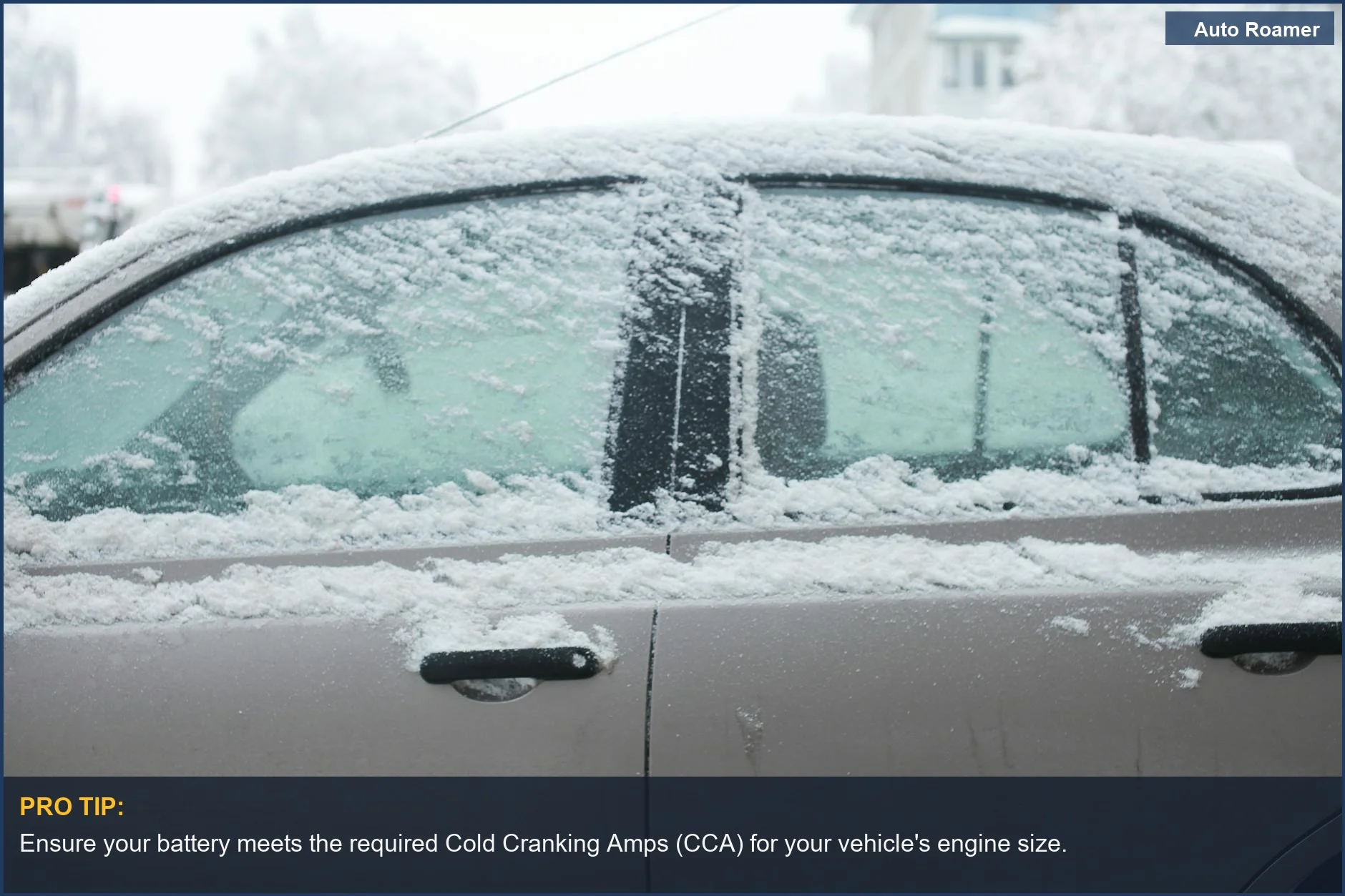
Modern car batteries, specifically lead-acid types, are rated by Cold Cranking Amps (CCA), which specifies the current a 12V battery can deliver for 30 seconds at 0 degrees F while maintaining at least 7.2V. A typical sedan might need 300-400 CCA, while a large truck could demand 700+ CCA. The critical spec here isn't just the 'Ah' (Amp-hour) rating, which describes total capacity, but the CCA, which defines peak current delivery under load. A 60Ah battery might have 500 CCA when new, but after 3 years of thermal cycling and discharge cycles, that effective CCA can drop by 30-40%. Reddit r/cars. This degradation isn't linear; it accelerates with age and exposure to high under-hood temperatures in summer, which cause electrolyte evaporation and plate corrosion. So, while it 'dies' in winter, the damage was often done in summer. Engine oil viscosity is another key player. Standard SAE J300 specifications define viscosity grades. A 0W-20 oil, common in many new vehicles, has a lower cold-crank viscosity than a 5W-30. The 'W' in the grade indicates its winter performance at low temperatures. Lower 'W' numbers mean less resistance for the starter motor. For example, at -22 degrees F (-30 degrees C), a 5W oil can be 3 times thicker than a 0W oil, demanding significantly more torque to spin the crankshaft. This increased mechanical load directly translates to higher current draw from the battery. Furthermore, modern vehicles never truly 'sleep.' The Body Control Module (BCM), infotainment system, and various sensors maintain a constant parasitic draw. Even a healthy system can pull 30-50mA at rest. Add an aftermarket dashcam pulling 200mA, and a 60Ah battery will be dead in under 10 days at 0 degrees F. This isn't just 'power-hungry features' Firestone Complete Auto Care; it's a constant, low-level discharge that the cold exacerbates by reducing the battery's effective capacity. The total energy available for cranking is a product of capacity and temperature. A battery that's 80% charged at 70 degrees F might only be 40% effective at 0 degrees F, and that 40% is fighting molasses-thick oil. This is why a battery test showing 'good' at room temperature can still leave you stranded in the cold. It's not a 'bad' test, it's a failure to account for thermal derating. The internal resistance of the battery also rises as temperature drops, further limiting the peak current it can deliver. This is fundamental electrochemical physics.
How to Handle This
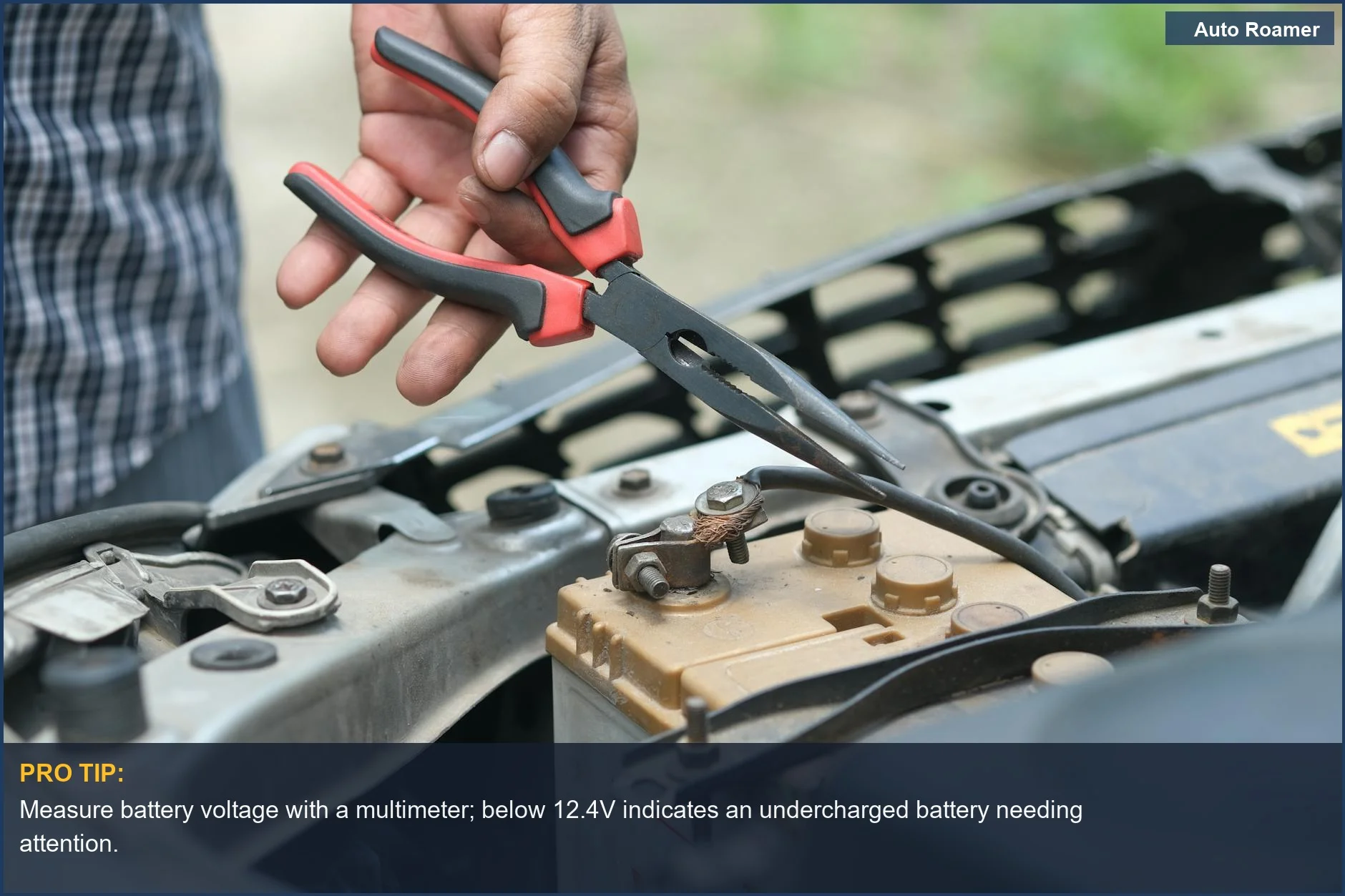
First, get a $15 digital multimeter. Don't guess. With the car off, measure voltage across the battery terminals. Anything below 12.4V means it's undercharged, period. A fully charged lead-acid battery should read 12.6V or higher. If it's below 12.0V, it's severely discharged and potentially damaged. Next, check the terminal connections. Those fuzzy blue-green crusts? That's lead sulfate corrosion, an insulator. It creates high resistance, reducing current flow. Disconnect the negative terminal first, then the positive. Use a wire brush or a battery terminal cleaner tool to scrape every bit of corrosion off the posts and the cable clamps. I've seen 100 CCA losses just from dirty terminals. Apply a thin layer of dielectric grease to prevent future corrosion. Reconnect positive, then negative, ensuring a tight mechanical bond. Torque specs for battery terminals are usually around 10-12 Nm (7-9 ft-lbs) - don't overtighten and strip the soft lead posts. If your battery is consistently low, park your car in a garage if possible. A 20-degree F difference in ambient temperature can mean a 15% increase in effective battery capacity. If that's not an option, consider a trickle charger. A cheap $30 smart charger will maintain a full charge and desulfate the plates, extending battery life by months, sometimes years. Connect it overnight if you know a cold snap is coming. It's a low-amp charge, typically 1-2 amps, that gently tops off the battery without overcharging. Finally, if your car still struggles, pull a spark plug (carefully, don't break the ceramic insulator) and check its condition. A fouled plug can increase cranking resistance and waste precious current. Replace any plugs that show heavy carbon buildup - usually a 10mm or 14mm socket, depending on the engine. This is about minimizing all resistance points in the starting circuit, not just the battery.
What This Looks Like in Practice
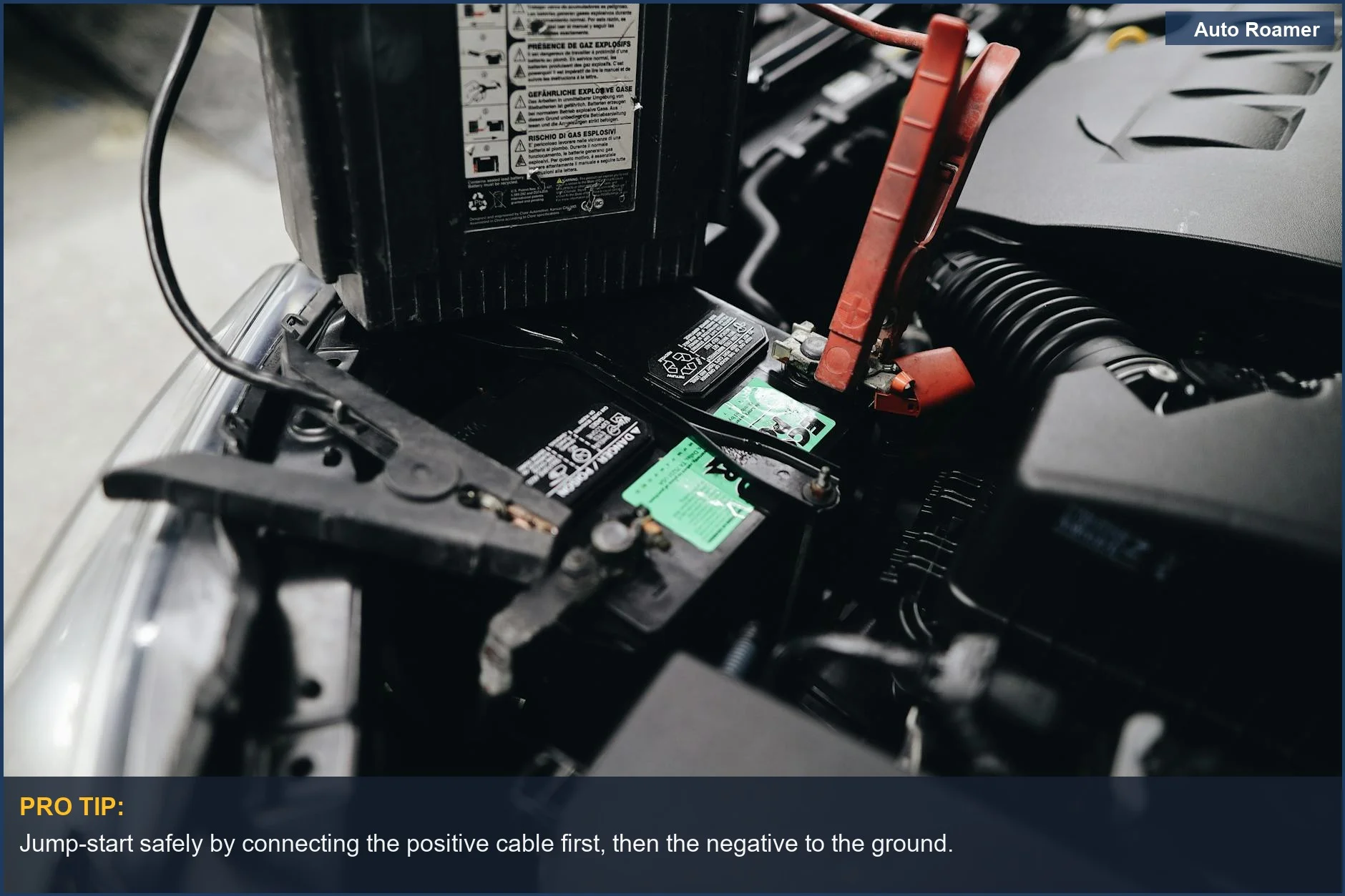
I had a guy with a 2017 Honda CRV last winter. He complained the battery died overnight at 10 degrees F, but was fine above 30 degrees F. Wisco Automotive. My multimeter showed 12.5V after a 30-minute drive, but a load test at 0 degrees F dropped it to 9.8V under 200A. The original battery, a 450 CCA unit, was now only delivering 280 CCA. It was 4 years old. The cold simply exposed its diminished capacity. Replaced it with a 550 CCA battery for $160. No more issues. Another time, a 2012 Chevy Silverado wouldn't start at -5 degrees F. He'd just replaced the battery. Turns out, the factory battery cables had internal corrosion, invisible from the outside. Resistance check from battery post to starter motor showed 0.8 ohms on the positive cable, when it should be less than 0.05 ohms. That 0.75 ohm difference, at 250 amps cranking, dropped 187.5V across the cable - effectively killing the voltage at the starter. Replaced the 4-gauge positive cable with a new 2-gauge cable for $45. Started right up. The voltage drop was consuming all the power before it even reached the starter motor. Then there was the 2019 Subaru Outback owner who swore his 6-month-old battery was bad. Parked outside. 15 degrees F. Car wouldn't start. I found a heated seat switch stuck in the 'on' position. The resistive heating elements were pulling 4 amps for 8 hours overnight. That's 32 Ah drained from a 60 Ah battery, reducing it to 47% state of charge. At 15 degrees F, that's maybe 20% effective capacity. Just enough to click the solenoid. Switched it off. Jumped it. No more issues. It's almost always a combination of aging components and parasitic draw.
Mistakes That Cost People
| Mistake | Why It Fails | Cost-per-Fix (Est.) |
|---|---|---|
| Ignoring slow cranking | You hear the starter motor laboring, but you keep driving. This means the battery is already struggling to deliver peak current. The lead plates are sulfated, or the electrolyte is low. Ignoring this tactile feedback means you're pushing a failing component to its ultimate limits, guaranteeing a no-start situation when the ambient temperature drops. | $0 (if addressed early) to $200+ (for tow and battery) |
| Not checking battery terminals | Corroded or loose terminals introduce significant electrical resistance into the circuit. Even a 0.1-ohm resistance at a 200A cranking load results in a 20V drop at the starter motor. The energy is dissipated as heat at the connection, not converted to mechanical work. This is a basic circuit integrity failure. | $5 (wire brush) to $150 (if terminals are damaged and need replacement) |
| Short trips in cold weather | The alternator needs about 20 minutes of driving at highway speeds to fully recharge the battery after a cold start, which can deplete 5-10% of the battery's charge. If your commute is 5 minutes, you're constantly operating in a net discharge state. The battery never reaches full charge, accelerating sulfation. | $0 (if driving habits change) to $180+ (for premature battery replacement) |
| Assuming the alternator is always good | A failing alternator, especially one with worn brushes or a faulty voltage regulator, won't adequately charge the battery. This leads to chronic undercharging. During cold weather, the battery's reduced capacity combined with insufficient charging guarantees a no-start. Check output voltage: should be 13.8-14.4V at idle. | $0 (diagnosis) to $400 (alternator replacement) |
| Using incorrect engine oil viscosity | Using a 10W-30 oil when your engine specifies 0W-20 or 5W-30 significantly increases the cold cranking resistance. The thicker oil requires more torque from the starter, demanding more current from the battery. This directly increases mechanical stress on the starter and electrical stress on the battery. | $0 (if caught at oil change) to $50 (cost difference for proper oil) |
Key Takeaways
Your car battery dying in cold weather isn't some black magic; it's a predictable failure mode driven by fundamental physics. The chemical reactions within your lead-acid battery slow down, reducing its available power output by up to 60% at 0 degrees F CantonRep. Simultaneously, engine oil viscosity skyrockets, increasing the mechanical resistance the starter motor has to overcome. This combination creates a situation where the demand for power exceeds the supply. The real fix isn't some fancy dealer service; it's understanding these core principles and addressing the weakest link in your starting system. Rohnert Park Transmission. Pay attention to:
- Battery age and CCA rating: If it's over 3-4 years old, it's living on borrowed time.
- Terminal cleanliness and torque: High resistance here kills current flow.
- Parasitic draw: Even 100mA can kill a battery in a week in cold weather.
- Engine oil viscosity: Use what your manufacturer specifies for cold weather.
- Driving habits: Short trips prevent full battery recharge.