Car Camping

What Size Truck Bed Tent Do You Need?

Casey - The Weekend Warrior
6 min read
Includes Video

My first truck tent was a $300 impulse buy for my 2015 Ford F-150. I figured any tent that said 'truck tent' would just magically fit. Turns out, that's a rookie mistake. I ended up with a tent that sagged like a wet blanket and left huge gaps.

My first truck tent was a $300 impulse buy for my 2015 Ford F-150. I figured any tent that said 'truck tent' would just magically fit. Turns out, that's a rookie mistake. I ended up with a tent that sagged like a wet blanket and left huge gaps. The honest version: truck bed tent sizes aren't one-size-fits-all. You gotta know your bed length, and maybe even your width, before you click 'buy'.

My second tent cost $250 and fit perfectly, which made sleeping under the stars in Yosemite actually enjoyable, not a battle against the elements.

This isn't rocket science, but it's also not just picking the prettiest color. It's about matching the tent to your specific truck. I learned this the hard way, so you don't have to. Let's get this sorted.
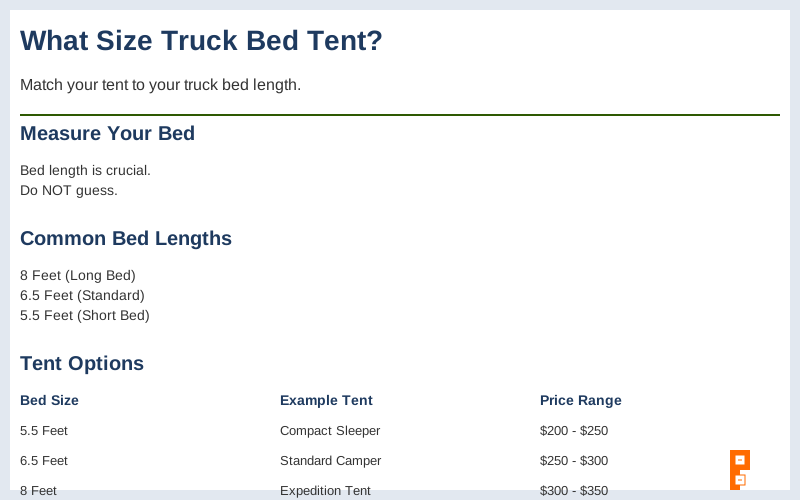
What Size Truck Bed Tent Do You Need? — Key Specifications Compared
Key specifications for What Size Truck Bed Tent Do You Need?

The Core Answer

The real move for picking a truck bed tent comes down to one main thing: your truck bed length. Most truck tents are designed for one of three common lengths: 8 feet, 6.5 feet, or 5.5 feet truck bed sizes. If you have a short bed, you're usually looking at the 5.5' or 6.5' options, depending on the exact model short beds usually range. Long beds typically mean you're in the 8' category. I made the classic mistake of not measuring my F-150's bed. I just assumed 'standard' meant it would fit any standard-ish tent. Wrong. My first tent was supposed to be for a 6.5' bed, but my truck actually has closer to a 5.5' bed. The result? A tent that bunched up in the middle and felt like a deflated balloon. Trying to install one in something with a slightly different bed length can lead to problems. Here's the game-time decision: measure your truck bed. Seriously. Get a tape measure and go out to your truck. Measure from the inside of the tailgate (when it's down) to the front of the bed. Don't guess. Don't eyeball it. Measure it. This is the single most important number you need most trucks with the 8' bed. If you have a 'stepside' or 'flareside' bed, pay extra attention. These have narrower widths due to the fenders inside the bed. Some tents are designed for these, but many aren't. I saw a guy on Facebook asking where he could find a tent for his stepside, and the replies were mostly 'good luck' step side trucks. You might need to look for specific models or even consider a universal fit that allows for some wiggle room. Width is also a factor, especially above the wheel wells. Most tents are designed to accommodate the standard width. If you have a wider truck or are trying to fit something like a HEST mattress that's specifically sized, double-check the tent's internal dimensions HEST mattress fits your truck bed. Don't forget about the tailgate. Some tents have a sewn-in floor, which means the tailgate needs to be up for it to seal. Others are floorless and designed to work with the tailgate down, giving you more space their floorless design means. This is a big deal if you want to use your truck's bed as a walkthrough into the tent. My first tent was floorless, which was great for airflow, but it also meant dirt and bugs could easily get in. My second, a $250 Kodiak Canvas, has a sewn-in floor. It's heavier, but it feels way more secure and keeps everything out. It's a trade-off you need to consider based on where you'll be camping. Ultimately, the 'right' size tent is the one that fits your specific truck bed without excessive sagging or gaps. It should install relatively easily and provide a taut, secure shelter. The $50 version might seem tempting, but if it doesn't fit, it's just $50 wasted.
Once you’ve chosen the right size, learning how to properly set it up is crucial, so here's a helpful guide on installing a truck bed tent.
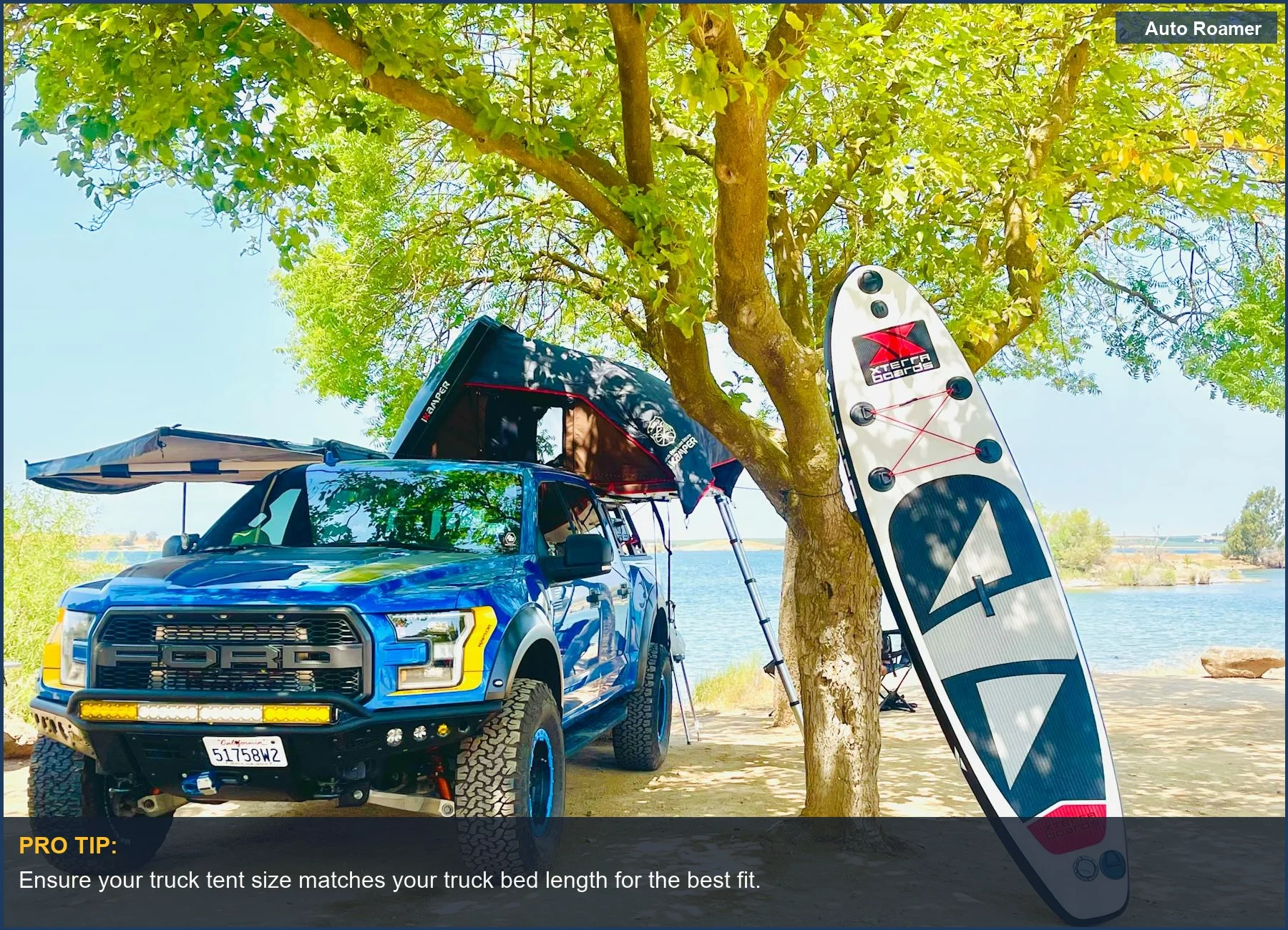
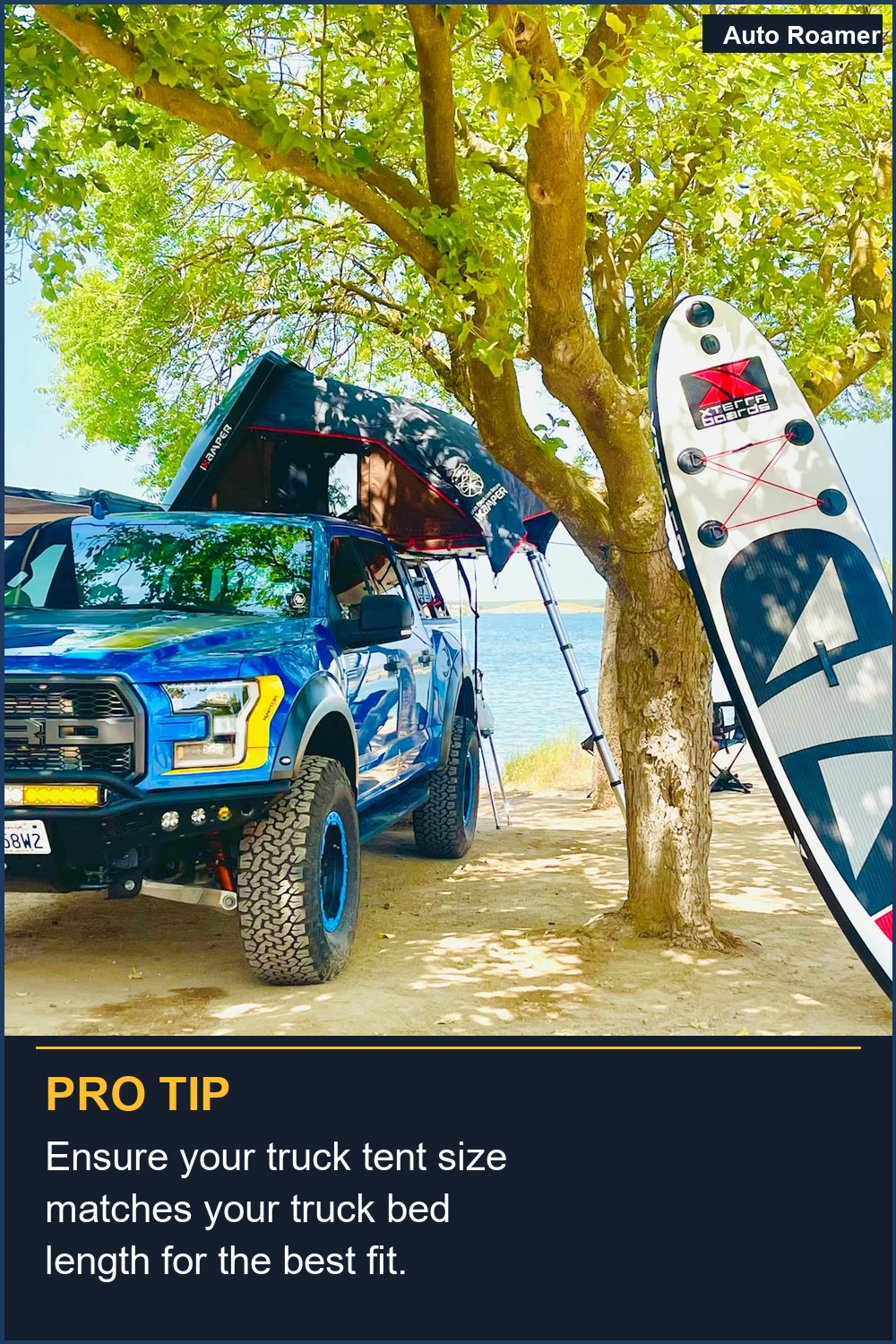
Ensure your truck tent size matches your truck bed length for the best fit.
This off-road truck setup with a tent and paddleboard by a lake highlights the freedom of truck camping. Choosing the right truck tent size is crucial for a comfortable adventure. | Photo by Tiffany Bacon

Why This Matters for Your Setup

  • No More Sagging Tents: I learned this lesson the hard way at a campground in Big Sur. My ill-fitting tent, meant for a longer bed, sagged so much in the middle that it pooled water. By 3 AM, I was sleeping in a shallow puddle. Measuring your bed length prevents this size is crucial.
  • Easier Setup, Less Frustration: Trying to force a tent that's too big or too small onto your truck bed is a nightmare. I spent 45 minutes at a state park in Oregon wrestling with my first tent, only to give up and sleep in the cab. The right size tent goes up in under 15 minutes ease of setup.
  • Weather Protection is Key: A tent that doesn't fit snugly leaves gaps for wind and rain to get in. On a windy night in Moab, Utah, my first tent flapped like a kite and let in a steady stream of dust. A properly sized tent seals up tight, keeping you dry and clean protected from the elements.
  • Maximizing Your Space: Even with a tent that fits, you want to make sure you're getting the most usable space. Some tents are designed to extend over the tailgate when it's down, adding valuable square footage. If your tent is too short, you lose that option, and your sleeping area feels cramped above wheel wells.
  • To enhance your camping experience, it's also important to consider how to choose the right size truck canopy for your needs.
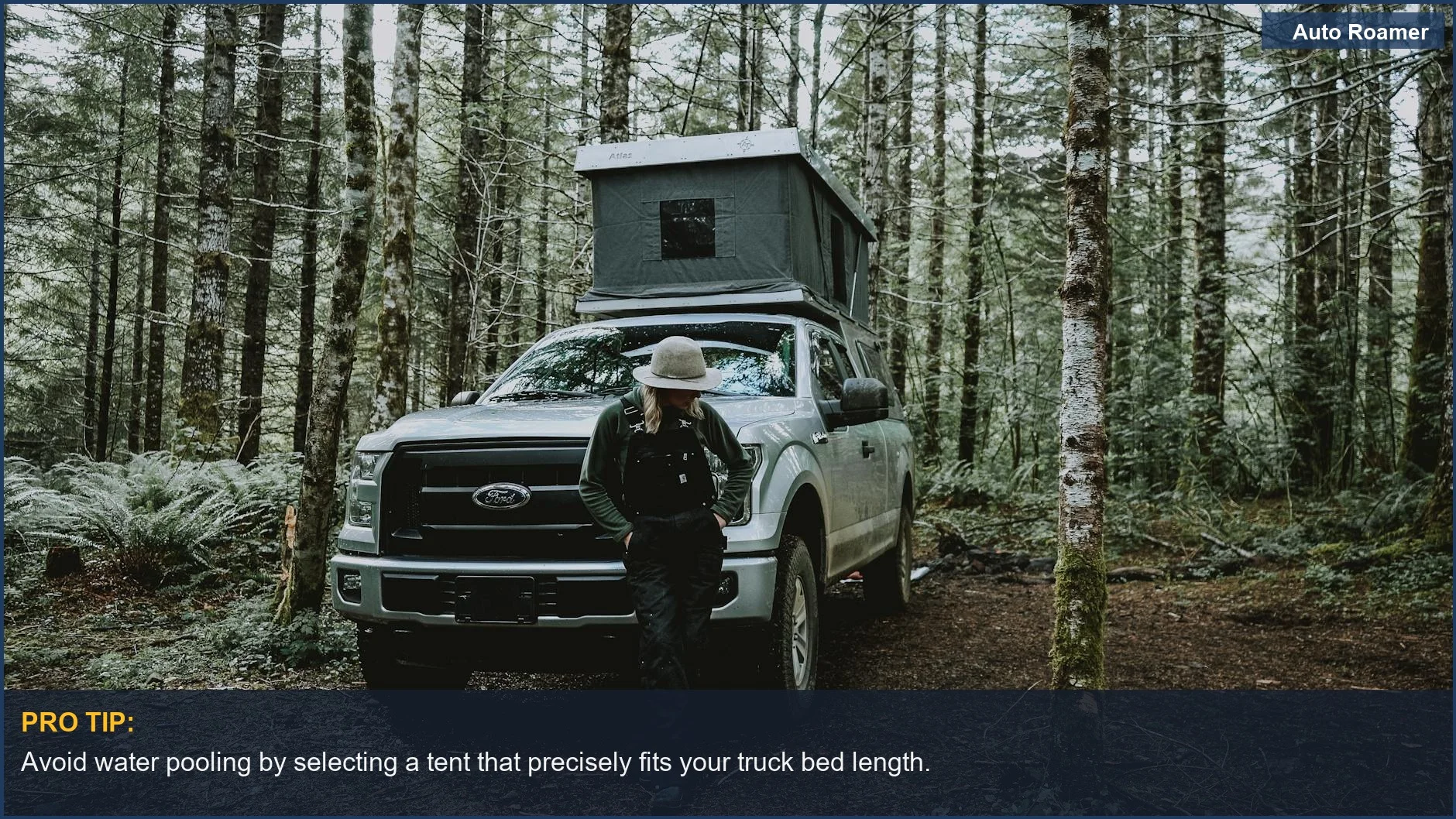
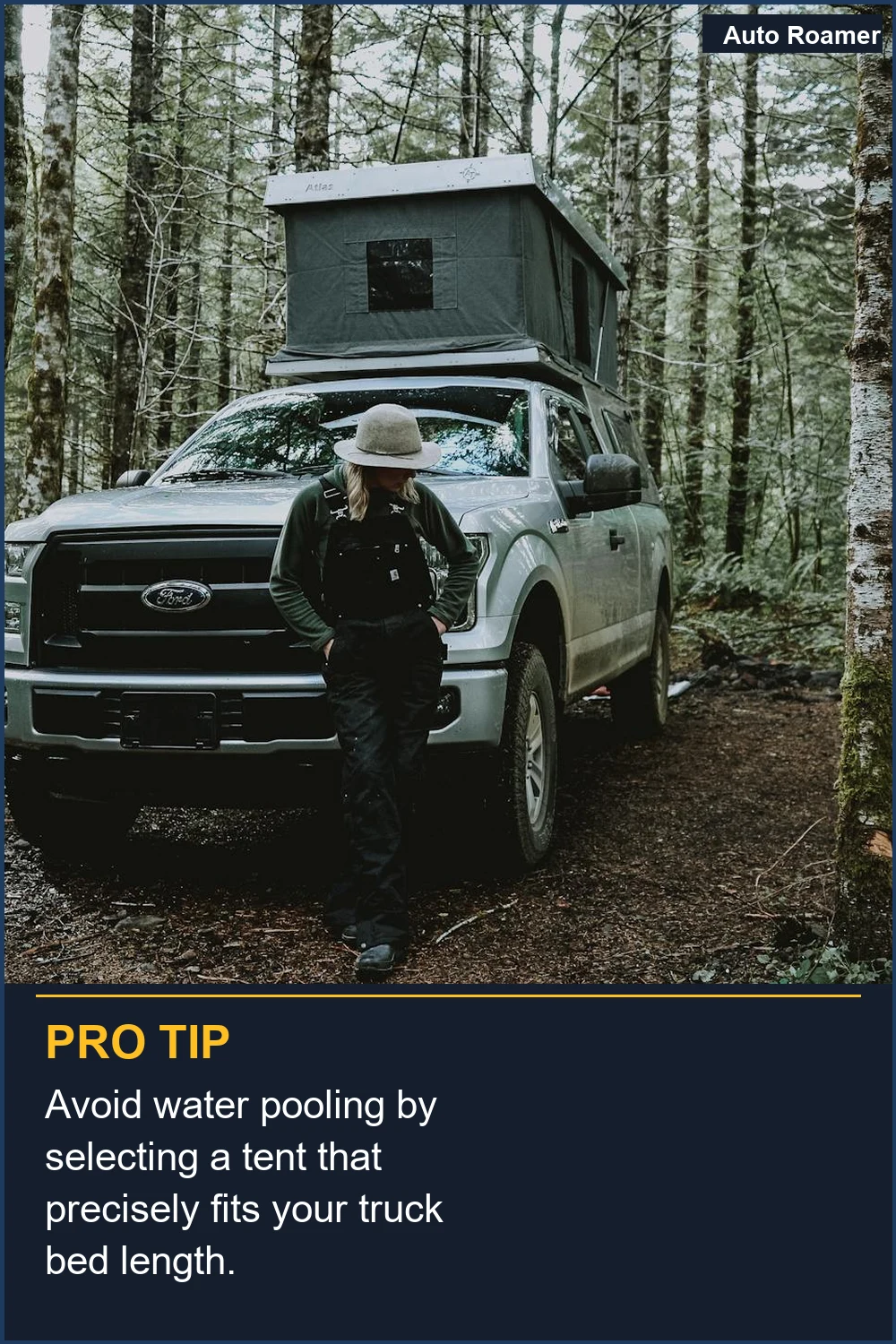
    Avoid water pooling by selecting a tent that precisely fits your truck bed length.
    Embrace the travel lifestyle with this woman camping in a pickup truck tent amidst the Oregon woods. Proper tent fit on your truck bed prevents common camping mishaps. | Photo by Katie Doane

    Making the Right Choice

  • Measure Twice, Buy Once: This is the golden rule. Grab that tape measure and get the exact length of your truck bed. Don't rely on what you *think* it is. My 2015 F-150 has a 5.5-foot bed, and knowing that saved me from buying another $300 mistake one of three common lengths.
  • Know Your Truck's Quirks: Is it a stepside? Does it have a unique bed width? These details matter. A tent designed for a standard bed might not work on a specialty bed. You might need to do a little extra digging to find brands that cater to less common truck bed styles step side trucks.
  • Floor or No Floor?: Consider if you want a tent with a built-in floor or a floorless design. Sewn-in floors keep bugs and dirt out but can make setup a bit more involved. Floorless tents offer better ventilation and can feel more open, but you're more exposed to the ground floorless design means.
  • Don't Overspend (Initially): You don't need the most expensive tent right out of the gate. My first $300 tent was a disaster because it didn't fit. My second, a $250 Kodiak Canvas, has lasted three years and is still going strong. Focus on getting the right fit first, then worry about fancy features choosing the right type depends.
  • To maximize your truck bed’s functionality, consider how to choose the right size truck bed drawer system for your camping needs.
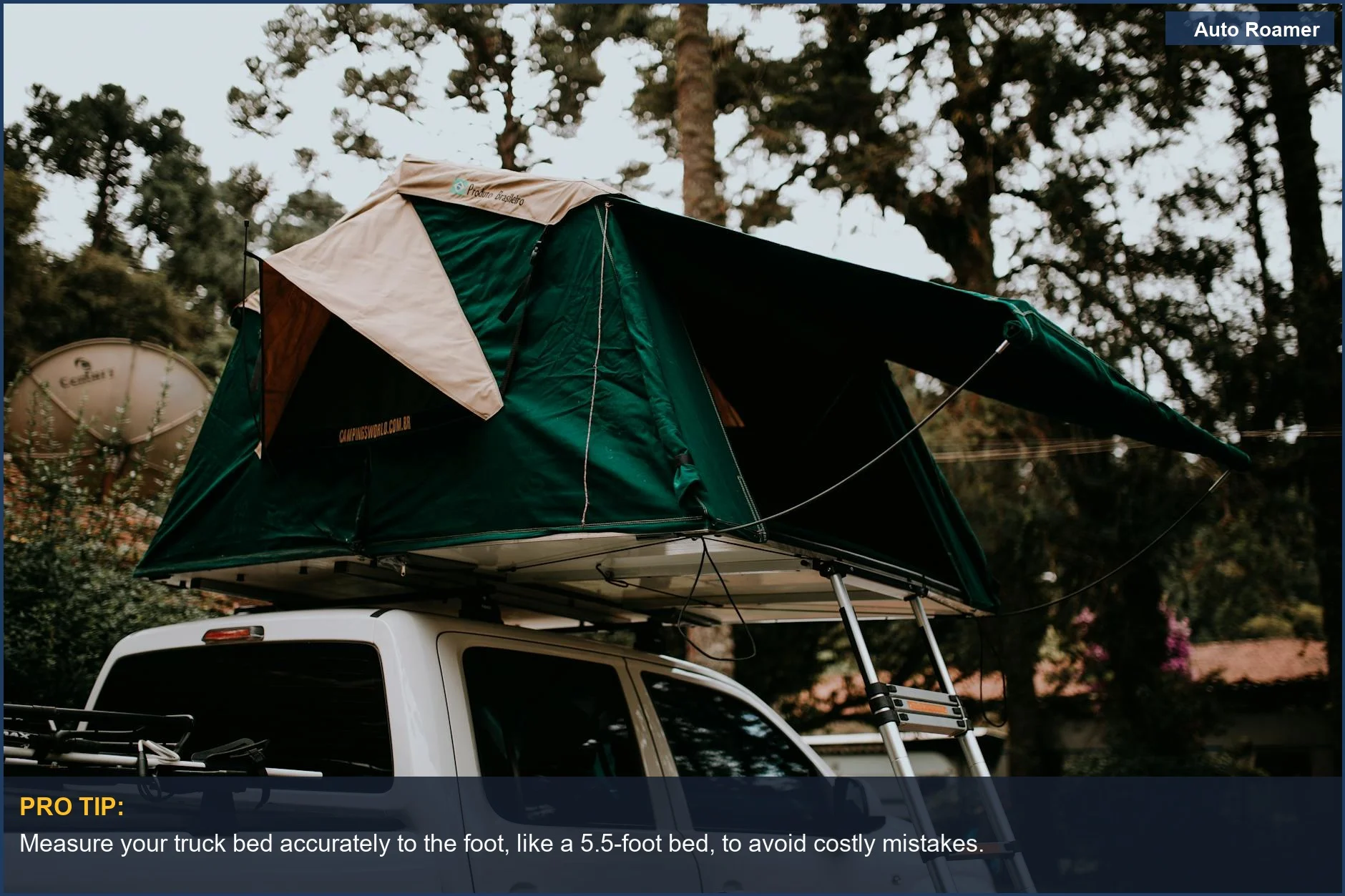
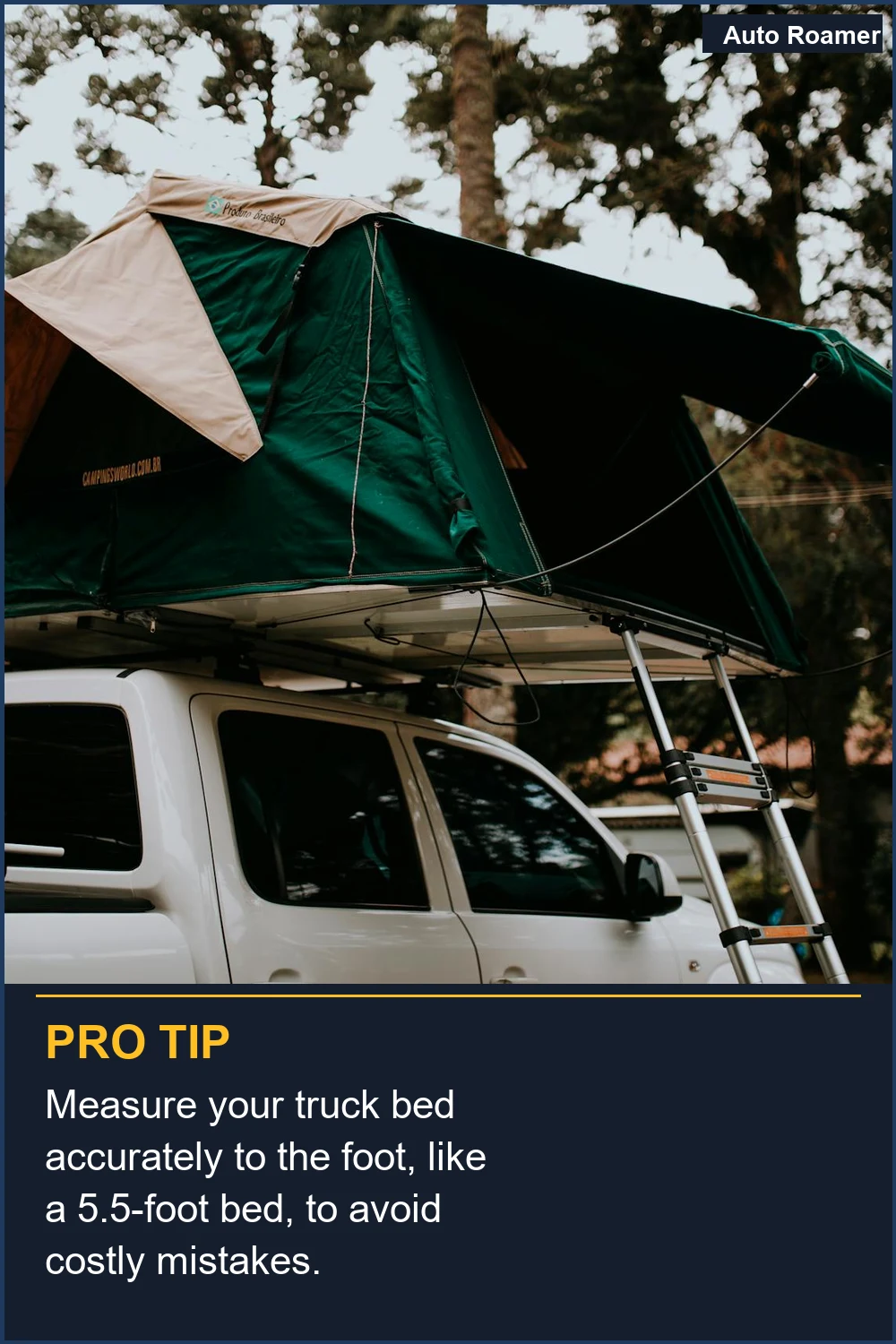
    Measure your truck bed accurately to the foot, like a 5.5-foot bed, to avoid costly mistakes.
    Explore scenic adventures with this pickup truck featuring a rooftop tent, perfect for ultimate outdoor camping. Knowing your truck bed length is key to choosing the perfect tent. | Photo by Matheus Bertelli

    Frequently Asked Questions

    If I buy a truck tent online and it doesn't fit, can I just return it like an Amazon shirt?
    Generally, yes, but read the return policy *before* you buy. My first tent was a nightmare, and I managed to return it after wrestling it back into the box, but it took me 2 hours. Some places charge a restocking fee, so it's not always a clean $300 return. Always check the fine print you can simply uninstall it.
    Do I really need to measure my truck bed width, or is length all that matters?
    Length is king, but width can matter, especially if you have a wider truck or want to fit specific gear. Most tents are designed for standard widths, but if you have a dually or a significantly wider bed, you might run into issues. My 6.5-foot bed is only about 50 inches wide above the wheel wells, so a tent designed for a wider bed would have slack above wheel wells.
    What if I buy a tent that's a little too long for my truck bed? Can I just leave the tailgate down?
    Yes, you absolutely can. That's exactly what floorless tents are designed for, and many floor-in tents can also be used with the tailgate down. This gives you extra space to walk into the tent or just more room to stretch out. I did this on a trip to Joshua Tree and it made a huge difference tailgate down.
    Can having a tent that's too big or too small for my truck bed permanently damage my truck?
    No, it's not going to permanently damage your truck. The worst that can happen is the tent poles could scratch your paint if they rub excessively, or the straps could put pressure on your bed rails. I've had tents that were a bit loose, and while annoying, they never caused any lasting harm to my truck's body convenience and functionality.
    I heard you can just buy a regular ground tent and set it up in your truck bed. Is that true?
    Technically, you *can*, but it's a terrible idea and a complete waste of money. Ground tents aren't shaped to fit the contours of a truck bed, they'll sag, they won't seal properly, and you'll spend more time fighting with it than sleeping. My buddy tried this with a 4-person dome tent, and it looked like a collapsed circus tent. Just buy a truck tent; they're designed for the job truck bed tents offer a practical solution.

    🏅 Looking for Gear Recommendations?

    Check out our tested gear guides for products that work with this setup:

    C

    Casey - The Weekend Warrior

    Weekend car camper and road trip enthusiast. Focuses on practical, budget-friendly solutions for families and first-time campers.

    Sources

    Related Articles