The Short Answer: Twin Easily, Full With Work, Queen Not Flat
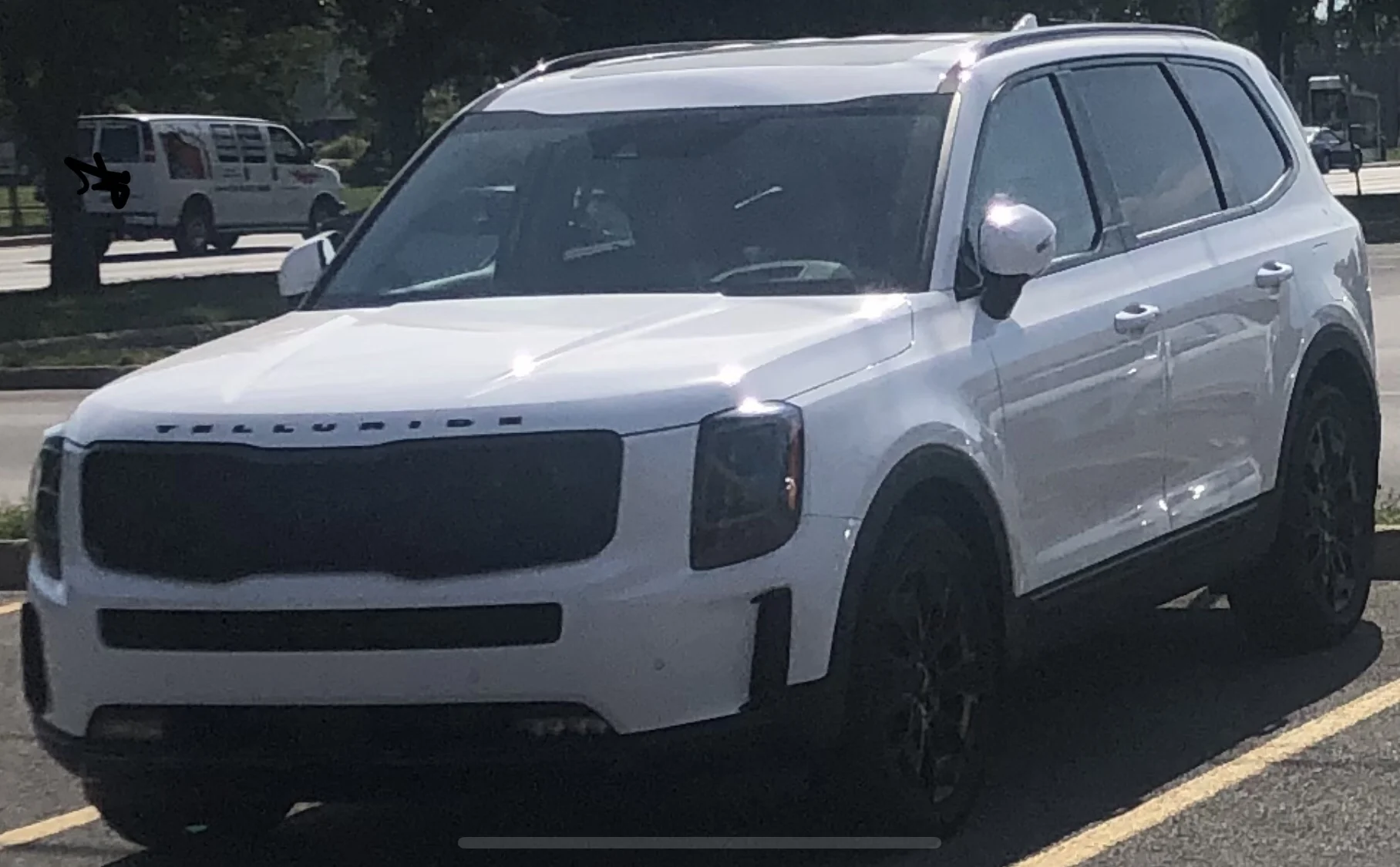
The Kia Telluride is a three-row SUV, which changes the sleeping math from the start. To open a full-length floor you have to fold both the second and third rows, and only then does the Telluride become a bed. Do that and the floor runs long, but the width and the seatback shape are what actually decide your mattress size.
The headline figure is generous. The Can You Sleep in a Kia Telluride Car Camping Guide shows 21 cubic feet behind the third row, 46 cubic feet with the third row folded, and 87 cubic feet with both rows down. Eighty-seven cubic feet sounds like queen territory, and that is exactly the trap this guide exists to defuse.
Here is the install-minded summary. A Twin or Twin XL fits the long floor without a fight. A Full fits only up above the wheel wells, where the cabin widens, so it wants a platform. A true queen does not lie flat at all. The measurements below show why, and where the seatback step will bite if you ignore it.

Fold Both Rows: The Length Is There
Length is the Telluride's strong suit once both rows are down. The second row folds in a 60/40 split and the third row folds in a 50/50 split, so you can drop them in stages depending on how many people are along. With only the third row folded, owners measure a cargo length from the back of the second-row seats of roughly 50 to 62 inches, about 53 inches typically, depending on how far forward the second row is slid.
That third-row-only length is a gear space, not a bed. Fold the second row too, and owners report the flat-ish floor runs well past 80 inches, long enough for a tall adult to stretch out fully. Length, in other words, is never the Telluride's problem; a Twin at 75 inches or a Twin XL at 80 inches clears it easily.
The staged fold is genuinely useful for mixed trips. Keep the 40 portion of the second row up for a passenger and fold the rest, and you still have a long strip to sleep one person while carrying gear or a rider. For a full two-person bed, though, both rows go down and you commit the whole back of the vehicle.
Because length is never the constraint, the Telluride gives you freedom most midsize SUVs do not. You can run a pad straight down the middle, angle it for shoulder room, or leave a foot of floor at the tailgate for boots and a cooler. That long floor is the reason the vehicle feels roomy inside even though its width is ordinary.
The Wheel-Well Pinch and the Width Above It
Width is where the Telluride, like every SUV, gets honest. Owners measuring the cargo width at the third-row and wheel-well level, between the armrests, report 44 inches. That 44-inch pinch is the hard limit on any mattress laid flat on the floor, and it is the number to fixate on before buying.
Above the armrests the cabin opens up. Owners measure about 56 inches of width higher in the cabin, well above the 44-inch floor pinch. That gap between floor width and upper width is the whole story of what fits: on the floor you have 44 inches, but a raised surface can borrow the 56 inches up top.
The rear opening matters too when you are loading a bulky mattress. Owners measure the hatch aperture at about 46.75 inches wide and 32 inches tall. That is roomy enough to slide a rolled Full through, but a fully inflated queen is a wrestling match, which is another quiet vote against oversizing your mattress for this vehicle.
Measure your own Telluride before you shop, because trim and model year shift these numbers slightly. Lay a tape between the wheel wells at floor level and again a foot up, and write both down. Those two widths, 44 inches low and about 56 inches high, are the whole decision, and confirming them takes less time than reading a mattress review.
The Seatback Step Nobody Mentions
This is the fitment detail installers care about and buyers miss. The Telluride's second-row seatbacks do not fold perfectly flat; they drop at a slight incline and leave a gentle slope with a low step where they meet the cargo floor. That step is small, but it sits right under where your hips go, and it will telegraph through a thin pad.
The consequence is that mattress choice interacts with the step. A tall air mattress laid across the slope sags into the low spot and rocks; a firmer, thinner pad or a foam layer that bridges the seam sleeps far better. The seam, not the width, is what ruins sleep for people who buy a plush inflatable and drop it straight onto the folded seats.
The fix is a deliberate one. Bridge the step with a folded blanket or a dedicated gap pad, then lay your sleeping surface over the leveled base. It is the same principle as shimming a cabinet before you screw it down: get the base flat first, and the mattress on top behaves. Skip it, and you will feel the step at 2 a.m.
This is why two Tellurides with the same mattress can sleep completely differently. The camper who leveled the seatback seam sleeps flat and rested; the one who dropped an inflatable straight onto the folded seats spends the night sliding toward the low spot. The mattress is identical, so the base preparation is the whole difference.

Twin and Twin XL: The Easy Single-Sleeper Fit
For one person, the Telluride is comfortable and forgiving. A Twin at 38 by 75 inches fits the 80-plus-inch floor lengthwise with room left over, and its 38-inch width sits well inside the 44-inch wheel-well pinch. Nothing has to be raised or trimmed; you fold both rows, level the seatback step, and lay it down.
A Twin XL at 38 by 80 inches suits taller campers. The width is identical, so the wheel wells are a non-issue, and the 80-inch length is still inside the floor's 80-plus-inch reach. Between the two, the only question is your height, since both clear the width the same way.
Because the floor is so long, a single sleeper has options the width does not otherwise allow. You can run the pad slightly diagonally to gain shoulder room, or leave space at the foot for gear. The Telluride sleeps one person as well as almost anything in its class, provided you respect the seatback step underneath.
For most solo campers this is where the search should end. A Twin or Twin XL on the leveled floor is cheaper, lighter, and quicker to set up than any platform, and it uses the vehicle exactly as its folded floor intends. Save the platform effort for when a second person genuinely needs the width.
Full-Size: A Platform Job
A Full mattress is 54 by 75 inches, and it is the size where the wheel wells start to matter. At 54 inches wide, a Full is over the 44-inch floor pinch, so it cannot bed down flat directly on the cargo floor. Lay one down and its edges climb the wheel-well humps, leaving a shallow trough down the middle.
The Telluride's saving grace is that 56-inch width up above the wheel wells. Build or bridge a surface at that height, and a 54-inch Full fits within the roughly 56-inch upper span with a little to spare. A mattress that bridges the seatbacks, or a proper platform, is what turns the Full from impossible into practical.
So a Full is a yes with an asterisk: yes, if you raise it; no, if you drop it on the floor. For two smaller campers who want more than two twins side by side, a platform-mounted Full sized to the upper width is the honest setup. Plan the build around 56 inches, not 44, and it works.
The platform buys you storage as well as width. With the sleeping surface raised to clear the wheel wells, the space underneath swallows bins, water, and gear that would otherwise crowd the cabin. That is the trade a Full-in-a-Telluride build really offers: not just a wider bed, but a two-level cabin that sleeps and stows at once.
Queen and King: Where the Volume Number Breaks
A Queen is 60 inches wide, and this is the reality-grounding surprise the Telluride hides behind its 87-cubic-foot figure. Sixty inches exceeds even the roughly 56-inch usable width up above the wheel wells, so a true queen air mattress buckles against the wheel wells and does not lie flat, platform or no platform.
The volume figure implies a queen-class bed, and that implication is simply wrong. Eighty-seven cubic feet counts the tapered air near the roof and the space over the seatbacks, none of which a flat mattress can use. The 44-inch floor pinch and the non-flat second-row seatbacks are the real governors, and both point to something narrower than a queen.
A King at 76 inches is further still beyond the Telluride's interior width and is not worth discussing. The practical two-person answer is a full-width pad trimmed to the interior, or two narrow pads. Believe the 56-inch upper width over the 87-cubic-foot brochure number, and you will buy a mattress that actually lies down.
This is the pattern across every three-row SUV, and the Telluride is a fair example of it. The cubic-foot number is designed to impress, but the wheel-well pinch is designed by physics, and physics wins. Size to the pinch and the upper span, not to the headline volume, and the vehicle sleeps exactly as well as it honestly can.
Thickness, Loading, and the Setup That Works
Thickness is your tool for managing the seatback step. Because the folded seats leave a slope and a low step, a firmer pad or a thin foam layer bridging the seam sleeps better than a tall air mattress that sags into the step. The goal is a surface that spans the transition rather than one that pools into the low spot.
Loading is the other practical constraint. The 46.75-inch-wide hatch takes a rolled Full or a deflated pad without drama, but an inflated queen fights the opening, which is one more reason the Telluride rewards a right-sized mattress over an oversized one. Inflate inside, not out, and orient the pad before it is full.
For the sleeping surface itself, a full-size SUV air mattress sized to the Full footprint pairs well with a platform tuned to the 56-inch upper width. On the floor, keep to a Twin or Twin XL and a firm pad. Either way, the step under the seatbacks is the thing to solve first; solve it, and the Telluride is a comfortable, roomy sleeper.
Putting the Telluride Bed Together
The build sequence is short. Fold the 50/50 third row, fold the 60/40 second row, and level the seatback step with a gap pad or folded blanket. Set your sleeping surface with the head toward the tailgate, confirm it clears the 44-inch floor pinch if it is on the floor, or sits on the 56-inch upper span if it is raised.
Two people should decide up front whether they are floor-sleeping on two twins or platform-sleeping on a Full. Trying to split the difference with a queen is where the frustration comes from. The Kia Telluride Cargo Space and Sleeping Measurement and the Kia Telluride Payload Capacity Specs lay out how the Telluride's cargo space measures out and where the roof options come in for those who would rather sleep above the vehicle than inside it.
Ventilation and power round out a real overnight. Crack windows on opposite sides for cross-flow, add bug screens, and plan your power draw. The What Size Mattress Fits in SUV Camping covers how the Telluride handles cold nights, which is the same body and the same folded floor you are sleeping on in any season, step and all.
Think of the finished setup as three layers: a leveled base over the seatback step, a right-sized mattress within the 44-inch or 56-inch width, and the comfort items on top. Get the bottom two right and the Telluride is a genuinely pleasant place to sleep; get them wrong and no amount of bedding rescues it.
The Verdict: Long Floor, Pinched Width, Level the Step
The Kia Telluride is a strong one-person sleeper and a workable two-person platform build. Fold both rows and you get an 80-plus-inch floor that swallows a Twin or Twin XL for length, with the 38-inch pad width sitting comfortably inside the 44-inch wheel-well pinch. For a single camper, it is genuinely easy.
Two people have to choose their level. A Full at 54 inches fits only up where the cabin opens to about 56 inches, which means a platform or a seatback-bridging setup. A 60-inch queen does not lie flat at any height, and the 87-cubic-foot volume figure that suggests otherwise is counting air you cannot sleep on.
Above all, level the seatback step. The Telluride's one real weakness is that its second-row seats fold to a slope with a low step rather than dead flat, and that seam is what people feel through a thin pad. Bridge it first, size your mattress to 44 inches on the floor or 56 inches up top, and the Telluride camps as well as its space promises.