
Car Ownership

What Happens If You Don't Have Gap Insurance?

Casey - The Weekend Warrior
4 min read
Includes Video

If you don't have gap insurance, you could be on the hook for thousands of dollars after your car is totaled. This isn't some theoretical nightmare scenario; it's what happens when the market value of your car drops faster than you can pay down the loan.

If you don't have gap insurance, you could be on the hook for thousands of dollars after your car is totaled. This isn't some theoretical nightmare scenario; it's what happens when the market value of your car drops faster than you can pay down the loan. My buddy Dave learned this the hard way after his three-year-old sedan met a deer in rural Ohio. He still owed $12,000 on it, but the insurance company only valued it at $9,500.

That $2,500 difference? That was Dave's new, unplanned expense. Nolo breaks down how this can leave you upside down on your loan.
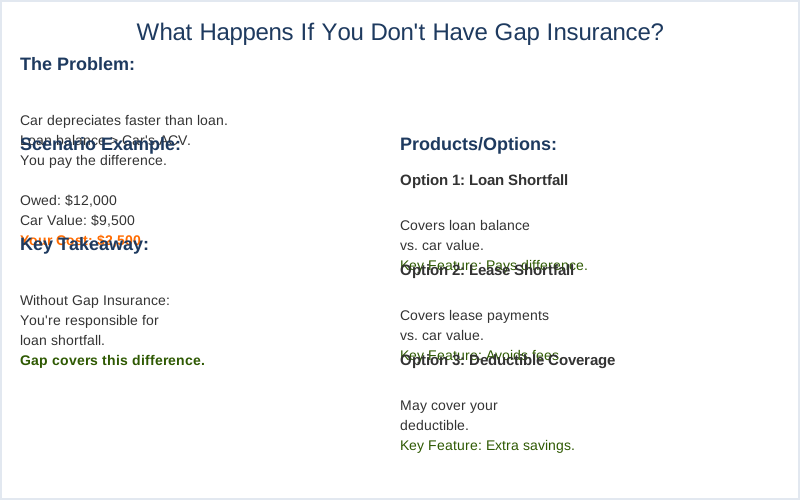
What Happens If You Don't Have Gap Insurance? — Key Specifications Compared
Key specifications for What Happens If You Don't Have Gap Insurance?

The Core Answer

So, what happens if you don't have gap insurance and your car gets totaled? The short, ugly version is you pay the difference. WalletHub pretty much sums it up: you're responsible for the remaining balance on your loan or lease. Your insurance company will pay out the car's actual cash value (ACV) at the time of the accident, but that's it. If your loan balance is higher than that ACV, that's your problem, not theirs. Let's say you bought a new car for $30,000 and financed $28,000 of it. Three years later, after a bunch of payments, you still owe $15,000. But because cars depreciate like crazy, especially in the first few years, its market value is now only $12,000. If it's declared a total loss, your insurance company writes you a check for $12,000. Brilliant engineering, right? Except you still owe $15,000 on that loan. That $3,000 shortfall? That's what gap insurance would have covered. Without it, you owe that $3,000 out of pocket. Allstate explains this clearly. This is exactly why gap insurance is usually recommended for new cars, especially if you put a small down payment on them. The biggest depreciation happens right after you drive off the lot. My first car, a used Honda Civic, had already taken that initial hit, so I skipped the gap insurance. But for my current truck, which I bought new? I paid the extra few bucks a month. It felt like cheap insurance against a really bad day. Protective Asset Protection has a whole FAQ on this. What are your options if you're in this pickle? You can try to negotiate with the insurance company or your lender, but don't hold your breath. Nolo suggests this, but it's rarely a home run. Sometimes lenders will let you roll that remaining loan balance into a new car loan, but that just means you're paying interest on money you owe for a car you no longer have. It's a rookie mistake to think the insurance payout covers everything.
To determine if it's worth the investment, you might want to explore when to consider gap insurance.
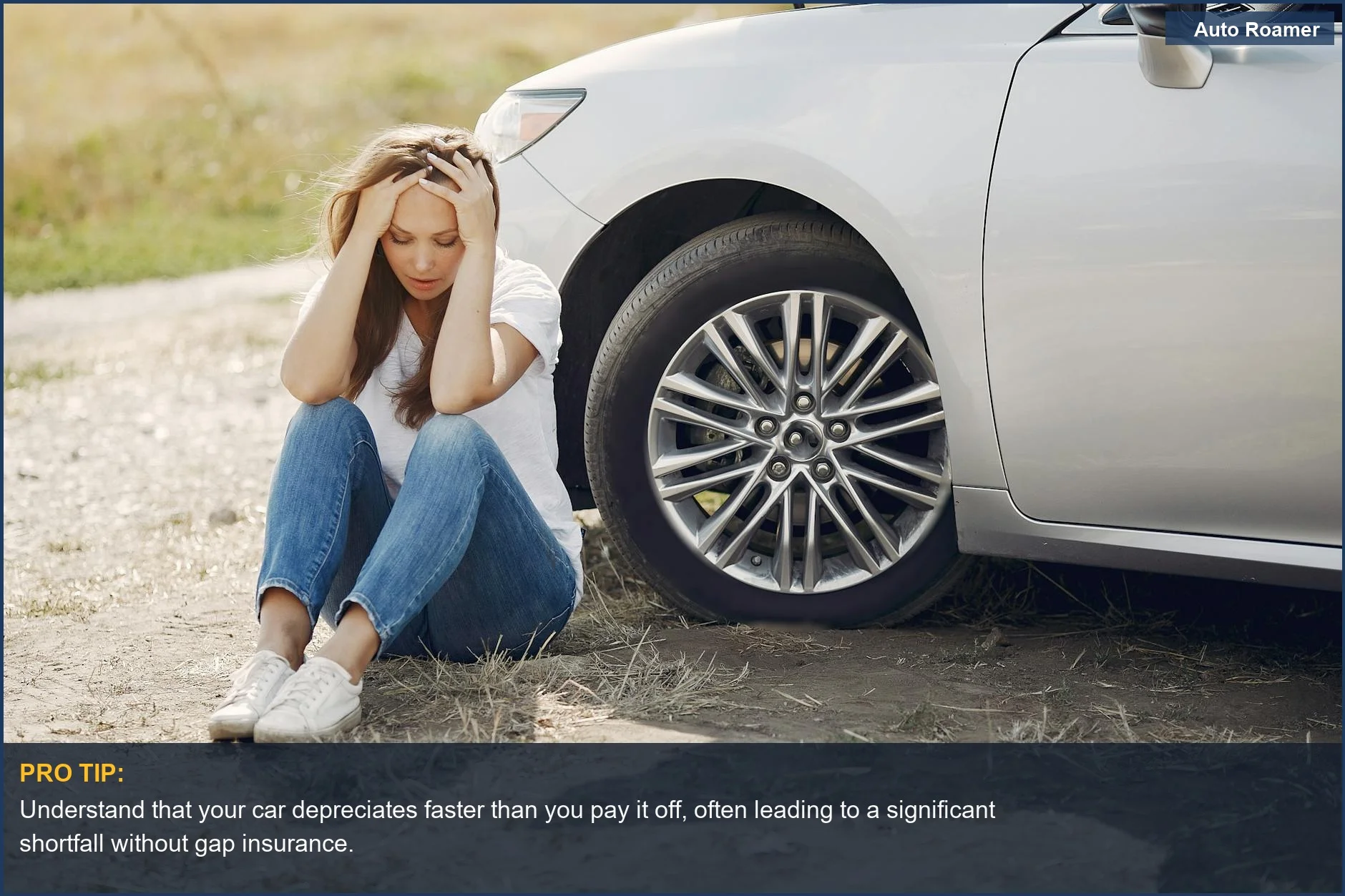
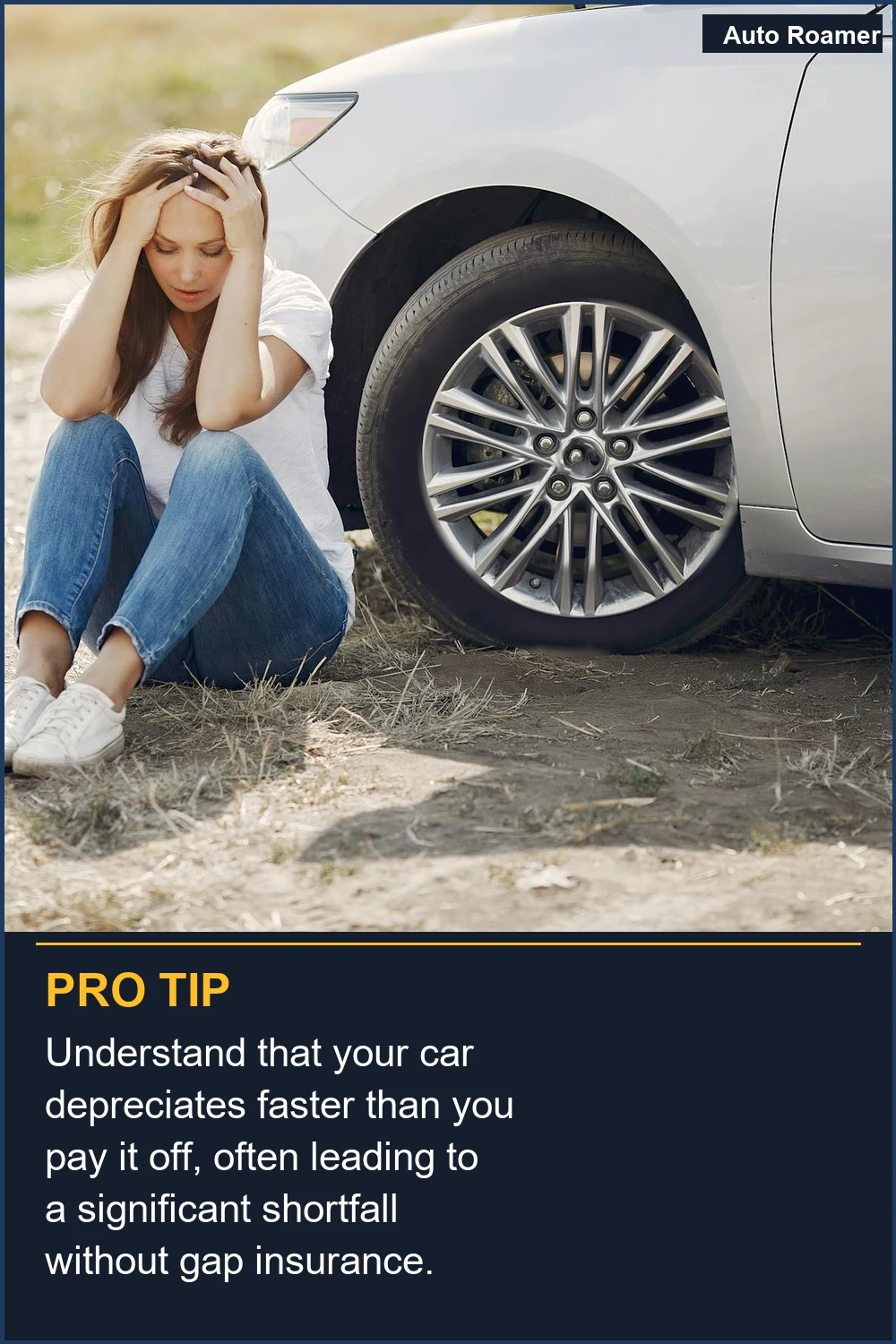
Understand that your car depreciates faster than you pay it off, often leading to a significant shortfall without gap insurance.
Facing the aftermath of a totaled car without gap insurance means you're responsible for the loan balance. This financial hit can be substantial, especially with new vehicles. | Photo by Gustavo Fring

Why This Matters for Your Setup

This whole gap insurance thing matters because it directly impacts your wallet after a major screw-up, like totaling your vehicle. Here's the breakdown:
  • The Immediate Financial Hit: If you don't have gap insurance and your car is totaled, you'll have to pay the difference between what the insurance company pays out and what you still owe on the loan. For example, if your car's value is $10,000 but you owe $13,000, you're suddenly on the hook for $3,000.
  • Crockett Law Group details this.
  • Being Upside Down on a Loan: This is the official term for owing more on your car than it's worth. Without gap insurance, this is your new reality. You're still making payments on a car that's in a junkyard somewhere.
  • It's like paying rent for an apartment you were evicted from.
  • Buying a Replacement Vehicle: If you need a new car quickly, that $3,000 (or more) you owe on the totaled car needs to be dealt with. Your lender might let you roll that debt into a new loan, but now you're paying interest on that old debt, too.
  • That's a double whammy nobody wants.
  • Potential for Collateral Exchange: In some rare cases, your lender might allow you to transfer the loan to a replacement vehicle, known as a collateral exchange. Washington's Office of the Insurance Commissioner mentions this possibility. It's not a guarantee, but it's something to ask about if you're in that awful situation.
  • Understanding your financial responsibilities can help you better assess gap insurance costs before making a decision.
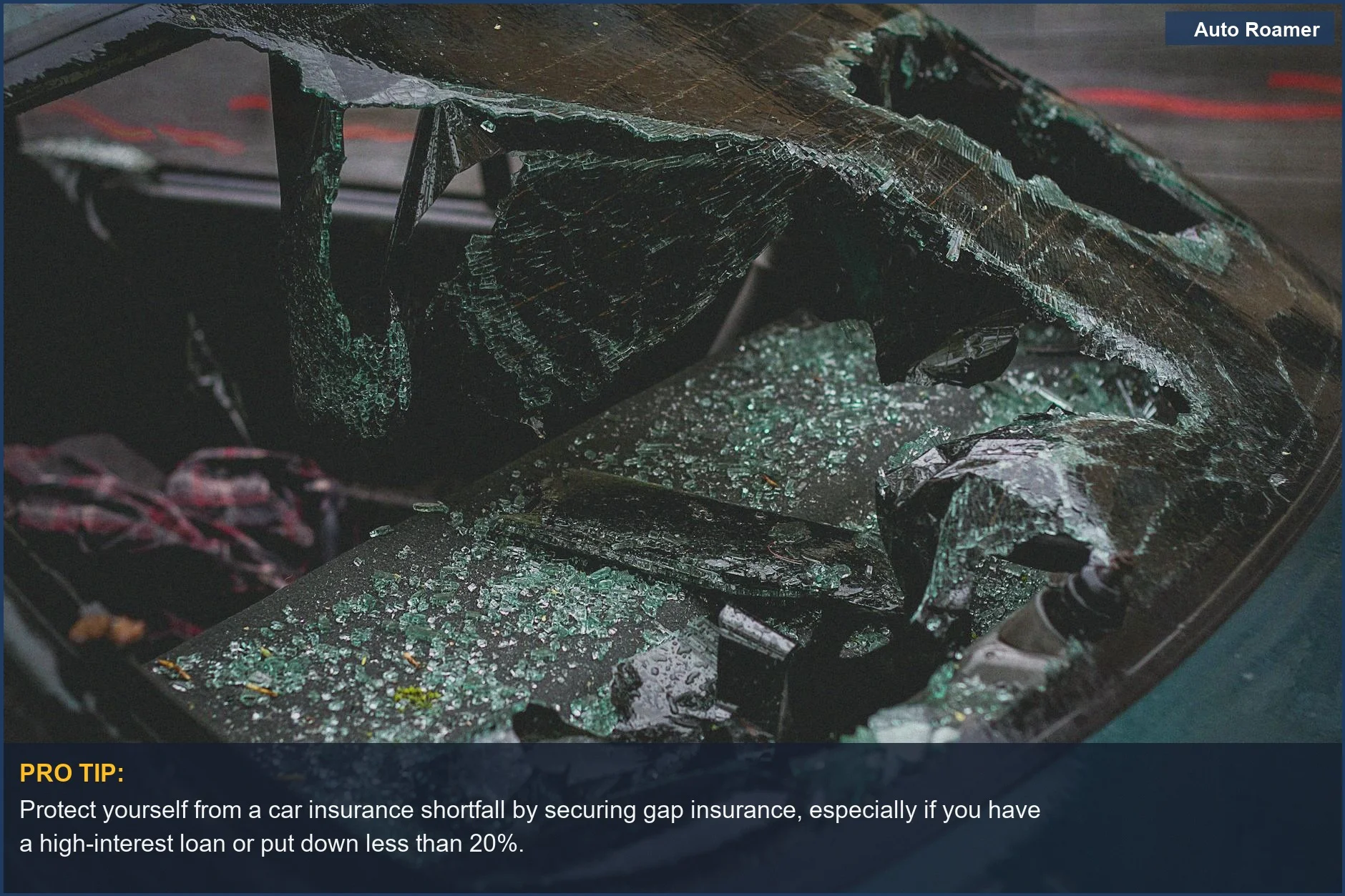
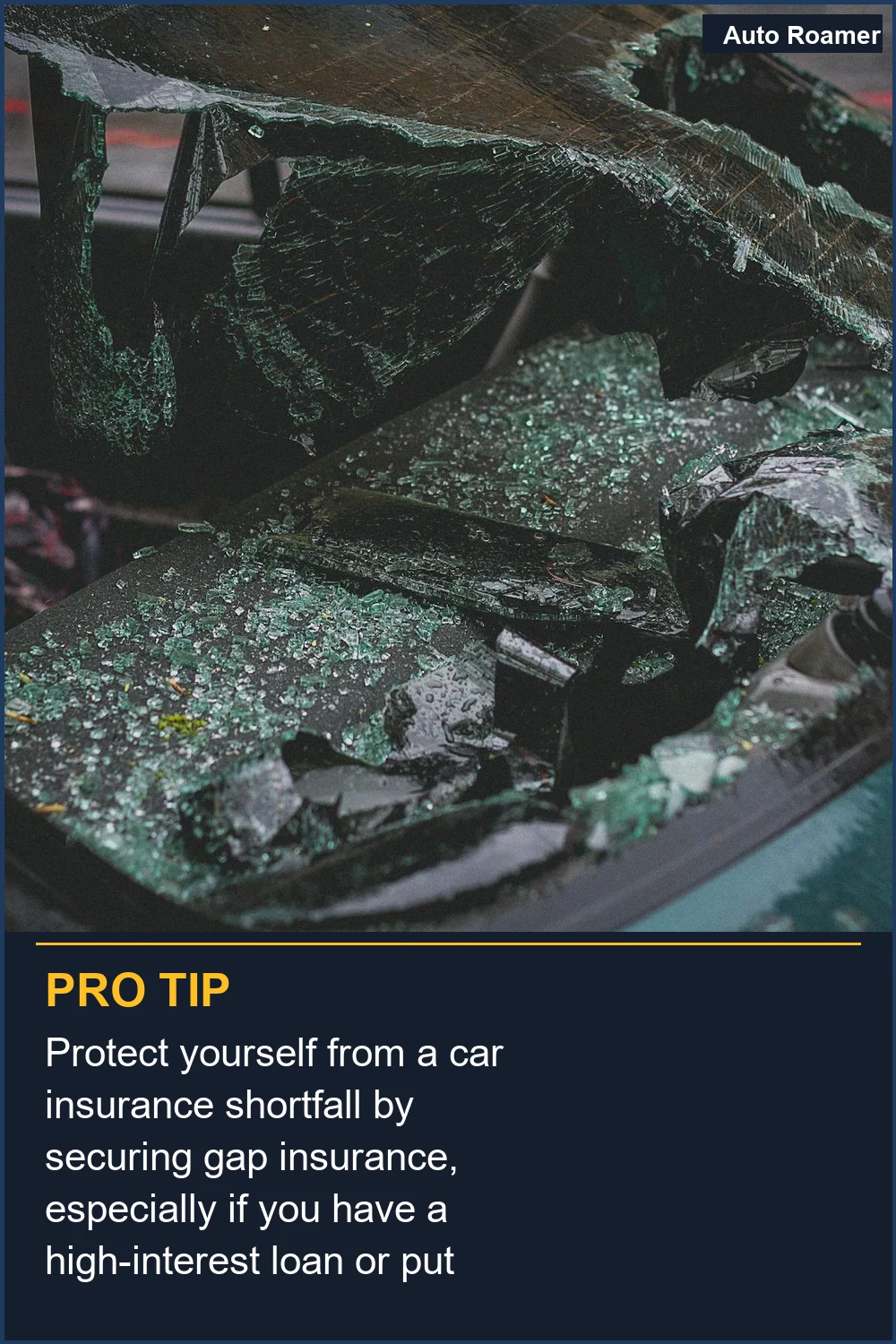
    Protect yourself from a car insurance shortfall by securing gap insurance, especially if you have a high-interest loan or put down less than 20%.
    A shattered windshield is a stark reminder of accident risks. If your car is totaled, you could face a car insurance shortfall without the right coverage. | Photo by Artyom Kulakov

    Making the Right Choice

    Deciding whether to get gap insurance isn't just about adding another line item to your car insurance bill; it's about protecting yourself from a massive financial headache. Here's the real move:
  • Assess Your Depreciation Risk: If you're buying a new car and putting down less than 20%, or if you plan to finance for more than 60 months, you're a prime candidate for gap insurance. Those first few years are when cars tank in value the fastest. Washington's Office of the Insurance Commissioner has some good points on this.
  • Compare Costs: Gap insurance through your auto insurer is usually cheaper than what a dealership or lender might offer.
  • I remember looking at a $15/month option from my insurance company versus a $600 one-time fee from the dealership. No contest. Ask your insurer first.
  • Understand What's Covered: Gap insurance covers the difference between your car's actual cash value and what you owe. It doesn't cover things like late fees or extended warranties. Read the fine print, folks.
  • It's Peace of Mind: For a relatively small cost, gap insurance can save you thousands if the worst happens.
  • It's the $50 version of not having to sell your kidney to pay off a totaled car.
    To better understand your options, it’s helpful to read about gap insurance needs for car owners.
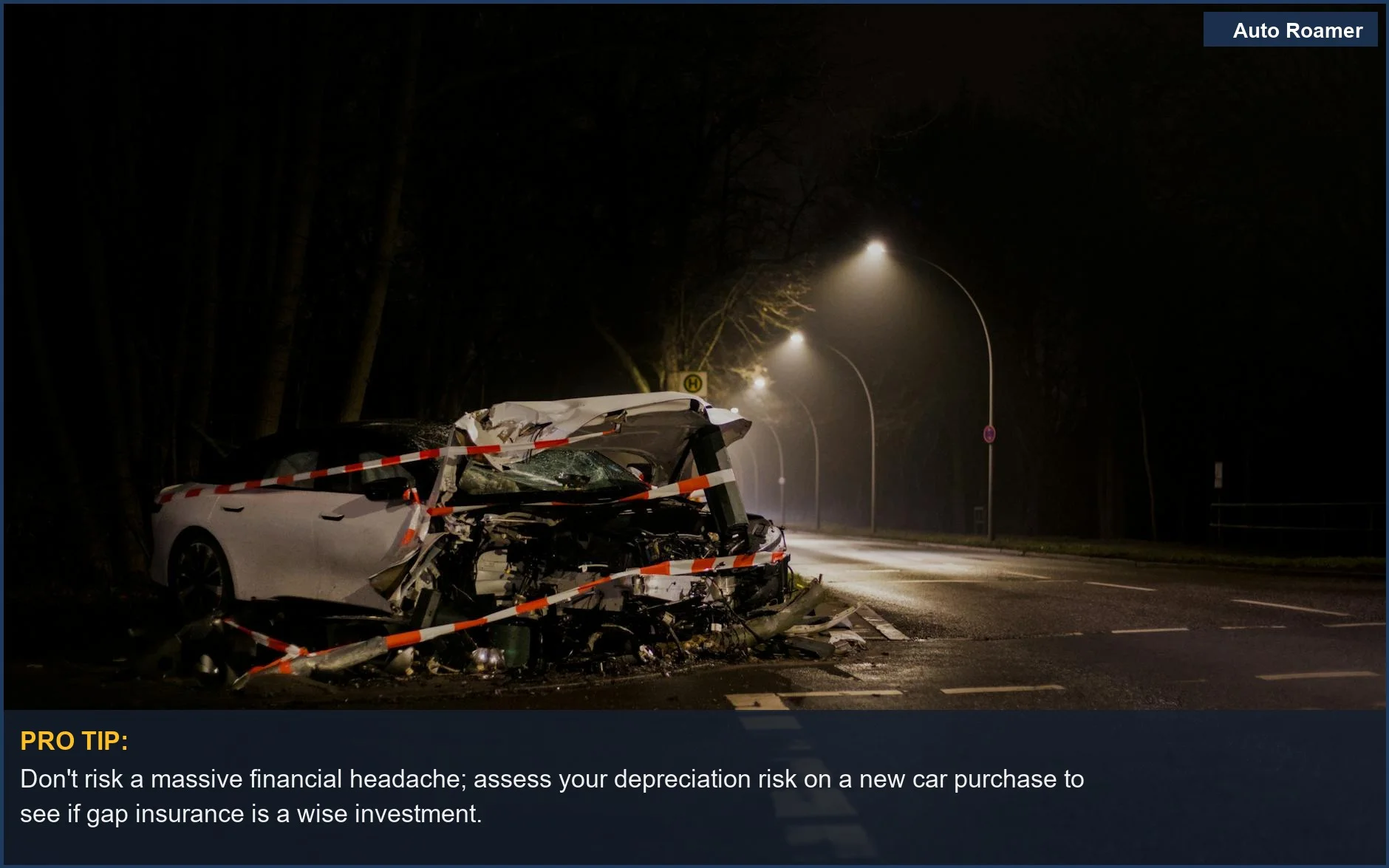
    Don't risk a massive financial headache; assess your depreciation risk on a new car purchase to see if gap insurance is a wise investment.
    A wrecked car in the dark symbolizes uncertainty. Without gap insurance, you might be left paying off a car you can no longer drive, a true financial burden. | Photo by Julien

    Frequently Asked Questions

    If I owe $10,000 on my totaled car, and the insurance company offers $8,000, can I just pay the $2,000 difference myself and keep the car?
    Generally, no. When your car is totaled, the insurance company is buying it from you for its actual cash value. You'd receive that $8,000 payout, and you'd still owe the lender the remaining $10,000. You can't usually keep the car and get the payout unless you negotiate to buy it back as salvage, which is a whole other headache.
    Do I really need a special tool to check if my car is 'level' for sleeping?
    Absolutely not. My first trip, I spent 10 minutes rolling a water bottle on the floor of my Civic at Shenandoah National Park, trying to figure out if it was level enough. The real move: park nose-slightly-uphill so your head is higher than your feet. You don't need a bubble level. Just don't wake up with a splitting headache.
    What if I buy a cheap, used car and don't get gap insurance, and it gets totaled a month later? Am I totally screwed?
    If you bought a used car with cash and it gets totaled, you're only out the purchase price, which is usually much lower than a new car loan. If you financed it, and owe more than it's worth, then yes, you're in the same boat as the new car scenario. That's why gap insurance on financed used cars is also a smart move if you're upside down.
    Can not having gap insurance permanently damage my credit score?
    Not directly, but it can indirectly. If you can't pay the difference owed on a totaled car, that debt can go to collections, which absolutely will wreck your credit score. It's like not paying your rent – the landlord doesn't just send you a polite reminder; they send the debt collectors.
    I heard gap insurance is just a scam dealerships push to make extra money. Is that true?
    Dealerships definitely make a profit on selling gap insurance, but the product itself isn't a scam. It's a legitimate financial product that protects you. However, you can often get it cheaper through your own auto insurance company. Think of it like buying a flashlight at a big box store versus a tourist trap shop – same product, different price.
    C

    Casey - The Weekend Warrior

    Weekend car camper and road trip enthusiast. Focuses on practical, budget-friendly solutions for families and first-time campers.

    Sources

    Related Articles