
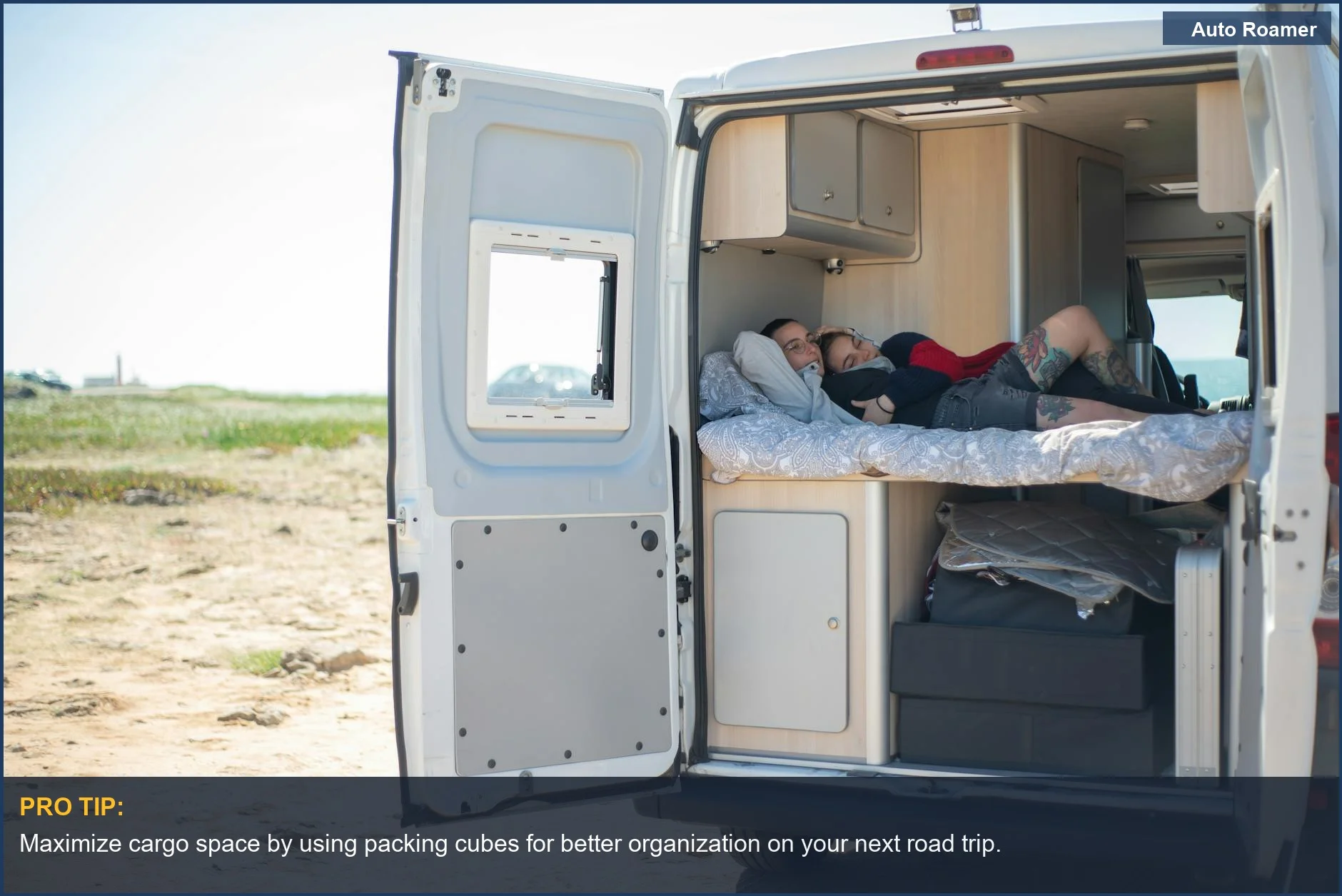
What the VW Transporter Camper Van Actually Is
The Volkswagen Transporter is, at its core, a commercial panel van — the workhorse half of VW's famous Transporter line — and that is precisely why it has become the single most popular base for professional and DIY camper conversions in Europe. When people search for a 'VW Transporter camper van,' they are almost never talking about a van that left the factory as a camper. They are talking about a Transporter panel van (the T6 and updated T6.1 generations, and the all-new successor that arrived for 2025–2026) that a converter has fitted out with a bed, kitchen, and pop-top. Understanding that distinction is the whole point of this guide.
It is easy to confuse three VW vans that share a body but serve very different buyers. The Transporter is the blank-canvas van: sold empty as a panel van or with seats as a basic crew van, it is the cheapest way into the platform and the one converters buy by the thousand. The Caravelle is the finished people-mover — carpeted, windowed, and seated for up to nine — aimed at families and shuttle use, not camping. The California is VW's own factory camper, built on the same bones but fitted in-house with a pop-top, kitchen, and fold-out bed at a premium price. This page is about the Transporter as a conversion base; if you want the finished factory camper, our VW California review covers that model in detail.
So when this guide weighs the Transporter as a camper, it is really weighing two things at once: the van itself — its size, engines, and driving manners — and the enormous conversion ecosystem built around it. The van is the foundation; the conversion is the house you build on it. The rest of this review treats them in that order, drawing on VW's published specifications and the established UK and European conversion market rather than any first-hand test of our own.

Size, Dimensions, and Why Converters Love the Platform
The Transporter's popularity as a camper base is not an accident of fashion — it comes down to dimensions that happen to suit a two-person camper almost perfectly. VW has long sold the Transporter in two wheelbases and two roof heights, and that menu is exactly what a converter needs to offer everything from a stealthy weekender to a full standing-height camper.
According to VW's published figures for the T6.1 generation, the standard-wheelbase panel van runs roughly 4,904–5,304 mm long depending on wheelbase, about 1,904 mm wide (excluding mirrors), and around 1,990 mm tall in standard-roof form — low enough to clear most height-barrier car parks, which is a genuine practical advantage over a taller panel van. The load bay on the standard wheelbase is long enough to sleep two adults lengthways with a fixed or rock-and-roll bed, while the long-wheelbase version adds useful extra length for a fixed bed plus a kitchen unit without feeling cramped.
The features that make converters reach for the Transporter again and again are worth spelling out:
- Two wheelbases: short-wheelbase for a compact, car-park-friendly weekender; long-wheelbase for a fixed-bed-plus-kitchen layout.
- A flat, square load bay that accepts furniture modules cleanly and wastes little space — far easier to fit out than a curvy MPV interior.
- A height that clears most barriers in standard-roof form, so a pop-top conversion can still daily-drive into multi-storey car parks.
- A mature aftermarket of bolt-in furniture, pop-top roofs, and electrical kits engineered specifically for these dimensions.
That last point compounds the first three. Because so many Transporters have been converted, an entire industry of made-to-measure components exists — you are never improvising. The result is a van that is the right size for two people and surrounded by parts that fit it exactly, which is why it has out-converted every rival on the same rough footprint.
It is worth being precise about payload, because dimensions only tell half the story. A Transporter panel van's published gross vehicle weight leaves a useful but finite payload, and a full conversion eats into it quickly: furniture, a leisure battery, a full water tank, a pop-top, gas, and a few weeks of gear can add several hundred kilograms before any passengers climb aboard. The practical lesson is to check the specific van's weight plate and plan the conversion's mass against it, rather than assuming there is unlimited capacity. A heavier-duty (higher gross-weight) Transporter variant is the safer base for an ambitious build, and it is one more reason buyers favour the platform: VW offered the right load ratings to convert it legally and safely.
Engines, Drivetrain, and How It Drives
A camper is also a vehicle you have to live with on motorways and mountain passes, so the Transporter's mechanicals matter as much as its load bay. Across the T6 and T6.1 generations, VW powered the Transporter almost entirely with 2.0-litre TDI turbo-diesel engines, offered in a spread of outputs — commonly quoted around 90, 110, 150 and a twin-turbo 199 PS at the top — paired with either a six-speed manual or VW's seven-speed DSG dual-clutch automatic.
For camper use, the published power figures translate into a clear piece of buying advice that the conversion community broadly agrees on. The entry-level engines are adequate for an empty van but feel strained once you add the weight of a full conversion — furniture, water, a leisure battery, and gear easily add several hundred kilograms. The popular sweet spot for a loaded camper is the mid-range 150 PS diesel, which has the torque to cruise comfortably and climb hills without constant downshifting. VW also offered 4MOTION all-wheel drive on many Transporters, a worthwhile option if you intend to use grassy campsites, slipways, or winter roads where a front- or rear-driven van can scrabble for grip.
The honest summary from published reviews is consistent: the Transporter drives more like a large car than a commercial van, with composed handling and a car-like cabin — but it is still a heavy diesel van, and a fully converted, fully laden example is no sports car. Buy enough engine for the weight you will carry.
One important note for buyers in 2025–2026: VW launched an all-new Transporter developed with Ford, sharing its platform with the Ford Transit Custom, and that model broadens the range to include diesel, plug-in hybrid, and fully electric (e-Transporter) options. This changes the conversion calculus over time — an electric Transporter camper is now a real possibility — but the vast majority of Transporter campers on the road and on the used market remain the proven T6/T6.1 diesels, which is what most of this guide reflects. For the established electric VW camper question specifically, see our 2025 VW camper van review.
On running costs and reliability, the published picture is reassuring rather than remarkable. The 2.0 TDI is a well-understood, widely serviced engine, so parts and specialist knowledge are easy to find across Europe, and diesel economy for a van of this size is competitive — an important consideration when a camper covers long touring miles. As with any older diesel, the usual cautions apply on a used buy: check the service history, look for evidence of timing-belt and DSG servicing where fitted, and be mindful that diesel-particulate and emissions hardware needs regular longer drives to stay healthy. None of this is unique to the Transporter, but a camper that sits unused for weeks between trips is exactly the use pattern that exposes a neglected diesel, so factor in occasional longer runs to keep one in good order.
Why the Transporter Became the Favourite Conversion Base
Plenty of vans are the right size for a camper, so why did the Transporter, in particular, become the default? The answer is a self-reinforcing loop of practicality, parts availability, and residual value that no rival has matched on the same footprint. Each factor feeds the next.
It starts with the platform's reputation. The Transporter inherits decades of brand equity from the original VW bus, and the T6/T6.1 vans earned a well-documented reputation for car-like driving manners and a durable, familiar drivetrain. That made buyers comfortable spending serious money converting one, which drew converters in, which created demand for parts. Today the result is a parts ecosystem of remarkable depth:
- Bolt-in furniture pods engineered to the millimetre for the Transporter's load bay, so a kitchen and bed fit without bespoke carpentry.
- Multiple pop-top roof brands (the elevating roofs that add standing room and an upstairs double bed) designed and crash-tested specifically for this van.
- Plug-and-play electrical kits — leisure batteries, split chargers, solar, and 12V distribution — sized for the Transporter's space.
- A deep used market of both base vans and ready-converted campers, giving buyers real choice at every budget.
Then there is the part that quietly matters most to owners: residual value. A well-converted Transporter camper has historically held its value strongly on the used market, because demand outstrips the supply of good conversions. That makes the high up-front cost easier to swallow — a converted Transporter is closer to an asset you can resell than to money that simply evaporates. Combined with the platform's reliability reputation and the parts ecosystem, it explains why someone choosing a conversion base so often lands on the Transporter even when cheaper vans are available. If you are comparing it head-to-head with other VW options, our VW camper van comparison lines the models up side by side.
Pop-Top vs High-Top Conversions: Which Roof Is Right?
The biggest single decision in any Transporter conversion is the roof, because it determines whether you can stand up inside, how many people can sleep, and where and how easily you can park. There are two mainstream approaches — the elevating pop-top and the fixed high-top — and they suit genuinely different owners.
A pop-top (elevating roof) is the classic VW-camper solution and by far the most common on Transporters. The roof sits flush when driving, preserving the van's low height and stealthy looks, then lifts on gas struts when parked to create standing headroom below and, usually, an upstairs double bed in the raised section. The advantages are that you keep car-park access and a discreet profile, and you gain a second sleeping berth so a family of four can sleep (two up, two down). The trade-offs are a canvas-sided upper section that is less insulated and a little more exposed to wind and cold, plus the modest fragility of a moving roof mechanism.
A high-top (fixed raised roof) bonds a permanent tall roof onto the van. It gives you full standing room all the time, more insulation, more upper-cabinet storage, and nothing to crank up at night. The cost is permanent height — you lose most height-barrier car parks and the stealthy look — and a fixed high-top is harder to reverse if you ever want the van back to standard. A useful way to choose:
- Choose a pop-top if the van is also your daily driver, you value car-park access and a low profile, or you need a fourth and fifth berth upstairs.
- Choose a high-top if the camper is a dedicated travel vehicle, you want all-weather standing room and warmth, and you rarely need barrier-controlled parking.
- Stay standard-roof only if maximum stealth and the lowest cost matter more than ever standing up inside — a sit-up weekender, in other words.
For most buyers the pop-top wins because it preserves what makes the Transporter special — a camper you can also use as an everyday vehicle — while adding the headroom and extra bed that make it liveable. The high-top is the better answer only when the van's job is purely to be a camper.
Layout Options Inside a Transporter Camper
Once the roof is settled, the interior layout is what you actually live with day to day. The Transporter's square load bay supports a handful of established floor plans, and the right one depends on how many people travel, how long your trips are, and how much you value daytime seating versus permanent sleeping space.
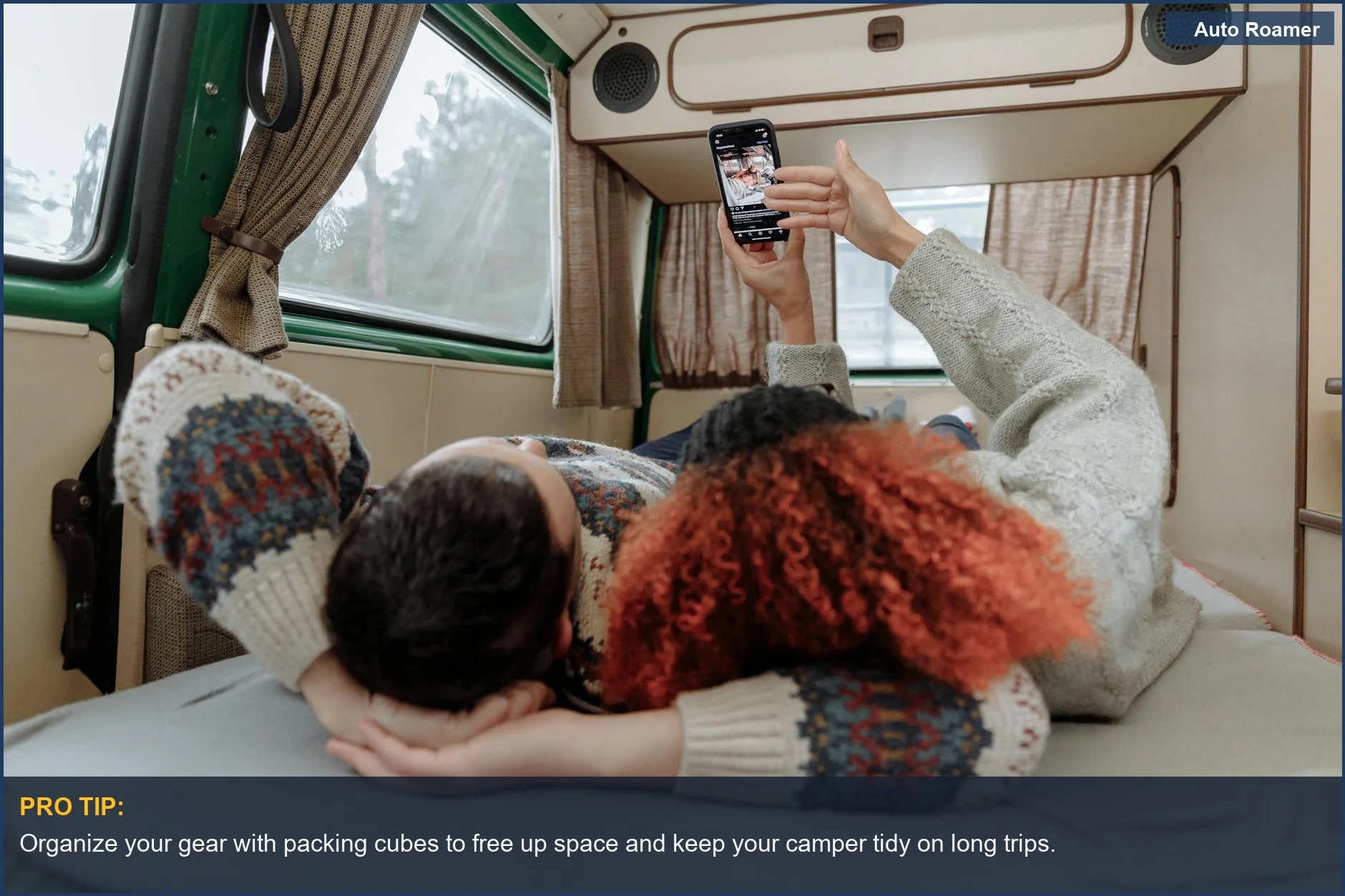
The most common layout by a wide margin is the rock-and-roll bed: a rear bench seat, certified for travel with seatbelts, that folds flat into a double bed at night. It is the heart of the classic VW-camper format because it does double duty — seating four to travel, sleeping two below (with two more upstairs if there is a pop-top) — and it keeps the van usable as a vehicle. Alongside it sits a side-kitchen unit, typically with a two-burner gas hob, a small sink, a compressor fridge, and storage, plus a swivelling front passenger seat that turns the cab into part of the living space.
The main layout families you will encounter are:
- Rock-and-roll bed with side kitchen: the classic, most flexible format — travels four, sleeps two to four, keeps daytime seating.
- Fixed rear bed over a 'garage': a permanent bed across or along the back with lockable storage beneath for bikes and gear — great for longer trips, but you give up the rock-and-roll seating flexibility.
- Pull-out or slatted convertible bed in a long-wheelbase van, balancing a roomy kitchen with a bed you make up each night.
Insulation, 12V electrics, lighting, and a heater (a diesel night heater is the common choice for cold-weather use) round out a proper conversion, and the quality of those hidden details separates a good professional build from a rushed DIY one. When viewing a converted van, look as hard at the wiring, the insulation, and the bed certification as at the visible cabinetry — the layout you see is only as good as the build you do not.
New vs Used vs Self-Build: Three Routes to a Transporter Camper
There is no single 'right' way to own a Transporter camper — there are three routes, and they suit very different budgets and temperaments. Knowing the trade-offs up front saves a lot of expensive second-guessing later.
A new professional conversion — buying a new Transporter and having an established converter fit it out, or buying a converter's ready-made new build — is the most expensive route but the most predictable. You get a warranty on the base vehicle, professional electrics and gas safety, certified travel seats, and a finished product from day one. A used converted camper is the value sweet spot for many buyers: someone else absorbed the steep new-conversion cost, and good Transporter campers hold value well, so a tidy used example can be both affordable and resaleable — provided you inspect the conversion quality carefully. A self-build (buying a panel van and converting it yourself) is the cheapest in cash terms and the most personal, but it demands real time, skill, and care — especially with the gas and 12V/240V electrical work, which must be done safely and to standard.
A quick way to match the route to the buyer:
- Go new-professional if you want a warranty, the latest van, and zero hassle, and the budget is there.
- Go used-converted if you want the best value and are willing to inspect (or pay to inspect) the conversion thoroughly before buying.
- Go self-build if you have the skills, the time, and the desire to build exactly what you want — and you respect the safety-critical jobs.
Whichever route you take, the single most valuable habit is treating the conversion as seriously as the van. A scruffy Transporter with an excellent professional conversion is a better buy than a pristine van with a dubious DIY fit-out, because the conversion is where the safety, the comfort, and most of the money live.
Two practical checks apply to all three routes. First, verify the paperwork that turns a converted van into a legal, insurable camper: in the UK that historically meant meeting the criteria a converted vehicle needs to be reclassified and insured as a motor caravan, and across Europe the equivalent registration and habitation details matter for insurance and resale. Second, insist on evidence of safe gas and electrical work — a documented professional installation, certified travel seats with proper belt mounts, and a habitation check — because these are the items that are invisible on a quick viewing yet decide whether the van is genuinely safe to sleep and travel in.
Pricing, Availability, and Who the Transporter Suits
The Transporter camper is fundamentally a European phenomenon, and being honest about that geography is essential to setting expectations — especially for readers in North America. The van and its conversion ecosystem are centred on the UK and continental Europe, where the Transporter is sold new and where thousands of converters operate.
On pricing, treat any figure as a broad guide rather than a quote, because conversion spec drives the total far more than the base van does. In the UK and Europe, a panel van to self-convert starts well below the cost of a finished camper; a quality used converted Transporter typically runs into the tens of thousands of pounds or euros; and a new professional conversion can climb substantially higher, approaching factory-California money once you add a pop-top, full furniture, electrics, and a heater. The exact number depends on generation, engine, mileage, roof type, and conversion quality — which is why the conversion, not the badge, is what you are really paying for.
The critical point for North American readers: VW has not sold the Transporter (or the California) new in the United States. The Transporter line is not part of VW's US range, so a Transporter camper in the US would have to be a grey-import — subject to the 25-year import rule for vehicles never federally certified here — rather than something you can buy from a dealer. US buyers drawn to the format are generally better served by VW's North American camper offerings or by domestic van platforms; do not assume a UK conversion company's product is available or road-legal to import new. Who, then, does the Transporter genuinely suit?
- European buyers wanting one van for daily life and weekends — a pop-top Transporter dailies easily and camps two to four.
- Couples and small families who value the rock-and-roll-bed format and car-park-friendly height over the bulk of a big motorhome.
- Buyers who care about resale — strong residuals make a good conversion a sensible long-term hold.
- People who want choice — new, used, or self-build, with a deep parts ecosystem behind every route.
If that profile fits and you are in Europe, the Transporter remains the benchmark conversion base for good reason. If you want the finished, warranted factory camper instead, the closely related VW camper van review and our California review are the natural next reads.