

The Short Answer: Which VW Camper Van Is Right for You
"VW camper van" is not one vehicle — it covers several very different machines, and choosing well means matching the right one to how you actually travel. Volkswagen currently builds two factory campers: the compact California, a pop-top van based on the Multivan/Transporter footprint, and the larger Grand California, a high-top, fully built-out motorhome based on the bigger Crafter chassis. Alongside them sits the electric ID. Buzz, which has real camper potential but no factory camper layout, and the long-standing route many owners still take: a custom Transporter conversion built to your own spec.
The short version, drawn from Volkswagen's published specifications and pricing, looks like this. Choose the California if you want a do-everything van that parks like a car, raises a roof bed when you camp, and folds back into a daily driver. Choose the Grand California if you want a proper motorhome with a fixed bed, an indoor toilet and shower, and room to stand up — accepting that it is far bigger to drive and park. Look at the ID. Buzz if going electric matters more than having a turn-key camper interior, and budget for an aftermarket sleep setup. Commission a Transporter conversion if you want exactly the layout, materials, and electrics you want, and you are comfortable managing a build.
One caveat sits over all of this for North American readers: as of 2026 none of these are sold as factory campers in the United States. The ID. Buzz is the only one offered through US dealers, and it arrives as a passenger van, not a camper. The rest of this guide breaks down each option by size, layout, sleeping capacity, powertrain, price, and that all-important availability reality, so the differences are concrete rather than vague.
Meet the VW Camper Van Lineup
Before comparing specs side by side, it helps to be clear on what each vehicle actually is, because the names get used loosely. These are four genuinely different propositions, not four trims of the same van.
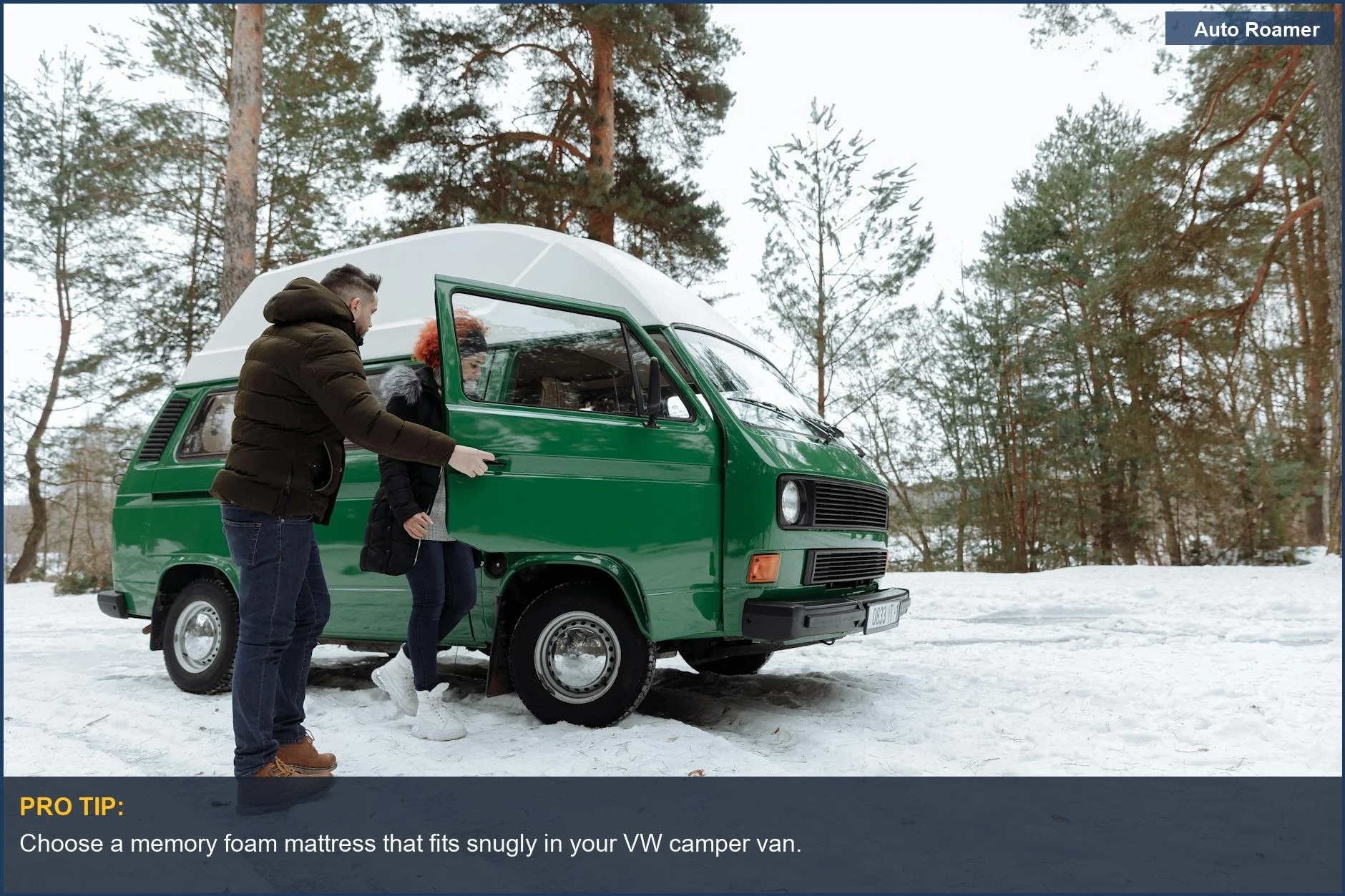
- VW California — the compact factory camper. Built on the Multivan/Transporter platform, it uses a pop-top (an elevating roof) to create a second sleeping berth and standing-ish headroom only when raised. It keeps a small kitchen unit, swivelling front seats, and seats that fold into a lower bed. Roughly the length of a large estate car, it is the easiest of the four to use as an everyday vehicle.
- VW Grand California — the big motorhome. Built on the larger Crafter van, it has a fixed high-top (a solid raised roof you can stand under), a permanent rear bed, a wet room with a toilet and shower, and a full kitchen. It is a self-contained home on wheels, and it drives and parks like the large van it is.
- VW ID. Buzz — the electric wildcard. The retro-styled, fully electric successor in spirit to the classic Microbus. Volkswagen sells it as a passenger van, not a camper; there is no factory pop-top or built-in kitchen. Its flat floor and long-wheelbase variants give it strong camper potential for an aftermarket or DIY conversion, but out of the box it is not a camper.
- Transporter conversion — the bespoke route. Buying a VW Transporter (or Multivan/Caravelle) panel or window van and having a converter — or yourself — fit a pop-top, bed, kitchen, and electrics. This is how camper vans were built long before the factory California existed, and it still offers the most freedom over layout and budget.
For a deeper single-model look, the dedicated reviews go further than this overview can: see the Volkswagen California camper van review, the broader VW camper van review, and the VW Transporter camper van review for the conversion base.
One more distinction is worth drawing early, because it shapes the whole comparison: two of these are finished products and two are starting points. The California and Grand California arrive from Volkswagen as complete campers — you choose a trim, and the kitchen, beds, electrics, and (on the Grand) bathroom are engineered, warrantied, and ready to use. The ID. Buzz and a Transporter both arrive as vans; the camping capability is something you, or a converter, add afterwards. That single difference explains a lot of what follows — the factory campers cost more up front but ask nothing of you to camp in, while the van-plus-conversion routes can cost less or far more, take time and decisions to complete, and ultimately reflect your choices rather than VW's. Knowing which kind of buyer you are — someone who wants to drive away camping today, or someone who wants to build exactly what they envision — narrows the field before you compare a single spec.
Size and Layout: Pop-Top vs High-Top
The single biggest dividing line in the VW camper range is roof type, because it drives almost everything else — height, headroom, bed configuration, and how the van handles in daily life. The choice is between a pop-top and a high-top.
A pop-top, as on the California, is a roof that stays low while you drive and elevates when you camp. The advantage is a low travelling height — the California sits around two metres tall with the roof down, so it clears most height-restricted car parks and parks in a normal bay. When raised, the pop-top creates an upper double berth and lets you stand more upright inside. The trade-off is that you have no full standing room while driving, and the canvas sides of a raised roof are less insulated than solid walls in cold or windy weather.
A high-top, as on the Grand California, is a permanent solid roof. You can stand up inside at any time, the bed is fixed and always made, and the insulation is far better. The cost is size: the Grand California is built on the much larger Crafter and is both longer and considerably taller, which rules out low car parks and makes tight urban parking a real consideration. The California measures roughly 4.9 metres long; the Grand California is offered in longer 6-metre and 6.8-metre body lengths, which is closer to a dedicated motorhome than to a van you would school-run in.
The rule of thumb: a pop-top buys you everyday usability at the cost of camping comfort, while a high-top buys you camping comfort at the cost of everyday usability. Almost every other difference between these vans flows from that one choice.
The ID. Buzz sits outside this split: it has a normal fixed car roof and no factory elevating roof at all, so any camper sleeping setup is something you add. A Transporter conversion lets you choose — most converters fit an aftermarket pop-top to keep the low driving height, but solid high-top conversions exist too if you prioritise standing room.
Interior layout follows from the roof and the chassis. Inside the California, the floor plan is built around flexibility: swivelling front seats turn to face the cabin, a sliding rear bench doubles as the lower bed, and a compact kitchen unit with a small fridge, a two-ring hob, and a sink tucks along one side. Everything has to fold, stow, or convert, because the same space is a five-seat van by day and a two-to-four-berth camper by night. The Grand California, by contrast, has the luxury of a fixed layout: a dedicated kitchen block, a separate wet room, and a permanent bed all keep their own space, so nothing has to be packed away to use the next feature. That fixed layout is the real reason it feels like a motorhome rather than a clever van. The ID. Buzz starts as an open passenger cabin, which is precisely what makes it a good conversion canvas — there is little built-in furniture to work around — while a Transporter conversion is a blank sheet where the converter places the kitchen, bed, and storage wherever the brief calls for.
Sleeping Capacity and Beds: How Many People, How Comfortably
How many people a VW camper sleeps, and how good those beds are, depends heavily on the model and roof. It is easy to read a headline "sleeps four" and assume they are all equal berths; in practice they are not.
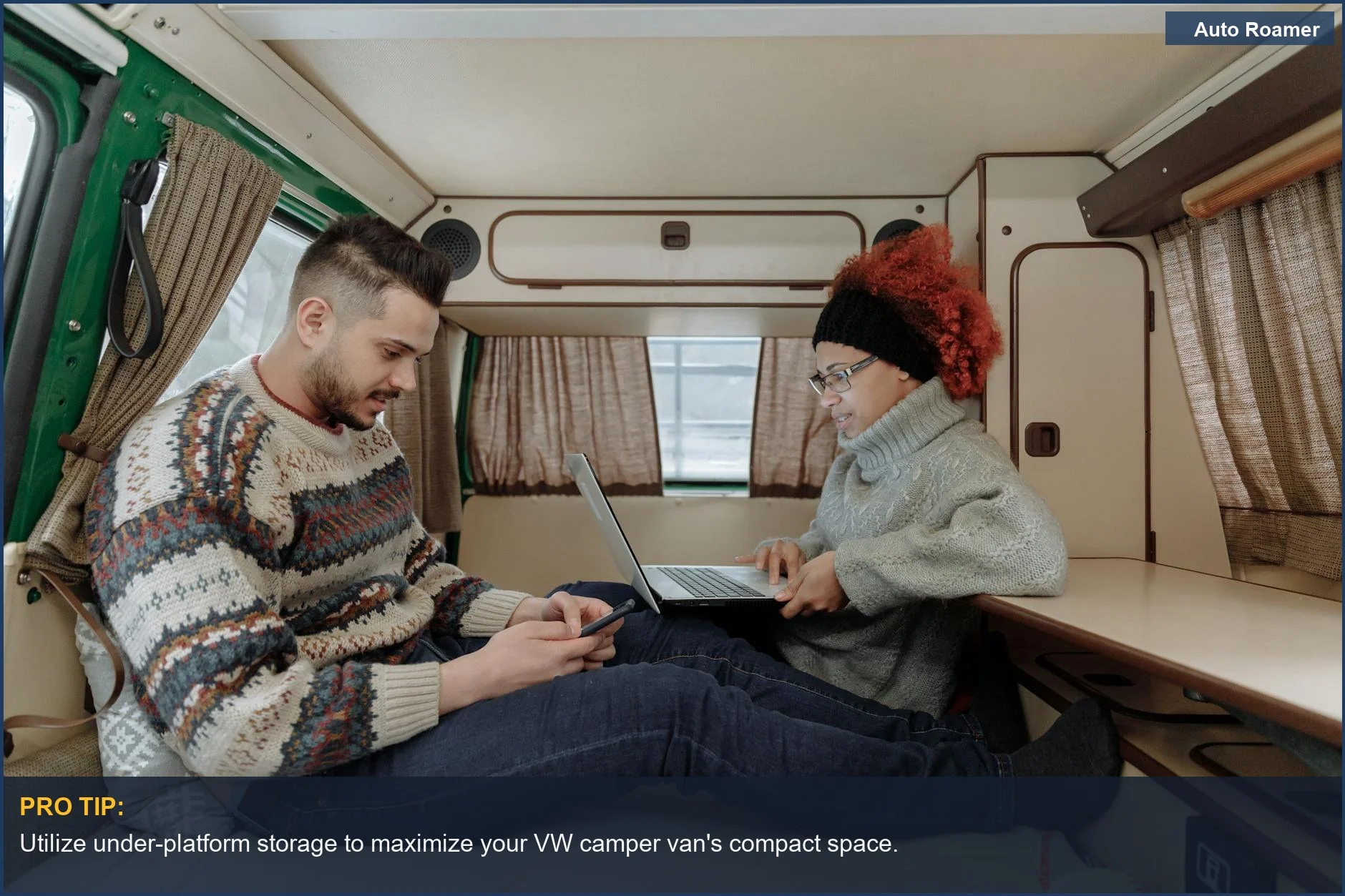
The California is the classic "sleeps four" configuration: two adults in the upper pop-top berth and two more on the lower bed formed by folding the rear bench flat. The upper berth is a genuine, comfortable double; the lower bed is shorter and firmer and is generally better suited to children or shorter adults. So while four people can sleep in a California, it is most comfortable for two adults (upstairs) plus up to two kids.
The Grand California takes a different approach with a permanent rear transverse double bed that is always set up, plus an optional pull-down bed over the cab on the longer body, allowing it to sleep up to four in proper, fixed berths. Because the beds are fixed rather than converted from seating, the sleeping comfort is closer to a small motorhome than to a fold-flat van.
The ID. Buzz has no factory bed at all. Its long-wheelbase version has a flat load floor with the rear seats folded or removed, which makes a single double mattress or a platform-bed conversion practical for two; sleeping more than two means an aftermarket pop-top, a roof tent, or a tow-along. A Transporter conversion is the most flexible of all — the same pop-top-plus-rock-and-roll-bed formula as the California is the most common, sleeping four, but you control mattress quality, bed size, and whether you fit an upper berth. For mattress and bedding choices that fit these vans, the model reviews above cover what owners actually use.
It is worth being realistic about what "sleeps four" means for daily comfort, because the number on a spec sheet rarely tells the whole story. In a California, raising and lowering the pop-top and converting the lower bench is a quick nightly ritual, but two adults plus two children share a single, compact space, and storage for everyone's gear gets tight fast. The Grand California's fixed beds remove that nightly conversion entirely — you can leave the bed made and the bedding in place — which is a meaningful comfort upgrade on longer trips, at the cost of the floor space those permanent beds occupy. For two people, almost any of these vans is comfortable; for a family of four, the Grand California's fixed sleeping is the easiest to live with, the California is workable for shorter stays, and the ID. Buzz or a conversion comes down entirely to how the build is specified. Be honest about who is actually sleeping where before you let a headline berth count drive the decision.
- California: upper pop-top double (comfortable for two adults) plus a shorter, firmer lower bed best for children — sleeps up to four.
- Grand California: fixed rear double plus an optional cab-over pull-down bed on the long body — sleeps up to four in always-made berths.
- ID. Buzz: no factory bed; a flat-floor mattress or platform sleeps two comfortably once converted.
- Transporter conversion: typically the California formula (pop-top plus rear bed) sleeping four, but bed size and quality are your call.
Powertrain and the Electric ID. Buzz Angle
Powertrain is where the lineup splits between conventional combustion and plug-in options and the fully electric ID. Buzz, and it is one of the most future-facing decisions in the comparison.
The California and Grand California are built on Volkswagen's commercial-van platforms and have historically used turbo-diesel (TDI) engines, which suit the long-distance, heavily-loaded driving campers do and return strong touring range from a tank. More recently Volkswagen introduced a plug-in hybrid (PHEV) California variant on the latest Multivan-based platform, pairing a petrol engine with an electric motor for a modest electric-only range around town plus the reassurance of the engine for longer trips. Diesel remains the workhorse choice for big mileage; the PHEV is the bridge for buyers who want some electric running without committing to a pure EV.
The ID. Buzz is the only fully electric option, and that is its whole appeal. It runs on a large lithium-ion battery driving an electric motor, with no tailpipe emissions and the quiet, smooth driving EVs are known for. The honest trade-off is range and charging: a fully electric van towing or carrying camping loads will see its range drop noticeably, and on a road trip you have to plan around the charging network rather than a two-minute fuel stop. For weekend trips and shorter electric adventures it is compelling; for long, remote touring it asks more planning than a diesel does. A Transporter conversion inherits whatever powertrain the donor van has — almost always diesel today — so it behaves like the California mechanically.
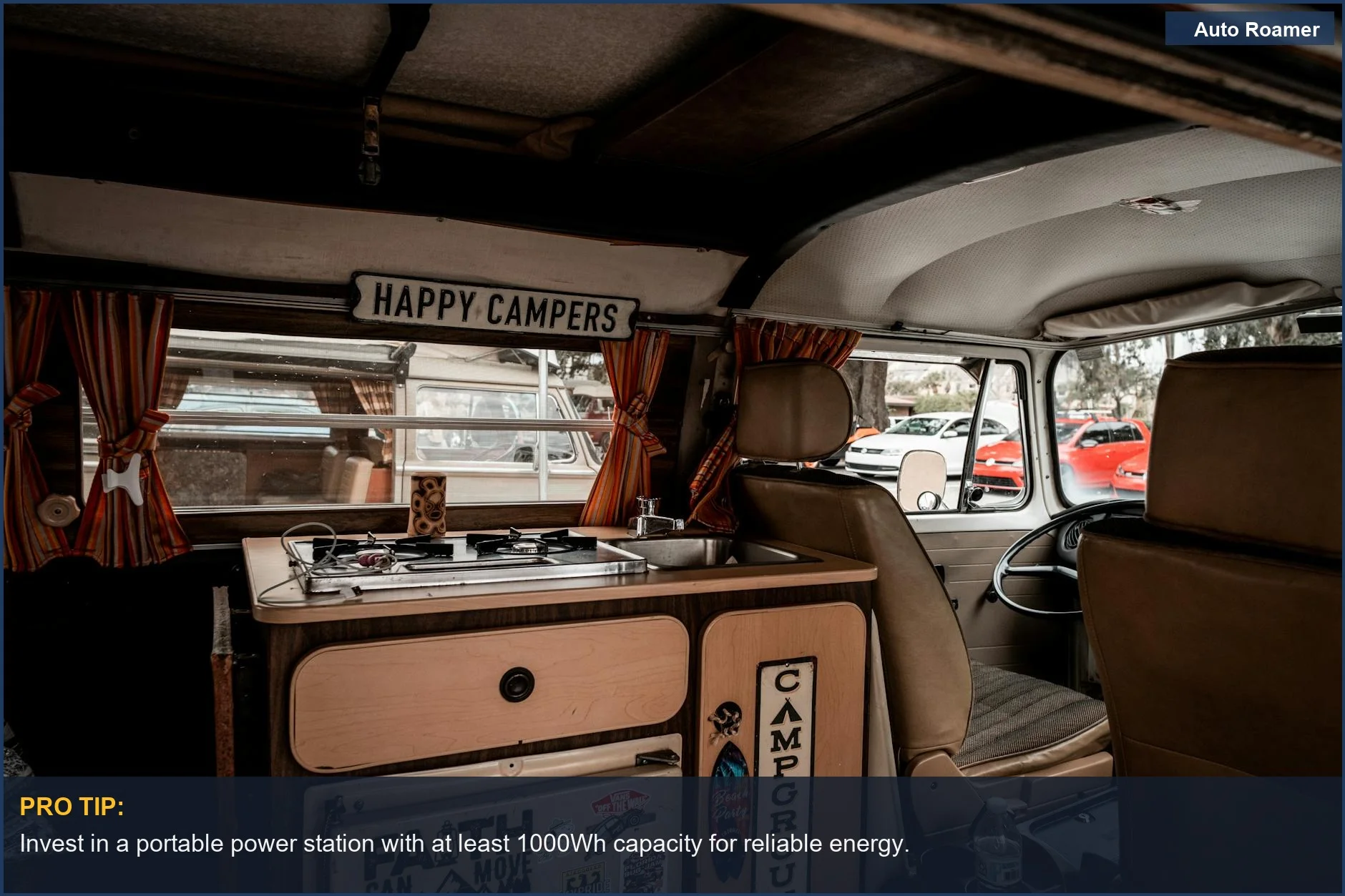
There is a practical camping dimension to powertrain beyond just driving, too. Diesel campers can run an auxiliary heater and a leisure battery topped up by the alternator or a hookup, and a diesel tank gives long unsupported range between fills — useful for remote, off-grid stays. A plug-in hybrid adds the ability to creep around a quiet campsite on electric power and to draw on its battery, while still carrying the engine as a backup. A pure-electric ID. Buzz can power devices and a conversion's electrics from a very large battery, which is genuinely useful at camp, but that same battery is what gets you home, so every kilowatt-hour spent on a kettle or a fridge is range you are not driving on. That tension — using the traction battery for camp life versus saving it for the journey — is the defining quirk of EV camping today, and it rewards trips planned around reliable charging rather than spur-of-the-moment dashes into the wilderness.
If the electric angle is your main interest, the dedicated VW electric camper van review goes deeper on range, charging, and what an EV camper realistically delivers.
Price and Value: What Each VW Camper Costs
VW campers are premium vehicles, and the price gaps between these four options are wide enough to be decisive on their own. The figures below are guide ranges based on published Volkswagen pricing and typical market positioning rather than a single quoted price, because trim, options, and region all move the number significantly.
- VW California — the most attainable factory camper, but still a premium purchase. In its core European markets it typically lands in the rough region of £60,000–£80,000 new depending on engine and equipment, with the new PHEV variant pushing toward the upper end. Used examples of earlier generations are the value entry point into a factory VW camper.
- VW Grand California — priced as the motorhome it is, generally above the California and well into motorhome territory once fully specified. You are paying for the fixed bed, wet room, larger chassis, and self-contained build.
- VW ID. Buzz — priced as a premium electric passenger van, not a camper, so the sticker does not include any camping kit. A realistic camper budget has to add the cost of a conversion or sleep setup on top of the vehicle, which can close the gap to a factory California surprisingly fast.
- Transporter conversion — the widest price range of all. A used Transporter plus a professional conversion can come in below a new factory California, while a high-end bespoke build with premium electrics and finishes can match or exceed one. This is the route for buyers who want to control where the money goes.
The value picture, in short: the California is the cheapest turn-key factory camper, the Grand California costs more because it gives you a full motorhome, the ID. Buzz looks cheaper until you add camping kit, and a conversion can be the best value or the most expensive depending entirely on the build you commission.
US Availability Reality: What You Can Actually Buy
This is the section North American readers most need, because the US camper-van picture is very different from Europe's, and the difference is easy to miss in glossy reviews shot abroad.
As of 2026, Volkswagen does not sell the California or the Grand California in the United States. Both are European products built on commercial vans VW does not market to US buyers, and they are not available through US dealers. That is why so much VW camper coverage features right-hand-drive vans, pounds-sterling pricing, and European roads — those vehicles are not on American forecourts. Importing one privately is possible only within the strict limits of US import law (broadly, the 25-year rule for older vehicles), which puts a new factory California out of reach for ordinary US buyers.
The ID. Buzz is the exception: Volkswagen does sell it in the US, but — importantly — as a passenger van, not as a camper. A US buyer can drive a new ID. Buzz off the lot, but it will not have a factory pop-top, bed, or kitchen; turning it into a camper means an aftermarket conversion or a DIY build. For Americans who specifically want a VW-badged camping vehicle from a dealer, the ID. Buzz plus a conversion is the only realistic factory-vehicle path.
That leaves US campers who love the VW camper format with two practical routes: build a camper on an ID. Buzz, or build one on an imported or US-market Transporter-family van where available — essentially the conversion approach. The factory California experience, much as it is admired, remains a European one for now. Anyone reading US-priced "VW California" listings should confirm carefully what is actually being sold and how it was brought into the country.
Bottom line for US readers: the ID. Buzz is the only one of these you can buy new from a Volkswagen dealer, and it arrives as a passenger van — so an American "VW camper" almost always means a conversion, not a factory California.
Verdict: Matching the VW Camper to Your Travel Style
There is no single best VW camper van — there is the best one for how you travel, and the four options separate cleanly once you are honest about your priorities.
If you remember one thing: the California is the everyday all-rounder, the Grand California is the comfort-first motorhome, the ID. Buzz is the electric base, and a Transporter conversion is the bespoke build. Pick by how you travel, not by the badge.
Choose the California if you want one vehicle that does everything: a daily driver that parks normally and pops its roof for a weekend away. It is the most versatile, the easiest to live with day to day, and the most attainable factory camper — ideal for couples, or two adults plus young children, who camp regularly but do not need a full bathroom.
Choose the Grand California if camping comfort outranks everyday convenience: a fixed bed that is always made, an indoor toilet and shower, standing room, and the self-sufficiency of a motorhome. Accept that it is big to drive and park, and that it is not the van you nip to the shops in. It suits longer trips, off-grid stays, and travellers who want a true home on wheels.
Look hard at the ID. Buzz if being electric is a priority and you are willing to add your own sleep setup; it is the future-facing choice and the only one US buyers can purchase new, but it is a camper base, not a finished camper. And commission a Transporter conversion if you want precisely the layout, electrics, and budget you choose, and you enjoy — or do not mind managing — a build. Whichever way you lean, read the dedicated California review, the full VW camper van review, and the VW Transporter review before you commit, because the right VW camper is the one that fits your trips, your driveway, and your budget — not just the one with the best badge.