
The Short Answer: The Bigger SUV Isn't the Better Bed
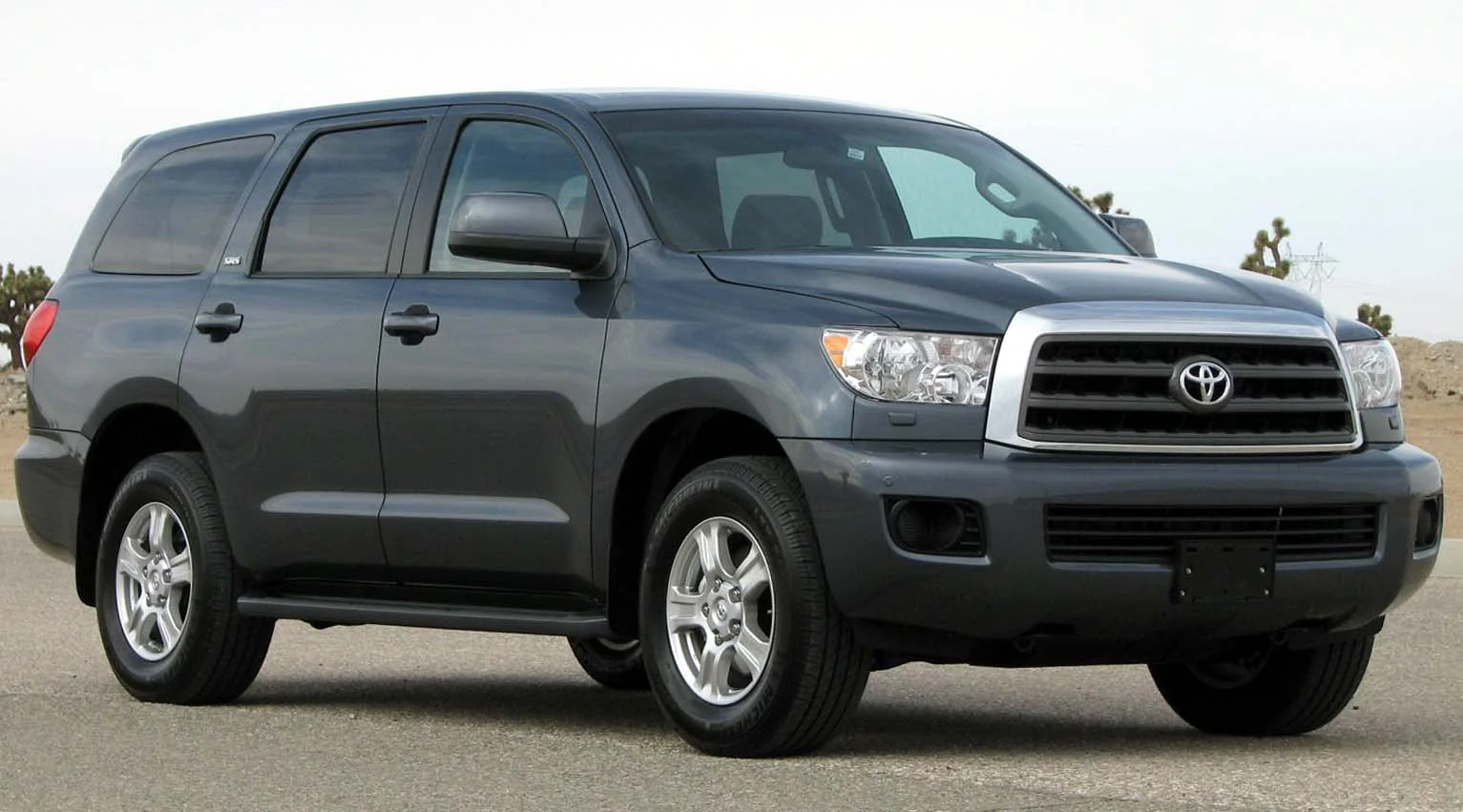
Two big three-row SUVs, one obvious assumption: the roomier one must be the better place to sleep the family. For once the assumption is wrong, and the number that overturns it is one neither brochure highlights. The Nissan Armada folds down to a genuinely flat load floor with about 7.5 feet of level sleeping length. The Toyota Sequoia, despite more towing muscle and a stronger outlet, does not, because its third row folds onto a raised, stepped floor you cannot lie flat on without building it up.
That single difference decides family car camping. The Armada gives you a level bed; the Sequoia gives you a slope with a step in it. Everything else the two SUVs argue about, cargo volume, towing, seating, outlets, matters far less than whether a parent and a kid can actually stretch out flat inside, and on that question the smaller-selling Nissan quietly wins.
This comparison verifies that claim against the published dimensions, then weighs the trade-offs the Sequoia offers in return, so you can decide honestly. The figures are Toyota's and Nissan's published specs where they publish them, with the flat-floor and sleeping-length details flagged as reviewer- and owner-confirmed, because the flatness of a folded load floor is exactly the kind of thing a spec sheet hides behind a cubic-foot number.
The Flat-Floor Test That Decides It
Start with the flaw, because it is the whole story. The third-generation Sequoia's third row slides and folds, but it does not fold flat into the floor. It leaves a raised, stepped, uneven load floor with a high lift-over, a direct consequence of packaging its i-FORCE MAX hybrid battery and solid rear axle under the cargo area. Fold the seats expecting a bed and you get a platform with a ledge in the middle of it.
The Armada does what you expect a big SUV to do. It folds down to a flat load floor with the second and third rows down, giving a genuinely level surface. Owners measure roughly 7.5 feet, about 90 inches, of flat length with both rows folded, enough for most adults to sleep fully stretched out. That is a real bed, not a compromise you engineer around.
By contrast, sleeping in the Sequoia with the seats folded means adding a leveling platform or a thick pad to bridge the step, since the folded third row and hybrid packaging create that stepped floor. It is doable, but it is a build project, not a lie-down. The single biggest car-camping differentiator between these two SUVs is this: the Armada's load floor is flat with the rows folded, and the Sequoia's is not.
Width is not the issue for either. The Sequoia is 208 inches long and 79.8 inches wide overall, so the space between its wheel wells comfortably clears a 25-inch pad; the stepped floor, not the width, is the limiting factor. The Armada shares that generous width with the crucial addition of a level surface to use it on. When you are choosing a family bed, flatness beats every other cargo number, and only one of these SUVs delivers it from the factory.
Cargo Volume: Close on Paper, Different in Practice
The raw cargo numbers are closer than the sleeping verdict suggests, which is exactly why they mislead. The Sequoia offers 22.3 cubic feet behind the third row, 49 cubic feet with the third row folded, and 86.9 cubic feet maximum with the second and third rows folded. The Armada offers 16.5 cubic feet behind the third row, 49.9 cubic feet with the third row folded, and 95.4 cubic feet maximum, about 8.5 cubic feet more than the Sequoia.
So the Armada holds more at maximum, and it holds it on a flat floor, a double advantage for camping. But notice how little the behind-the-third-row and third-row-folded numbers separate the two: for daily errands and grocery runs, these SUVs carry nearly the same amount. The cargo spec that actually matters for camping is the maximum-folded figure, and there the Armada leads both on volume and, decisively, on usability.
This is the trap of shopping on a single cubic-foot number. The Sequoia's 86.9 cubic feet sounds like plenty, and it is, for gear. But cubic feet do not tell you the floor is stepped, so a buyer comparing only the volume figures would never see the flaw that ends up mattering most. Always ask what shape the space is, not just how much of it there is.
There is a second-order effect worth noting for families. On the Sequoia, the leveling platform you build to fix the stepped floor sits on top of the cargo area, which raises your sleeping surface and eats into the vertical space between the floor and the roof. So the Sequoia does not just start with a worse floor; the fix for it costs you headroom you would keep in the Armada. The Armada's flat floor lets you sleep low and keep the full ceiling height above you, which matters when a parent wants to sit up to tend a child in the night.
Where the Sequoia Fights Back: Towing and Power
The Sequoia does not lose everywhere, and honesty requires laying out where it wins. It is rated to tow up to 9,520 pounds with its i-FORCE MAX hybrid V6, against the Armada's 8,500 pounds, roughly 1,000 pounds more. For a family that tows a camper trailer, a boat, or a pair of jet skis to the campground, that towing margin is a genuine, usable advantage the Armada cannot match.
Camp power favors the Sequoia too. It includes a 120V, 400-watt AC power outlet in the rear cargo area, strong enough to run small camp appliances. The Armada offers a 120V household-style AC outlet in the second row on SL and up, but Nissan lists it as intended for compatible low-wattage devices rather than a high-output unit. If running an appliance at camp matters, the Sequoia's 400-watt outlet is the better tool.
So the trade is real and specific: the Sequoia hands you more towing and more usable power, and the Armada hands you a flat bed and more maximum cargo. Which set of advantages wins depends entirely on how your family camps. Tow a trailer and run appliances, and the hybrid packaging that ruins the Sequoia's floor pays you back in capability. Sleep inside the SUV, and none of that offsets a stepped floor.
Seating and the Second-Row Choice
Both SUVs seat a family with room, and the configuration choice affects both passenger count and camping layout. The Sequoia seats 7 with second-row captain's chairs on Capstone and higher trims, or up to 8 with a second-row bench on lower trims. The Armada seats up to 8 with a second-row bench, or 7 with available captain's chairs on SL and Platinum, while the SV is bench-only and the Midnight Edition is captain's-only.
The relevant detail for camping is that only the bench setups reach the full 8-passenger count in either SUV. If you need to seat eight and sleep the family, a bench-equipped trim of either is the starting point, and it changes how the second row folds into the sleeping area. Captain's chairs leave a gap between them that a bench does not, which matters when you are trying to build a continuous surface.
For most camping families the practical advice is to match the second-row configuration to how you actually travel: a bench for maximum people and a more continuous fold-down surface, captain's chairs for comfort and walk-through access at the cost of that center gap. Neither choice fixes the Sequoia's stepped floor, but a bench does give you a slightly more uniform base to build a leveling platform on.
Think through the sleeping arithmetic before you pick a trim. Two adults and two small kids is a common car-camping load, and in the Armada's roughly 90 inches of flat length you can lay two people head-to-toe with kids across the width, all on one level. In the Sequoia, the same family is negotiating a stepped floor plus, on captain's-chair trims, a center gap, so the second-row choice compounds with the floor problem rather than sitting apart from it. If you are buying either SUV to sleep four, the bench trim on a flat-floor Armada is the simplest path to everyone lying level.
Building a Bed in Each One
In the Armada, the build is barely a build. Fold the second and third rows to the flat floor, roll out pads across the roughly 90 inches of level length, and you have a family bed that fits most adults stretched out. The flat surface means a simple foam pad or an SUV air mattress sits properly without sagging into a step, which is the entire advantage of starting level.
In the Sequoia, the build is the price of entry. Because the folded third row and hybrid packaging leave a stepped, uneven floor, you need a leveling platform or a thick pad to create a flat sleeping surface. A set of cargo-leveling cushions or a plywood platform sized to bridge the step turns the Sequoia's ledge into a usable bed, but it is gear you must buy, build, and store, and it eats into the cargo space you fold the seats to gain.
The honest framing: the Armada is ready to sleep in with pads, and the Sequoia is ready to sleep in with pads plus a leveling solution. That extra step is not a dealbreaker for a family that already builds out their vehicle, but it is a real, recurring difference every single night you camp. The Sequoia cargo-dimensions guide and the Armada cargo-dimensions guide detail the surfaces you are working with.
The Skeptic's Take on the Cubic-Foot Number
It is worth pausing on why this comparison surprises people, because the lesson generalizes. Both SUVs advertise big, similar maximum cargo volumes, 86.9 cubic feet for the Sequoia and 95.4 for the Armada, and a shopper naturally reads those as interchangeable sleeping spaces. They are not, and the spec sheet gives you no way to know that.
The cubic-foot figure measures volume, not flatness. A stepped floor and a flat floor can enclose nearly the same volume while offering completely different beds, and only the flat one lets you sleep without a build. This is the single most common mistake families make shopping a big SUV for camping: trusting the volume number and discovering the floor's shape only after the seats are folded in a dark campground.
So verify the floor, not just the volume. Before you buy either SUV for camping, fold the seats at the dealer and lie down in the cargo area yourself. The Armada will feel like a bed; the Sequoia will feel like a bed with a ledge under your hips. Two minutes of real testing beats any cubic-foot comparison, and it is the check that would have saved every surprised Sequoia camper the trouble.
Who Should Buy the Armada
Buy the Armada if sleeping the family inside the SUV is a real priority. Its flat load floor, roughly 90 inches of level length, and class-leading 95.4 cubic feet of maximum cargo make it the better bed by a clear margin, ready to camp in with nothing more than pads. For families who car camp regularly and value a level surface over a spec-sheet win, it is the honest choice.
The Armada also suits families who want maximum cargo and seating without a build project. Its flat floor swallows gear as easily as it holds a bed, and the up-to-8 bench configuration seats a full family. You give up about 1,000 pounds of towing and a high-output outlet, but you gain the one thing that makes SUV camping actually comfortable: a place to lie flat.
Accept the trade going in. If your family tows a heavy trailer or runs camp appliances, the Armada's lower 8,500-pound rating and low-wattage outlet are real limits. But for the family whose camping is about reaching a site and sleeping inside, none of that outweighs the flat floor, and the Armada is the SUV that gets the fundamentals right.
Who Should Buy the Sequoia
Buy the Sequoia if towing and power lead your list and you will build out the sleeping area anyway. Its 9,520-pound tow rating and 120V, 400-watt outlet are genuine advantages for a family that hauls a trailer or boat and runs appliances at camp, and if you already plan a leveling platform, the stepped floor becomes a solved problem rather than a dealbreaker.
The Sequoia also makes sense for buyers who value its hybrid i-FORCE MAX drivetrain and Toyota's reputation, and who see the vehicle as a tow rig first and a sleeping platform second. For weekend trailer camping where you sleep in the trailer, not the SUV, the stepped floor never matters and the towing muscle is exactly what you want.
Go in clear-eyed about the floor. If you intend to sleep inside the Sequoia, budget for a leveling solution from the start and treat it as required gear, not an afterthought. The i-FORCE MAX packaging that gives you the towing and the outlet is the same packaging that raised and stepped the floor, so you are buying both sides of that trade together. For a tow-and-power family that builds their bed, it is a fair one.
The Verdict: Flat Floor or Big Numbers
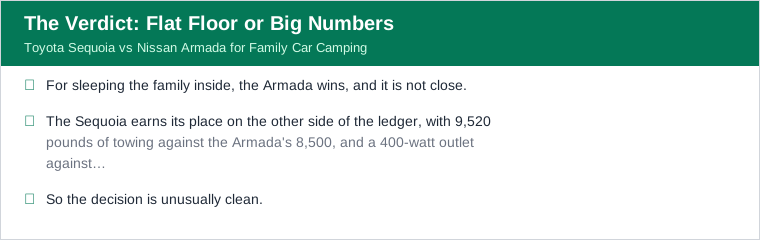
For sleeping the family inside, the Armada wins, and it is not close. Its flat load floor, roughly 90 inches of level length, and 95.4 cubic feet of maximum cargo make a genuine bed with nothing but pads. The Sequoia's third row folds to a raised, stepped floor that needs a leveling platform before anyone sleeps flat, and no amount of cargo volume changes that.
The Sequoia earns its place on the other side of the ledger, with 9,520 pounds of towing against the Armada's 8,500, and a 400-watt outlet against the Armada's low-wattage one. For families who tow heavy or run appliances, those are real, usable wins, and the stepped floor is a solvable inconvenience if you build the bed out. The hybrid drivetrain that compromises the floor is the same one delivering that class-leading tow rating, so you are buying the trade whole, not choosing one side of it.
So the decision is unusually clean. Sleep inside the SUV and value a level bed, choose the Armada. Tow a trailer, run power, and either sleep in the trailer or build out the cargo floor, choose the Sequoia. Just do not choose on the cubic-foot number alone, because it hides the one difference, floor flatness, that decides whether your family sleeps comfortably or on a ledge. Fold the seats and lie down before you sign anything.