
The Science of Temperature Regulation in Car Cabins (2026 Complete Guide)
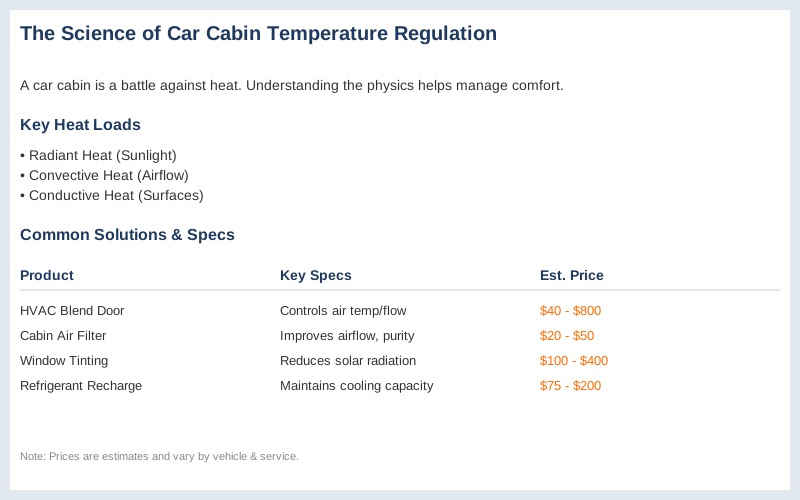
The dealer wanted $1200 to 'diagnose' why my 2017 F-150 felt like a convection oven in July. They'd probably tell me my HVAC blend door actuator was bad, charge $800 to replace a $40 part, and still miss the fundamental physics of heat transfer.
The dealer wanted $1200 to 'diagnose' why my 2017 F-150 felt like a convection oven in July. They'd probably tell me my HVAC blend door actuator was bad, charge $800 to replace a $40 part, and still miss the fundamental physics of heat transfer. It's not rocket science, it's just thermodynamics. Your car's cabin is a metal box, and that box is constantly fighting a losing battle against radiant, convective, and conductive heat loads.
Alibaba's insights on car warm-up touch on this, but they don't get into the nitty-gritty of why your butt is sweating. That's my job.
Most people think 'AC on, problem solved.' Brilliant. But the system is more complex than a simple on/off switch. There's an entire ecosystem of sensors, actuators, and refrigerant cycles trying to maintain a comfortable 72 degrees F inside a rolling greenhouse. And when one piece of that system starts to fail, your comfort goes out the window, literally.
Think about it: even if you're just sitting in traffic, the solar radiation hitting your roof can push the interior surface temperature of a dark dashboard past 180 degrees F. A study on land transport cabins highlights the pressure changes, but the real killer is the thermal load. That heat then radiates and convects into the cabin air, making your AC unit work overtime just to keep pace.
Then there's the mechanical stress. HVAC systems aren't designed for infinite duty cycles. The refrigerant lines vibrate, the compressor clutch cycles, and blend doors constantly adjust. Every one of these actions introduces wear, fatigue, and potential failure points. And the moment a seal weeps or a servo motor binds, your interior temperature control goes to hell.
I've seen HVAC systems fail for reasons ranging from a 50-cent O-ring to a poorly routed wiring harness rubbing through insulation. It's all about understanding the failure modes: material degradation, electrical shorts, or mechanical binding. Everything else is just a symptom.
Don't let some dealership tech with a fancy scanner tell you it's 'magic.' It's physics. And physics, unlike a dealer, doesn't lie or charge you $200 for a visual inspection.
Understanding the science of temperature regulation in car cabins
The fundamental battle for cabin comfort is against the three heat transfer mechanisms: conduction, convection, and radiation. Your car is constantly trying to shed or absorb thermal energy through these pathways. ScienceDirect's review on automotive cabin soak temperature dives into this, especially when parked in direct sunlight.
Conduction is heat moving directly through materials. Hot pavement radiating heat to your car's chassis, which then conducts it through the floor pan and into the cabin. Or the sun heating the metal roof, and that heat conducting through the sheet metal and headliner. Every material has a thermal conductivity coefficient, and car designers try to pick ones that resist heat transfer.
Convection is heat transfer through fluid movement - air or liquid. When your AC is blowing cold air, it's removing heat from the cabin through forced convection. Conversely, when hot air from the engine bay or exhaust system circulates near the cabin, it's adding heat through natural convection. This is why proper underbody shielding is critical; it creates a thermal barrier, reducing unwanted airflow.
Radiation is electromagnetic waves. The sun's infrared radiation blasting through your windshield is the biggest contributor to cabin heat gain. This is the greenhouse effect: short-wave radiation enters, heats the interior surfaces, which then re-radiate long-wave infrared that can't easily escape. Another ScienceDirect article reinforces how critical this is for parked vehicles.
The HVAC system fights these forces with refrigerant, a compressor, an evaporator, and a condenser. The compressor pressurizes the refrigerant, raising its temperature. It then flows to the condenser, where it releases heat to the outside air. The now-cooler liquid refrigerant then passes through an expansion valve, dropping its pressure and temperature dramatically. This super-cold, low-pressure refrigerant then enters the evaporator core inside the cabin. Here, it absorbs heat from the cabin air, cooling it down.
The refrigerant then returns to the compressor to restart the cycle. This is a continuous thermal exchange system, designed to move heat from where you don't want it to where you don't care about it. Every component has specific thermal tolerances and a failure rate.

the science of temperature regulation in car cabins in Detail
1. Solar Load Management: The primary thermal assault on your cabin comes from solar radiation. A dark dashboard can reach 185 degrees F in direct sunlight. This isn't just surface heating; it's a massive radiant heat source inside the cabin. A thermal analysis of a Hyundai i10 shows this greenhouse effect clearly. Window tinting reduces the transmission of solar energy, directly lowering the radiant heat load.
2. HVAC System Mechanics: The AC system's job is to move heat. The compressor, driven by the engine, is a mechanical pump that cycles refrigerant. This increases the refrigerant's pressure and temperature to around 200 PSI and 180 degrees F. This high-pressure, high-temperature gas then flows to the condenser, usually in front of the radiator.
3. Heat Rejection (Condenser): The condenser is essentially a small radiator. Ambient air flowing over its fins carries away the heat from the refrigerant. This phase change, from hot gas to warm liquid, is critical. If airflow is restricted-say, by leaves or bent fins-the system efficiency tanks, and head pressure rises, stressing the compressor.
4. Pressure Drop and Evaporation: The liquid refrigerant then passes through an expansion valve or orifice tube. This creates a drastic pressure drop, often from 200 PSI down to 30 PSI, causing the refrigerant to flash into a super-cold vapor, sometimes as low as 35 degrees F. This is where the magic happens.
5. Cabin Air Cooling (Evaporator): The cold refrigerant enters the evaporator core, located inside your dashboard. Cabin air is blown across these cold fins. The refrigerant absorbs heat from the air, cooling it. Condensation also occurs here, removing humidity. This study on car cabin environments emphasizes the role of humidity.
6. Air Distribution and Blend Doors: Once cooled, the air is routed through ducts to various vents. Blend doors, controlled by electric actuators, mix hot air from the heater core with cold air from the evaporator to achieve the desired temperature. A faulty blend door actuator, a common failure, can leave you with only hot or only cold air, regardless of your setting. The servo motor often strips its plastic gears, leading to mechanical play and inaccurate positioning.
7. Sensors and Control Logic: Temperature sensors throughout the cabin and in the HVAC ducts provide feedback to the climate control module. This module uses algorithms to constantly adjust fan speed, blend door position, and compressor cycling to maintain the set temperature. It's a closed-loop control system, constantly reacting to changes in thermal load. If a sensor drifts out of tolerance, the entire system misinterprets the thermal state.
Common Questions About the science of temperature regulation in car cabins
Why does my AC blow cold for 5 minutes, then warm up?
This is often a low refrigerant charge. When the system runs, the low pressure side drops too far, triggering the low-pressure switch to cycle off the compressor. The pressure then equalizes slightly, allowing the compressor to kick back on for a few minutes. You're likely 0.5 to 1.0 pounds of R-134a short. An experimental study on vehicle cabin temperature shows how critical proper system operation is.
My car's heater takes forever to get warm. What's the deal?
Could be a stuck-open thermostat, preventing the engine coolant from reaching operating temperature efficiently. Or, if you've got air in the cooling system, it could be vapor locking the heater core, preventing hot coolant flow. Check your coolant level first. A faulty water pump impeller could also reduce flow velocity.
Does running my AC on recirculate actually help?
Absolutely. When you're on recirculate, the AC system is cooling the air already inside the cabin. This air is typically cooler and drier than the hot, humid outside air. This reduces the thermal load on the evaporator, improving efficiency and cooling performance. It's basic thermal recycling.
My car smells like coolant when the heat is on. Is that bad?
Yes, that's bad. That's usually a leaking heater core, located behind your dashboard. Coolant is evaporating on the hot fins, and the vapor is entering the cabin. This is a significant mechanical failure. The outgassing of glycol is not something you want to be inhaling. Get that fixed before you're dealing with a soaked carpet and potential electrical shorts.
Can a dirty cabin air filter really affect my AC performance?
Definitely. A clogged cabin air filter restricts airflow across the evaporator core. Less airflow means less heat transfer from the cabin air to the refrigerant. This reduces cooling capacity and can even lead to the evaporator freezing up due to insufficient heat load. Research on thermal comfort models emphasizes how airflow impacts comfort.
Tips and Best Practices
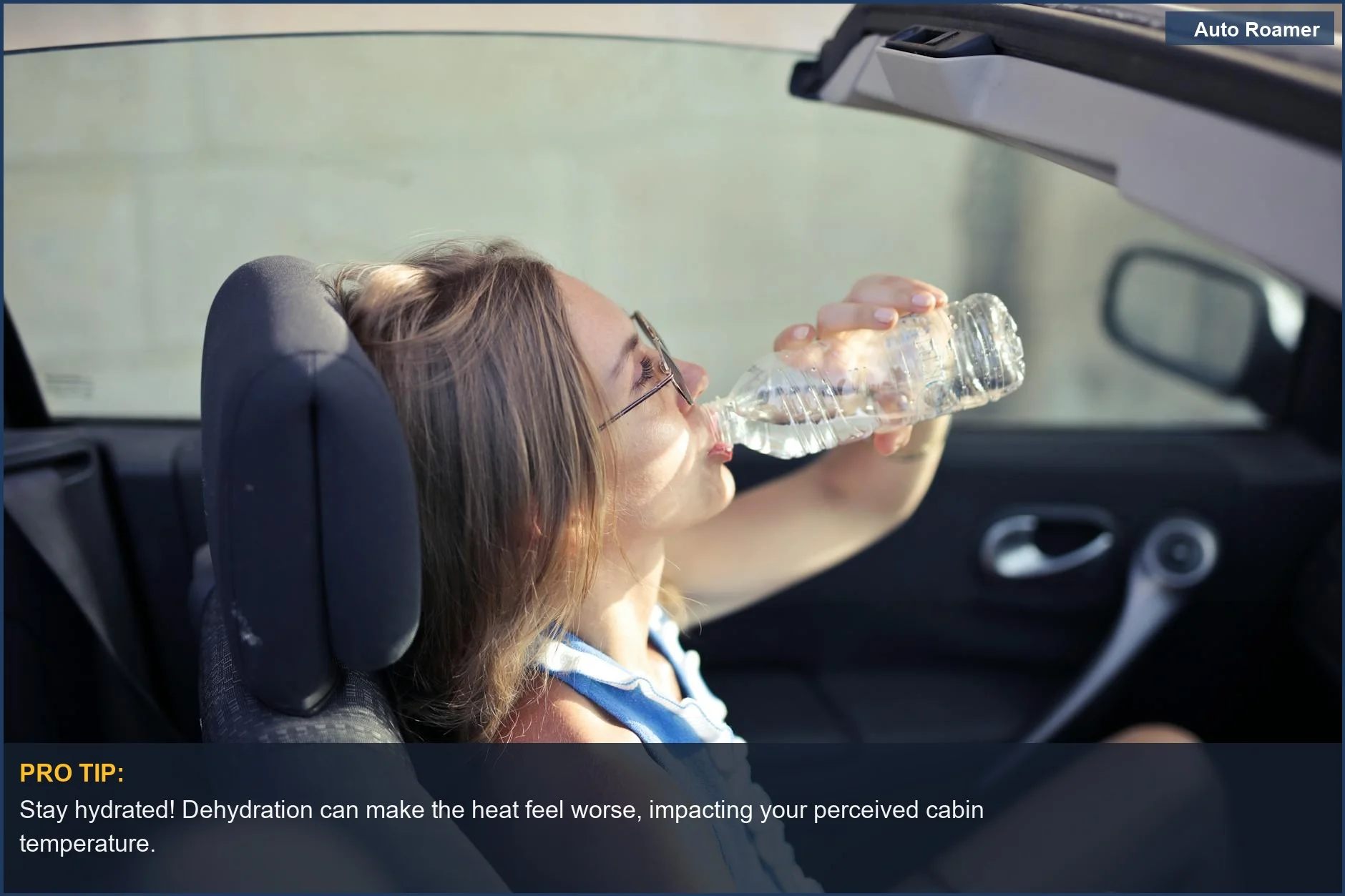
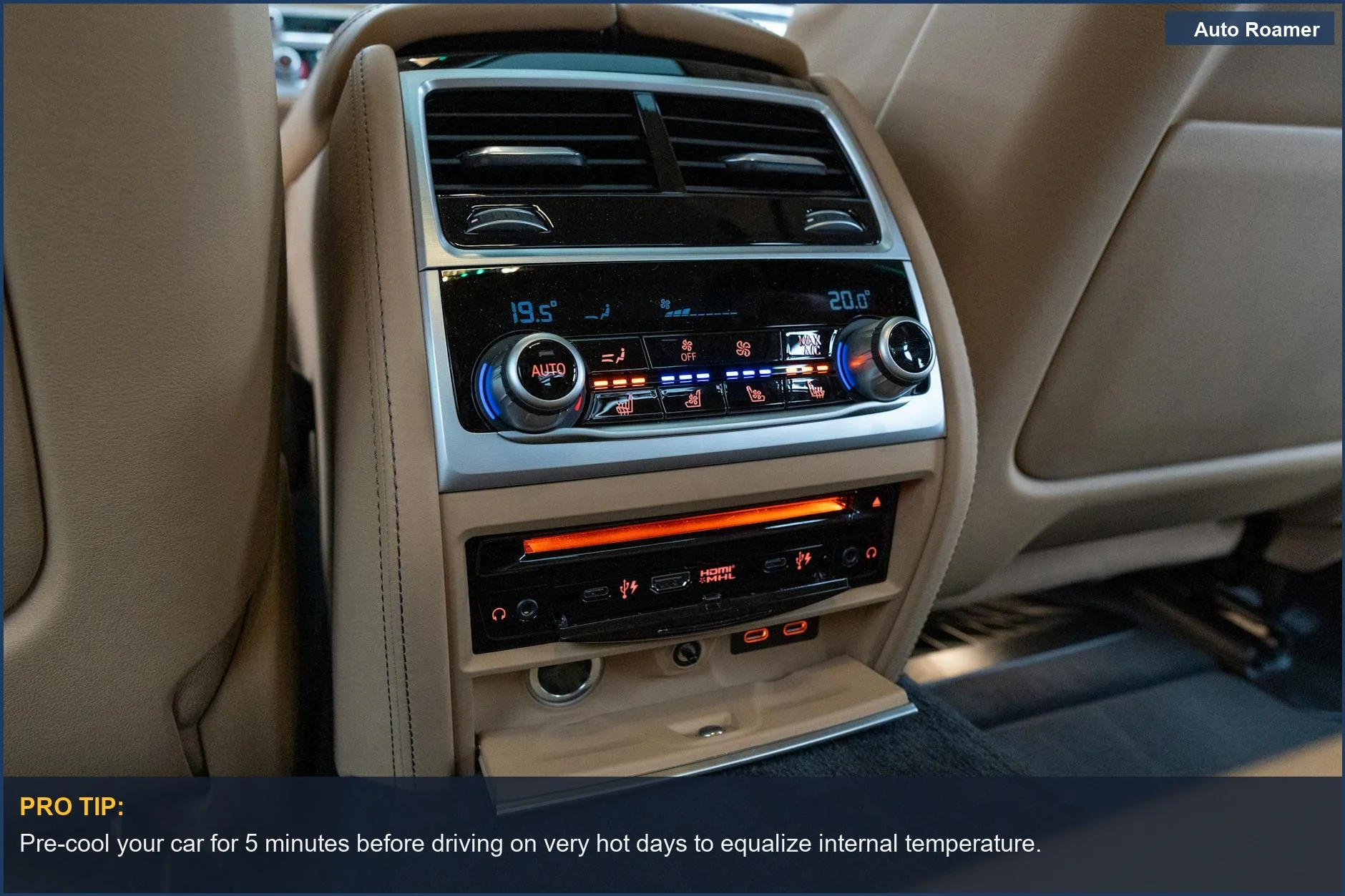
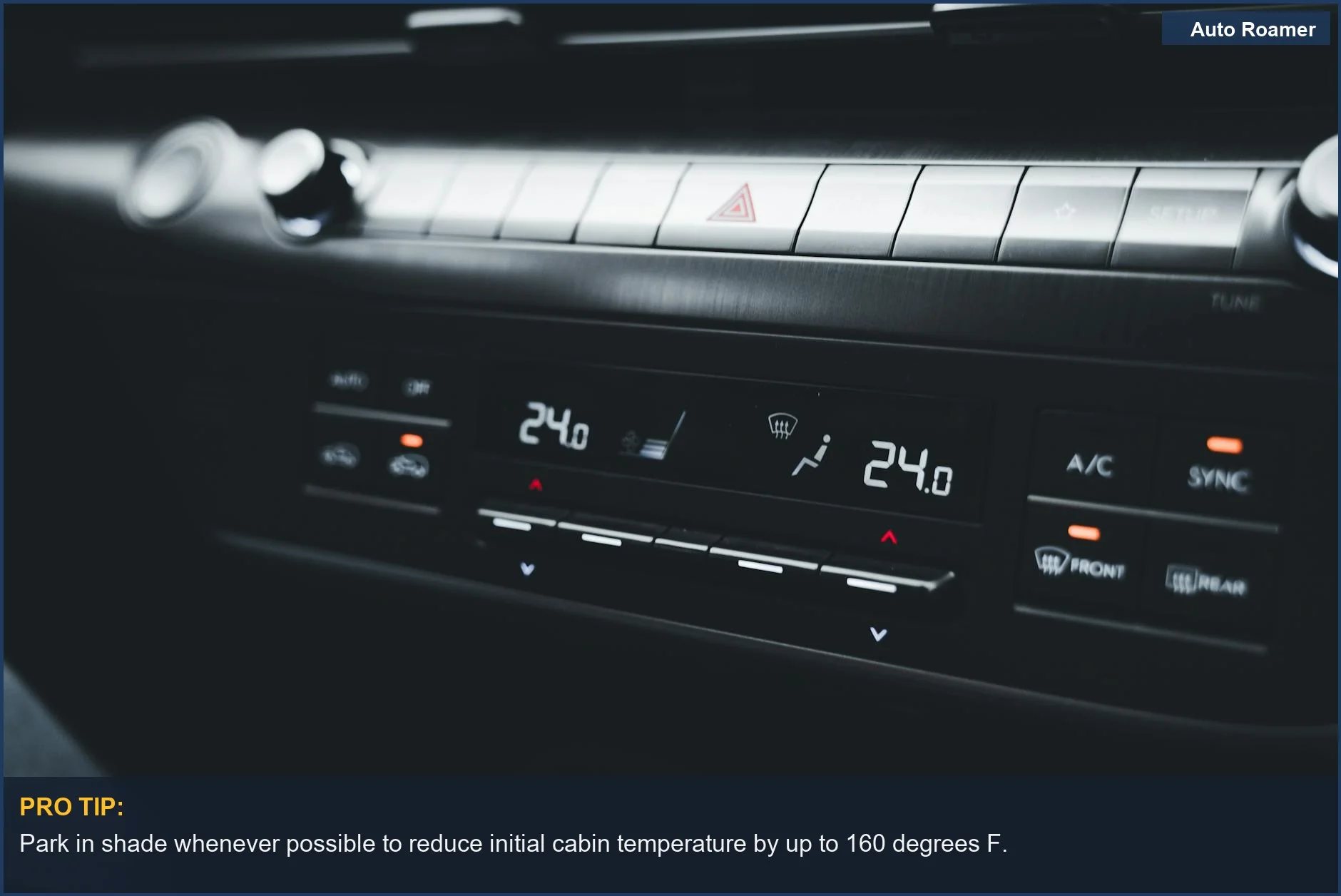
1. Park Smart: If you can, park in the shade. It's not rocket science. Reducing direct solar radiation on your car's exterior, especially the roof and glass, dramatically decreases the initial thermal load. This means your AC doesn't have to work as hard to pull the cabin down from 160 degrees F.
2. Window Tinting: Install quality window tint. This isn't just for looks. A good ceramic tint can block up to 90% of infrared radiation and 99% of UV rays. This directly reduces the radiant heat entering the cabin, making the AC's job significantly easier. It's a permanent reduction in heat gain, not a temporary fix.
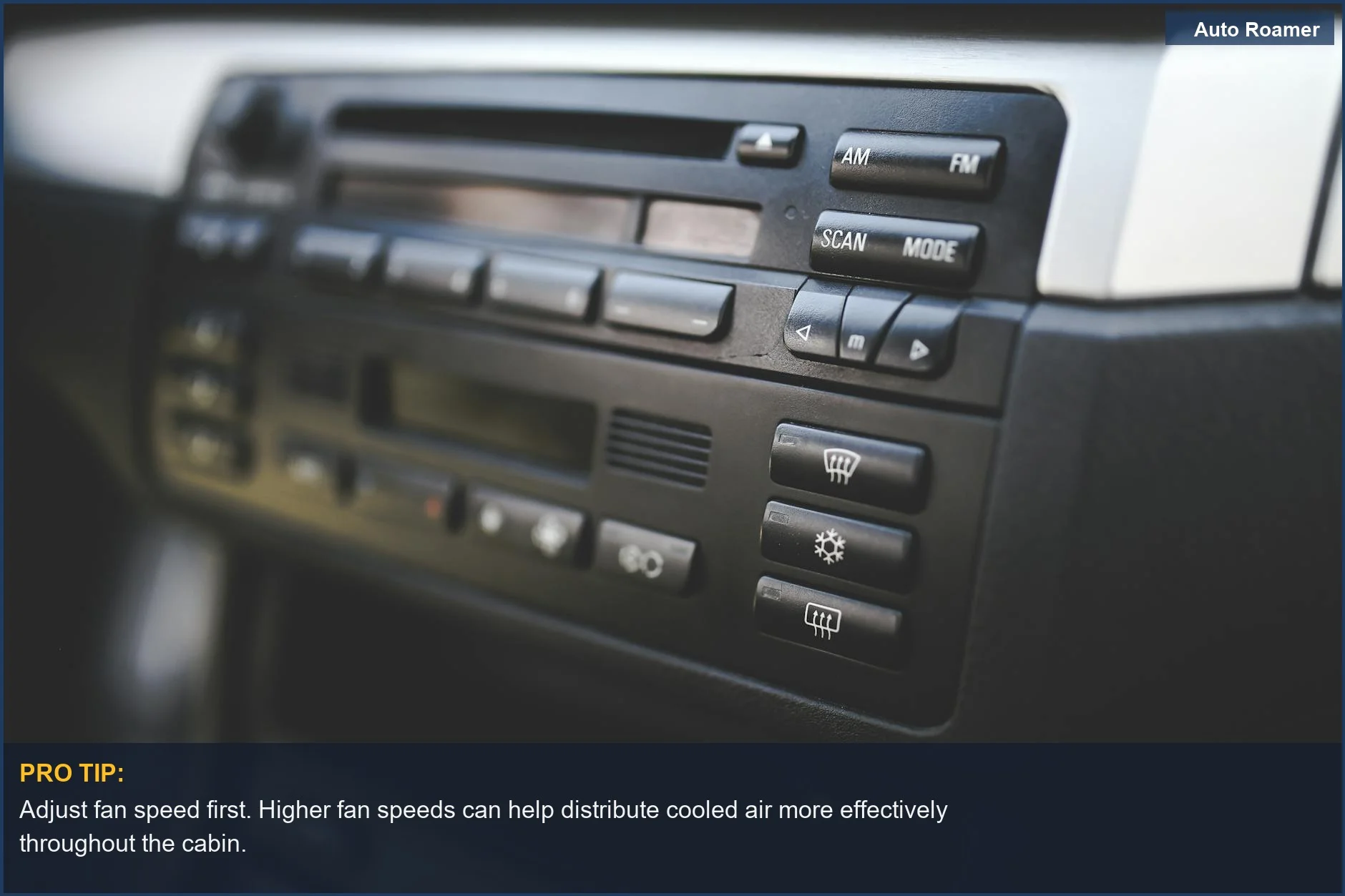
3. Ventilate Before Entry: Before you even get in, open the windows for 30 seconds. This allows the superheated air, which can reach 140 degrees F, to escape via convection. Then, crank the AC on high with the windows down for another 30 seconds to purge more hot air before closing them and switching to recirculate. It's a simple thermal purge.
4. Check Your Cabin Air Filter: Replace your cabin air filter every 15,000 miles, or more often if you drive in dusty conditions. A clogged filter restricts airflow to the evaporator, reducing cooling efficiency and potentially causing the evaporator to freeze up. It's a $20 part and takes 5 minutes to swap in most cars. The market for cabin air temperature sensors exists because clean airflow is critical.
5. Regular AC System Check: Have your AC system checked annually, especially for refrigerant levels. A system that's 20% low on refrigerant will still blow cool air, but it will work harder, consume more fuel, and put unnecessary mechanical stress on the compressor. A professional can check for leaks and proper charge using a manifold gauge set, ensuring optimal system pressure and performance.
6. Clean Your Condenser: Periodically inspect your condenser for debris like leaves, bugs, or road grime. Use a soft brush and water to gently clean the fins. Restricted airflow over the condenser means less heat rejection, leading to higher system pressures and reduced cooling. Don't use a pressure washer; you'll bend the delicate fins and reduce its efficiency.
Real-World Examples
1. The Black SUV in Arizona: A customer's black 2020 Tahoe, parked for 4 hours in 105 degrees F direct sunlight, had an initial cabin temperature of 168 degrees F at the dashboard surface. The AC system, even on max, took 22 minutes to bring the cabin air temperature down to 80 degrees F. This highlights the massive thermal inertia of a sun-soaked interior. Wells PPWF discusses how tinting reduces cabin heat.
2. The 2015 Honda Civic with a Clogged Condenser: The owner complained of weak AC, especially in traffic. Diagnosis showed high-side pressure consistently above 350 PSI, indicating poor heat rejection. Inspection revealed the condenser was 40% blocked with leaves and road grit. After cleaning, high-side pressure dropped to 220 PSI, and vent temperature dropped from 60 degrees F to 45 degrees F. Mechanical blockage caused thermal inefficiency.
3. The Prius with the Failing Blend Door Actuator: A 2013 Prius exhibited erratic temperature control, sometimes blowing cold, sometimes hot, regardless of settings. The climate control module reported intermittent circuit errors for the blend door motor. Disassembly revealed stripped plastic gears on the actuator, causing 25 degrees of mechanical play. A $40 replacement restored precise temperature control. It's a common failure mode due to low-cost plastic components and high duty cycles.
4. The Leaky O-Ring on a 2018 Ford Focus: Customer reported AC only working for a week after a recharge. Found a minor leak at the compressor's low-side service port. The O-ring had hardened and lost its elasticity, allowing refrigerant outgassing at a rate of approximately 0.2 pounds per week. Replaced the 50-cent O-ring, vacuumed, and recharged. System held pressure for months. A tiny seal, a huge problem.
5. The Volkswagen Jetta with a Frozen Evaporator: The owner, driving in humid conditions, noticed airflow dropping significantly, then no cold air at all. Diagnosis showed the evaporator core was a solid block of ice due to a faulty low-pressure switch not cycling the compressor off, allowing temperatures to drop below freezing. Replaced the switch, and the system operated normally. The ice blocked airflow, halting heat transfer.
Key Takeaways
- Heat Transfer is the Enemy: Your car's thermal regulation is a constant fight against conduction, convection, and radiation. Understanding these principles is key to diagnosing issues. Research on virtual sensors aims to predict these thermal loads.
- HVAC is a System, Not a Switch: Every component-compressor, condenser, evaporator, blend doors, sensors-has a specific function and potential failure mode.
A problem in one area cascades through the whole system. * Maintenance Matters: Simple things like cleaning your condenser, replacing cabin filters, and checking refrigerant levels can drastically improve performance and extend component life. Ignoring them guarantees higher thermal loads and increased mechanical stress. * Dealer Solutions are Overpriced: Most common cabin temperature issues are straightforward mechanical or electrical fixes. Don't pay $1000 for a $50 part and an hour of labor.
Learn the basics, diagnose the failure mode, and save your cash. * Physics Doesn't Lie: If your AC isn't cooling, there's a physical reason: insufficient heat rejection, inadequate heat absorption, or improper air distribution. It's never 'just one of those things.'
Frequently Asked Questions
My climate control module is dead. The dealer quoted me $1200 for a new one, plus $300 for programming. Can I just swap a used one from a junkyard?
Do I really need a fancy thermal imager to find hot spots, or can I just use my hand?
What if I replace my blend door actuator, but the cabin temperature is still off by 10 degrees F?
Can a constantly low refrigerant charge permanently damage my AC compressor?
My buddy told me that if my AC isn't blowing cold, I just need to add a can of 'recharge' from AutoZone. Is that true?
Sources
- Automotive cabin soak temperature control strategies for improved ...
- Automotive Cabin Air Temperature Sensor Market Analysis and ...
- Revisiting the dynamics of car cabin environment and driver comfort
- (PDF) Development Virtual Sensors for Vehicle In-Cabin ...
- Car Interior Maintenance During High Temperatures - MDPI
- A Study of Absolute Pressure Inside the Cabins of Land Transport ...
- Automotive cabin soak temperature control strategies for improved ...
- Experimental study of temperature control in vehicle cabin
- Drive Cool: How Tinting Reduces Cabin Heat
- How Long To Let A Car Warm Up: Expert Advice For 2026
- State-of-the-art thermal comfort models for car cabin Environment