
The hidden cost of a small convenience
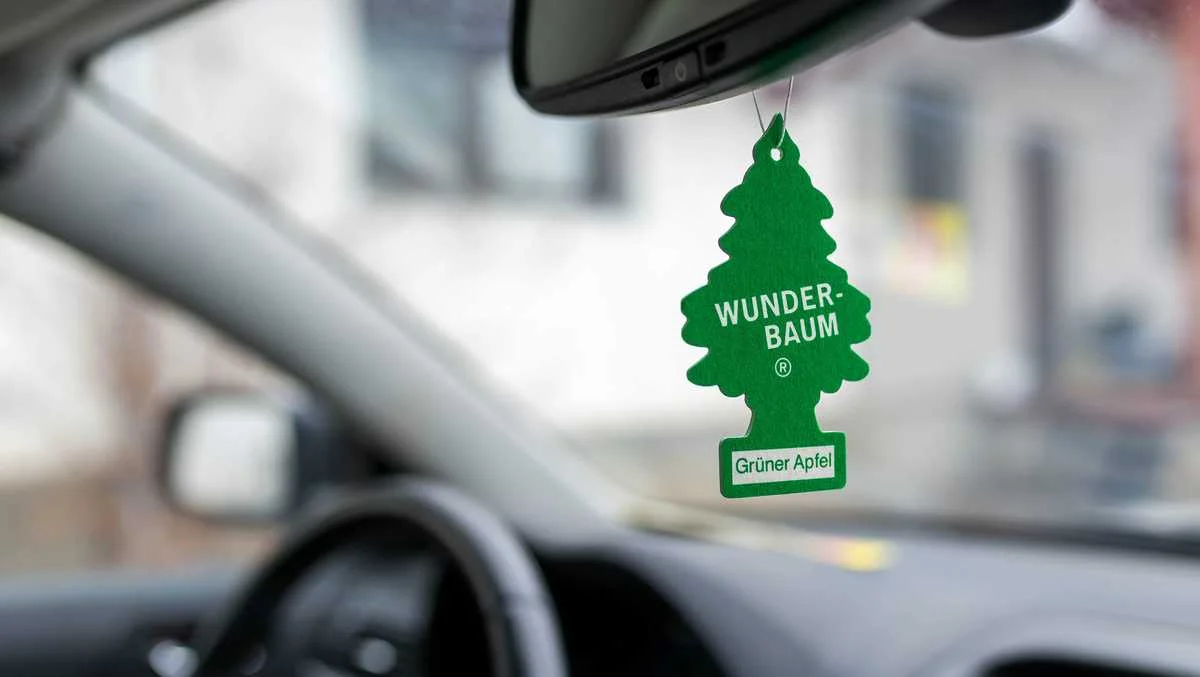
A car air freshener feels like one of the most harmless things you can buy, a dollar or two, a pleasant scent, and you toss it when it fades. But that very disposability is the problem. The cardboard tree hanging from millions of mirrors, the plastic vent clips, the gel cans and plug-in refills are single-use products designed to be thrown away, and the environmental cost lives in the volume, the materials and the chemicals, not in any one tree.
This guide looks honestly at what disposable car air fresheners cost the environment and, secondarily, your cabin air: the waste stream they feed, the volatile organic compounds and synthetic-fragrance chemicals they release, and why almost none of them can be recycled. Then it covers the lower-impact ways to keep a car smelling fresh that cost less over time and skip both the waste and the added chemicals.
The goal is not guilt over a single air freshener, it is perspective. When you see how the small convenience scales across hundreds of millions of units a year, and how a few simple habits replace it, the case for rethinking the throwaway tree is straightforward.
The waste stream: it is the volume, not the tree
The environmental story of disposable air fresheners is a volume story. Any single unit is tiny, but they are sold and discarded by the hundreds of millions every year, and each one is engineered for a short life, scent for a few weeks, then the trash. Multiply a near-zero individual footprint by an enormous number of units and you get a genuinely large stream of disposable waste.
What makes it worse is that the waste is low-value and mixed. A cardboard-tree freshener is paper soaked in fragrance oils, often sold in a plastic-and-foil wrapper; gel cans and plug-ins combine plastic housings with chemical refills. None of it is the kind of clean, single-material waste that recycling handles well. So the entire output, year after year, is essentially designed for landfill, which is the heart of the disposable-product critique.

Why almost none of them can be recycled
Recyclability is where disposable fresheners fall down hardest. Recycling depends on separating clean streams of a single material, paper with paper, a known plastic with the same plastic. Air fresheners violate this at every turn. The classic cardboard tree is paper impregnated with fragrance oils, which contaminates the paper stream; the plastic vent clips and gel cans mix housings, gels and metal foils that no curbside program will sort.
The result is that a used air freshener has essentially no end-of-life path except the bin. Unlike a glass jar or an aluminum can, it cannot re-enter the materials economy. This is why the volume matters so much: every one of those hundreds of millions of units is a true single-use object with no second life. Reducing how many you use, or switching to a refillable container, is the only way to cut that landfill contribution.
The core issue: mixed materials plus fragrance contamination make disposable fresheners effectively non-recyclable, so reduction and reuse are the only real levers.
VOCs and cabin air quality
Beyond waste, disposable fresheners affect the air you breathe in a small, enclosed space. They work by releasing volatile organic compounds (VOCs), the airborne molecules that carry scent. The US EPA identifies VOCs as a contributor to indoor air pollution, and a car cabin is a far smaller and more concentrated environment than a room in a house, sometimes a hot one, which raises the concentration you inhale.
This does not mean a single air freshener is acutely dangerous, but it does mean the assumption that 'fresh smell equals clean air' is backwards. A strong synthetic scent is adding compounds to the cabin air, not removing pollutants. People who are sensitive to fragrance frequently report headaches, irritation or nausea from a potent car freshener for exactly this reason. Ventilation, by contrast, actually exchanges the cabin air rather than masking it.
Heat makes it worse. A car parked in the sun can reach cabin temperatures far above the outside air, and warmth accelerates how fast a freshener off-gasses its VOCs, so the concentration spikes exactly when you climb into a hot car and shut the doors. That is the opposite of what you want: the strongest dose arrives in the smallest, least-ventilated moment. Airing the car out for a minute before you drive, rather than reaching for a stronger scent to cover the stuffiness, is both the healthier and the lower-impact move, and it costs nothing.
Synthetic fragrance, phthalates and the health angle
Many disposable fresheners rely on synthetic fragrance blends, and a recurring concern in those blends is phthalates, a family of chemicals used to help scents linger. Health agencies including the CDC have studied human phthalate exposure from fragranced consumer products, and because 'fragrance' on a label can legally hide a mixture of undisclosed ingredients, it is often hard to know exactly what a given freshener emits.
The honest framing is one of precaution rather than alarm: the cabin is small and enclosed, the exposure is repeated, and the ingredients are frequently undisclosed, so reducing avoidable synthetic-fragrance exposure is a reasonable goal, especially for children, pregnant people and the fragrance-sensitive. It also dovetails neatly with the environmental case, the same habits that cut waste, using less and choosing refillable or natural scent, also cut the chemical load in your cabin air.
Lower-impact alternatives that actually work
The good news is that keeping a car genuinely fresh is mostly free and low-impact. Start by treating the cause: remove odor sources (trash, damp gym clothes, food), clean spills promptly, and vacuum the carpets and seats where smells embed. Most persistent car odor comes from something you can remove, not from a lack of fragrance.
- Ventilate: air the car out regularly; fresh air exchange beats masking
- Absorb: an open box of baking soda or activated charcoal soaks up odor with near-zero footprint
- Refillable scent: a reusable diffuser or vent clip topped up with a few drops of essential oil, no throwaway housing
- Use less: a little scent in a small cabin goes a long way
These approaches cost less over a year than a steady stream of disposable trees, avoid the landfill waste, and reduce the synthetic chemicals in your cabin. They are not a sacrifice, they are simply the more effective way to deal with car smell, because they remove odor rather than layering scent on top of it.
How to think about 'eco-friendly' freshener marketing
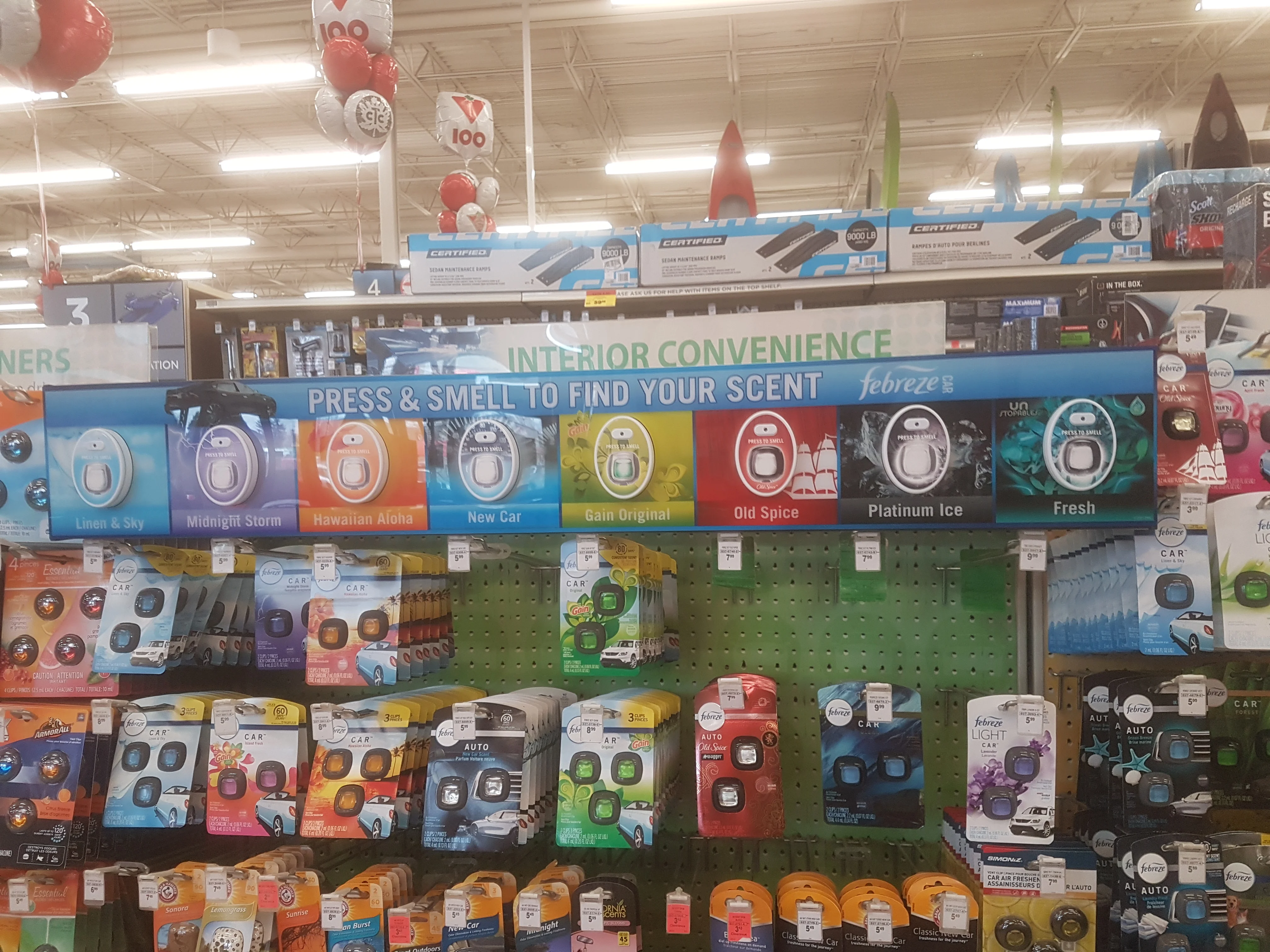
As awareness grows, more products advertise themselves as natural, green or eco-friendly, and some genuinely are lower impact, while others are marketing. Because terms like 'natural' are not regulated for air fresheners, a product can carry green branding and still be a disposable, mixed-material item full of VOCs. The label alone tells you little.
The reliable test is structural, not promotional. Ask: is it refillable or single-use? Is the container reusable, or does the whole thing get thrown away? Does it disclose its ingredients, or hide behind 'fragrance'? A refillable diffuser you top up with a known essential oil is genuinely lower impact regardless of branding; a throwaway 'natural' gel can is barely different from a conventional one. Judge the product by its end-of-life and its transparency, not its adjectives.
It also helps to widen the lens beyond the freshener itself. A product shipped in minimal recyclable packaging, made by a company that publishes its ingredient list, and designed to be refilled many times from a single durable housing is doing more for the environment than any scent claim on the front of the box. Conversely, a 'plant-based' label on a single-use plug-in that still ships in blister plastic and gets binned in a month is mostly marketing. The questions that matter are whether you throw the whole thing away and whether the maker is honest about what is inside.
The upstream footprint: manufacturing and transport
The waste a freshener becomes is only half its footprint; the other half is made before you ever buy it. Producing the fragrance oils, the plastics for clips and gel cans, the cardboard and the foil packaging all consumes energy and raw materials, much of it petroleum-derived. A single-use product that lives a few weeks then goes to landfill amortizes all of that manufacturing impact over a very short useful life, which is exactly what makes disposables inefficient on a per-use basis.
Transport compounds it. Lightweight fresheners are cheap to ship, but they ship constantly and globally, in volumes matched to their throwaway-and-replace business model. A refillable diffuser flips that math: one durable housing manufactured and shipped once, then topped up with small quantities of oil, spreads its upstream footprint across years rather than weeks. When you compare options, the honest unit is not the price of one freshener but the materials and energy embodied in a year or a decade of keeping your car smelling fresh.
Where it fits in the bigger single-use plastic picture
It helps to place car fresheners in the wider story of single-use plastics, which environmental groups and outlets like National Geographic have documented as one of the defining waste problems of the era. Plastic vent clips, gel-can housings and plug-in refills are small contributors individually, but they belong to the same category as straws, cutlery and sachets, low-value, short-life plastic items that are produced in enormous numbers and rarely recycled.
The reason these items draw scrutiny is not that any one is catastrophic, but that the category as a whole is vast and persistent: plastics break down slowly, fragment into microplastics, and accumulate in landfills and the environment. Choosing a reusable freshener is a tiny decision on its own, yet it is the same decision, repeated, that shrinks the single-use plastic stream overall. Seen that way, swapping a throwaway tree for a refillable diffuser is less about one car and more about which side of the disposable-versus-durable line your everyday habits fall on.
The pattern that matters: not one freshener, but the throwaway-and-replace habit multiplied across millions of cars and years is what turns a trivial object into a real waste stream.
The bottom line
The environmental cost of disposable car air fresheners is real but easy to misread. It is not that one cardboard tree is a disaster, it is that hundreds of millions of single-use, non-recyclable, mixed-material units a year add up to a substantial and avoidable waste stream, while releasing VOCs and often undisclosed synthetic-fragrance chemicals into the small, enclosed space you breathe in daily.
The fix is not deprivation, it is better habits: remove odor sources, ventilate, absorb smells with baking soda or charcoal, and if you want scent, use a refillable diffuser sparingly. Those choices keep your car fresher, cost less over time, cut the landfill burden, and reduce the chemical load in your cabin air, which is a rare case where the lower-impact option is also the more effective one.