
The short answer, then the whole spec sheet
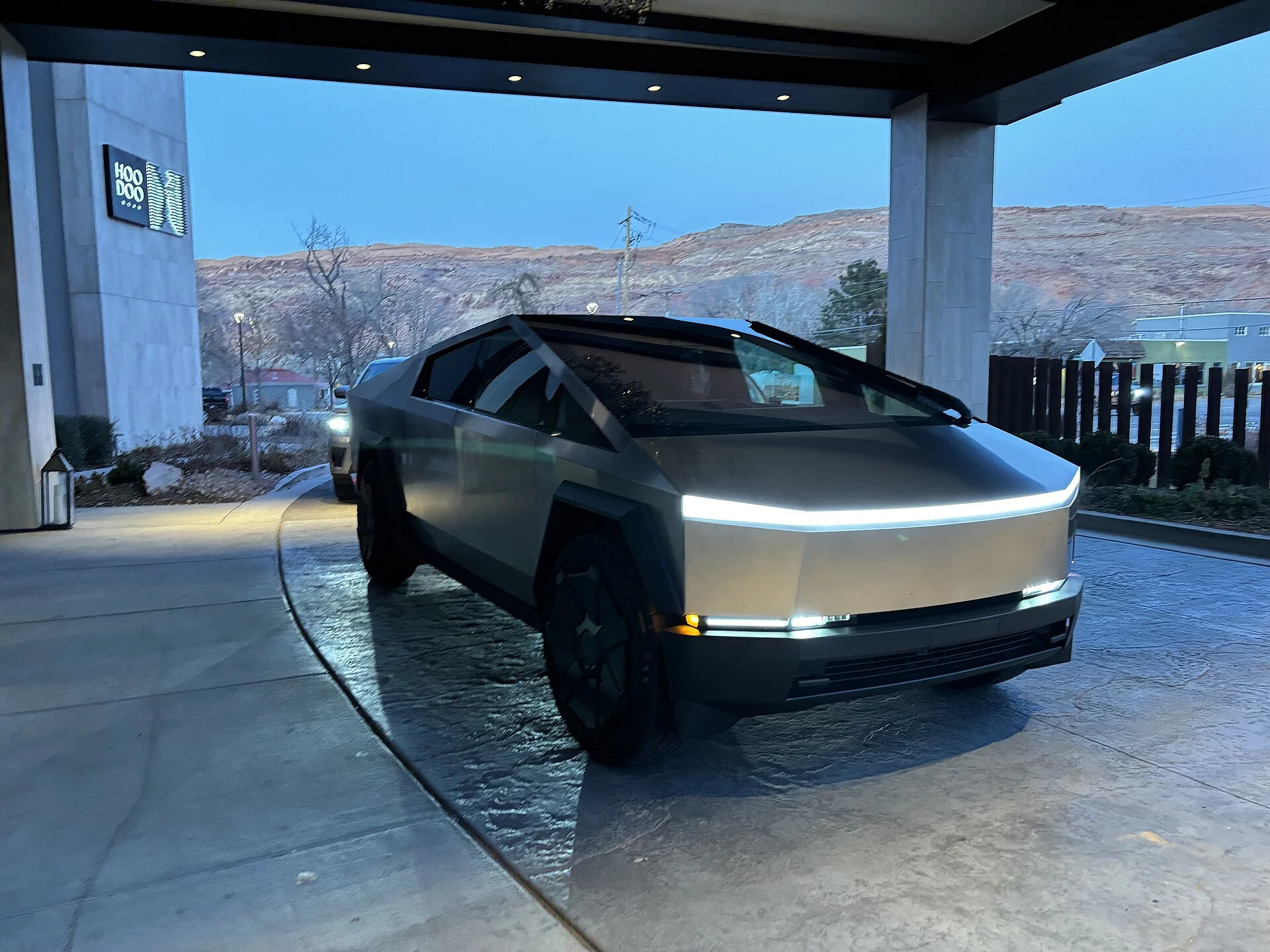
Yes - you can camp in a Tesla Cybertruck, and it's genuinely one of the better electric trucks to do it in, but the reasons are specific and worth getting right before you plan a trip. You sleep in the Vault (Tesla's name for the covered bed), not the cabin, and you power your whole camp off a system that peaks at 11.5 kW. Everything else - how long the fridge runs, whether an adult fits flat, what the range cost is - falls out of the measured numbers, so I've put the full sourced spec sheet right at the top of this page instead of burying it.
Two numbers do most of the work. The Vault floor is 72.9 inches long and 51 inches wide, per Tesmanian's teardown of the bed dimensions - about six feet by four, enough to lie flat on a pad. And Powershare, Tesla's built-in power system, supplies up to 11.5 kW continuous, per Basenor's Powershare breakdown - a generator that also happens to be your daily driver. Read the table, then the sections below explain what each row means for a real night out.
The Vault is your bed: 72.9 x 51 inches, and the cabin doesn't fold flat
Here's the thing most Model Y campers get wrong when they move up to a Cybertruck: the cabin does not fold into a flat bed. The rear seats fold to free up cargo space - 120.9 cubic feet total, per Recharged's cargo measurements - but the resulting surface is stepped, not a sleeping platform. The real bed is the Vault, and it's a good one.
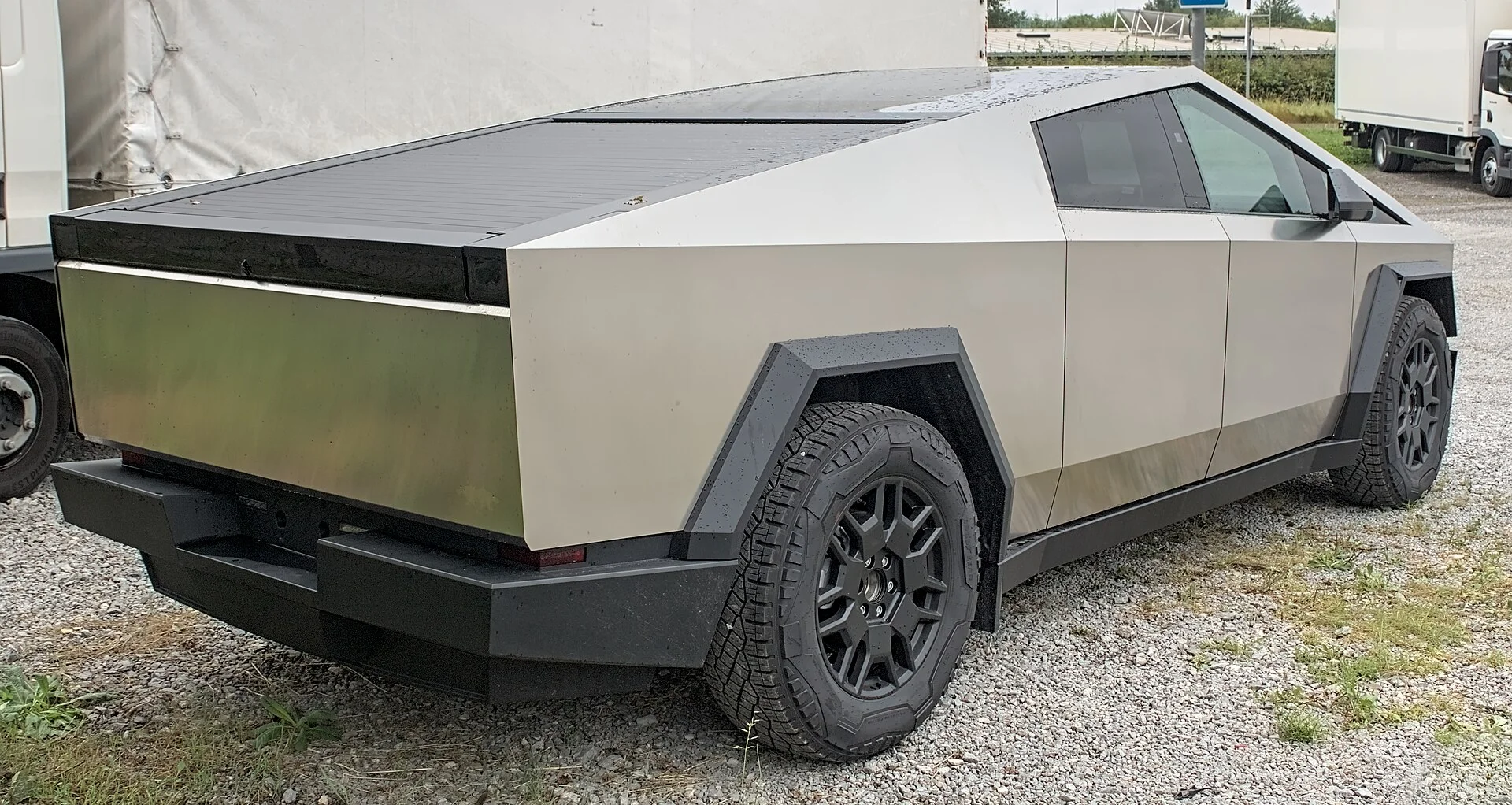
The Vault floor measures 72.9 inches long by 51 inches wide, with depth sloping from 28.7 inches at the cab wall to 19.9 inches at the tailgate for water runoff, all per Tesmanian. Six feet of flat length means most adults lie out fully; Recharged's own sleep guide calls the Vault long and wide enough for most adults on a pad or air mattress. Close the powered roll-top tonneau over you and you have an enclosed, lockable 67-cubic-foot space - a hard shell instead of a fabric tent. That combination, a real six-foot floor under a locking hard cover, is the Cybertruck's single best camping trait, and it's why the sleeping setup here is simpler than any SUV in this class.
The catch is width for two. At 51 inches the Vault is narrower than a queen mattress (60 in), so two adults sleep snug - closer to a full-size footprint. Solo, it's luxurious; as a couple, plan on a 50-inch-wide pad and friendly shoulders.
Powershare: what 11.5 kW and a 240V bed outlet actually let you run
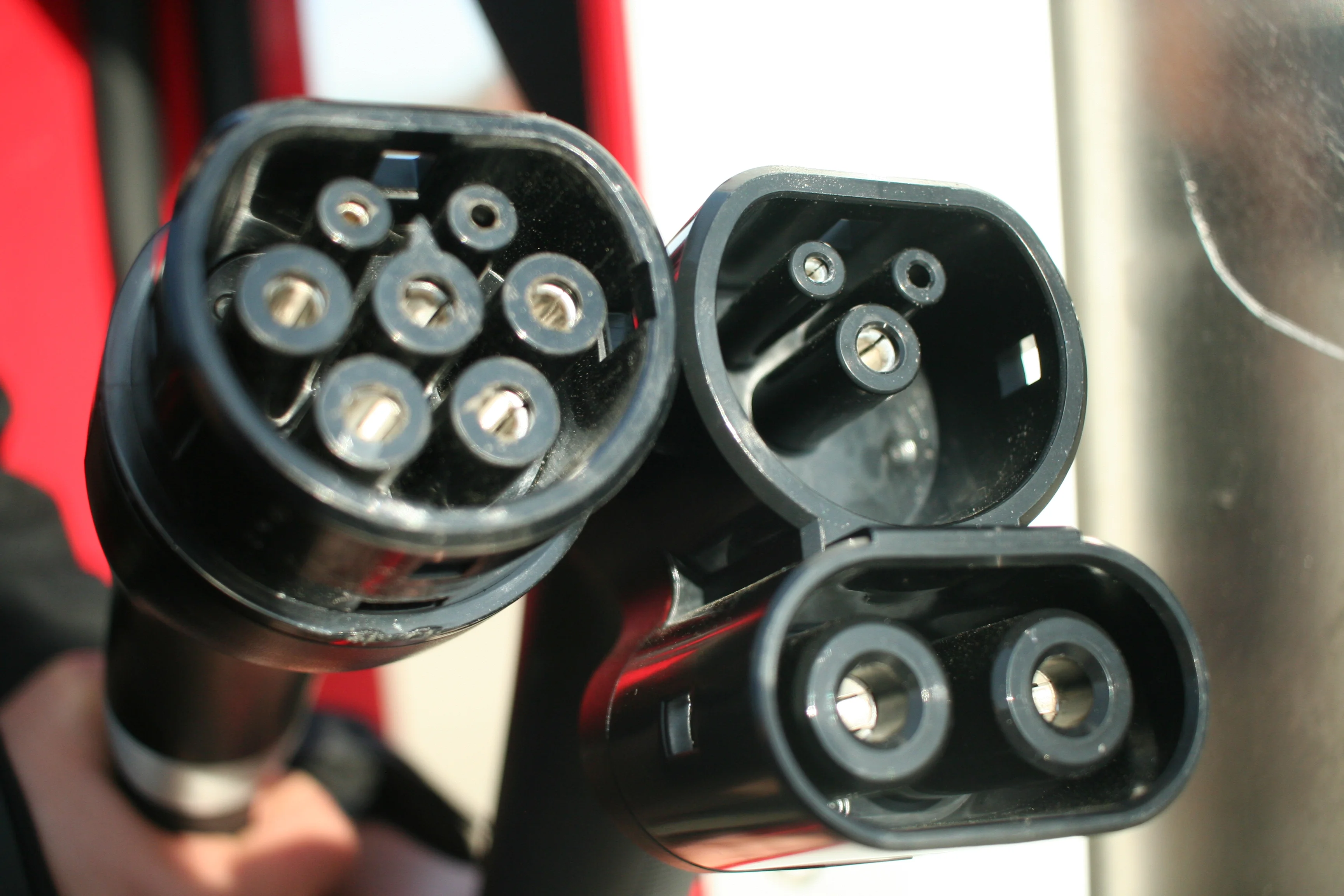
This is where the Cybertruck stops being a truck you sleep in and becomes a power station you drive. Powershare is the whole system, and it splits into two numbers people constantly blur together, so let me keep them apart:
- 11.5 kW is the peak continuous output, and it's the vehicle-to-home (V2H) ceiling - the full-house backup figure, per Basenor.
- Up to 9.6 kW is what the built-in outlets deliver as vehicle-to-load (V2L), per Wikipedia's spec listing - that's the number that matters at a campsite, because you're plugging into outlets, not wiring into a house.
The outlets themselves are the good part. The cargo bed carries two 120V/20A household outlets plus one 240V/40A NEMA 14-50 outlet - the same plug an RV air conditioner, an air compressor, or a welder uses, per Electrek's spec report. Two more 120V/20A outlets sit in the cabin, per Basenor. The one limit to respect: all the AC outlets share a combined 40-amp cap, so you can't simultaneously max the 14-50 and load the others. For camping that ceiling is academic - an electric griddle, a 12V fridge on its charger, string lights, and a laptop together don't come close to it.
How many nights of power? Do the battery math
The honest way to plan power is to work from the pack size, not from vibes. The Cybertruck's structural battery is about 123 kWh gross (122.4 kWh at 816 volts, built from 4680 cells), per InsideEVs' read of the EPA documents. I'll flag one thing plainly: Tesla does not publish the usable kWh, only that gross figure, so treat the numbers below as ceilings, not promises.
A typical 12V camping fridge pulls 40-60 watt-hours per hour. Even at a generous 60 Wh, that's under 1.5 kWh a day - a rounding error against a 123 kWh pack. Run a fridge, charge phones and a laptop, and run some lights, and you're spending maybe 2-4 kWh a night.
That's the scale that makes EV camping feel like cheating: the same battery Tesla says can back up a ~30 kWh/day house for three-plus days (per Basenor) will keep a modest campsite running for a week or more if you're careful, and still leave you plenty to drive out. The number that actually constrains you isn't camp draw - it's the drive home, which is the next section. The practical rule: decide your minimum drive-home buffer in miles first, convert it to kWh, and only spend camp power out of what's left above that line.
The range cost: 325 miles, minus whatever camp burns
Every watt-hour you pour into camp is a watt-hour that isn't driving you home, and on a long-body electric truck that trade matters. The AWD dual-motor Cybertruck is EPA-rated at 325 miles; the tri-motor Cyberbeast lands around 300-320 depending on wheels, both per Wikipedia's spec table. That's real range, but this is a 6,660-to-6,900-pound truck (curb weights per Wikipedia), so cold weather, headwinds, and a roof or bed load pull it down faster than they would a car.
The camping implication is a planning one, not a range-anxiety one. If you burn 3 kWh a night, that's roughly the energy of eight to ten miles of driving - trivial. The bigger drains are the ones people forget: running the cabin HVAC all night to sleep in the seats (don't - use the Vault), or parking somewhere with no charging for a multi-day base camp.
Plan the trip as a loop with a known charger on the way out, keep a drive-home buffer you never dip below, and the 240V outlet becomes free camp luxury instead of a range gamble.
That's the whole discipline - and it's exactly what separates a relaxing EV camp from a white-knuckle drive back to a Supercharger. The truck gives you the numbers; the loop plan is how you spend them.
Weather, climate, and sleeping comfortable in a metal box
The stainless Vault is weatherproof and lockable, which is a real advantage over a fabric rooftop tent in wind or rain - but a bare metal box has its own comfort problems, and they're solvable. Condensation is the first: two people breathing overnight in a sealed 67-cubic-foot space (the enclosed bed volume, per Recharged) will fog every surface. Crack the tonneau an inch or leave a cabin window vented for airflow; a closed metal shell with no ventilation is a wet one by morning.
The safety math here is genuinely better than a gas vehicle's, and it's worth being precise about why. Sleeping in a running gas car risks carbon-monoxide poisoning from exhaust - the silent killer behind car-camping warnings. An EV has no engine and no exhaust, so in a Cybertruck that carbon-monoxide risk is simply zero, even running climate control all night. The only air-quality concern left in a sealed Vault is the carbon-dioxide you exhale building up in a small closed volume, and that is solved the same way condensation is: a cracked tonneau or vented window keeps the air fresh. Vent for comfort and CO2, not for your life - that's the quiet advantage of sleeping in something with no tailpipe.
Temperature is the second, and here the EV genuinely shines. Because you're not idling an engine, you can run a low-draw electric heater or fan off the bed's 120V outlets without carbon-monoxide risk or the noise and fuel of a generator - the exact scenario the 40-amp outlet budget was built for. Insulate under your pad (a closed-cell foam layer between you and the metal floor stops the cold-sink effect), reflect the Vault walls with a windshield-style shade if you're in sun, and the Vault goes from tolerable to genuinely comfortable across three seasons.
Gear that's actually vault-shaped (not a generic truck pad)
The Vault's exact 72.9 x 51 inch floor is unusual enough that a generic full-size-truck air mattress fits badly - too long, wrong corners, gaps at the walls. The one accessory genuinely worth buying over a folded closed-cell pad is a mattress cut to the Vault's shape:
Storage: what 120.9 cubic feet actually swallows
Sleeping space and power get the headlines, but a good camp lives or dies on where the gear goes, and here the Cybertruck is quietly excellent. Fold the rear seats and total cargo hits 120.9 cubic feet, per Recharged's measurements - and that's separate from the 67-cubic-foot enclosed Vault and the 7.1-cubic-foot frunk. Folding the rear seats alone frees 54 cubic feet, per the same source. In plain terms, you can keep the Vault clear as a dedicated bedroom and still have a small closet's worth of dry, in-cabin storage for the kitchen kit, clothes, and electronics.
The frunk is the sleeper feature for campers: a sealed, drainable front trunk is the right home for a cooler or a bag of firewood you don't want in the cabin, and it locks separately from everything else. The practical layout that works is a three-zone split:
- Vault - the dedicated bedroom; keep it clear of gear so setup is zero-effort at dusk.
- Cabin behind the seats - the soft kit: clothes, bedding, electronics, the 54 cu ft the folded seats free up.
- Frunk - the messy and food-related gear, sealed away from the sleeping air.
That separation is exactly what a rooftop tent on an SUV can't give you, because there the sleeping platform and the storage are fighting over the same cargo hold. Three genuinely independent volumes is a real, measurable camping advantage, not a spec-sheet curiosity.
Charging strategy: plan the trip as a loop
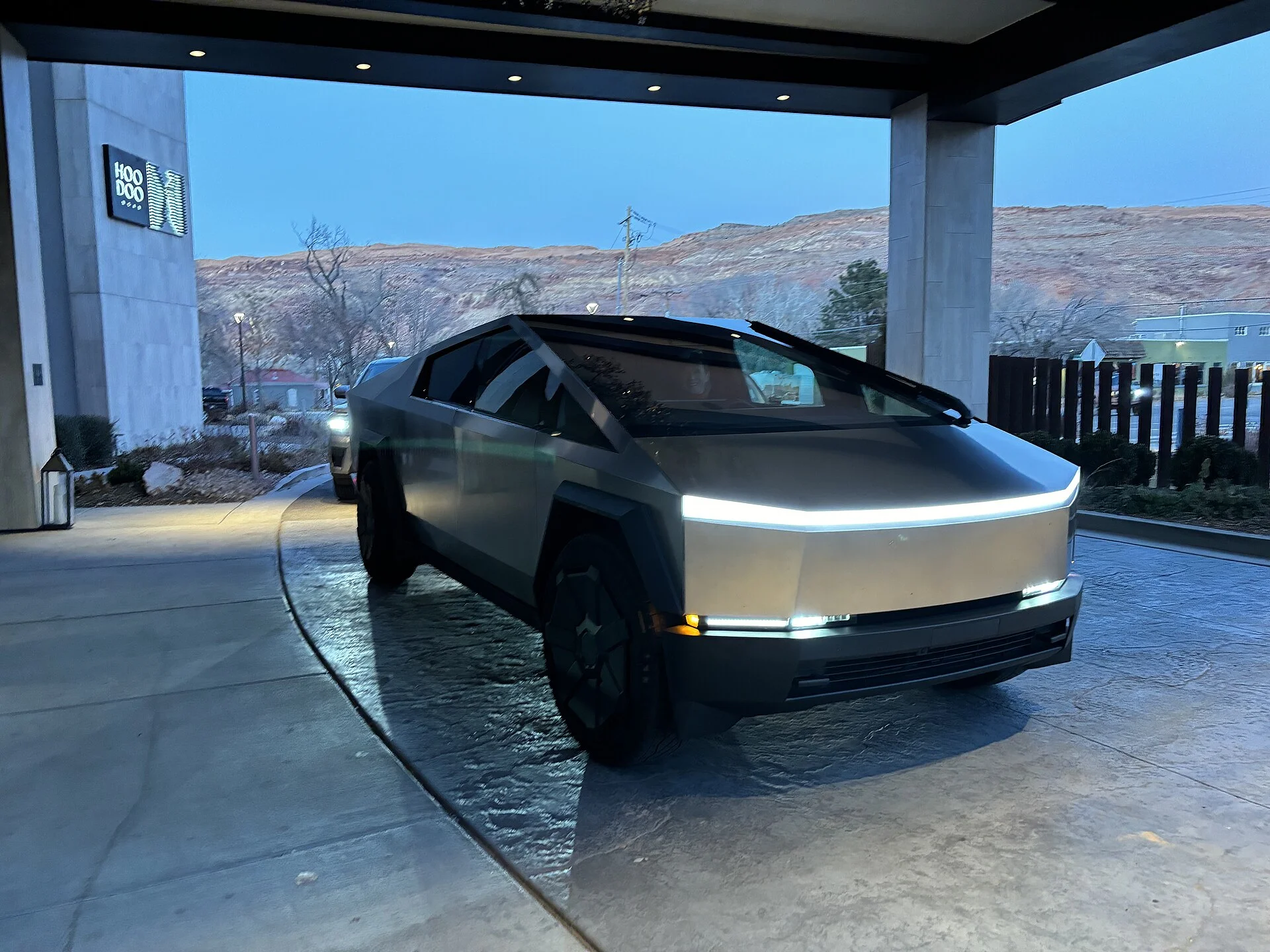
The one place an EV camp needs more planning than a gas rig is the fuel stop, because you can't carry a spare can of electrons. The good news is the math is forgiving on a Cybertruck: with a 325-mile AWD range (per Wikipedia) and camp draws measured in single-digit kWh, the battery is rarely the limit - the map is. Treat every trip as a loop anchored to a known charger, and the power luxury comes free.
- Arrive with a plan, not a percentage. Know the nearest fast charger to your campsite and its distance before you leave pavement.
- Set a floor and defend it. Convert your worst-case drive-home distance to kWh and never spend camp power below that line - the 240V outlet only feels free when the drive out is guaranteed.
- Base-camp differently than you tour. A multi-day stay in one spot with no charging is the one scenario that turns a power surplus into a range problem; for those, top up on the way in and ration the outlets.
None of this is range anxiety - it's the same trip discipline a diesel overlander uses to plan fuel, just with a battery that happens to double as the campsite generator. Get the loop right and the Cybertruck asks less of you at camp than a truck that needs a separate portable power station hauled along.
AWD or Cyberbeast: which trim for a camper
For camping specifically, the choice between the two available dual-motor and tri-motor trims is simpler than the spec race suggests. The AWD dual-motor carries the firm 325-mile EPA range and a ~6,660-pound curb weight; the Cyberbeast trades a little range (around 300-320 miles) and adds weight (~6,900 pounds) for tri-motor performance that a campsite never uses, all per Wikipedia's spec table. A 2.6-second 0-60 does nothing for a night in the woods.
Both trims share the camping-relevant hardware: the same Vault, the same ~123 kWh pack, the same Powershare outlets including the bed's 240V/40A NEMA 14-50 (per Electrek and InsideEVs). So the honest camping verdict is that the AWD is the smarter buy - more range to spend on both driving and camp power, less weight to drag up a forest-service road, and an identical basecamp once you're parked. Save the Cyberbeast premium for buyers who want the acceleration on-road; the campsite can't tell the difference, and the extra range is worth more than the extra motor when the nearest charger is fifty miles away.
A power station you sleep on
Stack the measured numbers and the Cybertruck's camping case is clear-eyed, not hype. You get a real six-foot sleeping floor (72.9 x 51 inches, per Tesmanian) under a locking hard shell, an 11.5 kW power system with a 240V outlet in the bed (per Basenor and Electrek), and a ~123 kWh battery (per InsideEVs) that makes camp power effectively free next to the drive home. That's a legitimately strong setup - closer to a self-contained basecamp than to sleeping in a car.
Buy the Cybertruck for camping if you want hard-shell security and want to run real appliances off a truck without a generator. Look elsewhere if you need a flat two-adult bed wider than 51 inches, or if your trips routinely park multiple days somewhere with no charging.
The one discipline that makes it all work is the same one every section here came back to: know your drive-home buffer, spend camp power only above it, and vent the metal box. Do that and the Cybertruck is a genuinely excellent - if pricey and narrow - place to spend the night. Plan from the spec sheet at the top of this page, not from marketing, and you'll know before you leave the driveway exactly what your trip can do.