
What the R1S Actually Gives You
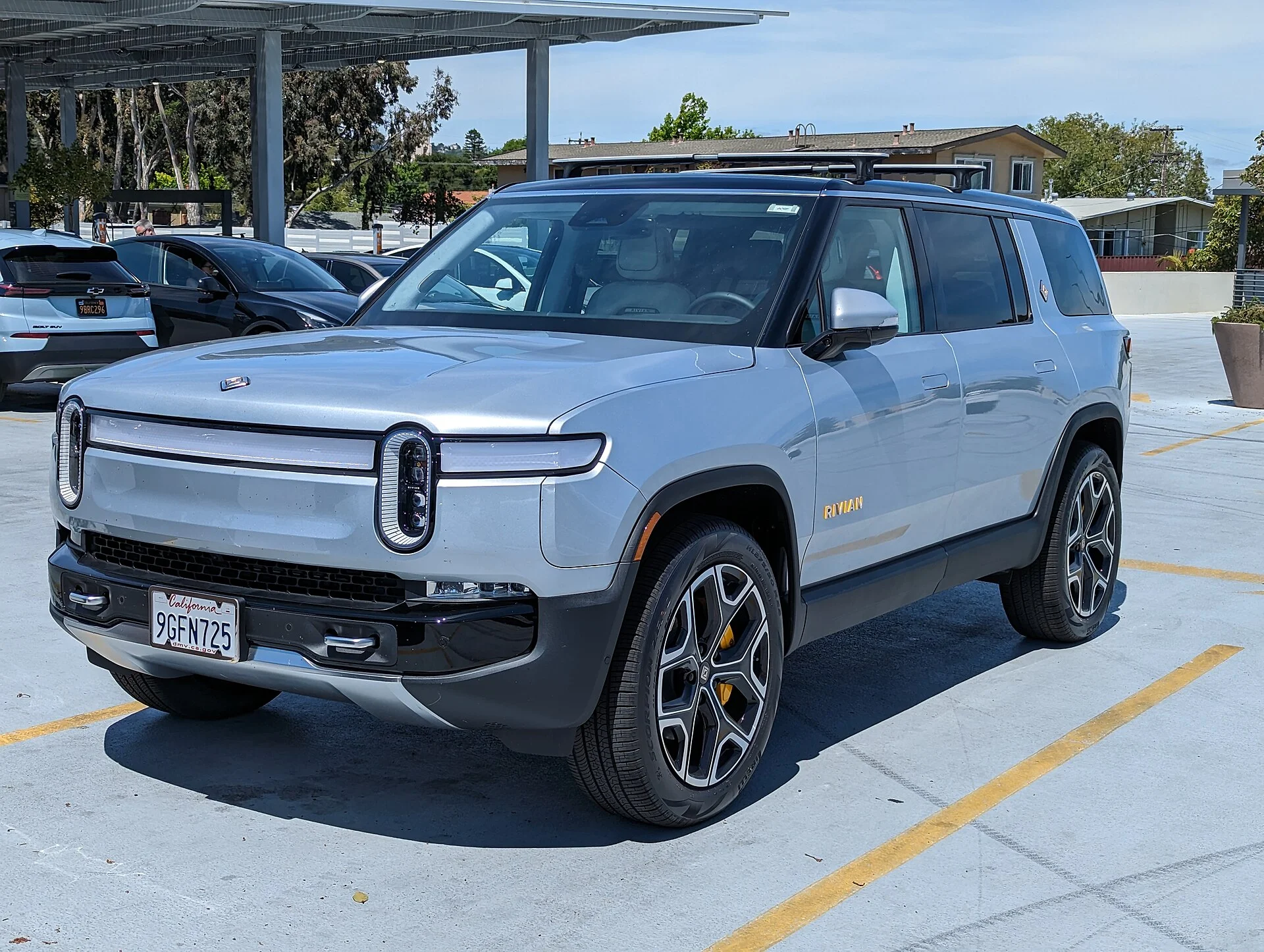
Strip away the marketing and the R1S's camp-power hardware is specific and knowable. The vehicle has two built-in 120V AC household outlets: one at the back of the center console, serving the second row, and one on the driver-side wall of the rear cargo area near the tailgate. Those two outlets are the backbone of running real gear at a campsite, and where they sit - one mid-cabin, one in the cargo bay - shapes how you lay out a camp kitchen or a charging station.
Alongside the AC outlets, the R1S provides six USB-C ports for phones, tablets, lights, and other small electronics. Between the household outlets and the USB-C ports, the vehicle covers the full range of camp loads from a laptop down to a headlamp, without any add-on inverter or aftermarket wiring. It is a genuinely capable power source straight from the factory.
What matters is understanding the shape of that capability before you rely on it. The outlet locations, the port count, and - most importantly - the wattage limits all define what the R1S can and cannot do at camp. A lot of buyers assume an EV this size can power anything; the reality is more specific and, once you know it, easy to plan around. The rest of this guide lays out those real numbers so you can build a camp setup that works with the R1S's actual power system rather than an imagined one.
The 1,500-Watt Ceiling
The single most important number for camp planning is the total AC output, and it is easy to misread. Each 120V outlet is fed by a 15 A circuit, but the total continuous AC output is capped at about 1,500 W combined across both outlets - not 1,500 W each. That is the ceiling the whole vehicle's household power lives under, and every appliance decision flows from it.
The distinction between combined and per-outlet trips people up constantly. It is tempting to look at two outlets and imagine two independent circuits you can load separately, but they draw from the same roughly 1,500 W budget. Plug a heavy load into one and you have little headroom left on the other. Think of it as one 1,500 W supply with two sockets, not two 1,500 W supplies.
Planning around that ceiling is straightforward once you accept it. Add up the continuous wattage of everything you want running at once and keep the total comfortably under 1,500 W, leaving margin for startup surges. A single big appliance can consume nearly the whole budget on its own, while a handful of small devices coexist easily. The 1,500 W figure is not a limitation to resent; it is simply the design, and a camp kitchen built with it in mind runs flawlessly, while one that ignores it trips the limit at the worst moment.
Outlets, Not True V2L - The Honest Distinction
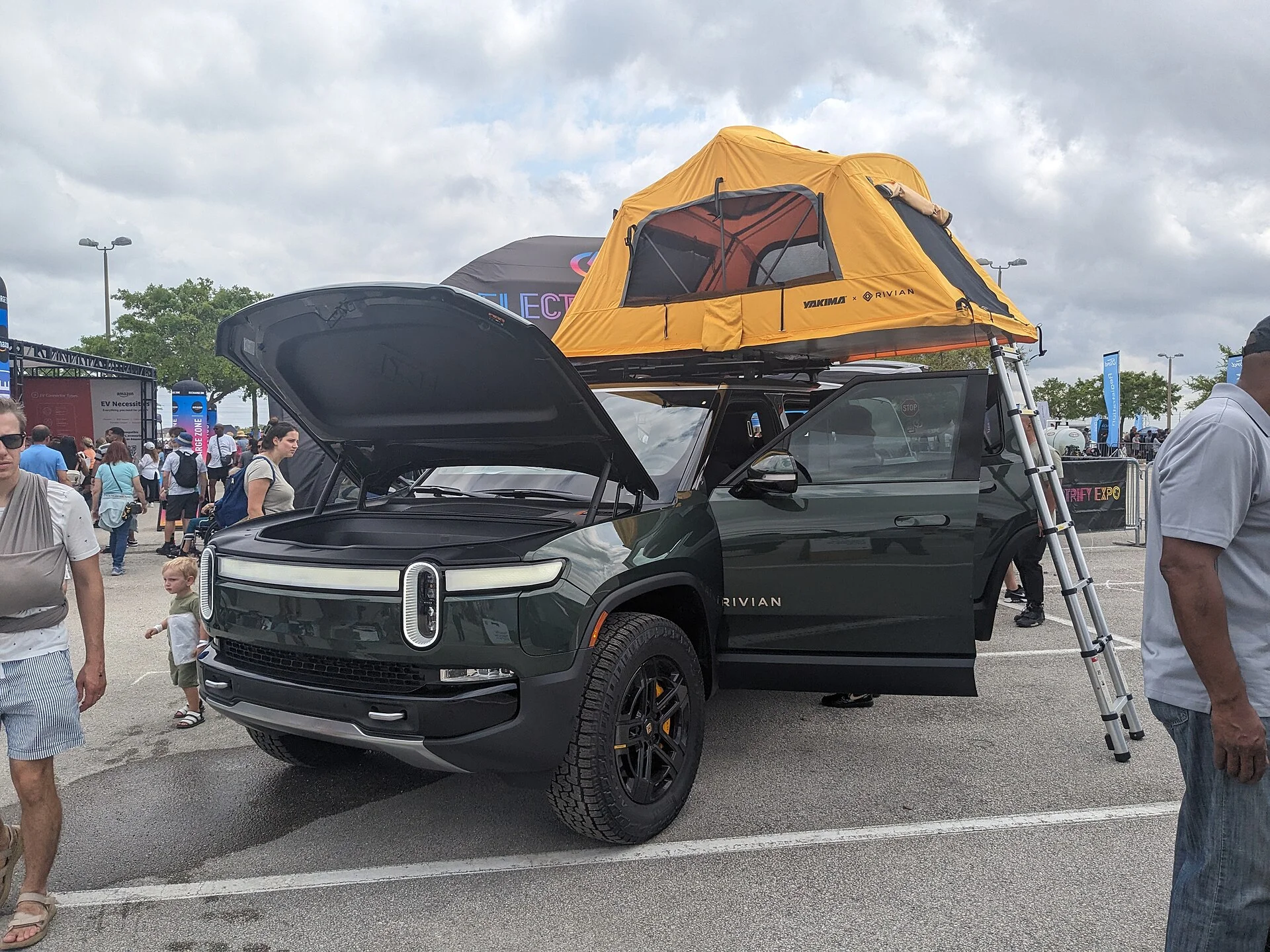
Here is the part the spec-sheet excitement often glosses over, and it is worth stating plainly. The R1S does not offer true vehicle-to-load (V2L) or vehicle-to-home (V2H) export. The built-in outlets run off an internal DC-to-AC inverter and cannot back-feed a house or charge another vehicle. If you were hoping to run your home off the truck during an outage, or top up a friend's stranded EV, the R1S is not built to do that.
This is a meaningful difference from some other EVs that advertise full V2L. Those vehicles can send serious power out through an adapter to run a house circuit or charge another car; the R1S instead gives you standard household outlets fed by its own inverter, sized for on-board devices rather than whole-home backup. It is the difference between a big built-in power station and a true bidirectional export system. For camping, the outlets are plenty - but calling it V2L oversells what the hardware does.
Rivian has signaled this may change on future platforms - bidirectional V2L and V2H are planned for the R2 platform, not the current R1 generation the R1S belongs to. So this is a current-generation limitation, not a permanent one for the brand. The honest takeaway for an R1S owner today: you have excellent camp outlets under a 1,500 W ceiling, but you do not have home backup or vehicle-to-vehicle charging. Plan for the power you actually have.
USB-C and the Small Stuff
Below the household outlets, the R1S handles small electronics through a generous set of USB-C ports. The vehicle provides six USB-C ports total, spread across the front console, the rear headrests, the rear of the console, and the cargo area. That coverage means nearly every seat and the cargo bay has a charging point within reach, which is exactly what a carful of campers needs for phones, headlamps, and tablets.
The ports are not all equal, and knowing which is which saves frustration. The highest-output USB-C port - in the center-console storage bin - delivers up to 60 W, enough to charge a laptop or a power-hungry tablet at full speed. Several of the other USB-C ports are limited to about 15 W, which suits phones and smaller devices but will charge a laptop slowly if at all. Match the device to the port: laptops and fast-charge gear to the 60 W bin, phones and lights to the 15 W ports.
There is also a traditional 12V accessory socket on the R1S for gear that still uses a cigarette-style plug - air pumps, older chargers, and 12V camp accessories. Between six USB-C ports, the 12V socket, and the two household outlets, the vehicle covers essentially every plug type a camp setup throws at it. The USB-C ports quietly do most of the daily work, since the bulk of camp electronics are small; the household outlets are for the few things that genuinely need AC.
It's an SUV: No Bed, No Gear Tunnel
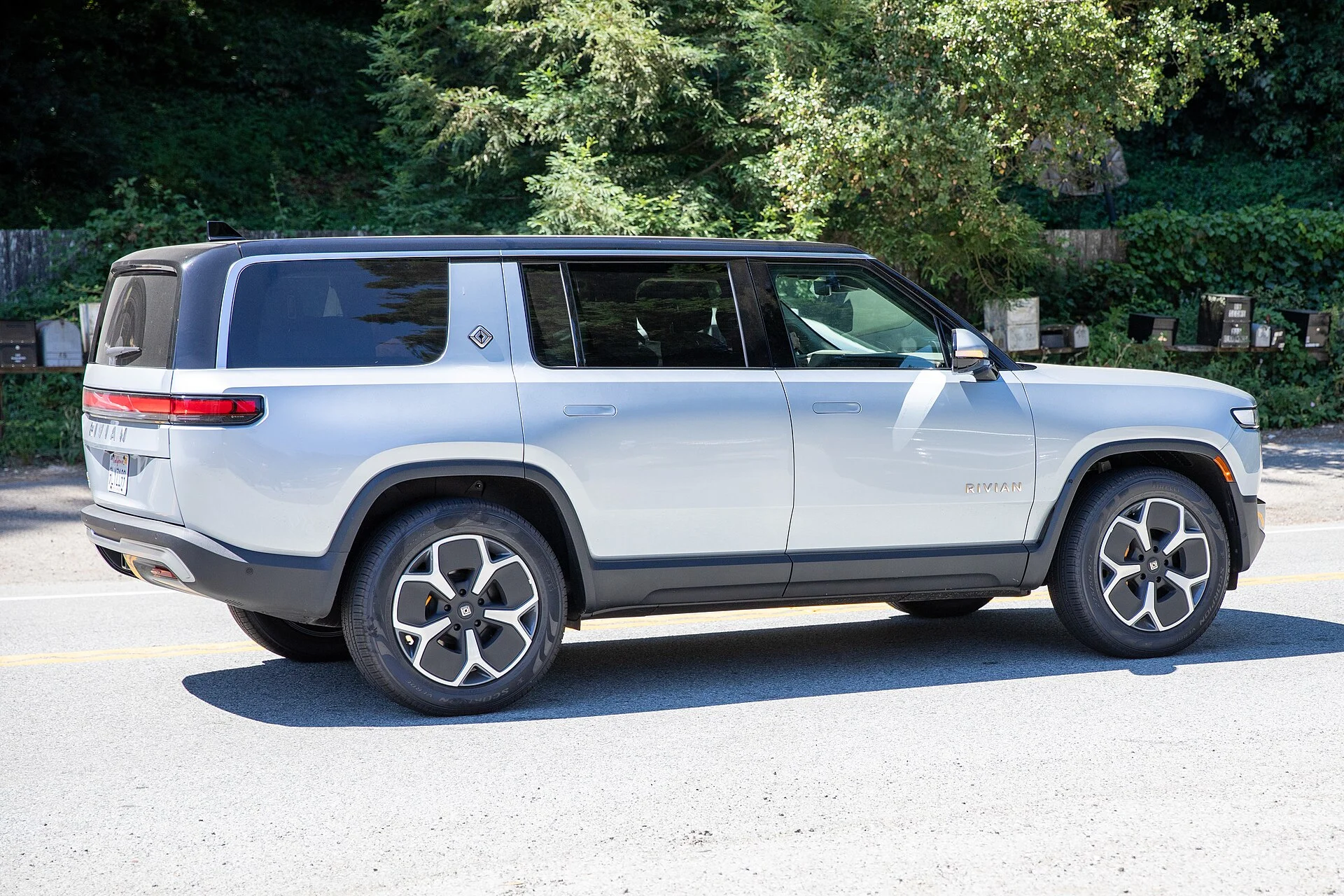
A common point of confusion comes from mixing up the R1S with its pickup sibling, and it matters for power planning. The R1S is the SUV body style, with no truck bed and therefore no in-bed 120V outlet. Those bed outlets belong exclusively to the R1T pickup. If you have seen photos of a Rivian powering tools from an outlet in the truck bed, that is the R1T, not the R1S.
The R1S also lacks another R1T feature people sometimes expect: the gear tunnel. The pass-through gear tunnel, and its accessory power, is an R1T-only feature. So the clever storage-with-power pass-through behind the cab is not part of the R1S package. The SUV trades those pickup-specific features for enclosed three-row seating and a covered cargo area.
For camp power, this means your outlets are the two described earlier - the console-back outlet and the rear-cargo-wall outlet - and that is the full set. There is no bed socket to run a work light from and no gear-tunnel outlet to tap. It is not a shortcoming so much as a body-style difference, but it is worth knowing before you plan a setup around an outlet the R1S does not have. Build around the cabin and cargo-area outlets, because on the SUV, that is where all the household power lives.
Camp Mode Is the Real Feature
The R1S's standout camping capability is not an outlet at all - it is Camp Mode, which turns the vehicle into a genuinely livable basecamp. Camp Mode lets you self-level the air suspension so the truck sits flat on uneven ground, run the climate control while parked to heat or cool the cabin overnight, keep the 120V outlets powered through the night, and enable Camp Courtesy, which dims the lights and mutes the chimes so you are not blasted with brightness and beeps at 2 a.m.
The self-leveling is a bigger deal than it sounds for anyone sleeping inside. The R1S's flat-folding second and third rows make a large sleeping platform, and Camp Mode's air-suspension leveling means you are not sliding downhill on a sloped pullout. Combined with parked climate control, it makes cabin camping comfortable in weather that would make a tent miserable - the truck holds a set temperature all night on battery power.
Keeping the outlets live overnight is what ties the power system to the sleeping setup. A fridge, a fan, or a CPAP can run through the night from the household outlets while Camp Mode manages the climate and courtesy lighting. This is where the R1S shines as a camping vehicle: not as a home-backup power exporter, but as a self-contained, climate-controlled, power-equipped place to sleep. Camp Mode is the feature that makes the whole package work together, and it is worth learning before your first trip.
What You Can Actually Run
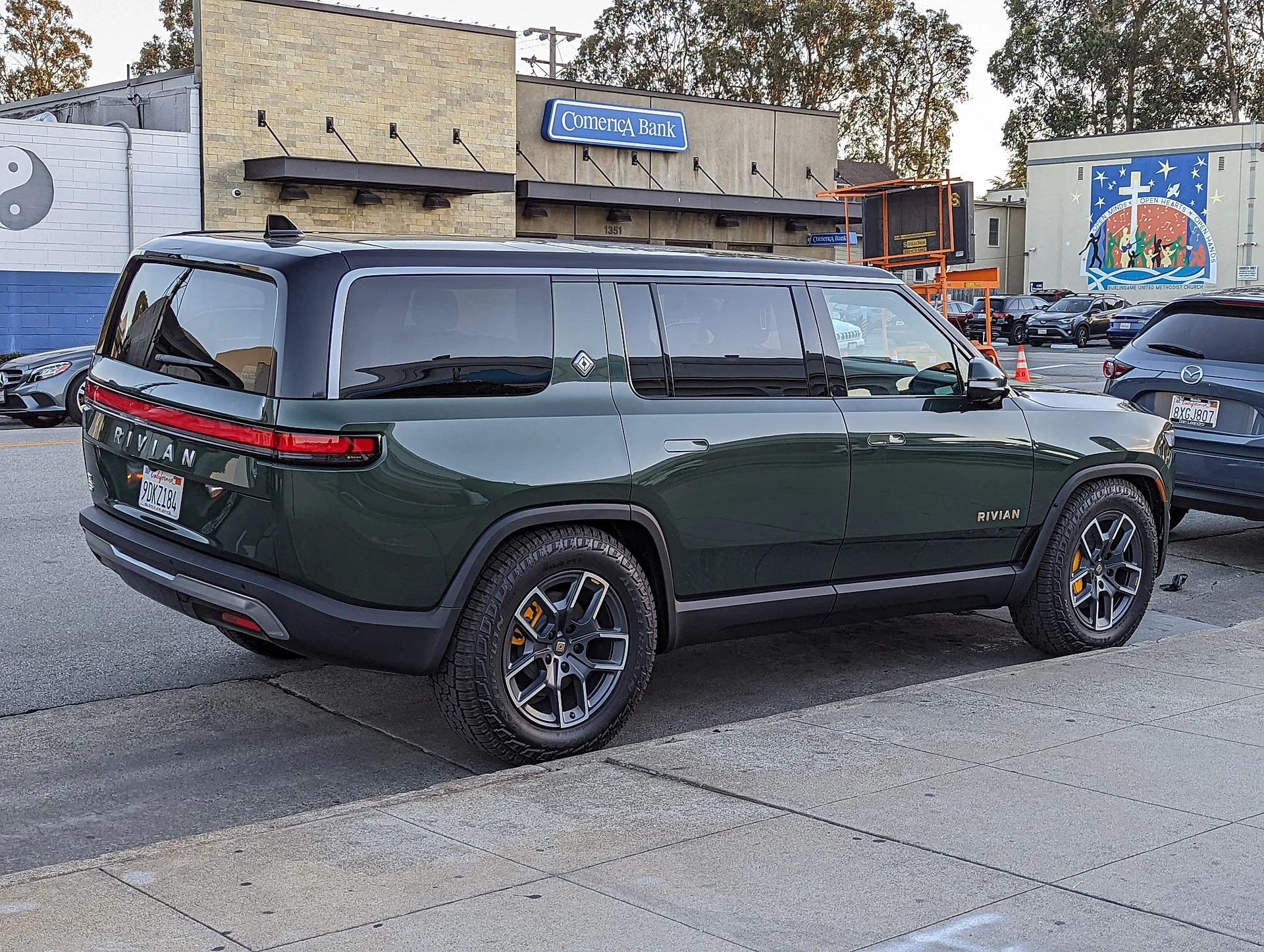
With the 1,500 W ceiling in mind, here is what the outlets realistically power. The outlets can simultaneously run typical camp loads such as a portable induction burner drawing about 1,200-1,500 W, or several smaller devices together - but not a full-power burner plus other AC loads at the same time. A single induction burner can eat nearly the entire budget, so it is a one-appliance-at-a-time proposition when the load is that big.
The same logic applies to any high-draw heater or kettle. High-draw appliances like a full-size electric kettle, which pulls around 1,500 W, should be run one at a time given the 1,500 W ceiling. Boil water, then cook, then charge - stagger the big loads rather than stacking them. It is exactly how you would manage a 1,500 W portable power station, because functionally that is what the R1S's outlet system is.
For everything smaller, the R1S is effortless. A fridge, a fan, LED string lights, a laptop, and phone chargers together draw a fraction of the budget and coexist without a thought. If you regularly need to exceed the ceiling - running a big appliance while other loads are live - the clean solution is to pair the R1S with a portable power station, using the vehicle for the steady loads and the station for the surge. Within 1,500 W, though, the R1S handles a full camp kitchen and sleeping setup on its own.
How Long the Battery Lasts
The reassuring part of camping off an EV this size is how little a night actually costs. A 12V-style portable fridge drawing about 40-60 W, run from the outlets, consumes only around 1-1.5 kWh per day. Against the R1S's pack, that is almost nothing - even the smallest 92.5 kWh Standard pack holds well over 1,000 theoretical hours of fridge runtime before you would run it down. A fridge simply is not a meaningful drain on a battery this large.
Climate control is the bigger variable, but still modest. Real-world parked and Camp Mode battery drain is roughly 1-2 miles of range per hour depending on the climate load, so a full overnight of running the heater or air conditioning typically costs only single-digit percent of the pack's charge. You wake up having spent a few percent of your range to sleep in a climate-controlled cabin - a trade most campers take happily.
The practical upshot is range anxiety mostly evaporates for camping use. Light loads like a fridge and lights are trivial; even parked climate for a night is a small slice of the battery. The one habit worth keeping is to not run big AC appliances continuously for hours if you also need to drive a long way the next day, since those add up faster than the fridge does. But for a normal overnight - fridge, lights, devices, and climate - the R1S has enormous margin, and the battery is the last thing you need to worry about.
Packs and Charging
Knowing your pack size sharpens the runtime math, because the R1S comes in three usable capacities. The Standard pack offers 92.5 kWh of usable capacity using LFP chemistry and delivers about 270 miles of range; the Large pack steps up to 109.4 kWh; and the Max pack tops the range at 141.5 kWh. All three are far more than a camping trip needs for power, but the bigger packs give more cushion for extended off-grid stays and longer drives between charges.
The LFP chemistry in the Standard pack is worth a note for campers. LFP batteries tolerate being charged to full regularly and handle repeated shallow cycling well, which suits a camping vehicle that gets topped up often and drained lightly overnight. The larger packs use different chemistry with more total energy, so the choice is really range and headroom versus cost.
Charging keeps the vehicle ready for the next trip. The Large and Max packs support DC fast-charging at up to 220 kW, which means a stop on the way to or from the trailhead can add substantial range quickly. For camping specifically, the takeaway is that any R1S pack has ample energy for outlets and climate, and fast charging makes it practical to arrive full, camp on a small slice of the battery, and top back up on the drive home without the power system ever being the limiting factor.
The Verdict: Enough Power for Camp, Just Know Its Shape
The R1S is an excellent camping power source as long as you understand the exact shape of what it offers. Two 120V household outlets share a combined ceiling of about 1,500 W, six USB-C ports handle small electronics with one 60 W fast port and several 15 W ports, a 12V socket covers legacy gear, and Camp Mode ties it together with self-leveling, parked climate, overnight outlet power, and courtesy dimming. For a camp kitchen and a climate-controlled place to sleep, that is a genuinely strong package.
The honest caveat is what it is not. The R1S does not do true V2L or V2H - it cannot back-feed a house or charge another vehicle, since the outlets run off an internal inverter rather than a bidirectional export system. And as the SUV, it has no truck-bed outlet and no gear tunnel; those are R1T features. Knowing these limits up front means you plan around the two cabin-and-cargo outlets and the 1,500 W budget instead of an imagined capability.
Work within that shape and the R1S rarely disappoints. The battery makes a fridge and overnight climate a trivial expense - single-digit percent of the pack - and any pack from 92.5 to 141.5 kWh has enormous margin, with fast charging to keep it topped. Pair it with a portable power station if you routinely need more than 1,500 W. But for the vast majority of camping trips, the R1S's onboard power does everything you actually need, quietly and reliably, as long as you plan for the real power it has rather than the power a spec sheet implied.