
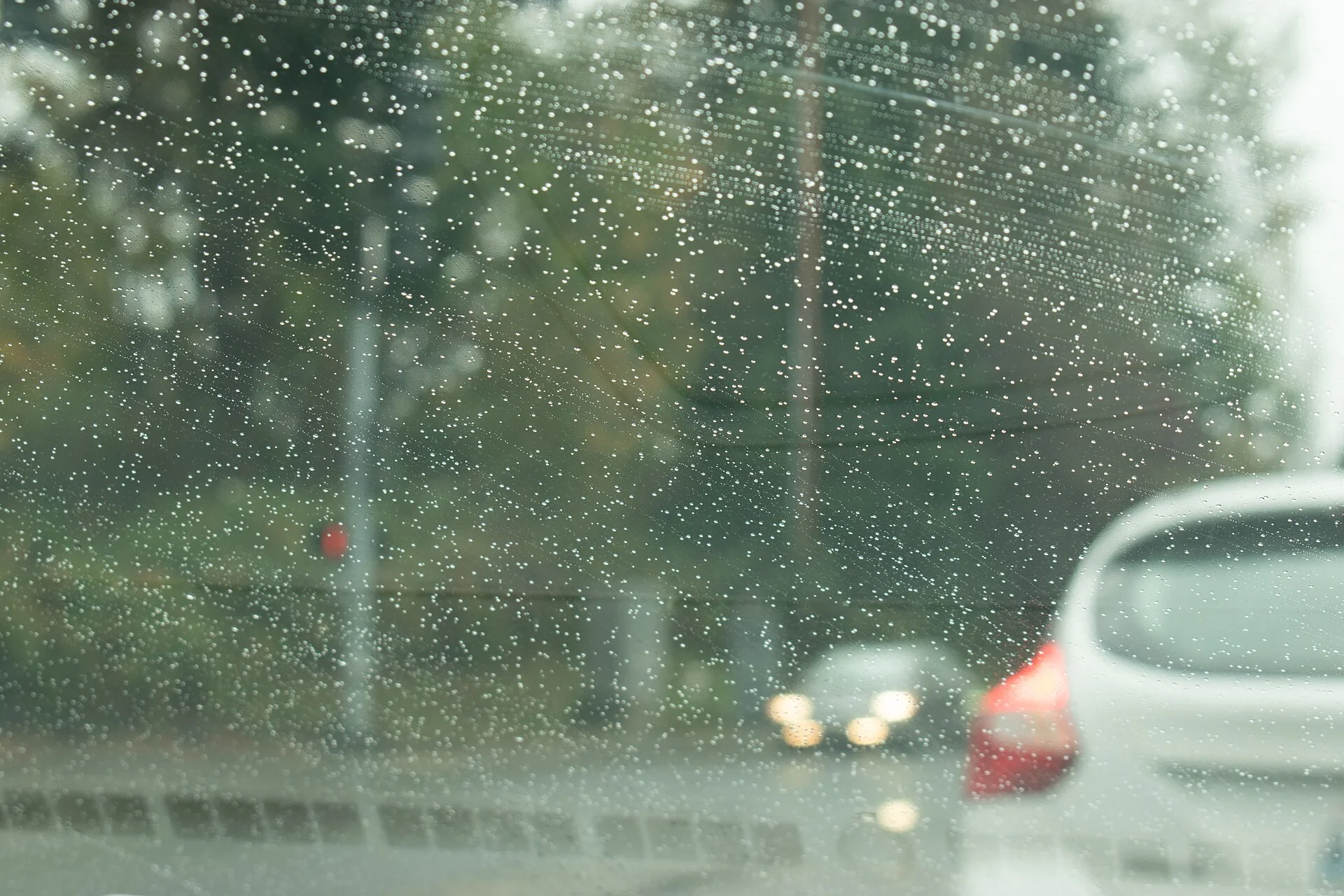
Why Your Car Windows Fog Up Overnight (and How to Stop It)
You sealed the car up for warmth and privacy, slept fine, and woke up to windows running with water and a windshield you can barely see through. That fog is not a leak and it is not a sign anything is wrong with the car. It is condensation: every breath you take all night puts water vapor into the air, and when that warm, humid cabin air touches the cold glass, the vapor turns back into liquid and films the windows. One sleeping adult exhales most of a liter of water over a night; two people put in roughly twice that, and the glass is exactly where it all shows up first.
Fixing it has two halves, and people usually only think about one. The first half is clearing the glass fast in the morning so you can actually drive away — and there is a right way to use your car's own defroster and air conditioner that works far quicker than just blasting heat. The second half is preventing the fog from forming in the first place, mostly by letting a little air move through the cabin and adding less moisture before bed. This guide covers both, plus a quick way to tell whether the fog is on the inside or the outside, because that one detail changes the entire fix.
If you want the full picture on managing overnight moisture beyond the glass — damp bedding, mildew, and the dew point in general — the companion guide on how to reduce condensation when sleeping in a car goes deeper on the whole-cabin side. This page stays focused on the windows themselves: why they fog, how to clear them in minutes, and how to wake up to glass you can see through.
First, Check Which Side Is Fogging: Inside or Outside?
Before you do anything, run a two-second test, because interior fog and exterior fog have opposite fixes and treating the wrong one wastes time. Reach out and swipe the glass with a finger:
- The swipe clears it and your fingertip comes away wet — the fog is on the inside. This is the classic overnight-sleeping and cold-weather case: warm, moist cabin air condensing on cold glass. Almost everything in this guide is aimed at this one.
- The swipe does nothing and the fog stays put — it is on the outside. That is dew or mist from humid outdoor air settling on glass that is colder than the surrounding air, and you clear it with wipers, not the defroster.
Which one you get depends on the season and where the cold is. On a chilly night with you warm inside, the glass is coldest on its inner face, so the moisture condenses inside. On a warm, muggy morning after the cabin has cooled — or after the AC has been running — the glass can be colder than the humid air outside, and the fog forms on the outside instead. Knowing the side first means you reach for the right control instead of fighting the fog from the wrong direction.
Most car-camping fog is interior fog, so the rest of this guide assumes that unless a section says otherwise. The summer and exterior case gets its own section near the end, because the fix genuinely flips.
Why the Glass Fogs Before Anything Else in the Car
Condensation forms on whichever surface is coldest, and inside a car at night that is always the glass. A window is thin, has no insulation, and sits in direct contact with the cold night air on the other side, so it sheds heat fast and its inner surface runs several degrees colder than the seats, the headliner, or the plastic trim. Air can only hold so much water vapor at a given temperature — the warmer it is, the more it holds — and the temperature at which it can hold no more is the dew point. The moment air touches a surface below that dew point, it has to let go of its water, and it lets go on the glass.
This is why you can wake up with soaking windows while the rest of the cabin feels merely a little humid. It also explains why the windshield is often the worst of all: it is the largest single pane, it is angled to catch your warm exhaled air as it rises and rolls forward, and it has the most cold outside air sweeping across it. The big flat windshield and the side windows nearest your head will fog long before a small rear quarter-glass does.
The temperature gap is the whole game. On a 35-degree night with the cabin warmed to the low 60s by two sleeping bodies, the air inside might be carrying plenty of moisture comfortably — until it drifts against glass sitting in the high 30s. That glass is well below the air's dew point, so the thin layer of air right at the window instantly gives up its water. You are not seeing the cabin's overall humidity on the glass; you are seeing the dew point being crossed at the one coldest surface in the car. Raise the glass temperature, lower the cabin humidity, or both, and that crossing simply never happens.
Two practical conclusions fall out of this. First, anything that keeps the inner glass surface warmer — insulation against the glass, a touch of cabin warmth, a small air gap — pushes that surface back above the dew point and stops it collecting water. Second, anything that lowers the humidity of the cabin air means the dew point drops below the glass temperature, and the fog never has the moisture to form. Every real fix in this guide is one of those two levers: warmer glass, or drier air.
The Fast Morning Defog: Defroster + AC + Fresh Air
When you need to drive away now and the windshield is filmed over, do not just crank the heat and wait — that is the slow way, and on a cold morning it can actually make interior fog worse for the first minute as warm air picks up more moisture. Run this sequence instead, and the glass clears in a couple of minutes:
- Start the engine and select the defrost setting so airflow points at the windshield and front side windows instead of your feet.
- Turn the air conditioner ON — yes, in winter too. The AC evaporator dries the air passing over it, and dry air pulls the condensation off the glass far faster than warm air alone. This is exactly why most cars switch the AC compressor on automatically the instant you choose defrost.
- Turn recirculation OFF (fresh air ON) so the system draws in drier outside air instead of recycling the saturated cabin air you have been breathing all night. Leaving recirculation on traps the moisture inside and keeps the fog coming back.
- Set the temperature warm to raise the glass back above the dew point once the air is already being dried — warm and dry is the combination, not warm alone.
- Crack a window an inch for the first minute to give the humid air somewhere to leave, and wipe the worst of the film with a microfiber towel — not your bare hand, which smears oils that make the next fog cling harder.
If you are not running the engine yet — say you are still parked and just want to see out — a clean microfiber towel and a quick crack of two windows will clear interior fog on their own, just more slowly than the powered defroster. Never sit in a sealed car idling to defrost with snow packed around the exhaust; that is a carbon monoxide risk covered in the safety section below.
Stop It Overnight: Crack the Right Windows for Cross-Ventilation
The single most effective way to wake up to clear glass is to never let the cabin humidity build up to the dew point in the first place, and the cheapest way to do that is airflow. Crack two windows on opposite sides of the car — diagonally across from each other works best — by just an inch or two each. That small gap lets the warm, moist air you are exhaling drift out and lets drier outside air replace it, holding the cabin humidity low enough that the glass never reaches its dew point.
You do not need them wide open, and you should not, for warmth and security. An inch on each of two windows moves a surprising amount of air over a night. Put the bigger gap on the downwind, sheltered side so a breeze does not blow straight onto your face, and skew the openings toward the windows farthest from your head so the draft is gentle. With two people in the car you are adding twice the moisture, so open the gaps a little wider — the fog load scales with how many of you are breathing in there.
The obvious objection is rain: who wants to crack a window in a downpour? This is what window deflectors, also sold as rain guards, are for — they clip or stick above the door windows and let you leave a gap open in wet weather without rain coming in. If you regularly sleep in the car in changeable weather, a set of rain guards turns 'I had to seal it up and woke up soaked' into a non-issue. A small rechargeable window fan aimed to push cabin air out through one of the gaps makes the same ventilation work even harder on a still, windless night when natural airflow is weak.
One common worry is that cracking the windows defeats the point of sleeping in the car at all — that you will freeze. In practice a one- to two-inch gap barely moves the cabin temperature, because the air exchange is slow and your sleeping bag is what keeps you warm, not the sealed cabin. A properly rated bag with a small vent gap is far warmer and drier than a too-light bag in a sealed, dripping car, where the condensation soaks your insulation and steals heat all night. If you are cold, the answer is more loft in your bag, not less ventilation. The handful of degrees you give up to airflow is repaid by waking up dry instead of clammy.
Add Less Moisture: The Sources You Control Before Bed
Ventilation removes humidity; this step is about not pumping so much in to begin with. Your breath is the one source you cannot switch off, but most of the rest are within your control, and cutting them means the airflow you do have keeps up easily instead of losing the battle.
- Do not boil water, cook, or brew coffee inside the sealed car. Boiling a single mug of water releases a startling amount of steam straight into the cabin — do it with the door open or outside.
- Keep wet gear out of the sleeping space. Damp jackets, towels, boots, swimsuits, and a wet dog all evaporate into the air all night. Bag wet items and stash them in the trunk or footwell away from where you sleep.
- Do not dry clothes in the cabin overnight. A drying line of laundry is a humidifier; it can single-handedly fog every window.
- Brush off snow before you climb in, and shake out anything frosty — melting snow inside is pure added water.
For a slow background assist, a desiccant moisture absorber — a calcium-chloride tub or a sock of silica gel set near the glass — quietly pulls water out of the air as you sleep. It will not out-run your breath on its own, but paired with cracked windows it shaves the peak humidity down. Think of it as helping the ventilation, not replacing it. For the full rundown on managing the cabin's overall moisture load over multiple nights, the dedicated guide on reducing condensation when sleeping in a car covers bedding, mildew, and longer trips in depth.
Anti-Fog Treatments and Why Clean Glass Matters
You can also treat the glass itself so that any condensation that does form stays clear instead of turning into a view-blocking haze. An anti-fog treatment leaves a thin surfactant film on the inside of the window; when moisture hits it, the water spreads into a flat, transparent sheet instead of beading into thousands of tiny droplets that scatter light and look like fog. The water is still there — you just see through it.
You have three easy options, and they all work on the same principle:
- A commercial anti-fog spray made for automotive interior glass is the cleanest, longest-lasting choice — wipe it on clean glass and buff it off.
- The shaving cream trick: smear a thin layer of plain (not gel) shaving cream on the inside of the glass and buff it out completely with a dry cloth. It leaves the same kind of surfactant film for free.
- A couple of drops of dish soap on a damp cloth, rubbed thin and then polished out until the glass is clear, does the job in a pinch.
Whichever you use, the technique matters more than the product: apply a genuinely thin layer and buff it until the glass looks completely clear and streak-free, because any residue left thick will itself blur the view and attract grime. One treatment typically lasts several days to a couple of weeks of sleeping in the car before it needs redoing, and you will know it has worn off when water starts beading again instead of sheeting into a clear film. Treat the inside of the windshield and the front side windows first, since those are the ones you need clear to drive away safely in the morning.
None of these work on dirty glass, and that is the part people skip. The oily haze that builds up on the inside of a windshield — off-gassing from warm plastics, skin oils, old smoke residue — gives water extra footholds to cling to, so dirty glass fogs sooner, fogs denser, and clears slower. Clean the interior glass properly with an automotive glass cleaner (or a little vinegar and water) and a microfiber towel first; you may find that the clean glass alone fogs noticeably less, before you add any treatment at all.
Insulate the Glass: Window Covers and Reflective Panels
The other lever — keeping the inner glass surface warmer so it stays above the dew point — is mostly about insulation. Reflective window covers or foam-backed panels cut to fit each window do double duty: they trap a thin layer of still air between the panel and the glass, which keeps the inner surface warmer, and they physically intercept whatever condensation still forms so it collects on the panel rather than streaming down the window and onto your bedding.
This is the same reason a covered, insulated window in a house sweats less than a bare single pane. In the car, a snug set of reflective covers also buys you privacy and blocks morning light, so it is one of the higher-value upgrades for anyone sleeping in their vehicle regularly. The trade-off is that covers alone, with no airflow, can let humidity build up in the cabin even as the glass stays clearer — so use them with cracked windows, not instead of them. The covers keep the glass warm and catch the drips; the ventilation carries the moisture away. A fitted set of window covers is worth sizing properly to your specific vehicle so they seal at the edges and actually hold that warm air gap.
In a real cold snap, a little gentle cabin warmth helps too, because warmer glass simply will not condense. The catch is that any warmth source has to be safe and dry — which rules out anything that burns fuel inside a closed cabin, as the next section explains.
Summer, Exterior Fog, and the Safety Line You Never Cross
Everything above assumes interior fog, which is the overnight norm. But in warm, humid weather the problem can flip to the outside of the glass. When the cabin is cooler than the muggy air outside — after a night, or after the AC has run — water from the outside air condenses on the cold outer surface, exactly like dew on grass or sweat on a cold drink. The tell is the wipe test from the first section: if the swipe does nothing, the fog is outside. The fix is the opposite of winter — a pass of the wipers clears it, and you want the glass slightly warmer, not colder, so easing off hard AC on the windshield and using a touch of warm defrost actually helps. Blasting cold AC at exterior fog can keep feeding it.
The one rule that overrides every other tip here is the safety line: never run the engine, a fuel-burning heater, or a camp stove inside a sealed car to defog the glass or stay warm. Burning fuel produces carbon monoxide, which is odorless, colorless, and can kill you in your sleep; a tailpipe blocked by snow or an engine idling in an enclosed space are documented killers. If you do idle briefly to run the defroster, make sure the exhaust pipe is clear and crack a window. No clear windshield is worth that risk — the ventilation that prevents fog is the same ventilation that keeps the air safe to breathe.
Finally, close the loop each morning. Condensation that ran down onto your bedding leaves it damp, and damp bedding feels colder and feeds the next night's fog with even more moisture. Wipe the glass and the door seals dry, run the defroster for a minute, and air your bedding out during the day. Break that cycle and a single foggy morning never compounds into a week of clammy, dripping nights of car camping.