

The Short Answer
When your trunk fills up before your packing list does, the two mainstream fixes are a rooftop cargo box bolted to roof crossbars or a small utility or cargo trailer towed behind the car. Both add real space, but they make opposite trade-offs, and the right pick depends far more on how you travel than on which one is “better” in the abstract.
Choose a roof box if you want the cheaper, simpler option: it needs no hitch, parks in any normal spot, and is easy to live with day to day. The price is fuel economy — the box sits in clean air on top of the car and adds drag — plus a hard weight ceiling set by your vehicle’s roof rating, and the chore of lifting gear overhead.
Choose a trailer if you need serious capacity or to haul heavy, bulky, or dirty items: a small trailer carries far more weight and volume than any roof box, loads at waist height, and hurts fuel economy less per pound because it adds weight rather than a big slab of frontal area. The price is a hitch, a bigger up-front cost, harder parking, the skill of backing up, and somewhere to store it between trips.
If you remember nothing else, remember this: the two carriers are not really competing on the same axis. A roof box optimizes for convenience and low cost at the expense of capacity and fuel; a trailer optimizes for capacity at the expense of convenience and money. Match the tool to the trips you actually take — not the once-a-year mega-haul you imagine — and the decision usually makes itself. The rest of this guide walks each factor in turn so you can see exactly where each option earns or loses its keep, and ends with a third middle-ground option many drivers overlook.
How Each One Works — and Why That Drives Every Trade-off
Almost every difference between these two comes straight from where the load sits. Understand the mechanism and the rest of this comparison becomes obvious rather than a list of specs to memorize.
- A roof box sits up high in fast-moving air. It rides on your crossbars in the clean airstream above the roof, so its main cost is aerodynamic drag — extra frontal area the engine has to push through the wind at speed.
- A trailer rolls on its own wheels behind you. It carries its load close to the ground in your car’s wake, so its main cost is towed weight and rolling resistance, not a big aerodynamic slab punching into clean air.
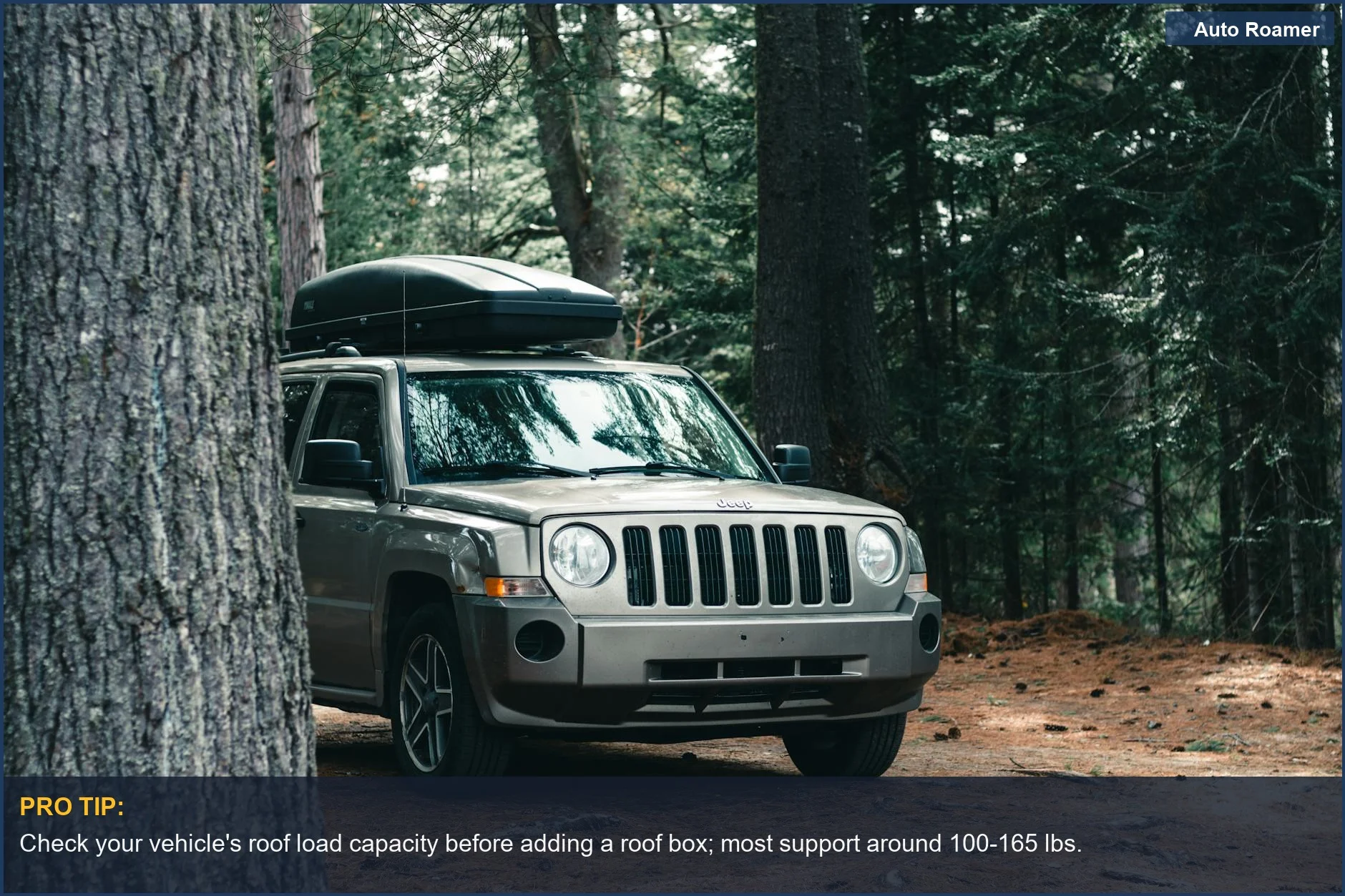
- The roof has a strict weight limit; the trailer has a much higher one. Your roof’s dynamic load rating is low — often only 100–165 lb including the box itself — while a small trailer is rated to carry many hundreds of pounds.
That single contrast — load up in the wind versus load down on wheels — explains the fuel-economy gap, the capacity gap, the loading-height difference, and even the parking headache. Keep it in mind as we work through each factor below. If you are still deciding whether you need any extra carrier, our guide on whether a roof box is worth it for camping is a good first read.
There is a second-order effect of the box riding high and the trailer riding low that is easy to miss but matters in practice. A loaded roof box raises the car’s center of gravity, which can make the vehicle feel slightly less planted in crosswinds and fast corners — not dangerous within sensible limits, but noticeable. A trailer does the opposite: its weight sits low and behind the rear axle, so the handling change is about the trailer following, swaying, or pushing the car, not about the car itself tipping. These are different driving feels, and which one bothers you is worth weighing if you drive a lot of mountain or windy-highway miles.
One more mechanism is worth naming because it shapes the whole ownership experience: setup and teardown effort. A roof box, once your crossbars are on, is a quick clamp-and-go affair, and you load it the same way you load a trunk — just higher. A trailer demands a short ritual every trip: hitch it, plug in and test the lights, check tire pressure, and confirm the load is balanced over the axle. None of that is hard, but it is a recurring few minutes and a recurring chance to forget a step. If you value grab-and-go simplicity, that difference compounds across a season of trips.
Capacity: How Much Each One Actually Carries
Capacity is two numbers, not one: how much volume fits and how much weight you may legally and safely carry. A roof box and a trailer land in completely different leagues on both, and conflating them is the most common buying mistake.
A typical rooftop cargo box holds roughly 11 to 22 cubic feet — enough for soft, bulky, lighter items such as sleeping bags, duffels, jackets, camp chairs, and tents. The catch is weight: the limiting factor is your roof’s dynamic rating, not the box’s size. Once the empty box (often 35–55 lb) is subtracted, you may only have room for 50–100 lb of cargo, so a box rewards low-density gear and punishes anyone trying to stash tools, water jugs, or firewood up top.
A small utility trailer changes the math entirely. Even a compact 4x6 or 5x8 model offers many times the usable volume of any box and is commonly rated to carry several hundred to over a thousand pounds. That headroom is what lets you haul bikes, coolers full of ice, generators, kayaks, lumber, or a motorcycle — loads no roof box could ever legally take. For pure hauling capacity, the trailer wins decisively and it is not close.
Rule of thumb: a roof box is for bulk without much weight; a trailer is for weight and bulk together. If your overflow gear is heavy or dirty, the roof is the wrong place for it.
It is worth being honest about what those volume figures feel like in practice. A 16-cubic-foot box swallows the soft, awkward items that eat trunk space — the pillows, comforters, jackets, and a family-sized tent — and for many road-tripping families that is exactly the overflow they have. They do not need to haul a generator; they just need the cabin back. For that buyer, the box’s modest weight ceiling is irrelevant because their overflow was never heavy to begin with, and the trailer would be wild overkill that sits unused fifty weeks a year.
The trailer buyer is a different person with a different problem. They are moving mountain bikes, a cooler packed with ice and food for a week, a generator and fuel cans, or building materials for a project at the cabin. No roof box can legally or safely take that load, and trying to force it onto the roof is how people exceed their roof rating without realizing it. If your honest packing list includes anything dense and heavy, capacity alone settles the question in the trailer’s favor before you even look at cost or fuel.
Fuel Economy: Drag Up Top vs. Weight Behind
This is the factor people most often get backwards. A roof box and a trailer both cost you fuel, but for different physical reasons, and at highway speeds the roof box is usually the bigger penalty per pound of cargo — because aerodynamic drag, not weight, dominates fuel use once you are cruising.
- A roof box adds frontal area. Sitting in clean air on top of the car, it forces the engine to push a larger profile through the wind. Drag rises sharply with speed, so the hit is worst exactly where road trips spend their time — the highway. Real-world reports commonly cite meaningful MPG losses with a loaded box, larger the faster you drive.
- A trailer mostly adds weight and rolling resistance. Because it rides low in the car’s wake rather than up in clean air, a small trailer’s aerodynamic penalty is gentler than a roof box’s for a given load. You still pay for the extra mass and the tires, but per pound carried the efficiency hit is often smaller, especially on a big haul.
The practical upshot: for a small, light load on mixed roads, a roof box’s drag penalty is modest and the convenience usually wins. For a large or heavy load — or lots of fast highway miles — a trailer often costs less fuel per pound carried because you are not dragging a wall of frontal area through the air. Whatever you choose, the biggest single fuel saver is removing the carrier when it is empty. Our deep dive on rooftop cargo box aerodynamics and fuel efficiency covers the box side in detail.
Two nuances keep this from being a clean trailer win, though. First, drag scales with the square of speed, so a roof box driven at a steady 60 mph costs far less than the same box at 80 mph — ease off the throttle and much of the penalty shrinks. Second, a trailer’s extra weight bites hardest in stop-and-go and on long climbs, where you are constantly accelerating mass rather than fighting wind. So the “winner” flips with how and where you drive: a box punishes high-speed flat-highway cruising, while a trailer punishes hilly, heavily loaded, frequent-stop driving.

Cost: Buying In, Hitch, and Total Outlay
Up-front cost is where the roof box looks most appealing, but the honest comparison has to count everything each option requires before it can carry a single bag — not just the headline price of the box or trailer.
Roof box total cost assumes you already have a roof rack. If you do, a cargo box is a single purchase. If you do not, you must add crossbars and a vehicle-specific fit kit on top of the box, which can rival the box’s own price. A soft cargo bag is the budget entry point if money is tight; our roundup of the best soft roof cargo bags covers that route, and the best rooftop cargo boxes guide covers hard boxes.
Trailer total cost is higher and has more line items: the trailer itself, a hitch receiver installed on your car, a ball mount and ball of the right size, wiring for the trailer lights, and sometimes a brake controller for heavier setups. A bare utility trailer can be affordable used, but a new enclosed cargo trailer climbs quickly, and the hitch install is a real cost on a car that lacks a tow package.
If you already own a roof rack and only overflow a little, a box is the cheaper answer by far. If you tow often or already have a hitch, the trailer’s extra cost buys capacity a box can never match.
Resale and longevity quietly tilt the long-run math, too. A quality hard cargo box holds its value well and can outlast several vehicles, and it carries over to your next car if you keep compatible crossbars — so the per-year cost is low if you actually use it. A utility trailer also holds value and can be sold on easily, but it incurs ongoing costs a box never does: tires that age out, bearings that need grease, lights and wiring that corrode, and possibly annual registration. Neither is throwaway, but the trailer has a maintenance tail that belongs in any honest total-cost comparison. See our top rooftop cargo box picks for families.
Towing, Licensing, and Backing Up
This category has no roof-box equivalent — and it is the single biggest reason some drivers rule a trailer out before cost or capacity ever enter the conversation. A roof box asks nothing new of you as a driver; a trailer does.
- Hitch and connections: A trailer requires a hitch, the correct ball size, and a wired light connector. A roof box just clamps to crossbars and needs no electrical hookup at all.
- Licensing and rules: Towing rules vary by location and trailer weight — some places require a specific license endorsement, trailer registration, plates, or safety chains above certain weights. A roof box has no such requirements anywhere; if it fits your roof rating, you simply drive.
- Driving skill: Towing changes how the car stops, turns, and — the part that intimidates most people — reverses. Backing up a trailer is a learned skill, and tight campsites or driveways punish the unpracticed. A roof box drives exactly like your car, just taller.
Speaking of taller: a roof box raises your vehicle’s overall height, so low garages, drive-throughs, and parking structures become hazards you must remember every single time. So neither option is truly “just drive normally,” but the trailer’s learning curve and legal overhead are steeper, while the box’s gotcha is simply remembering your new height.
Safety on the road differs in kind, not just degree. A roof box’s main risks are forgetting your added height and overloading the roof; both are avoidable with a little discipline. A trailer adds the possibility of sway — a side-to-side oscillation that can build at speed if the load is too far back, too light on the tongue, or pushed by a gust or a passing truck. Loading heavier items forward of the trailer’s axle to keep proper tongue weight, and not overspeeding, are the standard fixes, but they are skills a box never asks you to learn. If towing is new to you, build up on quiet roads before committing to a busy holiday-traffic trip.
Parking, Storage, and Loading Ergonomics
How each option behaves the other 360 days a year — when you are not on the road trip — matters as much as how it performs loaded. This is where the roof box quietly wins back a lot of ground it lost on capacity.
Parking and maneuvering heavily favor the box. A car with a roof box still fits a normal parking spot, parallel parks, and uses the garage (height permitting). A trailer roughly doubles your vehicle’s footprint, needs pull-through or oversized spaces, and turns every tight lot or city street into a planning exercise.
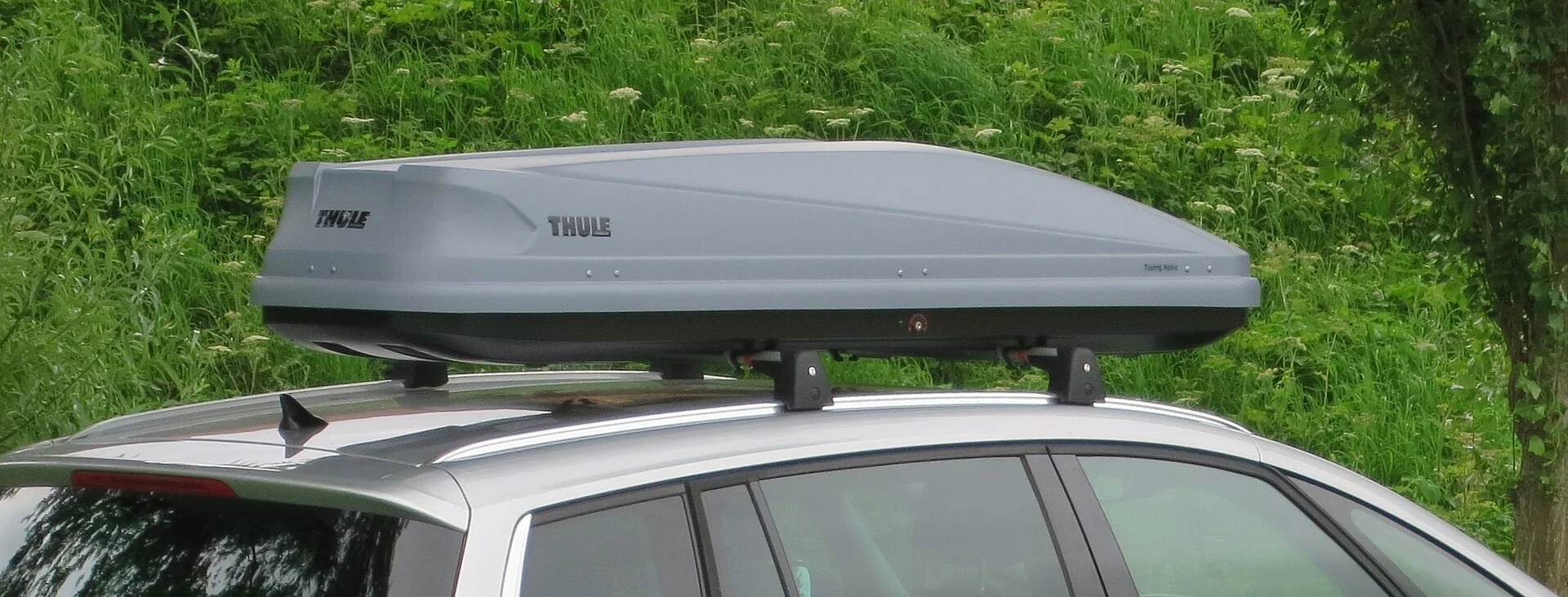
Storage between trips also favors the box only slightly less. A box can be lifted off and stood in a garage or hung from the ceiling; it takes real but modest space. A trailer needs a dedicated parking pad, driveway slot, or storage rental, and many neighborhoods and HOAs restrict trailer parking — a cost and hassle that is easy to forget at purchase.
Loading ergonomics flip the script back toward the trailer. Loading a roof box means lifting gear over your head — awkward, hard on your back, and worse for short drivers, tall vehicles, or heavy items. A trailer loads at waist height; you can roll, slide, or even drive items aboard. If you regularly move heavy or bulky things, the trailer’s low deck is a genuine, daily-felt advantage over reaching above the roofline.
Weather and security round out the everyday picture. A hard roof box locks and is fully weatherproof, so gear stays dry and reasonably theft-resistant even at a motel overnight — though anything on the roof is out of sight and harder to check. An open utility trailer leaves cargo exposed to rain and prying eyes unless you add a tarp or tonneau, while an enclosed cargo trailer locks up like a small garage on wheels but costs and weighs much more. Factor in how often you stop overnight and how valuable your load is, because the cheapest version of each option protects your gear very differently.
When Each Wins — and the Hitch-Carrier Middle Ground
There is no universal winner, only the right tool for your trips. Here is the honest way to decide without overthinking it — and a third option worth knowing about before you commit to either extreme.
- Pick a roof box if you carry light, bulky gear a few times a year, already have (or will add) a roof rack, want to keep parking and storage easy, and don’t want the cost or learning curve of towing.
- Pick a trailer if you haul heavy, dirty, or oversized loads, need far more capacity than any box, value waist-height loading, and have a hitch (or will fit one) plus somewhere to store it.
- Consider neither extreme if your overflow is moderate and you want most of the trailer’s ease without the full towing commitment.
That third path is the hitch-mounted cargo carrier — a platform or basket that slots into a hitch receiver and rides low at the back of the car. It sidesteps the roof box’s overhead lifting and worst drag, and avoids the trailer’s separate wheels, backing-up skill, and storage footprint, while still needing a hitch. It carries less than a trailer and can block rear access, but for many drivers it is the sweet spot. We compare it directly against a box in our roof box vs. hitch carrier guide.
Whatever you choose, size the load to the limits first: a roof box to your roof’s dynamic rating, a trailer to your car’s towing capacity and the trailer’s own rating. If you lean toward a box, our cargo box sizing guide helps you match it to your rack and gear; if you lean toward towing, match the hitch and wiring to your vehicle before you shop the trailer.
A useful final filter is frequency. If you overflow your trunk only once or twice a year, do not over-buy: a soft cargo bag or a modest hard box handles the annual ski week or camping trip for the least money and zero year-round hassle. If you haul most weekends — to the trailhead, the lake, the job site — the trailer’s cost and storage burden amortize fast and its capacity stops feeling like overkill and starts feeling essential. The hitch carrier sits naturally in between, for the driver who hauls fairly often but never needs trailer-scale volume. Buy for the trips you take routinely, not the extreme you take rarely, and you will rarely regret the choice.