The Short Version
Powering a hidden dashcam setup for extended car camping trips means you need a way to keep that little eye recording even when the engine is off, without draining your main car battery dry. This isn't about fancy features; it's about having a record if something happens while you're off hiking or sleeping. My first attempt involved a cheap cigarette lighter adapter and I woke up to a dead car at a campsite in the Smokies.
That was a $200 tow truck ride I'll never forget. Powering your dash cam requires thinking beyond the simple plug-and-play. You need a dedicated solution for those silent hours, especially when cell service is nonexistent and you're miles from anything resembling help. The honest version is, you can't just plug it into your car and expect it to work overnight without consequences.
Discreet setups often mean you can't easily access the power button or see the status light, so you need to trust your power source. This is where things get interesting for the weekend warrior.
The Core Answer
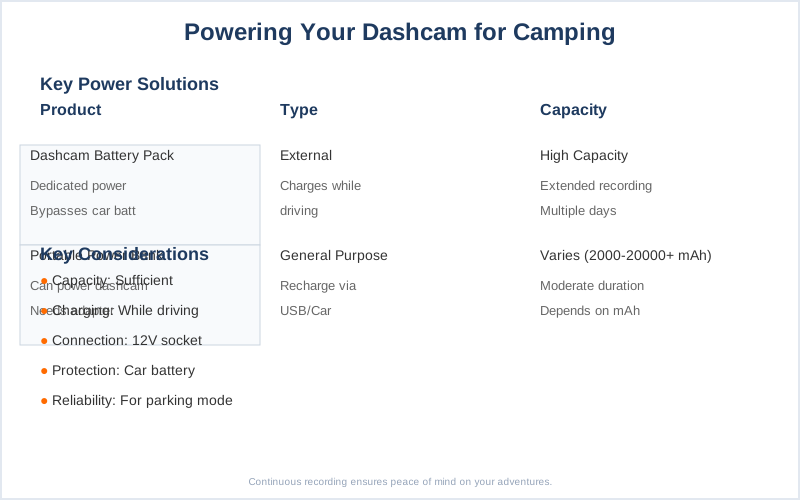
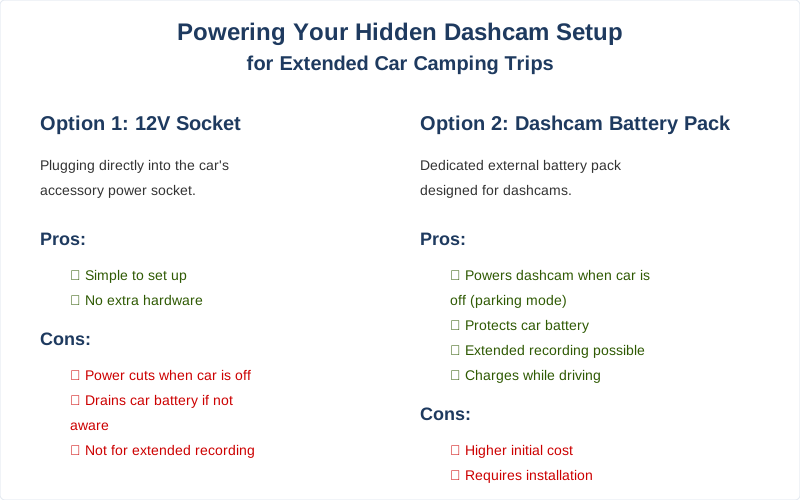
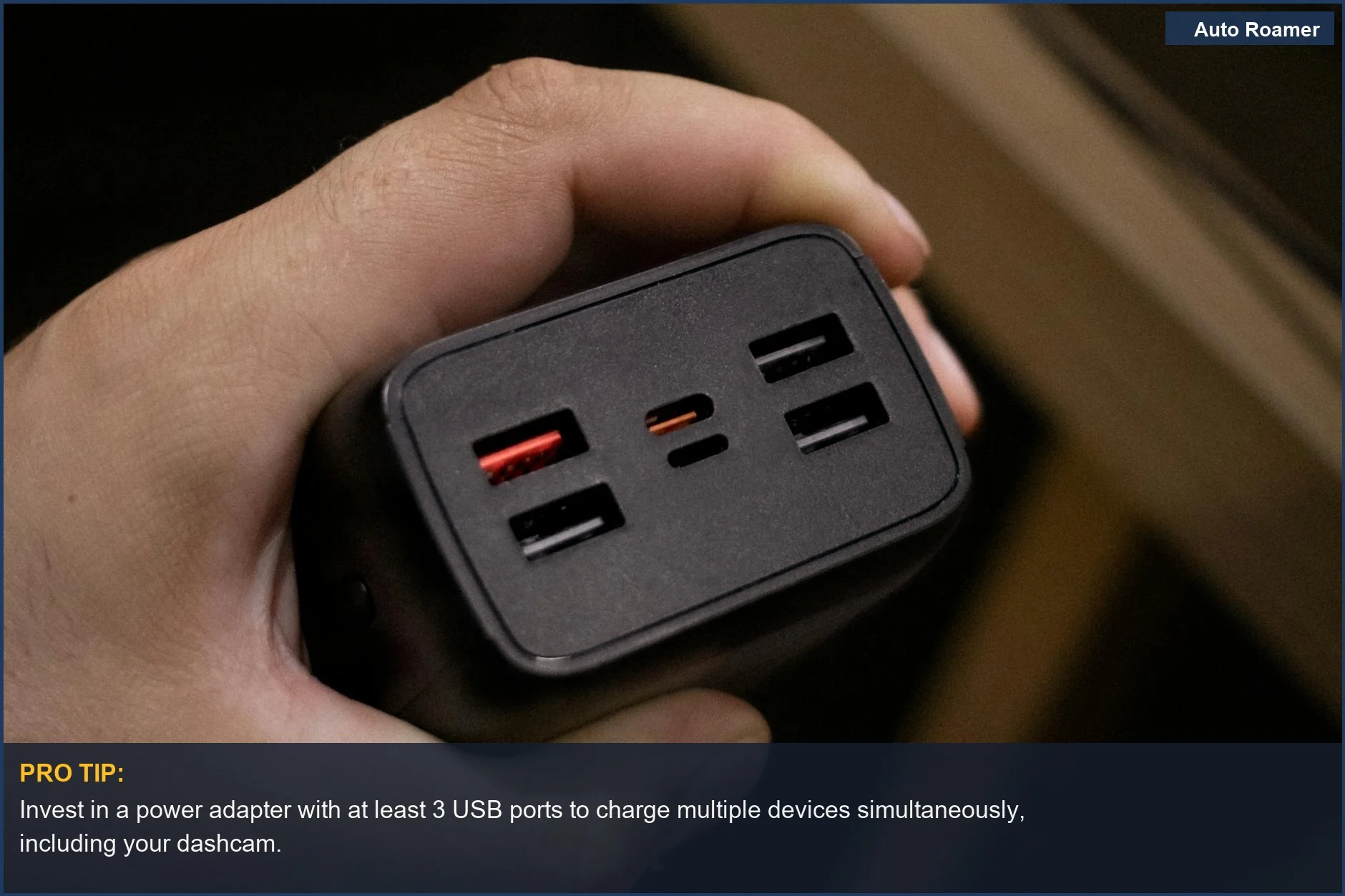
The real move for powering a hidden dashcam during car camping without killing your car battery is a dedicated power bank, often called a dashcam battery pack. Think of it as a portable battery just for your camera. This unit charges while you're driving, and then it takes over when the car is off, keeping your dashcam running in parking mode. It's the $50 version of not having to worry about your car not starting after a night of recording.
I learned this the hard way when my Civic wouldn't turn over after a chilly night at Big Meadows campground. The fix was a $70 battery pack that paid for itself with that one tow truck bill. Powering your dash cam for longer parking surveillance is key, and these packs are designed for it. The honest version is, you're essentially giving your dashcam its own little power supply.
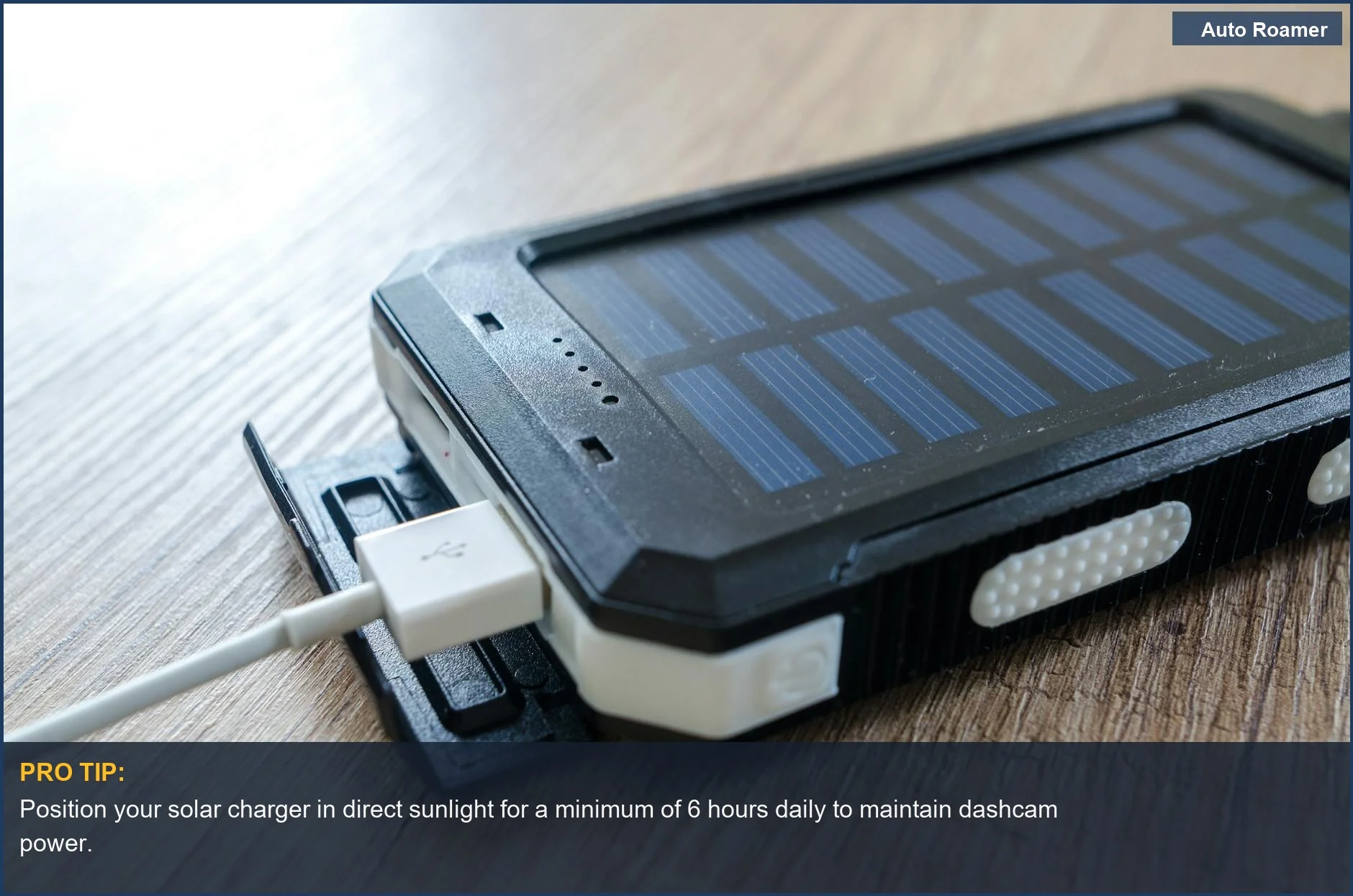
These packs have a capacity measured in milliampere-hours (mAh), and the higher that number, the longer your dashcam can record. For a typical overnight at camp, you'll want something with at least 10,000 mAh. This is game-time for your peace of mind. You can also find some that can be recharged via USB, which is handy if you have a portable solar panel setup.
My buddy tried running his dashcam off a massive portable jump starter once, and let's just say it was overkill and not designed for that kind of constant draw. It's about matching the power source to the need, not just grabbing the biggest battery you can find. The key is that it charges from your car's 12V system while you drive, and then it has its own internal battery to power the dashcam when the car is off.
Hardwiring directly to your car without this buffer is how you end up with a dead car. This approach separates the dashcam's power needs from your vehicle's critical starting power.
Why This Matters for Your Setup
Why does this matter for your setup? Because a dead car battery when you're miles from civilization is more than an inconvenience; it's a potential safety issue. Imagine being at a remote campsite, needing to record something, and then realizing your car won't start. That's a rookie mistake I made on my second trip, thinking the cigarette lighter adapter was enough. Alternative powering for dashcams is crucial for that peace of mind.
You want your dashcam to be a reliable witness, not a drain on your escape vehicle. A dedicated battery pack means your dashcam can keep recording for hours, even days, depending on its capacity and your dashcam's power draw. This is especially important if you're using a dashcam with advanced parking mode features that detect motion or impacts. Without a separate power source, these features would quickly drain your car's main battery.
The honest version: you're investing in security and convenience. It's the difference between capturing an event and being stranded. Lithium battery safety is also a factor here; these dedicated packs are designed with safety in mind for continuous use.
Making the Right Choice
Making the right choice for your dashcam's power source while car camping boils down to reliability and avoiding a dead car. Don't be like me on my first few trips, struggling with dead batteries and expensive tow trucks. The upfront cost of a dedicated power pack, often in the $70 to $150 range, is a small price to pay for the security it provides. This is the $50 version of peace of mind.
You're not just buying a gadget; you're buying assurance. Choosing the right power source means understanding your dashcam's power draw and how long you want it to record in parking mode. Consider the capacity in mAh; higher is generally better for longer recording times. Always ensure it charges efficiently from your car's 12V system. This is the real move for seamless operation.
The honest version: invest in a solution designed for this purpose, not a jury-rigged setup that could leave you stranded. Proper installation ensures it works when you need it most.