
What Pollutants Can a Car Air Purifier Remove?
A car air purifier is a device designed to remove pollutants from the air inside your vehicle, aiming to improve the overall air quality for occupants. Think of it like a tiny lung for your car, working to filter out the nasty stuff you don't want to breathe.
A car air purifier is a device designed to remove pollutants from the air inside your vehicle, aiming to improve the overall air quality for occupants. Think of it like a tiny lung for your car, working to filter out the nasty stuff you don't want to breathe. These gadgets are becoming more popular as people realize just how much gunk can build up in a car's cabin, from exhaust fumes to dust kicked up from the road.
It's not just about smelling nice; it's about what you're actually inhaling on your daily drive. My first car had an interior that smelled perpetually like old gym socks and questionable fast food, and I just thought that was normal for a decade-old sedan. Turns out, I was just breathing recycled funk. The real move is to actively clean that air.
These purifiers use various technologies to tackle everything from microscopic particles to lingering odors, making your commute a little less toxic. Clean Air on Wheels is more than just a catchy phrase; it's a practical solution to a real problem.
The Core Answer
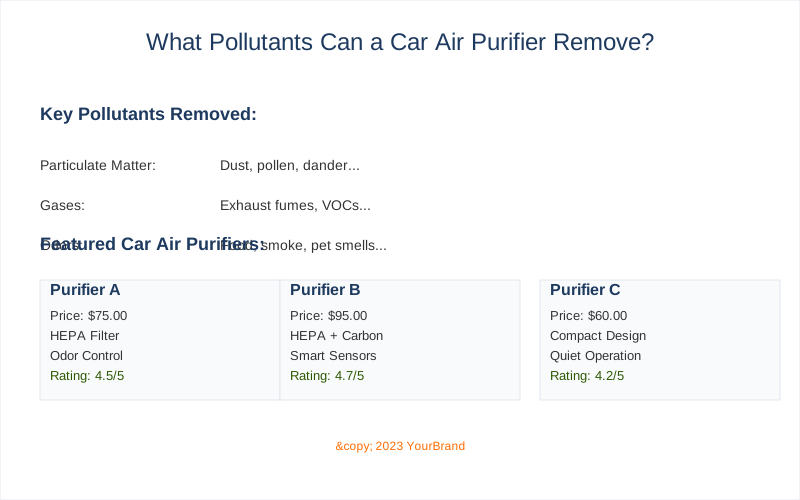
So, what exactly can these little boxes do? The main pollutants they target are particulate matter, gases, and odors. Particulate matter includes things like dust, pollen, pet dander, and soot from traffic. For this, you're looking at filters, primarily HEPA-style ones, which are basically super-fine nets. My first camping trip, I was inhaling pine needles and campfire smoke for days because I thought opening the window was enough. A good HEPA filter can trap 99.97% of particles down to 0.3 microns for cleaner air. This means it's catching most of the stuff that makes you sneeze or triggers allergies. A study showed HEPA purification can significantly cut down on traffic-related aerosols in residential settings, and your car is just a mini-residential setting on wheels traffic-related and other aerosols. Brilliant engineering, really. Then there are gases and odors. This is where activated carbon comes in. Think of activated carbon like a sponge that soaks up smelly molecules and volatile organic compounds (VOCs). VOCs are those nasty chemicals that off-gas from plastics, glues, and even air fresheners in your car. My old Civic smelled like a chemical factory after I tried to 'freshen' it up with a pine tree air freshener that lasted about 15 minutes before turning into something vaguely medicinal. Activated carbon is effective in trapping a range of pollutants, including VOCs volatile organic compounds (VOCs). Some purifiers also use ozone generation, but frankly, that's a bit sketchy. Ozone can break down pollutants, but it can also be harmful to breathe in high concentrations. I'd rather stick to filters and carbon for the $50 version of clean air. It's less about magic and more about physics, which is something I can get behind.Why This Matters for Your Setup
Why does this matter for your car setup? Because you're spending a lot of time in a small, enclosed space. My commute is about 45 minutes each way, and for years I just accepted whatever air was circulating. The honest version: that air is likely full of stuff you don't want. Vehicle emissions from other cars are a huge source of pollution, leaking in through vents or open windows. These can include carbon monoxide and nitrogen oxides dangerous levels of carbon monoxide, nitrogen oxides, and volatile organic compounds (VOCs). Plus, your car's interior materials themselves can off-gas VOCs. So, even if you're not driving through a smoggy city, your car can be its own little pollution factory. Consider allergens too. If you have pets or suffer from seasonal allergies, your car can become a breeding ground for dust mites, pollen, and pet dander. An air purifier can help remove allergens tracked into your car pet dander, dust, pollen and in-vehicle mould and spores. It's like having a mini-clean room for your commute. My dog sheds enough to knit a sweater weekly, so this is game-time for me. The goal is to reduce your exposure to these airborne irritants, making your drive more comfortable, especially if you have respiratory issues or sensitivities.Making the Right Choice
When you're looking at car air purifiers, remember it's not just about getting the cheapest thing. You need to consider what you want it to do. If odors are your main problem, activated carbon is key. If you're battling dust and pollen, a HEPA-style filter is your best bet HEPA Filter Based Media. Many units combine both, which is usually the most effective approach for a broad range of pollutants. Think about the size of your car too; a tiny unit in a large SUV might struggle. It's about finding the right tool for your specific situation. I learned this the hard way when my first 'powerful' little gadget barely made a dent in my minivan's interior. The honest version: read the specs and match them to your needs. Clean air in your car is achievable without breaking the bank, but it does require a little bit of research to ensure you're not just buying a fancy paperweight. Ultimately, it's about breathing easier on the road for cleaner air.Frequently Asked Questions
If I can just get a cheap filter online for $15, why would I pay $50 for a car air purifier?
Do I really need a special tool to install one of these car air purifiers?
What if I run one of these purifiers all the time and still smell exhaust fumes?
Can running a car air purifier for years damage my car's electrical system?
I heard that some air purifiers create ozone, and that's bad. So, are all car air purifiers dangerous?
🏅 Looking for Gear Recommendations?
Check out our tested gear guides for products that work with this setup:
Sources
- How effective are air purifiers in removing traffic pollution? - Reddit
- Choosing a Car HEPA Air Purifier - Oransi
- Clean Air on Wheels: Portable Air Purifiers for Cars - IQAir
- Buying an air purifier for your car - Eoleaf
- How Car Air Purifiers Remove Smoke, Dust & Traffic Pollution
- Effectiveness of a Portable Air Cleaner in Removing Aerosol ... - PMC