Setting the Scene
A check engine light on a used car isn't just a nuisance; it's a flashing red flag for potential thermal cycling issues or mechanical stress failure modes. The dealer wanted $40 for a basic scan, claiming it would 'diagnose the problem.' That's a scam. For $15-$20, you can grab a basic OBD2 scanner online and pull the codes yourself, saving hundreds on dealer diagnostics alone. You don't need their 'specialized tools' to read a standardized data stream.
Reddit users agree it's a smart move.
The Short Answer
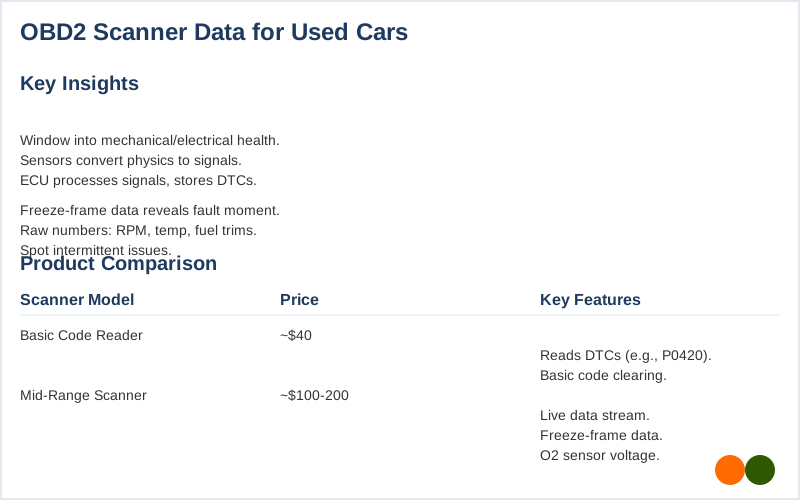
Every modern vehicle built after 1996 has an On-Board Diagnostics II (OBD2) system. It constantly monitors engine, transmission, and emissions components.
When a parameter deviates from its programmed tolerance-like an O2 sensor reporting an air-fuel ratio outside the expected lambda window-the PCM logs a Diagnostic Trouble Code (DTC) and illuminates the check engine light. This is a hard data point, not a subjective 'feeling' the car has. Basic scanners read these DTCs, giving you the specific problem code.
The Reality Check
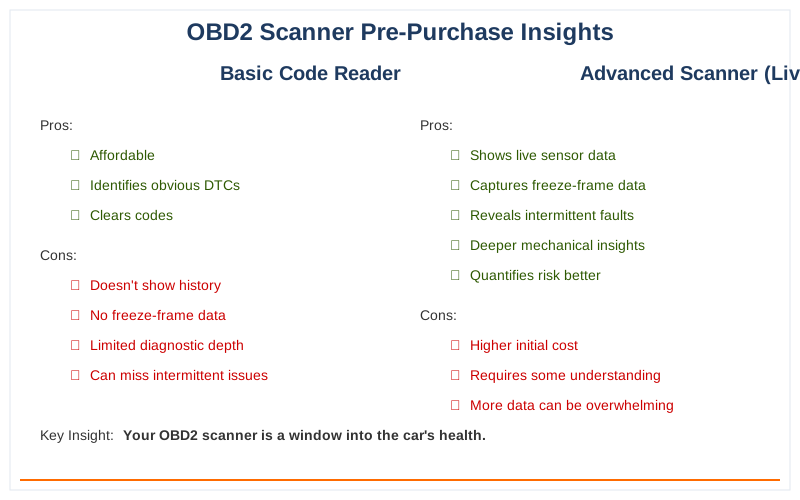
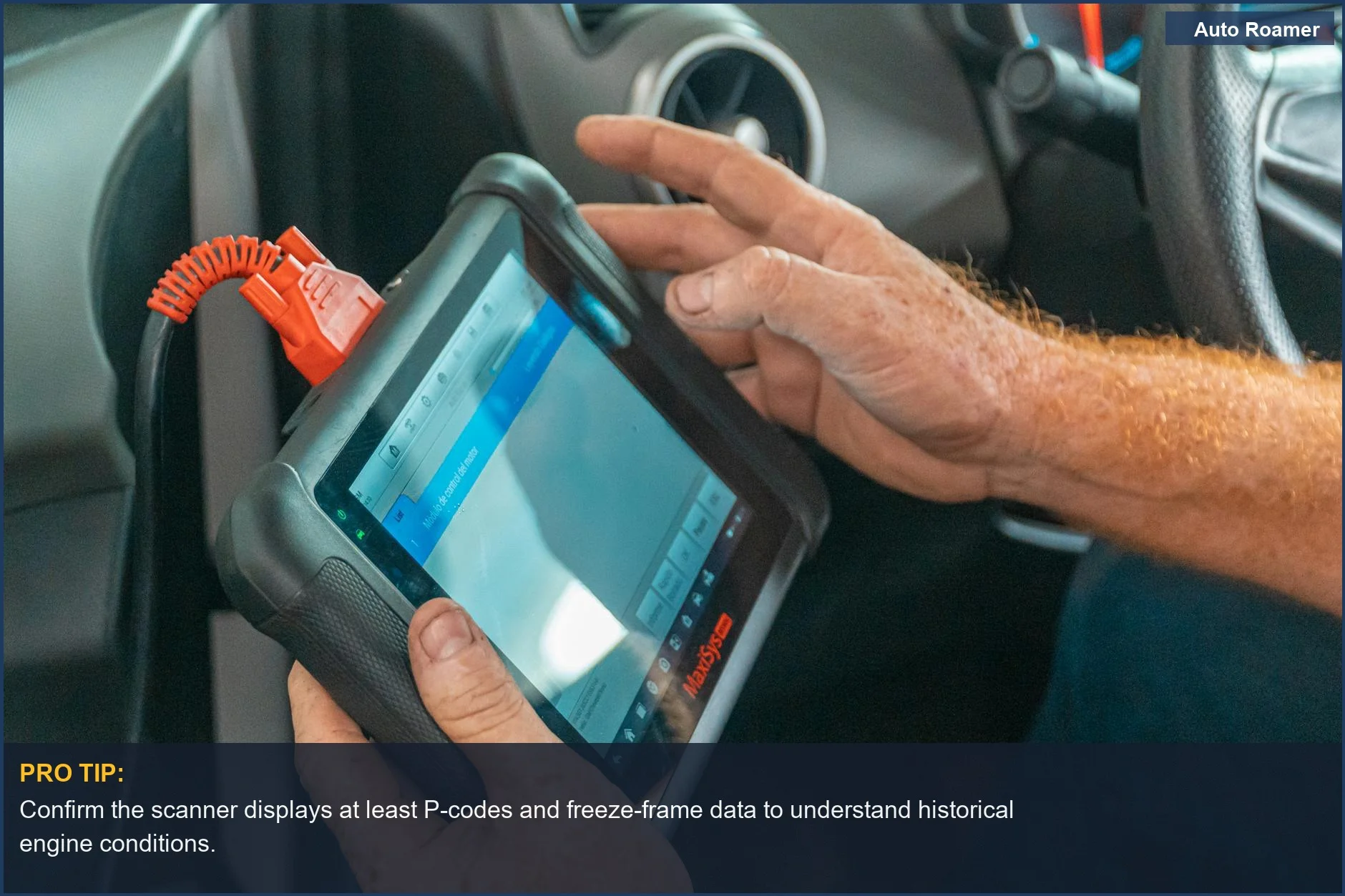
The reality is, most entry-level OBD2 scanners are designed to be cheap and tell you just enough to get you to the shop. They'll pull the P-codes (powertrain) and maybe some freeze-frame data, which is a snapshot of engine conditions at the moment the code was set. This is crucial for understanding the operating environment when the fault occurred, like engine RPM or coolant temperature. Don't expect live data streams of every sensor, especially on cheaper units.
Professional tools, often costing upwards of $500, can dive into body control modules or ABS systems, but for a pre-purchase check, basic engine and transmission data is your gold standard. Car and Driver tested several options, highlighting the difference.
How to Handle This
Here's how I approach a used car with an OBD2 scanner, keeping an eye on mechanical stress and circuit integrity.
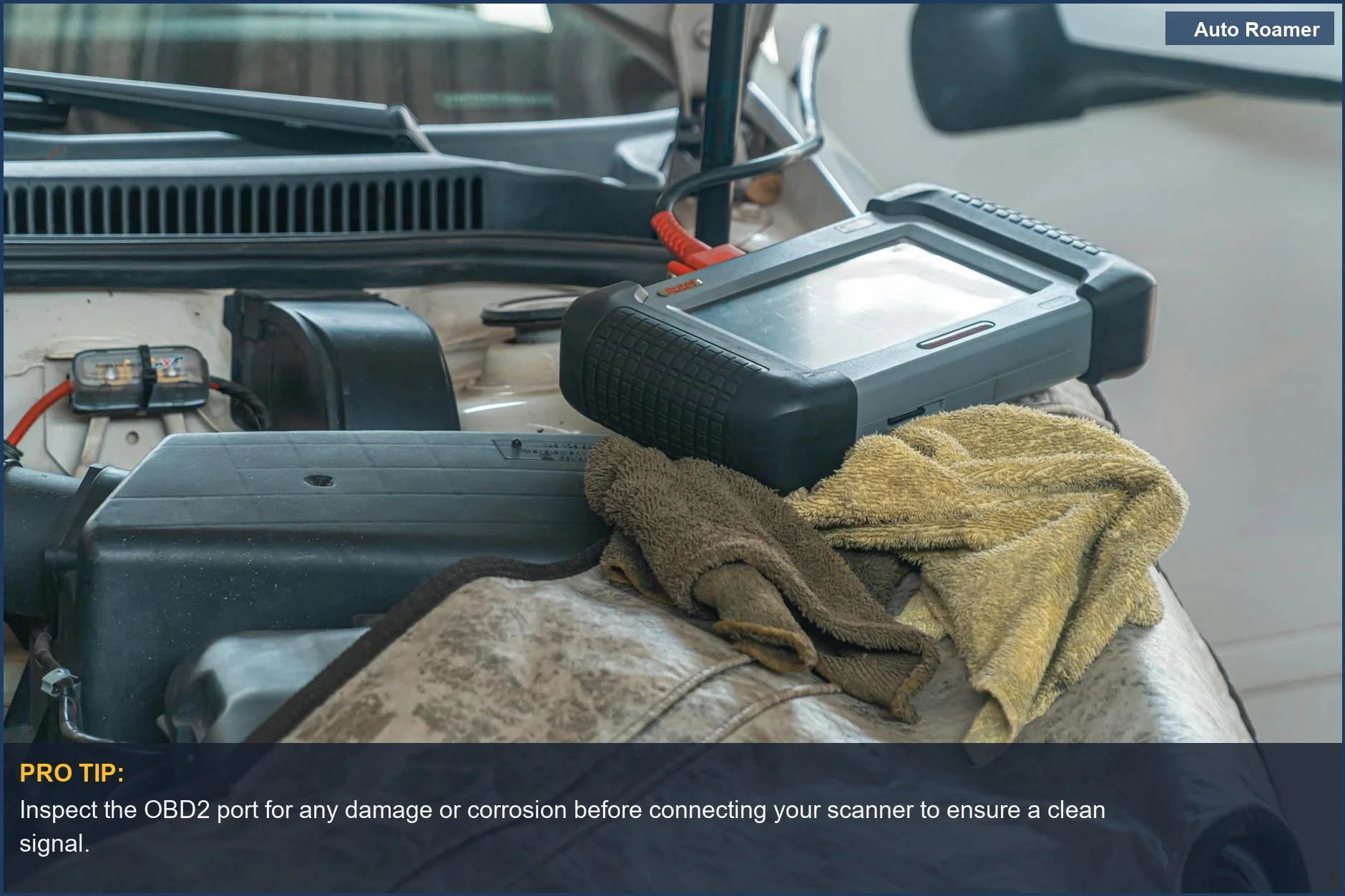
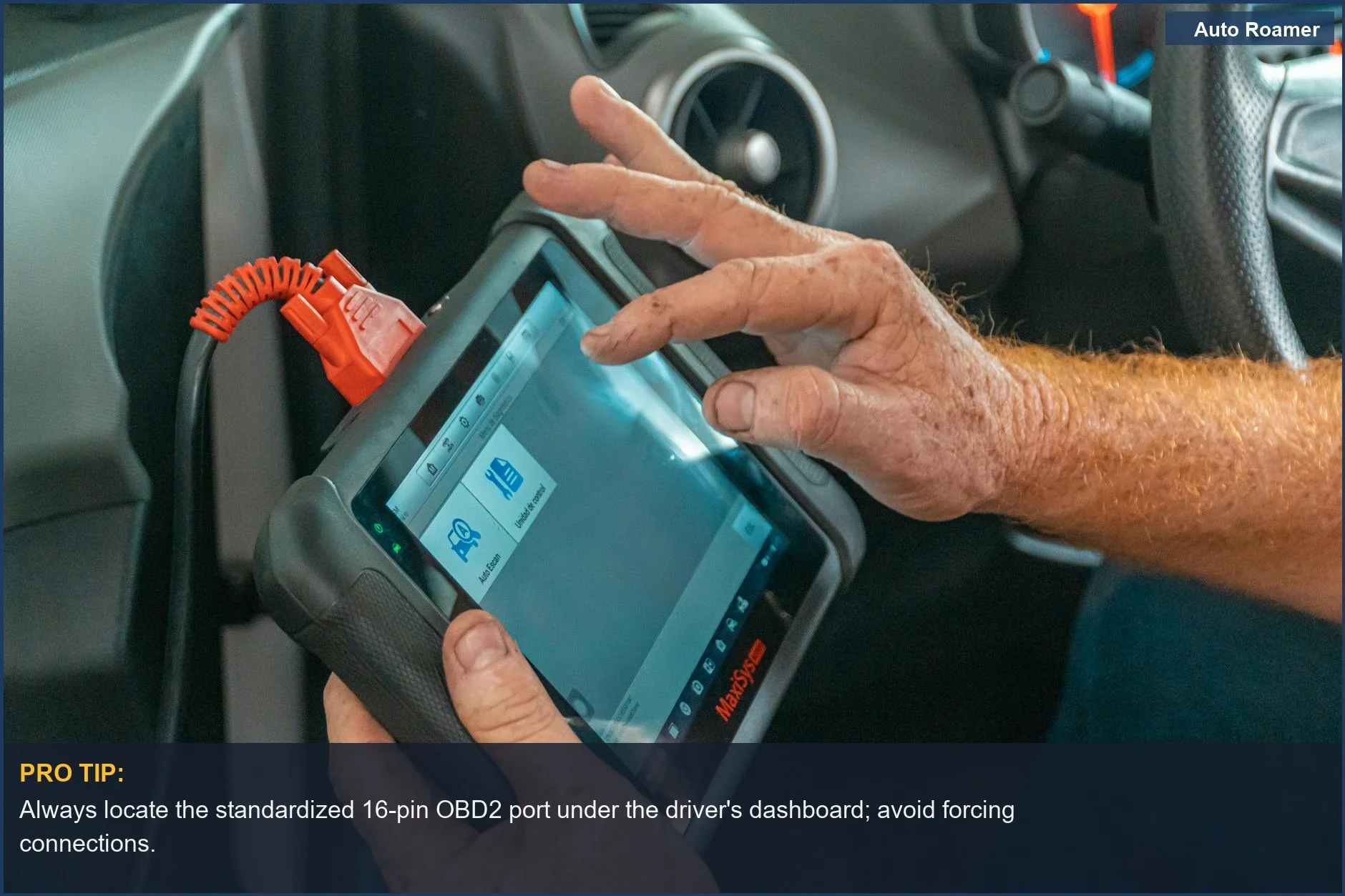
1. Locate the OBD2 Port: This is a standardized 16-pin trapezoidal connector, usually under the driver's side dashboard. Don't go yanking on wires; the plastic mount can be brittle from UV exposure and thermal cycling. It's a standard location, so it shouldn't be hidden.
2. Connect the Scanner: Plug it in firmly. The connection should be tactile, not wobbly.
A loose connection can cause intermittent data transfer, leading to false readings or failure to connect. Some cheap scanners have poor pin tolerances.
3. Turn Key to ON (Engine OFF): Don't start the car yet. This powers up the vehicle's modules for communication. The scanner should boot up and establish a link. If it doesn't, check the 12V supply at the OBD port's pin 16; sometimes a blown fuse kills power to the diagnostic port. Brilliant engineering, that.
4.
Read and Record DTCs: Navigate to 'Read Codes.' Write down every single P-code. Don't clear them yet. These are your breadcrumbs to understanding the vehicle's past. A P0420 (Catalyst System Efficiency Below Threshold) can mean an aged catalytic converter, which is a several-hundred-dollar thermal conversion system. This is your first step to spotting hidden issues.
5.
Check Freeze Frame Data: If available, this shows engine parameters like RPM, engine load, coolant temp, and fuel trims at the exact moment the DTC was set. This context is critical. A P0301 (Cylinder 1 Misfire) with high RPM and engine load suggests a mechanical stress issue under demand, not just a casual spark plug problem.
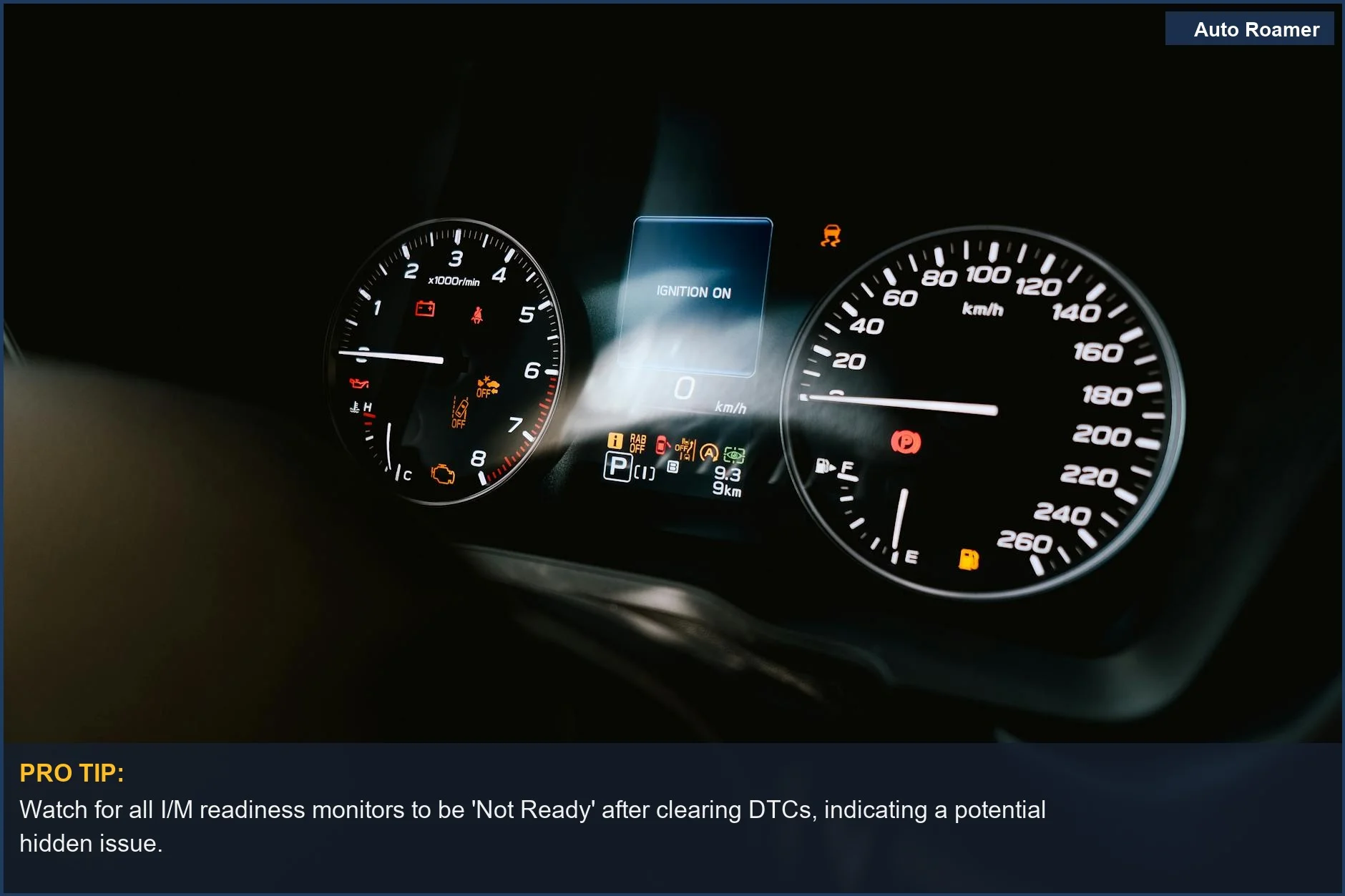
6. Inspect I/M Readiness Monitors: This tells you if the vehicle's self-tests for emissions systems have completed.
If some are 'Not Ready,' it's a red flag. Dealers often clear codes right before selling a car to hide issues. The monitors won't be ready until the car has completed a specific drive cycle. This is a classic dealer trick to obscure thermal cycling failures related to emissions.
7. Review Live Data (If Available): For more advanced scanners, look at real-time sensor readings.
Pay attention to O2 sensor voltage (should fluctuate), short-term and long-term fuel trims (should be close to zero), and coolant temperature (should stabilize around 190-210 degrees F). Wild fluctuations or stuck values indicate sensor circuit integrity problems or mechanical issues like vacuum leaks. An advanced scanner can show this.
What This Looks Like in Practice
Here are some scenarios where OBD2 data saves you from a lemon with bad thermal cycling or mechanical integrity.
1. The 'Freshly Cleared' Check Engine Light: You plug in a basic scanner, and it shows 'No DTCs.' But the I/M readiness monitors are all 'Not Ready.' This screams 'seller cleared codes to hide a problem.' The car hasn't completed its self-diagnostic cycles, meaning whatever was wrong is likely still wrong.
This is a classic move to mask an intermittent circuit integrity fault.
2. P0420/P0430 Catalyst Efficiency Codes: These indicate the catalytic converter isn't doing its job. This isn't a loose gas cap. It's a failure of the catalyst's thermal conversion efficiency. Replacing a catalytic converter can run $800-$2500 depending on the vehicle. This isn't a cheap fix; it's a major thermal component replacement.
3. Persistent Misfire Codes (P030X): A single misfire could be a bad spark plug or coil pack-a $50 part.
But if multiple cylinders are misfiring, or if the freeze-frame data shows misfires at high RPM and engine load, you could be looking at valve train issues, piston ring wear causing blow-by, or even a head gasket failure. These are serious mechanical stress issues, not simple electrical fixes.
4. Fuel Trim Deviations: Live data showing long-term fuel trims consistently +/- 15% indicates the engine control unit is struggling to maintain the correct air-fuel ratio.
This could be a vacuum leak (loss of mechanical seal), a failing mass airflow sensor (circuit integrity), or clogged fuel injectors. All impact engine efficiency and long-term mechanical stress.
5. O2 Sensor Heater Circuit Codes (P0135, P0141, etc.): These codes point to a failure in the oxygen sensor's internal heater element. The O2 sensor needs to be hot to work correctly, especially during cold starts.
A failed heater circuit means the sensor isn't reaching operating temperature, leading to incorrect fuel mixture readings and increased emissions. This is a specific circuit integrity failure, often from thermal cycling fatigue.
6. Transmission Temperature Sensor Malfunctions (P0710, etc.): If the transmission temperature sensor reports implausible data, the transmission control module can't accurately manage fluid viscosity and shift points. This can lead to overheating, increased mechanical wear on clutch packs, and premature transmission failure.
The sensor itself might be cheap, but the consequence of incorrect thermal management is expensive.
Mistakes That Cost People
I've seen these screw-ups drain wallets faster than a cracked oil pan.
1. Ignoring I/M Readiness Monitors: Thinking 'no codes means no problems' after a test drive. If the monitors aren't set, the codes were likely just cleared. You're buying a hidden problem related to emissions control or engine performance. That's a classic mechanic's trick before a sale. Don't let them pull one over on you.
2.
Buying the Cheapest Scanner for Advanced Diagnostics: A $15 Bluetooth dongle will read basic P-codes. It won't give you live data on transmission fluid temperature, ABS wheel speed sensor readings, or body control module faults. You'll miss critical thermal or circuit integrity failures outside the powertrain. Different scanners offer different capabilities.
3. Clearing Codes Without Understanding Them: Just because you can clear a code doesn't mean the problem is fixed. It just means the check engine light is off.
The underlying mechanical stress or circuit integrity fault will return, often after a few drive cycles. You're just resetting the clock on the failure.
4. Not Cross-Referencing Codes: A P0420 (Catalyst Efficiency) might be caused by an upstream O2 sensor reporting incorrectly, not the catalyst itself. Always look at related codes and live data. Don't jump to conclusions about a $1000 part when a $50 sensor is the real circuit integrity issue.
5.
Ignoring Pending Codes: Some scanners show 'pending codes' which are faults that haven't yet met the criteria to illuminate the check engine light. These are early warnings of an intermittent fault or a system approaching its failure tolerance. They're a crystal ball into future mechanical stress or thermal issues.
6. Not Checking for Previous Cleared Codes: Some advanced scanners can show how many times codes have been cleared.
A high count of cleared codes right before a sale is a massive red flag. It indicates a history of persistent problems the seller is trying to hide from you.
7. Failing to Verify Fixes with Live Data: If you're looking at a car that 'just had X fixed,' use live data to confirm the repair. Is the new O2 sensor switching correctly? Are fuel trims within spec?
Without this, you're just taking someone's word that their mechanical bond or circuit repair actually held up.
Key Takeaways
- Get an OBD2 Scanner: Even a basic $20 unit can save you hundreds in dealer diagnostic fees and prevent buying a vehicle with hidden issues. It's a minimal investment for critical insight into mechanical integrity and circuit health.
- Don't Trust Cleared Codes: If I/M readiness monitors are 'Not Ready,' walk away.
The seller likely cleared codes to hide a problem, indicating an unresolved thermal cycling or circuit integrity issue.
- Look Beyond the Code: Freeze frame data and live data (if your scanner supports it) provide crucial context. A code alone is just a symptom; the operating conditions tell you the root cause of mechanical stress or electrical failure.
- Verify Repairs: If the seller claims a fix, use the scanner to confirm it.
Check live data for appropriate sensor readings and ensure no new codes appear after a test drive. Don't trust a sketchy repair job.
- Factor in Repair Costs: Use the codes to research potential repair costs. A $50 sensor is one thing; a $2000 catalytic converter or a $3000 transmission rebuild is another. Understand the failure mode before you buy.