The Two-Tool Answer to Buying a Used Car
The single best way to avoid buying a problem used car is to combine two checks that look at completely different things: an OBD2 scan and a mechanic's pre-purchase inspection (PPI). They are not interchangeable, and skipping either one leaves a blind spot a seller can hide behind.
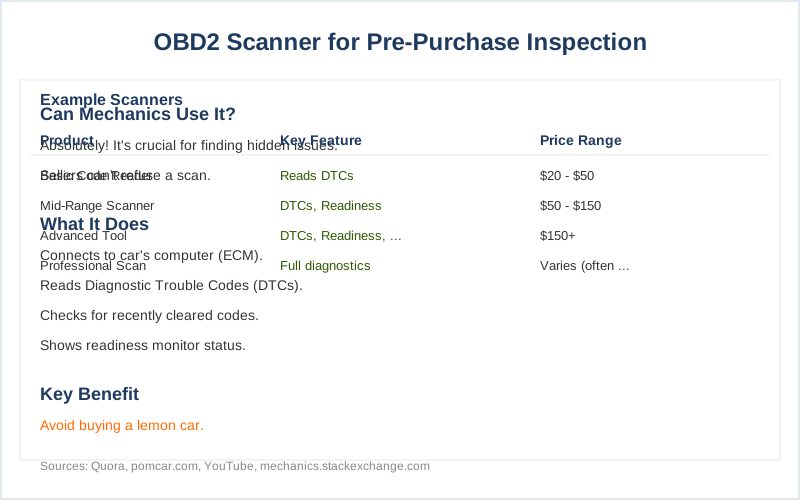
An OBD2 scan plugs a small reader into the car's diagnostic port and pulls data straight from the vehicle's onboard computers. It reads stored and pending trouble codes, the status of the readiness monitors, and freeze-frame data — and, critically, it can expose a car whose warning codes were recently cleared to hide a problem just long enough to make the sale. It is fast, cheap, and you can do it yourself in the driveway.
A mechanic's PPI covers everything the computer cannot see: worn suspension, leaking seals, frame or accident damage, brake and tire wear, fluid condition, and the dozens of mechanical and structural faults that never trigger a trouble code. A scan tells you what the car's electronics are complaining about; a PPI tells you what the car's physical condition is.
Used together, the scan is the quick screening pass and the PPI is the deep examination. The rest of this guide explains exactly what each one reads, the warning signs to watch for, how to do a DIY scan versus booking a shop PPI, what a thorough inspection should include, what it costs, and how to turn the findings into leverage at the negotiating table.
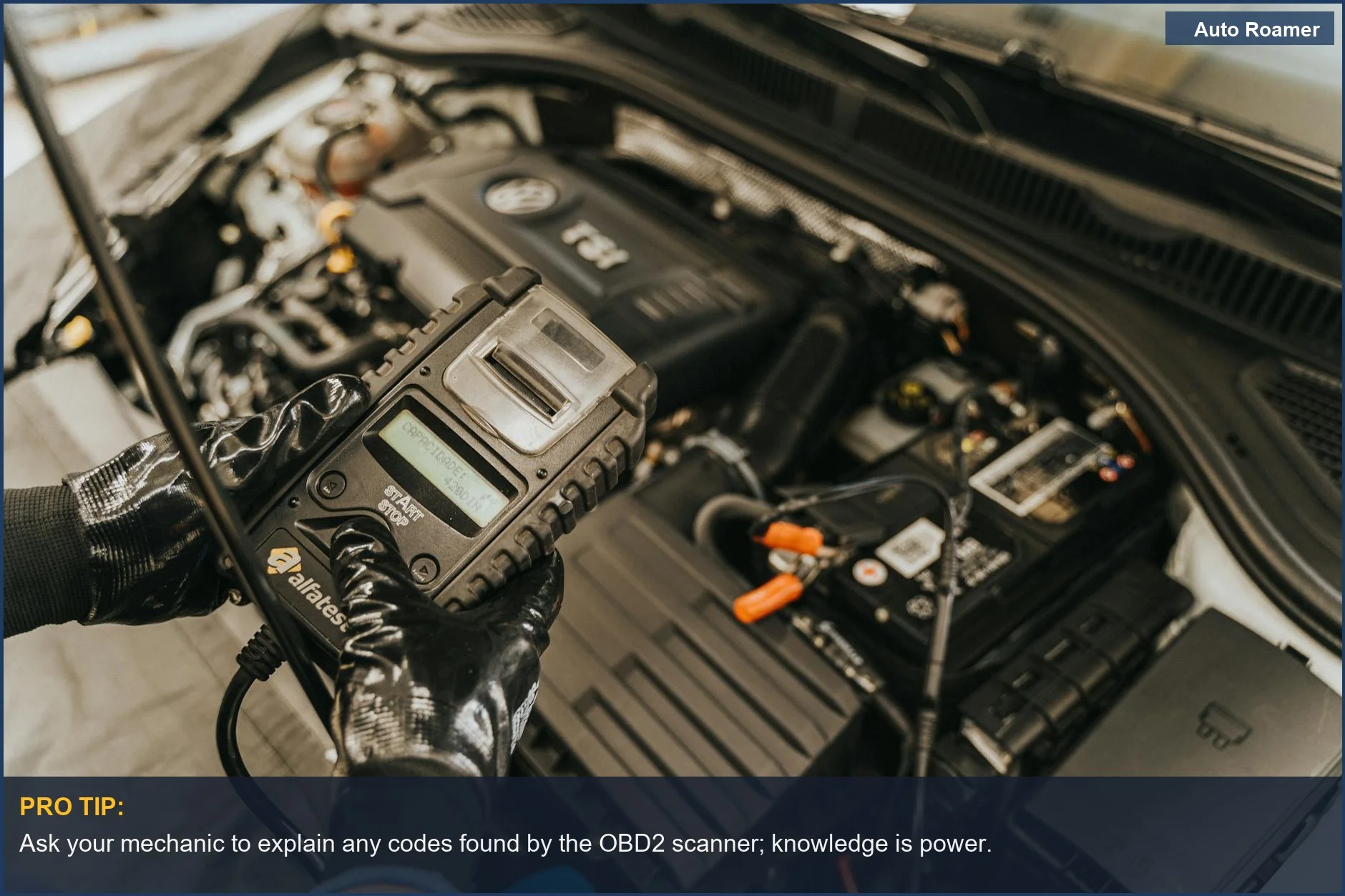
What an OBD2 Scan Actually Reads
Every car sold in the United States since 1996 has an OBD2 (On-Board Diagnostics, second generation) system and a standardized 16-pin port, usually tucked under the dashboard near the steering column. A scan tool talks to the car's computers through that port and pulls back several distinct kinds of data, each of which tells you something different.
- Stored (active) trouble codes: These are confirmed faults the car's computer has logged, and they are usually what turns on the check-engine light. Each is a standardized code such as P0301 (cylinder 1 misfire) that points to a system or component.
- Pending codes: These are intermittent faults the computer has noticed but not yet confirmed across enough drive cycles to light the dash. A pending code is an early warning — a problem that is brewing but hasn't fully tripped yet, which is exactly the kind of thing a seller may not even know about.
- Permanent codes: These cannot be erased simply by disconnecting the battery or clearing codes with a tool. They stay until the car verifies the underlying problem is actually fixed. Permanent codes are a powerful anti-cheat feature for a buyer, because they survive the usual quick reset tricks.
- Readiness monitors: Self-tests the car runs on its emissions systems (catalyst, oxygen sensors, EVAP, and more). Each reports "ready" or "not ready," and their state is one of the most useful red flags in the whole scan, as the next section explains.
- Freeze-frame data: A snapshot of operating conditions (engine speed, load, coolant temperature, and so on) captured at the moment a fault occurred. It helps a mechanic understand the context of a code instead of guessing.
- Live data (PIDs): Real-time sensor readings you can watch while the engine runs — coolant temperature, fuel trims, sensor voltages — useful for spotting a value that is drifting out of range even when no code has set.
The important mental model is this: an OBD2 scan reports what the car's own electronics have detected. That is a genuinely valuable window, especially into the engine, emissions, and increasingly the transmission and other modules. But it is a window into the computer's view of the car — not a physical inspection. Hold onto that distinction, because it defines both the power and the limits of a scan.
The Biggest Red Flag: Cleared Codes and "Not Ready" Monitors
If the scan shows no trouble codes but several readiness monitors are "not ready," treat it as a warning, not a clean bill of health. The most common innocent explanation is a recently disconnected battery — but the most common dishonest one is that someone just cleared the codes to hide a problem.
This is the single most valuable trick an OBD2 scan gives a used-car buyer, and it works because of how the system is designed. When you clear trouble codes — or simply disconnect the battery — the car wipes its stored faults and resets all of its readiness monitors to "not ready." The car then has to be driven through a series of specific conditions, sometimes over many miles and several drive cycles, before each monitor runs its self-test again and reports "ready."
So picture a seller who knows the check-engine light keeps coming on. Right before showing the car, they clear the codes. The dash goes dark, the car looks perfect, and a casual buyer never knows. But a scan tells the real story: the trouble codes are gone, yet a cluster of monitors still reads "not ready" because there hasn't been time to re-run them. That mismatch — no codes but monitors not complete — is the tell. Either the battery was recently disconnected (ask why) or the codes were deliberately erased shortly before you arrived.
There are a few legitimate reasons monitors can be incomplete: a recent battery replacement, a recent repair, or a car that simply hasn't been driven much. None of those should make a seller defensive. The honest move is to ask directly, then take the car for a longer drive and re-scan, or come back another day and scan again. If the monitors come ready and still no codes appear, the picture is reassuring. If codes start popping back up as you drive, you just caught the problem the reset was hiding.
A related warning sign is a check-engine light that doesn't illuminate at all during the key-on bulb check. The light is supposed to glow for a second or two when you turn the key to "on" before starting. If it never lights up, the bulb may have been removed or disabled — a crude but real way to hide a persistent fault. A quick look at the dash during startup costs nothing and can save you thousands.
Permanent codes are the buyer's friend here, too. Because they cannot be wiped by a battery disconnect or a standard clear, a permanent code that's still present proves the underlying fault has not actually been repaired, no matter what the seller did to the dash. Not every scan tool surfaces permanent codes clearly, so it's worth using one that does when you're checking a car you suspect has been reset.
What a Scan Can't Catch — and Why You Still Need a Mechanic
An OBD2 scan is fast and revealing, but it has a hard ceiling: it only knows what the car's sensors and computers are designed to monitor. A huge share of the most expensive used-car problems never set a trouble code at all, because no sensor watches for them. This is precisely why a scan is a screening tool, not a substitute for a physical inspection.
Here are the kinds of serious problems that a scan will happily report "no codes" on, because they live outside the computer's awareness:
- Structural and accident damage: A bent frame, hidden collision repair, paint overspray, mismatched panel gaps, or rust eating structural metal. The computer has no idea the car was wrecked.
- Suspension and steering wear: Worn ball joints, tie rods, control-arm bushings, struts, and wheel bearings. These reveal themselves to a mechanic on a lift, not to a scan tool.
- Fluid condition and leaks: Burnt or contaminated transmission fluid, milky oil signaling coolant intrusion, weeping seals, or a slow oil leak. A scan won't smell, see, or feel any of it.
- Brakes and tires: Thin pads, scored rotors, uneven tire wear that hints at alignment or suspension trouble. Mechanical wear, not a code.
- Body and interior: Water damage, a musty flood smell, non-functioning accessories, and electrical gremlins that don't trip a stored code.
Equally important, a scan can tell you a code is present but rarely tells you the true cause or the repair cost. A P0420 "catalyst efficiency" code, for example, might mean a failing catalytic converter — an expensive part — or something far cheaper like a bad oxygen sensor. Interpreting the code, cross-checking it against live data and physical symptoms, and estimating the real repair bill is exactly the judgment a qualified mechanic brings.
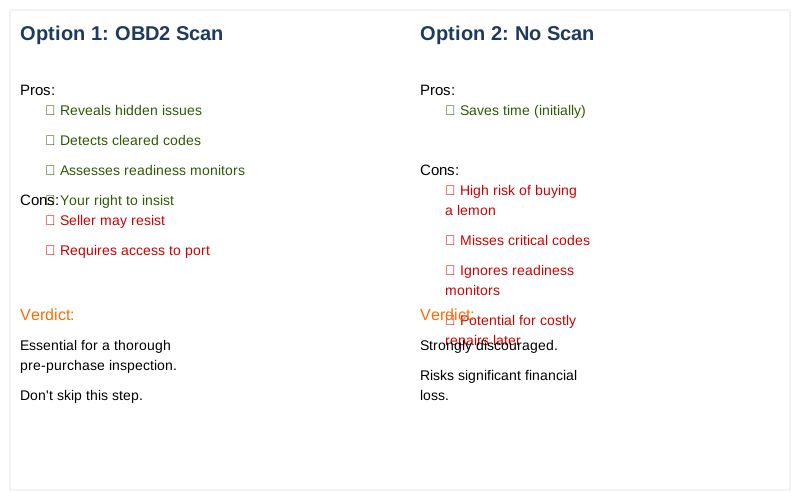
The honest takeaway: the scan and the inspection cover different territory with almost no overlap. The scan watches the electronic and emissions side; the mechanic watches the physical and structural side. Buy a car on the strength of only one of them and you are betting that the problems all happen to fall on the side you checked.
DIY Scan vs. a Shop PPI: When to Use Each
You don't have to choose between doing it yourself and paying a professional — the smart approach uses both in sequence. A DIY scan is your first-pass filter; a shop PPI is the verdict you get before handing over real money.
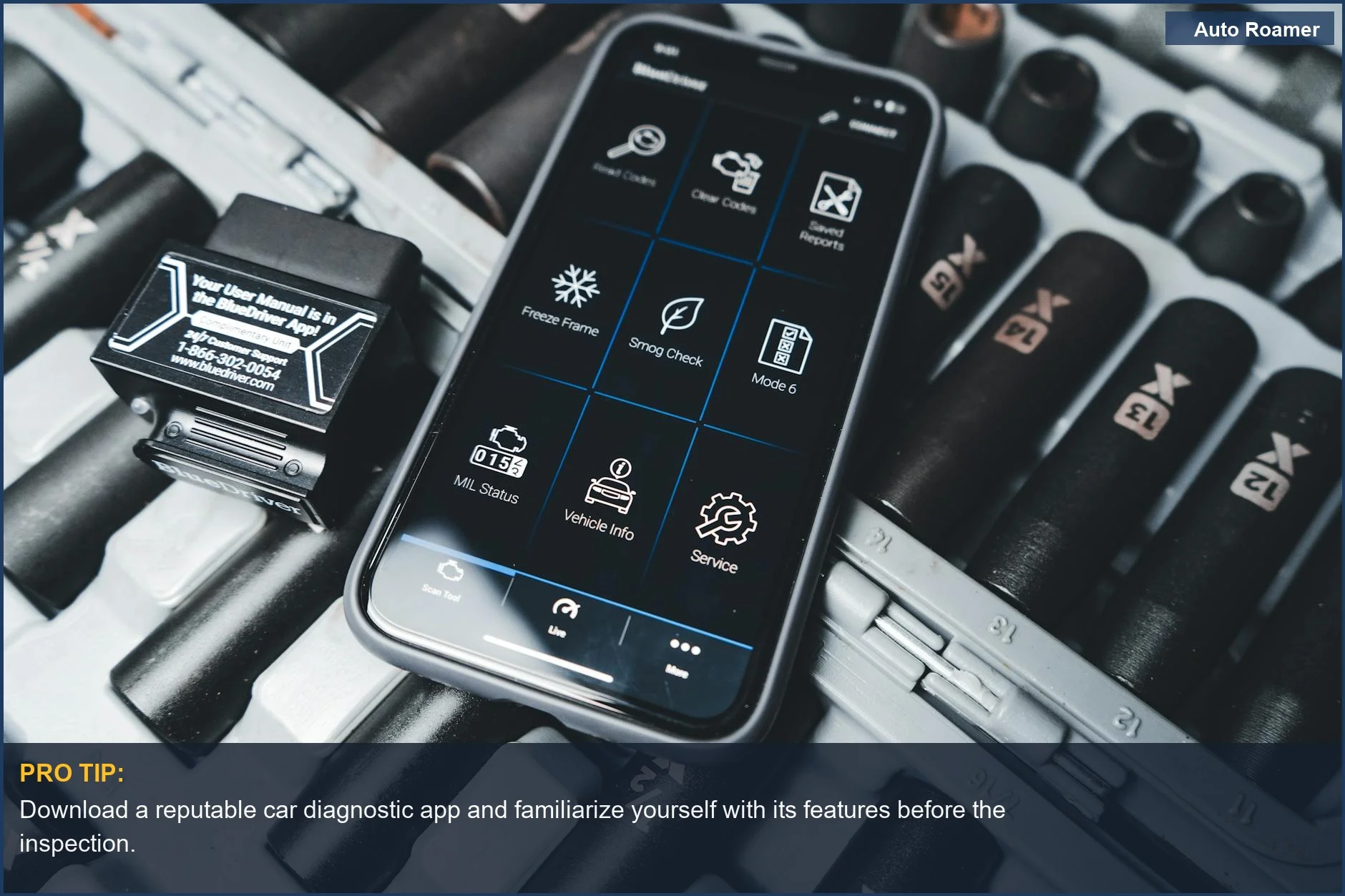
The DIY scan is something any buyer can do. An inexpensive code reader or a Bluetooth dongle paired with a phone app plugs into the OBD2 port and reads codes and monitor status in minutes. Use it as a quick screen while you're standing in the seller's driveway: pull stored and pending codes, check whether the readiness monitors are complete, and watch a few live values with the engine running. If the scan throws up serious codes or the no-codes-but-monitors-not-ready pattern, you may decide to walk away before you ever spend a cent on a professional inspection. That alone can pay for the scanner many times over.
Steps for a quick driveway scan:
- Find the 16-pin OBD2 port, usually under the dash on the driver's side.
- With the key on (engine off), confirm the check-engine light glows during the bulb check, then start the engine.
- Read stored and pending codes, and note any permanent codes.
- Check readiness monitors — flag any that read "not ready."
- Watch live data briefly: coolant temperature climbing normally, no wildly out-of-range fuel trims or sensor voltages.
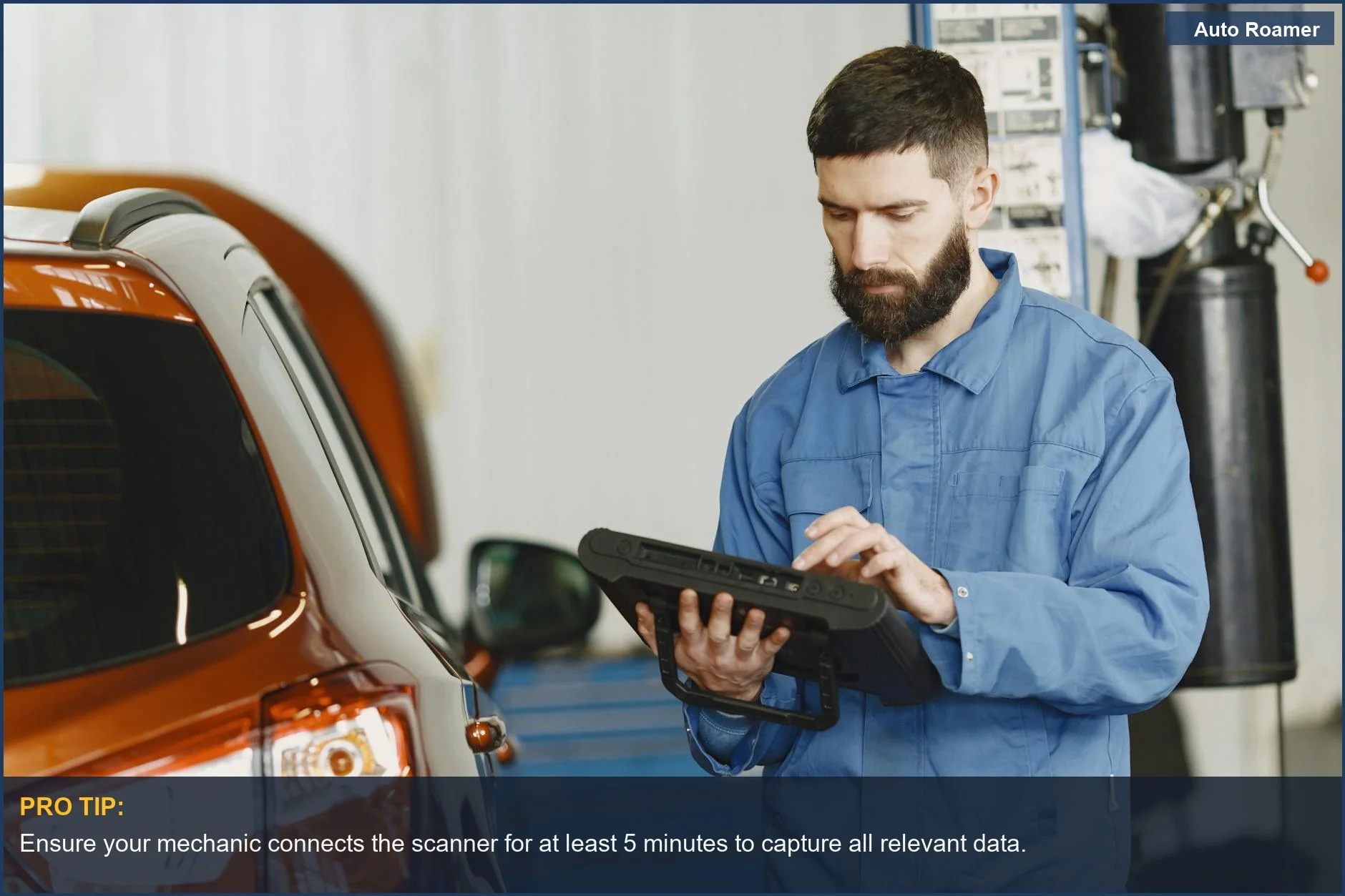
The shop PPI is where you bring in a mechanic — ideally an independent shop or a marque specialist, not the dealer selling the car. A good shop runs its own professional-grade scan (often reading modules a basic reader skips) and puts the car on a lift for the physical examination. The DIY scan tells you whether a car is worth paying for a PPI; the PPI tells you whether the car is worth buying. If you can only do one thing, do the PPI — but doing the free-or-cheap DIY scan first often saves you the PPI fee on obviously bad cars.
One practical note on the DIY tool: a basic reader covers the engine and emissions side well, but many cheaper tools won't read ABS, airbag (SRS), or transmission-specific codes. If those systems matter to you, choose a more capable scanner or rely on the shop's professional tool for the full module sweep.
What a Good Pre-Purchase Inspection Covers
A pre-purchase inspection is a structured physical examination of the whole car, performed by a mechanic before you buy it. The exact checklist varies by shop, but a thorough PPI should cover the systems below — and you should be suspicious of any "inspection" that takes only a few minutes or never puts the car on a lift.
- Engine and drivetrain: Cold-start behavior, idle quality, unusual noises, oil and coolant condition, evidence of leaks, and a professional-grade code scan across modules.
- Transmission: Fluid condition and level, shift quality on a test drive, and any slipping, flaring, or harsh engagement.
- Suspension and steering: Ball joints, tie rods, bushings, struts and shocks, wheel bearings, and steering play — checked on a lift.
- Brakes: Pad and rotor thickness, brake fluid condition, and any pulsation, pulling, or noise under braking.
- Tires: Tread depth, age, and wear patterns that hint at alignment or suspension issues.
- Body, frame, and rust: Signs of prior collision repair, mismatched paint, panel-gap inconsistencies, and structural corrosion.
- Electrical and accessories: Lights, climate control, windows, infotainment, and warning lamps — confirming everything works.
A genuinely useful PPI also includes a test drive under varied conditions — low and highway speeds, hard and gentle braking, full steering lock both ways — because some faults only appear under load or at temperature. The mechanic is feeling, listening, and watching for symptoms the computer would never log.
When you book the inspection, ask what the PPI specifically includes and whether the car goes on a lift. Ask for the findings in writing, with an estimate of what any needed repairs would cost. That written report is not only your decision-making tool — as the next section explains, it's also your strongest card in a price negotiation.
Cost, Worth-It, and Negotiating With the Findings
The economics of these checks are lopsided in the buyer's favor, which is why skipping them so often costs people far more than they save. A basic OBD2 code reader is inexpensive — a one-time purchase you reuse on every car you ever look at — and a Bluetooth dongle plus a free or cheap app does the same job through your phone. A professional pre-purchase inspection typically costs a modest, one-time fee relative to the price of the car. Set that against the cost of a blown transmission, a failed catalytic converter, or hidden frame damage, and the math is rarely close.
The cheapest used car you can buy is the one you walked away from because a scan and a PPI caught the problem first. The most expensive is the one you bought without either.
Worth-it is mostly about risk. A late-model car still under manufacturer warranty from a reputable dealer carries less risk than a high-mileage private sale, but even then a scan is nearly free and a PPI is cheap insurance. The higher the price, the older the car, or the more unknown its history, the more clearly both checks pay for themselves. For most private-party used purchases, doing both is simply the rational choice.
Where the findings really earn their keep is at the negotiating table. A written PPI report and a scan printout turn vague haggling into a fact-based conversation. Instead of "I think it's a bit pricey," you can say "the inspection found worn rear brakes, a weeping transmission seal, and a pending misfire code — here's the repair estimate." Use the findings like this:
- Quantify the repairs. Get the shop's estimate for fixing each issue, in writing.
- Subtract from the asking price. Propose a price reduction equal to (or a fair share of) the documented repair costs.
- Ask the seller to fix it, or split the difference — either they repair the issues before sale or they discount accordingly.
- Be ready to walk. If the findings are severe or the seller won't budge, the best negotiation is sometimes leaving. The check already did its job.
A seller who refuses to allow any inspection or scan at all is itself a red flag. An honest seller of a sound car has nothing to fear from a buyer plugging in a code reader or taking the car to a trusted shop. Resistance to a basic, reasonable check tells you something the scan might not.
EVs, Hybrids, and the Limits of a Generic Scan
The advice above is built around conventional gasoline cars, where OBD2 and a mechanical PPI cover the ground well. Electric and hybrid vehicles shift the picture, and it's worth knowing how before you scan one and assume a clean reading means a healthy car.
OBD2 was created primarily as an emissions-diagnostics standard, so its standardized codes and readiness monitors are oriented toward the combustion and emissions systems of a gas engine. On a hybrid, much of that still applies because there's a gas engine in the mix — but a generic scan may say little about the single most important and expensive component on an electrified car: the high-voltage traction battery. Battery state of health, cell balance, and degradation are typically read through manufacturer-specific diagnostics or specialized tools, not the generic OBD2 codes a basic reader pulls.
That matters enormously, because on an EV or hybrid the battery pack can represent a large share of the car's value, and its condition is the thing you most want to verify. A generic scan showing "no codes" does not confirm a healthy battery — it simply means the systems that scan does monitor aren't throwing standardized faults. For these vehicles, prioritize:
- A specialist inspection from a shop or technician experienced with that make's electrified models, using the correct manufacturer-level tools.
- Battery state-of-health data, where available, rather than relying on the dashboard range estimate alone.
- Warranty status, since many EV and hybrid battery packs carry long, separate warranties that can transfer to you and dramatically change the risk.
The high-voltage systems also carry genuine safety considerations, which is another reason a do-it-yourself poke-around is more limited on these cars and a qualified specialist is more valuable. The core principle is unchanged — combine a diagnostic read with a physical, expert inspection — but on an EV or hybrid the diagnostic read needs to reach the battery, and that usually means the right specialist with the right tool, not a generic dongle.
Whatever the powertrain, the takeaway holds: a scan and an inspection answer different questions, no single check sees everything, and the buyer who insists on both — adapted to the type of car — is the one who walks away from the lemons and drives home in the good one.