
The Short Answer: Three Outlets, and Only One You Want
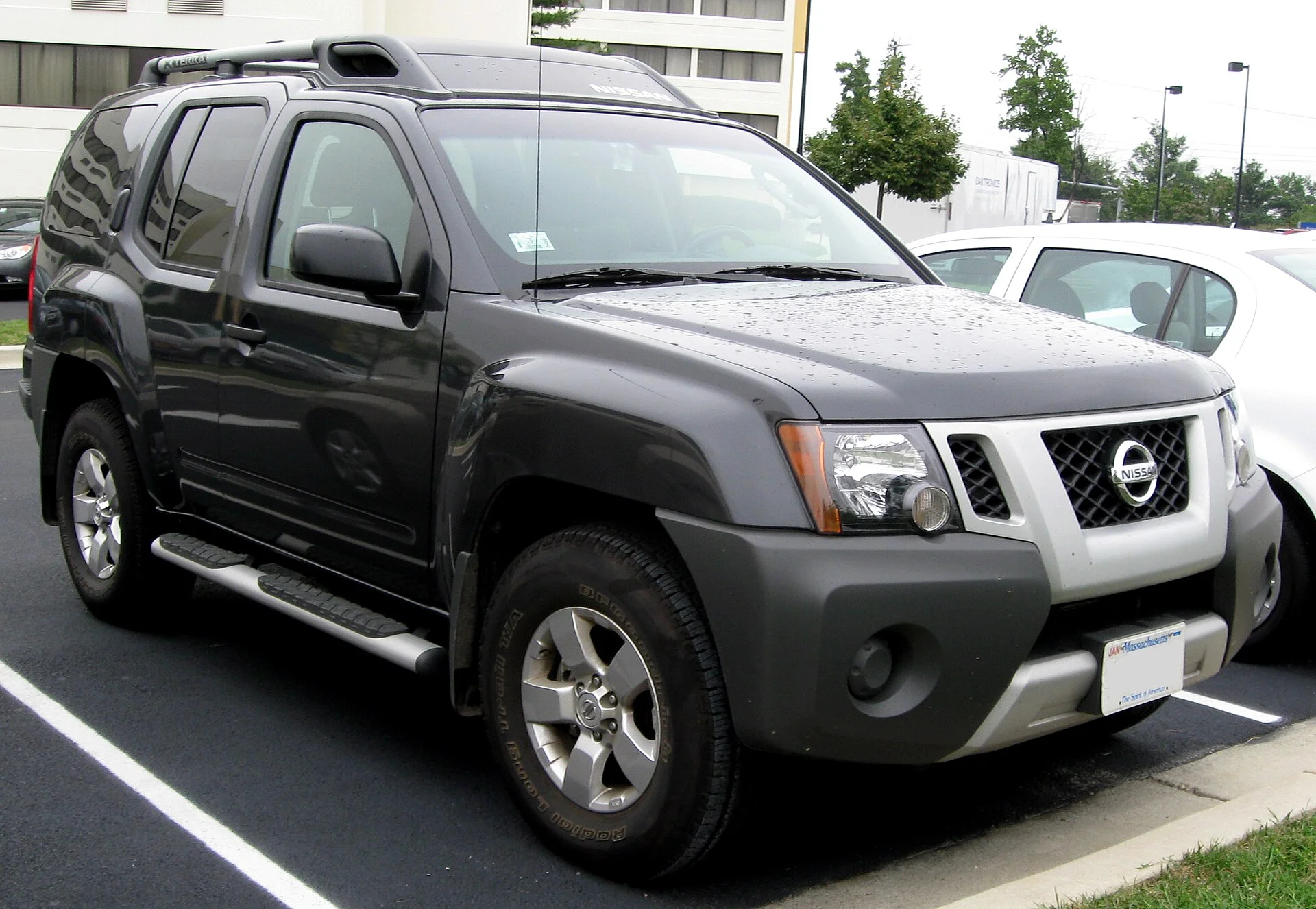
The second-generation Nissan Xterra gives you three 12V outlets, and for a camper only one of them matters. The N50 Xterra, built from 2005 to 2015, has a socket in the lower dashboard, one inside the center console, and one on the passenger side of the rear cargo area. They look identical. They do not behave identically, and plugging a fridge into the wrong one is the single most common mistake Xterra campers make.
Here is the map that saves your food. Owners report the lower-dash outlet is constant, always-on 12V that does not need the key, the center-console outlet is switched and dies with the ignition, and the rear cargo-area outlet is constant, always-on 12V. The only sockets that stay live with the key removed are the rear cargo outlet and, per owners, the lower dash outlet. The console outlet is the switched one, and it is exactly where an unwary camper plugs the fridge.
This page maps all three outlets, which fuse guards each, how the map changed between the early and late N50 years, and why the rear cargo socket is the one to wire your fridge to. The Xterra predates bed inverters and USB banks, so its electrical story is refreshingly simple, but that simplicity hides the constant-versus-switched trap. None of this comes from us personally wiring an Xterra. It is a synthesis of the fuse-box diagram and the measurements Xterra owners have posted after tracing their own circuits. Where the behavior is owner-reported rather than printed by Nissan, we flag it, because on this truck the mapping genuinely varies by year and trim, and a socket that is constant on one truck can be wired differently on another.
The Rear Cargo Outlet: Your Fridge Socket
For camper fridge use, the always-on rear cargo-area outlet is the socket that matters, because it keeps a 12V fridge running with the ignition off and the key removed. It sits on the passenger side of the cargo area, right where a fridge or cooler naturally lives, which is a happy accident of packaging on a truck this old.
The reason it works where the console outlet fails is simply that it is wired constant. A compressor fridge needs power around the clock; it cycles its compressor on and off to hold temperature, and any interruption when the ignition is off means the box starts warming. A constant socket never interrupts, so the fridge just runs. The rear cargo outlet gives you that without any modification at all, which is rare on a factory vehicle and genuinely useful here.
The catch is the flip side of the same coin. Because the rear cargo outlet is always-on, running a fridge there overnight with the engine off will draw down the starting battery, a caution every Xterra camper eventually learns. The socket will happily keep feeding the fridge right past the point where the truck can still start. So the rear outlet solves the power-timing problem and hands you a battery-management problem in its place. The Xterra camping guide covers how owners stage that power for a weekend.
Why the Console Outlet Will Betray You
The center-console outlet is the trap. It is switched, meaning it is powered only when the ignition is on or in the accessory position, so a fridge plugged there will lose power the moment the ignition is off. During the day, driving between spots, it works fine and lulls you into trusting it. Then you shut the truck off for the night, the socket goes dark, and the fridge quietly quits until morning.
What makes this trap so effective is that nothing looks wrong. No fuse blows, no light comes on, and the socket tests live the instant you turn the key back to accessory. Owners chase phantom faults for hours before realizing the outlet was simply doing what a switched circuit does. The myth to bust here is the assumption that every 12V socket on the truck is always-on; the console socket is proof it is not.
The fix is not to repair the console outlet, because nothing is broken. The fix is to use the rear cargo or lower-dash outlet for anything that must run untended, and reserve the console socket for things you only power while awake, like a phone charger or a tire inflator you run with the engine on. Match the socket to the job and the console outlet is perfectly useful; ask it to run a fridge overnight and it fails every time.
There is one silver lining to the switched console socket worth naming. Because it kills power with the ignition, it is the safest place to leave a charger plugged in long-term without any risk of draining the battery while the truck sits parked for a week. A device on the switched outlet simply cannot pull the battery down overnight, which is the exact opposite of the always-on rear socket. Used deliberately, the console outlet's switched behavior is a feature, not just a trap.
The Fuse Map, Early N50 (2005-2009)
On the early second-generation Xterra, the three outlets are fused separately, which is a clue to how Nissan wired them:
- The console power socket is protected by Fuse 5, a 15A fuse ('Console Power Socket') in the instrument-panel fuse box.
- The upper front power socket is protected by Fuse 7, a 15A fuse ('Upper Front Power Socket') in the instrument-panel fuse box.
- The lower front power socket is protected by Fuse 26, a 20A fuse ('Lower Front Power Socket') in the engine-compartment fuse box.
Notice the split: the two switched interior sockets each get their own 15A fuse in the cabin box, while the lower/front power socket, the constant one, sits on a 20A fuse out in the engine compartment. Owners report that a single 20A fuse feeds both the front and rear non-switched constant outlets, while the two switched outlets each have independent 15A fuses. That wiring choice is why the constant sockets share a circuit and the switched ones do not, and it tells you the constant outlets were designed as a heavier-duty pair.
If you are chasing a dead constant outlet on an early Xterra, the 20A Fuse 26 in the engine bay is the one to check, not the cabin fuses. Getting the box right saves you pulling the wrong panel, and on a truck this age a corroded fuse or a loose fuse-box connector is a more common culprit than the socket itself.
The separate 15A fuses on the two switched sockets tell you something useful too. Because the console and upper-front sockets each have their own circuit, a blown fuse on one does not kill the other, so if only the console outlet is dead you can rule out the upper-front socket's fuse immediately. On the early N50, the outlets are genuinely independent in a way the later consolidated wiring is not, which makes fault-finding a little easier if you know the map.
The Fuse Map, Late N50 (2010-2015)
Nissan simplified the interior wiring partway through the run. On 2010-2015 Xterras the console and upper-front sockets were consolidated into a single Fuse 5, increased to 20A and simply labeled 'Power Socket', in the instrument-panel fuse box. The lower front power socket stayed on Fuse 26, a 20A fuse in the engine compartment, across both the early and late years.
The practical effect of that change is a little more headroom. The fuse amperage jump from 15A on the 2005-2009 console socket to 20A on the 2010-2015 combined socket means later Xterras give a bit more continuous capacity on the interior power-socket circuit. It is not a dramatic difference, but if you are running a fridge plus a charger off an interior socket, the later truck has slightly more room before the fuse complains.
The takeaway when you buy or borrow an Xterra: confirm the model year before you plan your wiring, because the interior fuse layout genuinely differs between the early and late N50. A diagram for a 2007 truck lists sockets and fuse numbers that a 2013 truck consolidated. As always, the label on your own fuse-box lid is the final authority.
What Each Fuse Lets You Actually Draw
The Xterra's amperage ceilings are generous for what a camper actually plugs in. A 15A outlet supports about 180 watts at 12V, since 15 amps times 12 volts is 180 watts. A 20A outlet supports about 240 watts peak at 12V, best derated to roughly 192 watts, which is 80% of the 20A rating, for continuous fridge use. Either is comfortably more than a fridge needs.
That is the important reframe: a 12V compressor fridge typically pulls only 3 to 5 amps, well within the Xterra's 15A and 20A socket fuses, so the limiting factor is battery capacity, not the outlet fuse. You will never blow a fuse running a normal camp fridge on an Xterra. What you will do, if you are not careful, is flatten the battery, because the always-on outlet has no timer to protect you the way a modern truck's accessory socket does.
So plan around the battery, not the fuse. Size your loads to what the starting battery can give up overnight and still crank in the morning, which for a single battery and a compressor fridge is a night or two at most without a recharge. The fuse is not your constraint on this truck; the reserve behind it is.
This is worth sitting with, because it inverts the instinct many campers bring from newer vehicles. On a modern truck the accessory timer is the thing that frustrates you, cutting power off before you want it. On the Xterra there is no timer at all on the constant sockets, which feels liberating right up until the morning the truck will not start. The Xterra trusts you to manage the battery yourself, and that trust is exactly the responsibility a newer truck takes out of your hands.
Verifying Which Outlet Is Really Constant
Because the constant-versus-switched mapping is owner-reported and can vary by model year and trim, do not take any diagram, including this one, on faith for your specific truck. Test each outlet with the key out before you trust it for overnight fridge power. It takes two minutes and it is the difference between a cold fridge and a warm one.
The test is simple. With the key removed from the ignition, plug a phone charger or a 12V test light into each of the three sockets in turn. The ones that power the charger with the key out are your constant outlets; the one that stays dark is the switched console socket. Do this once when you buy the truck and label the constant socket with a piece of tape so you never guess again in the dark.
This habit matters more on the Xterra than on a newer vehicle precisely because the sockets look identical and the wiring varies. A 2006 truck and a 2012 truck can behave differently, and a previous owner may have added or rewired an outlet. Trust the test on your truck over any printed map, every time.
Managing the Battery You Will Otherwise Drain
The Xterra's constant outlet gives you overnight power and, in the same breath, the responsibility to protect a single battery. A compressor fridge left running on the rear cargo socket with the engine off will steadily pull the starting battery down, and unlike a modern truck there is no accessory timer to stop it before a no-start. This is the Xterra camper's defining chore.
The cleanest answer on a truck this straightforward is a small auxiliary battery dedicated to the fridge, so the starting battery is never in the loop overnight. A basic isolator or a manual switch charges the auxiliary battery while you drive and separates it at camp, which keeps the truck able to start no matter how long the fridge runs. It is an old-school setup that suits an old-school truck.
If a second battery is more than you want, the simpler disciplines still work: drive daily to recharge, add a small solar panel to offset the fridge's draw, or run the fridge from a portable power station that never touches the starting battery at all. Any of these turns the always-on rear outlet from a battery hazard into reliable camp power. The guide to powering a 12V fridge walks the options from cheapest to most robust.
Matching Camp Gear to the Right Xterra Outlet
The assignments follow the constant-versus-switched map. A 12V compressor fridge belongs on the always-on rear cargo outlet, sized well within its fuse and paired with a battery plan. A phone charger, a fan, or a tire inflator you only run while awake is fine on the switched console outlet, because a socket that dies with the key does not matter for gear you are actively using.
The lower-dash constant outlet is a good second always-on feed, handy for a second device that must run untended, though sharing the constant circuit with the rear outlet means the two split the same 20A budget. Keep the total across both constant sockets under that ceiling and neither will trip. In practice a fridge plus a small charger is well within it.
Get the pairing right and the Xterra, despite its age, is a capable and simple camp truck with power exactly where you want it in the cargo area. Get it wrong, trust the console socket overnight, and you learn about switched circuits the hard way. The whole trick is knowing which of three identical-looking sockets stays alive with the key out. For how the Xterra handles a cold night, see whether the Xterra is good for winter car camping.
The Verdict: Simple Truck, One Socket to Remember
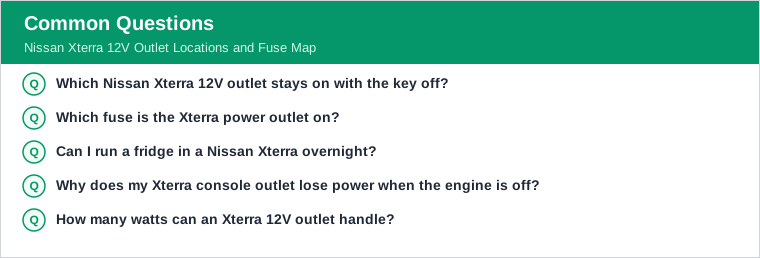
The Xterra's electrical system is a product of its era: three plain 12V sockets, no inverter, no USB bank, no timers. That simplicity is a gift once you learn the one rule that governs it. The rear cargo outlet and the lower-dash outlet are constant, always-on power; the center-console outlet is switched and dies with the ignition.
For a camper, that means the rear cargo socket is your fridge feed, well within its 15A or 20A fuse, and the console socket is for daytime devices only. Confirm the mapping on your own truck with a two-minute key-out test, because the constant-versus-switched behavior is owner-reported and shifts between the early and late N50 years.
Then manage the battery, because the always-on outlet that solves your power-timing problem will drain a single starting battery overnight if you let it. Add an auxiliary battery, solar, or a daily drive, and the Xterra delivers dependable camp power from a socket that was in exactly the right place all along. On this truck, understanding beats upgrading.