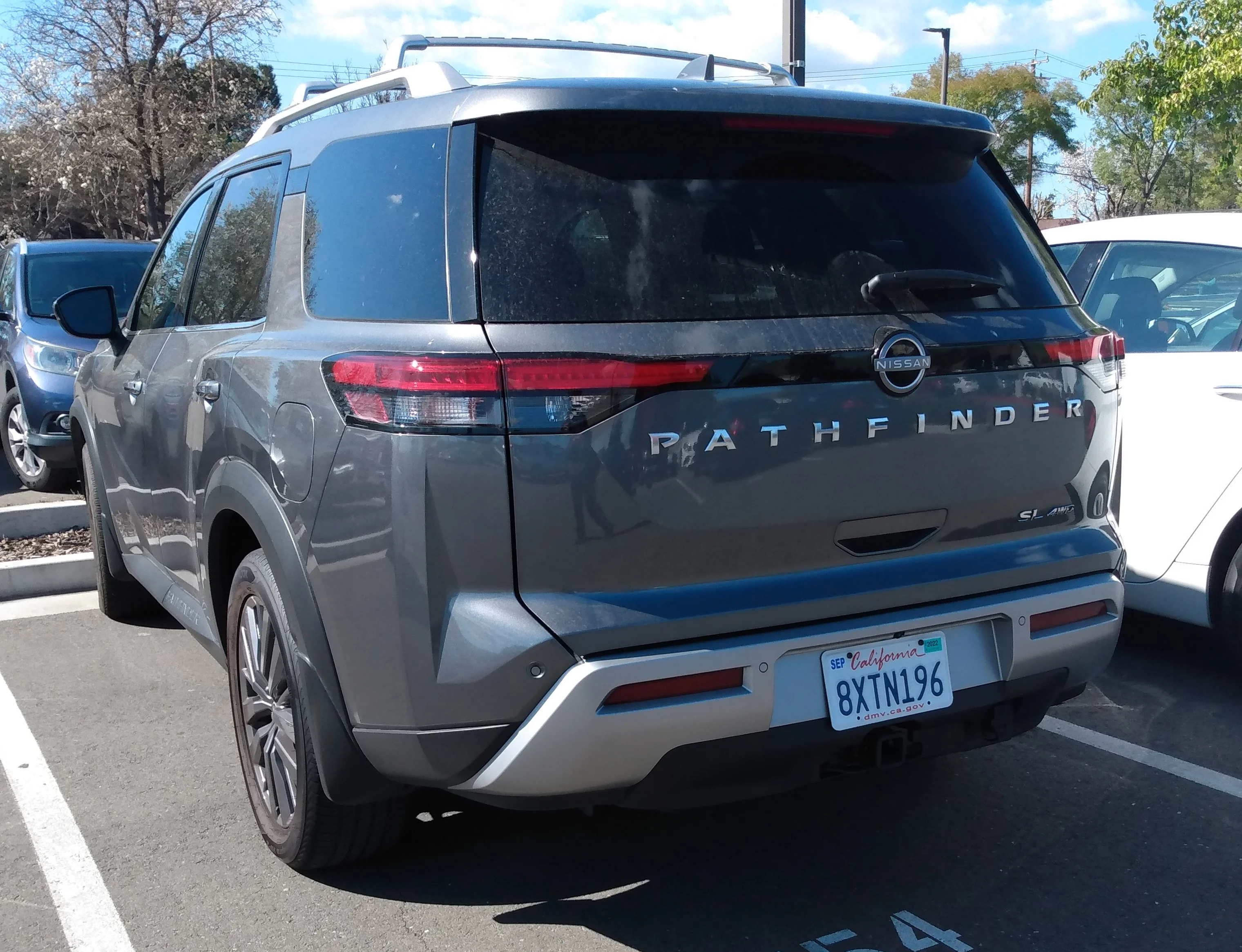
The Pathfinder number Nissan prints big, and the one owners live with
Two hundred miles from the nearest parts store, the gap between a brochure number and a real one stops being academic. Nissan advertises a 79.8-inch folded cargo length for the current R53 Pathfinder, and it's a genuinely useful-sounding figure - right up until you fold the seats and find the floor isn't flat and your usable platform is several inches shorter. That's the story of sleeping in a Pathfinder: a good, roomy three-row with a marketing maximum that needs translating into what you actually build to.
This page keeps the two apart honestly. I'll give you the official cargo volumes Nissan publishes, explain why the advertised 79.8-inch length is a maximum and not a flat bed, tell you the roughly 72 inches owners report building platforms to, deal with the non-level floor that changes every build, and cover the 150-watt outlet. The Pathfinder is a capable sleeper - it just rewards someone who reads the spec sheet like a skeptic, not a shopper.
A word on which Pathfinder this is. The R53 that arrived for 2022 was a full redesign - boxier, more upright, and roomier in the way back than the curvy generation it replaced. That shape is a big part of why it sleeps as well as it does, and it's also why the folded-length claim gets generous: a squared-off cargo bay measures long when a tape runs its longest line. I've seen the same brochure-versus-build gap on plenty of three-rows, and the Pathfinder's is an easy one to close once you know where the extra inches are hiding.
What Nissan officially publishes for cargo
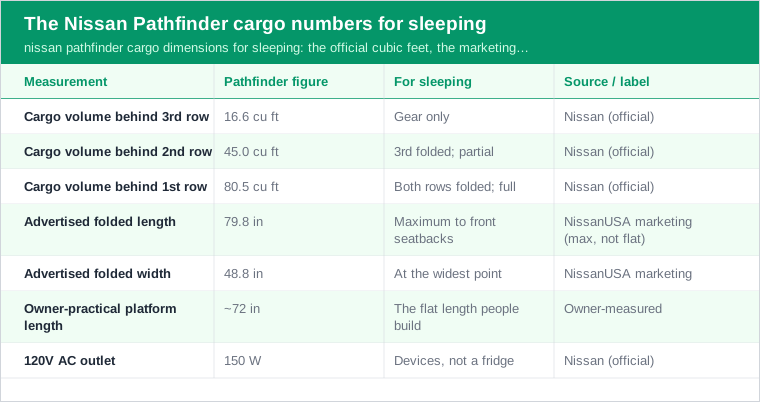
Start with the numbers Nissan actually stands behind. The Pathfinder's official cargo volume is 16.6 cubic feet behind the third row, 45.0 behind the second, and 80.5 behind the first. Those are the honest, published figures for the current car.
- 16.6 cu ft (behind row three): gear space with all seats up - not a bed.
- 45.0 cu ft (behind row two): third row folded, enough for a shorter sleeper or a diagonal.
- 80.5 cu ft (behind row one): both rows down - the configuration that makes the Pathfinder a genuine flat-floor sleeper.
One thing the cubic-foot figures quietly assume is a box, not a bed. Volume counts the space up over the seatbacks and out to the headliner, so a healthy number can still sit above a floor that isn't flat. Behind the third row, that 16.6 cubic feet is a deep well with the seats up - handy for duffels, useless for lying down. The jump to 45.0 with the third row folded is real, but the load floor still steps up where those seatbacks come to rest. Only the full 80.5 gives you a stretch of floor worth building a platform on.
Read as a build spec, almost every Pathfinder bed means folding both rear rows to reach that 80.5-cubic-foot floor. The volume is competitive for a mid-size three-row. What it doesn't tell you - and where the marketing steps in with a shakier number - is the flat length, which is the next section.
The 79.8-inch folded length is a marketing maximum
Here's the number to handle with care. Nissan's marketing lists a folded cargo length around 79.8 inches and a width around 48.8 inches. Those are real Nissan figures, but they are maximums - the 79.8 inches is measured to the front seatbacks along the longest line, over a floor that steps and slopes, not a flat 79.8-inch surface you'd lie on.
A 79.8-inch advertised length is not a 79.8-inch bed. It's the longest tape you can stretch over folded, terraced seats - the usable flat length is what you build after you level it, and it's shorter.
Why I flag it hard: a six-foot-two sleeper reads 79.8 inches, assumes easy room, and discovers the last several inches are up a slope against the front seatbacks. The marketing number isn't a lie - it's just answering a different question than 'will I lie flat.' Treat 79.8 inches as the outer envelope and build to the real flat length below.
It helps to picture how that tape gets pulled. The longest line runs from the closed liftgate, across the folded second row, then up and over the reclined front seatbacks - a diagonal that never lands on a single flat plane. Carmakers measure to the most generous point because the rules allow it, and the Pathfinder's upright seatbacks return a long reading. There's nothing dishonest in the figure, but a sleeping bag doesn't drape over terraced foam the way a steel tape does. The length you actually sleep on is the flat run between the liftgate and the first upward step.
Why owners build platforms closer to 72 inches
Ask people who actually sleep in Pathfinders and the number that comes back is different from the brochure. Owner platform builds tend to land around 72 inches of genuinely flat length once they've bridged the seatback steps and stopped short of the sloped section near the front seats. That's six feet - enough for most adults, tight for the tallest.
What eats the difference between 79.8 and ~72:
- The slope near the front seats is counted in the advertised length but isn't flat sleeping surface.
- Leveling the floor with a platform means building to the usable flat zone, not the absolute longest point.
- Front-seat position - sliding them forward buys some of it back, at the cost of your morning driving position.
The overlander's takeaway: plan your Pathfinder bed around roughly six feet of flat length, confirm it with your own tape, and if you're over six-foot-two, budget for a diagonal or a platform that runs up over the seatbacks. Build to the real number and the Pathfinder sleeps you well; build to 79.8 and you'll fight the slope all night.
Front-seat position is the lever most people forget. Run the front buckets all the way forward and their seatbacks stop crowding the platform, which can hand back three or four inches of flat run - sometimes the difference between a diagonal and a straight lie for a six-footer. The trade shows up the next morning as a driver's seat parked hard against the dash. I'd set the seats for sleep at night and reset them before coffee, and I've mapped more than one build where that single adjustment turned a cramped night into a comfortable one.
The floor is not flat, and that changes the build
This is the detail the volume figure hides and the one that decides your comfort: owners consistently report the Pathfinder's folded cargo floor isn't level. The seatbacks don't fold perfectly flush with the cargo floor, so you get a stepped, slightly sloped surface rather than a flat plane. Fine for hauling; rough on a spine.
How I'd handle it on my rig:
- Bridge, don't ignore. A shaped SUV pad or a low platform turns the steps and slope into one flat surface - this is the single biggest comfort fix in a Pathfinder.
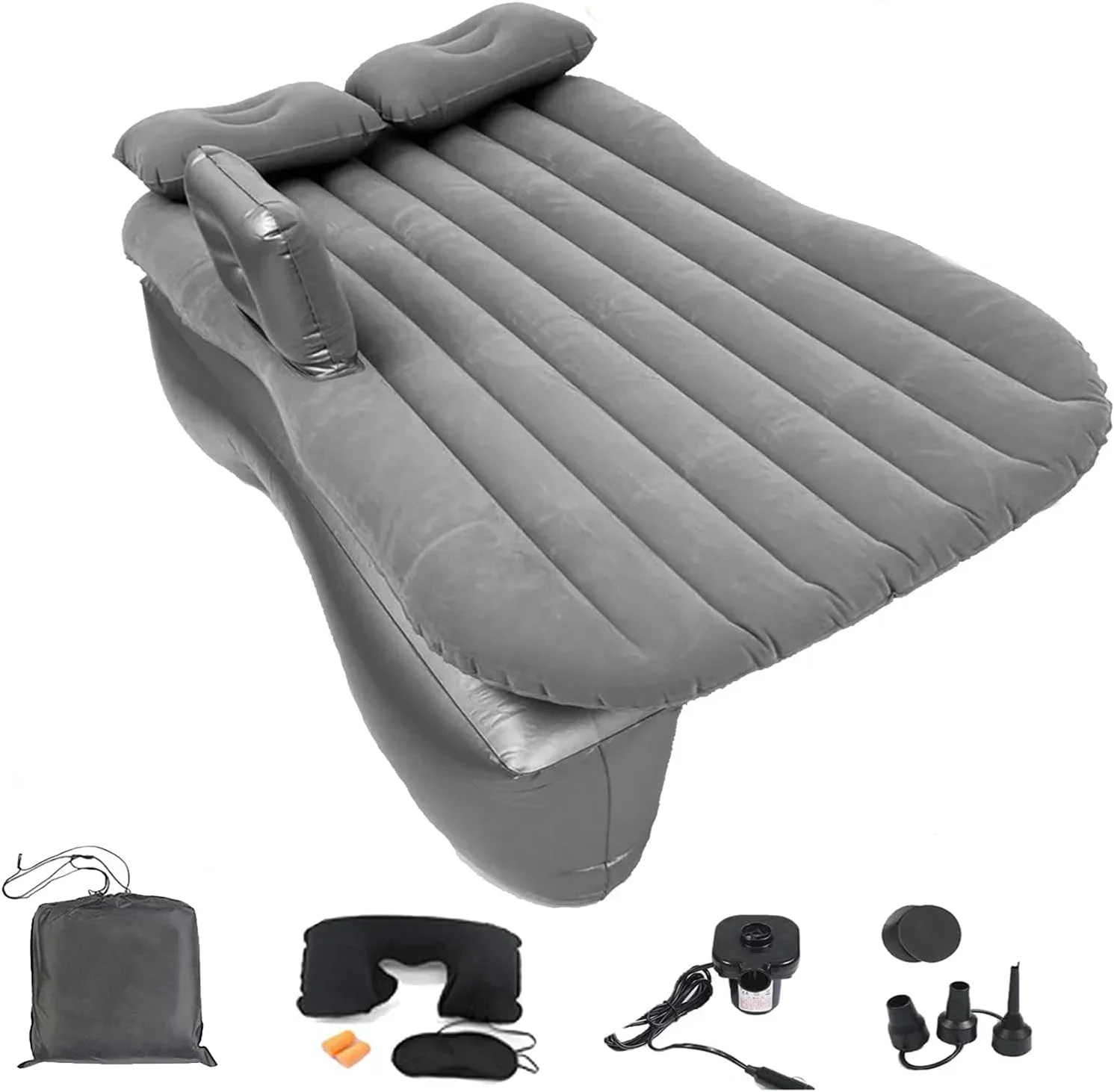
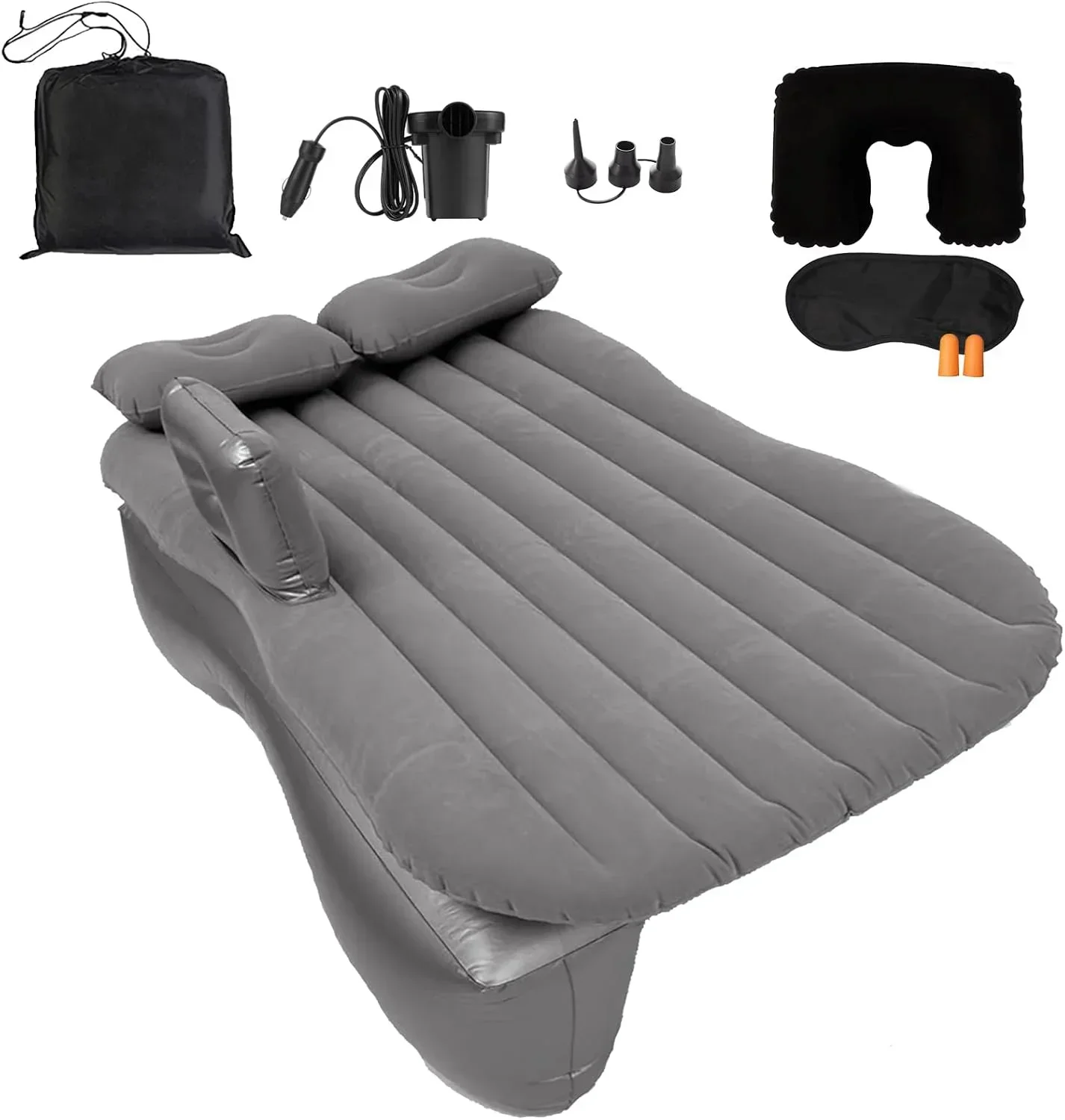
- An Onirii SUV air mattress is built to span exactly these seatback steps and level the bay in one inflate - the fast route to a flat Pathfinder bed.
- A plywood platform sized to your measured floor is the durable route, and it gives you storage under the bed.
The lesson from a lot of nights out: the Pathfinder's floor won't level itself, and a thin pad alone follows the slope. Level first with a platform or shaped mattress, then add your sleeping pad - that order is the difference between rolling into the low corner and sleeping flat.
The step to watch sits right at the seatback hinge, where the folded backrest meets the fixed cargo floor. It isn't a gentle ramp - it reads as a low ledge and then a mild downhill toward the liftgate, so a body laid straight ends up with hips in the dip and shoulders on the rise. A rigid platform ignores the whole terrain and hands you one plane; a shaped air mattress fills the low spots instead of piling over them. Either way, the cure is subtracting the slope, not stacking a thicker pad on top of it.
Width, and whether two adults fit
Width is where the Pathfinder's three-row size pays off. The advertised 48.8-inch folded width is measured at the widest point, and the pinch between the wheel wells is narrower, as always - but the Pathfinder is a wide vehicle, and two average adults across is realistic with both rows folded and a level surface.
Two adults side by side want about 48 inches of usable width. The Pathfinder's advertised 48.8 is at the widest point, not between the wheel wells - measure the pinch, because that's your real two-person ceiling.
Working with the width:
- Two adults: plausible on a level platform built up over the wheel wells to reclaim the full width.
- Solo or one-plus-a-kid: easy, with gear room alongside.
- Run pads down the center line where the walls are most parallel and keep gear out of the sleeping footprint.
The width is a real reason to pick a three-row like the Pathfinder for two-person sleeping - just measure the wheel-well number rather than trusting the 48.8-inch maximum.
The measurement that actually rules two-person nights is that wheel-well gap, and it runs a few inches under the advertised 48.8. Build a platform up level with the tops of those wells and you win the full width back, because the pads now bridge the humps instead of wedging down between them. Below that line you're on the narrow channel, shoulder to shoulder - two adults can do it, but they won't love it for a week. I've flagged the same thing on every three-row I look at: the wheel-well width, not the widest-point spec, is the honest two-person ceiling.
The 150-watt outlet and the overnight reality
The Pathfinder gives you more than the compacts: a factory 120-volt household outlet rated at 150 watts on many trims, plus 12V sockets. It's a genuine convenience for camp, but the wattage decides what it's good for, and 150 watts is a device outlet, not an appliance one.
- What 150 watts runs: chargers, a laptop, a CPAP on many machines - light, steady loads.
- What it won't: a 12V compressor fridge belongs on its own supply, and heating elements are out.
- Overnight, treat the car's outlets as off with the ignition off - carry a standalone battery for anything that runs while you sleep.
The overnight math is where the 150-watt ceiling earns its warning. A CPAP on its DC lead sips maybe 30 to 60 watts and can ride the night on a modest station; the same machine with its humidifier and heated hose spikes well past 150 and belongs nowhere near the car's outlet. Phones and a lantern are nothing. A 12-volt fridge, an electric kettle, a small heater - each one either trips the outlet or drains the starting battery you'll want at dawn. Size the power to whatever runs while you sleep, not to what you plug in at noon.
The 12-volt sockets are the smarter tap for a lot of camp gear anyway. A DC fan, a string of LED lights, and most phone and tablet chargers run natively off 12 volts, which skips the little conversion loss you pay running them through the household outlet. Just remember those sockets, like the 120-volt outlet, usually die with the ignition, so anything that must stay alive overnight - a fridge, a CPAP, a heated blanket - wants a separate battery that owes the Pathfinder nothing. Keep the vehicle's electrics for daytime and let a standalone station carry the night.
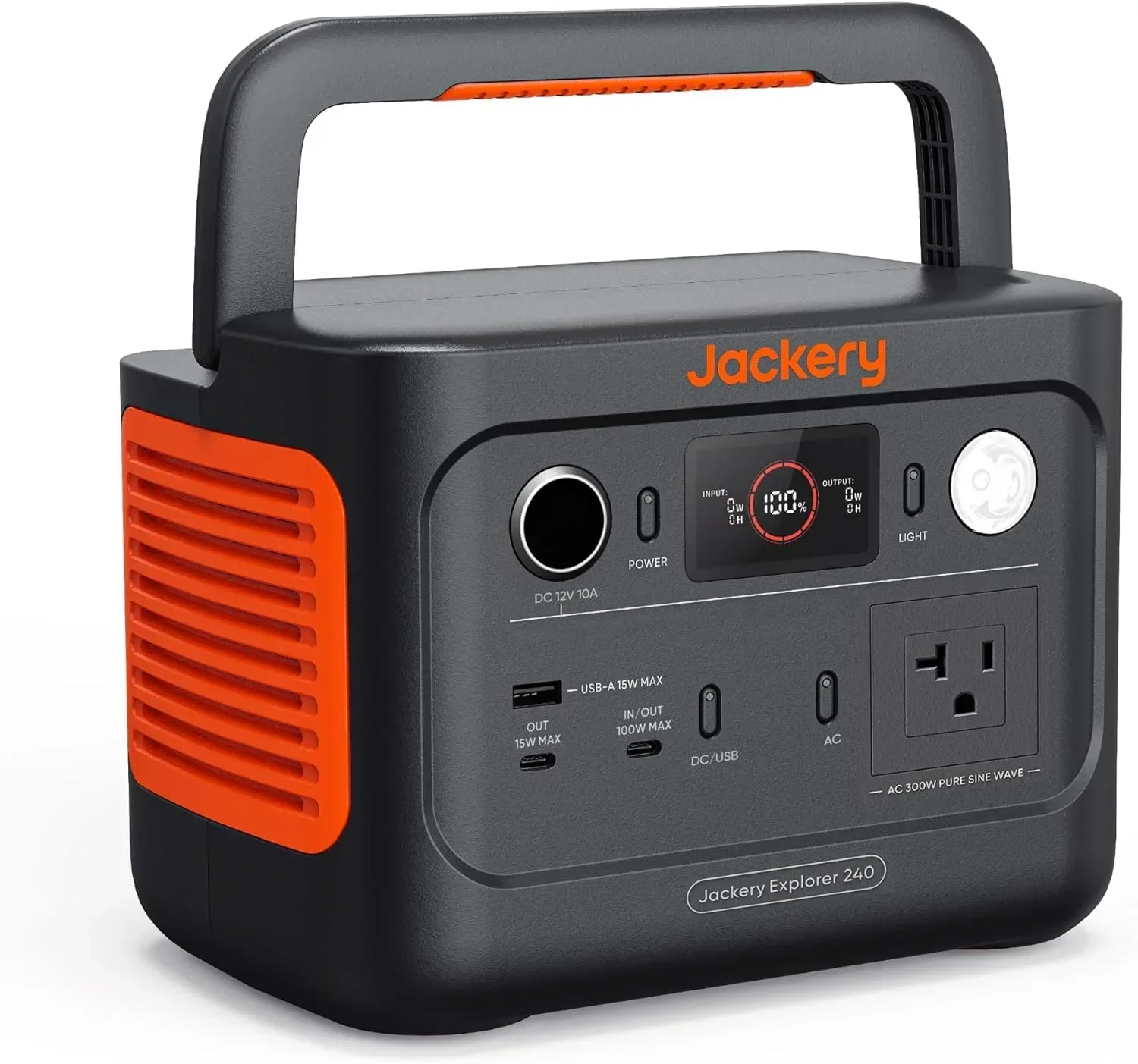
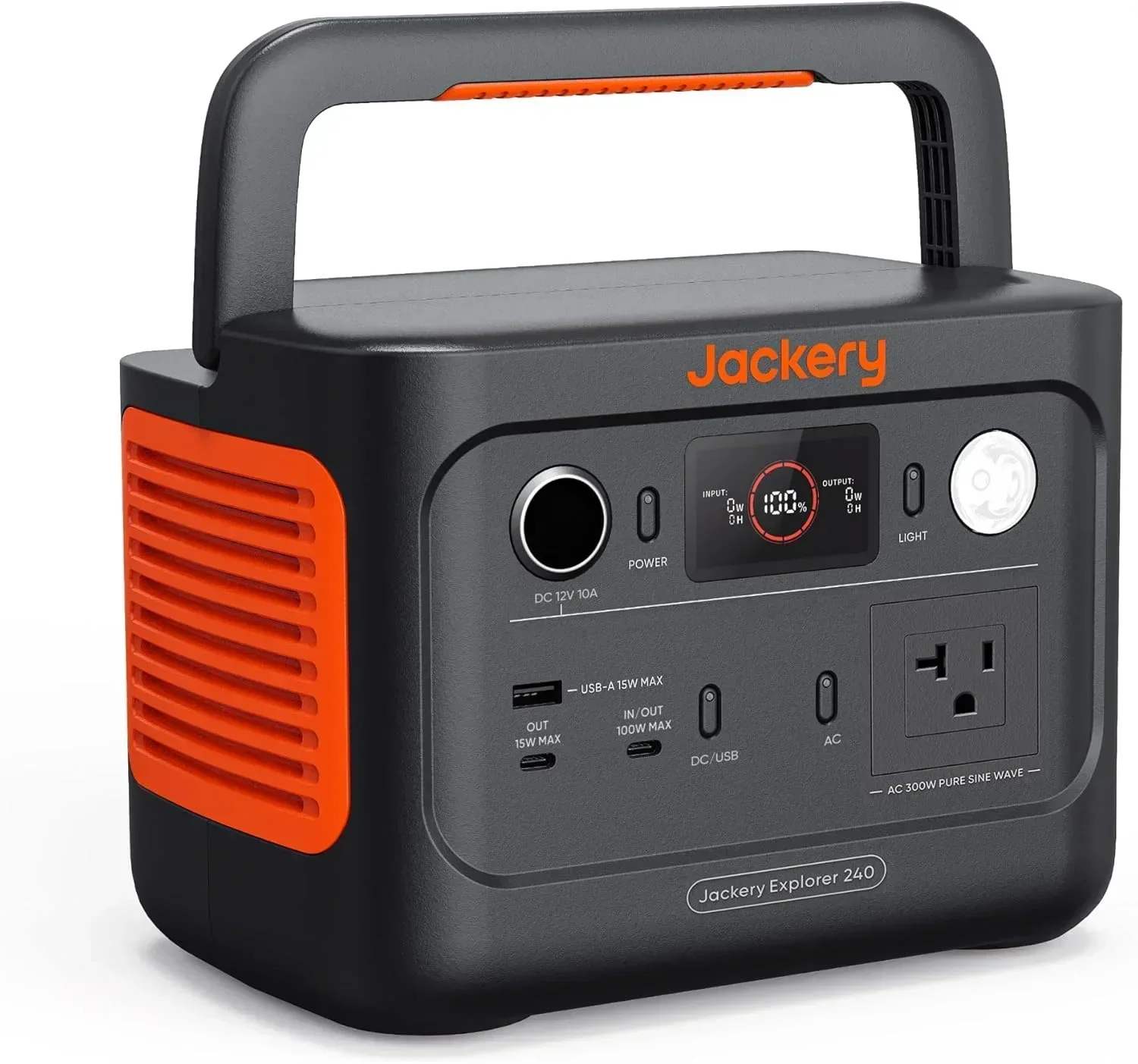
For dependable camp power a Jackery Explorer 240 v2 power station runs a fan, lights and charging off its own 256 watt-hours and tops back up from the 12V socket as you drive - so a night out never leans on the Pathfinder's 150-watt outlet or its starting battery.
How an overlander turns the Pathfinder into a bed
Put it together and the Pathfinder build is straightforward once you're working from real numbers. Here's the sequence I'd run.
- Fold both rear rows to reach the 80.5-cubic-foot floor - that's the sleeping configuration.
- Measure your true flat length, expecting roughly six feet of usable surface, not the advertised 79.8 inches.
- Level the sloped floor with a shaped mattress or a platform before you add a pad.
- Measure the wheel-well width to know whether it's a one- or two-person bed for your pads.
- Bring your own power for anything overnight; the 150-watt outlet is daytime convenience.
Picture a real night to see why the order matters. Roll into a trailhead after dark, drop both rear rows, and the bay looks bed-ready - right up until you lie down and start sliding toward the liftgate on the slope. Do it the other way: platform in first, its top set level with the seatback ledge, pads down over the wheel wells, power station parked by the door for the fan. Now the same bay is flat wall to wall, and the only thing left to settle is which end gets the pillow. That sequence is the whole trick.
A couple of small choices make the build live with you longer. Point the sleeper's head toward the liftgate rather than the seatbacks, because the floor sits lowest there and a low head end beats a low hip end for most backs. Leave a hand's width of air at the tailgate so a cracked window can breathe without dripping condensation onto your bag. And cut the platform a touch narrow of the trim panels, not tight to them, so it drops in and lifts out without a fight in the dark - the ten-second in, ten-second out test is what separates a rig you'll actually sleep in from a project that stays in the driveway.
Done in that order, the Pathfinder is a comfortable, roomy sleeper for one or two. The full setup and the trip-tested details live in our Nissan Pathfinder camping guide and the Outback vs Pathfinder comparison.
The verdict on the Pathfinder as a sleeper
The Nissan Pathfinder is a capable three-row sleeper if you build to the real numbers instead of the advertised ones. Nissan publishes 80.5 cubic feet behind the first row and markets a 79.8-inch folded length - but that length is a maximum over a non-level floor, and owners build flat platforms closer to 72 inches. Level the floor, and you get a two-adult-capable bed with a 150-watt outlet for devices.
The Pathfinder sleeps two on a level platform, at about six feet of real flat length - not the 79.8 inches on the sticker. Measure your own floor, bridge the slope, and it's a roomy, honest bed.
Read the brochure as an envelope, measure your own flat length and wheel-well width, level the sloped floor, and bring your own overnight power, and the Pathfinder turns its real 80.5 cubic feet into a comfortable place to sleep. If those numbers ruled it out for you - too short flat for your height, too much build for your patience - that's the page doing its job at the tape measure, not at a trailhead at midnight.
Who is it for, honestly. A solo traveler or a couple who'll build a simple platform and measure once get a roomy, weatherproof room on wheels that still hauls three rows of people on the days nobody's sleeping in it. Someone over six-foot-two who wants to drop the seats and flop without a build will feel the slope and the short flat run every time. The Pathfinder rewards the person who spends the ten minutes with a tape up front, out on the trail where getting it wrong costs a whole bad night.
Related on Auto Roamer: Hyundai Palisade cargo dimensions; Chevy Traverse cargo dimensions.