
How to Layer Your Car Camping Sleep System for Different Weather
My first car camping trip was a $47 experiment in a Honda Civic hatchback in Shenandoah Valley. Mid-October. I had a Walmart foam pad, a sleeping bag rated to 40F, and zero idea that the temperature drops 15 degrees F after midnight in the mountains.
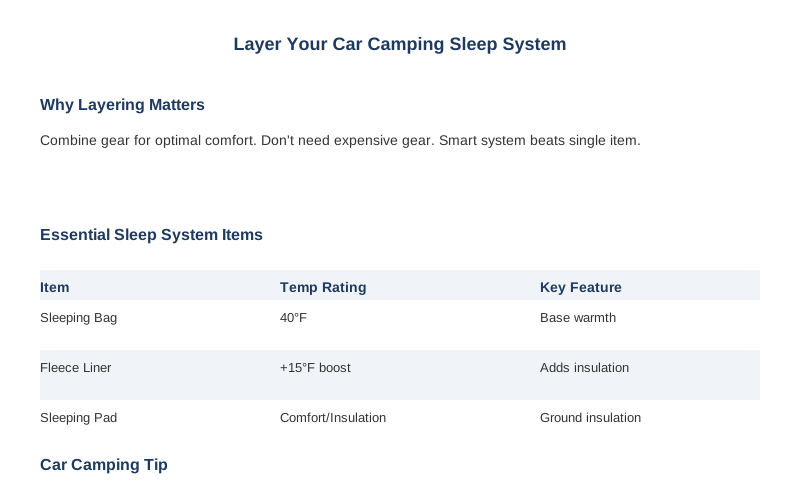
My first car camping trip was a $47 experiment in a Honda Civic hatchback in Shenandoah Valley. Mid-October. I had a Walmart foam pad, a sleeping bag rated to 40F, and zero idea that the temperature drops 15 degrees F after midnight in the mountains. By 2AM I was wearing every piece of clothing in my bag and still shivering. The fix was a $12 fleece liner from Amazon that turned my 40F bag into a 25F bag.
Three years later I still use that same liner on every trip. Science of Layering teaches us that combining gear is smarter than buying one expensive piece. It's about building a system that works, not just buying the fanciest bag. My $12 liner proved that point faster than any fancy marketing. You don't need a $500 sleeping bag to be comfortable; you need to know how to layer your existing gear.
It's not rocket science, it's just common sense once you've learned it the hard way. Beginners Guide agrees, and I'm here to share the field notes.
The Core Answer
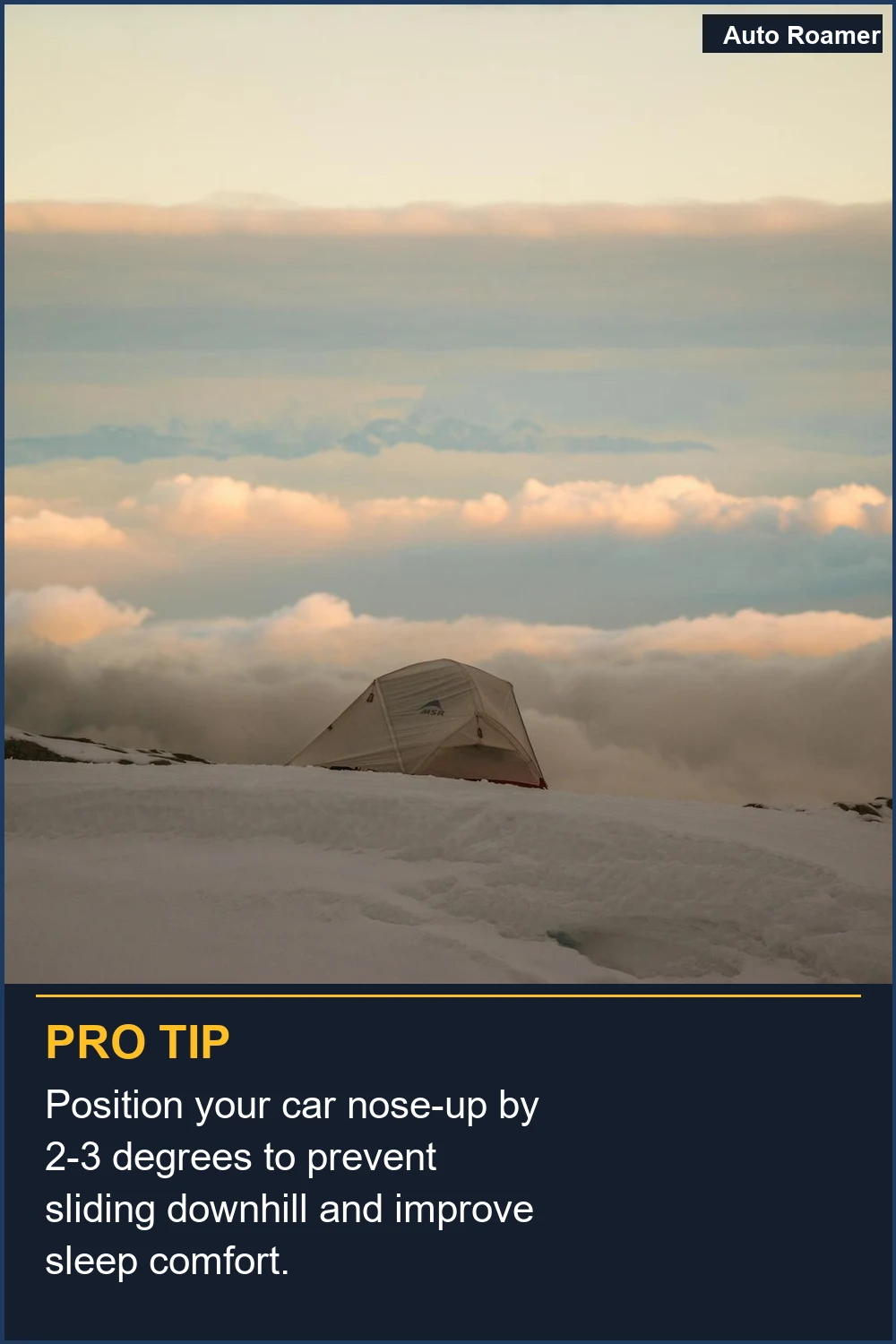
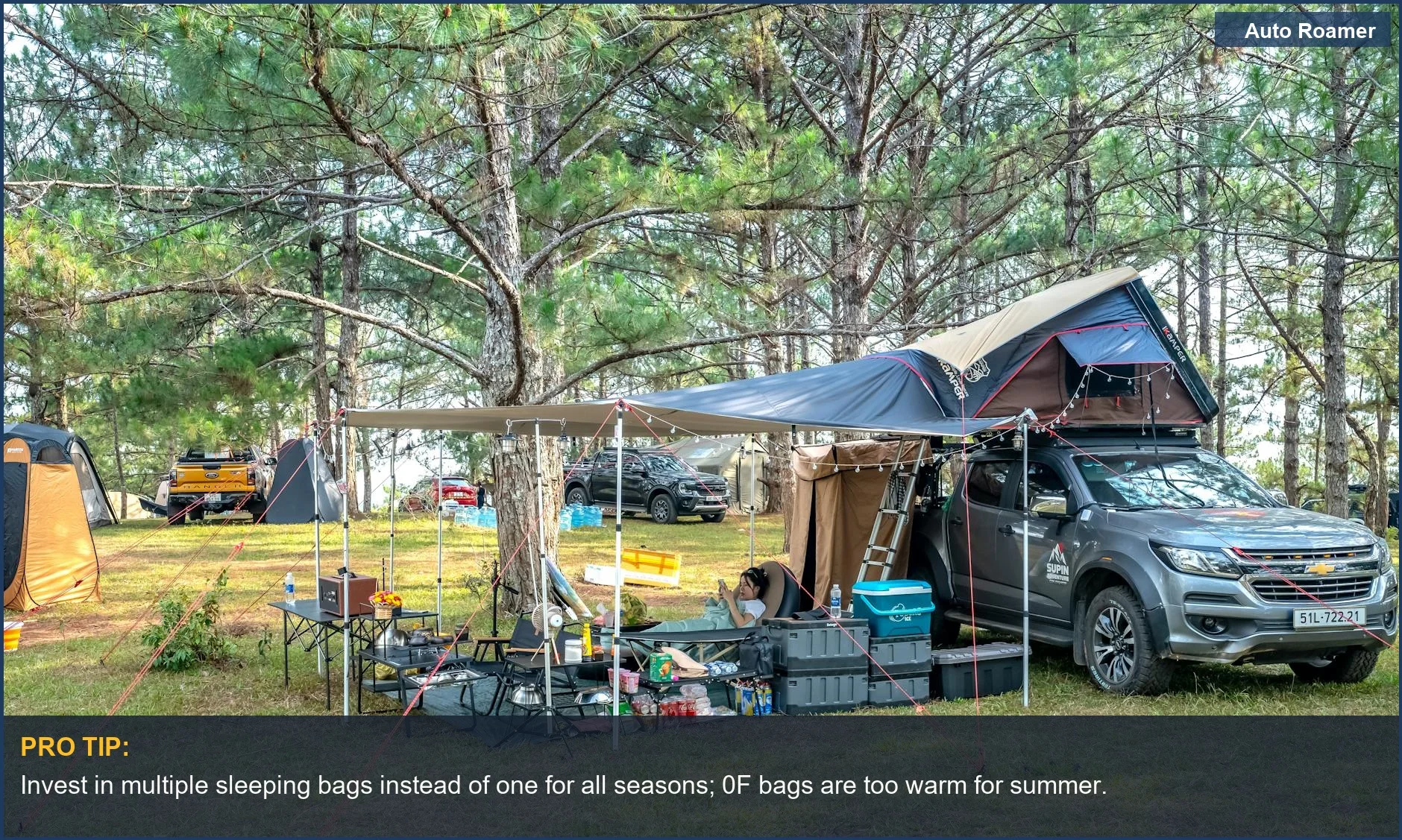
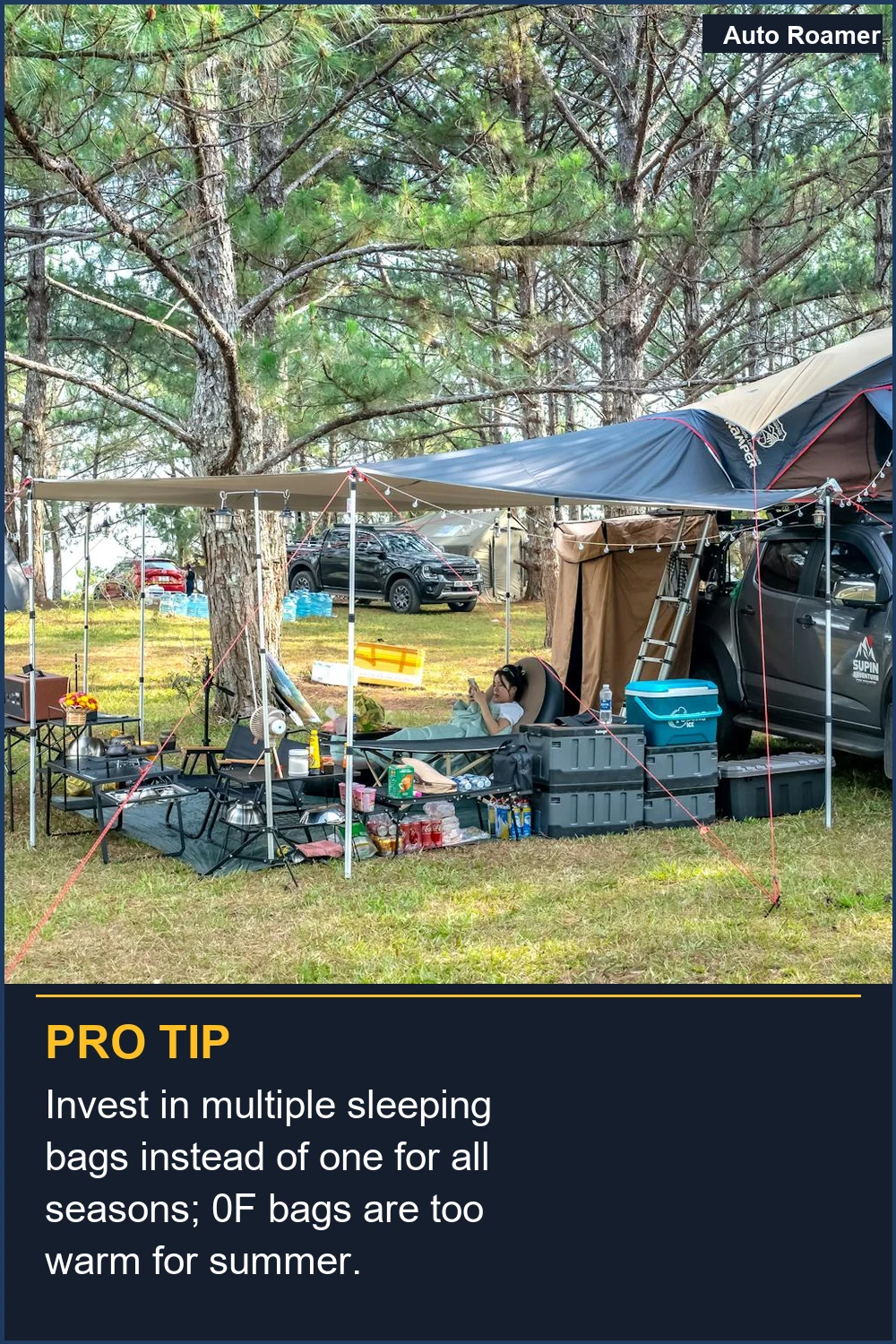
Every car camping guide tells you to 'level your vehicle' before sleeping. Nobody tells you HOW. I spent 20 minutes at a state park in West Virginia trying to figure out if my Subaru was level by rolling a water bottle across the mattress. The real move: park nose-slightly-uphill so your head is higher than your feet. That is it. You do not need a bubble level. You need to not wake up with a headache from blood pooling in your skull. How to Sleep Warm Outdoors shows folks using specialized pads, but the principle is the same. My first 3-day trip, I packed like I was moving apartments. Cooler, camp stove, folding table, lantern, tarp, extra tarp, backup tarp. My trunk was so full I could not see out the rear window. The honest version: you need a sleeping setup, water, food that does not need cooking, and a headlamp. Everything else is optional until you figure out what you actually use. My second trip had half the gear and was twice as comfortable. Layering your sleep system is the game-changer. Think of it like building a fort. You need a solid base, walls, and a roof. For sleeping, that means a pad, a bag, and then whatever else you need for warmth. Reddit users often suggest Reflectix, a cheap insulation material. I tried it under my sleeping bag and it made a noticeable difference for about $10. Brilliant engineering, really. For cooler weather, above 40 degrees F, a good sleeping bag rated to 20F or 30F is usually enough. I use my 40F bag with that $12 fleece liner I mentioned. That pushes its rating down to about 25F. It's a cheap way to get more bang for your buck. How to Sleep Warm Outdoors often highlights premium bags, but layering is the true budget hack. When it gets colder, say into the 20s F, I add a second sleeping bag on top like a quilt. This traps more air and creates a better insulator. It sounds like a lot, but it's just more blankets. The Ultimate Sleep Setup talks about heavy fleece and wool blankets, which is the same idea. Don't overthink it; think cozy. Your sleeping pad is crucial. That cheap foam pad from Walmart? It's better than nothing, but a good insulated pad with a higher R-value is a game-changer. Mine has an R-value of 4.5, which means it's pretty good at stopping the cold ground from sucking the heat out of you. Science of Layering says the pad is as important as the bag. I learned that the hard way when I woke up numb in Zion National Park, despite a decent bag. Clothing layers are your final defense. Wear clean, dry socks and a base layer. Avoid cotton; it holds moisture. A beanie is essential because you lose a lot of heat through your head. It's like putting a hat on your car engine in winter, but for your brain. Beginners Guide emphasizes this, and it's true. You can't just wear a t-shirt to bed in 30F weather.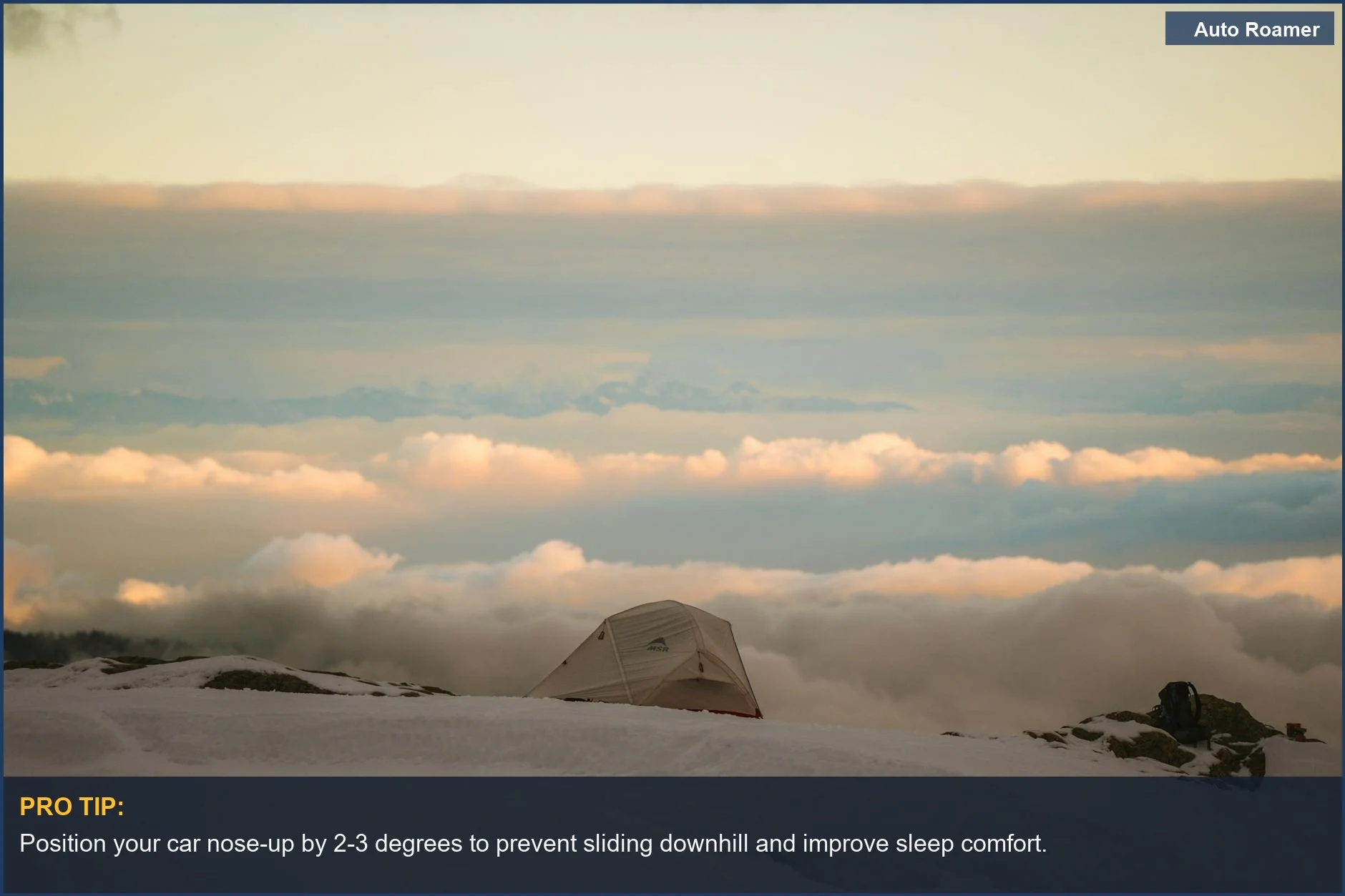
Why This Matters for Your Setup
Making the Right Choice
Frequently Asked Questions
I saw some fancy insulated sleeping pads online for $200+. Can I just use a $20 foam pad and a bunch of blankets to save money?
Do I really need one of those fancy sleeping bag liners, or can I just use a spare bedsheet?
What if I layer my sleeping bag with a fleece liner and a wool blanket, and I'm STILL freezing in my car?
Can sleeping directly on a cold car floor without a pad permanently damage my car's upholstery?
I heard you can just run your car for 10 minutes every hour to stay warm. Is that true?
🏅 Looking for Gear Recommendations?
Check out our tested gear guides for products that work with this setup:
Sources
- Science of Layering: The Best Camping Sleep System
- How to Sleep in a Freezing Car (Without a Heater) - YouTube
- What sleeping arrangement is best for car camping in temperatures ...
- The Ultimate Sleep Setup for Car Camping
- A Beginners Guide To Car Camping In Cold Weather - Luno
- How to Sleep Warm Outdoors in EXTREME COLD ... - YouTube
- Layering a sleeping bad in cold weather. : r/camping - Reddit
- How to Stay Warm Car Camping : Tips for Nights on the Road