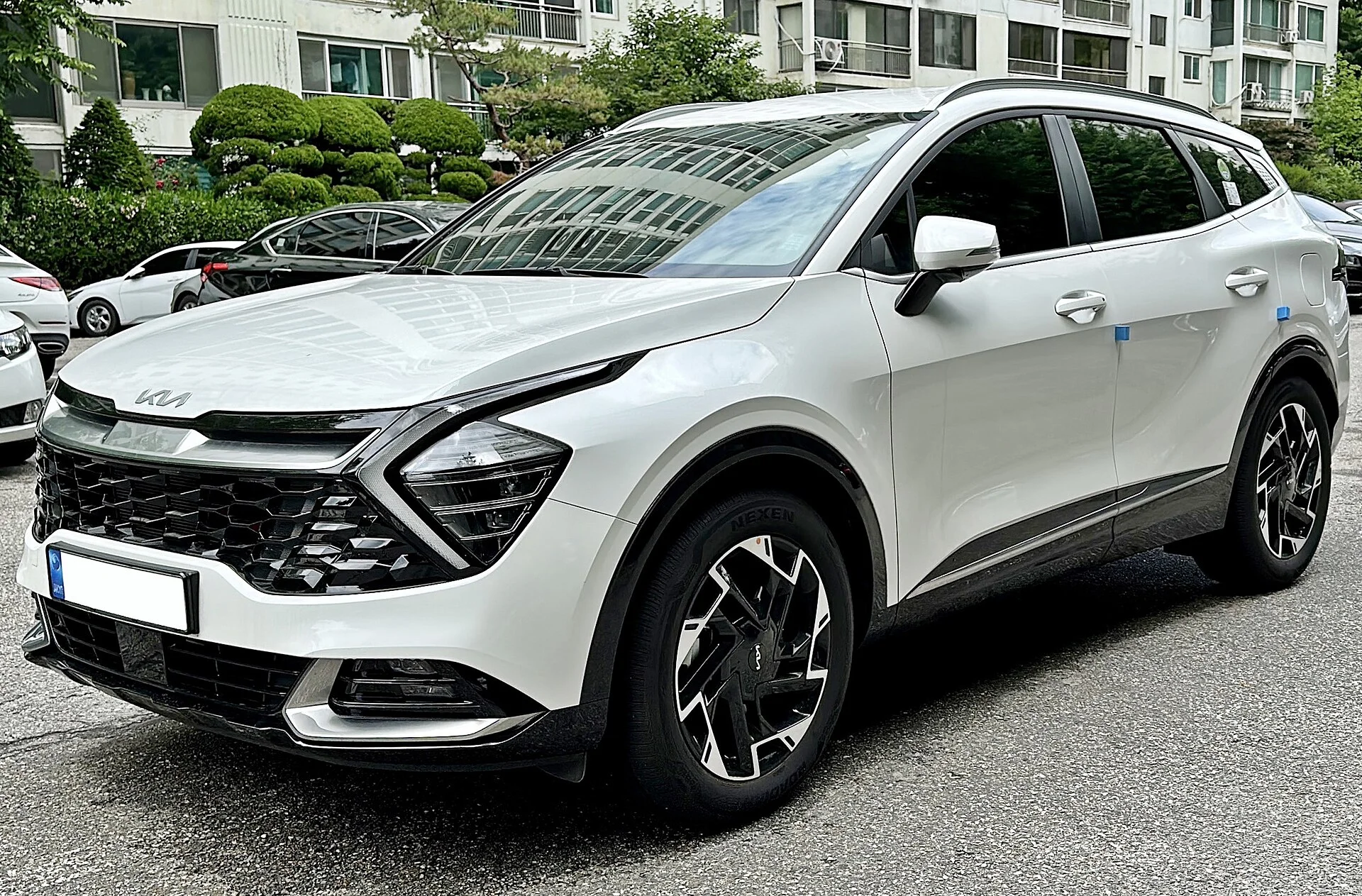
The Sportage's 12V outlets: two sockets, and the value question
The cheap way isn't cheap if it costs you twice, and nowhere does that bite harder than trying to camp off a car's 12V socket. So let's start with what the fifth-generation Kia Sportage actually gives you: two 12-volt power outlets, one in the front console area and one in the luggage/cargo area, per Kia's owner's manual. Two sockets, sensibly placed.
Here's the value question this whole page answers: both sockets are ignition-switched - Kia's manual says they work only in the ON position - so they can't run a fridge or lights while you sleep without draining the battery. That leaves you two options: pretend the socket is enough and risk a dead battery, or spend a little on a camp battery up front. I'll map both outlets, the fuses that feed them, the quirk that the Sportage has no cigarette-lighter fuse at all, and the honest math on which choice actually costs less. Spoiler: the false economy is the one that leaves you stranded, and it's easy to avoid.
Where the two 12V outlets live
Two sockets, two jobs - knowing which is which saves you running a cord across the whole cabin. Per Kia's owner's manual and the fuse diagrams, here's the Sportage layout.
- Front 12V outlet: in the front console area, the one you'll use for a dash cam hardwire or a phone charger up front.
- Luggage 12V outlet: in the cargo area, typically on the driver-side panel - this is the one that matters for camping, right where a fridge or a light sits.
For sleeping, the luggage socket is the workhorse. But two sockets doesn't mean twice the power or twice the runtime - both share the same ON-only limit, and both are meant for modest 12V accessories, not a high-draw appliance. Placement is the Sportage's strength here; the wattage and the switching are where you plan carefully.
One practical note on the luggage socket: on most Sportage layouts it sits on the driver-side cargo panel, which means a fridge or cooler wants to live on that side of the load floor to reach it without a cord stretched across your sleeping space. Plan your bed and your fridge position around that socket location before you build, not after - moving a fridge to chase a short cord is the kind of avoidable annoyance that makes a good setup feel cramped.
The Sportage skips the cigarette-lighter fuse - what that changes
Here's a Sportage quirk that trips up anyone used to older cars: there is no cigarette-lighter fuse on this generation. Both fetched fuse diagrams - StartMyCar and fuseboxinfo - confirm the Sportage has only POWER OUTLET1 and POWER OUTLET2 circuits, with no 'C/LIGHTER' row at all.
If you're hunting a 'cigarette lighter fuse' in a Sportage, you'll never find one - Kia renamed the circuits POWER OUTLET1 and 2. Look for those, not for CIGAR.
Why it matters when you're troubleshooting:
- A dead socket sends you to the wrong fuse if you're looking for a lighter circuit that doesn't exist.
- The labels are POWER OUTLET1 (luggage) and POWER OUTLET2 (front) - memorize those two names.
- Both live in the engine-room junction block, not the cabin box - that's the opposite of the Outback, so don't assume.
How much you can pull: the under-15A device limit
Kia is less generous with a wattage number than some rivals, so read the limit carefully. The owner's manual specifies only that connected devices must draw under 15 amps and be 12V accessories - it doesn't print a per-outlet watt figure. Each outlet circuit is protected by a 20A fuse, so the under-15A device rule is your real ceiling.
What that budget covers:
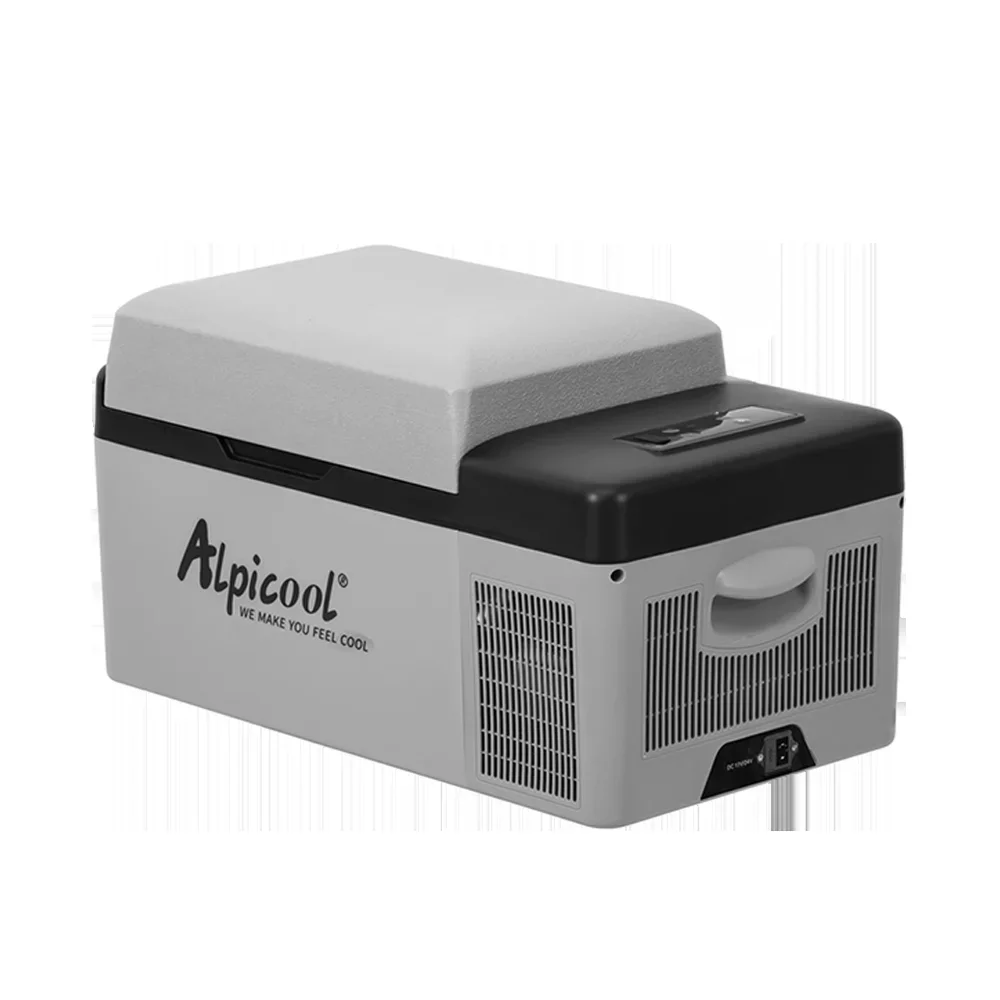
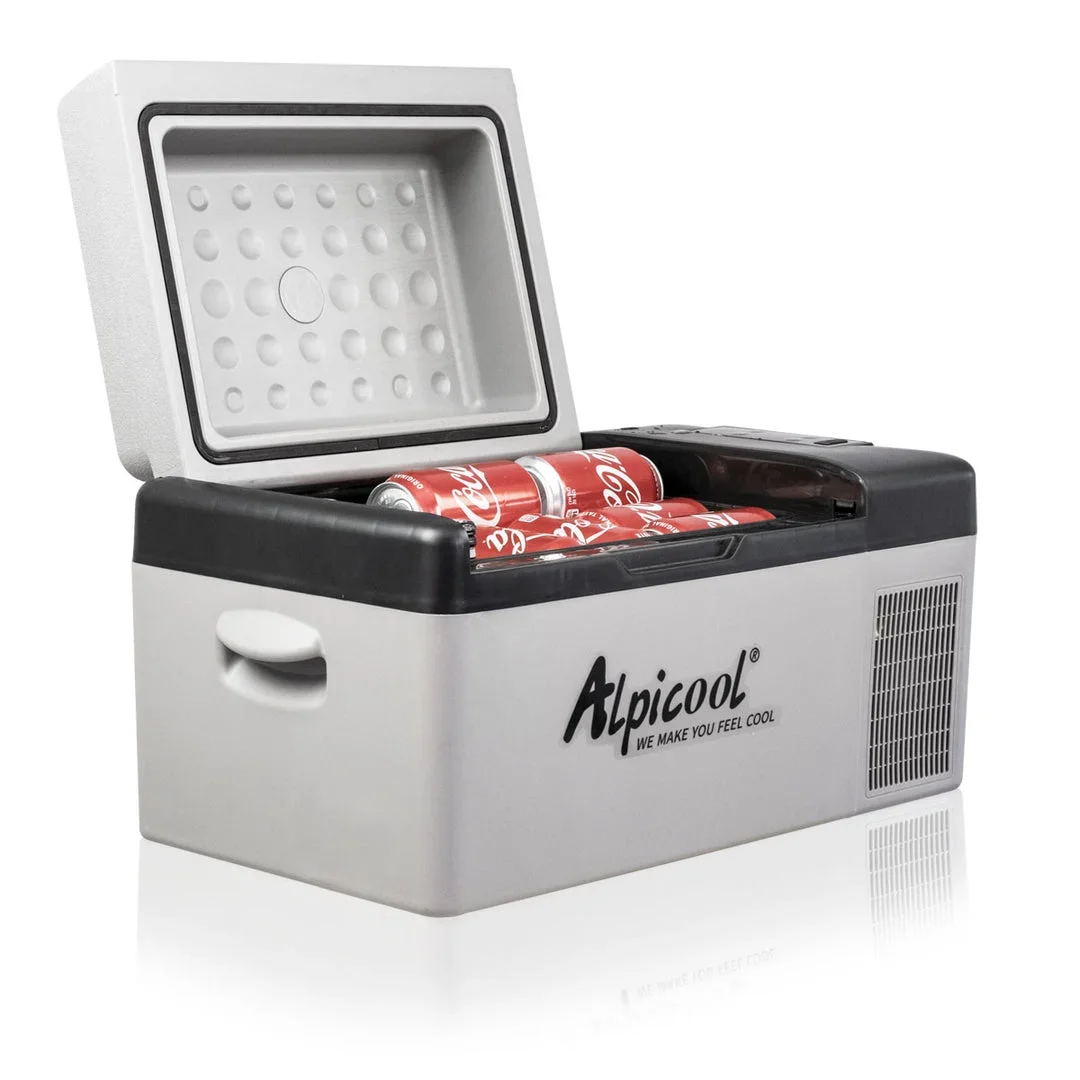
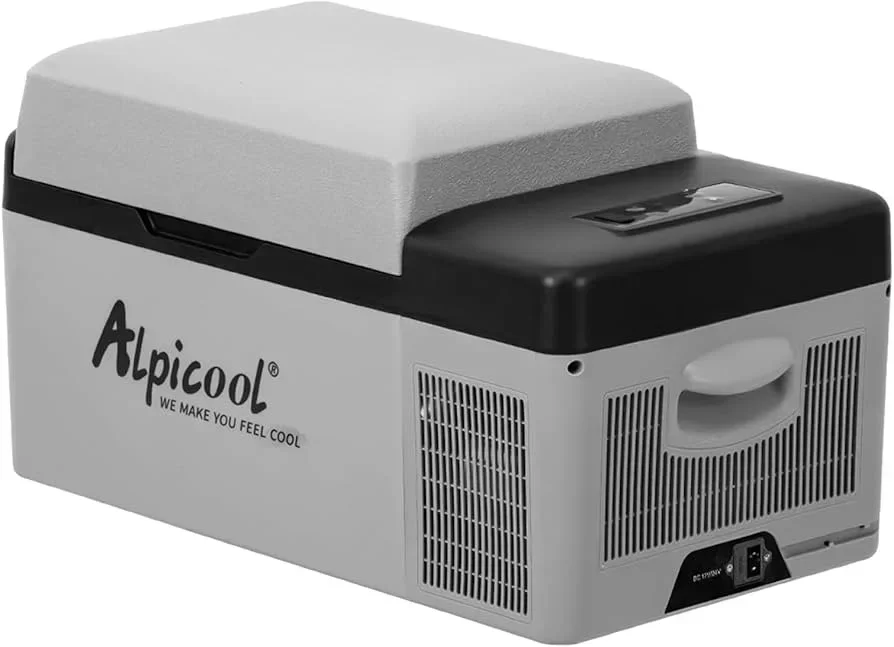
- A 12V compressor fridge like the Alpicool C20 portable 12V fridge at roughly 45 watts sits well under the limit - while the car is on.
- Phone, light, and dash-cam charging - all fine within the under-15A rule.
- Not a big inverter or a kettle - the under-15A device limit rules those out, so don't try to force it.
The under-15A limit is plenty for real camp accessories. The catch was never the wattage - it's that the socket only lives while the car is on.
The fuse map: front #6, luggage #12, USB #45
When a socket dies, here's exactly where to look - cross-verified across two fuse references. All the power-outlet fuses live in the engine-room junction block in the engine compartment.
- Fuse #6, 'POWER OUTLET2', 20A: feeds the front power outlet, per StartMyCar and fuseboxinfo, which agree on the assignment.
- Fuse #12, 'POWER OUTLET1', 20A: feeds the luggage (cargo) power outlet - the camping one - again confirmed by both references.
- Fuse #45, 'MODULE2', 15A: the USB circuit, but note it's in the driver's-side instrument-panel box, not the engine bay.
So the two power sockets are in the engine-room block and the USB circuit is in the cabin box - two different boxes. Carry a couple of 20A spares for the outlet circuits and a 15A for the USB, and a blown fuse is a two-minute roadside fix instead of a ruined evening.
Here's the money-saving reason this matters, because it's pure Budget Wrench territory. A shop will happily charge you a diagnostic fee to tell you a five-dollar fuse blew - and on a Sportage they'll waste time looking for a cigarette-lighter circuit that doesn't exist before they find the POWER OUTLET fuse in the engine bay. Learn the two fuse locations yourself, keep a cheap assortment of blade fuses in the glovebox, and you've turned a tow-and-diagnose bill into a roadside swap that costs less than a coffee. The whole point of knowing your own fuse map is that it moves the easy fixes out of the shop and back into your own hands, where they're nearly free.
The false economy: camping off the socket vs a power station
Here's the false economy nobody mentions: trying to save the cost of a camp battery by running your fridge off the Sportage's 12V socket. It looks free. It isn't. Because the sockets only work in the ON position, keeping a fridge cold overnight means leaving the car in accessory - and that drains the starter battery Kia's own manual warns you to unplug to protect.
Run the math the way I would:
- The 'free' option ends in a jump-start, a tow, or a replacement battery - the cheap choice that costs you twice.
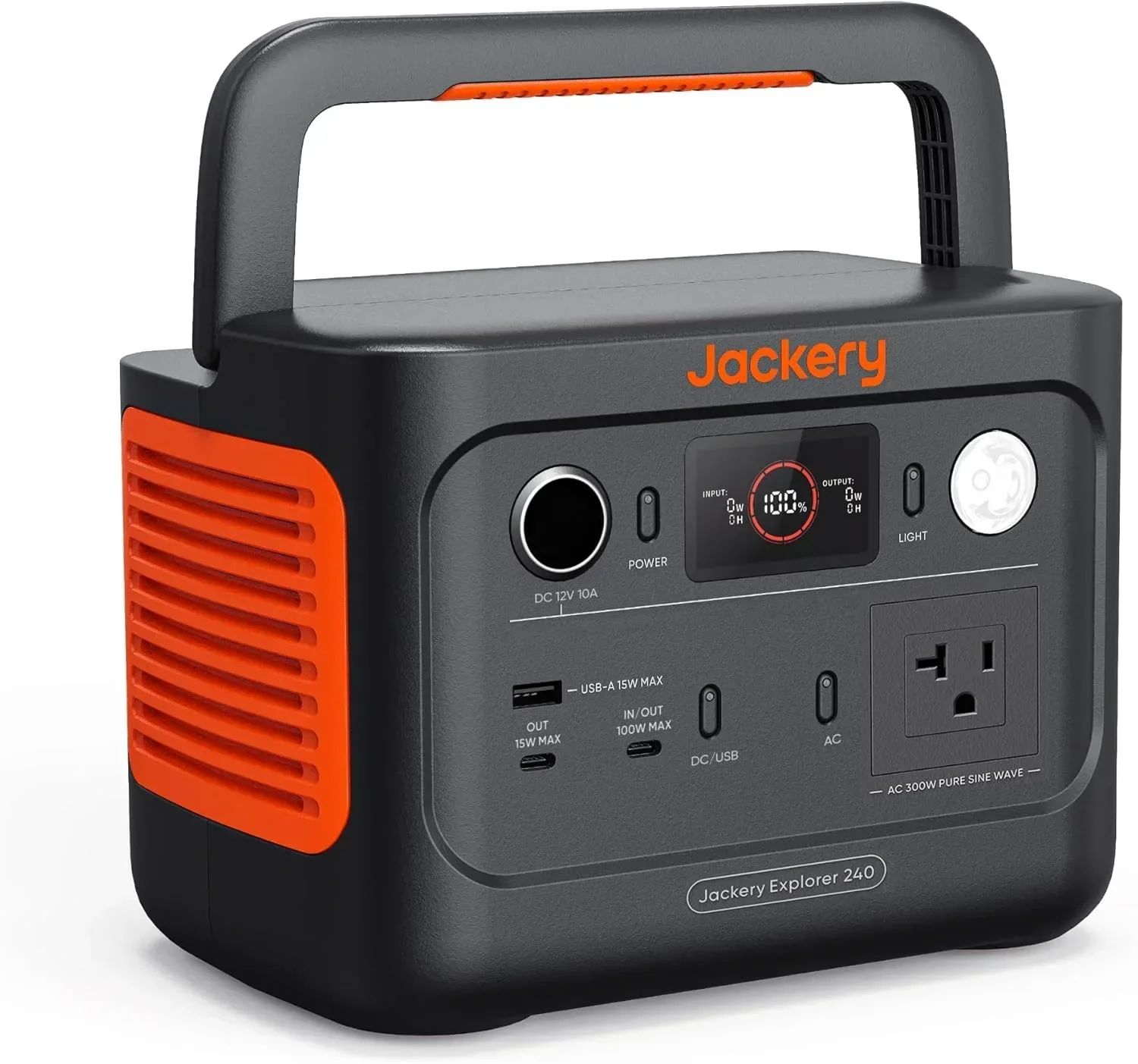
- A modest camp battery like the Jackery Explorer 240 v2 power station has always-on outlets, runs the fridge and lights all night, and recharges off the Sportage socket while you drive.
- Where spending more stops paying off: you don't need a giant station for a weekend - a small one covers a fridge and charging, and bigger is just weight you carry.
The battery isn't the expense; the dead-starter tow is. Buy the small station and the whole problem disappears.
Run the actual dollars if you don't believe me. A weekend-sized power station is a one-time cost you'll use for years, on every trip, for every device. A single dead-battery incident in a remote campground can mean a long wait, a paid tow, and sometimes a replacement battery if you've deep-cycled a starter unit that was never designed for it. The 'free' socket power isn't free the first time it fails - it's the most expensive power on the trip. Spending a little up front to never think about it again is exactly the kind of trade where paying more genuinely pays off.
The 115V inverter option - and why it's not the answer
You may have seen that some Sportage trims offer a household outlet, so let's check whether it solves anything. A 115-volt AC inverter outlet is listed as an optional feature on gasoline Sportage trims - but Kia doesn't document its wattage in any source I could fetch, so I won't quote a number, and neither should anyone else.
Why it doesn't change the plan:
- It's optional, not standard - most Sportages don't have it, so you can't count on it.
- Undocumented wattage means you can't size a load to it safely - a household inverter outlet on a gas car is usually modest.
- Still engine-dependent - like every factory outlet here, it draws from the car, so it's a daytime convenience, not an overnight source.
Treat the 115V option as a nice-to-have for charging a laptop while you drive, not as a reason to skip a real camp battery. The math doesn't change.
And here's the value trap hiding inside that option: it's tempting to pay up for the trim that includes the 115V outlet thinking it'll cover your camp power, then discover it's a modest, engine-dependent inverter that can't run overnight any more than the 12V sockets can. You'd have spent trim-package money to solve a problem a portable station solves better and more cheaply. If you love the higher trim for other reasons, enjoy the outlet as a bonus - but don't let a factory inverter be the reason you skip the one piece of gear that actually powers your night. That's the false economy wearing a nicer badge.
USB power: data vs charge, and the fuse that runs both
The Sportage's USB ports are easy to misuse, so here's the quick breakdown. Per the fuse diagram, the front USB charger and the seat-back USB ports run off fuse #45, 'MODULE2', 15A, in the instrument-panel box - one circuit for the lot.
The detail that matters:
- Front USB-A is the data port - use it for CarPlay or Android Auto; that's the one your phone talks to the car through.
- USB-C is charge-only on many trims, so plug your fast charger there and keep the data port free.
- All on one 15A fuse - a blown #45 kills every USB port at once, so that's your first check if they all die together.
USB is fine for phones and a light, but per-port amperage isn't documented, so don't count on it for anything hungrier. For real loads, you're back to the camp battery.
One cheap upgrade genuinely worth it: if your Sportage has older lower-amperage USB ports, a good multi-port 12V-socket USB adapter plugged into the front outlet often charges phones faster than the built-in ports and frees the factory USB-A for CarPlay. It's a ten-dollar part that sidesteps the whole 'which port is data, which is charge' shuffle. Just remember it still lives on an ignition-switched socket, so it's a driving-hours charger like everything else here - useful, cheap, and no substitute for the camp battery when the engine's off.
Dashcam parking mode: the one always-on need, done right
There's one camp-adjacent job that actually wants always-on power on a Sportage, and it's worth separating from the fridge question: a dashcam running parking mode overnight for security. Since both 12V sockets die with the car, a plug-in dashcam simply shuts off when you walk away - which defeats the point.
The budget-smart ways to solve it:
- A dashcam battery pack is the cheapest fix - a small dedicated cell that runs the camera for a day or two and recharges off the socket while you drive, with zero risk to the starter battery.
- A hardwire kit with low-voltage cutoff taps a fuse and powers parking mode directly, but only safely if the cutoff is set to protect the starter battery - otherwise it's the same drain trap as leaving the car in accessory.
- Skip powering it off the raw socket - there's no always-hot outlet to use anyway, so don't chase one.
It's the same lesson as the fridge, scaled down: the cheap-looking path (hardwire straight to power) carries the hidden cost (a dead starter battery), and the slightly-more-expensive path (a dedicated cell or a proper cutoff) is the one that never strands you. For overnight security at camp, a small battery beats a clever tap every time.
If you already own a camp power station for the fridge, by the way, you've solved parking-mode security for free - most dashcams will run happily off the station's 12V port or USB, so the same battery that keeps your food cold keeps the camera watching. That's the kind of double-duty that makes the station the smart buy: one purchase covers the fridge, the lights, the phones, and the camera, where a stack of single-purpose hardwire kits would cost more and each carry its own drain risk.
The budget power plan for the Sportage
Here's the cheapest plan that actually works, start to finish, so you spend once and never get stranded.
- Use the luggage socket for the fridge while driving, to pre-chill it and top up your battery.
- Remember the circuits are POWER OUTLET1 (luggage) and 2 (front) - no cigar-lighter fuse exists.
- Carry two 20A spares for #6 and #12, plus a 15A for the USB circuit.
- Never sleep with the car in accessory to keep a socket alive.
- Buy one small power station for overnight loads - the false economy is skipping it.
- Cross-reference: our Sportage dashcam power solutions covers hardwiring the front socket, and our best portable power station for car camping guide sizes the battery.
The verdict: two solid sockets, one honest limit
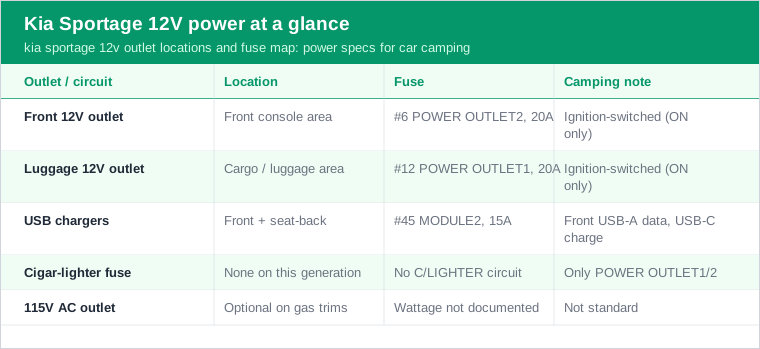
The Kia Sportage's 12V power is perfectly good for camping once you stop trying to make the socket do a battery's job. You get two 20A-fused outlets - front (#6 POWER OUTLET2) and luggage (#12 POWER OUTLET1) - in the engine-room junction block, a separate 15A USB circuit (#45 MODULE2), no cigarette-lighter fuse, and an optional, undocumented-wattage 115V outlet on some gas trims. Every socket is ON-only.
The Sportage's sockets are sensibly placed and easy to fuse. The only trap is treating them as overnight power - buy a small camp battery and the ON-only limit stops mattering.
Map the two circuits, carry the right spare fuses, and put your overnight fridge on its own battery, and the Sportage powers a trip cheaply and reliably. For the sleeping-setup side, our Kia Sportage car camping setup guide covers the bed and the rest of the build.