
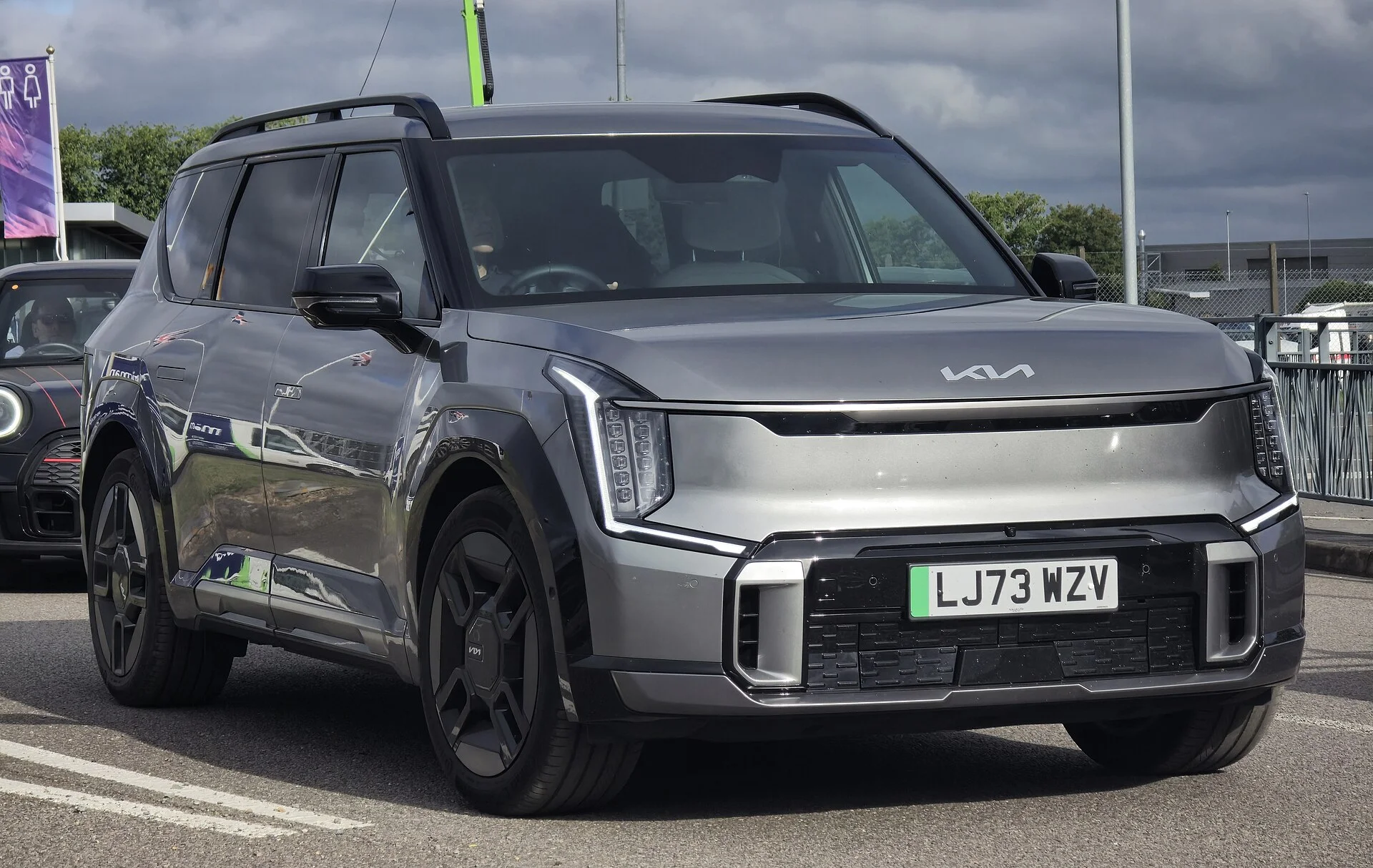
The EV9 Does Real V2L - Up to 3.6 kW
Unlike some big EVs that offer only household outlets, the EV9 does the real thing. It provides genuine Vehicle-to-Load (V2L) power with a total system ceiling of up to 3.6 kW - Kia officially lists up to 3.68 kW. That is enough continuous power to run a legitimate camp kitchen, not just charge phones, and it puts the EV9 in a different class from vehicles whose outlets top out far lower.
The 3.6 kW figure is the headline, and it is worth respecting as a real, usable number. It means the EV9 can act as a rolling generator, powering appliances that would overwhelm a typical vehicle's onboard outlets. For campers, overlanders, and anyone who wants to cook and run gear off the vehicle, that ceiling is the reason the EV9 gets talked about as a camping EV.
But - and this is the skeptic's job - the 3.6 kW ceiling is the maximum, reached only one specific way, and the outlet you are most likely to reach for is capped well below it. The marketing quotes the big number; the plug in the cabin delivers less. The sections below separate the true 3.6 kW capability from the lower interior-outlet limit, because building a camp setup around the wrong number is how people trip a breaker mid-meal. Know both figures before you plan.
Two Ways to Plug In: Inside vs the Adapter
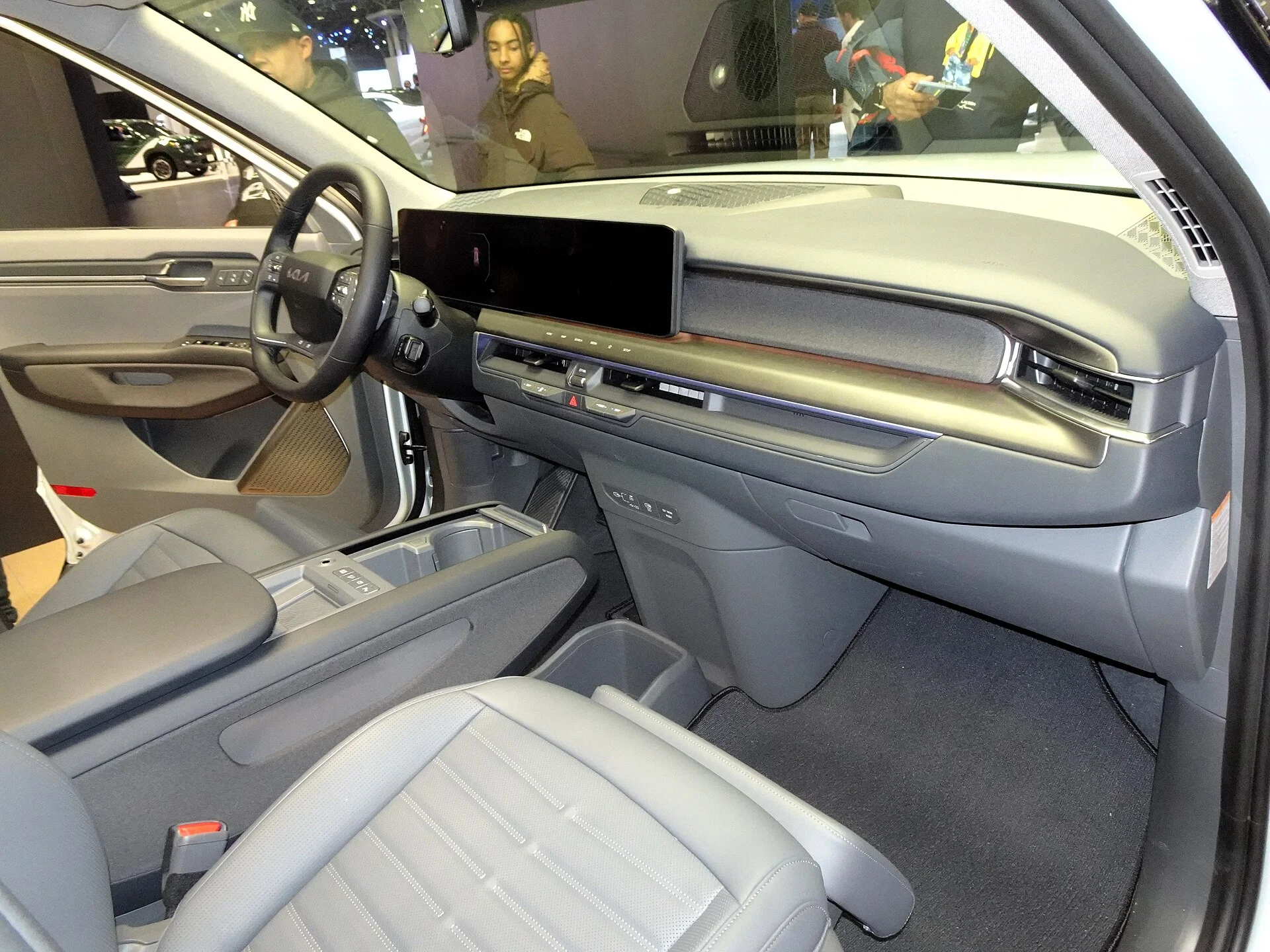
The EV9 gives you V2L power through two distinct paths, and they are not equal. The interior V2L outlet is a 110V household outlet located at the base of the second-row seat, and it is active when the vehicle's power switch is on. That indoor outlet is the convenient one - it is right there in the cabin, ready for a fridge, lights, or a laptop the moment you park.
Some trims add a second indoor outlet. Higher trims, such as the Land, include a second 110V household outlet in the rear cargo area, which is handy for running gear from the back while the second-row outlet serves the cabin. Whether you have one interior outlet or two depends on your trim, so check which you actually have before planning a layout that assumes both.
The full-power path is external. Exterior V2L works through an adapter that plugs into the charge port: open the charge door, insert the adapter, and press its power button to deliver up to 3.6 kW to external devices. This is how you reach the headline number - the adapter, not the cabin outlet. It is the route for high-draw appliances and for powering gear outside the vehicle, and it is the one that unlocks the EV9's real generator capability.
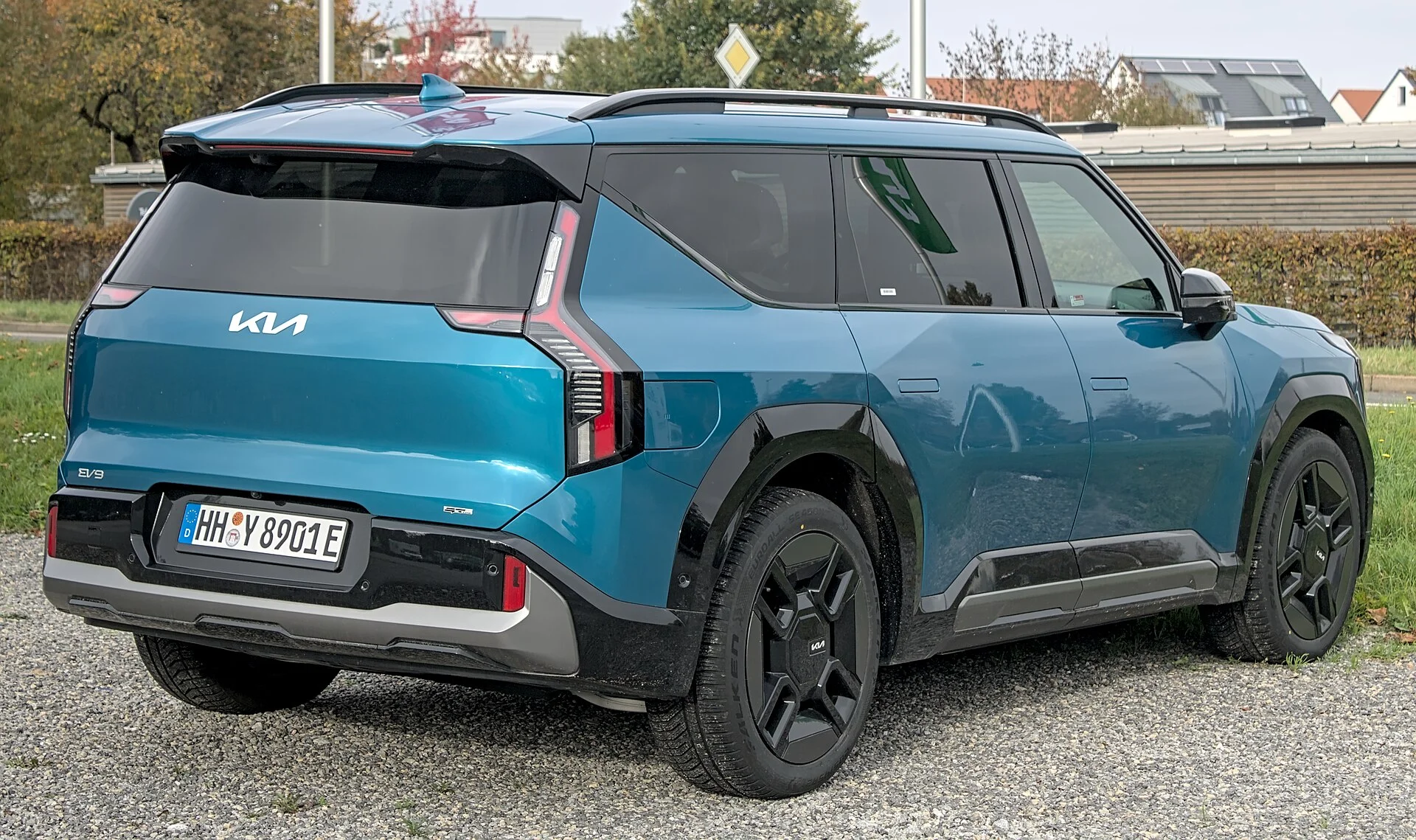
The Interior Outlet's Real Limit
Here is the number the marketing quietly omits, and it is the one that trips people up. The interior household outlet, or outlets, are limited to roughly 1.8-1.9 kW - about 16 A at 120V - not the full 3.6 kW. That indoor plug you will reach for most often delivers about half the headline figure, and asking it for more will not work.
The distinction is simple once stated: the full 3.6 kW capacity is available via the exterior adapter path, while the interior outlet is capped near 1.9 kW. So a high-draw appliance that the vehicle can technically run at 3.6 kW may still overload the cabin outlet if you plug it in there instead of through the adapter. The vehicle is capable of the big number; the interior socket is not the place to demand it.
This matters for real planning. If you want to run something that pulls more than about 1.9 kW, you must use the exterior adapter, not the second-row outlet. For everyday camp loads the interior outlet's roughly 1.9 kW is plenty, but the moment you reach for a full-power induction cooktop or a big kettle, the plug you choose decides whether it runs or trips. Match the appliance to the outlet: heavy loads to the adapter, everything else to the cabin.
USB-C and the Cabin Ports
Beyond the household V2L outlets, the EV9 covers small electronics generously. The vehicle provides seven USB-C ports total, distributed through the rows so that phones, tablets, headlamps, and other small devices have charging points within reach from nearly every seat. For a three-row family SUV headed to a campsite, that spread means nobody is fighting over a single port.
The USB-C ports handle the bulk of daily camp charging without touching the V2L system at all. Most of what a camping group needs to keep alive - phones, e-readers, portable speakers, rechargeable lanterns - draws little enough to live entirely on USB-C, leaving the household outlets free for the few things that genuinely need AC power. It is a sensible division of labor: small stuff on USB-C, real appliances on V2L.
Keeping those loads off the V2L outlets also helps your runtime planning. Every device you can charge over USB-C is one that is not competing for the 1.9 kW interior outlet or the 3.6 kW adapter budget. In practice, the seven USB-C ports quietly do most of the work on a typical trip, and the V2L system is reserved for cooking, the fridge, and anything else that needs a wall-style plug. Use the ports for what they are good at and the household power lasts longer.
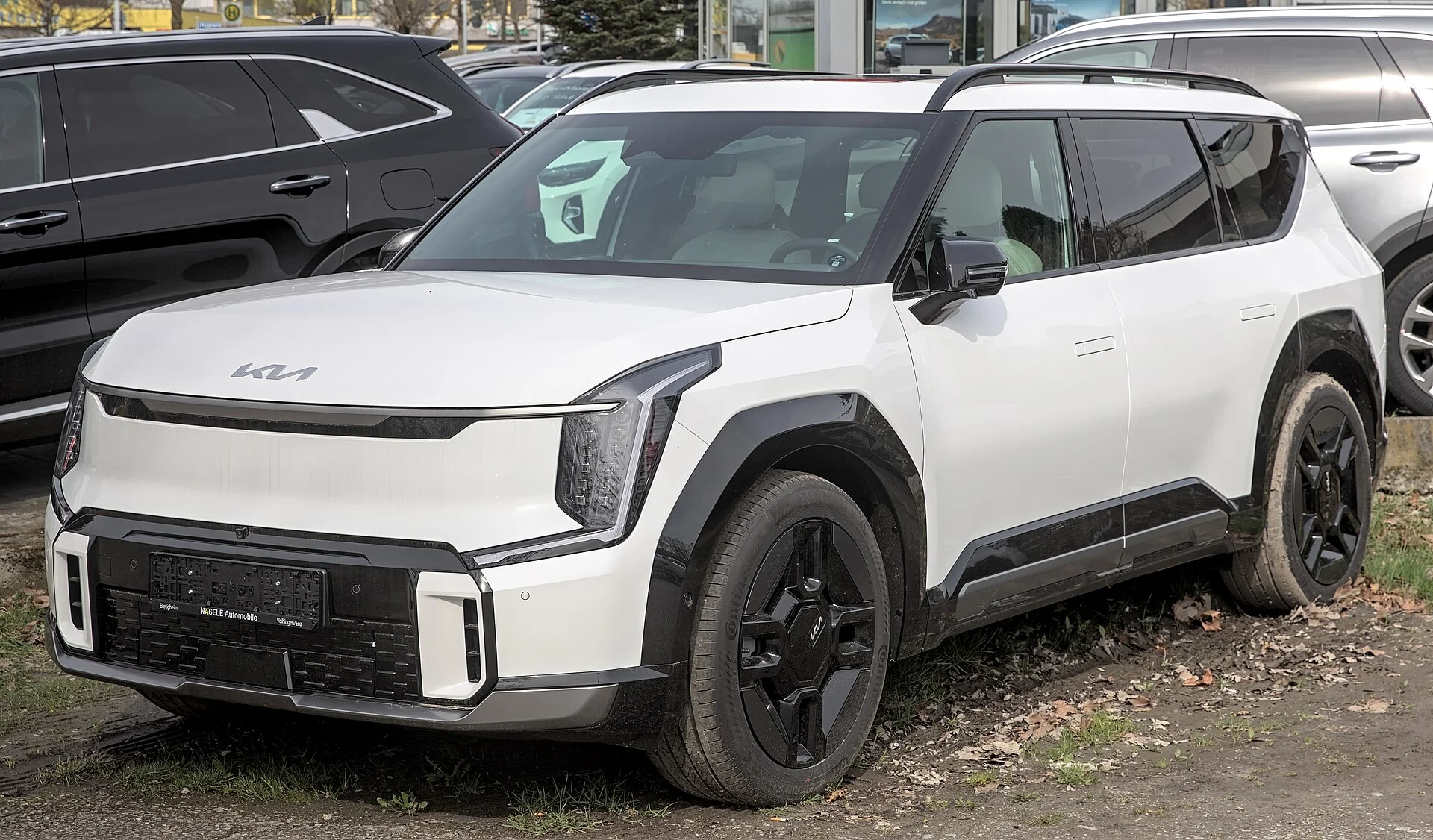
What 3.6 kW Actually Runs
The 3.6 kW ceiling is enough for genuine cooking, which is the EV9's party trick. A 1,500-1,800 W portable induction cooktop can be run from the 3.6 kW exterior V2L, leaving real headroom for a fridge or lights running at the same time. That means you can cook a full meal and keep the fridge cold simultaneously, as long as the combined load stays under 3.6 kW - which a single cooktop plus small loads comfortably does.
The interior outlet, at about 1.9 kW, is no slouch for lighter combinations. It comfortably runs a fridge drawing around 50 W, LED lighting at 50-200 W, a laptop, and phone charging all at once, since those together are well under its ceiling. For a typical evening at camp - fridge, lights, and devices - the second-row outlet handles the whole load without ever needing the adapter.
Smaller recurring loads barely register. Charging an e-bike battery, whose chargers typically pull about 150-250 W, off V2L uses only a small fraction of the 3.6 kW ceiling, so you can top up bikes while running other gear. The practical rule: reserve the exterior adapter for the one big appliance - a full-power portable induction cooktop or a big kettle - and let the interior outlet handle the steady mix of fridge, lights, and charging. Split that way, the EV9 runs a real camp kitchen with power to spare.
It is worth pausing on how unusual that cooking headroom is. Most vehicles that advertise onboard power cannot run an induction cooktop at all - their outlets tap out well below the 1,500-1,800 W such a burner needs. The EV9's 3.6 kW adapter clears that bar with room left over, which is the practical difference between heating water on a camp stove and actually cooking a meal from the vehicle. For anyone weighing the EV9 as a camping platform, that cooking capability, run through the correct outlet, is the feature that sets it apart from the pack.
The 20% Floor
The EV9 will not let you strand yourself, and that is by design. V2L has a default minimum battery cutoff at 20% state of charge - when the pack falls to 20%, V2L output stops to preserve enough charge to drive. That floor is a safety feature, not a limitation to resent: it guarantees you keep meaningful range no matter how long you run the outlets.
The floor is adjustable, which is the part worth knowing. The 20% reserve is user-adjustable to a higher percentage to protect drive range, so if you have a long drive ahead the next day, you can raise the cutoff and keep more range in reserve. Conversely, if you are parked near a charger and want to squeeze more camp time out of the pack, the default 20% is as low as it goes without your intervention. Either way, you decide how much range to protect.
For planning runtime, treat the 20% floor as the real bottom of your usable energy, not zero. The EV9 does not give you the whole pack for V2L - it gives you everything above the cutoff you set. That is a good thing: it means running the outlets all night cannot leave you unable to reach a charger in the morning. Set the reserve to match your next drive, and the floor turns the EV9 from a risky power gamble into a predictable, safe camp generator.
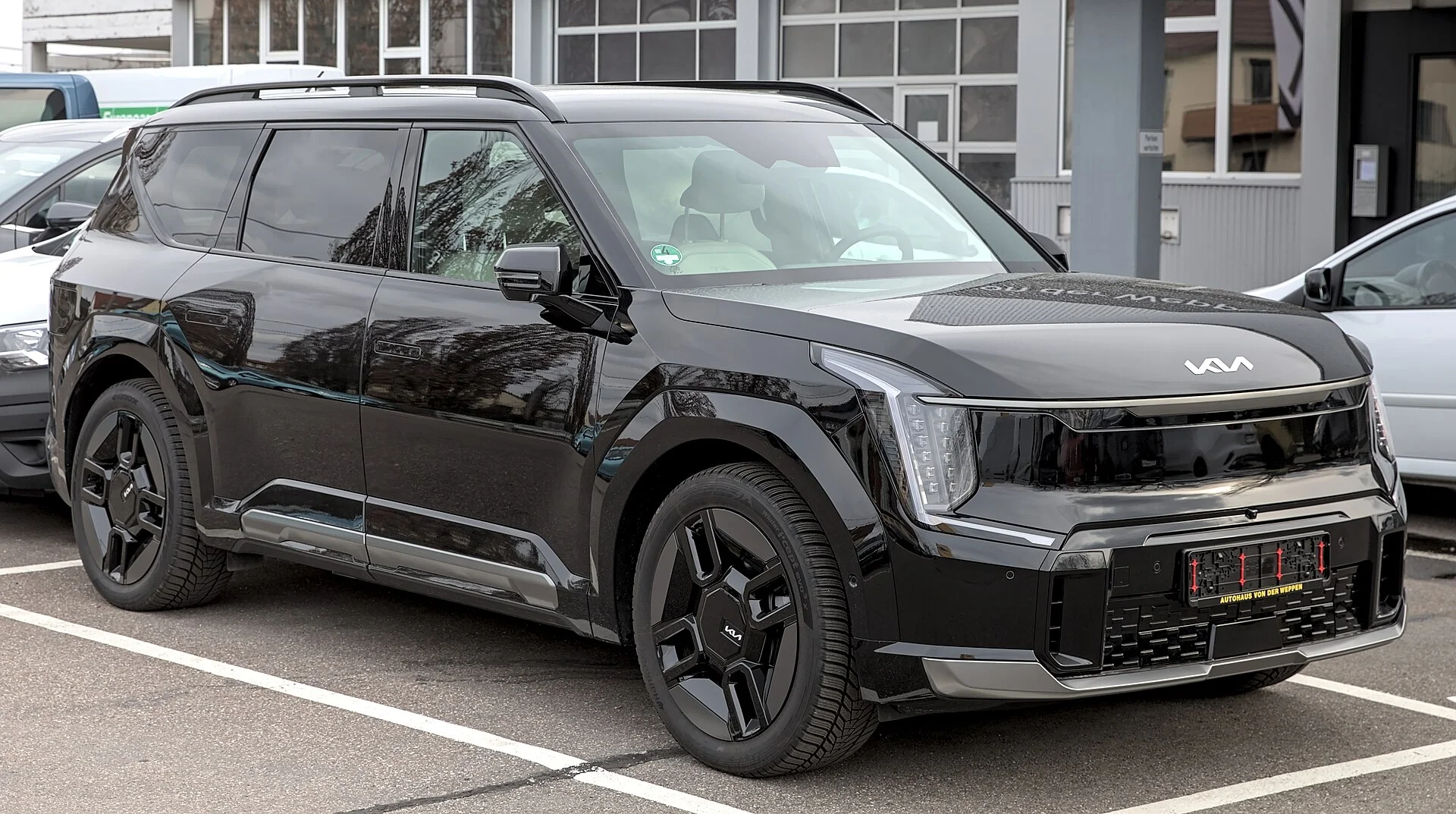
Is It Home Backup? The Honest Answer
The EV9's V2L is powerful enough that people ask whether it can back up a house, and here the honest answer needs a caveat. V2L can power household devices and even slow-charge another EV at AC rates, but it is not a code-compliant whole-home backup without a proper transfer switch or dedicated vehicle-to-home hardware. You can run appliances and tools directly off the outlets; you cannot safely tie it into your home's wiring without the right equipment.
The distinction matters for safety and legality, not just semantics. Plugging appliances into the V2L outlets is exactly what it is built for. Back-feeding a house through a regular outlet, without a transfer switch, is dangerous and against electrical code - it can energize lines that should be dead and endanger anyone working on them. Real home backup from an EV requires dedicated V2H hardware that the basic V2L adapter does not provide.
So set expectations correctly. During an outage the EV9 can run a fridge, some lights, a few devices, and other plug-in loads directly from its outlets, which is genuinely useful. It can also give a stranded EV a slow top-up. What it cannot do, out of the box, is safely power your house's circuits. For camping this is a non-issue - you are plugging gear straight into the outlets, exactly as intended - but anyone imagining whole-home backup should know it needs additional hardware to do that safely.
How Long It Lasts at Camp
The EV9's battery makes camp power feel nearly unlimited for normal loads. Usable energy is roughly 85% of the pack, so the 99.8 kWh Long Range pack gives about 84.8 kWh of drawable V2L energy above the reserve. That is an enormous reservoir compared to any portable power station, and it reframes what counts as a heavy overnight draw.
Against that reservoir, everyday loads barely move the needle. A portable camp fridge drawing about 50 W would run over 1,000 theoretical hours on the pack, and in real mixed use the V2L system typically costs about 4-8% of battery per hour depending on total device load. So an evening of cooking and a night of running the fridge and lights spends a modest, predictable slice of the battery rather than draining it.
Real-world reports line up with the math. Owners and testers report roughly 2-3 nights of typical off-grid camp draw before needing to recharge, which is consistent with about 84.8 kWh of usable energy and the 20% reserve cutoff. That is multiple nights of fridge, lights, devices, and cooking from a single charge - enough to make the EV9 a legitimate basecamp for a weekend without a plug. Plan for a couple of nights of comfortable off-grid power, and set the reserve to leave the range you need to get home.
The honest variable in all this is your own load. The 4-8% per hour range is wide because a camp running only a fridge and a few lights sits at the low end, while one cooking dinner on the induction cooktop and charging e-bikes spikes toward the top. Your actual runtime depends on how heavy your evenings are, so the smart move is to track your battery percentage over the first night and use it to calibrate the rest of the trip. Two nights is a safe planning figure for typical use; a light-load camp can stretch well beyond it.
Under the Skin: 800V and the ICCU
A quick note on the engineering, because one common assumption about the EV9 is wrong. The EV9 is built on the E-GMP platform, which is an 800V architecture - not the 400V some people expect. That 800V system is what enables the EV9's very fast DC charging, and it is a genuine technical advantage of the platform, though for V2L purposes the AC output is what you interact with.
The component that makes V2L possible is the ICCU. The Integrated Charging Control Unit inverts the high-voltage DC battery down to usable AC for the V2L outlets, which is how an 800V pack ends up delivering standard 110V household power at your second-row seat. You never see the ICCU, but it is the piece doing the conversion every time you draw camp power, turning the traction battery into a wall outlet.
The two pack sizes round out the picture. The EV9 comes with a Standard Range 76.1 kWh pack or a Long Range 99.8 kWh pack, the latter delivering roughly 300 miles of EPA range. Both are far larger than a camping trip needs for power, but the Long Range pack's extra energy translates directly into more off-grid nights and more range cushion after a weekend of running the outlets. For a camping-focused buyer, the bigger pack buys margin on both fronts.
The Verdict: The EV9 Is a Genuine Camp Generator
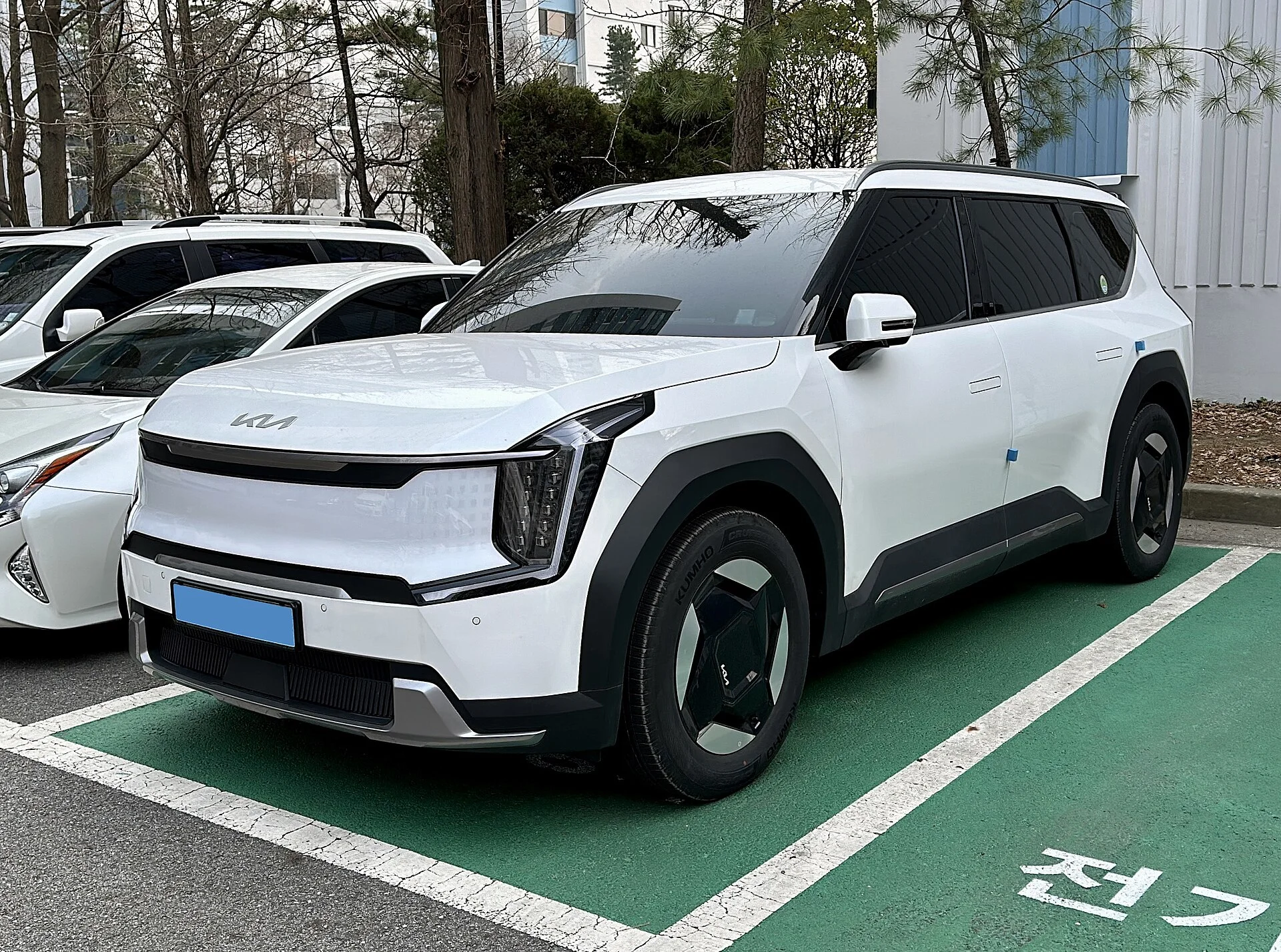
The EV9 earns its reputation as a camping EV, with one honest asterisk on the numbers. It delivers real V2L up to 3.6 kW through the exterior charge-port adapter - enough to run a full-power induction cooktop with headroom for a fridge - while the interior 110V outlet, the one you will use most, is capped near 1.9 kW. Match heavy loads to the adapter and everyday loads to the cabin outlet, and the system does everything a camp kitchen needs.
The rest of the package is strong. Seven USB-C ports handle small electronics, a 20% battery floor (adjustable) keeps you from stranding yourself, and about 84.8 kWh of usable energy on the Long Range pack delivers roughly 2-3 nights of typical off-grid camping per charge. The only real caveat is home backup: the V2L runs plug-in appliances directly, but it is not a code-compliant whole-home system without dedicated transfer hardware.
Compared with an EV that offers only low-wattage outlets, the EV9 is in another league - it is a genuine rolling generator that happens to seat seven. Know the two numbers (3.6 kW at the adapter, about 1.9 kW at the cabin outlet), set your reserve to protect the drive home, and the EV9 will power a real camp for days. The marketing's 3.6 kW is true; you just have to use the right outlet to get it.