

The biggest box, with a catch about the seats
On my rig, the thing that earns a vehicle its spot is whether it holds up a long way from help, and the Kia Carnival starts with a real advantage: it has the biggest behind-the-third-row cargo space of any minivan - about 40 cubic feet back there with every seat up. That's genuinely useful for a loaded overland setup. But the number that matters for sleeping isn't that one; it's how the seats get out of your way, and here the Carnival is not what a lot of buyers assume.
Let me clear up the big one first, because it drives the whole build: the Carnival does not have Stow 'n Go. Its second-row seats do not fold into the floor. They slide and recline, and on most trims they are removable - but heavy - so a flat, full-length floor means physically lifting the middle seats out of the van and finding somewhere to keep them. And on the top SX Prestige, the plush VIP lounge chairs don't come out at all. This page works from the numbers we actually have, flags where they're aggregator-sourced rather than Kia-official, and lays out the flat-bed build honestly - seats and all.
The numbers, and an honesty flag on where they come from
Start with the figures, with a caveat up front: Kia's public feature sheet doesn't actually print cubic feet for the Carnival, so the volume numbers here are aggregator-sourced, not straight from Kia. Treat them as a strong guide, not gospel. Reviewers list about 40.3 cubic feet behind the third row, 86.9 behind the second, and 145.1 behind the first with the second row removed.
- 40.3 cu ft (behind row three): the class-leading seats-up number - more gear space than any rival van, and a real perk for a loaded trip.
- 86.9 cu ft (third row stowed): the third row folds into the floor for a long, flat run from the tailgate - your no-lifting sleep zone.
- 145.1 cu ft (second row removed): the full flat floor, reached only by taking the heavy middle seats out - not by folding them away.
So read them the way I read any spec a long way from a parts store: useful for planning, worth confirming yourself. The 145.1 figure especially is a seats-out number, and getting there is work the spec sheet doesn't mention.

The third row: the part that stows the easy way
Here's the Carnival's clean mechanism, and it's a good one. The 60/40 third row folds down and back into a well in the floor, leaving a flat surface flush with the cargo deck - the same trick the good minivans use out back. No lifting, no storage problem, just a flat rear third.
What that buys the build:
- A flat floor behind the second row with no platform needed to level it - the third-row seats are simply gone, below the floor line.
- The trade-off: the well that swallows the third row is under-floor storage you give up when those seats are up - the usual either-or.
- Your easy sleep zone runs from the tailgate to the back of the second-row seats, and for a solo sleeper that's often enough on the diagonal.
So the back of the Carnival behaves. The problem child - and the reason this van needs a plan - is the row in front of it, which does not stow at all.
Out on a remote trip that mechanism matters more than the spec makes it sound: a rear third that drops flush means one less thing to build in the dark. I've set the diagonal bed in this zone in a matter of minutes at a pull-off - no platform, no leveling, no seat to wrestle. When you're a long way from a parts store, the part of the Carnival that just works, fold and forget, is the one you learn to lean on, and it's the reason I don't dread arriving after dark in this van the way I would in one that needs a build every night.
The second row: removable, heavy, and not on every trim
Here's the Carnival's defining constraint for sleeping: the second-row seats do not fold into the floor. On most trims they slide and recline, and you can take them out - but they're heavy captain's chairs, and there's nowhere in the floor for them to go. To reach that 145-cubic-foot flat floor, you lift them out of the van and store them at home or at camp.
And the wrinkle that catches buyers: the top SX Prestige's VIP lounge seats - the reclining ones with leg rests - are not removable at all. So the priciest, most comfortable Carnival is the hardest one to make a flat bed in. Comfort in the seat, cost at the campsite.
The overlander's read on the fork:
- Leave them in and sleep behind them: use the flat zone behind the stowed third row - no lifting, less length.
- Take them out for the full floor: a plan-ahead job, with two heavy seats to move and a place to keep them - not something you do at a trailhead.
- Check your trim before you buy: if the flat floor matters, the SX Prestige's fixed lounge seats are a genuine reason to step down a trim.
None of this rules the Carnival out - it just means the middle seats are a decision, and the trim you pick changes whether that decision is even available to you.
The logistics of that decision are worth walking through, because they don't happen at a trailhead. Each Carnival captain's chair is an awkward, heavy lift for one person, and once it's out you own the problem of where it lives - a garage at home, or a tarp at a base camp you'll circle back to. I pull mine before I leave the driveway, never at the destination; wrestling a seat out of the van in a dark, remote lot with nowhere to set it down is exactly how a good plan comes apart a long way from help. Sort the seats where you have room and light, then drive to the trip.
The inches Kia leaves you to measure
Let me be straight about a gap rather than paper over it: Kia does not publish a cargo-floor length, width, or height in inches for the Carnival - and, as noted, doesn't even print the cubic-feet volumes on its own sheet. Sites will hand you a confident inch number anyway, usually estimated. I won't, because a made-up measurement is what strands a tall sleeper with their feet on the tailgate a long way from anywhere.
What I'll say honestly from the volume: with the third row stowed and the second row out, the Carnival opens one of the longest, widest flat floors of any minivan - 145 cubic feet is enormous. With the second row in, your straight length runs to the seatbacks. Either way, the exact inch figure is yours to measure, because Kia didn't. On a box this big and square, that measurement is quick and the result is generous - but take it before you commit to a mattress size.
I'll extend that same caution to the volumes themselves: because the 40.3, 86.9 and 145.1 figures come from aggregators rather than Kia's own sheet, I plan with a small margin instead of trusting them to the cubic inch. On a box this square the shape forgives a lot, but a mattress ordered to a borrowed number is the kind of avoidable miss that turns a roomy Carnival into a cramped one - and you find out about it a hundred miles from anywhere that could sell you a different one.
Building the bed: platform behind, or seats out
The Carnival gives you two honest paths, and out on a long trip the right one is the one you can actually execute at camp.
- The seats-in path: stow the third row and sleep in the flat zone behind the second row.
- The seats-out path: pull the heavy second-row chairs for the full 145-cubic-foot flat floor, then a low platform on cross supports turns it into a deck with bins beneath. This is the base-camp build, done at home before the trip - not a nightly one.
- Either way, measure first and check sitting height against your planned deck.
The failure mode that strands people is planning the seats-out build and then discovering, in a dark lot, that the seats are heavy and there's nowhere to put them. Decide before you leave: if you're moving camp nightly, leave the seats in and sleep behind them; if you're parking for a stretch, pull them at home.
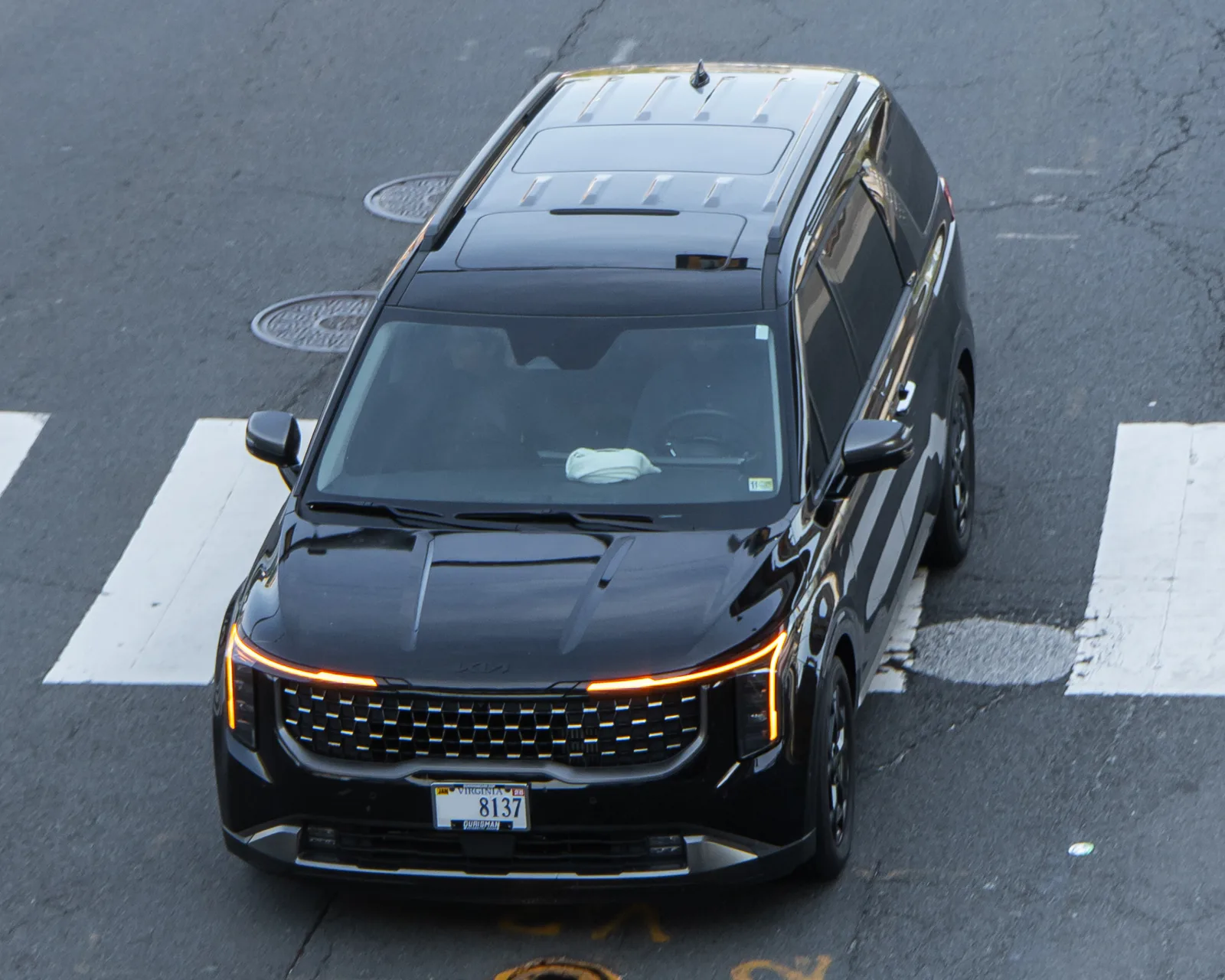
Width and the wheel wells: two across in the Carnival
Width decides one sleeper or two, and the Carnival's SUV-like box is a friendly shape. Kia doesn't publish a cargo width in inches, but the Carnival is wide with fairly upright sides, so two pads side by side are realistic on the flat floor - especially with the second row out.
The number to respect isn't the widest point - it's the pinch between the wheel wells. Measure that; it's the true ceiling on two pads across, and it's the figure I'd want before buying a wide mattress for a remote trip.
Working with the width:
- Two adults: plausible on the Carnival's wide floor with the middle seats removed - measure the wheel-well pinch and build up level to it.
- Solo or one-plus-a-kid: easy, with gear alongside.
- Mind the sliding-door tracks low on the sides.
The Carnival's width is a real reason to consider it for two - just confirm the pinch rather than trusting the wide tailgate opening.
On my rig the width is what tips the Carnival from a solo van into a two-person one, and that's a real distinction a long way from home, where sharing the sleeping surface means one less tent to pitch and one warmer box on a cold night. The upright sides help here too - they don't taper in over the sleeping platform the way a sloped SUV roof does - so the pad you measure down at the floor is close to the pad you actually get up at shoulder height. That honesty in the shape is a Carnival strength I don't take for granted.
Headroom: sit up under the Carnival's tall roof
Height decides whether the bay feels like a tent or a coffin, and the Carnival's tall, boxy roofline is one of its quiet camping strengths. Kia doesn't publish a cargo-area height in inches, but the upright shape gives generous sitting height - enough to sit up on an elbow and change a shirt seated, as long as your build doesn't eat it.
- Platform height: if you deck over the floor, keep it low - every inch up is an inch off sitting height.
- Pad thickness: a thick mattress adds comfort and subtracts headroom; run the math.
- Do the awkward business on the tailgate, hatch up, to save inside height for lying down.
Nothing this shape is a stand-up camper, but the Carnival's square roof keeps more usable height than a sloped SUV - a comfort that matters on a long trip where you live in the space, not just sleep in it.
Living in that space over a long haul, the sitting height is what keeps morale up when the weather pins you inside. I can brew coffee seated, sort a pack, and ride out a squall without folding myself into a corner. It reads as a small dimension on the page and a large one on day nine, and the Carnival's square roofline gives more of it than almost anything this size that isn't a full-height van - which is the difference between waiting out a storm and being beaten by it a long way from a dry motel.
Power: a 115-volt inverter on the upper trims
The Carnival offers a 115-volt inverter outlet, standard on the SX and SX Prestige and available on lower trims via option - with a luggage-area outlet reserved for the top trims. One honest note: Kia doesn't publish the wattage, so I won't invent a number for it. Assume it's a device outlet, not an appliance one, until your own trim's spec says otherwise.
- What an inverter outlet like this runs: phone and laptop charging, lights, a CPAP on many models - light, steady loads.
- What to assume it won't: a 12V compressor fridge is better off its own supply, and anything with a heating element is out.
- Trim check: confirm the outlet is on your Carnival, and note the outlets are typically off with the ignition.
The tape-measure numbers a Carnival bed needs
Because Kia gives you volume - and not even that officially - your tape measure is the real spec sheet. Take these five numbers, once with the second row in and once with it out if you're deciding between the two paths.
- Flat-zone length (seats in): tailgate to the second-row seatbacks - your no-lifting bed length.
- Full length (seats out): tailgate to the front seats with the middle chairs removed.
- Wheel-well width: the pinch between the wells - your two-person ceiling.
- Sitting height: floor to headliner, minus platform and pad.
- Seat weight and storage: confirm you can move the heavy second-row chairs and have somewhere to keep them - and remember SX Prestige lounge seats don't come out.
Those five turn a van whose maker won't even print cubic feet into a measured plan, and the last one is the Carnival-specific gotcha: the full-flat build is only real if your trim's seats actually remove and you can store them. Take each length twice, to the eighth of an inch.
Those five numbers belong on a card in the glovebox, because a long way from a parts store is no place to be guessing at fit. The seat-weight and storage line is the one that matters most: confirm before the trip that your trim's middle row actually comes out - remembering the SX Prestige's lounge seats won't - and that you have somewhere to keep them. The whole full-flat plan on a Carnival stands or falls on that one Carnival-specific fact, and it's the fact the spec sheet is quietest about.
The verdict on the Carnival as a sleeper
The Kia Carnival is a genuinely roomy minivan to sleep in - the biggest behind-the-third-row space of the bunch and a tall, square roof - with one honest limit: it has no Stow 'n Go, so a full flat floor means removing the heavy second-row seats, and the SX Prestige's lounge chairs don't remove at all. The volume figures are aggregator-sourced, and there's no flat length in inches, so confirm the fit with a tape.
Stow the third row for an easy flat zone; pull the heavy second row for the full 145-cubic-foot floor - unless you bought the SX Prestige, whose lounge seats stay put. Measure your own length and wheel-well width, and the Carnival sleeps one easily and two with the middle seats out.
Buy it for the space and the roof, plan the middle seats before you leave the driveway, and skip the SX Prestige if a flat floor is the point. Bring your own overnight power since the outlet is upper-trim and unrated. The full build lives in our Kia Carnival camper guide, and the Carnival vs Sienna comparison weighs it against the hybrid rival.
Related on Auto Roamer: Toyota Sienna camping guide; sleeping in a Kia Carnival.