Is the Kia Carnival's power any good for camping?
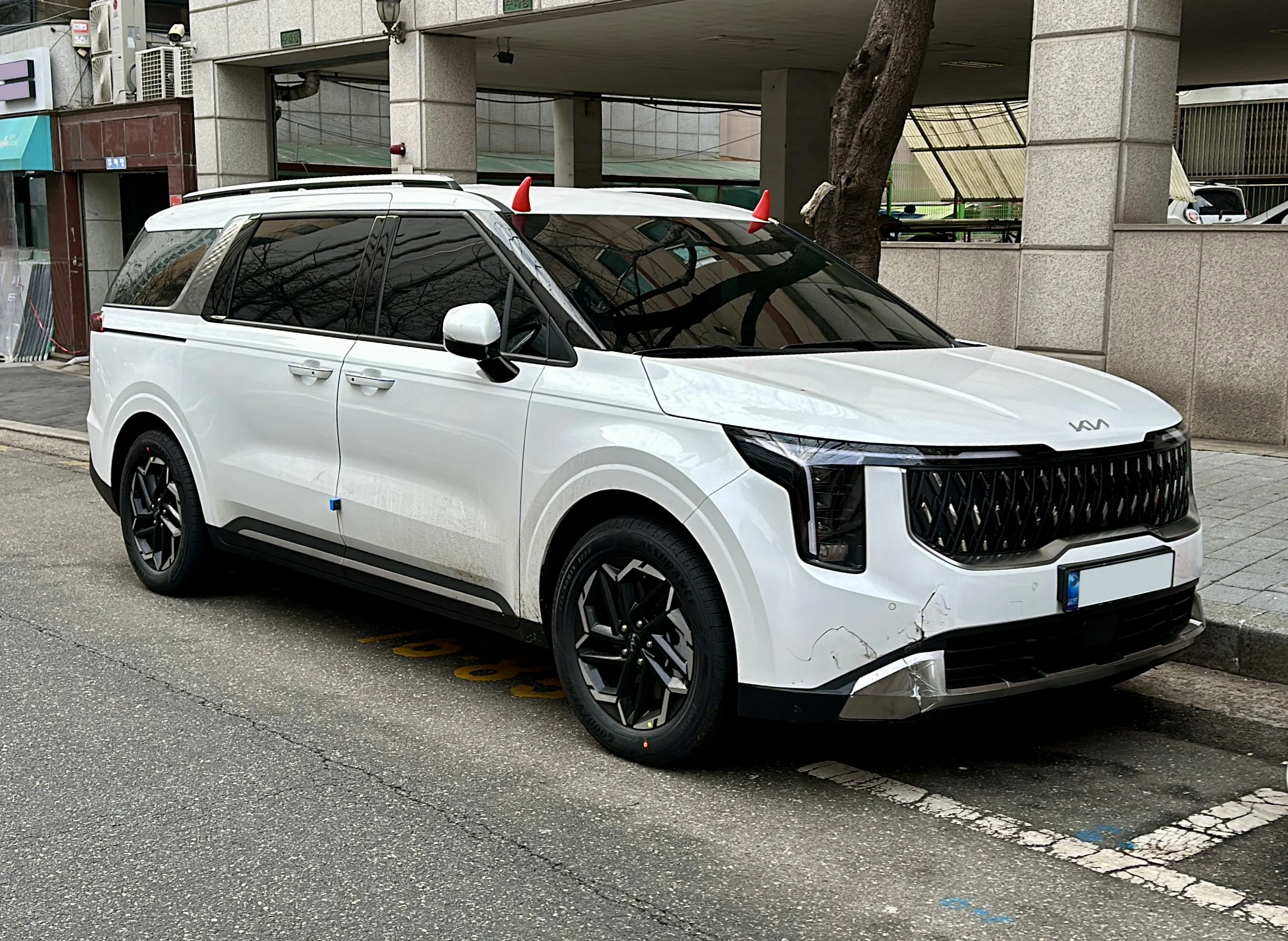
Short version: better than most minivans on paper, with one honest asterisk you need to know before you plan around it. The Kia Carnival's upper trims carry two 115-volt household outlets - more AC plugs than most vans give you - and, unusually, Kia actually publishes a fuse table you can read. The asterisk is that the clearest fuse table comes from the overseas manual, and the US van's 12V socket layout doesn't perfectly match it. So there's real value here, and a real trap, and I'll walk you through both.
I fix my own stuff because I won't pay shop rates, so I care about two things: what a feature actually does, and whether paying up for it is worth it. On the Carnival that means being straight about which trims get the outlets, what the outlets really run, where the fuses live, and why you shouldn't wire anything to a fuse number pulled from a manual written for a different market. Get those right and the Carnival is a genuinely good value for a camper; get them wrong and you're chasing a socket that isn't in your van or sizing a load to the wrong amperage. Let's sort the real from the marketing. A quick reality check on that 150-watt class: at 120 volts that's only about 1.25 amps of draw, so it's a charger-and-laptop rail, not something that will carry a 700-watt microwave or a 1,000-watt kettle without tripping. Because Kia leaves the exact inverter figure off some spec sheets, I treat the printed number as a ceiling and put a five-dollar plug-in watt meter on anything marginal before I trust it. And here's the line that quietly decides your whole overnight plan: unlike the Chrysler Pacifica, which keeps a household outlet live with the key off, the Carnival gives you nothing that runs while you sleep.
The two 115-volt outlets: SX and up, engine-running only
Start with the good news, because the Carnival's AC power is a real selling point. On the upper trims - SX and SX Prestige - the Carnival carries two 115-volt household outlets, typically one at the floor console and one back in the luggage area. Two AC plugs is more than a Sienna or an Odyssey gives you, and for a camper who wants to charge a couple of things at once, that's genuinely useful.
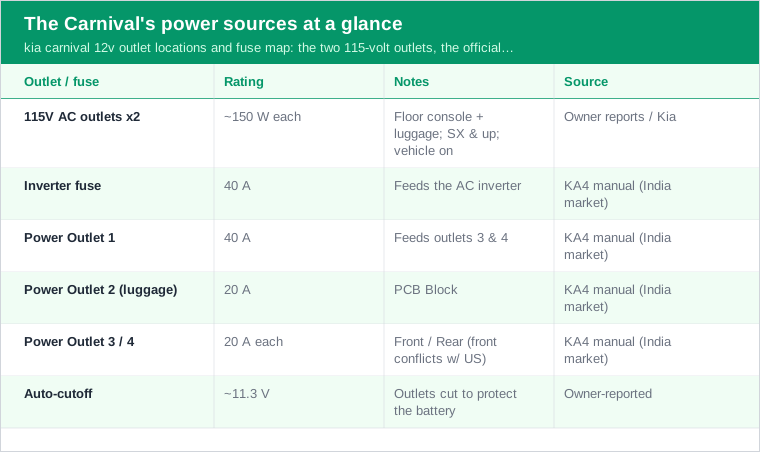
- Two outlets, ~150 watts each: light-duty household power - laptops, chargers, small electronics. Kia doesn't always print the exact wattage, so I won't overstate it, but it's in the modest 150-watt class, not appliance-grade.
- SX and up only: lower trims don't get the household outlets, so confirm your trim - this is where paying up actually buys you a feature.
- Vehicle-running only, ~11.3V cutoff: the outlets need the vehicle on, and owners report they cut out around 11.3 volts to protect the battery. So they're daytime power, not an overnight supply.
So the Carnival gives you more AC outlets than its rivals, which is a fair reason to like it - as long as you understand they're for use while the van is running. The value is real; the limitation is the same daytime-only story as every other minivan here. A couple of practical notes from actually living with the layout: the floor-console outlet is the one you can reach from the driver's seat, while the luggage-area outlet is better suited to a cooler or a set-and-forget charger, since climbing back to it mid-drive is a nuisance. That 11.3-volt cutoff isn't an arbitrary number either - a healthy 12V battery rests near 12.6 volts, so by the time the inverter sees 11.3 it has already pulled the pack toward the zone where a cold-morning start gets dicey, which is exactly what Kia is guarding against. The trap is idling the van to feed these outlets: you're burning fuel to make a trickle of household power, the textbook false economy a power station erases. And don't try to skirt the cutoff by leaving the van in accessory mode overnight - accessory draw on top of a dead-flat inverter is how you end up meeting your jump box at sunrise.
The fuse table Kia does print (and the market catch)
Here's where the Carnival is unusually camper-friendly: Kia's owner's manual actually prints a fuse table for the power outlets and inverter - something most makers bury. In the KA4 manual, the relevant fuses read as an INVERTER fuse at 40 amps, a POWER OUTLET 1 at 40 amps that feeds outlets 3 and 4, a POWER OUTLET 2 at 20 amps for the luggage outlet (on the PCB block), and POWER OUTLET 3 and 4 at 20 amps each for a front and a rear outlet.
That's a genuinely helpful table - but the version I can cite is from the India-market KA4 manual, and the US van's layout doesn't perfectly match it. So read it as a map of how Kia wires the Carnival, not a guaranteed one-to-one for your US vehicle.
The specific mismatch is worth calling out: the table lists a front power outlet (POWER OUTLET 3), but US owners report their Carnival doesn't have a front 12V socket in that spot. That's a real conflict between the printed manual and the US car, and I'd rather show it to you than pretend the overseas table is gospel for your van. The numbers are a strong starting point; your own fuse-box lid is the final word. Read the hierarchy in those figures before you touch anything: the 40-amp POWER OUTLET 1 is a feeder that splits down to the two 20-amp outlets 3 and 4, so it isn't a socket you plug into - it's the upstream protection, and pulling it kills both downstream outlets at once. The inverter riding its own dedicated 40-amp fuse tells you the AC side is wired as a proper circuit rather than piggybacked off a cigarette-lighter tap, which is why it can hold that ~150-watt draw steadily instead of browning out under a laptop. Keep the market label glued to every one of these numbers, too: an amperage that's correct for the India-market harness can be wrong for yours, because a fuse rated 20 amps in one market may be protecting a different gauge of wire in another, and matching the fuse to the wrong wire is how a 'fix' becomes a fire.
Where's the 12V socket, really? US versus the manual
This is the trap, so let's face it head-on. The published fuse table implies a front power outlet, but US Carnival owners consistently report there's no front 12V socket where you'd expect one - the US van's outlet placement differs from the market the manual was written for. If you buy a Carnival expecting a front dash socket because a fuse table listed one, you may go looking for a socket that isn't there.
- What the overseas manual implies: front and rear power outlets plus a luggage outlet.
- What US owners report: no front 12V socket in the expected spot - the US layout is different.
- The takeaway: don't assume a socket exists because a cross-market fuse table names it. Walk your own van and find the actual outlets.
This is exactly the kind of false economy I watch for: a spec that looks confirmed on paper but doesn't hold in your driveway. Confirm the sockets that are physically in your US Carnival before you plan a wiring run or count on a particular outlet, because the manual and the metal don't fully agree here. The safe move is a five-minute walk-around before you buy a single plug: check the dash, the second-row sides, the front console and the luggage bay, and confirm each socket with a test plug or a multimeter rather than trusting a diagram. This bites hardest on wiring plans - if you were going to tap a 'front outlet' circuit for a dashcam or a fridge feed and that circuit simply doesn't exist in your US van, you've engineered a run to a phantom. I'd rather you find two real sockets than count on three imaginary ones, because a plan built on the outlets actually in your driveway never surprises you at the campsite.
Reading the fuse map without getting burned
Even with a printed table, the safe way to use it is to verify against your own van. The Carnival keeps its fuses in a few boxes: an interior junction block on the driver's side (Kia calls it the ICU Junction Block), an Engine Room Junction Block and a PCB Block under the hood, and fuses at the battery terminal. The luggage-outlet fuse, for instance, lives on that under-hood PCB block.
- Driver's-side interior block: the ICU Junction Block for cabin circuits.
- Under-hood blocks: the Engine Room Junction Block and the PCB Block (which carries the luggage-outlet fuse).
- Battery-terminal fuses: high-current protection right at the battery.
Kia even provides a fuse puller in the engine-compartment box, which tells you they expect owners to service these. But because the amperages I can cite come from the overseas manual, and fuse-diagram aggregator sites are notorious for cross-templating, the rule holds: read the legend molded into your own van's fuse-box lid. It's specific to your US vehicle, and it's the map that won't burn you. A few bench habits make the lid legend actually useful: match the printed number to the fuse's color, since blade fuses code their amperage - a 20-amp fuse is usually yellow and a 40-amp typically green or amber - so a glance confirms whether the lid and the metal agree. Use the supplied puller instead of needle-nose pliers, because squeezing a mini-fuse with pliers cracks the plastic body and can drop shards into the slot; that puller in the engine box exists precisely to keep you from doing that. Pull fuses with the ignition off and the circuit unloaded, too - yanking a 40-amp feeder while it's carrying current can arc across the blades and pit the contacts, turning a clean pull into an intermittent-connection headache months later. And when the lid legend and the overseas table disagree, the lid wins every time, because it was printed for the exact harness sitting in front of you.
Running gear overnight without a factory key-off outlet
Like every minivan here except the Pacifica, the Carnival has no factory outlet that runs with the key off - the 115V outlets need the vehicle on and cut out around 11.3 volts, and the 12V sockets are switched. So the overnight question has the same answer it does in a Sienna or Odyssey: power the night from a battery, not the van. The switched 12V sockets tell the same story - they're fed through the ignition, so they die the instant you shut off, which is why the instinct to just leave a fridge plugged into the dash overnight quietly fails.
- Daytime: the two 115V outlets and the 12V sockets handle charging and a cooler while the van is running.
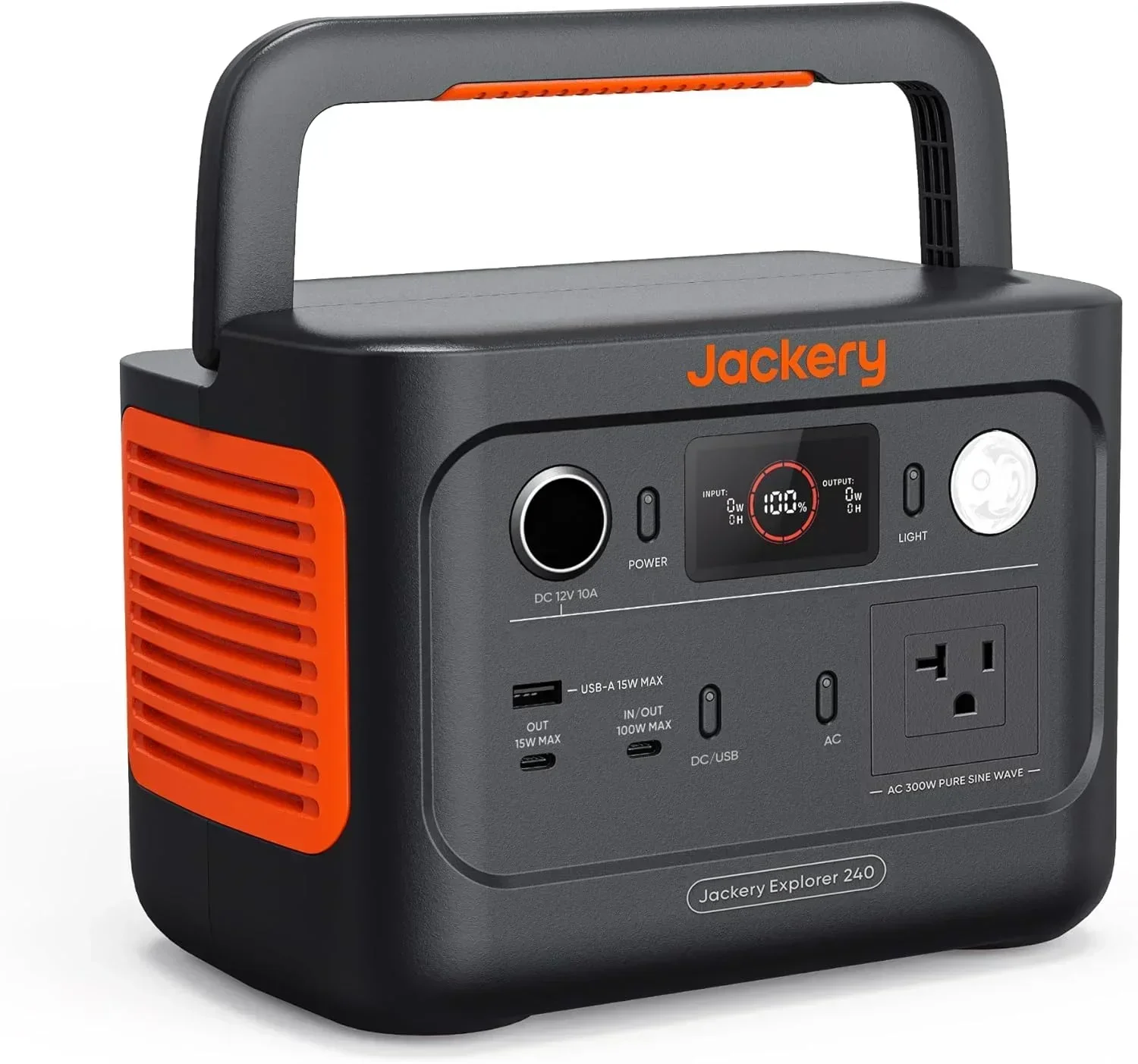
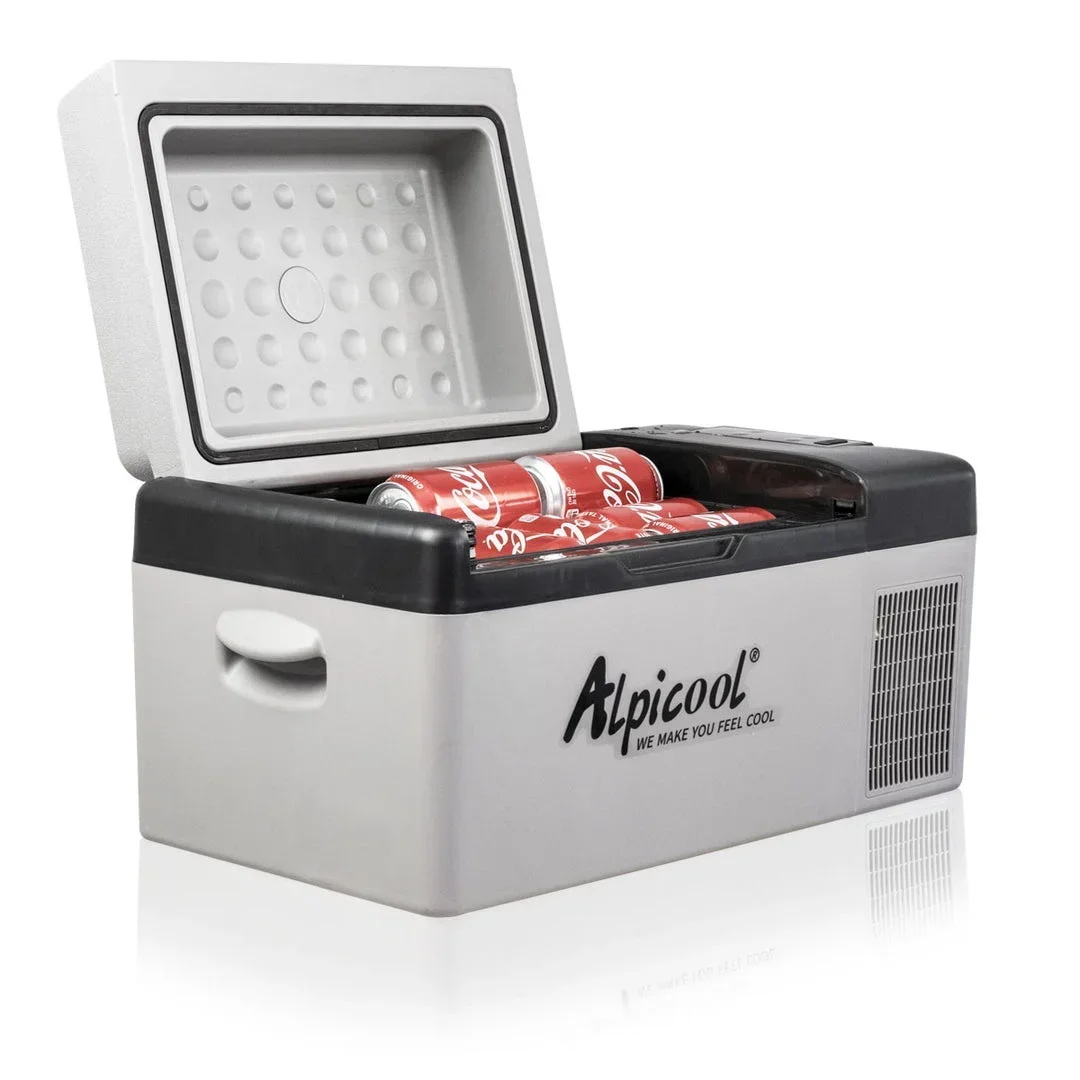
- Overnight: a portable power station carries the fridge, a fan and charging on its own cells - no running engine, no drained starter battery.
- Recharge on the move: top the station back up from a 12V socket as you drive to the next camp - but budget roughly an hour of driving per modest top-up, since a 12V socket feeds far slower than a wall charger, so plan recharges around real drive legs rather than five-minute errands.
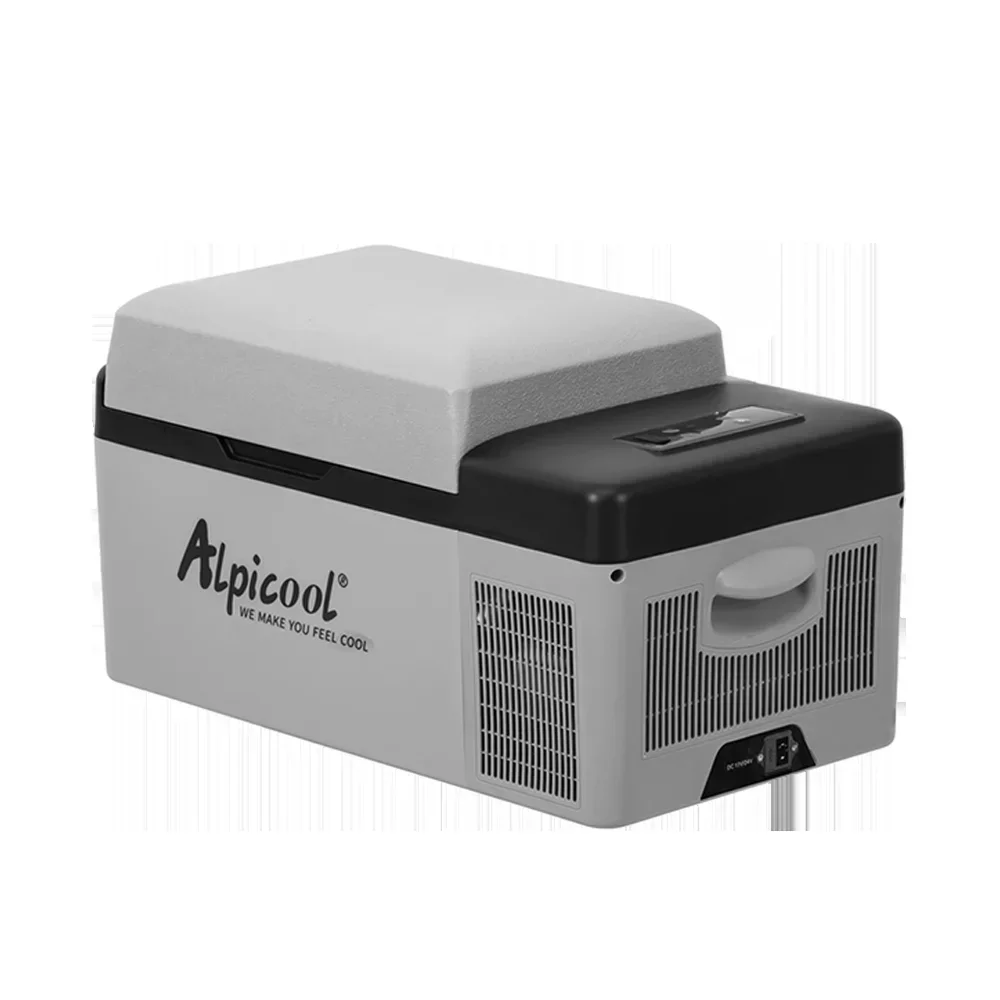
An Alpicool C20 12V fridge pulls about 45 watts and cycles rather than running flat out, so it's an easy overnight load for a Jackery Explorer 240 v2 power station - the value-minded way to keep food cold in a Carnival without leaving the van running or flattening the battery. And because a fridge draws in cycles rather than running flat out, a modest station stretches further overnight than its rated watt-hours suggest on paper - you're paying to cover the average draw, not the compressor's brief peaks, which is why you rarely need to buy as much battery as the anxiety in your head wants you to.
The budget-smart power setup for a Carnival
Here's where I land on value, because that's my whole thing. The Carnival's two AC outlets are a nice-to-have for daytime, and they're a fair reason to like the SX trims - but they're not worth stretching your budget for if you were only buying them to power a campsite, because they don't run overnight anyway. The money that actually changes your camping is spent on a battery, not a trim.
- Where spending more pays off: a right-sized power station that runs your real overnight loads silently - this is the purchase that makes any minivan campable.
- Where it stops paying off: chasing a higher trim purely for the second AC outlet, when a power station does the heavy lifting regardless of trim.
- The false economy: trying to run a fridge off the van's outlets to 'save' buying a battery - you'll either be stuck running the engine or risking a no-start. Do the arithmetic: a night of idling to hold a fridge cold can burn well over a half-gallon of fuel and pile needless hours on the engine, while the same job on a power station costs pennies of stored electricity and makes zero noise at a quiet campground where idling gets you side-eye anyway.
So buy the Carnival on the whole package - it's a strong, spacious value - and put your power budget into the battery that actually powers your nights. The two factory outlets are a daytime bonus, not the reason to spend up. Size the station to your real loads, not to a spec-sheet ego: a fridge, a fan and phone charging live comfortably on a small unit, and you only step up in capacity when you add a genuine draw like a CPAP or a longer off-grid stretch - never because a bigger box on the shelf implied you needed it.
The verdict: strong daytime outlets, plan the night yourself
The Kia Carnival gives a camper more daytime AC power than most minivans - two 115-volt outlets on SX and up - plus something rare: a fuse table Kia actually prints. The catches are that those outlets are vehicle-running only (cutting around 11.3 volts), the printed fuse table is from the overseas manual and doesn't fully match the US van's layout - notably a listed front outlet US owners don't have - and there's no key-off outlet at all. Netted out, you're buying a van that's generous by day and ordinary by night, and the smart money treats the factory outlets as a convenience rather than a camping system you can lean on after dark.
Use the two outlets by day, run overnight loads off a power station, confirm which sockets are actually in your US van, and read your own fuse-box lid for the real amperages - and the Carnival's power is a genuine value.
Buy it for the space and the daytime outlets, and spend the power budget where it counts. The full build lives in our Kia Carnival camper guide, the Carnival cargo dimensions for sleeping covers the bed, our can you sleep in a Kia Carnival guide answers the fit question, and the Carnival vs Sienna comparison weighs it against the Toyota's bigger outlet.