
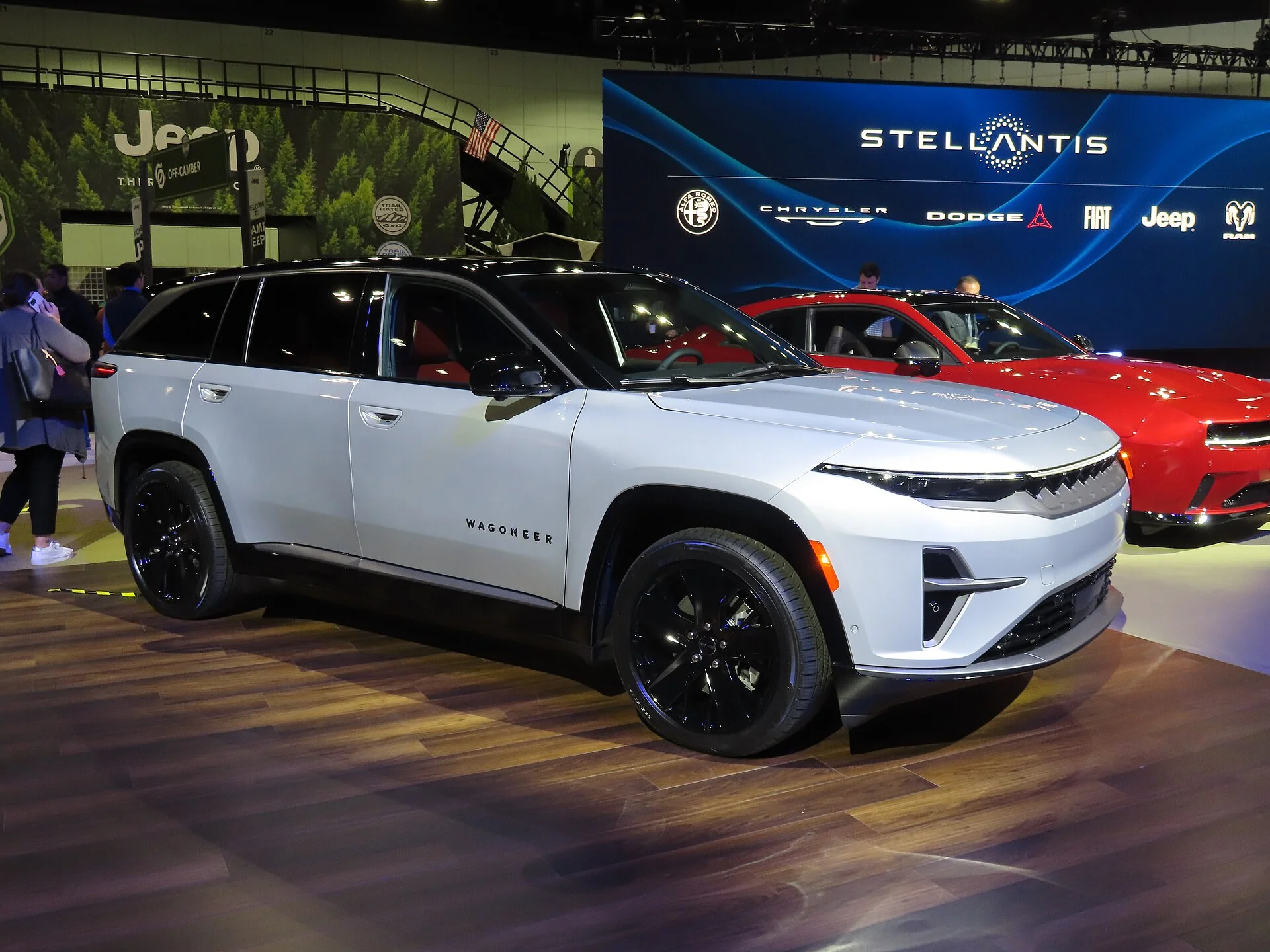
The Jeep Wagoneer represents the pinnacle of full-size SUV camping capability, combining massive interior space with luxury appointments that make extended camping trips genuinely comfortable. This flagship Jeep offers more cargo volume than most competitors, a refined powertrain capable of towing substantial trailers, and premium features that blur the line between roughing it and glamping. For families and couples who refuse to sacrifice comfort during their outdoor adventures, the Wagoneer delivers an experience that smaller SUVs simply cannot match. What sets the Wagoneer apart for camping enthusiasts is the sheer volume of usable space. With the second and third rows folded, you're looking at over 116 cubic feet of cargo capacity in the standard Wagoneer and even more in the extended Grand Wagoneer. This means two adults can sleep comfortably inside with room left over for gear, or the entire family can load enough equipment for week-long expeditions without resorting to rooftop carriers. The Wagoneer's body-on-frame construction and available air suspension also provide genuine off-road capability, allowing access to remote camping locations that unibody luxury SUVs cannot reach.
What You'll Learn
Cargo Space and Sleeping Configurations
The Wagoneer's cargo dimensions make it one of the most capable vehicles for in-vehicle sleeping available today. With all rear seats folded flat, the standard Wagoneer provides approximately 116.7 cubic feet of space with a load floor length exceeding 84 inches from the back of the front seats to the closed tailgate. The Grand Wagoneer's extended wheelbase adds even more length, creating a sleeping area that accommodates adults over six feet tall without any compromise.
Unlike many SUVs where folded seats create an uneven surface, the Wagoneer's seats fold into a remarkably flat configuration. A simple foam mattress topper may be all you need for comfortable sleeping, though many owners opt for a thin plywood platform to create an absolutely level surface and provide under-platform storage. The cargo floor sits at a convenient loading height, and the wide tailgate opening makes setting up and accessing your sleep system straightforward.
For families, the Wagoneer's three-row configuration offers flexibility. The second row can remain upright for seating while the third row folds flat, creating a cargo area suitable for one adult or two children to sleep while parents use a ground tent. Alternatively, both rows fold for maximum interior sleeping space. The available second-row captain's chairs provide a pass-through to the rear sleeping area, convenient for nighttime bathroom trips without exiting through the tailgate.
Cargo volume (seats folded): 116.7 cu ft (standard), 130+ cu ft (Grand Wagoneer L)
Load floor length: 84+ inches
Cargo width: 48-50 inches between wheel wells
Sleeping capacity: Two adults comfortably, or family configurations
Load floor height: Approximately 30 inches from ground
Luxury Features That Enhance Camping Comfort
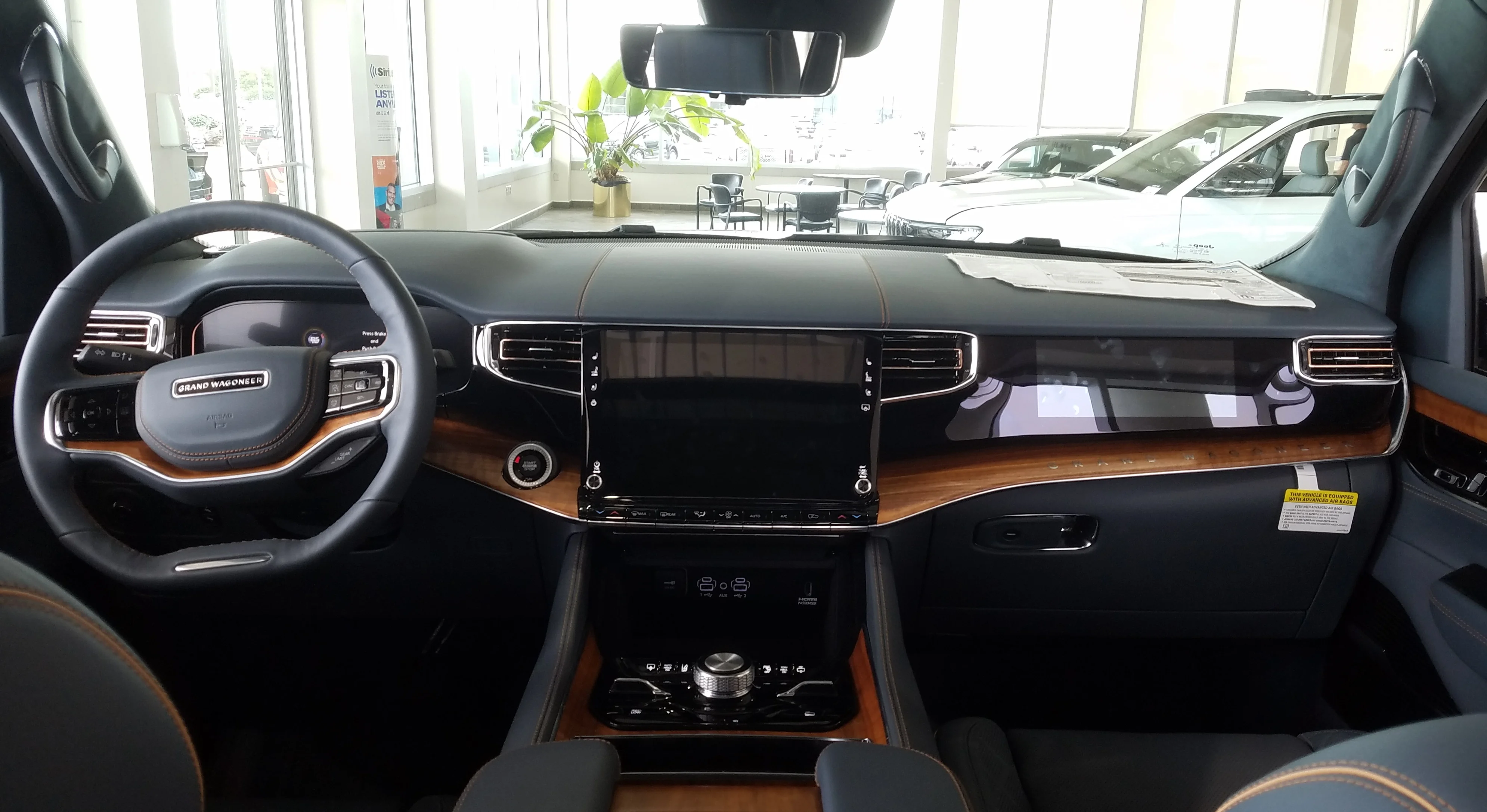
The Wagoneer's luxury appointments transform the camping experience from merely adequate to genuinely enjoyable. The available four-zone climate control means rear passengers and sleepers maintain comfortable temperatures regardless of conditions, and the system can run on battery power for limited periods or continuously when connected to shore power. The premium audio system provides entertainment during rainy days spent inside, while ambient lighting creates a pleasant atmosphere after dark.
The available refrigerated center console compartment keeps drinks and snacks cold without requiring a separate cooler, saving precious cargo space. USB ports and 120V household outlets throughout the cabin eliminate concerns about keeping devices charged during extended trips. The Wagoneer's massive moonroof floods the interior with natural light during the day and provides stargazing opportunities at night, all while protected from insects and weather.
Seat comfort matters during long drives to distant camping destinations, and the Wagoneer's available massaging front seats with heating and ventilation reduce fatigue on multi-hour journeys. The second-row seats offer similar comfort features in higher trims, meaning passengers arrive at camp relaxed rather than stiff and tired. These features may seem like frivolous luxury until you've experienced the difference they make during a ten-hour drive to a remote national park.
The Wagoneer's advanced driver assistance systems also contribute to camping comfort by reducing driving stress. Adaptive cruise control with lane centering handles highway miles with minimal driver input, while the 360-degree camera system makes navigating tight campground roads and backing into campsites significantly easier than in previous-generation full-size SUVs.
Power Solutions for Extended Camping Trips
Modern camping increasingly depends on electrical power, and the Wagoneer delivers more built-in capability than most vehicles. Multiple 120V AC outlets can power small appliances directly from the vehicle's electrical system. Running the engine periodically to recharge the battery allows use of these outlets for devices like CPAP machines, laptop computers, and phone chargers without carrying a separate power station.
For more serious power needs, the Wagoneer's robust electrical system supports aftermarket dual-battery setups that allow extended use of accessories without risk of draining the starting battery. The engine bay accommodates auxiliary battery installations, and the vehicle's alternator can handle the increased charging demands. This approach provides essentially unlimited power for lights, fans, refrigerators, and other camping electronics as long as you run the engine periodically.
Portable power stations remain valuable companions for Wagoneer camping, particularly for powering gear away from the vehicle or during quiet hours when running the engine would disturb neighbors. The Wagoneer's cargo capacity means you can carry larger power stations in the 1000-2000 watt-hour range without sacrificing space for other gear. These units charge quickly while driving via the 120V outlets, ready to provide silent overnight power.
Built-in 120V outlets: Multiple throughout cabin
USB ports: Standard and USB-C throughout all rows
Auxiliary battery compatibility: Excellent, large engine bay
Recommended portable power: 1000-2000Wh for extended trips
Refrigerator power: Native 120V outlets support most 12V/AC portable fridges
Towing Capability and Trailer Camping Options
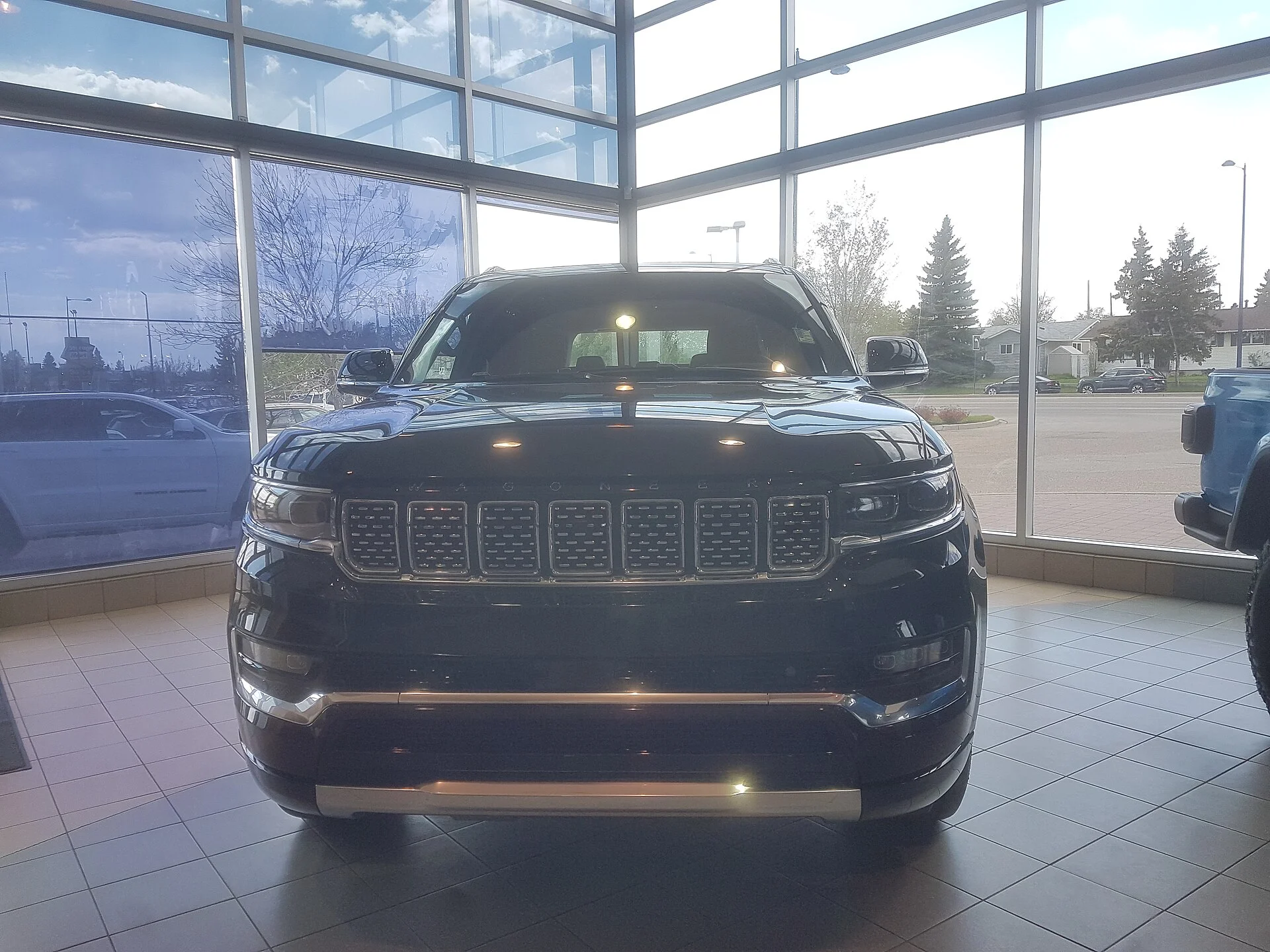
The Wagoneer's substantial towing capacity opens camping possibilities beyond what can fit inside the vehicle. With proper equipment, the standard Wagoneer tows up to 10,000 pounds, while the Grand Wagoneer handles similar loads with its upgraded powertrain. This capacity accommodates everything from small teardrop trailers to full-size travel trailers with slide-outs, dramatically expanding your camping comfort and capability options.
Teardrop trailers in the 2,000-3,500 pound range make particularly good Wagoneer companions. These compact trailers provide a dedicated sleeping space with a real mattress, often include a rear galley kitchen, and tow easily without significantly impacting the Wagoneer's fuel economy or handling. The Wagoneer's interior then becomes purely cargo and living space rather than needing to serve as the bedroom.
For families, larger travel trailers in the 6,000-8,000 pound range remain well within the Wagoneer's capabilities and provide multiple sleeping areas, bathrooms, and full kitchens. The Wagoneer's integrated trailer brake controller, trailer sway control, and multiple camera views make towing these substantial trailers more manageable than ever. The available air suspension automatically levels the vehicle when loaded and can raise for improved departure angle when entering steep campground driveways.
Even without a trailer, the Wagoneer's roof load capacity supports substantial cargo carriers or rooftop tents. The factory roof rails accept most aftermarket rack systems, and the vehicle's height provides excellent headroom inside a rooftop tent. This configuration allows the interior to remain configured for living space while sleeping happens on top, a popular arrangement for families who want flexibility to quickly set up and break down camp.
Comparing the Wagoneer to Other Large Camping SUVs
The Wagoneer competes in a rarefied segment of full-size luxury SUVs, and its camping capability reflects this positioning. Against the Cadillac Escalade and Lincoln Navigator, the Wagoneer offers comparable luxury appointments but superior off-road capability thanks to its Jeep heritage and available Quadra-Lift air suspension with multiple height settings. Neither competitor offers the same combination of ground clearance adjustment and traction management systems.
Compared to the Chevrolet Suburban and Ford Expedition, the Wagoneer generally costs more but provides a more refined interior and more advanced technology. The Suburban offers slightly more cargo space at lower price points, making it a value-oriented alternative for buyers focused purely on practicality. The Expedition matches the Wagoneer's towing capacity and offers its own luxury appointments in Platinum and higher trims. Within the Jeep family, the Grand Cherokee provides a compelling alternative for buyers who don't need the Wagoneer's massive interior space. The Grand Cherokee's two-row configuration costs less, uses less fuel, and still offers substantial cargo capacity and genuine off-road capability. Families with two or fewer children often find the Grand Cherokee meets their needs without the Wagoneer's size premium.
The Wagoneer justifies its premium for buyers who regularly use its capacity. Families with three or more children, couples who camp with lots of gear and guests, and buyers who tow frequently benefit most from the Wagoneer's capabilities. For occasional campers or those with modest space needs, the substantial purchase price and operating costs may prove difficult to justify against smaller alternatives.
Remember, recovery boards are overlanding essentials.
Frequently Asked Questions
Can you sleep in a Jeep Wagoneer?
Yes, the Wagoneer provides excellent sleeping space for two adults when the second and third rows fold flat. The load floor exceeds 84 inches in length with nearly 50 inches of width, accommodating standard queen-size air mattresses or purpose-built camping mattresses with room to spare.
What size mattress fits in a Jeep Wagoneer?
A standard queen-size mattress (60x80 inches) fits in the Wagoneer's cargo area with seats folded. Many owners use queen-size air mattresses, tri-fold memory foam camping mattresses, or custom-cut foam for optimal comfort and easy storage.
How much cargo space does the Wagoneer have?
The standard Wagoneer offers 116.7 cubic feet with all seats folded. The extended Grand Wagoneer L provides over 130 cubic feet. Even with the third row in use, you retain 27.4 cubic feet behind the rear seats.
Can the Wagoneer go off-road for camping?
Yes, the Wagoneer offers genuine off-road capability with available Quadra-Lift air suspension, Quadra-Trac II four-wheel drive, and Selec-Terrain traction management. Ground clearance adjusts up to 10 inches in Off-Road 2 mode, allowing access to remote camping destinations.
What is the Wagoneer's towing capacity?
The standard Wagoneer tows up to 10,000 pounds when properly equipped. This capacity handles most travel trailers, boat trailers, and toy haulers, making trailer camping a practical option.
How does the Wagoneer compare to the Grand Cherokee for camping?
The Wagoneer offers substantially more interior space (116 vs 70 cubic feet) and higher towing capacity but costs significantly more and uses more fuel. The Grand Cherokee suits smaller families and those who prioritize efficiency over maximum space.
Does the Wagoneer have built-in power outlets?
Yes, the Wagoneer includes multiple 120V AC household outlets and USB ports throughout all three rows. These power common camping devices directly without requiring a separate power station for basic needs.
What's the fuel economy of a Jeep Wagoneer?
The Wagoneer's 3.0L twin-turbo inline-six achieves approximately 15-17 MPG in mixed driving. Expect lower figures when towing or on unpaved roads. The Hurricane engine provides strong performance despite the relatively modest fuel economy numbers.
Can four people sleep in a Wagoneer?
Two adults can sleep comfortably in the cargo area with seats folded. Adding children is possible with creative arrangements, or consider a rooftop tent for additional sleeping space. The Wagoneer's payload capacity supports most rooftop tent installations.
Is the Wagoneer reliable for remote camping?
The Wagoneer is a relatively new model, so long-term reliability data remains limited. The Hurricane engine and eight-speed transmission use proven components. For remote camping, carry basic recovery gear and ensure cellular coverage or satellite communication for emergencies.
What year Wagoneer is best for camping?
The Wagoneer returned for 2022 after decades of absence. The 2024 and newer models offer the refined Hurricane engine and accumulated improvements. Earlier 2022-2023 models with the 5.7L V8 also perform well and may offer value on the used market.
How much does a Wagoneer cost?
The standard Wagoneer starts around $60,000 with prices exceeding $100,000 for fully loaded Grand Wagoneer models. For camping purposes, mid-trim Wagoneers offer the best value with essential features like air suspension and four-wheel drive without unnecessary luxury upgrades.