
The Short Answer: No, Not Unattended, and Here's the Real Reason
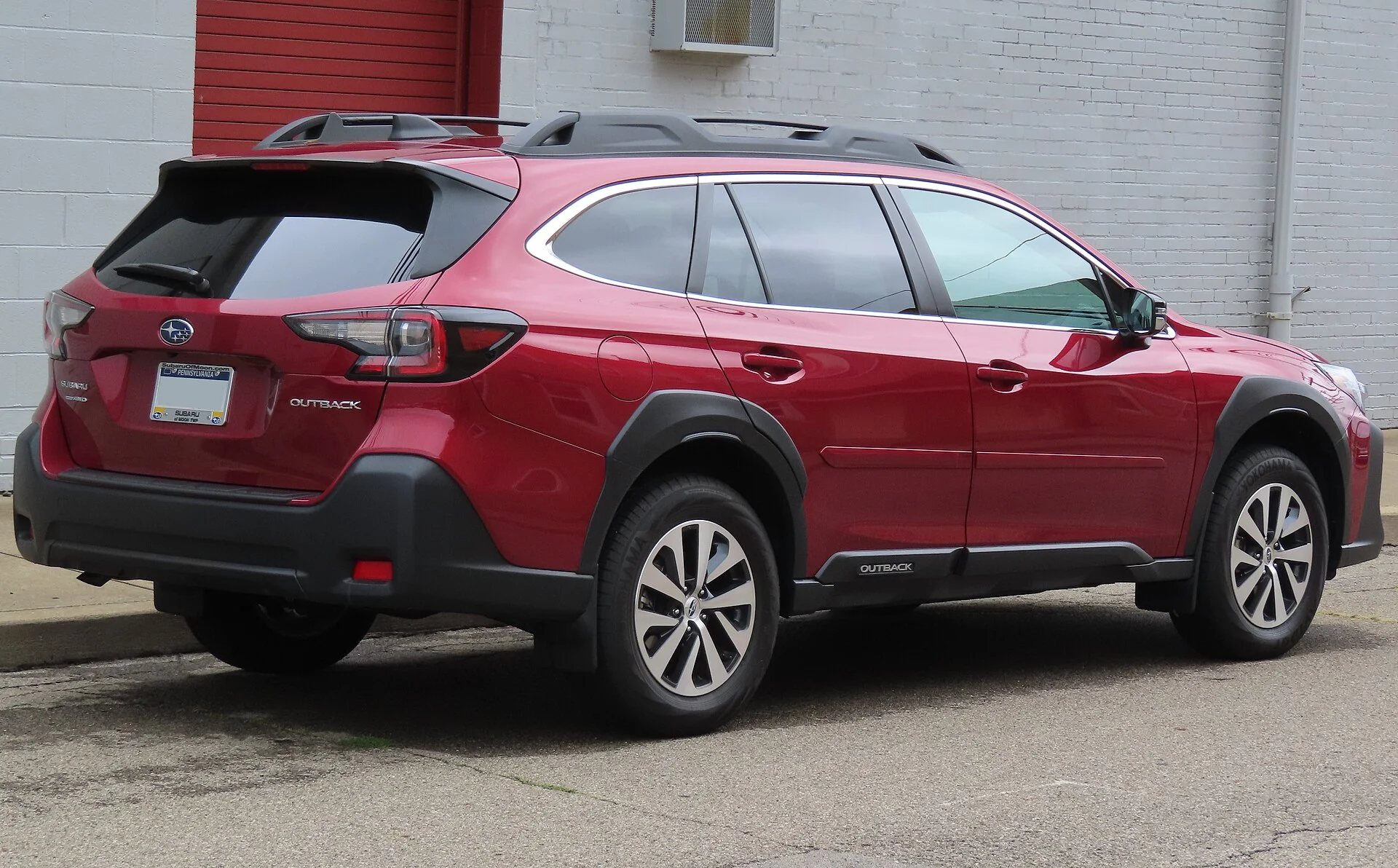
Here's the straight answer a mechanic will give you: no, do not leave a Subaru Outback idling unattended all night just to keep the heater running while you sleep. The Outback is a gasoline vehicle, so running the cabin heater overnight means keeping the engine idling to make heat - and a running gas engine is the whole problem.
Most people worry about the wrong thing. They assume the danger is running out of fuel, and they're not thinking about the thing that actually hurts people: carbon monoxide. An idling engine produces carbon monoxide, a gas that is completely odorless, colorless, and tasteless, so a sleeping person cannot detect it. You don't smell it, you don't wake up - that's what makes unattended overnight idling the core hazard.
The reason this matters isn't theoretical. Because carbon monoxide has no smell, a sleeping person can be overcome before ever waking up. So the safe answer is a firm no to set-it-and-sleep idling. That doesn't mean you can't stay warm in an Outback - it means the heat plan has to be built around not relying on an unattended running engine, which is exactly what the rest of this guide covers in practical detail.
It's a Gas Engine, So Heat Means Idling
Start with why this is even a question. The Subaru Outback is a gasoline-powered vehicle, so running the cabin heater overnight means keeping the engine idling to make heat. There's no separate heat source - the warmth comes from the engine, and the engine has to be running to produce it. No idle, no heat.
The engine in question is the 2024 Outback's base 2.5-liter four-cylinder Boxer, rated at 182 horsepower at 5,800 rpm per Subaru's official spec sheet. It's a fine engine, and none of this is a knock on the Outback - it's the same situation for any gasoline vehicle. Cabin heat is a byproduct of a combustion engine running, so overnight heat means overnight combustion.
That's the crux: to run the heater while you sleep, you'd be running the engine while you sleep, unattended, for hours. And a running combustion engine produces exhaust - carbon monoxide included - the entire time. The mechanic's framing is simple: you're not really asking 'is it safe to run the heater,' you're asking 'is it safe to idle the engine unattended all night.' The answer to that is no.

The Fuel Math That Fools You
Let's kill the fuel worry first, because it distracts from the real danger. A modern gasoline engine burns very roughly 0.15 gallons of fuel per hour for each liter of displacement, so a 2.5-liter engine idles at about 0.375 gallons per hour. Running a heavy heater load can roughly double the fuel an engine burns at idle, but even so, the numbers aren't scary.
Do the arithmetic against the tank. The 2024 Outback holds 18.5 gallons, per Subaru's published specs. At about 0.375 gallons per hour, a full 18.5-gallon tank could idle in theory for around 40 hours. Forty hours is far longer than any night, so you're not going to run dry idling for heat - fuel is simply not the constraint here.
And that's exactly the trap. Because the fuel math looks reassuring, people conclude idling for heat is fine. It isn't - fuel is not the real overnight danger. The engine will happily idle all night without emptying the tank, which is precisely what lets the actual hazard build up unnoticed. The comfortable fuel number is what lulls people into the dangerous behavior.
Carbon Monoxide: The Odorless Killer
Here's what actually hurts people, and why it's so insidious. Carbon monoxide forms from the incomplete combustion of fuels such as gasoline burned by a car engine, and it's odorless, colorless, and tasteless. Your senses give you no warning at all - there's nothing to smell, see, or taste as it accumulates in a closed cabin.
It's not a rare freak hazard, either. The CDC estimates that about 400 people die each year in the United States from unintentional carbon monoxide poisoning that is not linked to fires. That's a steady toll from exactly this category of mistake - engines, generators, and heaters running where their exhaust can reach people, often while they sleep.
The reason sleeping is the dangerous part ties it all together. Because carbon monoxide has no smell, a sleeping person can be overcome before ever waking up. Awake, you might notice a headache or nausea and react; asleep, the early symptoms pass you by, and the gas keeps building. That's why the hazard isn't idling in general - it's idling unattended overnight, when you can't respond to a problem you can't sense.
The Tailpipe Is the Real Danger
Eighteen years under cars taught me where the real risk hides, and it's not the engine - it's the exhaust path. A tailpipe blocked by snow, mud, or a snowbank pushes exhaust back under and into the car instead of venting it away. That's the failure that turns a running engine from a nuisance into a killer, and it's easy to set up without realizing it.
Picture the setup: you park in snow, the engine idles, and drifting or blown snow packs against the back of the vehicle. The tailpipe gets buried, the exhaust has nowhere to go, and it works its way back toward the cabin. You're asleep, warm, and unaware that the vent path just closed. This is the exact scenario behind a lot of those CDC deaths.
That's why the CDC advises clearing snow and debris away from a vehicle's exhaust pipe before running the engine. It's also why the mechanic's rule is that a clear tailpipe isn't a nice-to-have - it's the whole safety margin when an engine is running near people. Block that pipe, and every reassuring fuel number in the world doesn't matter, because the danger was never fuel.
The 2.5-Minute Reality From a Real Study
If you think a blocked tailpipe is a slow problem you'd have time to notice, the research says otherwise. In a real snow-obstructed idling car, researchers measured carbon monoxide reaching lethal levels within about 2.5 minutes with the windows closed. Two and a half minutes - not hours, not even ten minutes. That's how fast a buried tailpipe fills a cabin.
The numbers from that study are stark. The cabin hit 999 parts per million, the meter's ceiling, within 2.5 minutes when the tailpipe was blocked by snow. Nine hundred ninety-nine was as high as the instrument could read - the real level may have been higher. At that concentration, a sleeping person has essentially no chance of waking up and reacting in time.
This is the fact that ends the debate for me. A hazard that goes lethal in about 2.5 minutes is not something you manage by 'keeping an eye on it' while you doze. By the time anything felt wrong, if you felt anything at all, it would be far too late. The study is the clearest possible argument against unattended overnight idling in any gas vehicle, Outback included.
What makes it worse is that the snow scenario is common in exactly the conditions you'd want heat. You idle for warmth because it's cold and snowing, which is the same weather that packs a tailpipe. The circumstances that make idling tempting are the circumstances that make it deadly - that's the cruel overlap the study exposes, and it's why a mechanic treats cold-weather idling with real caution.

The Cracked-Window Myth
The most dangerous piece of advice floating around is that cracking a window makes idling safe. It doesn't, and the same snow-obstructed study proves it. The idea that cracking a window makes idling safe is a myth, because the study still reached dangerous carbon monoxide levels within about 5 minutes with a window open one inch.
Think about why. A one-inch gap is a tiny vent against an engine continuously producing exhaust that's being forced back into the cabin by a blocked tailpipe. The window can't exhaust the gas faster than the engine makes it and the blockage redirects it. Five minutes to dangerous levels with the window cracked is barely slower than the windows-closed case - the crack buys you almost nothing.
What actually worked in the study was clearing the exhaust path entirely. Only fully clearing the tailpipe, about 12 inches wide down to ground level, kept measured carbon monoxide at zero. That's the real fix - not a cracked window, but an unobstructed pipe. If you take one thing from the research, let it be that the window trick is false comfort, and the tailpipe is the only thing that matters.
The CO Numbers That Matter
It helps to know the concentrations, because they explain why sleeping is uniquely dangerous. Most people feel no symptoms at carbon monoxide levels of roughly 1 to 70 parts per million, though heart patients may feel chest pain. So at low levels, a healthy awake person notices nothing - which is fine until the level climbs.
The middle range is where an awake person gets their warning. When carbon monoxide levels stay above 70 parts per million, symptoms such as headache, fatigue, and nausea become noticeable. Awake, that headache is your cue to shut the engine off and get air. Asleep, you sleep through the one warning your body would have given you - the whole reason overnight exposure is so lethal.
The top of the range is why speed matters. At sustained carbon monoxide concentrations above 150 to 200 parts per million, disorientation, unconsciousness, and death are possible. Remember the study hit 999 in about 2.5 minutes - far past this range almost instantly. The gap between 'no symptoms' and 'unconscious' can be crossed faster than a sleeper could ever respond, which is the entire case against unattended idling.
How to Stay Warm Safely
None of this means you freeze - it means you stay warm without an unattended running engine. The foundation is passive: quality sleeping bags and insulation do the heavy lifting with zero risk. A cold-rated bag, insulated window covers over the Outback's big glass, and a good pad under you will get most people comfortably through a cold night with no engine at all.
If you must idle briefly for a warm-up, do it right and awake. Idle only while awake, with a confirmed-clear tailpipe, in short bursts to take the edge off - never as an all-night solution. And back it up with a detector: a battery-powered carbon monoxide alarm typically costs about 10 to 20 dollars and can be placed inside the cabin as a backup warning. A good portable carbon monoxide detector is the cheapest insurance in the entire kit.
Two more rules. Never run or idle a vehicle inside an attached garage, even with the garage door open - the CDC is explicit on that one. And the cleanest overnight heat, if you camp cold often, is a vented diesel heater that makes heat from sealed combustion and vents exhaust outside the sleeping space entirely, so there's no engine idling and no exhaust in the cabin at all. That's the real solution for regular winter camping.
The Verdict: Don't Idle Unattended - Insulate and Detect Instead
The verdict is unambiguous: do not leave a Subaru Outback idling unattended all night just to run the heater while you sleep. In a gas vehicle, heat means idling, idling means carbon monoxide, and carbon monoxide is an odorless gas that can overcome a sleeper before they ever wake up. The safe answer is no.
Don't let the fuel math fool you. Yes, an 18.5-gallon tank could idle around 40 hours at about 0.375 gallons per hour, so you won't run dry - but fuel was never the danger. The danger is a tailpipe a snowbank can block, sending carbon monoxide to lethal levels in about 2.5 minutes, and a cracked window doesn't fix it - only a fully clear exhaust path keeps the level at zero.
So stay warm the safe way: a cold-rated bag, insulated window covers, and a good pad handle most nights with no engine at all. Keep a ten-to-twenty-dollar carbon monoxide alarm in the cabin, idle only in short bursts while awake with a clear tailpipe, never idle in a garage, and consider a vented heater for regular cold-weather trips. Do that, and the Outback is a fine winter camper - just not one you idle unattended while you sleep.