

The Short Answer: Yes in Open Air, Engine Running All Night
Running the air conditioning in a Hyundai Palisade overnight is safe only in an open, well-ventilated area with the exhaust pipe verified clear. Under those conditions it is a managed risk. In an enclosure, or with a blocked tailpipe, it is a carbon monoxide hazard, and the Palisade has a specific trait that sets the terms.
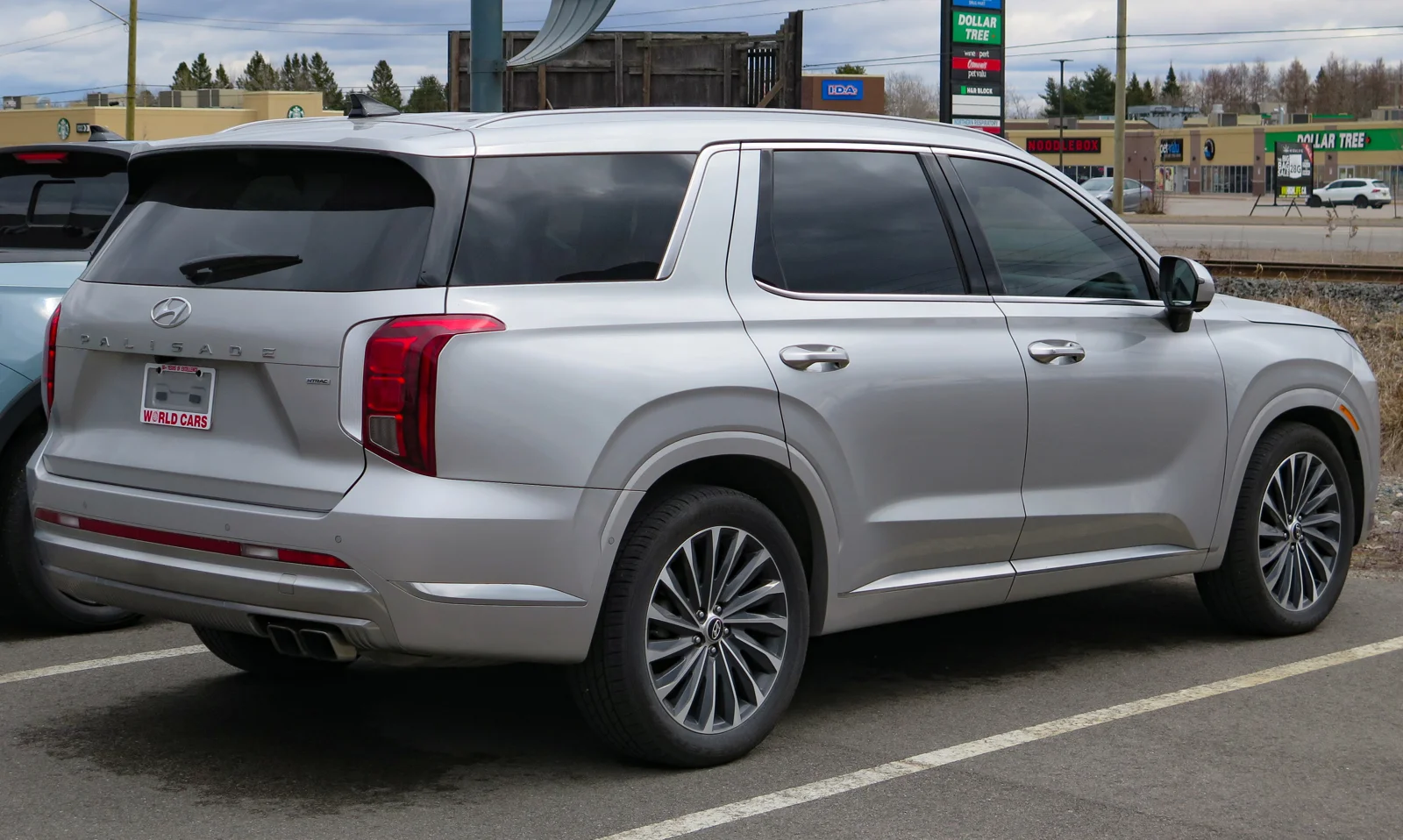
The 2024 Palisade is gas-only in the US, powered by a 3.8-liter GDI V6 rated at up to 291 horsepower and 262 lb-ft of torque with an 8-speed automatic. There is no hybrid Palisade sold in the US for this generation, so running the AC overnight means the 3.8-liter V6 idles continuously the entire night. There is no electric-only mode that can cool the cabin.
A tinkerer traces the consequence to its source: a continuously idling engine makes exhaust every minute the AC is on, not in short bursts, so there is more opportunity for carbon monoxide to accumulate if anything goes wrong. That does not make the Palisade unsafe to sleep in; it makes the precautions matter for the full duration. So the honest answer is yes, carefully, with the understanding that the engine, and its exhaust, are present all night. This guide covers the one variable that carries real risk and how to skip most of it by not idling when the weather allows.
Gas-Only Means Continuous Idling
Start with the trait that defines the Palisade overnight, because it is a power-delivery fact, not a preference. Because the Palisade has no hybrid or electric drive, running the AC overnight means the 3.8-liter V6 idles continuously the entire night. When you want cabin cooling, the engine runs from the moment you start it until you shut it off, producing exhaust the whole time.
Do not expect the Palisade's stop-start feature to help, because a tinkerer who reads the system sees it does not apply here. The Palisade's Idle Stop & Go, its auto stop-start, only shuts the engine off briefly at stops while driving; it does not provide overnight cooling and is not an accessory feature. So it offers no carbon monoxide benefit while you are parked and sleeping. The convenience feature that quiets the engine at a red light is simply inactive when you are camped.
The consequence is a continuous exhaust exposure window. Unlike a hybrid that fires its engine in bursts, the Palisade's V6 runs every minute the AC is on, so any exhaust problem, a pipe blocked by drifting sand or a wind shift toward a cracked window, has all night to build cabin carbon monoxide rather than a fraction of it. None of this makes the Palisade dangerous by nature; it means the open-air rule, the clear exhaust, the downwind window, and the CO detector are the baseline, not extra caution, because the engine never takes a break.

The Real Danger Is Carbon Monoxide
The whole risk reduces to one gas, so understand it precisely. Carbon monoxide is colorless and odorless; you cannot see or smell it, which is what makes overnight idling dangerous. Your senses give no warning, so a sleeping person has no natural alarm, which is the core of the hazard.
The lethal path is exhaust re-entering the cabin. It happens when the tailpipe is blocked by snow, mud, or tall dry grass, or when wind pushes exhaust toward a cracked window and draws carbon monoxide inside rather than venting it. Because the Palisade idles continuously to cool, the exhaust runs all night, so parking near walls, snowbanks, or in still air can let carbon monoxide pool and re-enter through the vents. It is not the running engine that harms you; it is exhaust that finds its way back inside.
A tinkerer's reassurance is that the failure mode is entirely preventable. Exhaust cannot poison a cabin it cannot reach, so open air, a clear pipe, and a downwind window keep cabin carbon monoxide at zero regardless of how long the engine runs. The Palisade's continuous idle raises the cost of getting it wrong, because a problem has the whole night to develop, which is exactly why getting the setup right, and trusting a detector over your own senses, is worth the small effort.
What the CO Numbers Mean for a Sleeper
Vague warnings are easy to ignore, so here are the measured figures. Per the CDC, more than 400 Americans die each year from unintentional non-fire carbon monoxide poisoning, more than 100,000 visit an emergency department, and more than 14,000 are hospitalized. This is a common, documented hazard, and vehicles idling in poor ventilation are a recognized cause.
The exposure ladder shows how fast it moves. Per CDC clinical guidance, about 200 ppm of carbon monoxide causes headache in 2 to 3 hours; about 400 ppm causes headache and nausea in 1 to 2 hours and is life-threatening after roughly 3 hours; and about 1,600 ppm causes severe headache and dizziness in about 20 minutes and death in about 1 hour. A continuously idling engine feeding a sealing cabin can climb that ladder overnight.
The reason it is uniquely dangerous asleep is the symptom set. Early symptoms are headache, dizziness, weakness, nausea, chest pain, and confusion, and a sleeping person may never wake to notice them. The body's warning signs require consciousness to act on, and overnight you do not have it. So the case for a battery-powered carbon monoxide detector in the cabin is airtight: with an engine running all night, the detector is the one device that can wake you before the ladder turns lethal. It is cheap gear against a measured, documented risk.
Fuel Is Not the Limit, Carbon Monoxide Is
The fuel math is comfortable in a way that misleads. The 2024 Palisade has an 18.8-gallon fuel tank, consistent across the SE, SEL, XRT, Limited, and Calligraphy trims. A typical passenger car burns roughly 0.1 to 0.5 gallons per hour idling; with the AC compressor loaded, the Palisade's 3.8-liter V6 sits toward the high end near 0.4 to 0.5 gallons per hour.
At about 0.4 to 0.5 gallons per hour, the 18.8-gallon tank holds many hours of idle AC, which means carbon monoxide exposure, not fuel supply, is the real overnight danger. A tinkerer flags this because the long runtime tempts people to treat idling as a solved problem, when the real clock is the CO ladder and the exhaust path, not the fuel gauge.
Two practical notes follow. Keep a fuel reserve rather than idling toward empty, so you retain range to reach a station in the morning, since the Palisade cannot cool without the engine running. And a hot exhaust and catalytic converter sitting over dry grass or leaves for hours is a genuine fire hazard, so park over bare dirt or gravel, not vegetation. The 18.8-gallon tank will outlast the night; the exhaust management is what actually keeps the night safe.
Why the Fan Alone Will Not Cool
A common instinct is to dodge the idling question by running only the fan, and the physics does not cooperate. Battery-only accessory mode in the Palisade runs the blower fan but not the AC compressor, so it only circulates warm air while draining the 12-volt battery. You trade cooling you do not get for a battery you might need to start the V6 in the morning.
Real cooling is mechanical and needs the engine. Real air conditioning requires the engine to drive the compressor, so just running the fan on the battery is not a cooling solution. On a hot night the blower simply circulates hot cabin air, and because the Palisade cannot cool without the compressor, and the compressor needs the V6 running, there is no engine-off way to get real AC from the vehicle.
That closes off the apparent safe middle path. The reasoning that you can avoid carbon monoxide risk by running just the fan fails twice: it does not cool, and it flattens the starting battery, which strands you. A tinkerer does not treat the built-in blower as a compromise. If you want cabin cooling from the Palisade itself, you are idling the V6 and managing the exhaust. If you do not want to idle, the answer is a separately powered fan and passive cooling, not the accessory-mode blower.
The Heat You Are Fighting, and How to Block It
It helps to size the enemy, because it explains the temptation to idle the V6 all night. A parked car's interior heats about 40 degrees Fahrenheit above the outside air within an hour, with roughly 80 percent of that rise happening in the first 30 minutes. The cabin becomes an oven quickly, and that discomfort is what pushes people toward continuous idling.
Because the heat comes mostly from the sun, blocking it is far more efficient than removing it afterward. a reflective windshield sunshade is the single highest-leverage tool: a reflective windshield sunshade can cut cabin air temperature by about 15 to 20 degrees Fahrenheit and dashboard temperature by up to about 40 degrees Fahrenheit, lowering the cooling load before the cabin ever bakes.
Set that barrier before dark, along with shade. Parking in deep shade blocks the solar gain that drives the 40-degree-in-an-hour rise, so the cabin never reaches the oven state a fan cannot fix. For a tinkerer this is the highest-value move, because it costs nothing to run and makes no exhaust. For a gas-only Palisade whose only self-cooling means running the V6 continuously, getting the passive setup right is the surest way to avoid idling through the night at all.
No-Idle Cooling That Works
The safest strategy for a gas-only Palisade is to not idle at all, and it is achievable more nights than people assume. The safer no-idle options are 12-volt or battery-powered fans, cracked windows fitted with bug screens, parking in deep shade, and reflective sunshades. Together they handle most warm nights without the V6 running.
Airflow does the work, and sizing the fan to the Palisade's three-row cabin matters. Target roughly 1 CFM per cubic foot of cabin volume so the interior air turns over frequently, and because a three-row SUV cabin is large, do not undersize the fan. Positioned to pull cooler night air in one window and exhaust warm air out another, a fan creates the cross-flow that makes a warm Palisade sleepable without the engine.
Screened windows make the cross-flow usable, since cracking windows on opposite sides only helps if bugs stay out. The decisive advantage is zero exhaust: a fan, screened windows, and shade cannot produce carbon monoxide, and powered from a separate battery they do not drain the Palisade's starting battery. Trace the power the way a tinkerer would, off a dedicated pack rather than the vehicle, using the Palisade outlet and fuse map to find a good source, and you get a cool cabin with the engine off all night.
If You Idle: The Rules
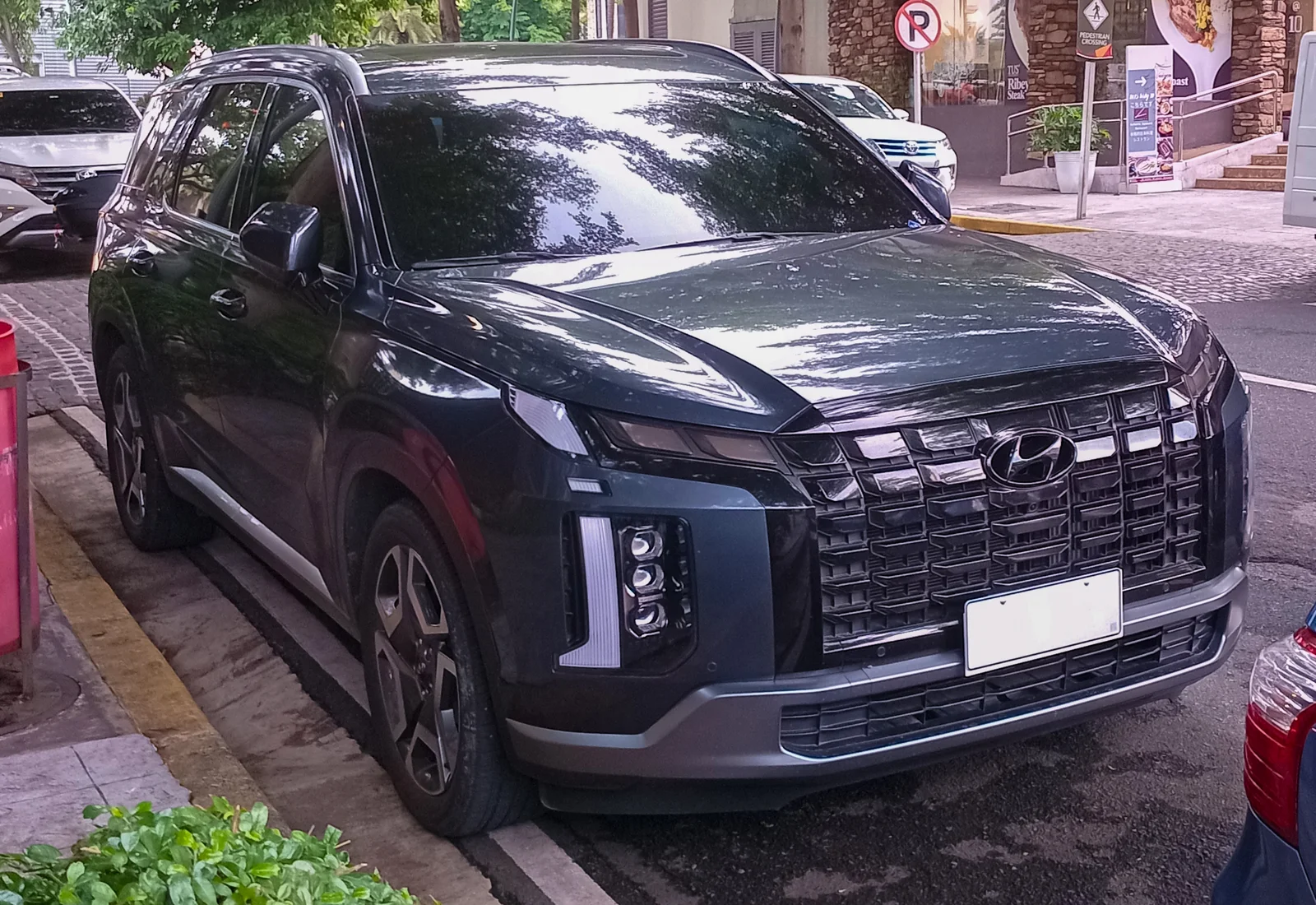
When the night genuinely defeats passive cooling, idling the Palisade for AC is a legitimate call, made safe by firm rules. If you do idle for AC, do it only in an open, well-ventilated area, never in a garage, carport, or other enclosure, with the exhaust pipe verified clear of obstructions. That is the rule that prevents the most common and most lethal poisonings.
Layer window and detector discipline on top. Crack a downwind window, not the one facing the exhaust or into the wind, so airflow carries stray exhaust away rather than drawing it in. Take the climate control off recirculation so it pulls outside air, and keep a battery-powered carbon monoxide detector inside the cabin. In a Palisade that idles all night, the detector covers the long exposure window the continuous idle creates.
Stay mindful that conditions change while the engine runs. A pipe clear at bedtime can be blocked by drifting sand or snow, and a helpful wind can swing to push exhaust at your cracked window by the early hours. Because the Palisade's V6 runs the entire night, these changes have maximum time to matter, which is exactly why the enclosed-space rule is absolute and the detector non-negotiable. Follow the rules and the continuous idle becomes a managed risk rather than a gamble.
The Verdict: Manageable, But Respect the Nonstop Idle
Running the AC in a Hyundai Palisade overnight is safe with precautions and dangerous without them, and the Palisade's defining trait is that it idles continuously because it is gas-only. Idle only in open, well-ventilated air with the exhaust clear, crack a downwind window, take the vents off recirculation, keep a CO detector aboard, and park over bare ground. Those steps keep cabin carbon monoxide at zero for the whole night the engine runs.
The point to carry is the exposure window. The 3.8-liter V6 runs every minute the AC is on, and the Idle Stop & Go feature does nothing for parked idling, so any exhaust problem has all night to build. The 18.8-gallon tank means fuel outlasts the night; carbon monoxide is the real clock.
The safer play, when the weather allows, is not to idle the V6 at all. A reflective sunshade cutting cabin temperature 15 to 20 degrees, deep shade, screened windows cracked for cross-flow, and a battery fan near 1 CFM per cubic foot handle most warm nights with zero exhaust. Reach for passive cooling first, keep a fuel reserve, and run a detector when you do idle. The Palisade summer car-camping guide covers hot-weather setup in more detail, and the Palisade sleeping guide covers the bed itself.