
The Short Answer: Capable Getting There, Fussier Once Parked
Two hundred miles from the nearest parts store, a winter camper is only as good as two things: whether it reaches the site, and whether it lets you sleep once you stop. On the first count the Subaru Forester is one of the strongest crossovers you can buy off a lot. On the second it is usable but fussier than its reputation suggests, and the reason is a folded floor that is not as flat as the brochure photo implies.
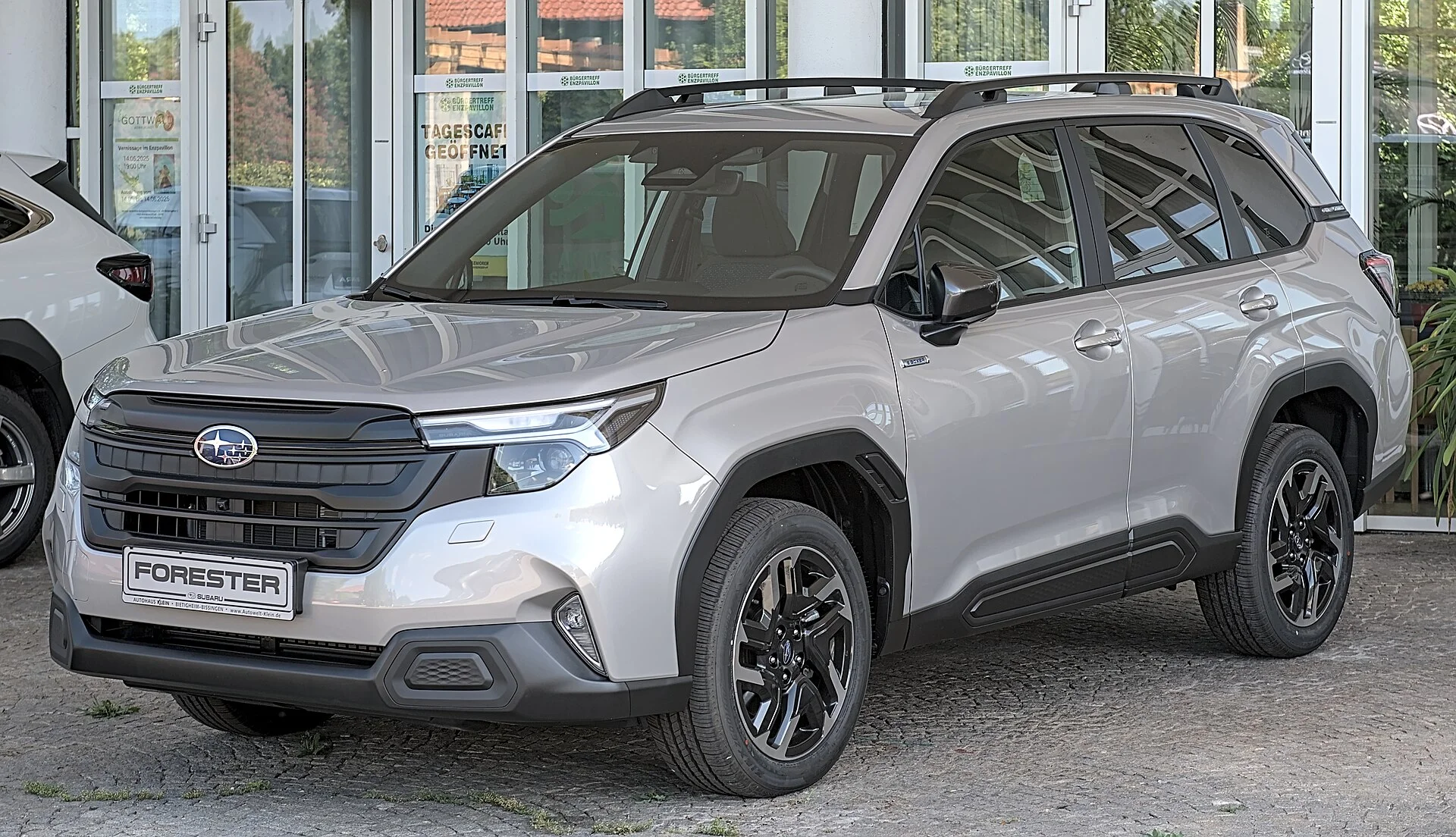
Every Forester comes standard with Symmetrical All-Wheel Drive - a permanent, full-time layout, not the on-demand system many rivals use - plus X-MODE traction management. Standard trims sit on 8.7 inches of ground clearance, and the Wilderness raises that to 9.2 inches. That combination clears packed snow and unplowed campsite approaches that would strand a lower crossover.
The two conditions are the folded-floor footwell gap and the lack of any factory dry-heat source. Neither is a dealbreaker. Both are things you solve before the trip, not at 2 a.m. when it is bitterly cold out. The rest of this guide is how to solve them.
Why It Reaches the Trailhead When Others Turn Around
The Forester's winter capability is not marketing language - it comes from a drivetrain and a stance that are built for slick surfaces. Symmetrical All-Wheel Drive is standard on all six trims, so power reaches all four wheels full-time without the driver selecting anything. That matters most at the moment a campsite driveway turns to glare ice and an on-demand system is still deciding what to do.
X-MODE backs it up. The dual-function version on the Wilderness adds Hill Descent Control and tuning for snow, mud, and slippery surfaces; the single-function version on other trims still optimizes the AWD, engine, and braking for low-traction footing. Underneath, the 2.5-liter boxer four sits low in the bay, which gives the whole vehicle a low center of gravity - the quiet reason a Forester tracks straight on ice where a taller SUV wanders.
Clearance finishes the case. At 8.7 inches standard and 9.2 on the Wilderness, the Forester clears the plowed berm and the frozen ruts on an unmaintained forest road. This is the part it nails with no help from you. The harder problem starts once the engine is off.
The Folded Floor: A Footwell Gap You Have to Bridge
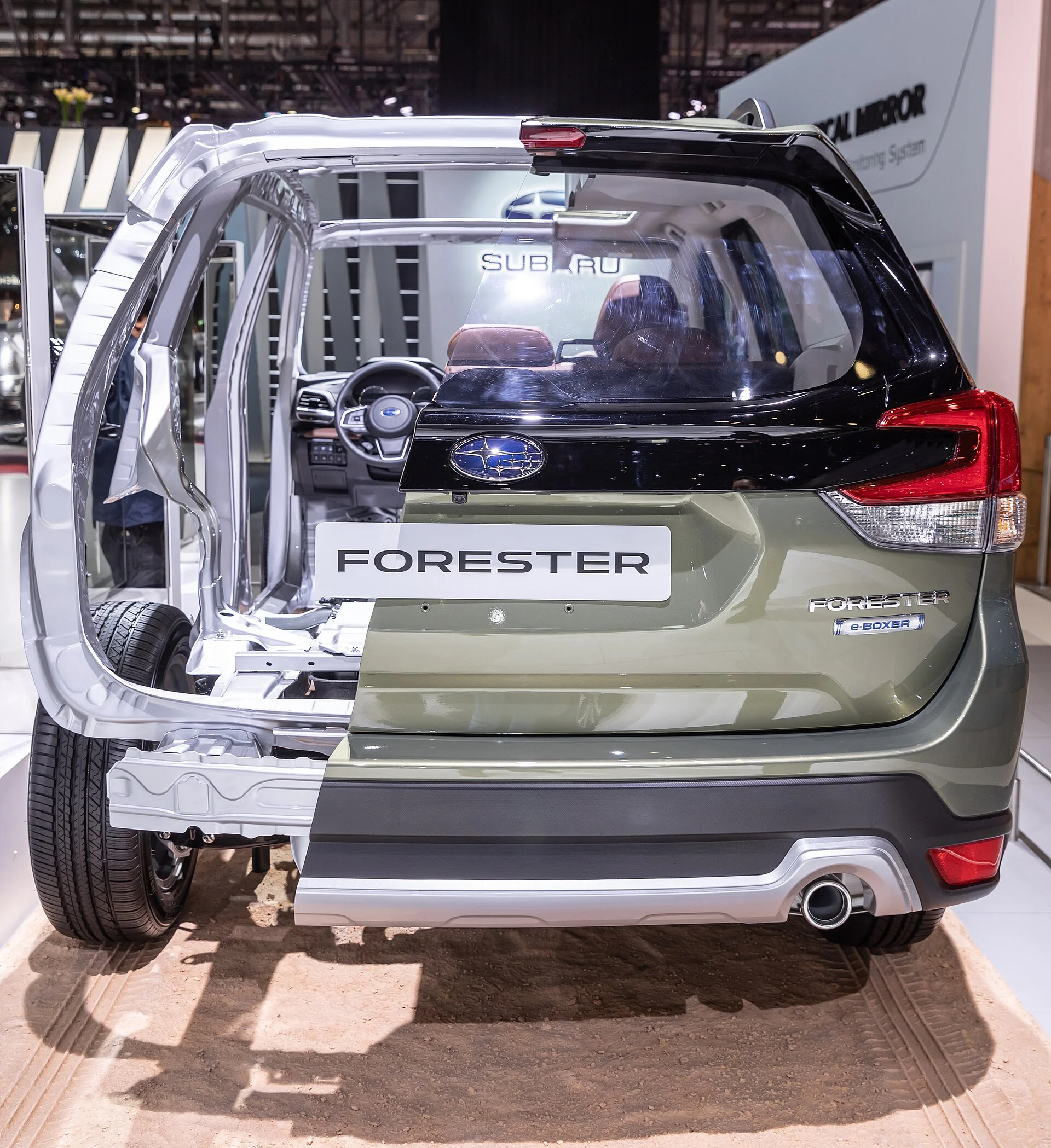
Here is the condition the spec sheet hides behind a single cargo-volume number. With the 60/40 rear seats folded, the Forester opens up 74.2 cubic feet and a raw floor roughly 69 inches long. That sounds like plenty for one adult. The problem is that the last 16 inches or so behind the front seats is an open footwell drop, not a flat surface - the seatbacks fold down to a level that leaves a step and then a hole.
What that means in practice is that the bare folded floor is not a bed. Owners who bridge the footwell gap with an aftermarket sleeping platform report up to about 72 to 74 inches of genuinely flat length, which is enough for one adult up to roughly six feet. Without the platform you are sleeping on a slope with a gap under your knees.
Width sets the mattress size. The rear opening is about 51.3 inches wide, but the usable flat span between the wheel wells is narrower, and the practical fit is a twin-size tri-fold foam pad at roughly 38 by 75 inches. A full or queen will not lie square. Measure from the closed tailgate to the front seatbacks before you build, because your platform length depends on how far forward you slide the front seats.
The Heat Gap: No Factory Dry-Heat Source
The second condition is the one that gets people into trouble. The Forester has no factory-sealed dry-heat source - nothing in the vehicle is designed to make heat while you sleep without either running the engine or burning fuel in an aftermarket device. In summer that is a non-issue. In a real freeze it is the whole game.
That leaves the same three options every unibody crossover leaves you: idle the engine in short watched cycles, add a vented heater, or go heaterless and win the night with insulation and a cold-rated bag. Each has a cost, and the worst outcome is treating the choice as an afterthought and discovering the gap at midnight.
One piece of gear is non-negotiable regardless of which path you pick: a battery carbon monoxide alarm, which runs about ten to twenty dollars and belongs in any vehicle you heat overnight. A good portable carbon monoxide detector is the cheapest insurance in the entire kit, and on a Subaru with a big glass greenhouse it is the item that lets you sleep instead of listening for the engine all night.

Idling for Heat: What a Tank Actually Buys You
The reflex is to just run the engine, and it is worth knowing the math before relying on it. A 2.5-liter gas four idling to make cabin heat burns roughly 0.2 to 0.5 gallons of fuel per hour - call it about 0.25 gallons an hour as a working estimate. Against the Forester's 16.6-gallon tank, that is theoretically dozens of hours, so fuel is rarely the limit.
The limit is exhaust. Idling in snow demands a clear, unobstructed tailpipe, because a drift banked against the back of a parked vehicle can push carbon monoxide toward the cabin. That is why the idle-for-heat approach only works in short cycles while someone is awake, never as a set-it-and-sleep solution, and why the carbon monoxide alarm is mandatory the moment the engine is running.
There is a fuel-economy footnote worth carrying: the Forester is EPA-rated around 26 mpg city and 33 highway, which tells you it is efficient enough that idling is not going to drain a tank quickly - but efficiency is not the point. A long way from a parts store, the engine you are idling for heat is also the engine you need to drive home. Idling is a fallback, not a plan.
The Vented-Heater Fix and Why Owners End Up There
The clean answer to the heat gap is a dedicated vented heater, and it is where campers who do real cold nearly all land. A diesel heater sips fuel - far less than continuous engine idling - and makes heat as its only job, with a sealed combustion chamber that vents exhaust outside the sleeping space entirely. That sealed design is the difference between waking up warm and waking up in a bag damp from your own breath.
Dry heat is the underrated half of the benefit. A sealed-combustion heater does not add moisture to the cabin the way an unvented propane or catalytic heater does, and in a Forester's large glass greenhouse, moisture is the enemy that fogs every window and dampens every soft surface by morning. Solving heat and condensation with one device is why the upgrade pays for itself on a multi-night trip.
The trade-off is honest: it is an aftermarket purchase and an install, not a feature you buy at the dealer. For a weekend-a-year winter camper, short idle cycles plus a good bag may be enough. For anyone who plans to camp below freezing regularly, the vented heater is the single upgrade that turns the Forester from a fair-weather base into an all-season one.

Condensation and the Big-Glass Problem
Even with heat sorted, every car you sleep in fights water - the water you exhale. Two people breathing in a sealed cabin will fog the glass and dampen the bag by morning, and the Forester's tall greenhouse gives that moisture a lot of cold surface to condense on. In freezing weather a wet bag is not just uncomfortable; it stops insulating, which is a safety problem, not a comfort one.
The first defense is counterintuitive: crack a window. At least one window open a finger's width lets humid air escape instead of raining back down, and it does double duty on the carbon monoxide front any time a heat source is running. The small amount of heat you lose is repaid every time you wake up dry.
The second defense is the heat source itself. A vented dry-heat source does not add to the moisture load, which is why it beats boiling a pot or running an unvented burner for warmth. Pair a cracked window with dry heat and you avoid the single most common way a cold night in a Forester goes wrong.
Insulating a Greenhouse on Wheels
The Forester's glass area is great for stargazing and terrible for holding heat. Insulated window covers and reflective panels cut the heat loss through that glass, which is the biggest cold-weather weak point on the whole vehicle. Every uncovered window bleeds the warmth you spent fuel or a heater to make, all night long.
The fix is cheap and high-leverage. Reflective panels cut to each window trap a layer of still air and bounce radiant heat back inside, and they block solar gain in reverse during summer. On a crossover with as much glass as the Forester, covering the windows is arguably the highest-return dollar in the winter kit - it lowers the workload on whatever heat source you run and holds warmth between idle cycles.
The covers compound with everything else. An insulated cabin holds a vented heater's output far longer, which means less runtime and less fuel across the night. Skip them and you are trying to heat the outdoors through single-pane glass. For serious below-freezing use, window insulation is not optional on this vehicle.
Remote Start, the Wilderness Trim, and the Morning
A few Forester-specific features change the winter calculus at the edges. Remote engine start, available and standard on higher trims through the Subaru connected-services app, lets you pre-warm the cabin before climbing in on a single-digit morning. It does not replace an overnight heat source, but it makes the transition from bag to driver's seat humane and clears frost off the inside of the glass.
The Wilderness is the winter-oriented pick if you are buying for this. It raises clearance to 9.2 inches from the standard 8.7, adds the dual-function X-MODE with Hill Descent Control, and is built to shrug off the rough approaches where a winter site tends to be. For deep, unplowed access roads, that extra clearance and traction tuning is the margin between reaching a remote spot and turning around.
One buying note from the spec sheet: moonroof-equipped trims lose a little interior height, which matters when every inch of headroom over the sleeping platform counts. Buy the clearance and traction you need for how remote you go, then budget separately for the platform and the warmth the vehicle does not provide.
The Verdict: A Great Snow Base, Once You Prep It
Put it together and the Forester earns a confident yes for winter car camping - with two conditions you handle before you leave the driveway. As a platform to reach the site, it is hard to beat in its class: standard Symmetrical AWD, standard X-MODE, 8.7 inches of clearance (9.2 on the Wilderness), and a low 182-horsepower boxer that keeps it planted on ice. Getting there is the easy part.
The conditions are the folded-floor footwell gap and the missing heat source. Bridge the gap with a platform sized to a twin pad and roughly 72 to 74 inches of flat length, and close the heat gap with a vented heater at a fraction of an idling engine's fuel, backed by insulated window covers, a cracked window, a cold-rated bag, and a ten-to-twenty-dollar carbon monoxide alarm that is never optional.
So who should buy it for winter? Someone who wants one vehicle that daily-drives, out-climbs almost anything its size in snow, and doubles as a solo winter camper once a weekend platform and a heat plan are in place. Prep those two things and the Forester's conditions disappear, leaving a genuinely excellent cold-weather base a long way from anywhere.