
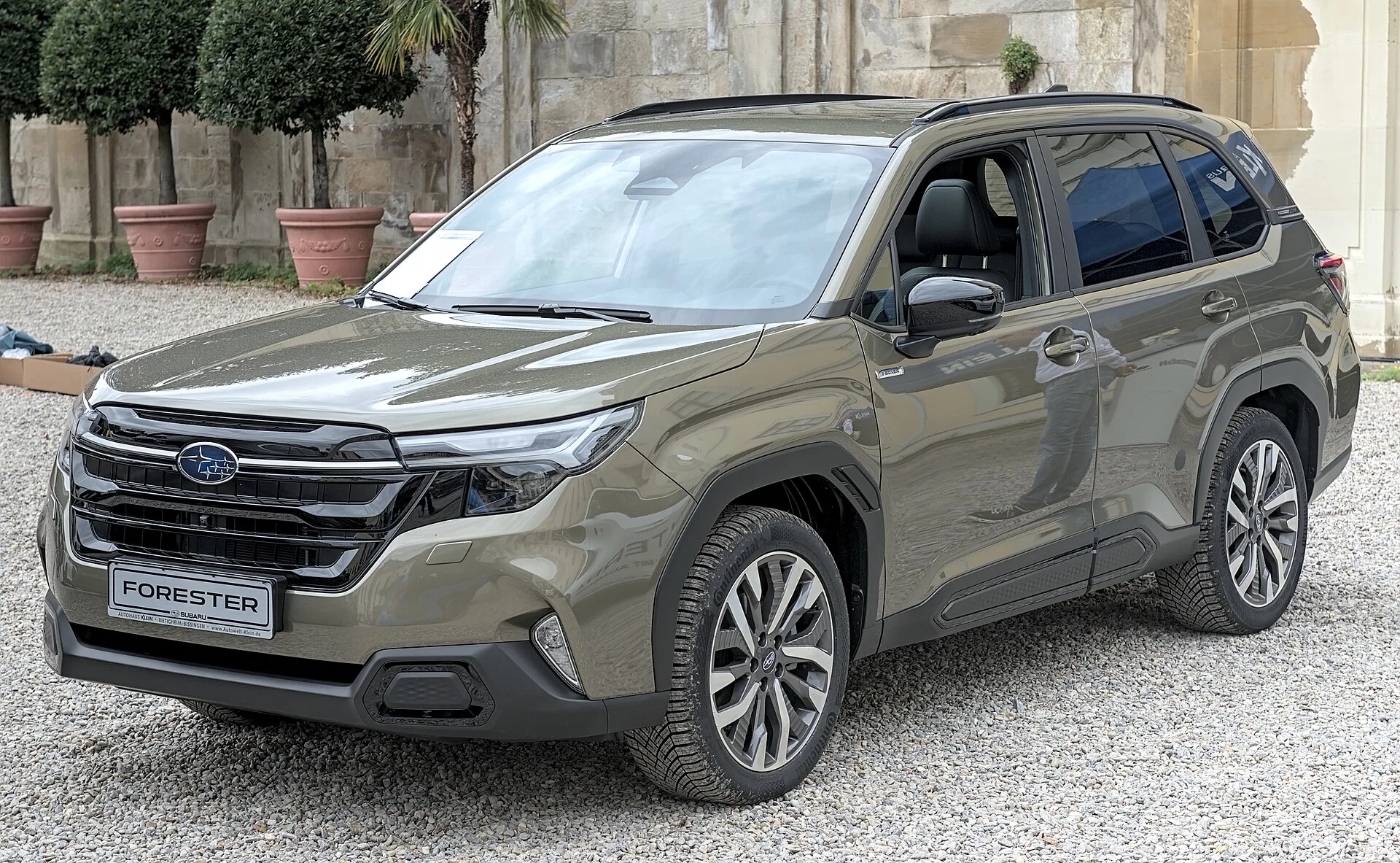
The Short Answer: A Proven Camper, Two Fixable Flaws
The Forester is one of the most popular compact SUVs for car camping, and in summer it works well for one or two people - but only after you address two things the brochure will not tell you. The rear seats do not fold perfectly flat, and the large glass area turns the cabin into a greenhouse in direct sun. Both are fixable, and both are the kind of detail that decides whether you sleep or sweat.
On the good side, the fifth-generation Forester, the 2019-and-newer SK, offers 76.1 cubic feet of maximum cargo volume with the 60/40 rear seats down. That is genuinely generous for a couple, and the tall, upright cargo opening gives more sitting headroom than a lower Outback or Crosstrek, which matters for moving air and changing while parked.
The installer's approach is to measure the imperfect floor first, build a platform that levels it, and set the ventilation up properly before the first night. Do that and the Forester is a comfortable summer camper. Skip it and you get a sloped bed and a stuffy cabin by midnight. This guide walks the build and the venting in the order that actually matters.
Measure First: The Cargo Floor Reality
Before you buy a single piece of foam, measure. Camping blogs put the Forester's folded cargo floor at roughly 69 to 72 inches of length, with one measured figure around 69.1 inches of flat floor. A 6-foot adult, at 72 inches, fits only diagonally or by using the footwell gap for their feet. That is the first number that governs whether you and your setup fit.
Width and height are friendlier. The cargo area measures about 51.3 inches wide and 33.1 inches tall, wide enough for a twin mattress at 38 inches with gear alongside, and tall enough to sit up and move around. Behind the raised seats you have 28.9 cubic feet, though that drops to 26.9 on trims with the large panoramic moonroof, because the moonroof housing lowers the ceiling.
The catch is the floor is not level. The Forester's rear seatbacks do not fold perfectly flat - they leave a noticeable upward slope toward the front, plus roughly a 16-inch footwell gap behind the front seats. Lie directly on that and you sleep on an incline with a hole under your knees. Measuring it honestly is step one, because the fix is a platform sized to those exact gaps, not a guess.

Building a Flat Platform
Here is the step everyone skips, and the one that transforms the Forester as a bed. Because the seats slope and leave that roughly 16-inch footwell gap, a level sleeping surface needs a raised platform or cushions filling the void. Done right, a DIY or commercial sleeping platform extends the usable flat surface to about 79 inches - long enough for a taller sleeper to stretch out fully, which the bare folded floor cannot manage.
The install logic is simple: the platform bridges from the high point of the folded seatbacks back over the footwell gap, giving you one continuous flat plane. Measure the height of the seatback slope and the depth of the footwell, cut your supports to match, and the surface comes out level rather than tilted toward your head. A clean platform is the difference between waking up rested and waking up slid into the footwell.
It does not have to be elaborate. Firm foam blocks cut to fill the footwell gap and a rigid board across the top will level most of it; a built platform adds under-bed storage as a bonus. The point is that you plan it to the Forester's specific slope and gap dimensions rather than hoping a flat mattress will magically ignore them. Measure, cut, level - the same discipline as any install that has to last.
The Heat Problem: Greenhouse Glass
Now the summer-specific challenge, and it is real. The Forester's large glass area - tall side windows plus the available panoramic moonroof - creates a strong greenhouse effect. Parked in direct sun, the cabin heat-soaks well above the outside air temperature, which is miserable for a daytime nap and slow to shed at night.
The darker the interior, the worse it is. The Forester's interior is typically light gray or black cloth depending on trim, and a darker interior absorbs and re-radiates more heat during a heat-soak than a lighter one. There is nothing you can do about your upholstery color after the fact, but knowing it tells you how aggressively you need to manage the glass.
The fix is to block the radiant gain before it gets in. A reflective windshield cover is recommended to cut heat coming through the large front glass, and the same covers reduce nighttime condensation as a bonus. For a parked daytime rest, a full set of reflective covers on the glass is not optional in real heat - it is the single biggest lever you have on cabin temperature, and it is a five-minute setup once you have the panels cut to fit.
Venting: Cracking Windows the Right Way
Airflow is what keeps a sealed cabin from turning stuffy and humid by midnight. The standard, proven technique on the Forester is to crack two windows, one per side, about a half-inch each, for genuine cross-ventilation. One window open does little; two on opposite sides let air actually move through rather than sit.
Timing matters because of how the truck powers its windows. With the engine off, the Forester's power windows stay operable only briefly on retained accessory power before the key cycle or opening a door cuts them. So the installer's habit is to set the windows exactly where you want them before shutting down for the night, not after you are already zipped into a sleeping bag and the windows have gone dead.
That cross-flow does double duty in summer: it cuts the stuffy heat buildup and it is also the standard fix for condensation, which forum campers call their number-one complaint. Body heat and breath in a sealed cabin fog the glass and dampen everything; two cracked windows let that moisture escape. Set them before bed, on both sides, and you solve the heat and the damp with one move.
The Screen-and-Deflector Step Everyone Skips
Cracking the windows invites two problems - bugs and rain - and both have simple fixes that too many campers skip until the first bad night. For insects, custom-cut mesh window screens, bug nets, clip over the cracked windows so air moves through freely without letting mosquitoes in. For windows-down summer sleeping, screens are essential, not optional; without them you are choosing between airflow and getting eaten alive.
For weather, side-window rain guards or deflectors let you keep the windows cracked for airflow even during a summer thunderstorm. A deflector overhangs the gap so rain runs past instead of in, which means you do not have to seal the truck up and cook the moment the sky opens. The two together - screens inside, deflectors outside - are what make windows-down venting reliable rather than fair-weather-only.
These are cheap parts and quick installs, which is exactly why they get overlooked until you need them at 2 a.m. Fit them before the trip. A set of car window camping screens cut to the Forester's windows, plus deflectors on the rear doors, and you have turned cracked windows from a compromise into a proper, all-conditions ventilation system.

Airflow With No 120V Outlet
Here is a limitation to plan around: most Forester trims have no factory 120V outlet. You get 12V accessory outlets and USB ports, which Subaru does not publish an amperage for, so treat them as standard low-draw accessory power rather than a high-wattage source. That means you are not running anything big off the truck - no household fan, no cooler compressor from the wall socket.
What that power will run is exactly what you need it to: a small clip-on 12V or USB camping fan. A little USB-C clip fan, often mounted on a headrest, is the common way to move air across the full cargo length overnight. It draws almost nothing, runs all night off the accessory outlet or a small battery, and it is the difference between still, stuffy air and a livable cabin in the heat.
Set the fan to pull air along the length of the bed, working with your two cracked windows rather than against them - one window as the intake, the fan pushing toward the other as the exhaust. That little bit of forced airflow, combined with the cross-vented windows, is what keeps a compact cabin comfortable without a 120V outlet. Match the tool to the truck: a 12V fan is all the Forester needs, and all it can power anyway.
Condensation: Summer's Hidden Issue
People associate condensation with cold, but it is the Forester's number-one camping complaint year-round, and summer humidity makes it worse. Two people breathing in a sealed cabin overnight put a surprising amount of moisture into the air, and it condenses on the cool glass and re-dampens your bedding by morning. In humid summer conditions, a closed-up Forester fogs fast.
The fix is the same airflow you set up for heat, which is why the venting plan pays off twice. Cracking the windows slightly is the standard remedy - it lets the moist air escape instead of condensing on the interior surfaces. The reflective covers help here too, because they reduce the temperature difference at the glass where moisture collects. Everything you do for heat also fights the damp.
So there is no separate condensation system to build - just do not seal the cabin up tight. The temptation on a cooler summer night is to close everything for comfort, and that is exactly when you wake to fogged windows and clammy gear. Keep the two windows cracked with their screens in, run the little fan, and the Forester stays dry as well as cool. One ventilation setup solves both problems at once.

The Best Heat Strategy: Chase Shade and Elevation
The single most reliable way to sleep comfortably without air conditioning is to not be where it is hot. The Forester's standard all-wheel drive and about 8.7 inches of ground clearance let it reach shaded, higher-elevation dispersed sites where nighttime temperatures drop. Gaining elevation and parking in shade beats any amount of in-cabin ventilation on a genuinely hot night.
This is where the Forester's off-pavement capability earns its keep for a summer camper. A lower crossover is stuck near the hot valley floor; the Forester can climb a rough forest road to a cooler, shaded pullout where the air is naturally ten or more degrees cooler after dark. That temperature drop is worth more than any fan, and it costs nothing but the drive.
Pair the location strategy with the build: park in shade to keep the greenhouse effect from ever starting, gain elevation for cooler night air, then use the cracked-and-screened windows and the 12V fan to keep that cooler air moving. Managed that way, the Forester's summer weaknesses - the glass, the small power supply - largely stop mattering, because you have removed the heat at the source instead of fighting it in the cabin.

The Verdict: Yes, With a Platform and a Plan
The Forester is a good summer car-camping SUV for one or two people, with two honest caveats you plan around rather than ignore. The 76.1 cubic feet of space is generous and the upright cabin is comfortable to sit up in, but the seats slope and leave a roughly 16-inch footwell gap, so a platform that levels the floor to about 79 inches is the build that makes it a real bed.
The heat is the summer-specific work. The large glass area heat-soaks the cabin, so reflective covers, two cracked windows with screens and deflectors, and a small 12V fan are the ventilation system - there is no 120V outlet to run anything bigger, and none is needed. Condensation is solved by the same airflow, so one venting setup handles both.
Do the platform, set the venting before bed, and chase shade and elevation with the Forester's all-wheel drive and 8.7 inches of clearance, and it sleeps genuinely well in the heat. Its weaknesses are real but entirely manageable with a measured build and a plan. For a couple who wants a capable, proven summer camper that can reach the cooler, shaded ground where a hot night becomes a comfortable one, the Forester earns the yes.