
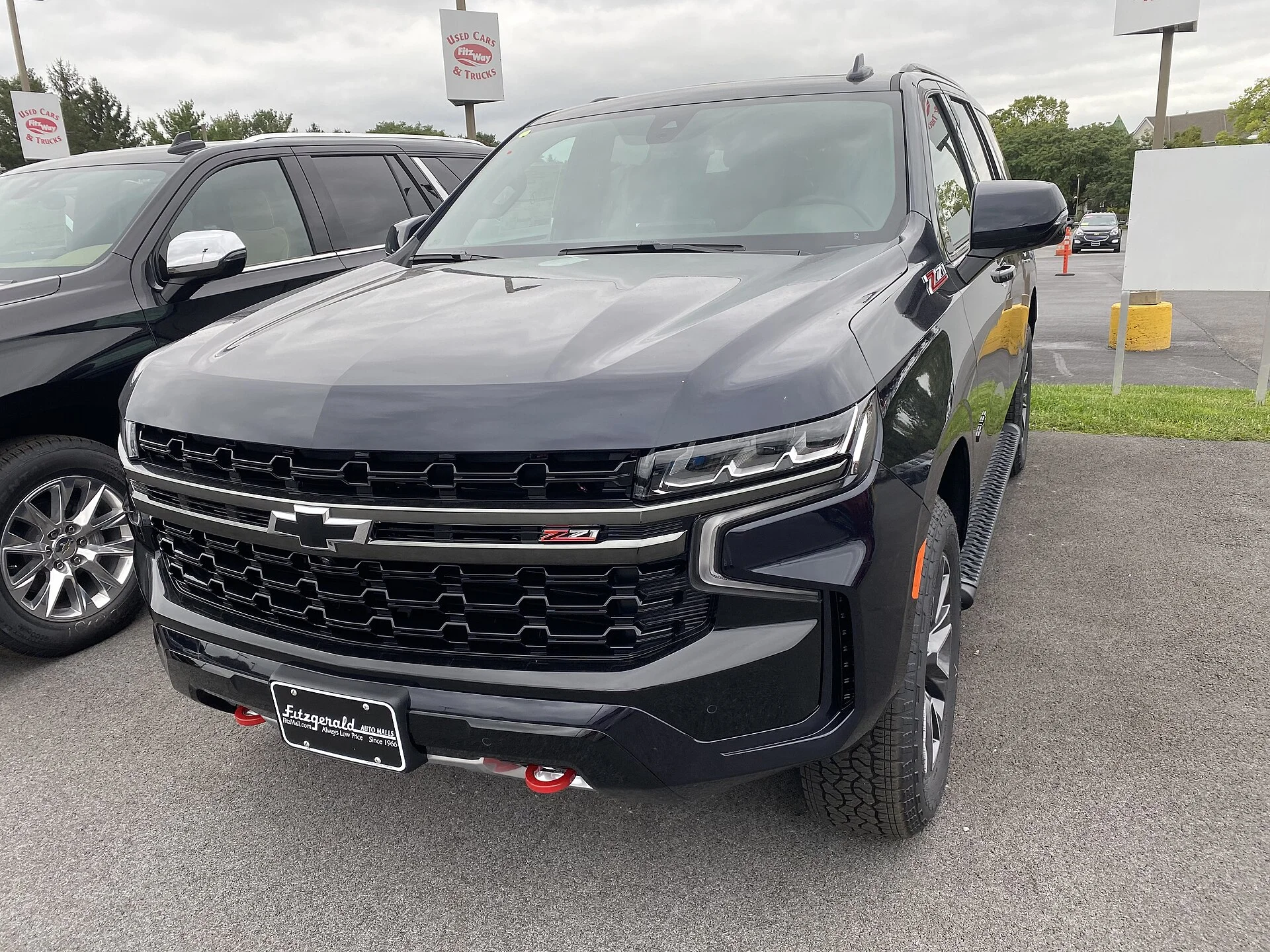
The Short Answer: The Full-Size Bed the Compacts Can't Offer
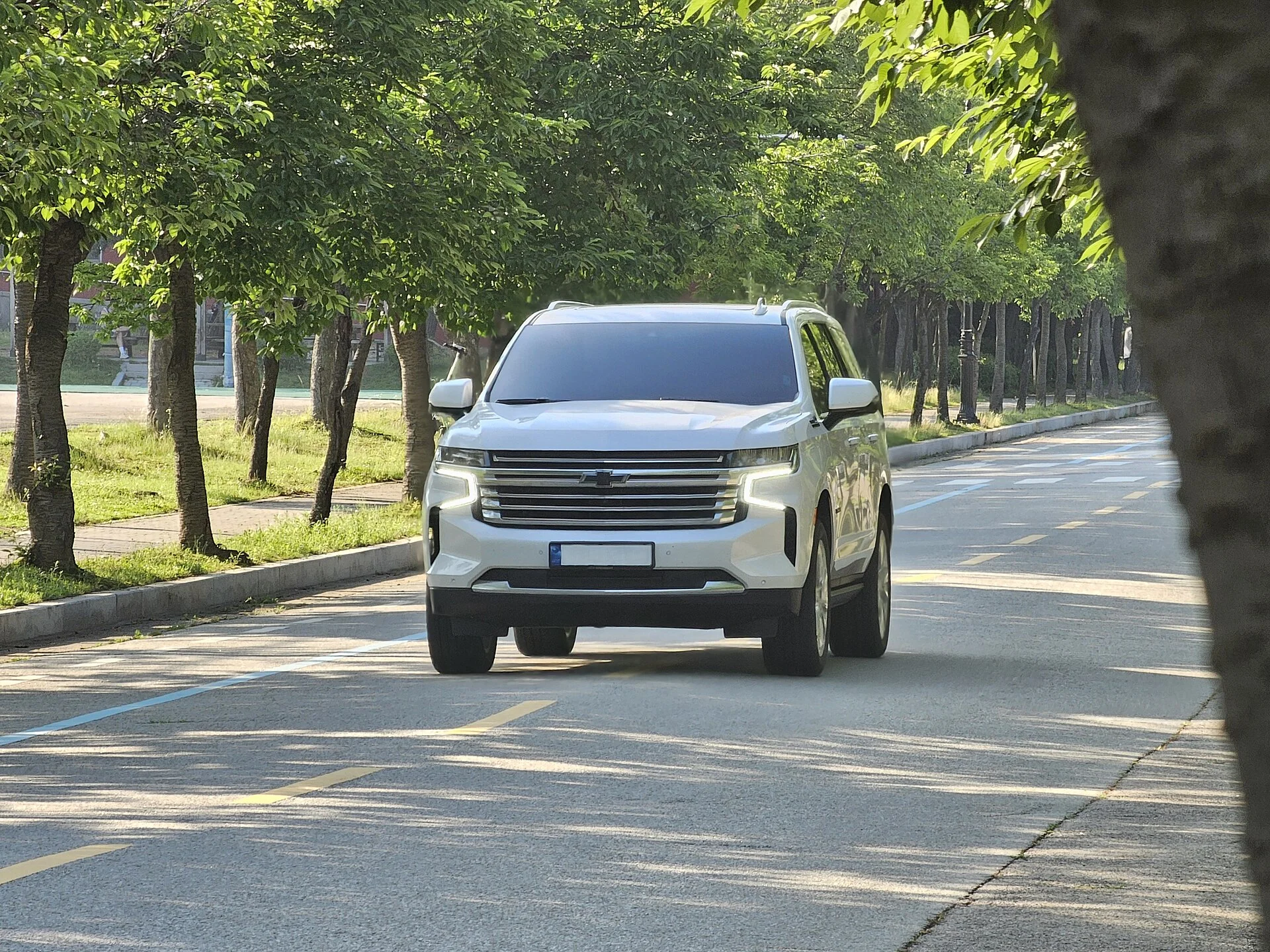
Most crossovers make you choose between reaching a winter site and sleeping well once you stop. The Chevy Tahoe refuses that trade. It is a full-size, body-on-frame SUV with a low, flat load floor and enough length to lay two adults out flat - the thing a CR-V or a Forester simply cannot do. If your winter camping is a couple, not a solo trip, that changes everything.
With both the second and third rows folded, the Tahoe offers 122.9 cubic feet of maximum cargo volume, and the independent rear suspension gives it a low, flat cargo load floor rather than a stepped, humped one. That combination is rare and valuable: a genuinely level deck long enough for a real bed, in a vehicle that also gets you to the site.
The honesty a long-trip camper owes you is the cost. This capability comes with a 5.3-liter V8 rated at 15 mpg city, drawing from a 24-gallon tank. The Tahoe is not efficient, and on a cold multi-day trip you plan fuel more carefully than you would in a crossover. The space is the point; the thirst is what you pay for it.
Why This Is the One That Sleeps Two Flat
The single reason the Tahoe stands out for winter camping is the sleeping deck. The Tahoe's independent rear suspension gives it a low, flat cargo load floor, and with the rear rows folded that floor is long enough to lay out a full or queen air mattress for two sleepers. Nice in a driveway is easy; a flat bed for two a long way from the nearest town is the real test, and this vehicle passes it. Spend enough winters sleeping in vehicles and you learn that rest is a safety system, not a luxury - a cramped, angled bed on a sub-freezing night leaves you stiff and slow to react on icy roads the next morning, while the Tahoe's flat deck lets two people sleep like they mean it.
The numbers back the feel. A queen mattress is 80 inches long and 60 inches wide, and the Tahoe's 122.9-cubic-foot cargo bay is among the largest in a non-full-size-truck SUV for accommodating it. You are not diagonal-sleeping or dangling feet over a tailgate - you are lying flat, side by side, the way you would at home.
That matters more in winter than any other season. Cold nights are long, and a poor sleeping position steals rest you need to stay warm and alert the next day. The Tahoe removes the compromise that defines small-vehicle winter camping, which is why couples who camp in the cold keep gravitating to full-size SUVs. The Tahoe is one of the most livable of them.
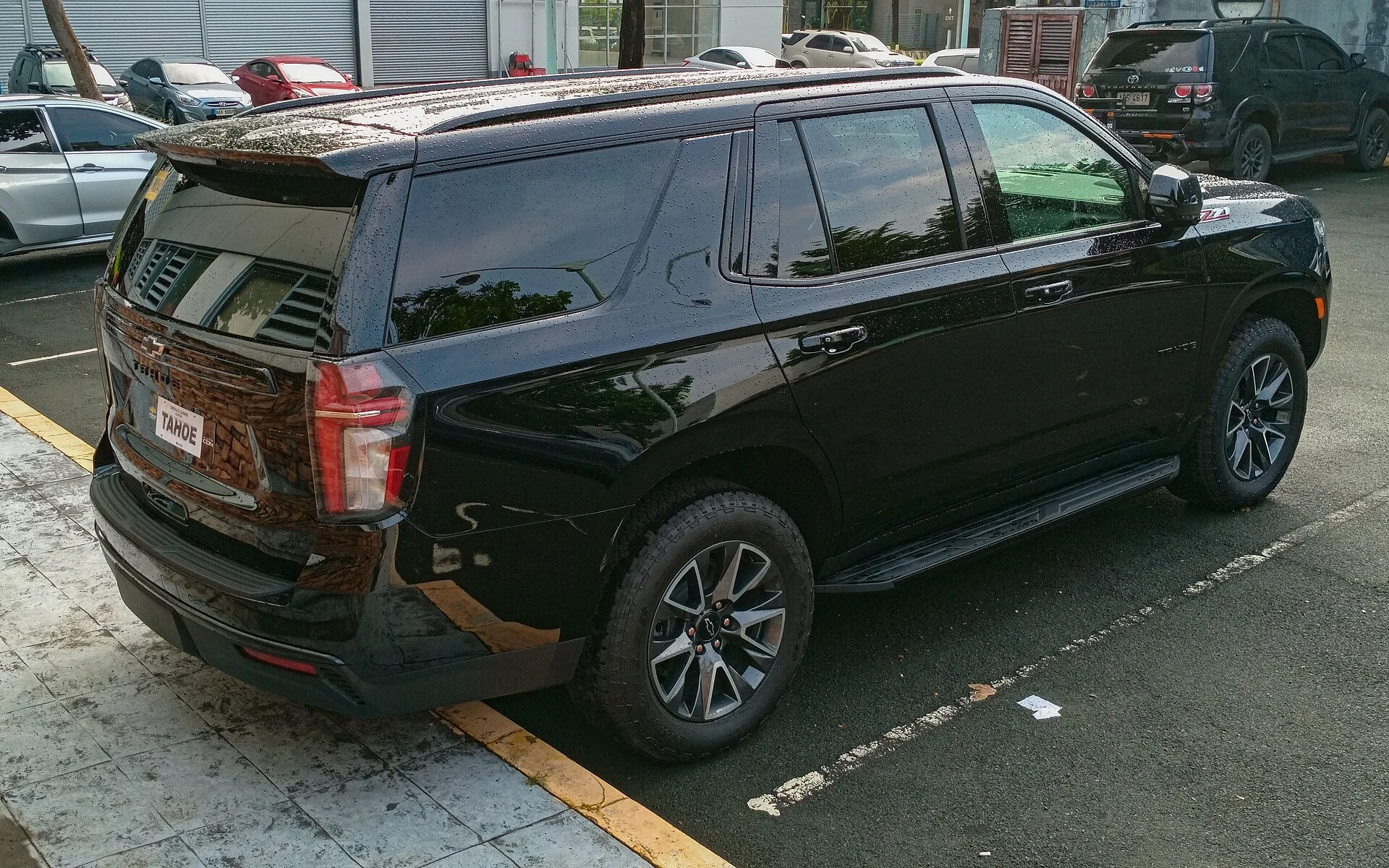
Getting There: V8 Grunt, 4WD, and Honest Clearance
A great bed is worthless if you can't reach the site, so start with the drivetrain. The Tahoe's standard engine is a 5.3-liter V8 producing 355 horsepower at 5,600 rpm, with an available 6.2-liter V8 making 420 horsepower. That is real grunt for pushing through unplowed snow and hauling a heavy vehicle up a slick grade without straining.
Four-wheel drive is where the trims diverge, and it's worth knowing which you have. The Tahoe's four-wheel-drive LS, LT, and RST trims use a single-speed Autotrac transfer case, while the Z71, Premier, and High Country 4WD models use a two-speed Autotrac transfer case with four-high and four-low ranges plus neutral-tow capability. For deep-snow campsite approaches, the two-speed case with a low range is the meaningful upgrade.
Clearance is the honest limiter. The Tahoe has 8.0 inches of ground clearance on most trims, and the Z71 and some off-road-oriented trims raise that to about 8.4 inches. That's decent for a full-size SUV but not extreme, and the Tahoe is a long, wide vehicle, so tight snow-narrowed trails are harder to thread than in something compact. It reaches most winter sites easily; it just isn't a rock crawler.
The Trade-You-Pay-For: 15 MPG and a 24-Gallon Tank
Here's the failure mode that strands the unprepared: running a thirsty V8 low on fuel far from a station in the cold. With the 5.3-liter V8 and rear-wheel drive, the Tahoe is EPA-rated at 15 mpg city and 20 mpg highway. That is genuinely poor economy, and winter driving - cold starts, snow resistance, idling for heat - only makes real-world numbers worse.
The saving grace is the tank. The Tahoe has a 24-gallon fuel capacity, and that large tank supports long idle-heat sessions between refuels during cold nights, as well as real highway range despite the thirst. Twenty-four gallons is a meaningful buffer, but it demands respect: you plan fill-ups around a route, not on a whim, and you never let a snowy detour eat your margin.
If efficiency is a priority, there's a genuine alternative in the lineup. The Tahoe's 3.0-liter Duramax turbo-diesel inline-six produces 277 horsepower and is rated up to about 21 mpg city and 28 mpg highway in rear-wheel drive, the most efficient Tahoe powertrain. For a long-distance winter camper who lives with the vehicle's size, the diesel meaningfully softens the one real weakness.
The Flat Floor: A Real Two-Person Sleeping Deck
Back to the reason you'd choose a Tahoe: the deck. Behind the second row the Tahoe provides 72.6 cubic feet, and behind the third row it still has 25.5 cubic feet, but the sleeping configuration is both rows folded for the full 122.9 cubic feet. The Tahoe's third-row seat is a 60/40 split-folding bench, which also lets you keep a passenger seat up and still have a long partial bed.
What makes the Tahoe's floor special isn't just size - it's flatness. Many SUVs fold to a stepped or sloped surface that needs foam mats or plywood to level. The Tahoe's independent rear suspension gives it a low, flat load floor, so the folded deck is genuinely close to level out of the box, which means less platform-building and more sleeping.
Low also means easy in-and-out, which matters when you're climbing into a bag in the cold at night and out of it in the dark before dawn. A high, awkward load floor makes every entry a chore; the Tahoe's low, flat deck is one of the more civilized cargo bays to actually live in. That livability is the quiet reason it's a favorite for cold-weather couples.
Mattress Sizing in a Standard Tahoe
The Tahoe's flat, low load floor with the rear rows folded is long enough to lay out a full or queen air mattress for two sleepers - which is the headline, but the standard-length Tahoe has a nuance worth stating. A full-size air mattress fits comfortably. A queen at 80 inches long and 60 inches wide works too, though width is the tighter dimension in the standard body.
If you want the roomiest possible bed, the answer is the long-wheelbase sibling. The Tahoe's own maximum is 122.9 cubic feet; step up to a Suburban-length platform and there's even more, but within the standard Tahoe, a full-size mattress is the no-compromise fit and a queen is the ambitious-but-workable one. Measure your specific mattress against the folded floor before a trip.
For two adults in winter, a full-size air mattress on the flat deck is the sweet spot: enough width for two without crowding the wheel-well line, and enough length to stretch out. Add insulation underneath - cold radiates up through an air mattress fast - and you have a genuine two-person winter bed in a vehicle that also drove you there through the snow.
Heat: The Big Tank Helps, But the Rules Don't Change
A big vehicle and a big tank tempt people into relying on engine idling for heat, and the Tahoe's 24-gallon capacity does support longer idle-heat sessions between refuels than a crossover's small tank. But the fundamental safety rules do not change with size. Idling in snow demands a clear, unobstructed tailpipe, because a drift banked against a parked vehicle can push carbon monoxide toward the cabin.
That's why idle-for-heat only works in short cycles while someone is awake, never as a set-it-and-sleep solution - a rule as true for a Tahoe as for any car. The moment the engine is running to make heat, a battery carbon monoxide alarm is mandatory. A good portable carbon monoxide detector is the cheapest insurance in the entire winter kit, and the large cabin of a Tahoe is no exception.
The cleaner path, as in any vehicle, is a dedicated vented heater. A diesel heater sips far less fuel than continuous idling and makes dry heat from sealed combustion, venting exhaust outside the sleeping space. In a cabin as large as the Tahoe's, a vented heater sized to the space is what turns a big cold box into a warm one without draining that 24-gallon tank overnight.
Insulating a Big Cabin and Beating Condensation
The Tahoe's size cuts both ways in winter. A large cabin is comfortable to move in, but it's also a lot of volume to heat and a lot of glass to lose warmth through. Insulated window covers and reflective panels cut heat loss through that glass, and on a vehicle with as many windows as a three-row SUV, covering them is one of the highest-return moves in the kit.
Condensation scales with occupants, and two people breathing in a sealed Tahoe overnight will fog the glass and dampen bedding by morning. In freezing weather a wet bag stops insulating, which is a safety issue rather than a comfort one. The fix is the same as in any vehicle: crack a window a finger's width for ventilation, and lean on dry vented heat that doesn't add moisture the way an unvented burner does.
The advantage the Tahoe has here is thermal mass and a real, sealable cabin - it's a solid steel box, not a fabric-topped one, so once it's warm and insulated it holds heat reasonably well between cycles. Cover the glass, ventilate deliberately, insulate under the mattress, and the big cabin becomes an asset instead of a liability on a long, cold night.

Remote Start, Diesel Option, and Cold-Morning Livability
The Tahoe is well-equipped for cold mornings. Remote start is standard on the 2024 Tahoe, including base models, so you can pre-warm the cabin from the bag before climbing into the driver's seat and clear frost off the inside of the glass. It's a genuine winter-livability feature, standard across the lineup, and one less thing to option or add aftermarket.
The diesel option deserves a second mention because it addresses the Tahoe's one real weakness for the long-distance winter camper. At up to about 21 mpg city and 28 mpg highway, the 3.0-liter Duramax turns the thirstiest full-size platform into a genuinely tourable one, extending range on that 24-gallon tank and easing the fuel-planning burden on cold, remote trips.
Everything else about living in a Tahoe in winter is straightforward. It's offered in both rear-wheel-drive and four-wheel-drive configurations, seats up to nine when you need people-hauling capacity, and folds down to a flat two-person bed when you don't. As a vehicle that does daily family duty and doubles as a serious cold-weather camper, it covers an unusually wide range.
The Verdict: The Space Is the Point, the Thirst Is the Cost
The Chevy Tahoe earns a confident yes for winter car camping, and it earns it on the one thing most vehicles can't deliver: a flat, low, 122.9-cubic-foot deck that sleeps two adults on a full or queen mattress without a fold-out trick. For a couple who camps in the cold, that is the whole ballgame, and the Tahoe is among the most livable ways to get it.
The cost is fuel. A 5.3-liter V8 at 15 mpg city is thirsty, and even the 24-gallon tank demands disciplined fuel planning on a long, cold trip. If that's a dealbreaker, the 3.0-liter Duramax diesel at up to 21 city and 28 highway is the honest fix, trading a little up-front cost for real range and easier touring.
Get there on the two-speed transfer case if your sites are deep-snow, respect the standard 8.0 inches of clearance, build almost no platform on that flat floor, and handle heat with a vented heater and a carbon monoxide alarm rather than open-ended idling. Do that, and the Tahoe is a rare thing: a vehicle that reaches winter sites and then lets two people actually sleep once they arrive. For a couple who takes the cold seriously, that rare combination of access and a real flat bed is worth the fuel bill it comes with.