The whole argument: a full-size body changes the camping math
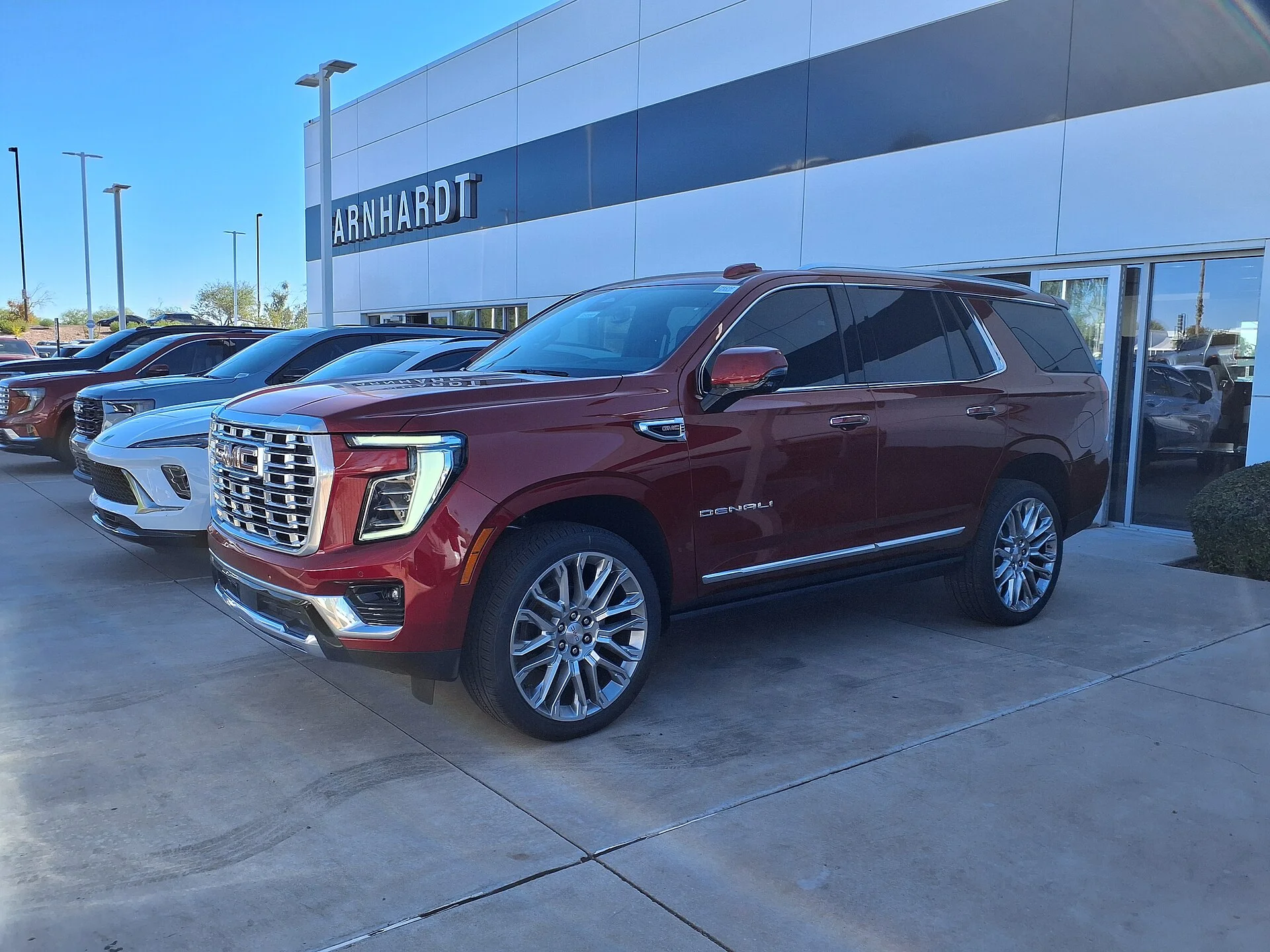
Fold the second and third rows in a GMC Yukon or a Chevy Tahoe and you get something a crossover physically cannot hand you: a flat load floor that runs past 75 inches of length, wide enough for two adults to sleep side by side without a head or a set of feet jammed into plastic. Both trucks post 122.8 and 122.7 cubic feet of maximum cargo, both tow up to 8,400 pounds, and both stand about 8.0 inches off the ground in off-road trim, per U.S. News and Edmunds. That is the entire thesis of this piece - the full-size body isn't just more cubic feet, it's the difference between sleeping diagonally in a compact SUV and sleeping flat and lengthwise, the way a bed actually works.
I'll say up front what most Yukon-vs-Tahoe comparisons bury: for camping, these two are nearly the same vehicle. They come off the same assembly line in Arlington, Texas, on the same platform, with the same powertrains and the same cargo geometry, per U.S. News. So the honest job here isn't to crown a winner between two near-identical siblings - it's to show you why a full-size rig earns its footprint at the campsite, and then to split the Yukon and Tahoe on the handful of things that genuinely differ for a camper: trim, price, and the long-wheelbase XL that only one of them offers.
Most people under-buy on size. They talk themselves into a midsize three-row because it parks easier, then spend three seasons sleeping with their knees bent. If you camp in your vehicle more than a couple of nights a year, the full-size floor is the upgrade that pays for itself - and here's the case for it.
Why sleeping length is the number that matters most
Cubic feet is the spec everyone quotes, but for sleeping it's the wrong one. What decides whether you sleep well is linear length - how many flat inches you have from the back of the front seats to the tailgate. Two adults need roughly 75 inches of clear floor to stretch out head-to-toe or lie side-by-side, and the folded floor in a standard-wheelbase Tahoe or Yukon clears that comfortably, running past six feet with the second and third rows dropped.
The reason it works is GM's independent rear suspension, which drops a low, flat load floor with only a mild seatback step - U.S. News and Edmunds both call out the flat fold. In a compact SUV you're negotiating with a floor that's too short, so you sleep on the diagonal and your feet ride up the hatch. In a full-size, you just lie down the length of the truck. That's the whole physical advantage, and no amount of clever cargo origami gives it to a smaller vehicle.
The camping question isn't 'how much will it hold' - it's 'can I lie down straight.' A full-size Yukon or Tahoe answers yes for two adults without a mattress extender, a hammock, or a tailgate tent. That single fact is why big-rig campers stop cross-shopping crossovers.
The cargo numbers, and what they buy you at camp

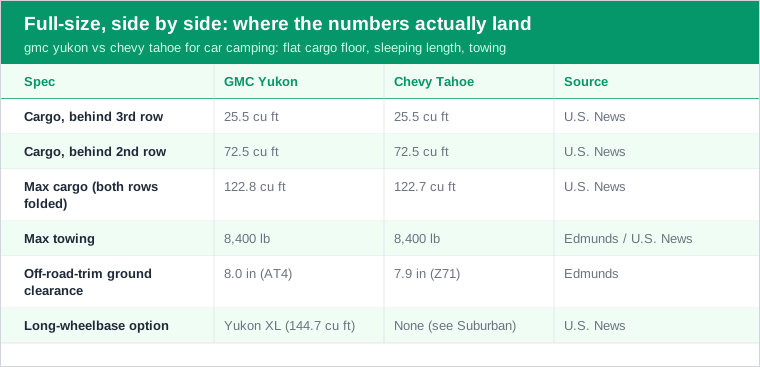
Here are the volumes that matter, and they're effectively a tie because the two share a body. Both give you 25.5 cubic feet behind the third row, 72.5 cubic feet behind the second row, and a maximum of 122.8 cubic feet (Yukon) or 122.7 (Tahoe) with both rear rows folded, per U.S. News. A tenth of a cubic foot between them is rounding noise - ignore it.
What those numbers translate to on a trip:
- Third row up (25.5 cu ft): a full family of passengers plus a weekend's worth of soft bags and a cooler behind them - more than most midsize SUVs give you with a row folded.
- Second row folded (72.5 cu ft): the sweet spot for a two-adult camp - bed built on the floor, second row down, front seats holding the day gear.
- Everything folded (122-plus cu ft): the full sleep-flat platform, six-foot-plus floor, with room to stack bins along the flanks and still lie straight.
The takeaway isn't 'the Yukon wins by 0.1' - it's that both land in a cargo class the midsize field can't reach. When you're deciding between these two, the cargo sheet is a wash. Save your decision-making for the things that actually differ.
Towing: 8,400 pounds either way
If your camping involves a trailer, the full-size platform is again the real story. Both the Yukon and the Tahoe tow up to 8,400 pounds with the 5.3L V8 and the Max Trailering Package, per Edmunds and dealer spec sheets; the available diesel rates around 8,200 pounds. That's genuine travel-trailer territory - the kind of number a three-row crossover can only dream about, since most of that field tops out near 5,000 pounds.
For a camper deciding between the siblings, towing is another tie: same engines, same frame, same rating. What matters is that 8,400-pound ceiling gives you real margin. You can pull a mid-size travel trailer or a loaded car hauler and still have headroom on a grade, instead of running maxed out the way a smaller SUV would. If a trailer is in your future, I break down the full-size math in my Yukon travel-trailer towing guide.
One honest caveat that applies to both: the tow rating assumes the factory package and disciplined loading. A full-size hauling a family, a roof box, and a week of gear is already carrying real payload before the trailer hitches on, and payload runs out before tow capacity does. Weigh the whole rig, not just the trailer.
The fork that only the Yukon offers: the long-wheelbase XL
Here's the first difference that genuinely changes the camping calculus, and it's the biggest one on the table: the Yukon comes in a long-wheelbase XL, and the Tahoe does not. Chevy's long-body full-size is a separate model, the Suburban. So if you want the stretched platform wearing a GMC badge, the Yukon XL is your only path.
The XL numbers are a serious step up for a camper. Where the standard Yukon gives 25.5 / 72.5 / 122.8 cubic feet, the Yukon XL jumps to 41.5 behind the third row, 93.8 behind the second, and 144.7 cubic feet fully folded, per U.S. News. That extra roughly 22 cubic feet at max is almost all length - the XL's floor stretches well past seven feet, enough that a taller camper stops worrying about the tailgate entirely.
If you're over six feet tall or you camp with two full-size adults, the long-wheelbase body is the upgrade I'd chase hardest. The standard truck sleeps two; the XL sleeps two with elbow room and a gear garage at the foot of the bed.
Cross-shopping the long bodies is a whole decision of its own - if that's you, my Yukon vs Suburban camping comparison runs the standard-vs-XL length question head to head, and the Suburban camping setup guide shows what the longest GM floor actually does at camp.
Where they split: Yukon plush, Tahoe value
Now the tiebreaker that decides most real purchases, and it isn't a spec - it's positioning. GMC pitches the Yukon as the premium full-size; Chevy pitches the Tahoe as the value one. The Tahoe starts around $59,500 and the base Yukon around $69,600, per U.S. News - though match the trims and U.S. News notes the Yukon can actually come out a few hundred dollars cheaper, which is why you shop the specific trim, not the badge.
What the extra Yukon money buys, camping-relevant:
- Standard comfort: even the base Yukon Elevation includes heated first- and second-row seats, a heated wheel, and leather-appointed seating, per U.S. News - features that cost you a trim jump on the Tahoe. Warm seats matter on a 40-degree camp morning.
- Upmarket options: the Yukon offers Night Vision and an 18-speaker Bose system at upper trims that the Tahoe doesn't sell at any price. Night Vision is a genuinely useful thing on a dark forest-road approach.
- Tahoe's counter: a lower entry price and a slightly higher predicted-reliability score (81 vs 78 out of 100, per U.S. News). The value case is real.
For camping capability specifically, none of this moves the needle - the floor and the tow rating are identical. This is a comfort-and-budget fork: pay up for the Yukon's standard luxury, or bank the savings with the Tahoe and put the difference toward gear.
The off-road trims: AT4 vs Z71 for rough approaches
Camping often means the last few miles are dirt, so the off-road trims deserve a look - and here the split is name-only. The Yukon's off-road trim is the AT4; the Tahoe's is the Z71. Both add a two-speed transfer case, skid plates, all-terrain tires, and an available adaptive air suspension that lifts the body up to two inches to clear obstacles.
The clearance numbers are close enough to call a tie: the Yukon AT4 sits around 8.0 inches of ground clearance and the Tahoe Z71 around 7.9 inches, per Edmunds and GM spec sheets, with air suspension adding roughly two more inches on demand. That's enough for maintained forest roads, gravel, washboard, and moderate ruts - not rock-crawling, but that's not what a full-size camper is for anyway.
Pick the off-road trim on the same logic as the rest of the truck: AT4 if you want the GMC's plusher cabin along with the hardware, Z71 if you want the capability at Chevy's lower price. The dirt-road ability is a wash between them.
Fuel and the honest cost of choosing big
I'm the full-size believer, but I won't pretend the footprint is free. The Yukon and Tahoe are thirsty - the gas V8 lands around 16 mpg combined, and even the efficient available diesel tops out near 23 mpg combined, per Edmunds. On a long camping road trip that's a real line item, and it's the single biggest reason to be honest with yourself about how often you'll actually use the size.
So here's the buying rule, stated plainly:
Buy the full-size if you camp in the vehicle more than a handful of nights a year, tow anything meaningful, or travel with a full family. If you camp twice a summer and never tow, a midsize three-row will sleep you fine and save you real money at the pump - and I'll tell you that even though it costs me the sale.
The diesel is the move for high-mileage campers who tow: it recovers a chunk of the fuel penalty and pulls with more low-end torque, at the cost of a higher up-front price. For occasional weekend duty, the gas V8 is the simpler, cheaper buy.
Put real numbers on it. A 1,200-mile round trip to a national park runs roughly 75 gallons in the gas V8 at 16 mpg combined, versus about 52 gallons in the diesel at 23 mpg combined, per Edmunds - a 23-gallon swing per trip that a frequent traveler recovers over a few seasons. That's the full-size tax, and I'd rather you see it clearly up front than discover it at the third fuel stop. The size is worth paying for when you use it; it's just money burned when you don't.
One sleep kit fits both - and it's a big one
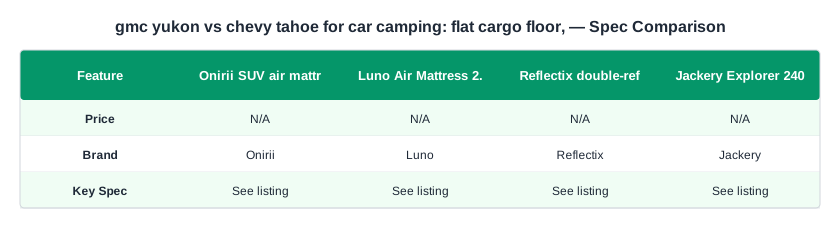
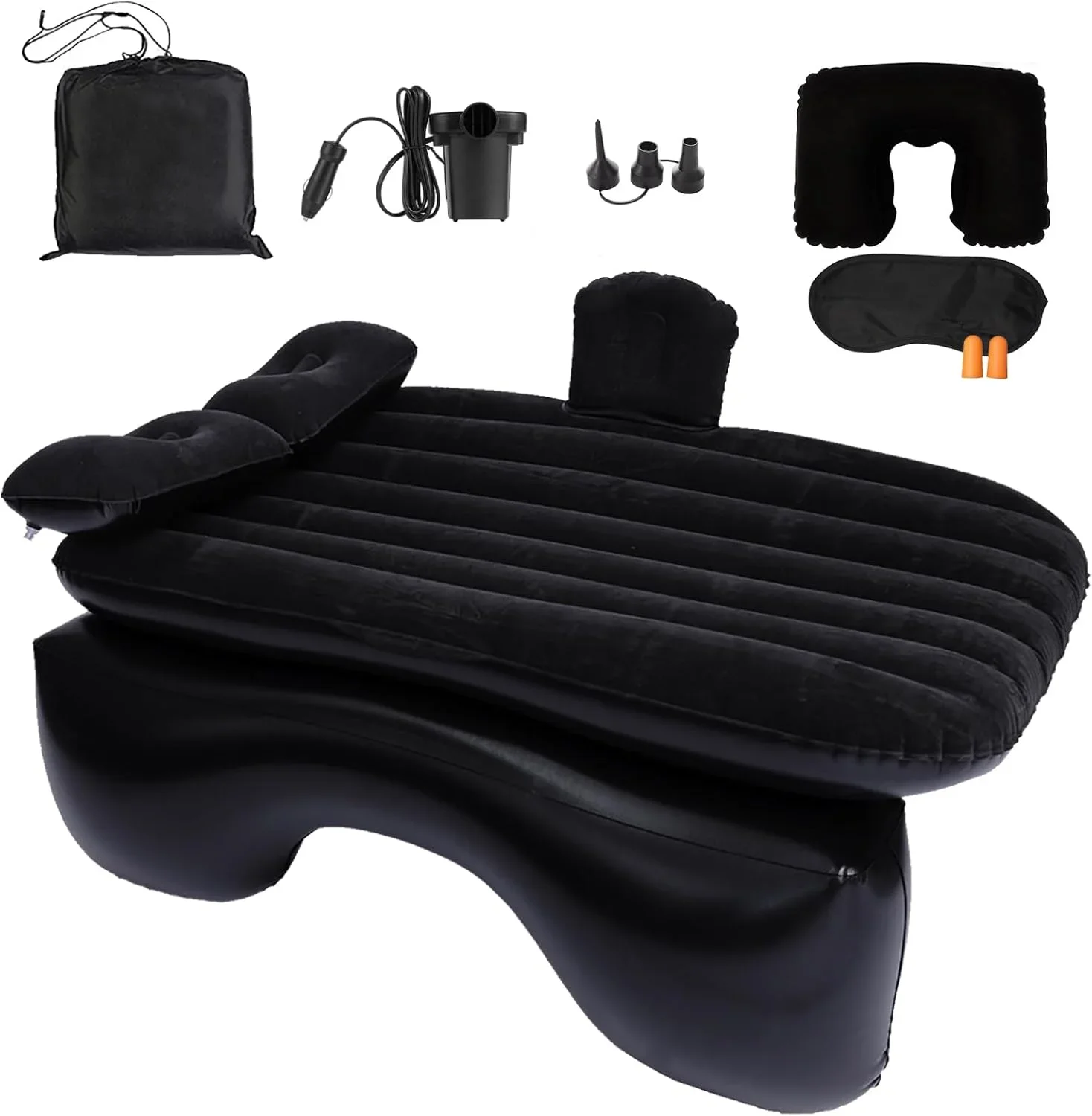
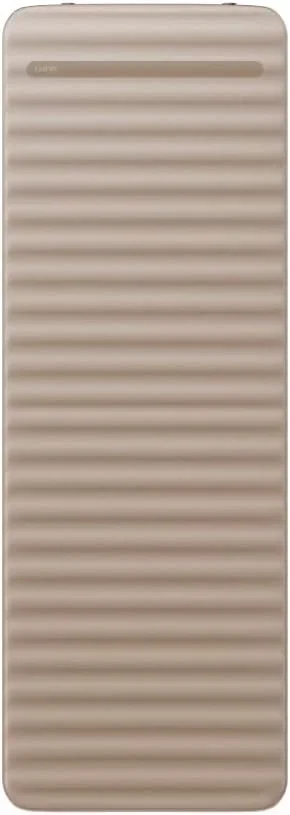
The upside of a full-size floor is that the kit is simple: you have room to spare, so nothing has to be clever. Both trucks fold to the same wide, flat bay with the same mild seatback step, and both take the identical short list. Start with the mattress - an SUV-shaped air mattress like the Onirii SUV air mattress fills the folded bay and smooths the step so two adults lie flat across the full length of the floor. If you camp monthly rather than once a season, the Luno Air Mattress 2.0 is the buy-once upgrade for the same footprint.
The rest of the full-size build:
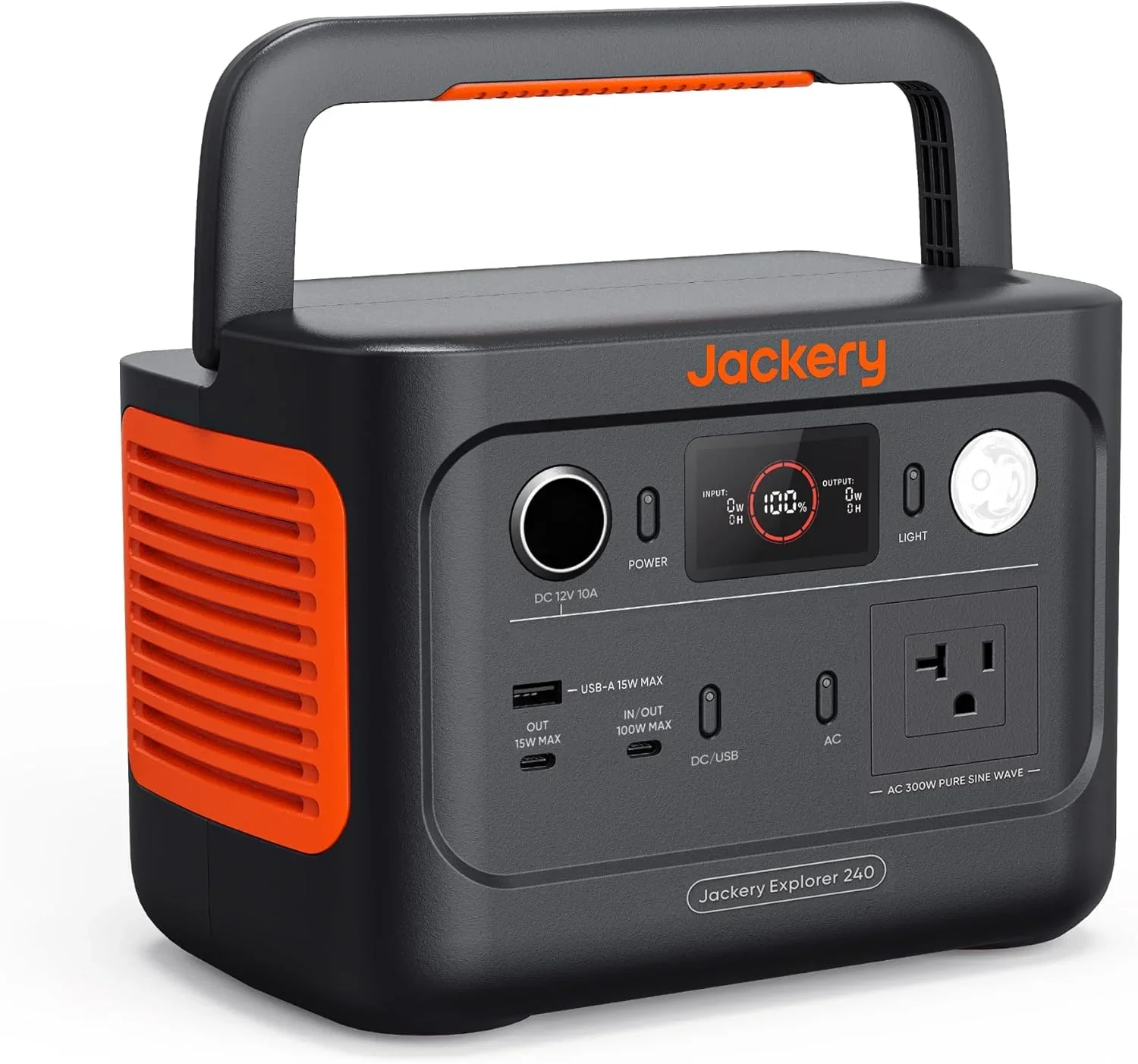
- Power: a Jackery Explorer 240 v2 power station runs a fan and charges phones and lights overnight without touching the starter battery - top it off the 12V socket between camps.
- Windows: the full-size greenhouse is large, so cut covers from Reflectix double-reflective insulation once and label them; mesh at two opposite windows gives you the cross-flow a big cabin needs.
- Gear garage: with a six-foot-plus floor you have length to spare - keep the day bins at the foot of the bed instead of hauling them outside every night.
For the exact folded dimensions and where the seatback step lands, my Yukon cargo measurements guide lays out the numbers you'll build the bed around - and every one of them applies to the Tahoe too.
The verdict: buy full-size on the platform, split them on trim
My honest verdict as the full-size believer: the Yukon-vs-Tahoe question is the small one, and the full-size-vs-everything-smaller question is the big one. Both give you the same 122-plus cubic feet, the same 8,400-pound tow rating, and the same six-foot-plus flat floor two adults sleep on lengthwise. On camping capability, they are a genuine tie - because they're the same truck with different grilles.
So decide on the things that actually differ:
- Want the long floor? Only the Yukon offers the XL (144.7 cu ft) - the Tahoe's long body is the separate Suburban.
- Want standard luxury? The Yukon's base trim brings heated seats and leather that cost extra on the Tahoe, plus exclusive Night Vision.
- Want the value? The Tahoe's lower entry price and slightly higher reliability score make it the budget-smart full-size.
Cross-shop the specific trims, take the better deal, and don't lose sleep over the badge - you literally cannot buy the wrong camping platform here. Just make sure it's a full-size platform. Most people under-buy on size and regret it by the second night; the Yukon and Tahoe are the fix, and the only real question left is which grille you'd rather look at over a decade of campfires.