
The Short Answer: Yes, but the Year and Box Decide the Bed
The Chevy Colorado is a good winter car-camping truck, and whether you can lie fully flat in the bed comes down to two things most buyers overlook: the model year and the box length. The catch is real and worth stating first, because it is easy to get wrong when you shop by trim and horsepower instead of by where you will sleep.
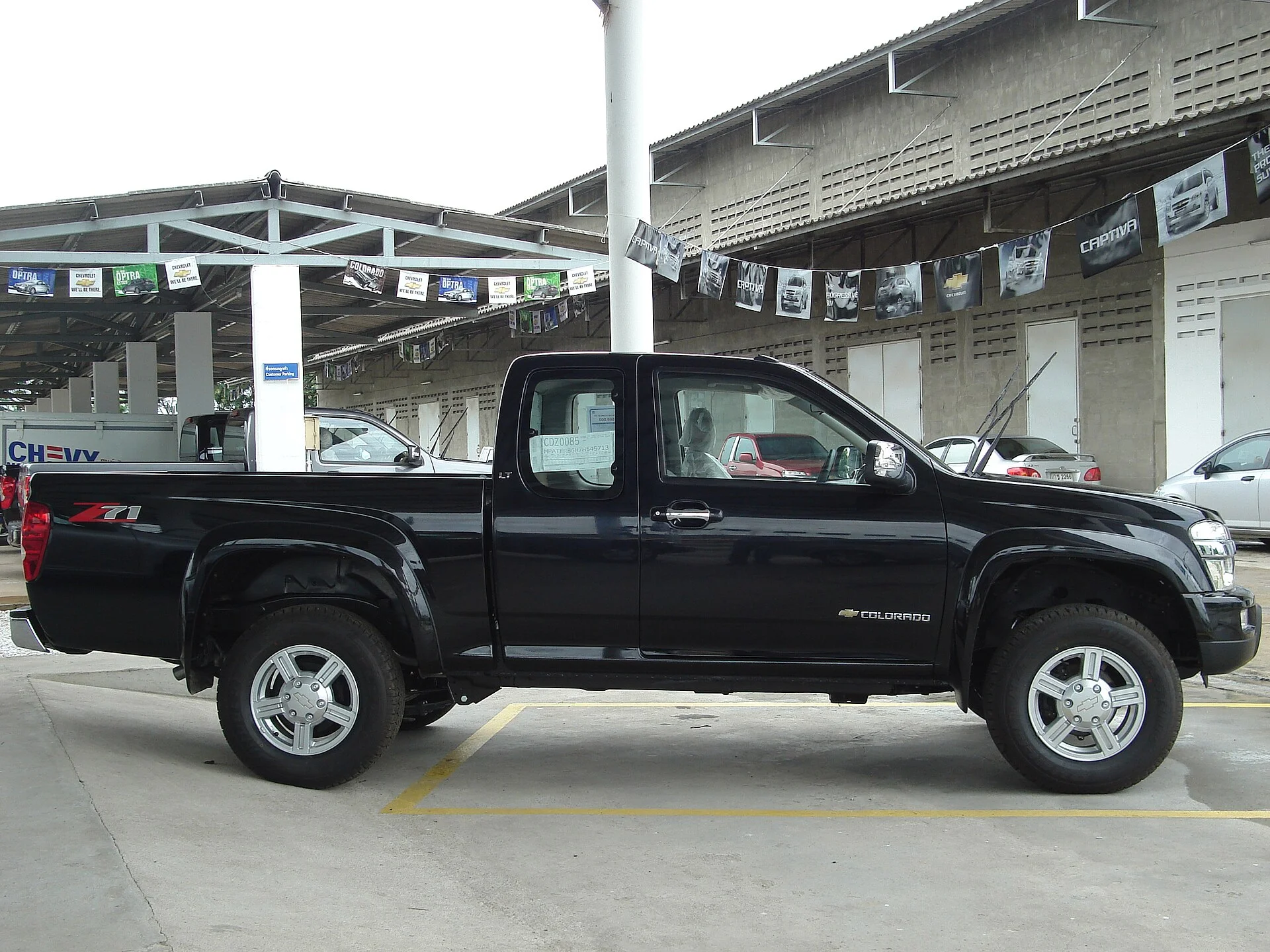
Like any midsize truck, the Colorado's cab is a warm-up shelter, not a bed, so you sleep in the box. For winter camping the Colorado truck bed is the better sleep space than the cab, because the crew-cab seats do not fold into a flat bed. That means bed length is what decides whether you stretch out flat or have to angle, and bed length depends heavily on which Colorado you are looking at.
The 2nd-generation Colorado offered a long box that lies flat for most adults; the current 3rd-generation truck does not offer it at all. This guide walks that year-and-box decision, the topper you need as winter shelter, the insulation and pad R-values, the safe idling rules, and one skeptic's caveat about remote start that trips up base-trim buyers expecting to warm up before bed.
The figures are the Colorado's published bed and clearance dimensions plus standard cold-weather insulation and safety facts, with owner practices flagged as such. Where a spec depends on generation or trim, we say so, because with the Colorado those details change the answer more than usual.
The Box-Length Trap: Long Box vs Short Box
Here is the detail that decides your comfort. The 2nd-generation Chevy Colorado, sold from 2015 to 2022, came with a short box at 61.7 inches or a long box at 74 inches. That 74-inch long box is long enough for most adults to lie fully flat in the bed, which makes the older long-box truck the standout winter sleeper in the lineup.
The current truck changes the math. The 2023-and-newer 3rd-generation Colorado is sold only as a Crew Cab with the short box, which measures about 61.7 inches long. There is no long-box option anymore, so a new Colorado tops out at a bed too short for most adults to lie fully flat, forcing a diagonal layout or a bed extender in winter.
This is exactly the kind of spec that a horsepower-and-trim shopper misses and a careful camper checks. If lying fully flat in the bed matters for your winter camping, the 2015-2022 long-box Colorado is the truck to seek out, and it is a used-market decision, not a new-truck one. The Colorado bed-dimensions guide lays out both boxes so you can plan the layout.
The honest read: verify the box before you buy for winter bed-sleeping. A 74-inch long box lets you stretch out; a 61.7-inch short box, whether on an older truck or every 2023-plus model, means angling or an extender. It is the single most important dimension for the Colorado, and it is the one the marketing never leads with.
The used-market implication is worth spelling out. Because the long box vanished after 2022, a clean 2015-2022 4WD long-box Colorado is genuinely more valuable to a winter camper than a newer short-box truck, despite being older. If flat bed-sleeping is your goal, do not assume newer is better here; the older truck holds the one dimension the new one cannot offer at any trim or price.
Why the Bed, Not the Cab
The reason you sleep in the box is structural. The Colorado Crew Cab seats five, but the crew-cab interior is a fallback shelter, not a flat sleeping surface for winter nights, because the crew-cab seats do not fold into a flat bed. You can wait out weather reclined in the cab, but you cannot lie flat there, so the bed is your bedroom.
That is fine for warmth, with one firm requirement. A capped truck bed is a small, low, enclosed space that holds heat well, and overnight the temperature inside a capped truck bed typically tracks within about 10 to 15 degrees of the outside air. Sealed and insulated, the box runs meaningfully warmer than the open night.
The requirement is the cap. Sleeping in the Colorado bed usually needs a cap or topper plus a flat platform, since the open box gives no wind or snow protection. In winter that hard-sided cap is not a convenience; it is the wall between you and the storm, and without it the bed is just a cold metal tray exposed to the sky.
So the Colorado's winter setup is a capped box, ideally the 74-inch long box, with a flat platform and a warm sleep system inside. The cab becomes your warm-up room and gear store. The Colorado camping guide covers the full build around that arrangement.
Getting There: 4WD and Ground Clearance
A winter truck has to reach the cold sites, and the Colorado can, if you spec it right. Four-wheel drive is optional on the WT and LT trims and standard on the Z71, Trail Boss, and ZR2, so traction is a trim decision rather than a given. For snowed-in access roads, confirm the truck actually has 4WD, because a two-wheel-drive WT will not get you far in snow.
Clearance climbs with the trim. The 2nd-gen Colorado has about 8.4 inches of ground clearance, rising to 8.9 inches on the ZR2, while the 2023-plus Trail Boss offers about 9.5 inches for deeper snow and rougher access roads. The higher-clearance trims genuinely break trail where a car-based SUV cannot, opening backcountry winter sites.
The pattern is that the Colorado's winter capability tracks its trim. A 4WD Z71, Trail Boss, or ZR2 with 8.9 to 9.5 inches of clearance is a real break-trail winter truck; a two-wheel-drive base WT with 8.4 inches is closer to a reach-the-plowed-lot vehicle. Match the trim to how deep into the snow you actually go.
This is why the skeptic checks the window sticker rather than the badge. Two Colorados can look alike and reach very different places in winter depending on drivetrain and clearance, so verify both before you count on the truck to get you to a remote cold-weather site and back.
The Remote-Start Caveat Base Buyers Miss
Here is the assumption worth challenging: that any modern truck lets you warm up before you climb out into the cold. On the Colorado, that is trim-dependent. Remote start is not standard on the base Colorado WT trim, so cheaper trucks may need a dealer-added key fob to warm up before sleeping or before rising.
That matters more in a truck than an SUV, because your bed is separate from the cab's heater. The winter workflow, warm the cab with a short burst, then retreat to the bed, leans on being able to trigger that heat conveniently. A common cold-weather approach is a 10-to-15-minute heater burst in the cab to warm up, then shutting the engine off to sleep, and without remote start you are doing that from the driver's seat, not the bag.
The skeptic's takeaway: do not assume the Colorado you are buying warms up remotely. On a base WT it may not, and adding a factory-compatible fob later is an extra step and cost. If the pre-warm convenience matters for your winter camping, confirm remote start is present or budget to add it, rather than discovering the gap on a cold morning.
It is a small feature that reveals a bigger habit: with the Colorado, the base trims quietly omit conveniences that higher trims include, from 4WD to remote start. Read the specific truck's equipment, not the model's reputation, and you avoid the winter surprises that catch trim-blind buyers.
Insulating the Capped Box
A cap seals the box but does not insulate it, so you add insulation the same way you would in any vehicle. Reflectix reflective insulation adds about R-1 of insulation per layer over a window, costs about $18 a roll, and is enough to cut covers for most of a vehicle's glass. The double-bubble material is about a quarter-inch thick, so it cuts stiff and holds itself in a cap window frame.
Target the cap's glass and the front bulkhead. A topper's side and rear windows lose heat like any glass, so Reflectix panels cut to those openings keep the box's warmth in. The bed's metal floor is the other cold surface, and that is your sleeping pad's job from below, working with the window panels to seal the box thermally against the cold.
The result matches any insulated space: warmer surfaces hold heat and reduce the cold spots where breath condenses. An insulated capped box running within 10 to 15 degrees of outside is a genuinely warm place to sleep on a cold night, especially with a proper pad and bag inside it.
Cut and label the panels at home, since fitting stiff Reflectix in a cold, dark box is far worse than pressing pre-sized covers into place. A labeled set turns cap insulation into a two-minute nightly step you actually do rather than skip when your hands are numb, which is when insulation matters most.
The Sleep System for a Cold Box
The metal bed floor is a heat sink, so insulating from below is the priority in a truck. A winter sleeping pad should have an R-value of R-5.0 or higher to block cold coming up from below, and over a bare metal box floor exposed to cold air beneath, treat R-5.0 as your minimum rather than your goal.
Choose the pad for the expected cold. The Exped MegaMat sleeping pad has an R-value of 8.1 and is rated to insulate down to about -40 degrees for hard winter nights, while a closed-cell foam pad provides roughly R-3.6 to R-4.0 of insulation per inch. Layering foam under an air pad both lifts your total R-value and shields the air pad from the cold metal, a cheap and effective winter stack.
The bag and cabin finish the system. With the capped box holding within 10 to 15 degrees of outside, a bag rated for the night's low over an R-5.0-or-higher pad handles most winter camping. The insulation, the pad, and the bag each do part of the job; skip any one and the cold metal floor wins.
Build the full stack, an R-5.0-plus pad, ideally foam plus air, a properly rated bag, and an insulated capped box, and the Colorado bed is warm through genuinely cold nights. It scales with more pad and a warmer bag for the harshest conditions, all without touching the truck itself.
Idling Safely and Managing Moisture
The safety rules are absolute in any vehicle, and a truck's separate cab does not exempt you. Carbon monoxide is an odorless, colorless gas, and the CDC warns never to idle a vehicle with a snow-blocked exhaust, because carbon monoxide can build up inside within minutes. Clear snow from around the tailpipe before any idling, every time, without exception.
Keep idling short and vented. Use a 10-to-15-minute heater burst in the cab to warm up, then shut the engine off to sleep in the box, and whenever you idle, crack a window about every 10 to 15 minutes to vent any buildup. Never sleep with the engine running. Because your bed is the capped box, not the running cab, the Colorado separates you from the exhaust better than a running SUV cabin would, but the rules still stand.
Moisture is the other overnight problem. One sleeping person exhales roughly a liter, about a quart, of water vapor overnight, which condenses on cold metal and glass. In a small capped box that vapor lands fast on the cap windows and walls, so crack a window or vent slightly while you sleep, which reduces condensation from your breath and lowers carbon-monoxide risk at once.
Insulation helps moisture control too, since Reflectix over the cap glass keeps those surfaces warmer and reduces where breath condenses. Pair covered windows with a cracked vent and you manage both the cold and the damp, keeping your sleep system dry and warm across a multi-night winter trip.

Who the Colorado Suits in Winter
The Colorado winter-camps best for the camper who wants a capable break-trail truck and will match the year, box, and trim to their needs. A 4WD, higher-clearance trim reaches snowed-in sites, and a capped long-box bed with a good sleep system is warm and quiet. For backcountry winter access with careful spec-checking, it is a strong choice.
It suits buyers who can find or already own the 2015-2022 long-box Colorado, since its 74-inch bed is the one that lets most adults lie fully flat. If you want a new 2023-plus Colorado, accept the short 61.7-inch box and plan a diagonal or a bed extender, because the long box is simply not offered anymore.
It suits base-trim shoppers less well without homework, because 4WD and remote start are not standard on the WT, and both matter in winter. A skeptic buying a Colorado for cold-weather camping checks the drivetrain, the clearance, the box length, and the remote start on the specific truck rather than trusting the model's reputation to cover them.
If sleeping inside a warm cabin without a topper appeals more than break-trail capability, a fold-flat SUV is a better fit than any truck. The Colorado trades that convenience for access and payload. Check the Colorado outlet and fuse-map guide to plan bed power, and the Colorado ground-clearance guide to match the trim to your terrain.

The Verdict: A Capable Winter Truck, If You Check the Box
Is the Chevy Colorado good for winter car camping? Yes, as a break-trail truck whose bed is the sleeping space, provided you check the year, box, and trim. A 4WD Z71, Trail Boss, or ZR2 with 8.9 to 9.5 inches of clearance reaches snowed-in sites, and a capped box with a flat platform makes a warm, sealed bedroom within 10 to 15 degrees of outside once insulated.
The Colorado's defining catch is the box length. The 2015-2022 long box at 74 inches lets most adults lie fully flat; the 2023-plus truck offers only the 61.7-inch short box, so a new Colorado forces a diagonal or an extender. Verify the box, and confirm 4WD and remote start too, since the base WT omits both and both matter in the cold.
Build the winter setup, a topper as mandatory shelter, Reflectix over the cap glass, an R-5.0-or-higher pad on the metal floor, and a properly rated bag, and idle safely in short bursts with the tailpipe cleared. Do that on the right Colorado, ideally a 4WD long-box truck, and it is a capable, warm winter camper that reaches the quiet snowed-in places an SUV cannot. The homework at purchase is what separates a great winter Colorado from a frustrating one.