
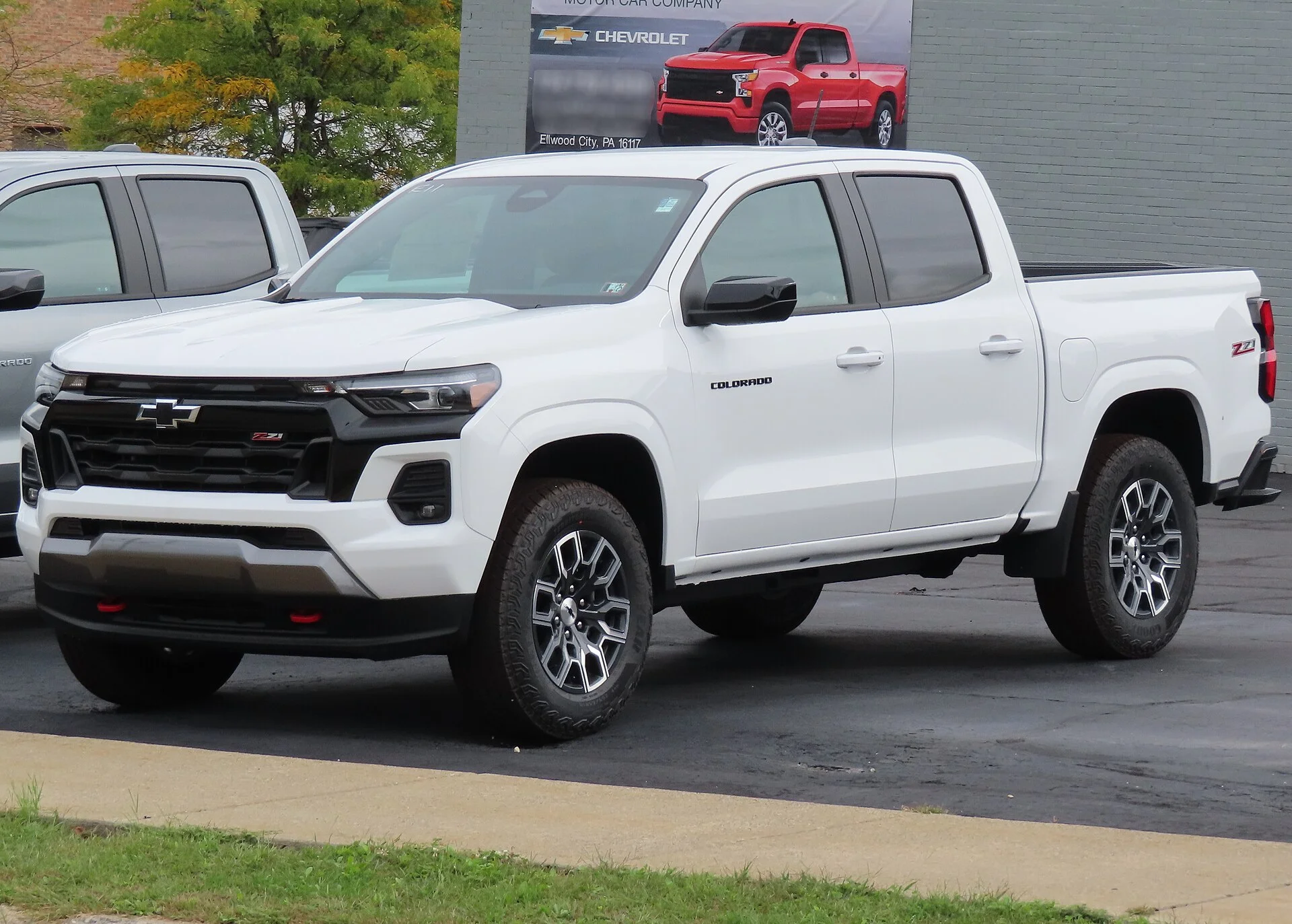
The Short Answer: The Sockets and the Catch
The cheap truth first: the Colorado gives you enough 12V power to run a camp fridge and chargers, but most of its outlets die shortly after you pull the key, and the fix costs about five dollars if you do it yourself. Pay a shop and it is fifty. That gap is the whole reason to learn the fuse map.
The basics: every Colorado has at least one 12V accessory outlet in the front console, standard on all trims, protected by a 15A or 20A fuse in the instrument-panel fuse block. Higher trims add more sockets and an optional 120V outlet. But GM caps a single 12V socket near 160 watts, or 13 amps, so the fuse rating is not your real ceiling.
The catch that matters for camping is switching. Most factory Colorado outlets are ignition-switched or run on Retained Accessory Power, which means they go dead a short time after the key comes out. For an overnight fridge that is a problem - and the DIY answer is a fuse tap, which this guide walks through after the full outlet map.
The 12V Outlets by Generation
The map depends on which Colorado you have. On the 2nd-gen 2015-2022 trucks, the 12V accessory outlets wire to instrument-panel fuse slots F41, labeled Auxiliary Power Outlet 1 or the cigarette lighter, and F39, Auxiliary Power Outlet 2. Higher trims add F40 and F44 for extra outlets in the rear console or rear cab area. A single front console socket is standard on every trim.
On the 3rd-gen 2023-2026 trucks, the cabin 12V socket moves to passenger-compartment fuse F41, labeled Auxiliary DC Power Outlet. The newer truck also adds an optional Accessory Fuse Block in the engine compartment with auxiliary-switch circuits F01 through F04, if equipped, which are protected feeds made for wiring accessories like lights or a fridge - a genuinely useful upgrade for a camper.
So a 2nd-gen owner works from the instrument-panel block, and a 3rd-gen owner may have a dedicated accessory block under the hood as well. Either way, the front console 12V socket is your baseline, and the fuse behind it is a 15A or 20A depending on trim. Read the diagram on your specific truck rather than trusting a forum post about the other generation.
If you have the 3rd-gen accessory block, use it - those F01 through F04 auxiliary-switch circuits are the tidiest way to add a fridge feed, because they are protected feeds designed for exactly that job. It saves you tapping a cabin outlet at all, and it keeps your added accessory on its own fuse where a fault stays isolated. For a camper building a semi-permanent setup, that dedicated block is worth ordering or wiring into, and it is the cleaner path than a cigarette-socket splitter every time.

USB Runs on Separate Fuses
Do not assume your USB ports share a fuse with the 12V sockets, because they do not. On the 2015-2022 Colorado, the USB circuits run through separate instrument-panel fuses: F23, tied to the data link connector and USB, and F35, covering the rear USB and wireless charging module. On the 3rd-gen truck the USB power is on fuse F25, the Auxiliary USB Power Outlet.
That separation is actually good news for troubleshooting. If your phone stops charging from the USB port but the 12V socket still runs your fridge, you are looking at two different fuses, and the dead one points you straight to the problem. A budget wrench likes that - it narrows the search and saves you pulling fuses you did not need to touch.
The practical note: USB ports are for small devices, phones and tablets, on their own modest circuits. Your real camp loads - a fridge, a pump, a light bank - belong on the 12V accessory sockets, which carry more current. Keep those roles straight and you will not overload a little USB circuit trying to run something it was never fused for.
The Fuse Rating and the Real Limit
Here is where people overspend or overload, so get the number right. The factory 12V accessory outlets are typically protected by a 15A or 20A fuse. A 20A fuse allows roughly 240 watts and a 15A fuse roughly 180 watts at 12 volts before it blows. But that is the fuse - it is not what GM says the socket can carry.
GM's own guidance for its 12V outlets warns not to exceed the socket's rated maximum, and comparable GM trucks state a limit of 160 watts, or 13 amps, at 12 volts for a single accessory socket. That 160-watt number is the honest working ceiling, below the 20A fuse, because the socket and its connector are the real bottleneck, not the wire.
So plan to about 160 watts per socket, not 240. For a camper that is still fine - a fridge at 4 to 5 amps uses only a fraction of it. The false economy to avoid is jamming a big 12V-to-120V inverter into a socket: that inverter can pull 15 amps or more and trip the fuse, so anything high-draw should be hard-wired on its own circuit, not run through a cigarette-lighter plug that was never meant for it.
The RAP Catch: Why Your Outlet Dies
This is the detail that ruins an overnight fridge if you do not know about it. Most factory Colorado 12V outlets are ignition-switched or run on Retained Accessory Power, managed by the Body Control Module. That means they stay live for a short time after you remove the key, then the truck cuts them off. Convenient for a phone on a quick stop; useless for a fridge you want running all night.
You cannot argue a Body Control Module out of its programming, so there is no setting to flip that keeps the stock socket hot indefinitely. Leave a fridge plugged into a RAP outlet and it will run for a little while, then quit when the truck decides the accessories should power down. You wake up to a warm cooler and no obvious reason why.
The good news is the fix is cheap and does not require fighting the electronics. You simply give the fridge a different, always-hot feed instead of the switched one. That is a fuse-box job any owner can do in a driveway, and it is the single most valuable thing a Colorado camper can learn about the truck's power - so it gets its own section next.
The Cheap Fix: Fuse-Tap a Constant Circuit
Here is the five-dollar solution. To get always-on constant 12V power, you move the outlet's fuse to a constant-hot slot, or you use an add-a-circuit fuse tap on a circuit that stays live with the key off. Either way you are borrowing power from a slot the truck keeps hot around the clock, instead of the switched one that dies.
The tap method is the friendlier one for most people. An add-a-circuit fuse tap piggybacks onto an existing fuse slot without cutting a single factory wire, giving you a new fused feed for a dedicated 12V socket in the console or bed. Pick a constant-hot source, size the added fuse to the load, and you have an always-on outlet the fridge can live on overnight.
Two rules keep it safe and honest. First, confirm the circuit is genuinely constant with a test light before you trust it - key out, socket still live. Second, match the fuse to the draw, because a fridge at 4 to 5 amps needs only a small circuit, and you never oversize a fuse to stop it blowing. Do it right and you have bought yourself real overnight power for the price of a fast-food lunch, no shop bill required.
The 120V Outlet: 150W Old, 400W New
If your Colorado has the optional 120V AC outlet, its capability depends heavily on the generation, and the gap is big. The 2nd-gen 2015-2022 factory converter is a low-capacity unit rated about 150 watts, delivering roughly 110 volts at 1.36 amps. That is enough for a phone or laptop charger and nothing more - do not plan camp power around it.
The 3rd-gen 2023-and-newer Colorado upgraded that optional inverter to a 400-watt rating, about 100 watts continuous with 400 watts peak. That is a meaningful jump over the old 150-watt version and turns the AC outlet into something genuinely useful for laptops, camera batteries, and small camp electronics rather than just a phone charger.
Neither version, though, is a big-appliance source. A 400-watt outlet cannot run a hair dryer that needs about 1,500 watts - roughly four times its peak - so keep your expectations honest. When equipped, the 120V system feeds up to two household-style outlets, one in the bed side panel and one on the back of the center console, and only the newer 400-watt unit is worth leaning on for real gear.
Engine-Running-Only: The Inverter Reality
Before you count on that 120V outlet at camp, know the catch that comes with it. The Colorado's 120V AC inverter is mounted behind or under the rear seat, and the outlets only work with the engine running, because the inverter draws heavily on the charging system. Shut the engine off and the AC outlet goes dead.
That is a real limitation for a camper who pictured charging a laptop overnight from the truck's AC outlet. You cannot - not without idling the engine, which wastes fuel and is not something to do in an enclosed space. The 120V system is a while-you're-driving or engine-running convenience, not a silent overnight power source.
So the honest plan is to use the 120V outlet for what it is good at - topping up AC devices while you drive between camps - and to handle overnight AC needs with a separate battery pack or power station. For 12V loads like a fridge, the always-on fuse tap from the last section is your overnight answer. Match each need to the right source and you stop expecting the truck to do something it physically will not.
Matching Device to Socket
The value move with any truck is matching each device to the right circuit instead of overpaying for capacity you do not need or overloading a socket you do. On the Colorado, a 20A 12V outlet comfortably handles a 4-to-5-amp fridge plus a 1-to-2-amp LED light bank at the same time - that is a normal camp load with margin to spare.
The line to respect is roughly 240 watts total on a single 12V socket, and really the 160-watt GM socket rating below that. Anything above it - a big inverter, a high-draw appliance - needs a dedicated higher-amp circuit or a house battery, not a cigarette-lighter plug. Cross that line and you are into blown fuses, hot connectors, and the kind of false economy that costs more than doing it right.
And when a fuse does blow, replace it with the exact original amperage - 10A, 15A, or 20A, whatever the diagram lists - and never a higher-rated one. GM is explicit about this, and for good reason: a bigger fuse does not fix the problem, it removes the protection and lets the wire become the fuse. Match the fuse, match the device to the socket, and the Colorado runs a camp load cheaply and safely - no shop visit, no guesswork, just the right circuit for the right job.
The Verdict: Cheap Power Done Right
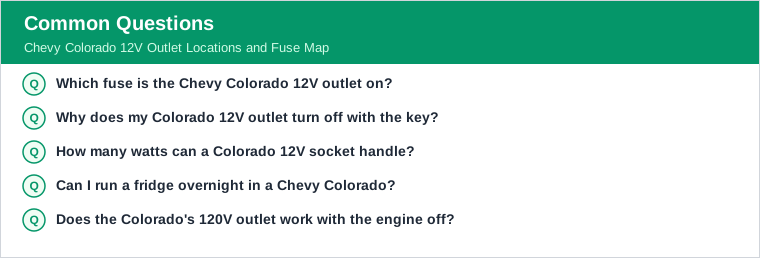
The Colorado is a solid camp-power truck once you know its map and its one quirk. Every trim has a front 12V accessory socket on a 15A or 20A fuse - F41 and F39 on the 2nd gen, F41 on the 3rd - with a real working ceiling near 160 watts. USB runs on separate fuses. A fridge at 4 to 5 amps fits with huge margin.
The quirk is that most sockets are switched or on Retained Accessory Power, so they die after the key comes out. The cheap fix - a fuse tap to a constant-hot circuit, or moving the fuse to a constant slot - turns a switched socket into the always-on feed a fridge needs, for a few dollars and a driveway afternoon. That is the single best-value upgrade on the truck.
For AC power, the 3rd-gen's 400-watt inverter beats the 2nd-gen's 150-watt unit handily, but both run only with the engine on, so treat 120V as a driving convenience and handle overnight loads with a battery pack. Read your own fuse diagram, do the constant-power tap yourself, match every device to its socket, and the Colorado gives you honest camp power without a shop bill.