First, the Basics
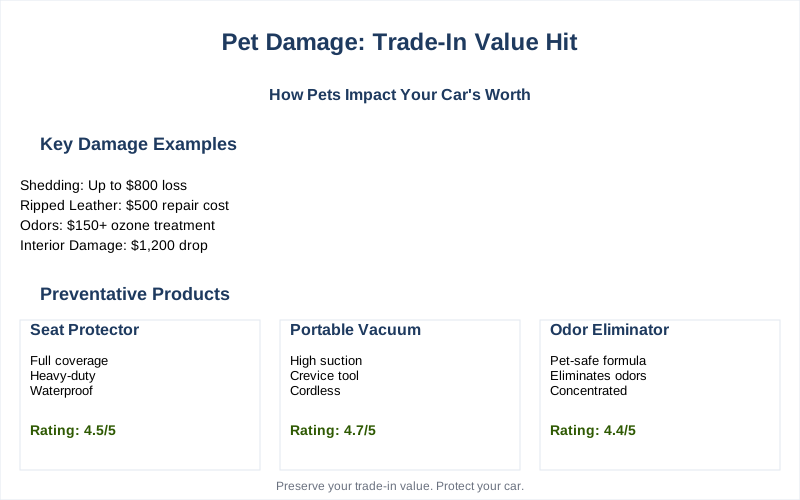
That 15-pound terrier, the one who sheds like a snow machine in July, just cost you $800 on your trade-in value. Nobody tells you the specific half-life of dog hair embedded in a fabric headliner, but trade-in debriefs consistently show it's permanent. Dealerships aren't looking for 'character' when they assess your vehicle; they're looking for biohazard zones that will cost them money to clean.
Market data consistently shows buyers pay less for vehicles with accident history, and pet damage often falls into that same 'repair-or-discount' category. This isn't about love for your furry companion; it's about logistic survival and minimizing financial extraction.
The impact of pet damage isn't just a hypothetical number; it's a concrete hit to your wallet. A ripped leather seat isn't just an eyesore; it's a $500 upholstery repair that the dealer will subtract directly from your trade-in offer.
That persistent 'wet dog' smell? It's a hazmat situation requiring ozone treatments, costing upwards of $150, which again, comes out of your pocket, one way or another. Owners learn this lesson the hard way when they try to trade in an SUV after a muddy camping trip with a couple of big dogs.
An appraisal can drop by a solid $1,200 just for the interior.
A tactical load-out for preventing this disaster includes a heavy-duty, full-coverage seat protector for the entire back row, a portable vacuum with a crevice tool for immediate hair extraction, and a gallon of pet-safe odor eliminator for preemptive strikes. This isn't about making your car a pet palace; it's about maintaining a clean combat zone.
The goal is to make your vehicle appear as if no creature larger than a dust bunny has ever occupied it, thereby preserving its maximum trade-in value. Without proper containment, every slobber, scratch, and stray hair acts as a ticking time bomb for your resale profit. Dealerships assess a car's condition to gauge its resale potential, and pet damage is a major red flag according to Randall Ford.
What Real Users Say
What Real Users Say
Real users, the ones who have actually tried to offload a car after years of pet cohabitation, understand the financial pain. They'll tell you that a single deep scratch on a door panel, courtesy of an anxious paw, can cost around $80 to repair if you DIY it with a touch-up pen. Let the dealer handle it, and that's easily $200.
Pet-related car damage quickly adds up.
The persistent smell of 'eau de dog' is a common complaint. Many owners report that after a deep clean, the odor returns within 48 hours, especially in humid conditions. This indicates a deep saturation of organic compounds in the fabric and foam, requiring professional ozone treatment or even upholstery replacement to truly neutralize.
This isn't a job for a can of Febreze; it's a biohazard.
Another critical point from the field is the damage to window tints and door plastics. Dogs, especially those who like to look out the window, will scratch these surfaces with their claws. A tiny scratch might seem minor, but a full panel replacement can be $150-$300, and re-tinting a single window is another $75-$100.
These are not 'minor wear and tear' in the eyes of a trade-in appraisal.
Trade-in appraisals can drop by 5% to 10% solely due to interior pet damage. This isn't just a few bucks; on a $20,000 vehicle, that's a $1,000 to $2,000 hit. The vehicle's condition dictates its value, and interior damage is a silent killer of that value as many dealerships confirm.
Then there's the hair. Oh, the hair.
It embeds itself into carpet fibers, ventilation systems, and even the crevices of seatbelts. Professional detailers charge extra for pet hair removal, sometimes an additional $50-$100 on top of a standard detail. This isn't just cleaning; it's a full-scale extraction operation. A solid load-out includes a rubber-bristled brush specifically for carpet hair and a shop vac with a narrow nozzle.
Total cost: about $45, saving a $75 upcharge.
The consensus among owners who've traded in pet-damaged vehicles is clear: prevention is cheaper than repair. A $50 seat cover now saves you a $500 upholstery bill later. It's simple mathematics, not rocket science. Don't let sentimentality cost you hard cash. Minor exterior scratches may cost around £80 each to repair, and interior damage can be far worse.
Top Picks According to Real Owners
Top Picks According to Real Owners
When it comes to pet containment, you need gear that can withstand a biohazard event, not just a casual drive. A field-tested load-out focuses on maximum barrier protection and rapid extraction. These are the specific components that can save hundreds in detailing bills.
WeatherTech Pet Barrier (~$130)
Capacity/Key Specs: Adjustable width (40-60 inches), height (28-44 inches), heavy-duty tubular steel.
Pros: Creates an impenetrable barrier between the cargo area/backseat and the front.
Prevents pets from becoming projectiles during sudden stops. Easy 5-minute install/removal.Cons: Can be bulky to store when not in use. Some larger dogs can still try to push under.
Best-for use case: Long road trips with large, active dogs in SUVs or wagons. Keeps the front cabin a sterile zone.
Kurgo Wander Bench Seat Cover (~$70)
Capacity/Key Specs: 55 inches wide, waterproof, ripstop fabric, hook-and-loop seatbelt openings.
Pros: Full coverage for the entire back bench, including the seat base, back, and sides. Anchors securely to prevent shifting. Machine washable for easy decontamination.
Cons: Can trap heat in warmer climates. Seatbelt openings can allow some debris through.
Best-for use case: Daily commutes and short trips with medium to large dogs. Excellent for containing mud and wet fur.
Ruffwear Dirtbag Dog Towel (~$45)
Capacity/Key Specs: 26 x 36 inches, microfiber, highly absorbent, integrated hand pockets.
Pros: Dries wet paws and fur rapidly, preventing moisture from soaking into upholstery. Compact and easy to store in a door pocket for immediate deployment. The hand pockets make it easy to control a wriggling dog.
Cons: Not a full-coverage solution. Requires active use.
Best-for use case: Post-hike or beach extraction protocols. Essential for preventing a 65-lb lab from becoming a permanent upholstery stain.
BISSELL Pet Stain Eraser PowerBrush Plus (~$120)
Capacity/Key Specs: Cordless, handheld, 4V lithium-ion battery, 6 oz tank capacity, motorized brush.
Pros: Immediate spill containment and extraction for liquid biohazards. The motorized brush actively lifts stains. Battery lasts 15-20 minutes, enough for most emergencies.
Cons: Small tank requires frequent refilling. Not for large-scale cleaning.
Best-for use case: Vomit, urine, or spilled coffee. Critical for preventing a liquid spill from setting in during a 4-hour drive. Upholstery stains can cost your dealership money, and thus, you.
Chemical Guys Pet Hair Remover Brush (~$10)
Capacity/Key Specs: Rubber construction, ergonomic handle.
Pros: Effectively pulls embedded pet hair from carpet and upholstery. Reusable and easy to clean. Far more effective than vacuuming alone for stubborn hair.
Cons: Requires manual effort. Not for large, loose hair piles.
Best-for use case: Pre-trade-in debriefing for thorough hair extraction. This $10 tool can save you a $75 detailing upcharge.
Arm & Hammer Pet Fresh Carpet & Room Odor Eliminator (~$8)
Capacity/Key Specs: 30 oz powder, baking soda based.
Pros: Excellent for neutralizing lingering pet odors in carpets and fabric. Affordable and widely available. Acts as a sanity-saver after a long trip.
Cons: Requires vacuuming after application. Not for liquid spills.
Best-for use case: Post-cleaning odor control. A final tactical step before a trade-in appraisal. Professionally repaired paint damage can increase trade-in value, and similarly, a fresh interior smell makes a huge difference.
View on Amazon — WeatherTech Pet Barrier
View on Amazon — Kurgo Wander Bench Seat Cover
View on Amazon — Ruffwear Dirtbag Dog Towel
View on Amazon — BISSELL Pet Stain Eraser PowerBrush Plus
View on Amazon — Chemical Guys Pet Hair Remover Brush
View on Amazon — Arm & Hammer Pet Fresh Carpet & Room Odor Eliminator
The Debate: What Divides Owners
The Debate: What Divides Owners
The biggest divide among owners isn't whether pet damage impacts trade-in value, but how much effort is worth it to mitigate that damage. Some argue for full hazmat-level containment from day one, while others prefer a reactive approach, dealing with messes as they happen.
| Argument Point | Pro-Active Containment Stance | Reactive Cleaning Stance |
|---|---|---|
| Initial Investment | Spend $200-$300 upfront on liners, covers, and barriers. This is war planning. | Spend $0 upfront, deal with detailing costs ($150-$500) later.
This is gambling. |
| Time Commitment | 5-10 minutes per trip for setup/takedown of covers. This is a pre-flight check. | Hours spent cleaning after a major incident, or 2-3 hours for professional detailing. This is damage control. |
| Trade-in Value Impact | Minimizes depreciation by protecting surfaces.
A clean interior means fewer deductions. | Accepts potential deductions of $500-$1500 for stains, smells, and scratches. |
| Pet Comfort | Some covers can be less comfortable for pets, or restrict movement. | Pets have full freedom, but at the cost of potential damage to the vehicle. |
| Perceived Effort | Seen as a necessary tactical step for long-term financial survival. | Seen as an unnecessary hassle until a disaster strikes. |
The reality is, dealers will always deduct for damage.
Visible damage can decrease the value, indicating potential repair costs that will lower your car's trade-in value according to dealership assessments. A minor scratch might be $50 to fix yourself, but the dealership will quote you $150 and deduct that from your offer. That's not a negotiation; that's an extraction fee. Interior damage can cost your dealership money on trade-ins.
The 'reactive' approach often ends up costing more in the long run.
You might save $50 on a seat cover, but then pay $500 for a new seat cushion because Fido decided to chew through it during a thunderstorm. This isn't just about saving money; it's about avoiding unnecessary logistical nightmares and maintaining your sanity. My protocol is clear: contain the biohazard before it becomes a permanent part of your vehicle's depreciation record.
Long-Term Reliability and Durability
Long-Term Reliability and Durability
Pet damage isn't just cosmetic; it can impact the long-term reliability and durability of your vehicle's interior components. A dog chewing on a seatbelt isn't just an aesthetic issue; it's a safety hazard. A compromised seatbelt could fail in an accident, and that's a liability you don't want.
Heavy pet hair accumulation in ventilation systems can reduce HVAC efficiency and even cause motor strain over time. This isn't anecdotal; it's basic airflow dynamics.
Restricted airflow means your fan works harder, drawing more power and potentially shortening its lifespan. A $20 cabin air filter swap is a 10-minute job; a new HVAC blower motor is a $300-$500 mechanic bill.
Urine saturation, especially in carpets and seat foam, can lead to mold and mildew growth. This isn't just a smell; it's a health biohazard. Mold spores can degrade fabric fibers and even corrode underlying metal components if left unchecked for extended periods.
The half-life of a urine spill before permanent mold colonization is about 72 hours in humid conditions. Your extraction protocol must be immediate.
Scratches on interior plastics and vinyl can deepen over time with repeated abrasion, making them harder to repair. What starts as a minor surface scratch can become a deep gouge that requires full panel replacement. This isn't just about looks; it's about structural integrity of the material.
Prospective buyers and dealerships regard cars with a history of accidents with caution, and that includes significant interior damage.
The constant flexing and pulling from a large dog can also stress seat frames and mounting points. Over years, this can lead to weakened welds or loose bolts, creating squeaks and rattles. These are the subtle indicators of wear that a meticulous buyer or dealer will pick up on, signaling deeper issues.
A car involved in an accident inevitably declines in value due to damage and wear. Pet damage, if significant, is treated similarly.
My advice: consider your pet a mobile, fur-covered demolition crew. Plan accordingly. A $30 investment in a durable seat cover today prevents a $300 interior repair five years down the line. That's not a suggestion; it's a field-tested directive.
How to Choose Based on Real Feedback
How to Choose Based on Real Feedback
Choosing your pet containment load-out isn't about luxury; it's about strategic defense. You need to assess your specific threat level and deploy the appropriate countermeasures. Don't over-engineer, but don't under-prepare either.
| Pet Damage Type | Recommended Action for Trade-In | Estimated Cost & Impact |
|---|---|---|
| Light Pet Hair Accumulation | Thorough vacuuming with pet hair attachment, rubber brush extraction. | DIY: $20 (brush/attachment). Pro Detail: $50-$75 surcharge. Minor impact if removed. |
| Minor Scratches on Plastics/Vinyl | Plastic trim restorer, touch-up pen for light scuffs. | DIY: $15-$30.
Dealer deduction: $50-$150 per panel if not fixed. |
| Lingering Odors (Non-Urine) | Baking soda treatment, ozone generator rental (24 hours). | DIY: $10 (baking soda), $50 (ozone rental). Pro Detail: $150-$250 for ozone. Major deduction if present. |
| Fabric Stains (Non-Urine) | Spot cleaner, portable carpet extractor (BISSELL SpotClean). | DIY: $30-$120. Pro Detail: $50-$100 per stain. Moderate deduction if visible. |
| Deep Hair Embedment in Carpets | Professional detail with specialized pet hair removal tools. | DIY: High effort, limited success. Pro Detail: $75-$150 surcharge.
Moderate deduction if visible. |
| Urine Stains/Odor (Deep) | Professional upholstery cleaning, potentially foam/carpet replacement. | Pro: $200-$700 (depending on severity). Major deduction, potentially $1000+, if unresolved. This is a hazmat scenario. |
| Ripped/Chewed Upholstery | Professional upholstery repair or panel replacement. | Pro: $300-$800 per panel. Significant deduction, potentially $1000-$2000+, if unresolved. |
Before you commit to a trade-in, get a professional appraisal. This isn't a commitment; it's a reconnaissance mission. They will tell you exactly what they're deducting for, giving you a clear picture of your extraction costs.
Market data consistently shows buyers pay less for vehicles with accident history, and pet damage is often categorized similarly in terms of depreciation.
Consider the cost-benefit analysis. Spending $100 on a professional detail to remove stubborn hair and odors might save you $500 on your trade-in. That's a 5x return on investment. This isn't about pampering your car; it's about maximizing your asset's value. Don't leave money on the table because you didn't execute a proper pre-trade-in cleanup protocol.
Bottom Line
Bottom Line
Pet damage is not 'character' when you're trying to trade in your vehicle; it's a direct hit to your bottom line. Every scratch, every embedded hair, every lingering odor translates into a dollar figure subtracted from your trade-in offer. This isn't emotional; it's pure logistics and financial survival.
- Prevention is Paramount: A $70 seat cover today prevents a $500 upholstery bill tomorrow.
Invest in your containment protocols early.
A clean interior speaks volumes.
Your goal is to present a vehicle that appears untouched by the chaos of pet ownership. This means a tactical load-out of covers, cleaners, and air purifiers. Don't let your lovable furball become a financial liability. Maximize your trade-in value by minimizing the evidence of their existence.
This guide will walk you through the steps to maximize your trade-in value, and pet damage is a critical factor.
My final debrief: treat your car's interior like a clean room. Any breach of containment must be dealt with swiftly and decisively. Your wallet will thank you.