
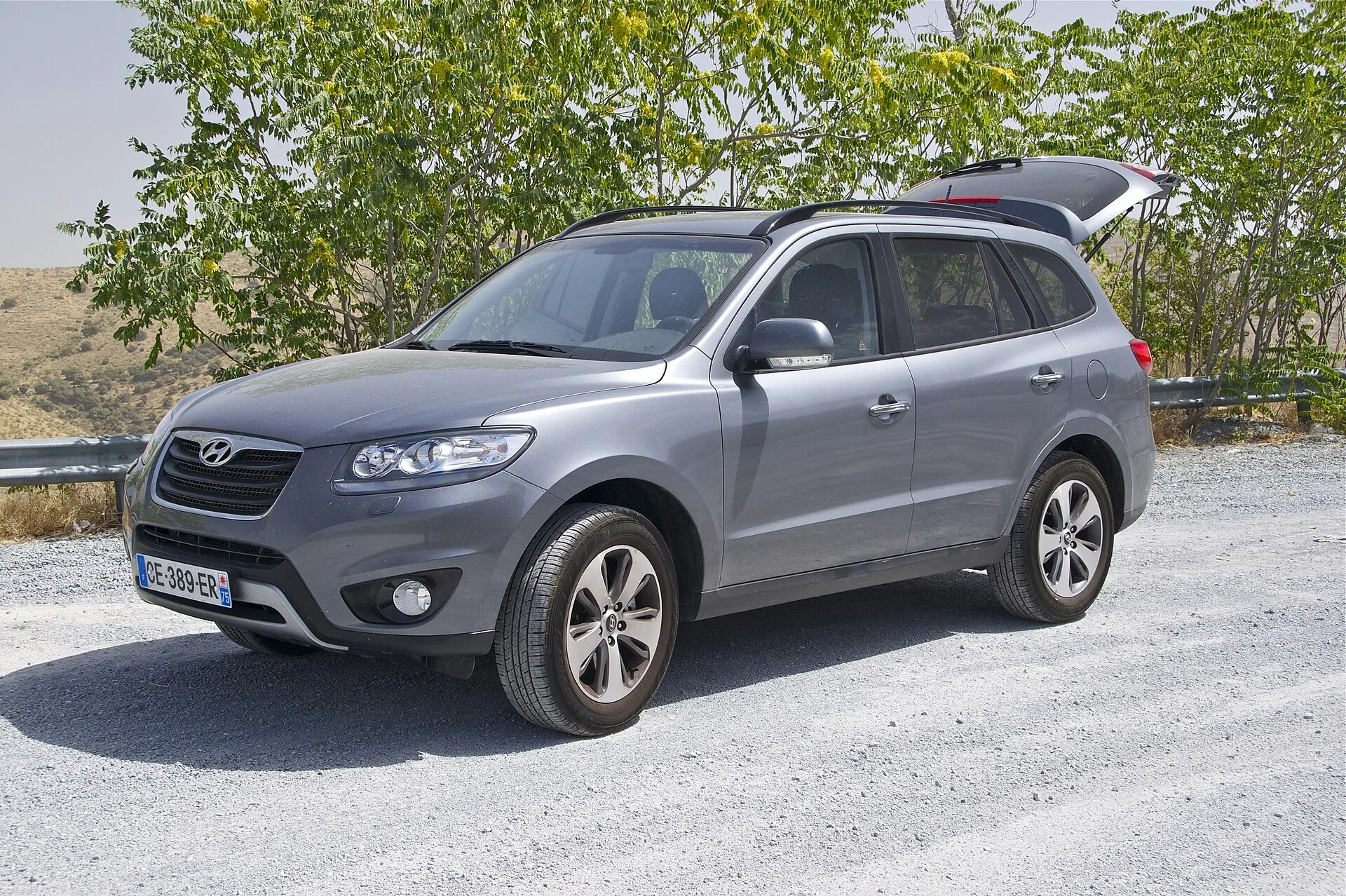
Two corporate cousins, two takes on the small three-row
The Hyundai Santa Fe and the Kia Sorento share a corporate parent and a mission — a right-sized three-row SUV that isn't as unwieldy as a full-size — which makes them natural cross-shops for a family that also wants to camp. Both fold into a long, flat bed once the rear rows drop, and both are far more livable than a compact SUV thanks to the extra length. The Santa Fe's recent boxy redesign is the plot twist: its squared-off roofline and upright tail add real headroom and a more usable cargo shape.
Both still want the same basics to sleep in: the second and third rows folded, a mattress cut to the floor, and window shades for privacy. The question is which gives you a flatter, roomier bed and the better daily driver. This comparison walks cargo volume and floor length, how flat each bed really is, power for your gear, and everyday livability.
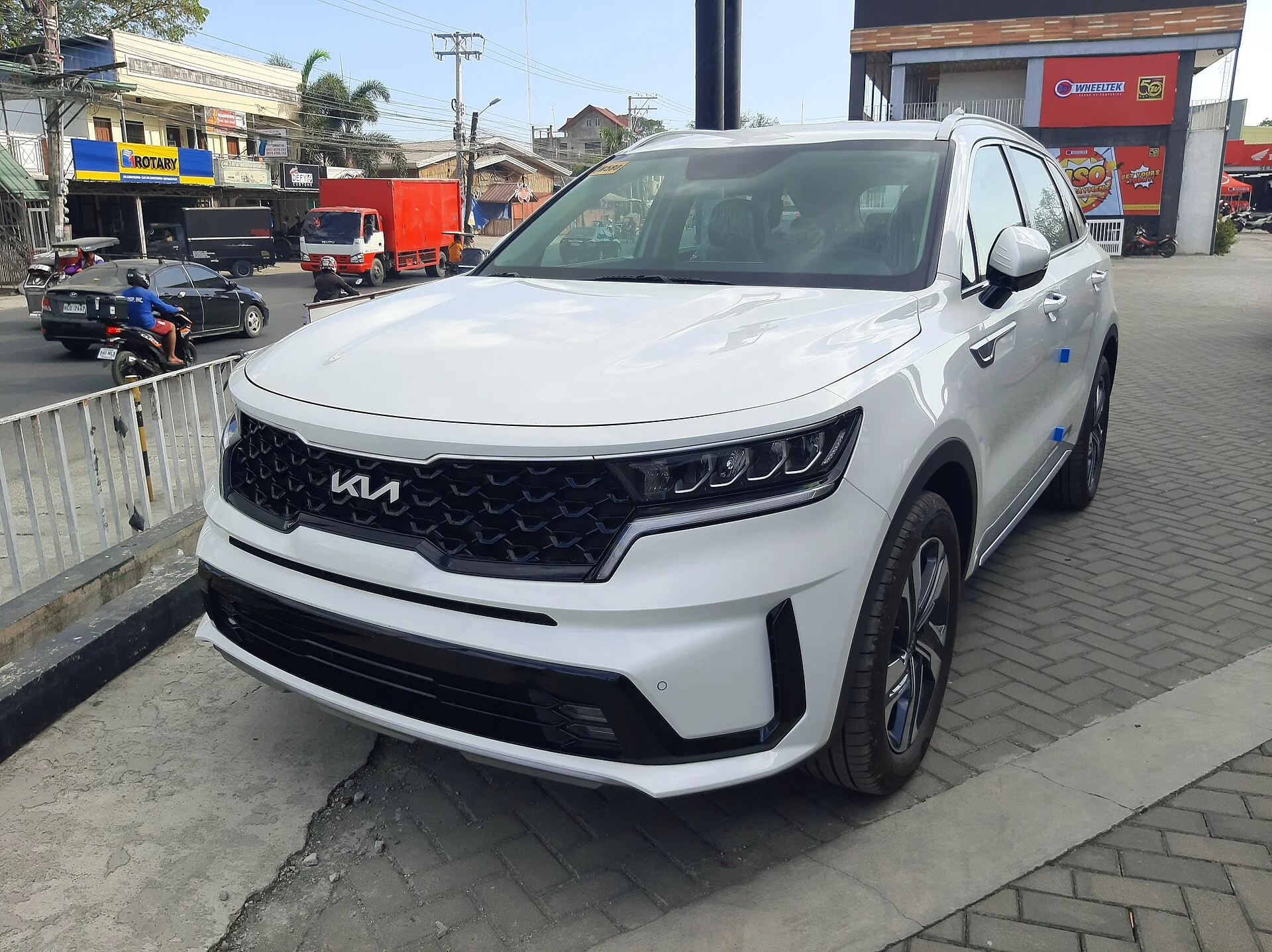
Cargo space and sleeping length: the Santa Fe's box wins
The two are close on paper, and the boxy Santa Fe has the edge at every level.
| Spec | Hyundai Santa Fe | Kia Sorento |
|---|---|---|
| Behind 3rd row | 14.6 cu ft | 12.6 cu ft |
| Behind 2nd row (3rd folded) | 40.5 cu ft | 38.5 cu ft |
| Maximum cargo (both folded) | 79.6 cu ft | 75.5 cu ft |
| Body shape | Boxy, upright (extra headroom) | Conventional SUV |
| Powertrains | Hybrid available | Hybrid & PHEV available |
| Household AC outlet | None (12V) | None (12V) |
The Santa Fe leads modestly on volume — 79.6 cubic feet maximum versus 75.5 — but the more important camping advantage is shape. Its redesign made the body tall and square, so the cargo area has more usable height and a more upright, boxy profile than the Sorento's more conventionally sloped tail. That means more room to sit up, more space for tall bins, and a flatter, more rectangular bed. The Sorento's floor is still long enough for most adults with the rows down, and it offers more powertrain choice (including a plug-in hybrid). A cargo-area mattress cut to fit turns either folded floor into a proper bed for two.
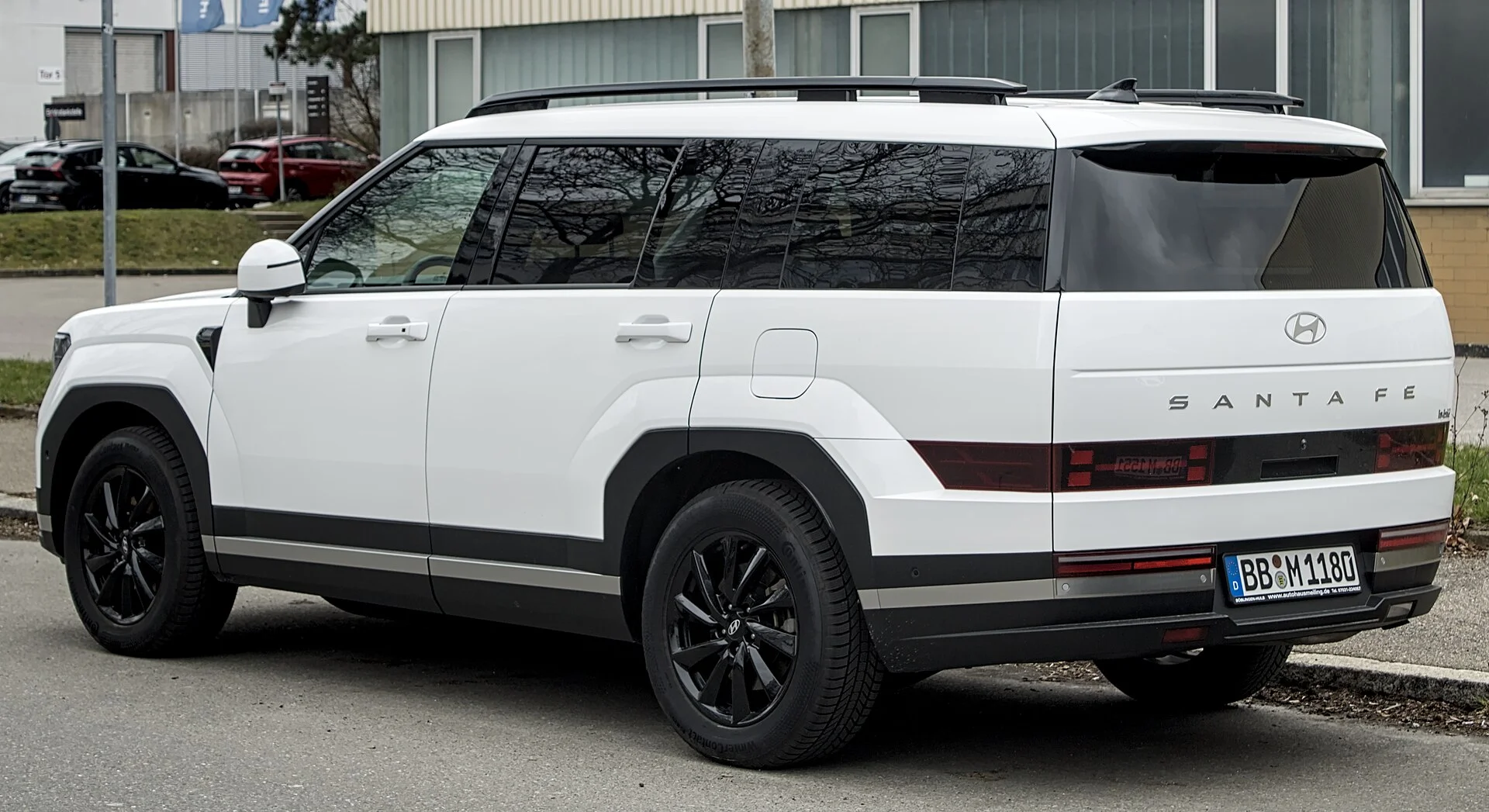
The sleeping platform
Both fold into a bed long enough for two adults; the boxy Santa Fe adds headroom and a flatter, more rectangular floor.
Drop both rear rows in the Santa Fe and its squared-off body pays off: the floor is long, wide, and more rectangular than most SUVs, and the upright roof leaves genuine headroom to sit up, change clothes, and organize gear — small things that make a three-row SUV feel almost van-like for a night. Most adults lie flat easily and two sleep comfortably with gear up front.
The Sorento makes a similar-length bed — it's a right-sized three-row too — but its more conventional, slightly more sloped roofline trims a bit of sit-up headroom and cargo height compared to the boxy Santa Fe. As with any SUV, both leave a step and a mild slope where the seats meet the floor when folded, so a topper or fitted pad is what levels things out. For both, a foam topper over the seams and the front seats slid forward reclaim comfort and length. The Santa Fe simply gives you a little more room to move once the bed is made.
Two habits matter as much as the vehicle in either three-row. Insulate from below with a pad that has real R-value, since the folded floor sits close to the cold air under the SUV. And manage condensation — two people breathing in a sealed cabin will fog the glass by morning, so crack the front windows a half-inch behind bug screens. The Santa Fe's boxy headroom makes it easier to sit up and arrange bedding across a multi-night trip, while the Sorento's layout still leaves ample room to keep a fridge and gear organized beside the bed without crowding the sleeping surface.
Power for your gear
Neither of these is a full EV with vehicle-to-load power, so overnight electricity is something to plan for in both. Neither the Santa Fe nor the Sorento offers a 120V household outlet from the factory — both rely on 12V sockets and USB.
The only electrification wrinkle is powertrain choice: both offer efficient hybrids for the long drive to camp, and the Sorento additionally offers a plug-in hybrid with a larger battery, giving it a slight edge as an electrified platform — though, again, it isn't sold as a whole-home power source. For the vast majority of trips in either SUV, the dependable answer is a portable power station that runs a fridge, lights, and chargers all night without touching the starter battery. Size it to your fridge's running watts and a long weekend is covered. Both three-row SUVs have plenty of room to store even a large battery and a full-size fridge alongside the bed, so power is a matter of what you carry, not whether it fits.
If long-haul efficiency to distant campsites matters, both hybrids are strong on the drive; the Sorento's available plug-in hybrid adds short electric-only running for errands around a basecamp town, a niche but genuine convenience the Santa Fe's lineup doesn't currently match.
Living with it: drive, interior, and ownership
Both are comfortable, well-warrantied family SUVs; the camping-relevant differences are clear.
- Space and shape: the boxy Santa Fe wins on usable cargo height, headroom, and a flatter bed — the better sleeper of the two.
- Powertrain choice: the Sorento offers hybrid and plug-in hybrid, plus available all-wheel-drive trims aimed at light trails (X-Line/X-Pro).
- Interior feel: the Santa Fe's redesign brought a modern, lounge-like cabin; the Sorento leans a touch more rugged and traditional.
- Ownership: both carry long Hyundai/Kia warranties and hold value well, so running costs are a wash.
Put simply: the Santa Fe is the better bed thanks to its box, while the Sorento offers more powertrain and trail-trim choice for how you get there.
Which should you camp in?
Match the SUV to how you camp:
- Choose the Hyundai Santa Fe if sleeping space is the priority — you want the boxy body's extra headroom, the flattest, most rectangular bed, and the roomiest cargo for two-person camping.
- Choose the Kia Sorento if you want more powertrain choice (hybrid or plug-in hybrid) and available trail-oriented AWD trims for rougher access.
- Camp as a couple often? The Santa Fe's headroom and flatter floor make it the more comfortable two-person bed.
Pricing and warranty are similar between these cousins, so the decision usually comes down to the Santa Fe's superior sleeping shape versus the Sorento's broader powertrain and trail options. If you want the full single-vehicle picture, the deeper guides on camping in each cover the layouts and gear that fit best.
The verdict
For car camping, the Hyundai Santa Fe is the better tool, and it's mostly about the box. Its redesigned, squared-off body gives more usable cargo height, real sit-up headroom, and a flatter, more rectangular bed than the Sorento — plus a modest cargo-volume lead (79.6 vs 75.5 cubic feet). If you plan to sleep two in the back regularly, the Santa Fe is the more comfortable choice.
The Kia Sorento stays close on space and answers with more choice in how you get to camp: hybrid and plug-in hybrid powertrains and available trail-oriented all-wheel-drive trims give it an edge for rougher access and long-haul efficiency. It's still a very good camper — just with a slightly less sleep-optimized shape.
Pick the Santa Fe if the bed matters most; pick the Sorento if powertrain and trail options do. Either way, a fitted pad, window shades, and a power station turn a right-sized three-row SUV into a genuinely livable basecamp for two.