
Can You Camp and Sleep in a Hyundai Santa Fe? The Short Answer
Yes — a Hyundai Santa Fe makes a genuinely comfortable car-camping platform, and the current fifth-generation model is one of the better mainstream SUVs for it. With the 60/40-split second-row seats folded down, the 2024-and-newer Santa Fe opens up a large, usefully flat cargo area — Hyundai publishes roughly 79.6 cubic feet of maximum cargo volume behind the front seats on the fifth-generation model, a notable jump over the previous generation's figures. That boxy, squared-off body the 2024 redesign introduced is not just a styling choice; it translates directly into more usable interior length, width, and headroom for sleeping.
The honest catch is length. The flat load floor on most mid-size SUVs in this class, the Santa Fe included, runs short of a fully stretched-out adult once the seats are folded, so the practical question is not can you sleep in it — you can — but how you arrange yourself and your mattress to use the length you have. Here is the quick reality:
- Cargo volume (5th gen, seats folded): about 79.6 cu ft maximum — ample room for two people's gear plus a sleeping setup.
- Sleeping length: the folded-flat floor typically gives roughly 6 feet of usable length; taller campers angle diagonally or extend onto a slightly reclined front seat.
- Best fit: one adult sleeps comfortably flat; two adults fit if you size the mattress to the floor and pack gear up front or on a roof rack.
- 5th-gen advantage: the upright, boxy roofline means more sit-up headroom and a more rectangular sleeping space than the swoopier older Santa Fe.
The Santa Fe sleeps one adult easily and two with a floor-sized mattress; the limiting factor is length, not whether it works. Size your bed to the floor and stow gear up front, and the fifth-generation Santa Fe is a comfortable place to spend the night.
The rest of this guide works through the exact cargo dimensions, how flat the floor really gets, how to size a mattress, privacy and window covers, power, and ventilation — all from Hyundai's published specifications and practical setup logic, so you can plan a Santa Fe sleeping setup before you ever fold a seat.
Santa Fe Cargo Dimensions and Sleeping Fit (Seats Folded)
Everything about a car-camping setup starts with the numbers, so it is worth being precise — and clear about where they come from: Hyundai publishes cargo volumes and the liftgate opening, but no cargo-floor length or width — the floor figures here are third-party and owner measurements, so treat them as approximate and measure your own car before buying. The fifth-generation Santa Fe (2024 model year onward) is the one to plan around if sleeping space is your priority, because its redesign deliberately maximized boxiness and interior volume.
The cargo volumes Hyundai publishes for the fifth-generation Santa Fe are approximately, working from the back forward:
- Behind the third row (if equipped): a small amount, enough for a few soft bags — not a sleeping consideration.
- Behind the second row (seats up): roughly 40 cubic feet, generous for daily gear.
- Behind the first row (second/third rows folded): about 79.6 cubic feet maximum — this is the figure that matters for sleeping.
Volume alone does not tell you whether you fit, though. What matters for sleeping is the length of the flat load floor and the width between the wheel wells. As a practical planning rule for a mid-size SUV like the Santa Fe, expect the folded floor to give you somewhere in the neighborhood of 6 feet of usable length and a width that comfortably accommodates one adult lying straight, or two adults lying snug if you choose a mattress sized to the floor rather than to a standard bed.
Because the published volume is a maximum that assumes the space is filled all the way to the roof, do not read 79.6 cubic feet as 'room for anything.' The usable flat sleeping rectangle is smaller than the total cavity, since the back of the folded seats and the slope toward the tailgate eat into it. The honest way to plan is to treat the floor as roughly a 6-foot-by-4-foot rectangle and design your sleeping layout to live within it, using the volume above for gear rather than assuming it is all flat bed space.
If you are comparing the Santa Fe against other SUVs for camping, its fifth-generation boxiness is the differentiator: the same nominal cubic-foot rating feels roomier in a squared-off body than in a sloped-roof crossover, because more of that volume is the kind you can actually lie down or sit up in. For a broader cross-vehicle comparison of how these numbers translate to real sleeping comfort, our look at Hyundai Tucson cargo dimensions for camping walks through the same trade-offs on the Santa Fe's smaller sibling.
Plan around the floor, not the brochure: treat the Santa Fe's folded space as a roughly 6-foot-by-4-foot flat rectangle and use the volume above it for gear. The 79.6-cubic-foot maximum is real, but it counts the air all the way to the roof — not all of it is bed.
How Flat Does the Floor Really Get?
This is the question that decides whether you wake up rested or with a sore back, and it is where honesty matters most: on the Santa Fe, as on nearly every SUV, the seats-folded floor is close to flat but not perfectly flat, and planning around that small reality is the difference between a good setup and a frustrating one.
When you fold the 60/40-split second row, you get a long, mostly level surface, but two things commonly interrupt it:
- A slight step or angle where the folded seatbacks meet the cargo floor. The seatbacks usually sit a touch higher than the load floor, creating a gentle incline rather than a true plane.
- The gap and contour between the seat bottoms and the back of the front seats, which can leave a recess depending on how the seats fold.
None of this is a dealbreaker — it is the normal SUV reality — and the fix is straightforward. The reason a proper camping mattress or a sleep platform matters so much is that it bridges these gaps and turns a near-flat floor into a genuinely flat bed. A few proven approaches:
- A thick self-inflating or foam mattress sized to the floor smooths out the seam between the seatbacks and the cargo floor by spanning it. Thicker pads level minor steps better than thin ones.
- Towels, packing cubes, or a folded blanket tucked into any recess before you lay the mattress fills the low spots so the surface above is even.
- A simple sleep platform — a sheet of cut plywood on low supports — creates a perfectly flat deck above the contoured floor and frees the space underneath for gear storage. It is more effort but the most level result.
The Santa Fe's folded floor is near-flat, not dead-flat — expect a small step where the seatbacks meet the cargo floor. A floor-sized mattress or a plywood sleep platform bridges it; that single choice does more for sleep quality than anything else in the setup.
Whichever route you choose, the goal is the same: a continuous, level surface from the tailgate forward, long enough to stretch out on. Decide between a mattress-only setup (simpler, faster, less storage underneath) and a platform build (flatter, more storage, more work) based on how often you camp and how much gear you carry.
Choosing and Sizing a Mattress for the Santa Fe
Once you know the floor is roughly a 6-by-4-foot rectangle, mattress choice becomes a sizing exercise rather than a guessing game. The mistake most first-time car campers make is buying a standard mattress size and hoping it fits; the better approach is to match the pad to the Santa Fe's actual floor and to the kind of sleeping you do.
The main categories, with how each suits the Santa Fe:
- SUV-specific air mattresses are designed to fill an SUV cargo area and often include sections that rest on the folded seats; many are sized in the 54-by-75-inch Full range — which is too wide for a Santa Fe. Third-party measurements put the floor at roughly 45 inches between the wheel arches, so look for an SUV mattress cut to about that width; a 54-inch Full will ride up the wheel wells and will not even pass the 50.2-inch tailgate opening squarely. Their upside is full-floor coverage; their downsides are bulk when inflated and the need for a pump.
- Self-inflating foam pads (think a thick camp mattress around 3 to 4 inches) are the sweet spot for most Santa Fe campers: they level minor floor steps, pack down reasonably, and need no power. Choose one close to the floor width so two can lie side by side.
- Closed-cell or thin inflatable sleeping pads (around 72 inches long) are the lightest and most compact, ideal for a solo camper, but they do less to smooth out the floor's contours and are firmer.
A few sizing realities specific to the Santa Fe: a true queen mattress (60 by 80 inches) is generally too long to lie flat with the tailgate closed, which is why floor-matched or SUV-cut mattresses are the smarter buy. If you are tall, prioritize length over plushness, and plan to angle diagonally or reclined into the front-seat space to gain a few inches. If two of you are sharing, prioritize width and accept that gear will live up front or on the roof.
For a deeper, cross-vehicle look at how to choose a car-camping mattress and how SUV floor dimensions drive the decision, our guide to car-camping mattresses covers the sizing logic in detail — the same principles apply directly to fitting a pad to the Santa Fe's folded floor.
Window Covers, Privacy, and Insulation
A flat bed gets you horizontal; window covers get you a real night's sleep. Covering the Santa Fe's glass does three jobs at once — privacy, light control, and thermal insulation — and it is one of the cheapest, highest-impact parts of the whole setup.
Why covers matter for each:
- Privacy is the obvious one: covered windows mean no one can see in, which is what lets you sleep comfortably in a parking spot or trailhead lot.
- Light control keeps streetlights and early sunrise out, so you actually sleep through the night rather than waking at first light.
- Insulation is the underrated benefit: a large SUV like the Santa Fe loses and gains heat fast through its glass, and reflective covers cut both summer heat soak and winter heat loss substantially.
The common cover options, roughly from simplest to best-fitting:
- Custom-cut reflective insulation (the bubble-foil material sold in rolls): trace each Santa Fe window onto the material, cut, and friction-fit the panels. Inexpensive, excellent insulation, and you control the fit. The trade-off is the upfront effort of templating each window.
- Magnetic or suction-mount blackout shades: faster to deploy nightly and tidy to store, though fit varies and a vehicle-specific set is ideal.
- A simple curtain or rod system across the cabin behind the front seats to wall off the sleeping area, often combined with window panels.
For the windshield specifically — the biggest single pane and the largest source of heat transfer and exposure — a dedicated sunshade is worth its own consideration; our comparison of reflective versus blackout sun shades covers which type does the better job of blocking heat versus light, which applies directly to choosing covers for the Santa Fe.
Window covers are the cheapest upgrade with the biggest payoff: they buy you privacy, block light, and insulate the cabin all at once. On a glass-heavy SUV like the Santa Fe, covering the windows does as much for sleep comfort as the mattress does.
Power, Ventilation, and Managing Condensation
Two things separate a miserable night in a sealed-up SUV from a comfortable one: having power for your devices and lights, and managing the air so you do not wake up to fogged windows and a damp interior. Both are easy to plan for in the Santa Fe.
Power. The Santa Fe provides 12V and USB charging from the cabin outlets, which is plenty for phones, a fan, and small lights — but running anything from the vehicle's battery with the engine off risks a dead battery in the morning. The safe approach for car camping is to keep camp loads off the starting battery entirely:
- A portable power station is the cleanest solution — charge it at home or while driving, then run lights, a fan, and device charging from it overnight with zero risk to the vehicle battery. Our portable power station guide for car camping covers sizing one to your needs.
- USB battery banks handle phone and small-device charging for lighter trips without any larger investment.
- The 12V socket is fine for short engine-off use, but treat it as a top-up, not an overnight source.
Ventilation and condensation. This is the part new car campers underestimate. A sleeping adult exhales a surprising amount of moisture overnight, and in a sealed SUV that water condenses on the cold glass and metal — you wake up to dripping windows and damp bedding. The Santa Fe is no different, so airflow is non-negotiable:
- Crack two windows slightly (ideally on opposite sides) to create a small cross-breeze. Even a half-inch gap dramatically reduces interior humidity.
- Use bug screens over the cracked windows so you can ventilate without inviting insects — mesh that fits over the window opening is the usual fix.
- Add a small 12V or battery fan to keep air moving; it also helps in summer heat.
- Keep a moisture absorber (a desiccant tub) in the cabin to soak up what ventilation does not clear, especially in cold, wet weather.
The relationship between ventilation, temperature, and condensation is worth understanding rather than just reacting to; our explainer on condensation in car-camping setups details why moisture forms and how airflow controls it, which applies directly to a sealed-up Santa Fe on a cold night.
What Makes the Santa Fe Camping-Friendly
Plenty of SUVs can technically fit a mattress; what makes the Santa Fe a genuinely pleasant car-camping vehicle is a handful of design traits that work together. Understanding them helps you lean into the Santa Fe's strengths and plan around its limits.
The traits that count, drawn from the vehicle's published specifications and layout:
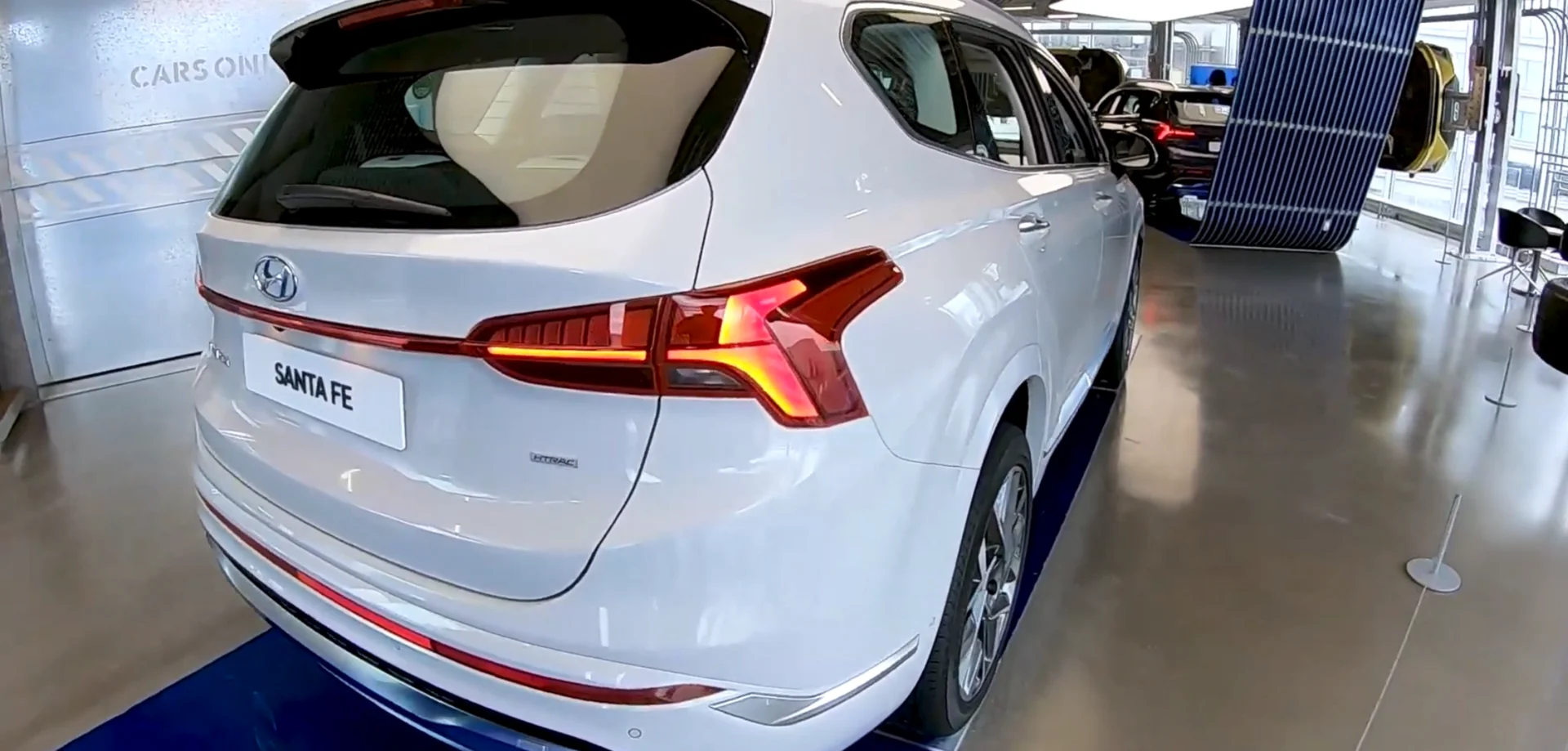
- The fifth-generation boxiness. The 2024 redesign's upright, squared-off roofline is the headline advantage: more of the cargo volume is usable sit-up and lie-down space rather than wasted under a sloping roof. It is the single biggest reason the current Santa Fe sleeps better than its predecessor.
- A wide, low-ish load floor. The flat floor between the wheel wells is wide enough to sleep two with the right mattress, and the load height is manageable for getting in and out.
- 60/40-split folding seats. The split lets you fold one side for a long-gear pass-through while keeping a seat up, or fold both for full sleeping width — flexibility that matters on mixed trips.
- Roof rails on most trims. Standard or available roof rails let you move bulky gear — a cargo box, kayak, or rooftop tent within the roof rating — off the interior floor, freeing the inside entirely for sleeping. See our Hyundai Santa Fe roof rack guide for fitment and weight limits.
- Available all-wheel drive on many trims expands where you can comfortably get to — gravel forest roads and unpaved campsites — though the Santa Fe is a crossover, not a hardcore off-roader, so match your destinations to its capability.
Two SUVs with the same cubic-foot rating can sleep completely differently. The Santa Fe's edge is shape, not just size: its squared-off fifth-generation body turns more of that volume into space you can actually lie down and sit up in.
The honest limits are the same as for any mid-size SUV: the sleeping length is short for very tall people, the roof load rating is modest (so heavy rooftop tents need a fitment and weight check), and it is a comfortable weekend-and-roadtrip platform rather than an expedition rig. Within those bounds, the fifth-generation Santa Fe is one of the more accommodating mainstream choices for sleeping inside.
If you are weighing the Santa Fe against other family SUVs specifically for camping, the boxy-versus-sloped distinction is the one to focus on: it is why two SUVs with similar cubic-foot ratings can feel very different to actually sleep in.
Essential Gear for a Santa Fe Sleeping Setup
You do not need much to turn the Santa Fe into a comfortable bedroom, and most of it you may already own. The goal is a short, deliberate kit rather than a carload of extras — remember that anything not on the bed has to go up front or on the roof.
The core checklist, in rough priority order:
- A floor-sized mattress or sleep pad (covered above) — the foundation of the whole setup and where to spend first.
- Window covers for privacy, light, and insulation — the second priority and the cheapest big upgrade.
- A sleeping bag or bedding rated for the temperatures you will actually face, plus a good camp pillow.
- Ventilation aids — bug screens for the cracked windows and a small fan to keep air moving and condensation down.
- A power source — a power station or at minimum a USB battery bank so you are not draining the vehicle battery.
- Lighting — a rechargeable lantern or LED strip that runs off your power station rather than the car.
- Storage and organization — soft bags or collapsible bins that pack flat and move easily between the floor and the front seats as you switch between driving and sleeping mode.
For organization specifically, the Santa Fe rewards a system where everything has a place and the bulky items live off the sleeping floor. A roof cargo box or rooftop tent (within the roof rating) is the cleanest way to keep the interior clear; for what fits up top and how to mount it, our Santa Fe camping accessories guide rounds up the gear that pairs well with the vehicle.
Beyond the sleeping kit, the usual car-camping essentials apply — a stove and cookset, a cooler or 12V fridge, water storage, and a camp chair or two for outside the vehicle. None of these are Santa Fe-specific, but planning where each rides (front seats, footwells, roof) before you build the bed keeps the inside livable. The discipline that makes any SUV sleeping setup work is deciding, in advance, what sleeps inside and what stores elsewhere — do that and the Santa Fe is a comfortable, capable basecamp.