
The Short Version
As an Amazon Associate I earn from qualifying purchases.
- Have raised side rails? Any clamp-on crossbar set here fits.
- Flush or bare roof (no rails)? You need a fixed-point or clamp-foot system instead — confirm before buying.
- Want a factory look? Hyundai sells OEM crossbars (part R6F21-AC000) through dealers.
How to Confirm Your Santa Fe Roof Type
Fit is the single most common mistake buyers make, so confirm it first. Hyundai builds the 2024-2026 Santa Fe with different roof hardware by trim and year, so two Santa Fes in the same lot can take different racks.
- Raised side rails — rails with a visible gap underneath that you can slip a hand through. Most SE, SEL, XRT, and Calligraphy trims have these. The crossbars in this guide clamp here.
- Flush (low-profile) rails — rails that sit nearly flat against the roof with no gap. These need flush-specific feet, not the raised-rail clamps below.
- Bare roof — no rails at all. Requires a clamp-in-the-door-frame system; verify fit per the manufacturer chart.
Check the maker year/trim fit chart against your VIN before ordering — "fits Santa Fe" is not the same as "fits your Santa Fe." Raised-rail and flush-rail hardware are not interchangeable.
An easy way to check at home: open the rear door, look at the rail from the side, and try to slide your fingers under it. If there is a clear channel you can grip, you have raised rails and the clamp-on sets in this guide will fit. If the rail hugs the roofline with no gap, it is a flush rail. The 2024-2026 redesign leans heavily toward raised rails on the rugged XRT and upper trims, which is good news because raised-rail crossbars are the most plentiful and affordable category. When in doubt, photograph your rails and compare against the maker fit images before you order.
Our Top Picks for the 2026 Santa Fe
All five sets below are aftermarket aluminum crossbars listed to fit the 2024-2026 Santa Fe with raised rails. We differentiate them on the specs that actually vary — rated load, locking, and bar profile — drawn from each maker listing, not first-hand testing.
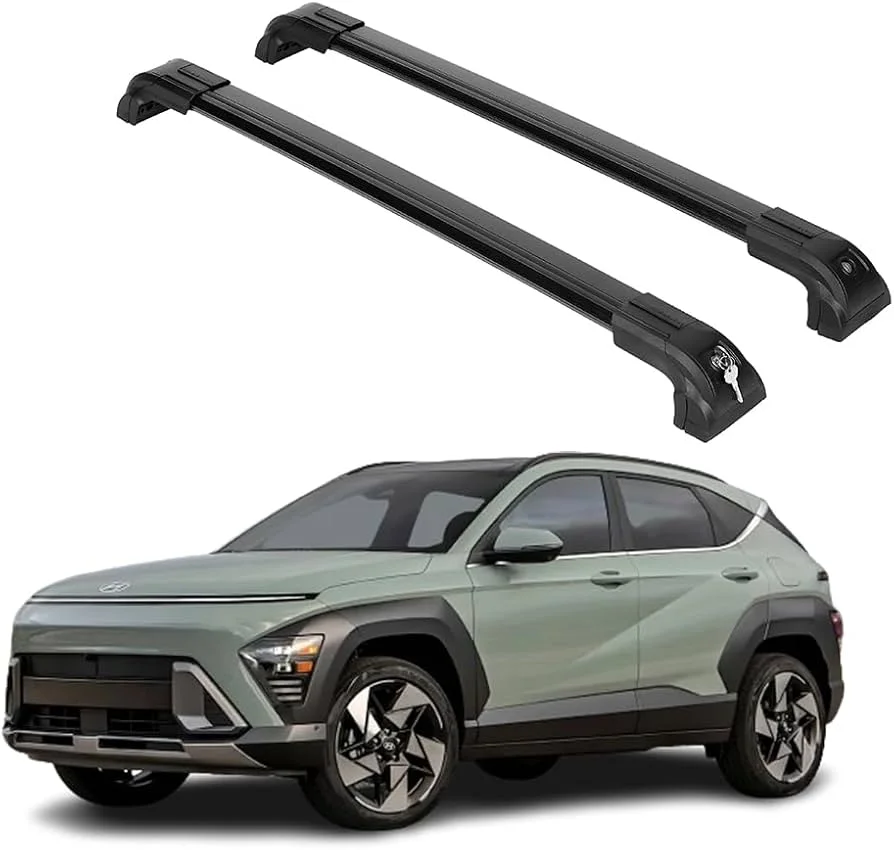
- The aerodynamic wing profile is designed to cut wind noise versus a square bar, and the all-black finish suits darker trims. Best for buyers who want a quieter highway ride.
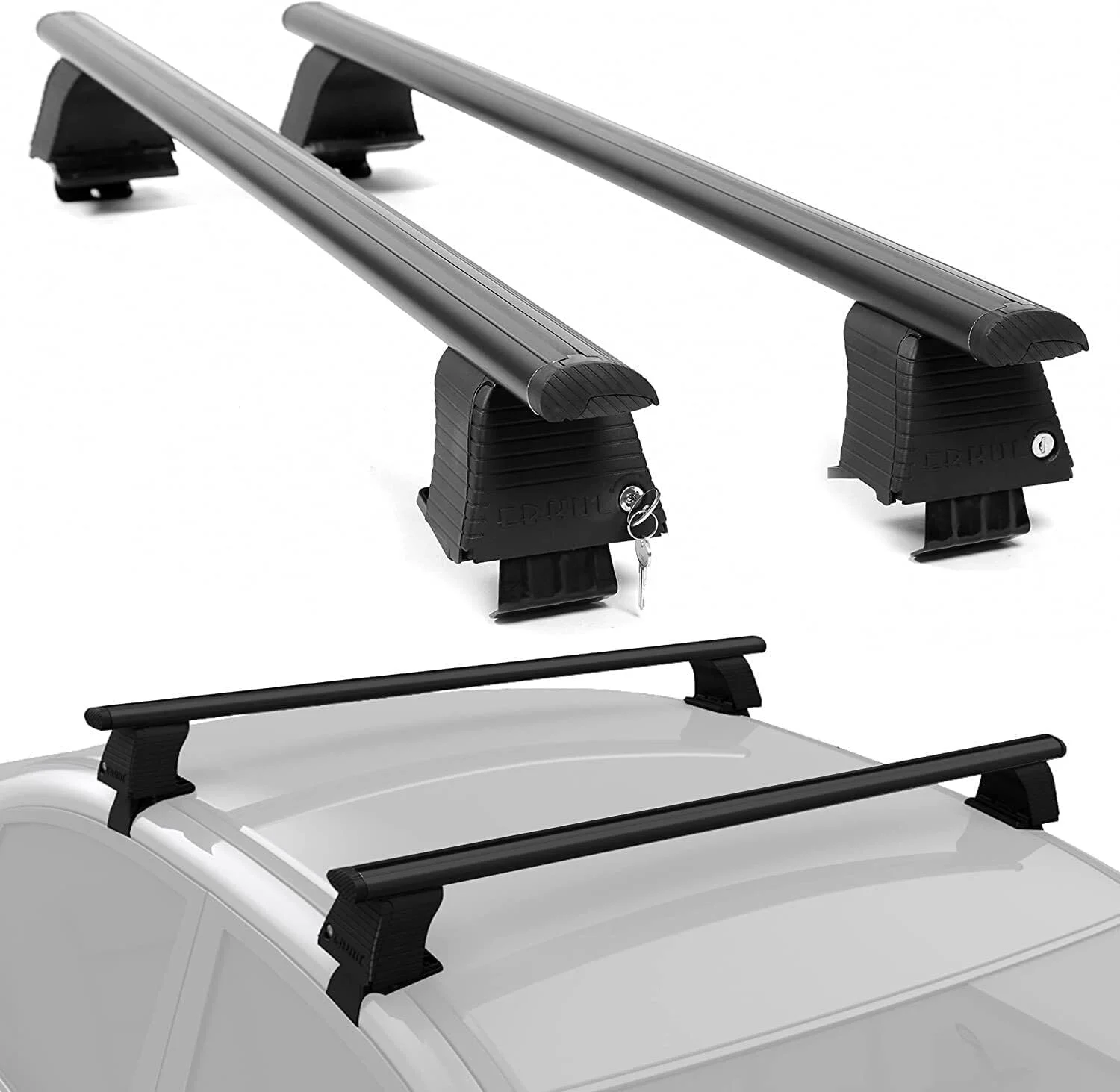
- ERKUL Aluminum Roof Rack Crossbars — A straightforward aluminum clamp-on set for raised rails. ERKUL lists it specifically for Hyundai applications, and the simple T-slot top makes mounting accessory carriers easy. Best for a no-frills, model-matched fit.
- The higher rated load and integrated locks suit owners hauling heavier cargo boxes or leaving the rack on long-term. Best for higher load and security.
- A close alternative to the SYDSZ set; choose on price and finish. Best for a lockable high-capacity option.
- The lower rating makes them best for lighter loads — a single kayak, snowboards, or a small cargo bag — rather than a fully loaded box. Best for light, secured cargo on a budget.
Prefer a genuine fit and dealer support? Hyundai OEM crossbars (Manufacturer Part Number R6F21-AC000) are engineered for the Santa Fe and integrate with other factory accessories, though they typically cost more than these aftermarket sets.
A note on what these picks have in common: they are all bolt-on aluminum bars, so none require drilling or permanent modification, and all five are reversible — you can remove them and return the roof to stock in minutes.
Weight Capacity: Dynamic vs. Static Load
Rated capacity is the spec most often misread. Crossbars carry two different limits, and confusing them is how gear ends up on the roadside. Here is how the five picks compare on rated dynamic load and locking, per each maker listing:
| Crossbar set | Rated load (approx.) | Locking |
|---|---|---|
| BrightLines (wing/aero) | ~220 lb | No |
| ERKUL | Standard | No |
| SYDSZ | ~300 lb | Yes |
| Soruci | ~300 lb | Yes |
| Snailfly | ~165 lb | Yes |
Two terms matter here. Dynamic load is the weight the rack can carry while driving. Static load is the weight it holds parked, which is relevant for rooftop tents and is usually far higher than the dynamic rating — but never assume, check the listing. Most important: the real limit is your vehicle. The Santa Fe roof load limit is set by Hyundai and is typically well below any crossbar rating, so your usable limit is always the lower of the two.
Distribute weight evenly across both bars and keep heavy items low and centered. A common mistake is loading a single heavy box toward one bar, which concentrates stress on a few clamp points and can exceed the local rating even when the total weight looks fine. Tie down every load at four points and re-check the straps after the first few miles, since loads settle and straps loosen. If you are carrying bikes or a kayak, remember the gear weight plus the carrier hardware both count against the dynamic rating.
For a full breakdown of how much you can safely carry, see our Santa Fe roof rack weight limit guide.
Wind Noise and Aerodynamics
The most common complaint about any roof rack is noise. Bar shape is the biggest factor.
- Square/round bars are cheaper and stronger for the price but tend to be louder.
- Remove bars when not in use — empty crossbars still add drag and noise and shave fuel economy. Lockable sets make this quick.
If whistling appears after install, it usually means the bars are spaced or oriented wrong, not that the set is defective. Some sets include rubber strips or fairings that further dampen noise; if yours did not and the whistle bothers you, an aftermarket wind fairing mounted to the front bar is an inexpensive fix. Crosswinds and roof-box shape also matter, so a tall box on square bars will always be louder than a low cargo basket on aero bars.
Installation and Fit Tips
For a step-by-step walkthrough, see how to install a Santa Fe roof rack.
Care and Maintenance
- Rinse after salt or dirt. Wash aluminum bars with mild soap and water after winter or off-road trips to prevent corrosion at the clamps.
- Re-check torque. Vibration loosens hardware; re-check the feet after the first long drive and periodically after.
- Store off-season. Removing the bars when unused cuts drag and protects the locks and finish.
- Do not overload. Stay under the lower of the crossbar rating and the Santa Fe roof limit.
A well-maintained aluminum crossbar set will outlast several vehicles — the only parts that typically wear are the rubber pads and the lock cylinders, both of which are inexpensive to replace.
Pairing the rack with the right gear? Browse our Santa Fe camping accessories guide.
Final Recommendations
The best 2026 Santa Fe roof rack depends on your priorities:
- Simplest model-matched fit: ERKUL Aluminum Roof Rack Crossbars — a clean Hyundai-specific clamp-on set.
- Factory look: Hyundai OEM crossbars (part R6F21-AC000) from a dealer.
Whatever you choose, confirm your roof type first — raised rails, flush rails, or bare roof — because fit, not brand, is what makes a rack safe. See also GX 550 roof rack fitment options.