
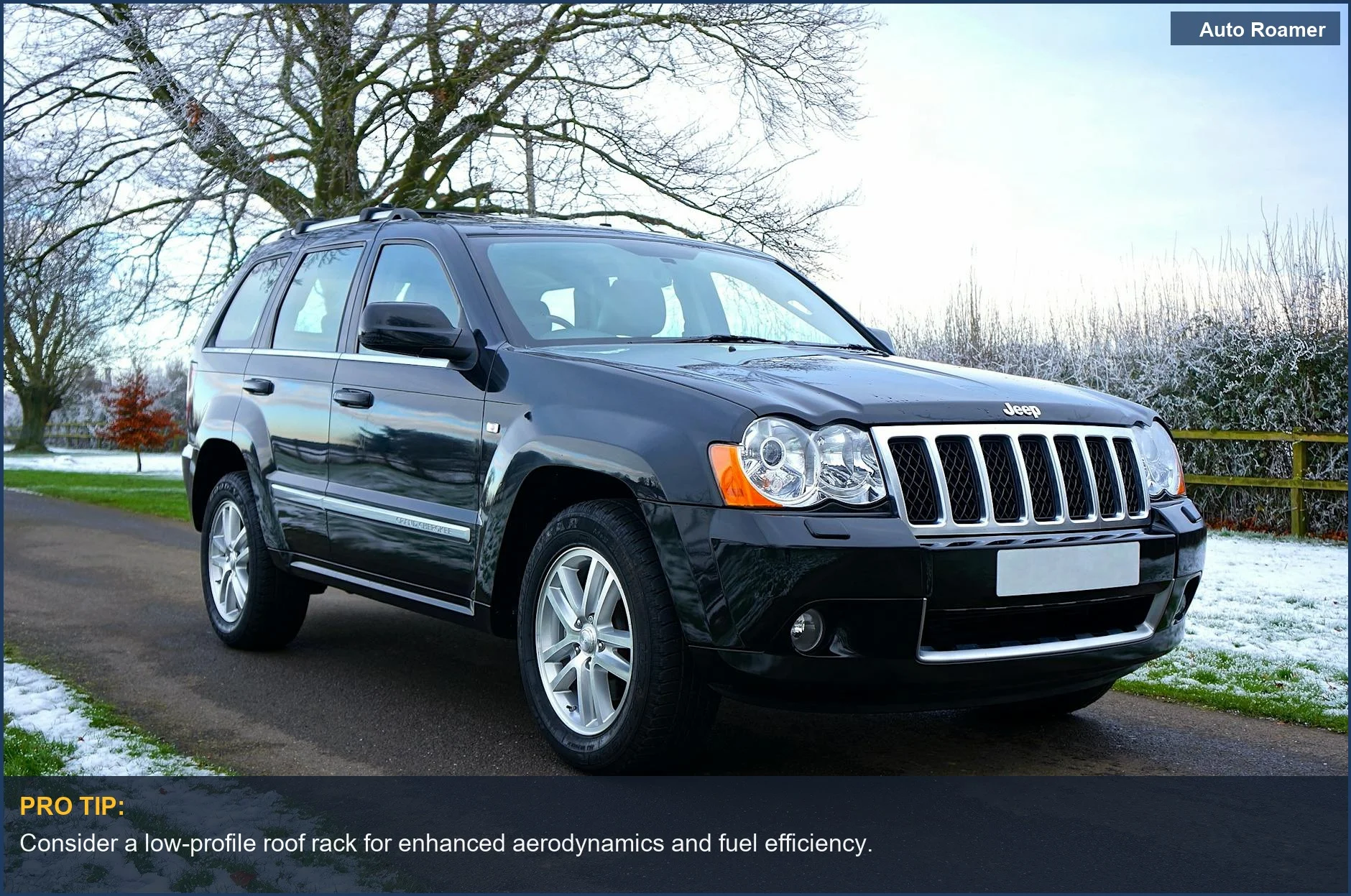
Lexus GX 550 Roof Rack Options at a Glance
The Lexus GX 550 is one of the easier modern SUVs to put a roof rack on, because it leaves the factory with usable mounting points and a tall, square roofline that takes a rack well. The catch is that "roof rack" covers several very different things, and the right one depends entirely on what you want to carry. Before spending money, it helps to know which category you actually need.
At the broadest level, your GX 550 roof rack options fall into three buckets:
- Factory or aftermarket crossbars — two bars running side to side, the simplest and lightest setup. They carry a cargo box, bikes, kayaks, or a basket, and they are all most owners ever need.
- A full platform rack (roof tray) — a flat aluminum platform covering most of the roof. It spreads load, mounts accessories anywhere, and is the setup of choice if you want a rooftop tent or a lot of bulky gear.
- The GX 550's own factory rails — the side rails the truck comes with (or the heavier-duty rails on the off-road trims), which are the foundation everything else bolts to.
The single most important thing to understand before you buy is that a roof has two completely different weight limits: a low dynamic limit for driving and a much higher static limit for when the vehicle is parked. Nearly every confusing roof-rack question — "can it hold a rooftop tent and two adults?" — comes down to telling those two numbers apart. We cover that in detail below, using Lexus's published specifications rather than any figure we measured ourselves.
Quick rule: crossbars for boxes, bikes, and kayaks; a platform rack for a rooftop tent or heavy, bulky loads. Match the rack to the cargo, not to the biggest rack you can find.


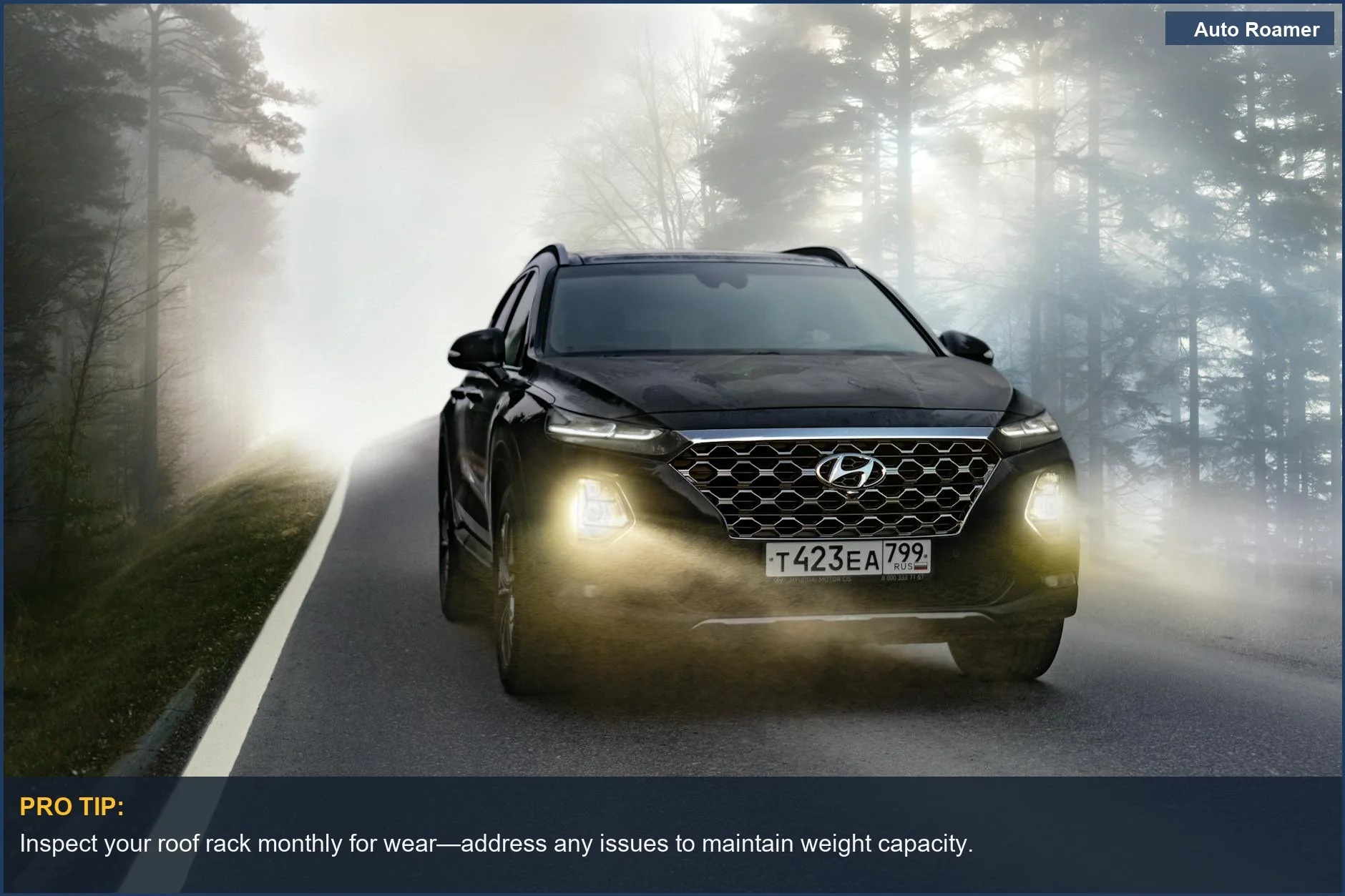
Factory Roof Rails and What the GX 550 Comes With
Every roof rack starts with what the vehicle gives you to bolt onto, so it pays to know your GX 550's roof before shopping. The current GX 550, the body-on-frame SUV that replaced the long-running GX 460, ships on most trims with raised side rails running front to back along the roof. Those rails are the anchor points; crossbars and platform racks clamp to them or to dedicated mounting feet that locate off them.
Not all GX 550 roofs are identical, though, and the differences matter when you choose a rack:
- Standard raised side rails — found on most trims, these are the familiar two rails along the roof edges. Aftermarket crossbar systems clamp directly to them, which is the easiest path for a cargo box or bikes.
- Off-road trim rails — the rugged-focused Overtrail trim is set up for accessories and is the trim most owners associate with heavier roof builds; its rail and mounting arrangement is aimed at platform racks and overlanding gear.
- Flush or bare roofs — some configurations come without raised rails, which usually means a track or fixed-point system instead. Confirm exactly what your specific truck has before buying.
Why obsess over the rails? Because the rail type decides which mounting kit you need, and the wrong kit either will not fit or will not be rated for the load you have in mind. A rack rated for thousands of pounds is meaningless if it is hanging off rails or feet that are the actual weak link. The rails, the feet, the bars, and the cargo all form a chain, and the chain is only as strong as its lowest-rated part.
If you are cross-shopping the GX against other SUVs for a roof build, our overview of which SUV is best for camping puts the GX's roof and cargo strengths in context against the rest of the field.
Dynamic vs Static Load: The Number That Decides Everything
This is the section to read twice, because misunderstanding it is how people end up disappointed or, worse, unsafe. A vehicle roof has two separate weight ratings, and they are not interchangeable.
- Dynamic load rating — the maximum weight the roof can carry while the vehicle is moving. It is deliberately conservative because driving adds bumps, braking forces, cornering loads, and wind. On SUVs in the GX's class this figure is commonly in the range of roughly 150 to 180 pounds, and it must include the weight of the rack itself, not just your cargo.
- Static load rating — the maximum weight the roof can support when the vehicle is parked and not moving. Because there are no driving forces, it is far higher, often several hundred pounds. This is the number that makes a rooftop tent possible.
Here is why the distinction is the whole ballgame. A rooftop tent might weigh 130 pounds empty. Add two adults at 180 pounds each and you are at roughly 490 pounds on the roof. No SUV has a dynamic rating anywhere near that — but you are not driving while you sleep. The tent's weight has to respect the dynamic limit on the highway, while the tent plus sleepers must stay under the static limit overnight. Both checks have to pass, and they are different numbers.
The honest framing: dynamic load tells you what you can drive with; static load tells you what you can park and sleep under. A rooftop tent lives in the gap between the two.
It is worth pausing on why manufacturers set the dynamic figure so low. The roof is structurally one of the strongest parts of the vehicle when pushed straight down, which is why the parked static number is so generous. But driving introduces side loads, sudden braking, and the leverage of weight perched high above the center of gravity, all of which stress the mounting points and the rack rather than the roof panel itself. A modest 165 pounds of cargo behaves very differently at 70 miles per hour over a pothole than it does sitting still, and the dynamic rating is the engineer's safety margin for exactly that difference. Raising weight to the roof also blunts handling and raises rollover risk, so the conservative driving number protects more than just the sheet metal.
Two cautions on the numbers themselves. First, treat the figures above as the typical class range and confirm the exact dynamic and static ratings for your model year in your owner's manual and your rack manufacturer's documentation — those are the authoritative sources, not a general article. Second, the rated limit always belongs to the lowest-rated component in the stack, which is the principle we apply next.
Crossbars vs Full Platform Racks
With the load rules clear, the practical choice for most GX 550 owners is between simple crossbars and a full platform rack. They solve different problems, and there is no universally "better" one.
Crossbars are two bars spanning the roof, and they are the right answer for the majority of buyers. They are lighter, cheaper, quieter, and easy to remove when you do not need them. They carry a hard-shell cargo box, a roof basket, bikes, kayaks, skis, or a cargo bag with no trouble. If your roof use is occasional and gear-focused, crossbars are almost certainly enough.
- Best for: cargo boxes, bikes, kayaks, skis, roof baskets, occasional hauling.
- Strengths: low weight, lower cost, less wind noise, quick to fit and remove.
- Limits: only two mounting lines, so very bulky or full-roof loads (like a tent) are awkward or unsupported.
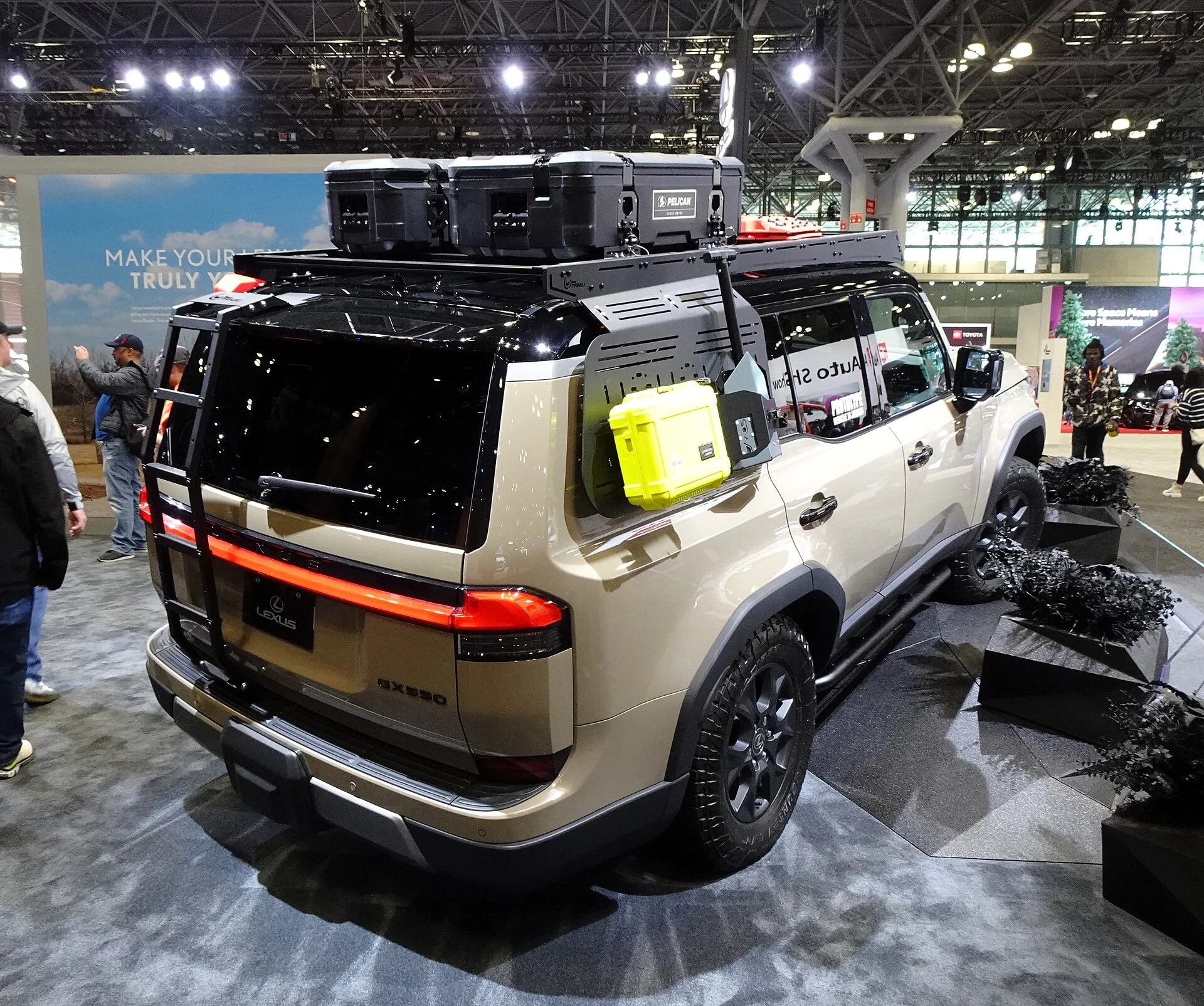
Platform racks (also called roof trays or flat racks) are a full aluminum platform that covers most of the roof. They cost and weigh more and add wind noise, but they spread load across the whole roof, give you tie-down points everywhere, and accept accessories like awnings, tables, and especially rooftop tents. If overlanding or a roof tent is the goal, this is the category.
- Best for: rooftop tents, awnings, heavy or bulky loads, full overland builds.
- Strengths: load spread across the roof, mount accessories anywhere, very rigid.
- Limits: heavier, pricier, more wind noise and a fuel-economy penalty, harder to remove.
A useful tie-breaker: how often will the rack be empty? A platform rack you drive around bare most of the year is dead weight and wind drag costing you fuel. Crossbars come off in minutes. If the roof earns its keep only a few weekends a year, lean toward crossbars; if it is a permanent part of how you use the truck, the platform is worth it. For a deeper look at the cargo-box side of that decision, see the best rooftop cargo box for road trips, and for the cheaper soft option, soft roof cargo bags.
Can the GX 550 Carry a Rooftop Tent?
Yes — and this is the question that brings most people to a GX 550 roof rack search in the first place. The GX is genuinely well suited to a rooftop tent, but the answer comes with conditions you have to respect.
Work through it in three steps, in order:
- Check the tent's weight against the dynamic limit (driving). A folded hard-shell tent often weighs 100 to 160 pounds, plus the platform rack itself. That combined weight has to stay under the roof's dynamic rating, which on this class of SUV is commonly around 150 to 180 pounds. This is the binding constraint, and it is why a heavy tent on a heavy rack can exceed the driving limit before anyone climbs in.
- Check tent plus occupants against the static limit (parked). Once you stop and deploy the tent, the much higher static rating applies. Tent plus two adults — call it 450 to 500 pounds — needs to stay under that static figure. For most GX-class roofs, it does.
- Confirm the platform rack is rated for both. The rack has its own dynamic and static ratings. The number you actually live by is the lower of the rack's rating and the roof's rating at each condition.
A rooftop tent on a GX 550 is realistic for two adults — but only when the folded tent plus the rack clears the driving limit, and the deployed tent plus sleepers clears the parked limit. Check both, against the lower of the rack and roof ratings.
Two practical notes. A platform rack, not bare crossbars, is the right base for a tent, because it spreads the load and gives the tent's mounting rails a full surface to clamp to. And remember that a GX is tall to begin with; a roof tent adds height, weight up high, and wind drag, all of which affect handling and fuel economy. If a roof tent feels like overkill, the GX's own flat cargo floor sleeps well inside — our note on the best Lexus for car camping explains why the GX is the easiest Lexus to sleep in without going up top, and our rooftop tent guide covers the tents themselves.
Trim Differences: Overtrail and the Off-Road Setups
Not every GX 550 approaches roof loads the same way, and the trim you own changes the smart starting point. The lineup splits roughly into the comfort and luxury trims and the off-road-focused Overtrail, and they signal different intentions for the roof.
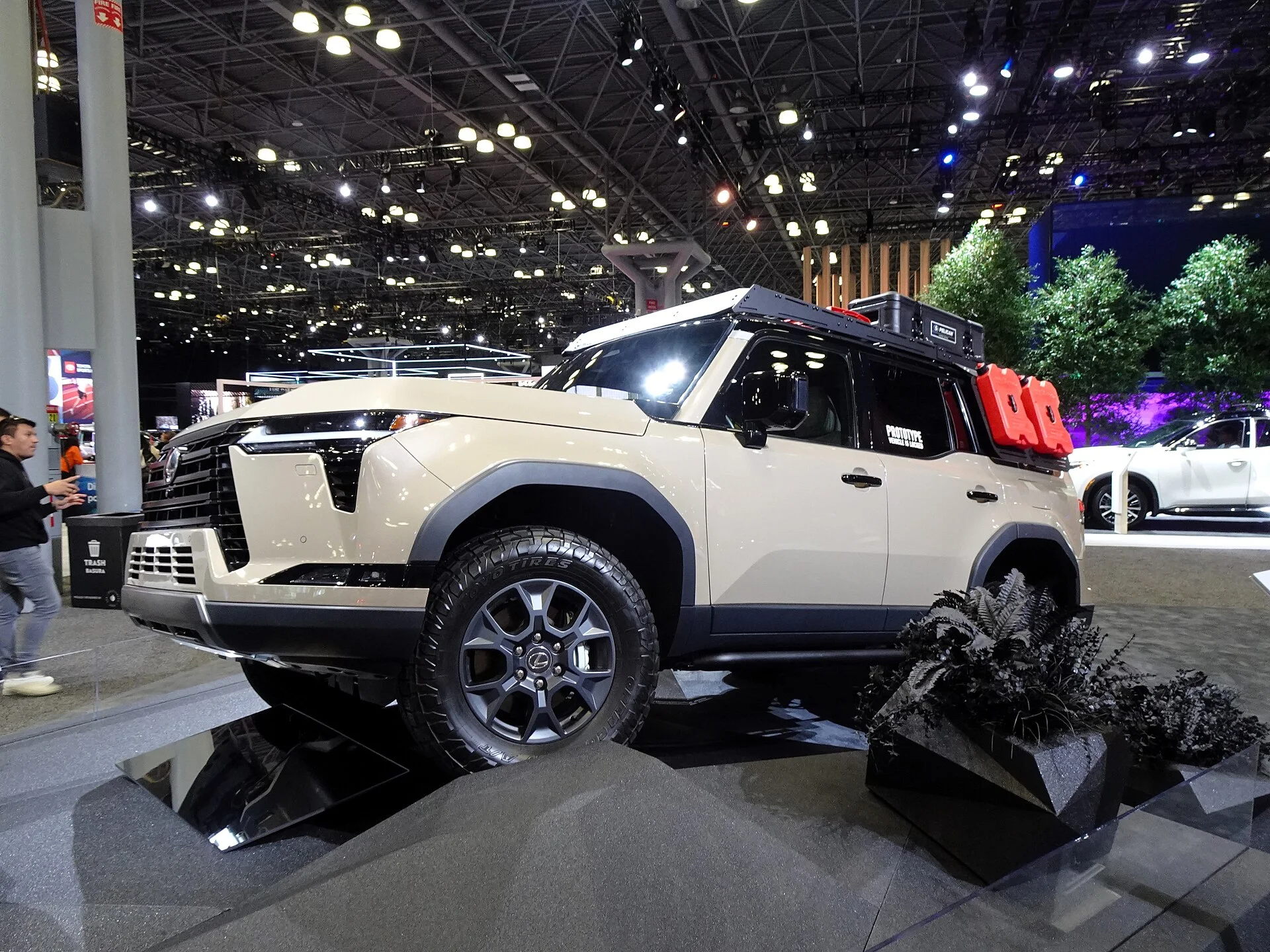
The Overtrail is the trim built around going off pavement and carrying gear, and it is the one most associated with serious roof builds. It is set up with accessory mounting in mind, which makes it the natural home for a platform rack, an awning, and a rooftop tent. If you bought the Overtrail specifically to overland, a platform rack is the logical roof, and the trim's hardware is oriented that way.
The luxury and Premium trims are aimed at on-road comfort, and while they take crossbars and a cargo box happily, they are not where most owners start a heavy overland roof build. That is a matter of intent and how the truck is equipped from the factory, not a hard rule — the underlying roof structure is shared across the lineup.
- Overtrail — geared for accessories; the natural base for platform racks, awnings, and rooftop tents.
- Luxury / Premium — happy with crossbars and a cargo box; less commonly the start of a full overland build.
- All trims — confirm your specific roof hardware and the published dynamic/static ratings for your model year before buying; intent differs by trim, but the authoritative numbers come from your manual.
The takeaway is to let your trim guide the category but never the safety numbers. An Overtrail does not magically have a higher roof rating than another GX 550 of the same year just because it is the off-road trim; it is simply equipped and intended for that kind of load. Whatever trim you have, the dynamic and static figures in your owner's manual are the limits that apply.
Fitment, the Lower-of-Two-Ratings Rule, and Avoiding Mistakes
Most roof-rack regret comes from two avoidable errors: buying a rack that does not actually fit, and buying one whose load rating you misread. A few minutes of checking prevents both.
On fitment, the GX 550 is well supported by the major rack brands, but "fits a GX" is not specific enough. Confirm three things before you buy:
- Exact roof type. Raised side rails, flush rails, a track, or fixed points each need a different mounting kit. Identify yours precisely, because the kit is what makes a rack model fit your truck.
- Model-year compatibility. The GX 550 is the current generation; do not assume a rack listed for the older GX 460 carries over. Use the manufacturer's fit guide for your exact year.
- Clearance and access. A tall rack or box can complicate garage entry and rear-hatch operation. Measure your garage and check that the hatch still clears.
On load, apply the lower-of-two-ratings rule, which is the single most useful habit in this whole topic:
Your real roof limit is always the lowest-rated part in the stack — roof, mounting feet, crossbars or platform, and accessory. If the roof allows 165 pounds dynamic but the crossbars are rated to 150, your driving limit is 150. The weakest link sets the number, every time.
Put concretely, walk the chain and take the smallest figure: the vehicle's published roof rating, the rack/foot kit's rating, and the accessory's own limit. Never add them, never average them — take the minimum, and stay comfortably below it rather than at it. For a sense of how brands stack up before you choose, our Thule vs Yakima comparison walks through the differences, and if you are weighing a roof box against a trailer for big loads, roof box vs trailer covers that trade-off.
A word on the cost a roof load quietly imposes, since it rarely shows up in the buying decision. Anything on the roof pushes the GX's already-tall profile higher and disrupts the airflow the body was shaped to manage, and the result is measurable: more wind noise in the cabin and a fuel-economy hit that grows with speed. A bare platform rack alone can cost you a meaningful chunk of highway efficiency before you have loaded a thing, and a roof box or tent makes it worse. That is the strongest practical argument for removable crossbars over a permanent platform if your roof spends most of the year empty — you only pay the penalty when you are actually carrying something.
Finally, do the boring maintenance: re-torque the rack hardware after the first drive and periodically after, keep the rated load in mind every time you pack, and remove the rack when you are not using it to claw back fuel economy and quiet. None of this is glamorous, but it is what separates a roof setup that lasts from one that rattles loose or quietly overloads the weakest link.
How to Choose the Right GX 550 Roof Rack for You
Reduce the whole decision to a short series of honest questions, and the right rack falls out quickly without overspending.
- What are you carrying most? A cargo box, bikes, or kayaks point straight to crossbars. A rooftop tent or a full overland kit point to a platform rack.
- How often will the roof actually be loaded? A few weekends a year favors removable crossbars; year-round use justifies a permanent platform.
- What does your roof have? Identify your rails or mounting points first, then shop only racks with a kit for that exact setup and your model year.
- Do the numbers clear? Confirm the dynamic limit for driving and the static limit for any rooftop tent, and apply the lower-of-two-ratings rule across the whole stack.
- Can you live with it daily? Check garage and hatch clearance, and accept that a platform rack costs some fuel economy and adds wind noise the rest of the year.
For the typical GX 550 owner who road-trips with gear and camps occasionally, a good set of crossbars plus a cargo box is the sweet spot: light, affordable, quiet enough, and easy to remove. The full platform rack earns its cost only when a rooftop tent or a serious overland build is the genuine goal, which is exactly what the Overtrail trim is set up to support.
Whatever you choose, the priorities are the same in order: confirm fitment for your exact roof and year, respect the dynamic and static limits, and size the whole stack to its weakest link. Because you cannot buy a vehicle on a retail site, this guide stays focused on the options and the rules rather than selling a single rack — and for the storage side of the build, our guides to rooftop cargo boxes and soft cargo bags cover what rides on top once the rack is on. Get the foundation right and the GX 550 becomes one of the more capable roof platforms in its class.
Before loading up, check the weight limits with a panoramic sunroof.