Can a car battery run a fan all night? Usually, yes
Will a fan drain my battery and leave me stuck? That's the question underneath this one, and the honest short answer is that a small 12V fan almost never will, while a big one run flat-out can. The fan itself is rarely the problem. What decides your morning is how far you let the battery run down before it can't turn the starter over - and that line sits a lot higher than most people think.
Eighteen years of shop work taught me that the dead-battery calls in the morning almost never come from the load being huge. They come from someone assuming a battery is a fuel tank you can run to empty. A starter battery isn't. This page walks the actual numbers: what a 12V fan really pulls, how much of your battery you can safely spend, the runtime math worked out for a couple of real fans, and the cheap part that stops a fan from ever flattening the battery past the point of no return. No inverter, no second battery required to follow along - just watts, amp-hours, and a little arithmetic you can do on your phone.
The one number that decides it: your fan's watts
Everything here turns on one figure - how many watts your fan draws - so get that first and the rest is division. A fan's job is to move air, not make heat, and moving air is cheap in electrical terms. That's the whole reason a fan is a friendly overnight load in a way a heater or a fridge compressor never is.
Find your number one of two ways:
- Read the label or listing: most 12V and USB fans print a watt or amp rating. If it says amps, multiply by 12 for a rough watt figure - a 0.4-amp fan is about 5 watts.
- Meter it if you're serious: a $10 inline watt meter between the socket and the fan tells you the truth on every speed. The high setting can pull two or three times the low setting, and that gap is your whole runtime.
Hold onto that watt number. Everything below is just your safe battery reserve in watt-hours divided by it, and the answer comes out in hours. The watt figure is the one spec that matters here; the fan's size, color and mounting clip are all marketing next to it.
Small clip fan, big roof fan - the draw is not the same
The word 'fan' covers two very different electrical animals, and lumping them together is how people get the runtime badly wrong. A little clip fan and a roof vent fan can differ by a factor of ten in draw, so sort yours into the right bucket before you do any math.
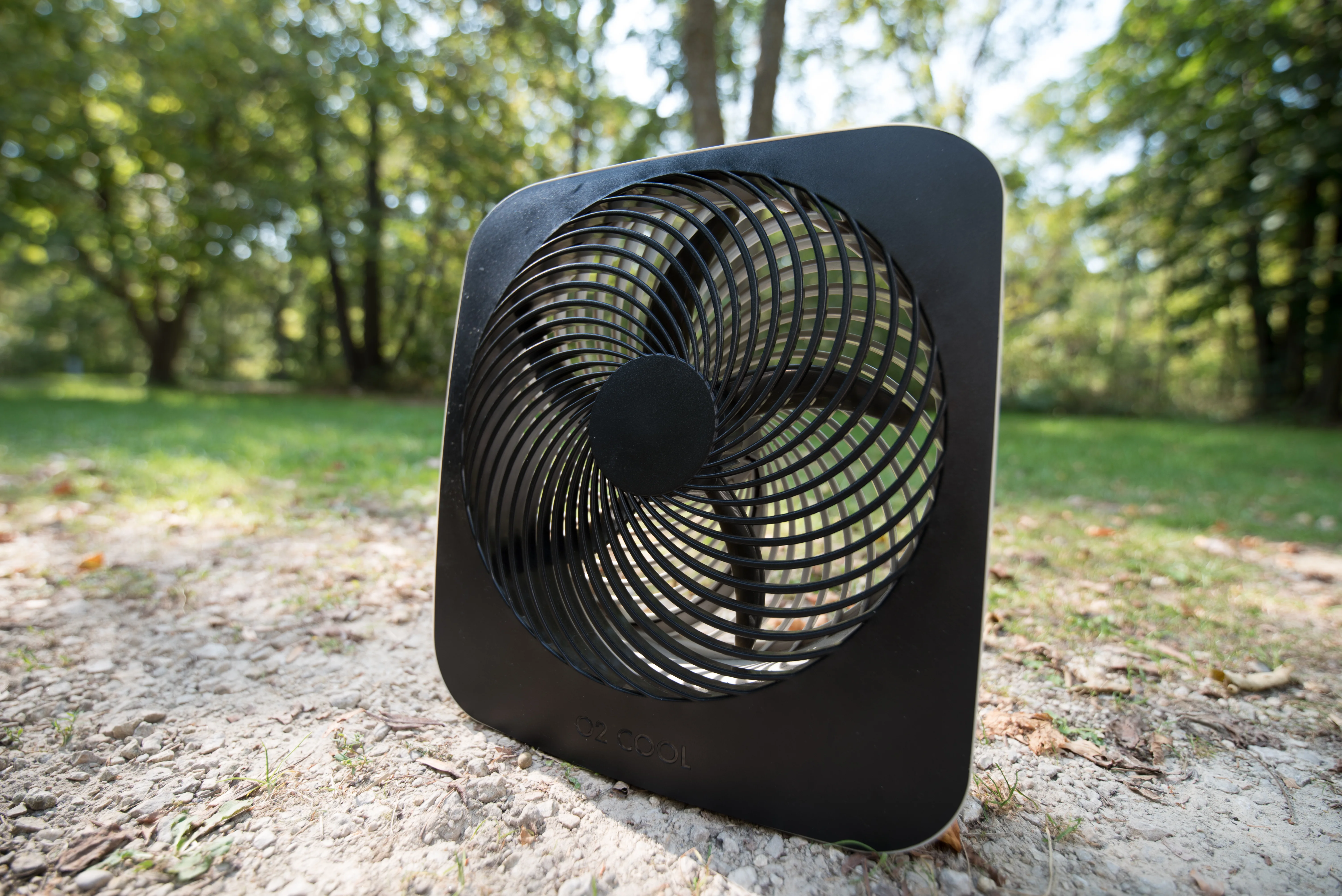
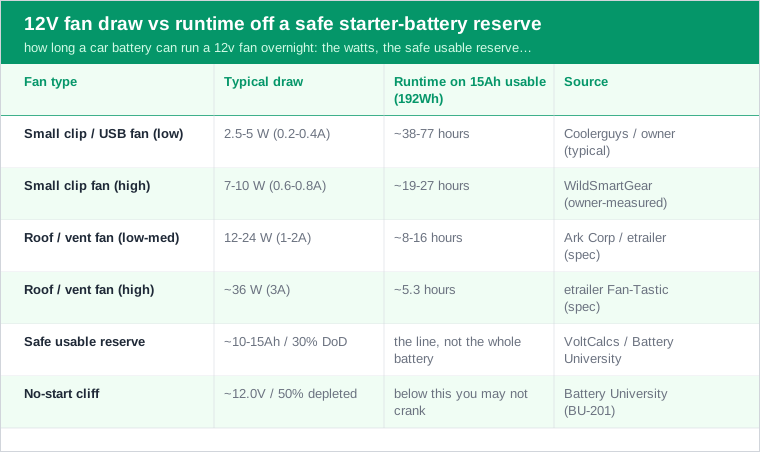
- Small clip / USB / window fans: roughly 2.5 to 10 watts. On low, a good one (a Caframo Sirocco, say) sips around 0.3 amps - about 3 to 4 watts, per Coolerguys' bench figures. On high, 7 to 10 watts. This is the overnight-friendly category.
- Roof / vent fans (Fan-Tastic and the like): around 1 to 2 amps on low and medium, up to 3 amps on high per etrailer's spec - so roughly 12 to 36 watts. Great airflow, but on high it's a genuine load.
- Household AC box fans: 60 to 100 watts, and only run off a battery through an inverter that wastes another chunk. Skip these for battery use - they don't belong in this math.
The mechanic's read: a small DC fan is a rounding error against your battery, and a big vent fan on high is a real customer you have to budget for. Know which one is clipped to your window before you trust a runtime number, because the two aren't in the same league.
How much of a starter battery you can actually use
Here's the number that trips everyone up, and it's the whole reason this isn't just 'battery amp-hours divided by watts.' Your car's starter battery might read 50 amp-hours on paper, but you cannot use all 50. You can use a sliver off the top, because the battery's real job is to crank the engine in the morning, and that takes a big current burst it can only deliver when it's still fairly full.
The safe rule, per VoltCalcs and echoed across battery references, is roughly 30 percent depth of discharge maximum if you still want to start the engine afterward. On a typical 50-amp-hour battery that's about 10 to 15 usable amp-hours - not 50.
Translate that to watt-hours and it's your real fuel tank: 15 amp-hours times 12.8 volts is about 192 watt-hours safe; a more conservative 10 amp-hours is about 128. Watch the voltage as your gauge - keep the resting battery above about 12.2 volts (roughly 60-70 percent charge). Twelve-point-zero volts is about half depleted and, per Battery University, near the no-crank line for many engines - worse on a cold morning when the starter wants even more. So the honest budget for overnight is 128 to 192 watt-hours, and everything below is measured against that, not the battery's full paper rating.
The runtime math, worked for real
Now the easy part - the arithmetic that turns your watt number into hours. The formula is just usable watt-hours divided by fan watts, and I'll run it on real fans so you can see where the line falls.
- 5-watt clip fan on the safe 192Wh reserve: 192 divided by 5 is about 38 hours. That's several nights, not one - a small fan is nowhere near your limit.
- 5-watt fan on the conservative 128Wh reserve: about 25 hours. Still all night with margin to spare.
- 7.5-watt fan on 128Wh: about 17 hours. Comfortable for an eight-to-ten-hour night.
- 36-watt vent fan on high, on the 192Wh reserve: 192 divided by 36 is about 5.3 hours. That's the catch - a big fan on full blast can spend your entire safe reserve before dawn.
Read those and the pattern is obvious: the small fans have runtimes so long the battery is never in danger, while a big fan on high is the only case where you have to think. If your night is eight hours and your fan is under about 20 watts, you finish the night inside the safe window. Over that, or running the vent on high, and you're either dipping past 30 percent or you need a bigger battery than the one under the hood.
Why a starter battery hates being run down
It's worth knowing why the safe reserve is so small, because it changes how you treat the battery. A starter battery and a deep-cycle battery look alike but are built for opposite jobs, and the difference is right there in the lead plates.
Per Battery University's BU-201 teardown of how these cells work:
- Starter batteries use thin, sponge-like plates with lots of surface area, tuned to dump a huge current for one second of cranking and then get topped straight back up by the alternator.
- Those thin plates don't survive deep discharge - running the battery way down and back up repeatedly dissolves them. A cranking battery simply cannot be deep-cycled without shortening its life.
- Deep-cycle batteries use thick plates built to be drained and refilled hundreds of times. At 30 percent discharge a starter battery lasts around 130-150 cycles; a deep-cycle lasts 1,000-plus.
So the 30-percent ceiling isn't timidity - it's the plate chemistry. Every time you run a starter battery hard down for a fan you're spending not just tonight's crank but a slice of the battery's whole life. A small fan barely touches it; making a habit of deep draws is what quietly kills a battery months early.
The no-start morning nobody plans for
Let me walk the failure the way it actually happens, because it doesn't announce itself. You clip a fan to the window, leave it running on the battery overnight, and it hums along fine for hours - fans don't stutter or warn you as the voltage sags. The trouble only shows up at the one moment you can't afford it: you turn the key and get a click.
A fan will happily keep spinning below the voltage your starter needs to crank. The fan is fine at 11.8 volts; your engine is not. Nothing in the car tells you you've crossed the line until you try to leave.
That's the scenario that strands people, and it's almost always a bigger fan, a weak or old battery, or a cold night stacking the odds. A tired battery has less usable reserve to begin with, and cold cuts cranking power further, so the same fan that was harmless in July leaves you calling for a jump in January. If you're going to run any load off the starter battery overnight, plan for that morning instead of hoping past it - which is exactly what the next two sections are for.
A low-voltage cutoff is your safety net
If you take one piece of hardware from this page, make it this: a low-voltage disconnect. It's a $15-to-$30 inline gadget that sits between the socket and the fan and physically cuts the load when the battery drops to a set voltage - usually around 11.8 to 12.0 volts.
What it buys you:
- It stops the fan before the battery is too flat to crank. The cutoff, not your memory, enforces the safe line all night.
- It turns a guessing game into a rule. You no longer have to wake up and check voltage - the device holds the floor for you.
- It's cheap insurance against a tow. One avoided no-start pays for it several times over.
Wire it on the feed to the fan, set it to cut around 12.0 volts, and you can run a fan off the starter battery with the worst-case pulled out from under it. It's the same logic a good dual-battery setup uses, boiled down to one small part. The fan might quit at 3 a.m. if you cut it too close - but you'll still start the car, which is the whole point.
The clean fix: a fan that carries its own battery
Honestly, the simplest way to never worry about any of this is to not run the fan off the car at all. A rechargeable clip fan with a big internal battery skips the entire no-start question, because it never touches the 12V system while you sleep.
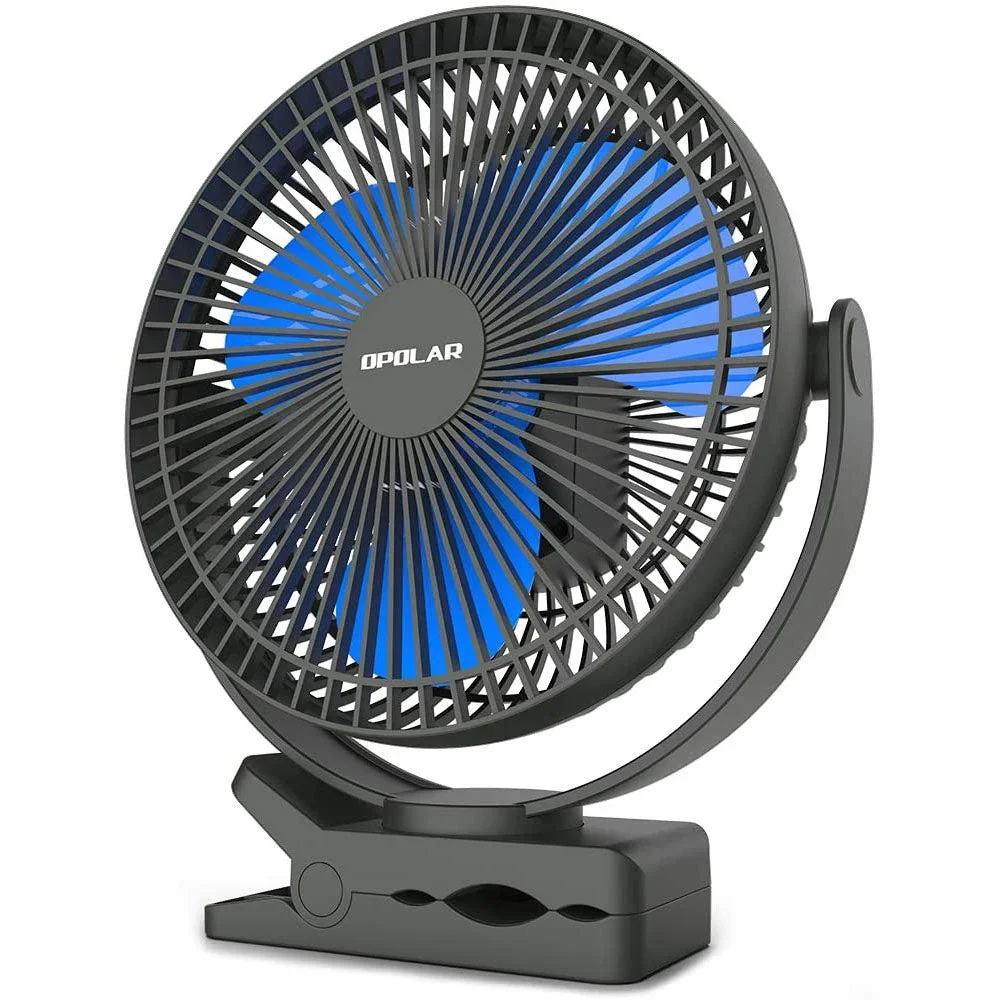
An OPOLAR 10000mAh Battery Operated Clip On Fan is the clean version of this: it runs off its own 10,000-milliamp-hour pack for a long night on a low setting, clips to a window or seatback, and charges off the car's USB while you drive the next day. The car's starter battery stays a starter battery, full and ready, no matter how long the fan runs.
- No wiring, no cutoff, no math - the fan's own battery is the reserve, and draining it doesn't affect your start.
- Recharge on the move so it's topped up by the next campsite.
- The trade-off is runtime capped by the internal pack, so run it on low overnight and save high for when you're awake.
For a lot of car campers this is the entire answer - the fan is the load and the battery in one box, and the car is left out of it. Our roundup of the best rechargeable car-camping window fans goes deeper on which self-powered fans actually last the night.
When you want the fan and everything else: a power station
If the fan is just one of several things you want running - a fan plus lights, phones, maybe a small fridge - the right tool stops being the car battery and becomes a portable power station, which is really a deep-cycle battery with outlets built in.
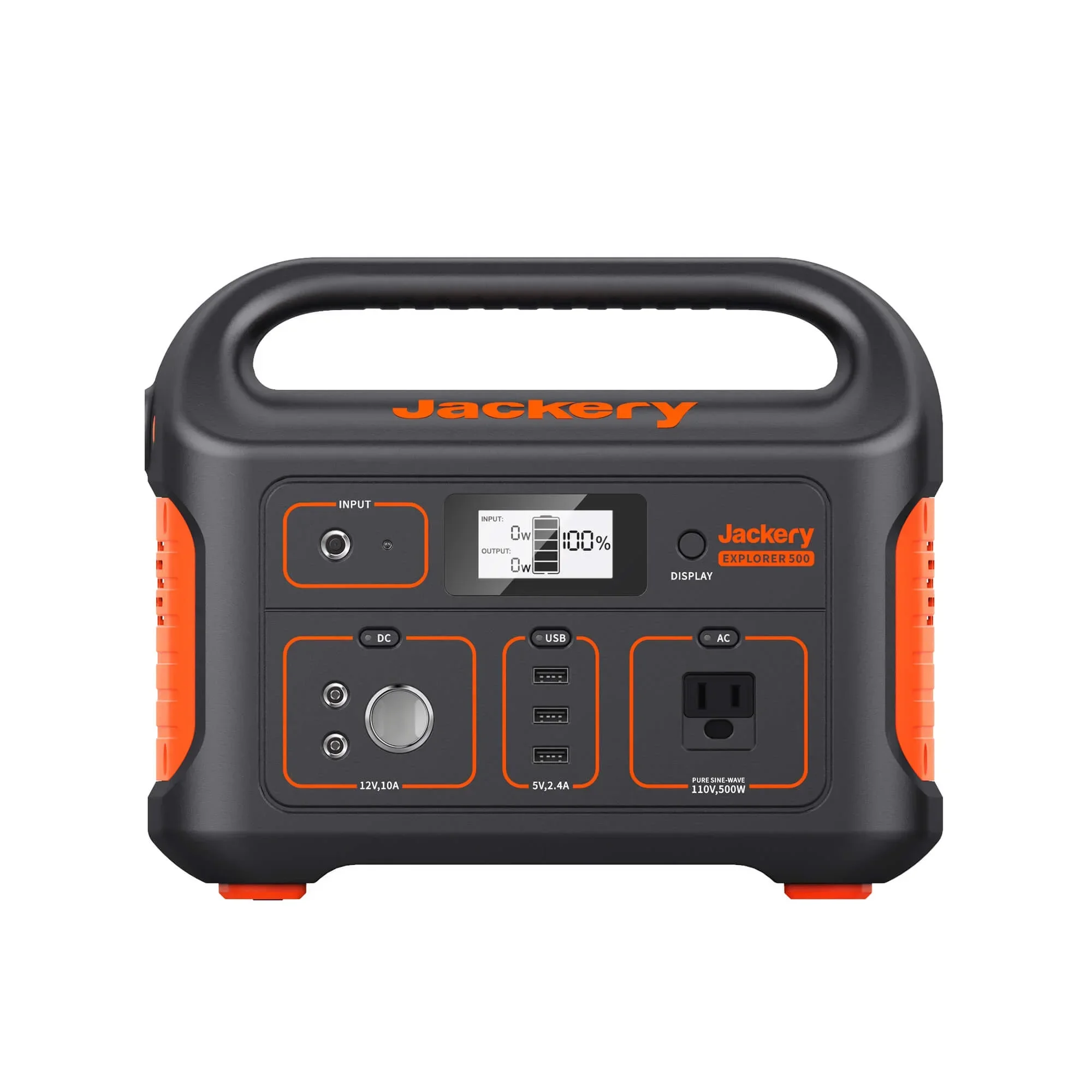
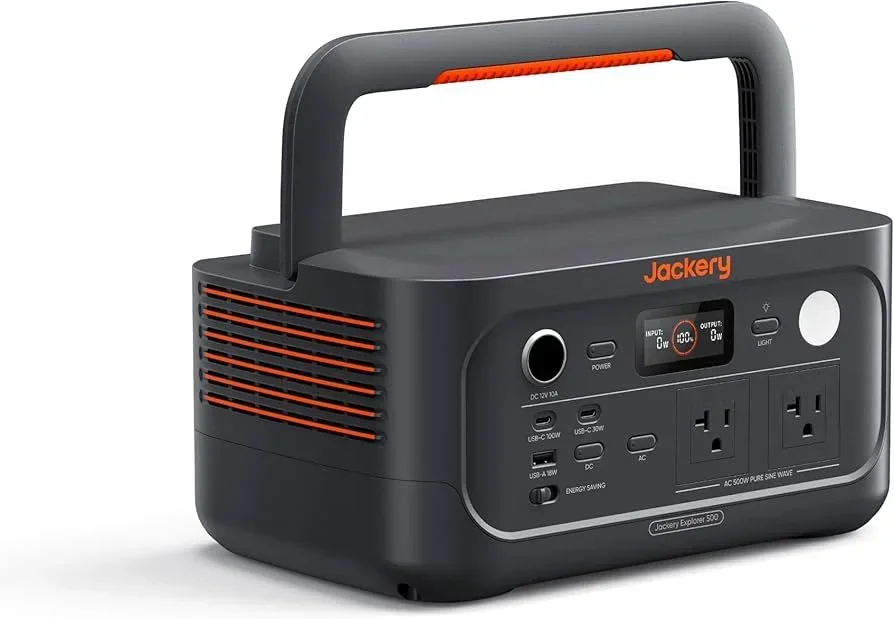
A Jackery Explorer 500 v2 power station carries 512 watt-hours in a lithium chemistry designed to be drained and refilled nightly, so a 5-watt fan barely dents it and you can share the same pack with your other gear. It recharges off the car's 12V socket as you drive, off wall power, or off solar - and, crucially, running it flat doesn't cost you a start.
- Deep-cycle by design: unlike the starter battery, it's built for exactly this nightly drain-and-refill.
- Runs the whole camp: fan, lights, and charging off one reserve, with a real fuel gauge on the front.
- Keeps the car out of it: the one battery you must not kill - the starter - never enters the equation.
That's the upgrade path when a fan alone stops being the whole story. For the fan-only camper a small self-powered clip fan is plenty; the moment you're powering a night's worth of gear, a power station is the honest answer, and our guide on whether you really need a second battery lays out where that line falls.
The honest verdict on fans and car batteries
Put it all together and the answer to 'how long can a car battery run a 12V fan overnight' is: far longer than one night for a small fan, and about five hours for a big vent fan on high - with the real limit being your start, not the fan. A 2.5-to-10-watt clip fan runs 25 to 38 hours off the 10 to 15 amp-hours you can safely take from a starter battery, so a single night is never close to the edge.
Small fan, wired straight to the battery: sleep easy. Big fan on high, weak battery, or a cold night: add a low-voltage cutoff, or move the load onto its own battery. The fan won't strand you - a flat starter battery will.
Know your fan's watts, respect the 30-percent line, and keep the resting voltage above 12.2, and a fan is one of the safest loads you can run in a parked car. When in doubt, let the fan carry its own battery or put a cutoff between it and the car - either way you wake up to a fan that ran all night and an engine that still starts. That's the outcome the whole page is chasing. For the rest of the overnight-drain picture, our guide to what drains a car battery overnight while parked covers the loads that sneak up on you.
Related on Auto Roamer: how long you can idle your car overnight.