
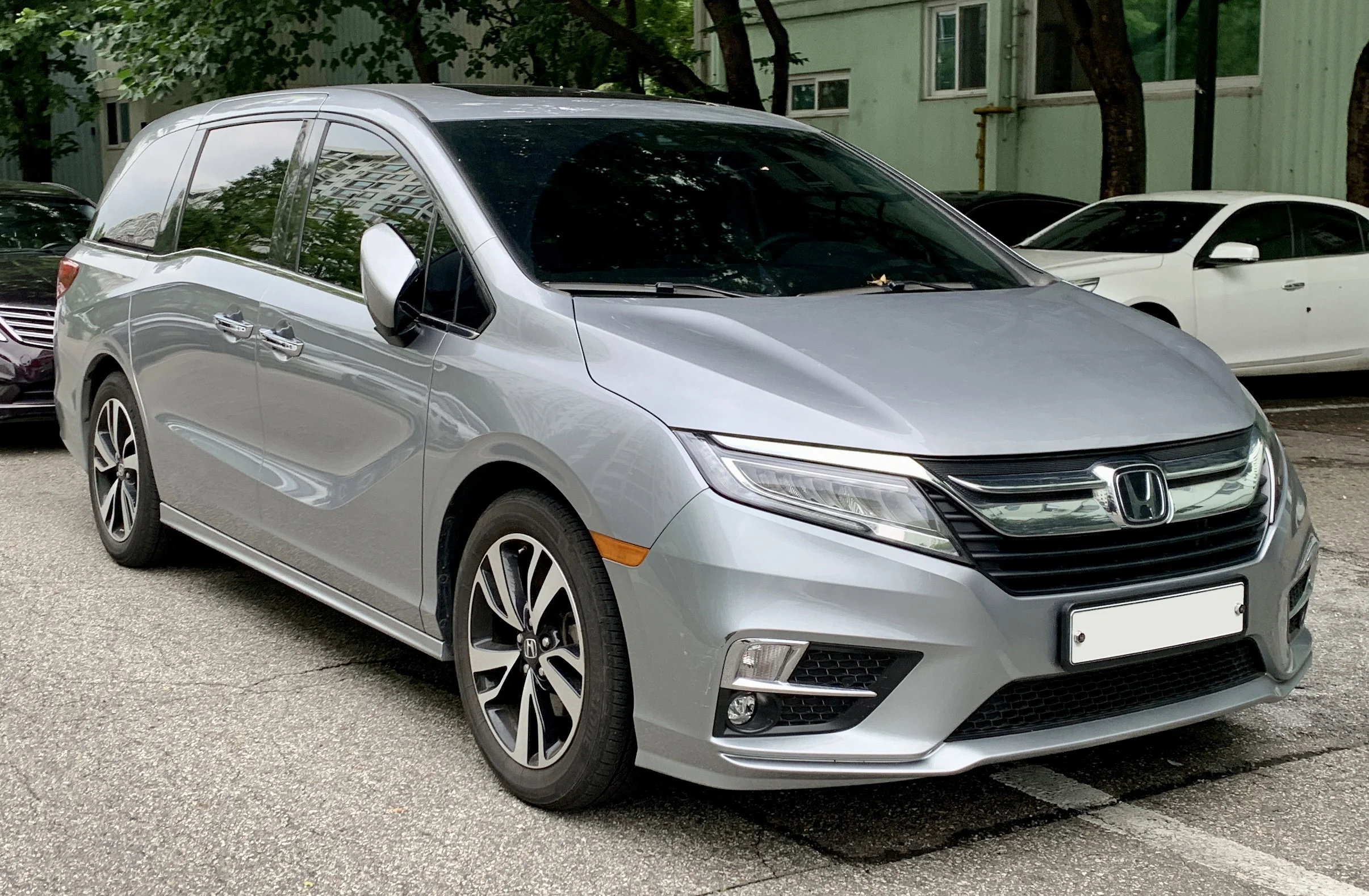
What does the Odyssey's seat mechanism tell a maker?
Open up how a minivan turns into a bed and the whole story is in the seats - so the 5th-generation Honda Odyssey is a genuinely interesting one, because its two rear rows solve the flat-floor problem in completely different ways. The third row folds down into a well built into the floor and vanishes. The second row doesn't fold into anything - it slides on long rails, and if you want it gone, you physically lift it out of the van. Those two mechanisms are the difference between a stepped floor and a flat one, and knowing which is which is how you build a bed that works.
Get the generation straight first, because the mechanism changed over the years: this is the 5th-gen Odyssey, 2018 and newer, with the in-floor Magic Seat third row and the Magic Slide second row. Older Odysseys behave differently, so ignore advice written for a pre-2018 van. This page reads the seats like a teardown - what folds, what comes out, what's left - then works from the volumes Honda actually publishes, explains why there's no flat length in inches, and lands on the 150-watt outlet and its trim catch.
What strikes me most, when I open it up, is that Honda solved the same problem twice and refused to make the two rows match. A tidier brochure would have folded both rows into the floor and called it done. Instead the engineers protected the second row's slide - that sideways-and-forward travel is genuinely useful for a family - and let it cost them the fold-flat trick. As a maker I respect that honesty in the hardware: the van doesn't pretend the middle seats vanish. It hands you a heavy object and a choice, and the rest of this page is about reading that choice correctly rather than wishing the Magic Slide row behaved like the Magic Seat behind it.
The numbers Honda prints, and why there are two of each
Start with what's official, and notice Honda gives you a range, not a single figure, for each zone - that's not marketing fog, it's the seats moving. Honda lists 32.8 cubic feet behind the third row (up to 38.6), 86.6 behind the second (up to 92.3), and 140.7 behind the first, rising to 158.0. The spread is the mechanism at work.
- 32.8 to 38.6 cu ft (behind row three): the low number is seats-up; the high number is with the second row slid forward. Gear space, not a bed.
- 86.6 to 92.3 cu ft (third row stowed): the Magic Seat drops into the floor and you get a long, flat run from the tailgate to the second-row seatbacks. This is the sleep-here-tonight number for most people.
- 140.7 to 158.0 cu ft (behind row one): the top of that range, 158, is reached only by removing the second-row seats entirely - not sliding, removing.
So read the ranges as a decision: 86.6 is your easy flat floor behind the stowed third row; 158 is the full-length flat floor you unlock by hauling the middle seats out of the van. The gap between them is exactly how much work you're willing to do, which is the whole Odyssey question.
One more thing about the ranges is worth sitting with: they're additive, not alternative. The 32.8 becomes 38.6 by sliding the Magic Slide row forward, and that same slide is borrowing legroom from a passenger you no longer have back there at night. The 140.7 becomes 158.0 only by deleting the second row from the equation entirely. So the published spread isn't Honda hedging its bets - it's a precise map of exactly which seat you moved and how far. Read it left-to-right and you can predict your own cargo number before you ever open the tailgate, which is more than most spec sheets let you do.
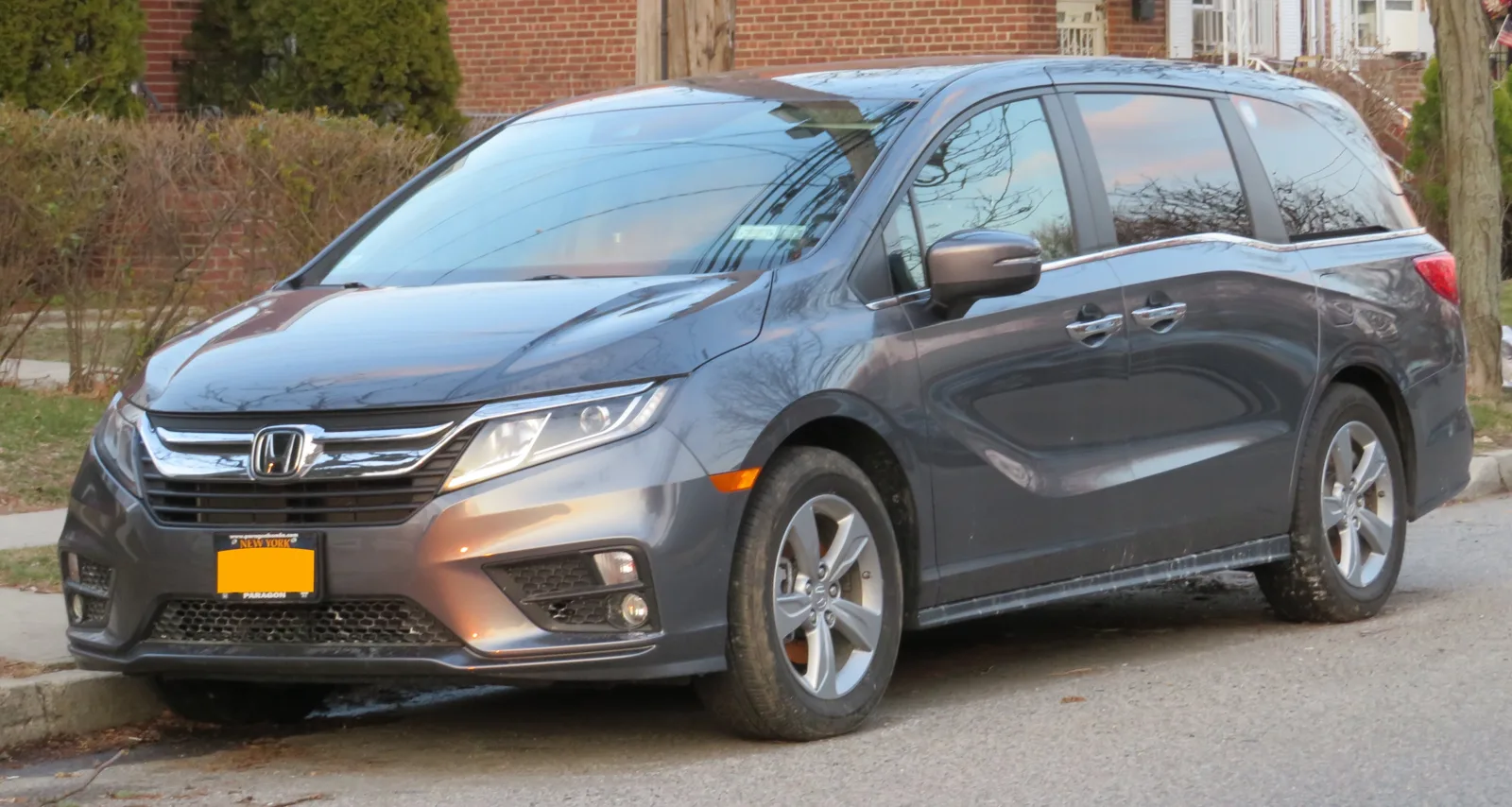
The Magic Seat: a third row that hides in the floor
Here's the mechanism I like best on this van, because it's the clean one. The 60/40 third row is Honda's Magic Seat, and it doesn't fold on top of the cargo floor the way an SUV's seats do - it tumbles down and back into a deep well molded into the floor, leaving a flat surface flush with the cargo deck.
What that buys the build:
- A true flat floor behind the second row with no platform needed to level it - the seats are simply gone, below the floor line.
- One-motion operation so you're not wrestling it at a dark campsite.
- The trade-off: the well that swallows the seats is under-floor storage you give up when the third row is up - you can't have both the seats and that bin.
This is the part of the Odyssey that just works. Stow the Magic Seat and the back third of the van is a flat, sleepable deck. The interesting engineering question is the row in front of it, which solves the same problem a completely different way.
When I first stowed one, the detail that delighted me was how deep the well actually is - the seatback and cushion tumble down and settle below the load floor, not level with it, which is why the result reads as truly flat instead of nearly flat. That depth is the entire trick, and it's also the reason you can't keep anything in the under-floor bin while the third row is up; the seat is occupying the same volume the bin used. A zero-tools, zero-lifting flat floor for the back third of the van, bought with nothing but that hidden storage - it's the cleanest trade on the whole vehicle, and the yardstick I hold the stubborn middle row against.
Why doesn't the second row fold flat too?
Here's the design choice that gives the Odyssey away: the second-row Magic Slide seats don't fold into the floor because they're built to do something else - slide sideways and fore-and-aft on a wide track for flexibility and easy third-row access. Honda traded in-floor stowage for that sliding versatility, and it means the middle seats are a physical object you deal with, not a fold-away.
The Magic Slide seats are removable, but they are heavy - roughly 68 pounds each - and there's nowhere in the floor for them to go. To get the full 158-cubic-foot flat floor, you lift them out and store them at home or at camp.
So the maker's reality is a fork:
- Leave them in and sleep behind them in the 86.6 cu ft flat zone - no lifting, less length.
- Take them out for a genuinely flat, full-length floor - but that's two awkward 68-pound seats to move and a place to keep them, so it's a plan-ahead job, not a trailhead one.
- Don't expect a fold-flat middle: the one thing the Magic Slide won't do is disappear into the floor.
Once you see that, the Odyssey stops being confusing. The third row is a hide-in-the-floor seat; the second row is a take-it-out seat. Your build picks which of those you're willing to commit to.
Lift one and the design logic gets physical fast. Roughly 68 pounds is not a two-finger job - it's a bend-your-knees, brace-against-the-doorsill haul, and there are two of them to move. The Magic Slide seats release from their track cleanly enough, but where they go next is the part people forget: a removed seat is a bulky, awkwardly shaped 68-pound object that has to live in a garage or a shed while you travel, then get reinstalled when the trip ends. That storage-and-reinstall question, not the removal itself, is what makes the seats-out Odyssey a plan you commit to at home rather than a choice you make at the trailhead.
How long is the flat floor, really?
Let me be honest about a gap rather than paper over it: Honda does not publish a cargo-floor length, width, or height in inches for the Odyssey. Sites will hand you a confident number, but most have estimated it from the volume or borrowed it from another year. A made-up inch is what strands a tall sleeper with their feet on the tailgate.
What I can tell you honestly from the mechanism and the volume: with the Magic Seat stowed and the Magic Slide seats removed, the Odyssey opens up one of the longest flat floors of any minivan - 158 cubic feet is enormous, and it distributes into a long, wide, genuinely flat deck. With the second row left in, your straight-line length runs from the tailgate to the seatbacks, which is shorter but still generous. Either way, the exact inch figure is yours to measure, because Honda didn't. The measure-your-own step below is the only way to know the fit before you build.
The reason I won't hand you an inch figure is that I've watched those numbers drift between sites by half a foot, and half a foot is the difference between stretching out and sleeping on the diagonal. Volume converts poorly to usable length, because so much of 158 cubic feet is height and width you can't actually lie down in. The only length that decides your bed is the one your own tape gives you along the floor - once with the Magic Slide seats in, once with them out - which is exactly why the measurement step below isn't optional busywork but the real spec sheet for this van.
Building the bed: platform or pull the seats?
The Odyssey gives you two honest build paths, and the right one depends on how often you camp and how much lifting you'll tolerate.
- The seats-in path: stow the Magic Seat and sleep in the flat zone behind the second row.
- The seats-out path: pull the two Magic Slide seats for a full-length flat floor, then a low plywood platform on cross supports turns 158 cubic feet into a deck with bins beneath. This is the tinkerer's build - more work up front, the roomiest result.
- Either way, measure first and check sitting height against your planned deck.
The maker's rule: match the effort to the trip. Weekend-here-and-there? Leave the seats in and use a shaped mattress. Living out of it for a stretch? Pull the seats and build the deck. The Odyssey rewards either, which is why its mechanism is worth understanding rather than fighting.
There's a middle path I've come to like, too: pull only one of the two Magic Slide seats. Because they're independently removable, you can leave one in for a passenger and open a longer flat run down the other side - an asymmetric floor that suits a solo sleeper who still wants a seat for a friend on the drive out. It's the kind of option an in-floor-fold van can't offer, and it falls straight out of the Odyssey's mechanism: the middle seats are two separate liftable objects, not a single folding bench, so you get to decide them one at a time.
Width, wheel wells, and two pads across
Width decides one sleeper or two, and the minivan shape helps. Honda doesn't publish a cargo width in inches, but the Odyssey is a wide box with fairly upright sides, so two pads side by side are realistic on the flat floor - more so than in a tapering SUV.
The real limit isn't the widest point - it's the pinch between the wheel wells. Measure that, because it's the true ceiling on two pads across, and a platform decked level with the wells reclaims the width above them.
Working with the width:
- Two adults: plausible on the Odyssey's wide floor, especially with the second row out - measure the wheel-well pinch and build up to it.
- Solo or one-plus-a-kid: easy, with gear alongside.
- Mind the sliding-door tracks low on the sides, and keep pads inboard of them.
The width is a real advantage of going minivan for sleeping - just confirm the pinch rather than trusting the wide tailgate opening.
It's worth measuring the wheel-well pinch twice, because on the Odyssey the wells sit fairly low and the sidewalls above them run close to vertical, so a platform decked level with the well tops genuinely reclaims the width you'd otherwise lose - you sleep across the widest part of the box instead of the narrowest. Down at floor level, though, that pinch is the honest number, and it's the one that decides whether two standard pads sit flat side by side or have to overlap. Trust the tape at the wells, not the generous look of the tailgate opening, and build your deck to the number you actually read.
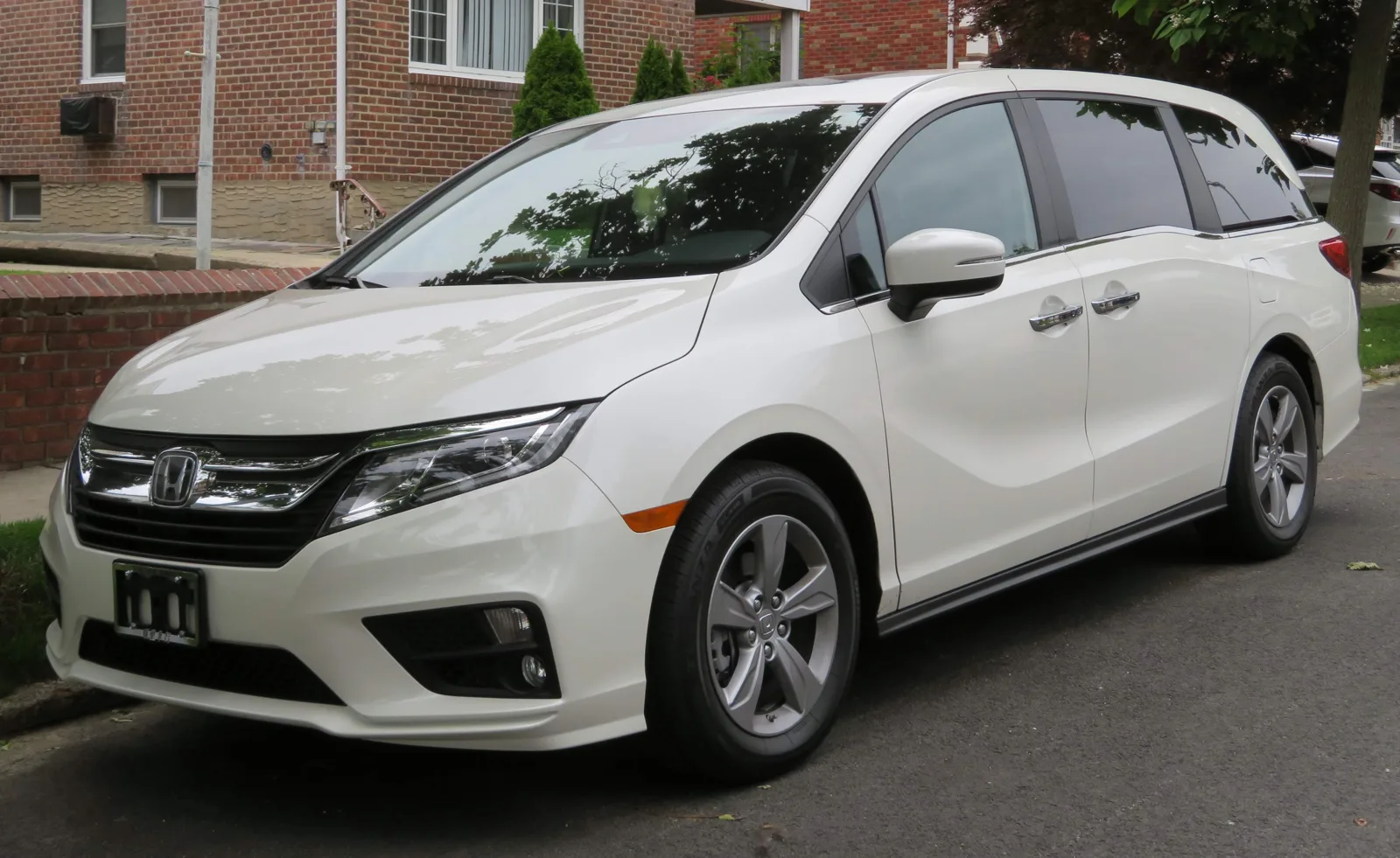
Power: a 150-watt outlet on the top trims only
The Odyssey offers a 115-volt, 150-watt household outlet - but read the trim line before you plan around it, because it's standard only on Touring and Elite. Lower trims don't have it, so an EX or EX-L owner is planning around an outlet the van doesn't carry.
- What 150 watts runs: phone and laptop charging, lights, a CPAP on many models - light, steady loads.
- What it won't: a 12V compressor fridge is better off its own supply, and anything with a heating element is out. It's a device outlet, not the Sienna's 1500-watt appliance outlet.
- Trim check first: confirm Touring or Elite, or plan for no factory AC outlet at all.
Five measurements to take before you build
Because Honda gives you volume and not inches, your tape measure is the spec sheet. Take these five numbers - do it once with the seats in and once with them out if you're deciding between the two paths.
- Flat-zone length (seats in): tailgate to the second-row seatbacks - your no-lifting bed length.
- Full length (seats out): tailgate to the front seats - the full-flat-floor length once the Magic Slide row is removed.
- Wheel-well width: the pinch between the wells - your two-person ceiling.
- Sitting height: floor to headliner, minus platform and pad.
- Seat weight and storage: confirm you can move roughly 68 pounds twice and have somewhere to keep the seats.
Those five turn Honda only publishes cubic feet from a frustration into a measured plan, and the last one is the Odyssey-specific gotcha: the full-flat build is only real if you can actually lift and store the middle seats. Take each length twice, to the eighth of an inch.
The verdict on the Odyssey as a sleeper
The 5th-gen Honda Odyssey is one of the most flexible minivans to sleep in, precisely because its two rear rows solve the flat-floor problem differently: the Magic Seat hides in the floor for free, and the Magic Slide second row comes out - heavy, but out - for a genuinely full flat floor. Honda gives you 140.7 to 158 cubic feet but no flat length in inches, so the fit is a tape-measure job, not a spec-sheet one.
Stow the Magic Seat for an easy flat zone; pull the 68-pound Magic Slide seats for the full 158-cubic-foot floor. Measure your own length and wheel-well width, confirm the outlet trim, and the Odyssey sleeps two comfortably with a little effort.
Buy it for the removable middle row and the in-floor third row, decide up front how much lifting you'll do, and bring your own overnight power since the outlet is top-trim only. The full build lives in our Honda Odyssey camper setup, and the Odyssey vs Sienna comparison weighs its removable seats against the Sienna's fixed ones.
Related on Auto Roamer: Chrysler Pacifica camper conversion; best SUV and sedan camping mattresses.