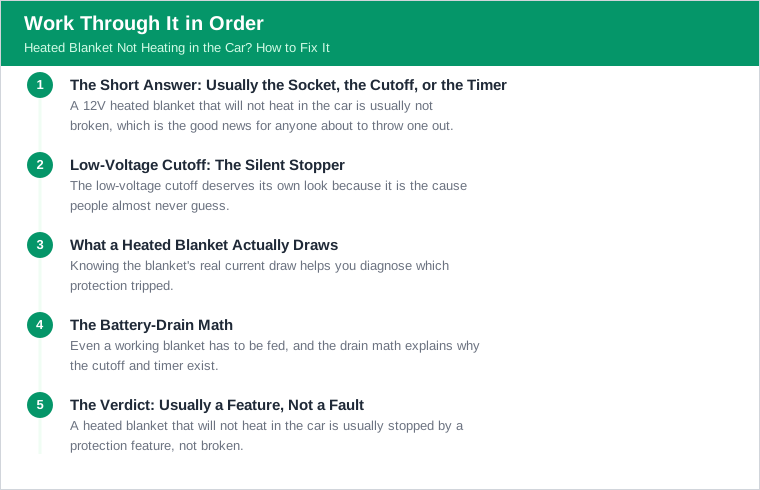
The Short Answer: Usually the Socket, the Cutoff, or the Timer
A 12V heated blanket that will not heat in the car is usually not broken, which is the good news for anyone about to throw one out. On most vehicles the 12V socket is only powered with the ignition in ACC or ON, so a blanket not heating with the car off is usually just an unpowered socket, not a fault. That is the first and most common thing to check.
The two other innocent causes are a low-voltage cutoff and the blanket's own auto-timer. Many power stations and vehicle circuits cut 12V output when battery voltage drops, commonly around 11 to 11.6 volts, and most 12V blankets have a built-in 30-to-60-minute auto-shutoff for safety. Either one silently stops the blanket while the blanket itself is perfectly fine.
Only after those three come the real faults, and they are worth knowing how to spot. A broken internal heating wire from repeated folding, a failed controller, or a blown fuse are genuine failures, but they are less common than the innocent causes and easy to confuse with them. The fix order below separates the harmless from the broken.
The Best Car Camping Blanket for Cold Weather covers choosing a good car-camping blanket, and this guide covers reviving one that has gone cold. Open the problem up methodically, from the socket to the cutoff to the timer to the wire, and most of the time you will find a blanket that was never broken, just stopped by a protection feature doing its job.
It Is Probably Not Broken: The Three Innocent Causes
Before suspecting the blanket, rule out the three things that stop a working blanket cold. The first is the socket itself: on most vehicles the 12V socket is only powered with the ignition in ACC or ON, so with the car off, the blanket gets nothing. Turn the key to ACC, or confirm the socket is live with another device, and a dead blanket often warms right up.
The second is a low-voltage protection cutoff, which is a leading real cause and the sneakiest. Many power stations and vehicle circuits cut 12V output when battery voltage drops, commonly around 11 to 11.6 volts, to protect the battery from deep discharge. When that cutoff trips, it silently stops the blanket, and nothing about the blanket looks wrong because nothing is wrong with it.
The third is the auto-shutoff timer built into most 12V blankets for safety. A blanket going cold after roughly 30 to 60 minutes is usually the timer, not a defect. These timers exist to protect the car battery from being drained by a blanket left on, and they are so commonly mistaken for a failure that they deserve to be the first thing you suspect after the socket.
What ties these three together is that they are all protection features working as designed, not malfunctions. The socket only powers with the key on, the cutoff protects the battery, and the timer prevents a dead battery, and all three present as a blanket that simply stopped heating. Knowing they exist is what keeps you from replacing a blanket that was doing exactly what it should.
Low-Voltage Cutoff: The Silent Stopper
The low-voltage cutoff deserves its own look because it is the cause people almost never guess. Power stations and many vehicle circuits monitor battery voltage and cut the 12V output when it drops, commonly around 11 to 11.6 volts, to keep from deep-discharging the battery. The blanket goes cold not because it failed, but because its power source deliberately shut the port off.
This is especially common on a power station running low. As the pack drains through the night, its voltage sags, and when it crosses the cutoff threshold the 12V port stops delivering. If your blanket heats fine on a full battery and dies as the pack runs down, the cutoff is almost certainly the cause, and the blanket is blameless.
The fix is about the power source, not the blanket. On a power station, check the low-voltage cutoff setting and the battery state of charge; recharge the pack or, if the station allows, raise the cutoff threshold. a portable power station with a healthy charge and a sensible cutoff runs a low-draw blanket for hours, where a nearly-empty one cuts it off early and looks like a fault.
Understanding the cutoff also helps you size the system. A blanket is a light load, but a light load on a small, low battery still eventually trips the cutoff, so the answer is more stored energy or a fuller charge, not a different blanket. The Best Car Camping Heaters covers heat options generally, but for a blanket specifically, feeding it from a well-charged source is what keeps the cutoff from stopping it.
The Auto-Timer That Looks Like a Failure
The auto-shutoff timer is the single most misdiagnosed cause, so it is worth understanding exactly. Most 12V blankets include a timer, and a specific example makes it concrete: some blankets have a 30, 45, or 60-minute timer that auto-shuts-off to protect the car battery. A blanket that reliably goes cold at the same interval is showing you its timer, not a defect.
The reason for the timer is the same battery protection the cutoff provides, from a different angle. Left on indefinitely, a blanket would keep drawing from the battery, so the timer caps the run and forces a deliberate restart. It is a safety feature, and the fact that it feels like a failure is just a side effect of it working quietly in the background.
The fix is simply to reset it. Unplug the controller for a few minutes and plug it back in, since a 30-to-60-minute auto-off can masquerade as a failure, and the blanket resumes heating on a fresh cycle. If cycling the controller brings the heat back every time, you have confirmed the timer, and there is nothing further to repair.
Some blankets layer other protections on top, which a tinkerer learns to read. Many include over-voltage protection, and on one common model the indicator lights blink when the outlet is over 12 volts, refusing to run above spec. They also use a thermostat with overheating protection, often topping out around 60 degrees Celsius, that cuts power if the blanket is folded, bunched, or covered by heavy bedding. None of those is a fault; all are the blanket protecting itself.
What a Heated Blanket Actually Draws
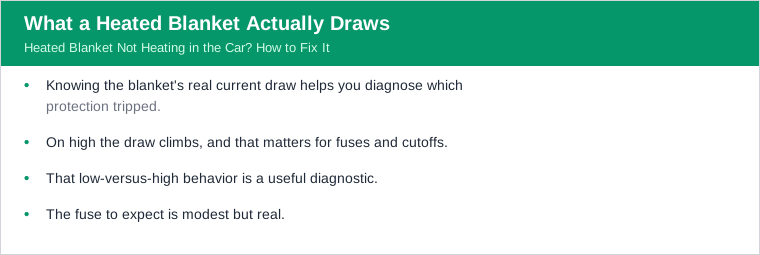
Knowing the blanket's real current draw helps you diagnose which protection tripped. 12V heated car blankets typically draw about 3 to 4.5 amps on low, roughly 36 to 55 watts, with verified examples at 3.5 amps and 42 watts, 3 amps and 36 watts, and 4 amps and 48 watts. A common heated throw lands right around 45 watts on low, which is the number to remember.
On high the draw climbs, and that matters for fuses and cutoffs. The same blankets pull more on high, with verified figures of 7 amps and 84 watts, 6 amps and 72 watts, and 8 amps and 96 watts. So a blanket that works on low but will not heat on high may be tripping a fuse or a cutoff at the higher draw, which points you at the circuit rather than the blanket.
That low-versus-high behavior is a useful diagnostic. If low works and high does not, suspect the fuse rating or a marginal power source struggling with the higher current, not a broken element. A broken heating wire, by contrast, usually shows as a dead cold zone regardless of the setting, which is a different symptom entirely.
The fuse to expect is modest but real. A heated blanket circuit is commonly protected by a 15A fuse, so check that it matches the original rating if the blanket is hardwired. Given the blanket's low draw on the low setting, a blown 15A fuse usually points to a short in the cord or plug rather than normal operation, which is a cue to inspect the wiring next.
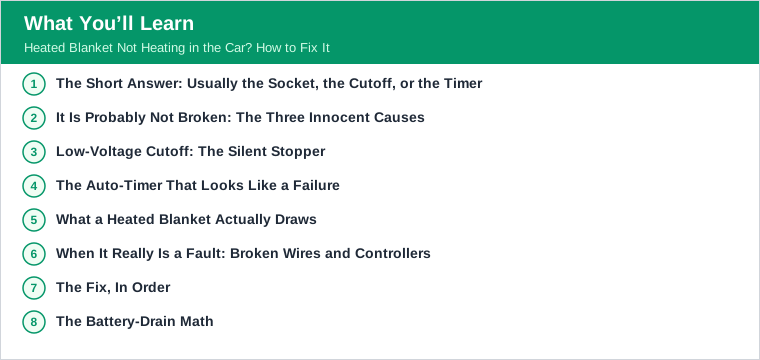
When It Really Is a Fault: Broken Wires and Controllers
Once the innocent causes are ruled out, a few genuine faults remain, and the most common is a broken heating element. Repeated folding or creasing damages the internal heating wires over time, and a severed wire shows up as a dead cold zone that stays cold while the rest of the blanket warms. Flex-testing the panel by section is how you find it.
The plug and cord are the next suspects. Cigarette-lighter adapters are known to overheat and lose contact, so a loose or corroded 12V plug is a common cause of intermittent or no heat, and a direct 12V wired connection is more reliable than a socket adapter. Inspect the full length of the cord for breaks, and check the plug tip for scorching or a loose center pin.
The controller module can fail too. The inline controller houses the timer, the thermostat, and often the over-voltage protection, so a failed controller can stop the blanket even when the element and wiring are fine. If the blanket gets confirmed power, an intact fuse, a fresh timer cycle, and no cold zones, yet still will not heat, the controller is the likely culprit.
Diagnosing these is a process of elimination, and a tinkerer works it visually and by touch. Confirm power, cycle the timer, check the fuse, then flex-test the panel for a cold zone and inspect the cord and plug. If everything checks out and it still will not heat, the controller has failed. At that point the blanket is genuinely broken, but you will have proven it rather than guessed.
The Fix, In Order
Work these steps in sequence to separate the harmless from the broken. Step one: confirm the socket is live by putting the ignition in ACC or ON, or verify the power station's 12V output is switched on and the battery is charged. Step two: check the fuse and match its amp rating, commonly 15A for a hardwired blanket circuit, replacing it like-for-like.
Step three: on a power station, check the low-voltage cutoff setting and the battery state of charge, and recharge or raise the cutoff threshold if the pack is near empty. This is the step that catches the silent stopper, and it is easy to miss because the blanket looks fine. A sagging battery crossing the 11-to-11.6-volt cutoff is a frequent, invisible cause.
Step four: wait out or reset the auto-timer by unplugging the controller for a few minutes and plugging it back in, since a 30-to-60-minute auto-off can masquerade as a failure. Step five: inspect the plug and the full length of the cord for breaks, then flex-test the blanket panel by section to find a broken heating element, which shows as a dead cold zone that stays cold.
Step six: try a different 12V port or power source to isolate whether the fault is the blanket or the socket. Run those six steps in order and you will nearly always find the cause: a dead socket, a tripped cutoff, an elapsed timer, a blown fuse, or, less often, a broken wire or controller. The Best Portable Power Station Car Camping covers power stations in depth for the cutoff step.
The Battery-Drain Math
Even a working blanket has to be fed, and the drain math explains why the cutoff and timer exist. An efficient blanket adds up over a night: about 14 amp-hours over 4 hours on low, roughly 40 amp-hours over 8 hours on medium, and about 70 amp-hours over 10 hours on high. Those are real bites out of a battery bank, which is why protection features intervene.
That math is why low-voltage cutoffs will eventually stop a blanket on a small battery bank. A modest power station simply does not hold enough to run a blanket on high all night, and as it drains toward the cutoff voltage it shuts the port off to protect itself. Sizing the battery to the blanket's overnight draw is what prevents the cutoff from ending your warmth early.
The practical lesson is to run the blanket on low and feed it from an adequate source. Low draws about 14 amp-hours over 4 hours, which a mid-size power station handles comfortably, while high at roughly 70 amp-hours over 10 hours demands far more capacity. Matching the setting and the source to your battery is how you get a full night of heat without hitting the cutoff.
Understanding the drain also reframes the timer as sensible rather than annoying. A blanket left on high all night could flatten a starting battery, so the 30-to-60-minute timer forces a check-in that prevents a dead battery in the morning. The 12V Fridge Low Voltage Protection Cutoff Fix covers low-voltage cutoffs on other 12V devices, which follow the same protective logic the blanket does.
Why the Blanket Beats the 12V Heater
It is worth stepping back to appreciate why a heated blanket is the right tool for staying warm in a car, because it explains why the modest fixes above are worth the effort. A roughly 45-watt heated blanket warms the person directly and far more efficiently than a 12V cabin heater, whose roughly 180 watts of resistive heat is spread uselessly into the air.
The efficiency comes from heating the right thing. A blanket puts its warmth against your body, where you feel all of it, while a 12V heater dumps four times the wattage into cabin air that leaks away through glass and gaps. For staying warm while car camping, the blanket is the correct tool, not a 12V space heater, despite the heater's bigger power draw.
That is why a blanket at 42 to 48 watts on low is a genuinely practical overnight device, where a 180-watt socket heater is not. The blanket delivers useful warmth within a car battery's realistic overnight budget, especially on low, and its protection features exist precisely because it is efficient enough to be worth running all night if the battery allows.
So the effort to revive a cold blanket is well spent, because a working blanket is one of the best warmth-per-watt tools in a car-camping kit. Reviving one that stopped on a timer or a cutoff returns you to an efficient heat source, which is a much better outcome than switching to a heater that draws far more for far less felt warmth. The blanket earns its place in the kit.
The Verdict: Usually a Feature, Not a Fault
A heated blanket that will not heat in the car is usually stopped by a protection feature, not broken. Check the three innocent causes first: an unpowered socket with the ignition off, a low-voltage cutoff around 11 to 11.6 volts on the power station, and the built-in 30-to-60-minute auto-timer. One of those three explains most cold blankets, and none of them is a fault.
When it is a real fault, the fix order finds it. After confirming power, the fuse, the cutoff, and the timer, inspect the plug and cord and flex-test the panel for a broken heating wire showing as a dead cold zone, then suspect the controller if everything else checks out. Work the six steps in sequence and you will identify the cause rather than guess at it.
Feed the blanket properly and it rewards you. Its draw of about 42 to 48 watts on low, or 14 amp-hours over 4 hours, is modest, but a small or drained battery still trips the cutoff, so run it on low from a well-charged source sized to the overnight draw. Matching the setting and the battery to the night is what keeps the heat on until morning.
So treat a cold blanket as a diagnosis, not a death sentence. It is one of the most efficient warmth tools in a car-camping kit, far better than a 180-watt socket heater, and most of the time it is working perfectly and simply protecting your battery. Reset the timer, charge the source, check the wiring, and a blanket that seemed dead is usually back to keeping you warm.