
First: The Cutoff Is Doing Its Job
A 12V fridge that keeps switching itself off on low-voltage protection is not malfunctioning - it is guarding the battery, exactly as designed. Compressor fridges include a battery-protection cutoff so they cannot flatten a battery to the point it will not restart the car. When voltage sags to the set threshold, the fridge stops. Annoying, yes; a fault, no.
The real problem is almost always a mismatch: the protection level is set too aggressively for the battery you are running, or the wiring lets voltage sag past the cutoff under load. Both are cheap to fix once you understand the thresholds. The fridge is simply enforcing a rule, and the rule can be adjusted to fit your setup.
So the fix is not repair - it is matching three things: the protection level, the power source, and the wiring. Get those aligned and the fridge stops nuisance-tripping while still protecting whatever battery it runs on. This guide covers the exact cutoff voltages, why High is too aggressive on a car battery, and the one trap that bites lithium users.
The H/M/L Levels and Their Exact Voltages
The battery protection has three levels, and the High threshold is published by Alpicool, while the Low and Medium figures below are the commonly reported values (they can vary by model, so treat them as approximate). On Alpicool fridges at 12V input, the Low setting typically cuts off around 9.6V and restarts near 10.9V, Medium around 10.1V with restart near 11.4V, and High cuts off at 11.1V and restarts at 12.4V. The higher the level, the sooner the fridge quits to protect the battery.
Read those numbers carefully, because they explain the symptom. High cuts off at 11.1V - a voltage a tired or heavily loaded battery hits easily - while Low hangs on all the way down to 9.6V. So the same battery that trips the fridge constantly on High might run for hours on Low. The setting, not the fridge, decides how forgiving the cutoff is.
There is also a restart gap built in. The fridge does not restart the instant voltage recovers to the cutoff; it waits for the higher restart threshold - 12.4V on High, for instance - so a battery hovering near the line does not chatter on and off. That gap is why a fridge can stay off for a while even after the battery seems to have recovered.
Why High Is Too Aggressive on a Sagging Battery
High protection is the default on many fridges, and it is the usual reason for constant cutoffs. In High mode the input must be above about 12.4V for the fridge to start and it shuts off if voltage drops below about 11.1V. A resting car battery sits only a little above that 12.4V start threshold - and any load that pulls it down toward 11.1V trips the cutoff.
That is easy to trigger. A battery that is a little tired, cold, or already powering other accessories sags under the fridge's own startup surge, dips below 11.1V, and the fridge quits - then waits for 12.4V to come back before restarting. On High, a perfectly usable battery can look like it is failing, simply because the cutoff is set to protect a starter battery's cranking ability at all costs.
So constant cutoffs on High are often a sign the level is wrong for the situation, not that the battery is dead. Before buying a battery, try dropping the protection level - if the fridge suddenly runs fine on Medium or Low, High was tripping early on a battery that had plenty left to give.
Match the Level to the Power Source
The single most useful rule is to set the protection level to match what you are powering from. Alpicool advises using High protection when running off a vehicle starter battery and Medium or Low when running off a dedicated house or portable battery. The logic is about what you are protecting: a starter battery must always be able to crank the engine, so High keeps a big reserve.
A house or portable battery has no such job. It exists to be discharged, so protecting it to 11.1V wastes capacity you paid for - Medium or Low lets you use more of the battery before the fridge cuts out. Running a house battery on High is why some owners complain their expensive setup shuts off with charge to spare; the fridge is hoarding reserve the battery does not need.
So the quick diagnosis is to ask what the fridge is plugged into. Starter battery, use High and accept early cutoffs as the price of a car that starts. Dedicated house or portable battery, drop to Medium or Low and reclaim the runtime. A battery monitor shows the real state of charge so you set the level with data, not guesswork.
The LiFePO4 Trap: Low Can Over-Discharge Lithium
Lithium users need to know one counterintuitive thing before dropping to Low. For LiFePO4 packs the BMS over-discharge cutoff is roughly 2.5V per cell, about 10V on a 12V battery, so setting the fridge's Low protection - which can cut off as low as 9.6V - can let a lithium pack over-discharge before the fridge ever protects it. On lithium, the fridge's Low setting is below the battery's own safe floor.
This is the opposite of the lead-acid concern. On a lead battery, Low just means deeper discharge; on lithium, 9.6V is past the point you want to take the cells, and you would be relying on the battery's own BMS to save it rather than the fridge. The fridge's protection and the lithium battery's protection are set for different chemistries, and Low tuned for lead-acid does the lithium no favors.
The practical guidance is to not lean on the fridge's low cutoff at all on lithium. Because a 12V LiFePO4 battery holds near 13V through most of its usable charge and only sags near 12V when nearly empty, the better habit is to recharge before it drops to about 12V rather than draining to the fridge's cutoff. Use Medium on lithium and manage the charge yourself instead of running the pack to the floor.
Voltage Drop Masquerading as a Weak Battery
Even with the right level, thin or corroded wiring can trip the cutoff on a healthy battery. The protection measures voltage at the fridge, not at the battery, and every bit of resistance between the two drops voltage under load. So a battery resting at a healthy voltage can present far less at the fridge's plug when the compressor pulls its startup surge - enough to cross the cutoff and shut the fridge off.
The classic culprit is the cigarette-lighter path: a thin factory lead on a long run, a loose socket, or corroded contacts, all of which look fine at rest and collapse under load. This is why a fridge can cut out on the dash socket but run all day on a short, thick cable straight to the same battery. The battery never changed; the voltage reaching the fridge did.
Fix the delivery before blaming the battery or the setting. Use adequately thick cable on as short a run as practical, clean and tighten every connection, and feed from the battery directly where you can. If cutoffs stop once the wiring is upgraded, voltage drop was faking a weak battery all along - a cheap fix that reclaims a lot of nuisance cutoffs.
When the Battery Really Is the Problem
Sometimes the cutoff is telling the truth: the battery genuinely cannot hold voltage under load. An old, cold, or undersized battery sags quickly once the fridge starts drawing, hits the threshold, and trips - and no setting change fixes a battery that is simply worn out or too small for the job. The protection is doing exactly what it should, warning you the supply is inadequate.
Tell this apart from the false alarms by testing on Low with good wiring. If the fridge still cuts out quickly even on Low - hanging on only to 9.6V - fed by thick cable from that battery, the battery itself is the weak link. A healthy battery of adequate size should run a fridge drawing only 3.3-4A for a long time before any level trips.
The fix here is capacity, not settings. A bigger or healthier house battery, kept charged, gives the fridge the stable voltage it needs. For continuous fridge use the goal is a battery that barely sags under the modest load, so the cutoff rarely fires - upgrading a tired starter battery to a proper deep-cycle or lithium house battery is the real cure when the battery is the genuine cause.
24V Systems: Different Numbers, Same Logic
If you run a 24V system, the same protection works on doubled thresholds. On the Alpicool table for 24V input, Low cuts off at 21.3V and restarts at 22.7V, Medium cuts off at 22.3V and restarts at 23.7V, and High cuts off at 24.3V and restarts at 25.7V. The logic is identical to the 12V case - High protects the most reserve, Low lets you discharge deepest - just scaled to the higher system voltage.
The same mismatch pitfalls apply. High on a 24V starter or sagging bank trips early at 24.3V; Medium or Low suits a dedicated house bank. And the lithium caution scales too: a 24V LFP bank has its own BMS floor, so leaning on the fridge's lowest cutoff is no wiser at 24V than at 12V. Match the level to the source and mind the chemistry, whatever the system voltage.
The one thing to confirm is that the fridge is actually set for the correct system voltage, since many auto-detect but some do not. A fridge reading a 24V supply against 12V thresholds would behave strangely, so verify the input matches before troubleshooting the level. Once it does, the 24V numbers slot into the same match-and-wire routine.
Setting It Right for Your Setup
Here is the whole routine in order. Identify the power source: starter battery, house or portable battery, lead-acid or lithium. Set the level to match - High on a starter battery you must keep able to crank, Medium on a healthy house battery or any lithium pack, Low only on a lead-acid house battery you are willing to run deep. That single choice resolves most nuisance cutoffs.
Then make the wiring stiff so the level, not a voltage drop, decides the cutoff: thick cable, short run, clean tight connections, a direct feed where possible. And on lithium, do not rely on the fridge's cutoff at all - recharge before the pack sags toward 12V rather than draining to 9.6V, because the fridge's Low setting sits below the LFP safe floor.
Finally, size the battery to the job. A fridge drawing 3.3-4A is a light load for a proper house battery, so if the cutoff still fires often on the right level with good wiring, the battery is too small, too old, or too cold. Match level, wire, chemistry, and capacity, and the low-voltage protection fades into the background - firing only when it genuinely should.
The Verdict: Match the Level to the Battery
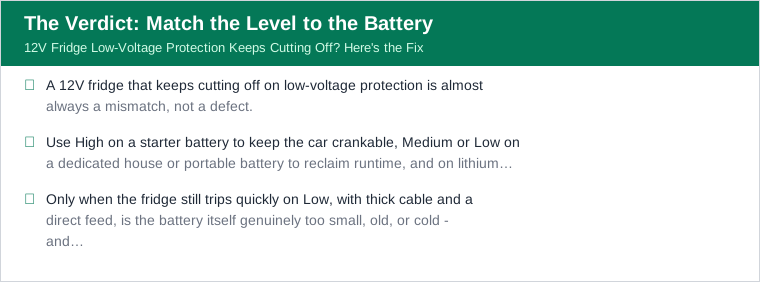
A 12V fridge that keeps cutting off on low-voltage protection is almost always a mismatch, not a defect. The H/M/L levels have exact cutoffs - 11.1V on High, 10.1V on Medium, 9.6V on Low at 12V - and High, the common default, trips a sagging battery early because it demands 12.4V to start and quits below 11.1V. Dropping the level to match the source fixes most cutoffs.
Use High on a starter battery to keep the car crankable, Medium or Low on a dedicated house or portable battery to reclaim runtime, and on lithium use Medium and recharge before the pack drops to about 12V, since the Low setting's 9.6V is below the LFP safe floor. Then make sure thin wiring is not dropping voltage under load and faking a weak battery.
Only when the fridge still trips quickly on Low, with thick cable and a direct feed, is the battery itself genuinely too small, old, or cold - and the cure there is capacity, not settings. Match the level to the battery, wire it to hold voltage, and mind the chemistry, and the cutoff stops being a nuisance and goes back to being a safeguard.