

The Real Question: What Can This Outlet Actually Run?
A GMC Acadia has a 120-volt household-style outlet, and the brochure treats that like a headline feature. Does it actually matter for camping? Run the numbers and the answer is a qualified yes — it is useful, but only if you know its hard limit and stop expecting it to be a wall socket. The Acadia's power system is well-placed for a sleep setup, but its capability is defined by one number most owners never look up.
The Acadia gives a camper three power points: two 12-volt outlets and one 120-volt outlet, spread front to back. That is a sensible spread for a vehicle whose sleeping platform lives in the cargo area, and the placement of the always-on rear outlet in particular is genuinely thought through.
What separates a working overnight setup from a frustrating one is knowing which outlet does what, which ones stay live with the engine off, and exactly what the 120-volt outlet can and cannot power. Those are the specs that decide your real-world experience, not the marketing line about onboard power.
The claim worth checking hardest is the 120-volt outlet. It looks like the answer to running appliances at camp, and the spec sheet quietly says otherwise. Understanding that gap before a trip saves the disappointment of a tripped outlet and a cold breakfast.
The Two 12-Volt Outlets: Front and Rear
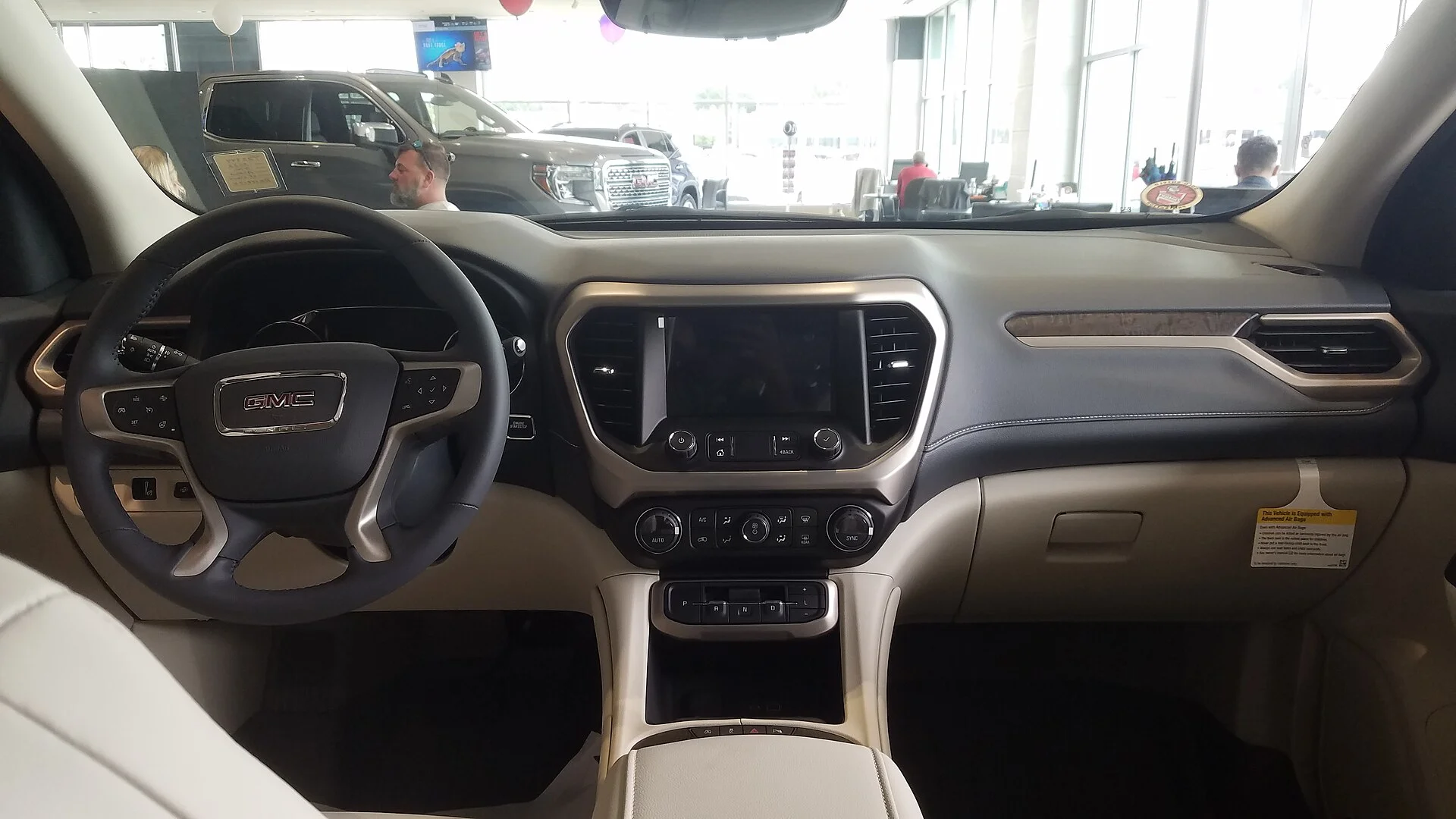
The Acadia's two 12-volt outlets are the practical workhorses, and their placement matters. One sits on the center stack below the climate controls, within easy reach of the front seats, and the other is in the rear cargo area, right where a sleeping platform would be. That front-and-back split is exactly what a camper wants.
The rear cargo outlet has a critical property spelled out in the owner's manual: power is always supplied to it. That means it stays live with the ignition off, so a fan or a fridge can run overnight from the cargo area without the engine on. For a car camper, an always-on outlet beside the bed is worth more than any number of switched front sockets.
That always-on convenience comes with the standard warning that the marketing skips: an outlet wired straight to the battery will run a load until the battery is too flat to start the vehicle. The rear outlet is perfect for a fridge or fan, but treating it as bottomless overnight power is the mistake that ends with a dead battery and a jump-start.
The front center-stack outlet is better suited to short-duration or engine-on loads — a tire inflator, device charging while driving, a quick top-up. Between the two, the smart division is the always-on rear outlet for camp loads and the front outlet for drive-time use, with a power station carrying anything sustained.
The 120-Volt Outlet and Its Location
The Acadia's 120-volt outlet is located on the rear of the center console, facing the second row. That placement is deliberate and camper-friendly: it puts a household-style outlet within reach of the rear cabin and cargo area, closer to where a sleep setup actually needs it than a dash-mounted socket would be.
Finding it is half the battle, because owners looking at the front dash for a household outlet miss it entirely. It faces backward, at the rear of the console, so the second-row passengers or someone reaching from the cargo bed are the intended users. Once located, it behaves like an ordinary three-prong outlet — within its limits.
The rear-of-console position also means a cord from the 120-volt outlet runs naturally toward the back of the vehicle, toward the bed, rather than snaking forward from the dash. That is a small design win for cable management in a made-up sleeping space, and it is the kind of detail that reveals whether a layout was considered for real use.
The one catch is that this outlet, like the household outlet in most vehicles, is inverter-fed and capped low. Its convenient location invites plugging in an appliance, and the next section is the reason that invitation has to be resisted for anything beyond electronics.
The 150-Watt Limit That Defines Everything
Here is the number that settles what the 120-volt outlet can do: it can power equipment up to a maximum of 150 watts. That is the spec the brochure does not print in large type, and it is the single most important fact about the Acadia's onboard AC power. Everything else follows from it.
Within 150 watts, the outlet is genuinely handy: laptop chargers, phone and tablet chargers, camera battery chargers, a small fan, LED string lights, and similar low-draw electronics all run comfortably. For keeping a modern camp's devices alive, the outlet does exactly what is needed, and having it faced toward the bed makes it convenient to use.
Beyond 150 watts, the outlet is powerless in the literal sense. Coffee makers, electric kettles, hair dryers, microwaves, induction burners, and space heaters all draw several hundred to over a thousand watts, and every one of them will trip the outlet's protection the instant it is switched on. No setting or reset changes that; the physics of a 150-watt inverter is fixed.
The honest framing is that this is a device outlet, not an appliance outlet. Owners who want camp coffee or heat carry a dedicated power station rated for those loads, and use the factory 120-volt outlet for the electronics it was designed to serve. Match the load to the 150-watt number and the outlet never disappoints.
The Fuse Map: F42, CB3, and the DC-AC Inverter Fuse
When an outlet goes dead, the fuse map is where a calm fix starts, and the Acadia's is well documented. On the 2017-2023 Acadia, the auxiliary power outlet and lighter are protected by circuit breaker F42 in the instrument panel fuse box, so a dead front 12-volt outlet points there first.
The rear auxiliary power outlet — the always-on cargo socket — is protected by circuit breaker CB3 in the rear compartment fuse box. If the outlet a camper relies on beside the bed suddenly stops working, CB3 is the component to check. Because these are circuit breakers rather than simple blade fuses, they can trip on overload and may reset, which is worth knowing before assuming permanent failure.
For the 120-volt outlet, the relevant fuse is F32 in the instrument panel fuse box, often labeled DC AC inverter. A dead household outlet that is not an overload trip usually traces to F32. The instrument panel fuse block itself is located inside the center console on the passenger side, which is where to go with the owner's manual diagram in hand.
Knowing these three — F42 front 12-volt, CB3 rear 12-volt, F32 the inverter — turns a mysterious dead outlet into a two-minute diagnosis. Carry the owner's manual fuse page and a few spare fuses in the right amperages, and most outlet failures become a roadside fix rather than a ruined weekend.
Troubleshooting a Dead Outlet in Order
Work a dead outlet from most-likely to least, and the fix usually comes fast. For the 120-volt outlet, start with the load: if it died under an appliance, it tripped because the draw exceeded 150 watts. Unplug the appliance, give it a moment, and switch to a low-draw device. This is the outlet protecting itself, not failing, and it is the single most common cause of an Acadia household outlet appearing dead.
If the load is clearly within limits and the outlet is still dead, move to fuse F32, the DC-AC inverter fuse in the instrument panel fuse box inside the center console. A blown F32 kills the 120-volt outlet entirely, and replacing it with the correct amperage restores it.
For a dead 12-volt outlet, check the matching protection: F42 for the front lighter-style outlet, CB3 for the always-on rear cargo outlet. Because these are circuit breakers, a trip from a momentary overload may clear on its own or after the load is removed; a persistent dead outlet points to a genuine fault worth investigating.
Running the sequence — load, then the specific fuse or breaker — resolves the overwhelming majority of dead-outlet situations without a shop visit. The Acadia's power system is reliable; most failures are an overload trip or a single fuse, both of which the owner can handle on the spot with the manual and a spare-fuse kit.
An Overnight Power Plan for the Acadia
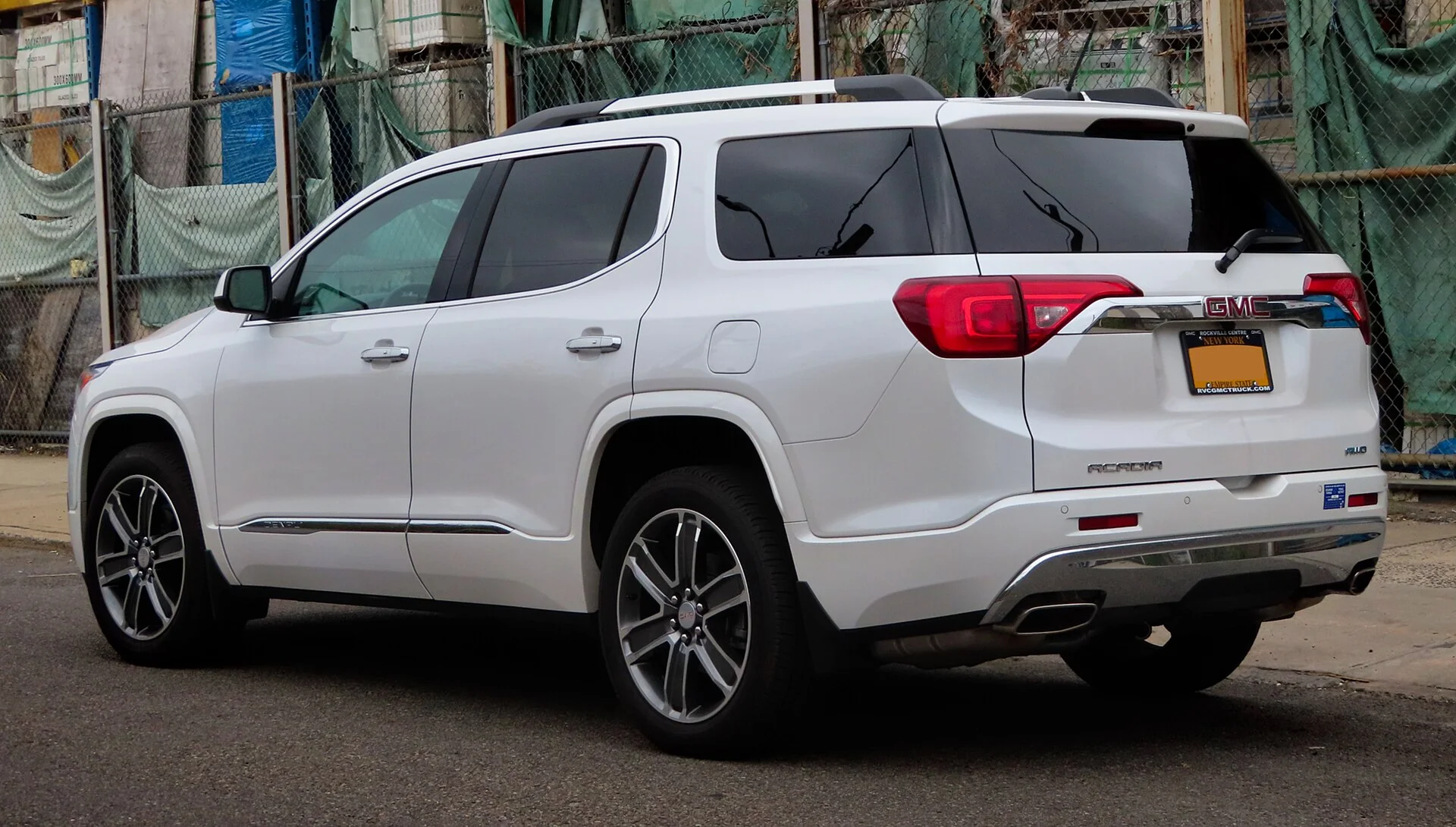
The way to get the most from the Acadia's outlets is to assign each load to the right source. Device charging and light electronics belong on the factory outlets: the front 12-volt for drive-time, the always-on rear 12-volt and the 150-watt 120-volt for parked use. For that tier, the built-in system is all a camper needs, and the rear placement keeps cords tidy.
Sustained overnight loads — a 12-volt fridge running all night, or any real appliance — should live on a dedicated power station or second battery, not the starting battery. The always-on rear outlet makes it tempting to run a fridge straight from the vehicle, but a multi-day trip that way risks a no-start morning, and that risk is not worth the convenience.
The layered plan is simple: electronics on the factory outlets, heavy loads on a power station, and the engine run occasionally to recharge if parked for days. A modest portable power station handles the appliance tier and keeps the vehicle's battery reserved for its one non-negotiable job: starting the engine.
Used this way, the Acadia's three outlets each do what they are good at, and the always-on rear socket becomes the genuine camping asset it was designed to be. The key is discipline about the 150-watt line and the starting battery, both of which are easy to respect once you know the numbers.
The Always-On Rear Outlet Is the Acadia's Best Camping Trick
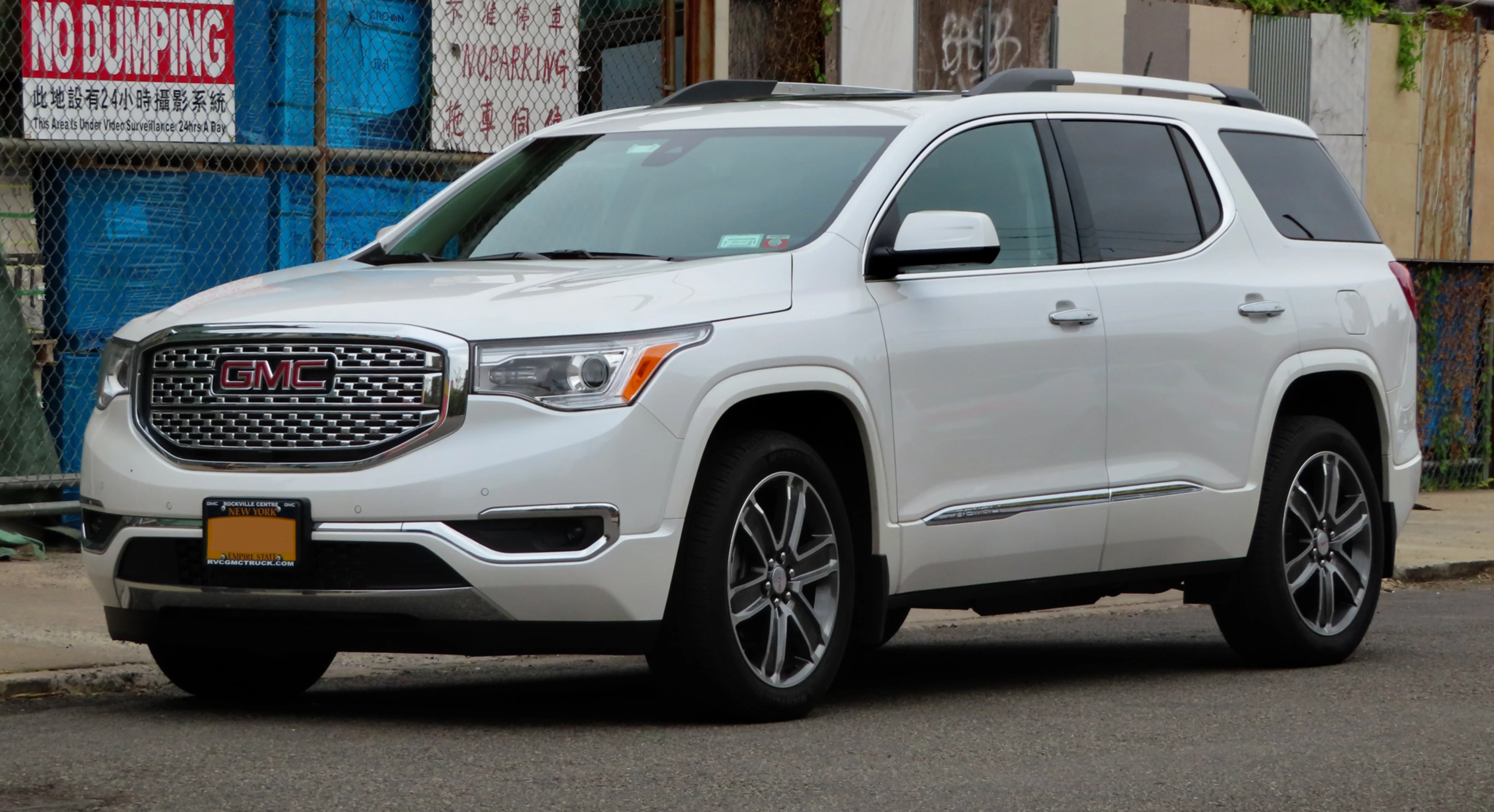
Of the Acadia's three outlets, the rear cargo 12-volt socket is the one that genuinely earns its keep for a camper, and it is worth dwelling on why. The owner's manual specifies that power is always supplied to it, meaning it works with the ignition off and the key out of the vehicle. Many vehicles switch their accessory outlets off with the ignition, forcing a camper to leave the key on, so a truly always-on outlet is a real advantage.
Its position compounds the benefit. Sitting in the rear cargo area, it is exactly where the sleeping platform lives, so a fan clipped above the bed or a small fridge in the cargo bay plugs in beside itself. No cord runs forward to the dash, no trip hazard crosses the sleeping area, and nothing depends on remembering to leave the vehicle in accessory mode.
The one discipline it demands is battery awareness. Because it is always live and draws from the starting battery, it will run a load right up to the point the engine will not start — the always-on convenience is also the always-on risk. It is perfect for a fan or short fridge runs, and dangerous only if mistaken for an inexhaustible supply.
The right mental model is a convenient tap into the vehicle's battery, not a house circuit. Use it freely for light, intermittent loads, pair it with a power station for anything sustained, and the always-on rear outlet becomes the single feature that makes the Acadia feel purpose-built for a night out.
Matching Real Camp Loads to the Acadia's Outlets
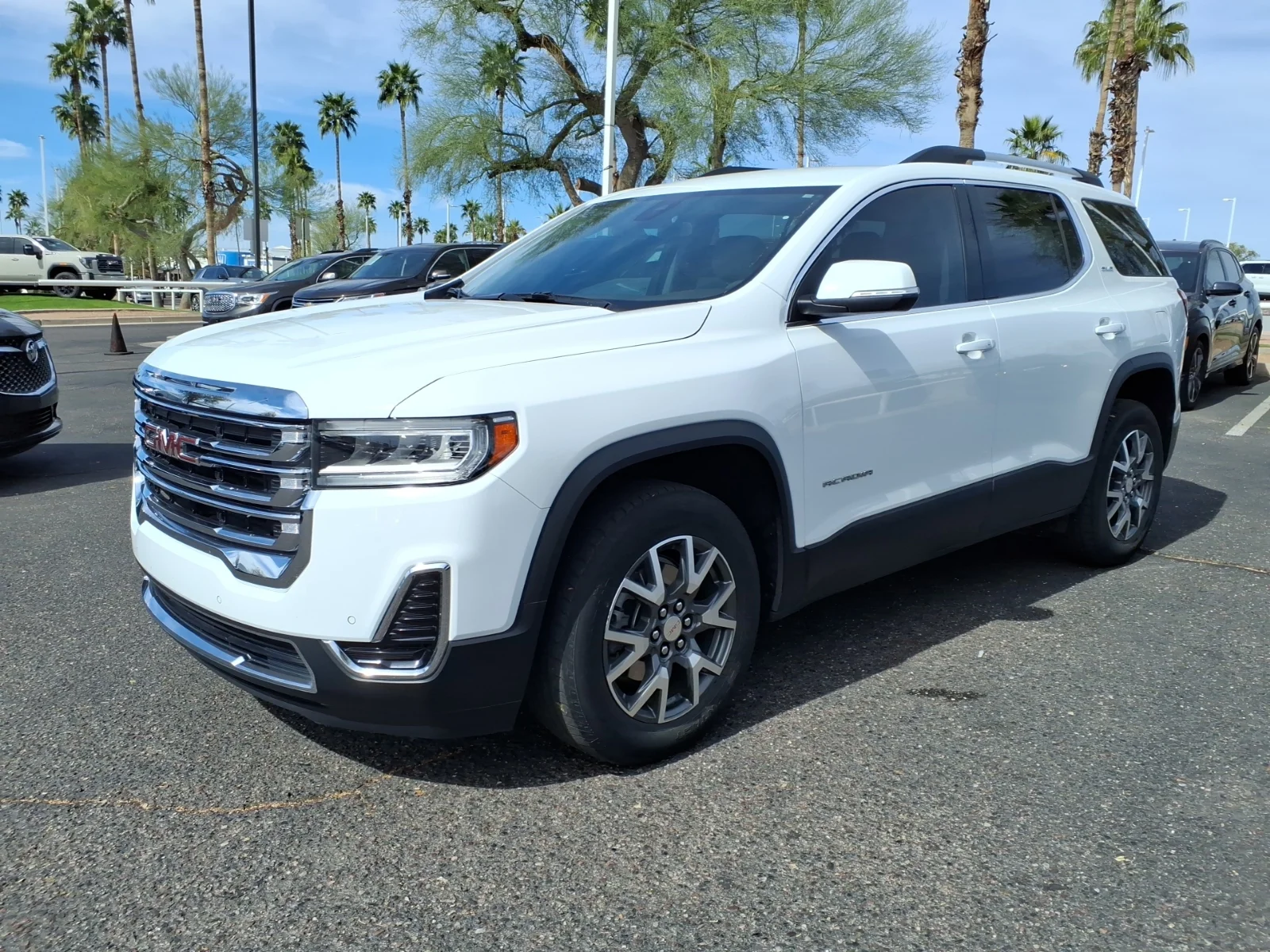
It helps to translate the specs into the actual devices a camp runs. A phone charger draws a handful of watts; a tablet or laptop charger, a few dozen; a small clip fan, under twenty; a string of LED lights, single digits. Every one of these sits comfortably inside the 150-watt 120-volt outlet or runs off a 12-volt socket, which is why the Acadia handles a modern camp's electronics without complaint.
A 12-volt fridge is the pivot point. The efficient models draw modestly while the compressor cycles, so the always-on rear 12-volt outlet can run one — but over a multi-day trip that steady draw is what threatens the starting battery, not any single big appliance. The fridge is where the vehicle's finite reserve becomes the binding constraint.
Above the fridge sit the loads the Acadia simply cannot serve from the factory outlets: anything that heats. A kettle, coffee maker, hair dryer, or resistance heater draws several hundred to over a thousand watts and trips the 150-watt outlet instantly. These are not marginal cases; they are firmly outside what the vehicle's inverter was built to supply.
Sorting loads into these tiers — trivial electronics on the factory outlets, a fridge on the rear outlet for short stints or a power station for long ones, and heating appliances only on a dedicated high-wattage station — is the whole planning exercise. Do it once and the Acadia's power system stops being a guessing game and becomes a predictable, reliable part of the setup.
The Verdict: Useful Power, Once You Read the Number
The GMC Acadia is well set up for camping power, with two 12-volt outlets — one front on the center stack, one always-on in the rear cargo area — and a 120-volt outlet on the rear of the center console facing the bed. The placement is genuinely thoughtful, especially the always-on rear socket and the backward-facing household outlet.
The one number that governs everything is 150 watts, the ceiling on the 120-volt outlet. Within it, the outlet keeps a camp's electronics charged; beyond it, appliances simply trip the protection. That is not a defect, it is the spec — and knowing it up front is the difference between a useful outlet and a frustrating one.
When an outlet does go dead, the fuse map makes it a quick fix: F42 for the front 12-volt, CB3 for the rear, and F32, the DC-AC inverter fuse, for the 120-volt, all reachable in the instrument panel fuse block inside the center console. Work from load to fuse and most failures resolve in minutes.
For anything beyond light electronics, a power station is the honest addition that keeps sustained loads off the starting battery. Read the 150-watt number, use the always-on rear outlet for camp loads, and the Acadia delivers reliable, well-placed power for a comfortable night out — with no surprise at the ignition in the morning.