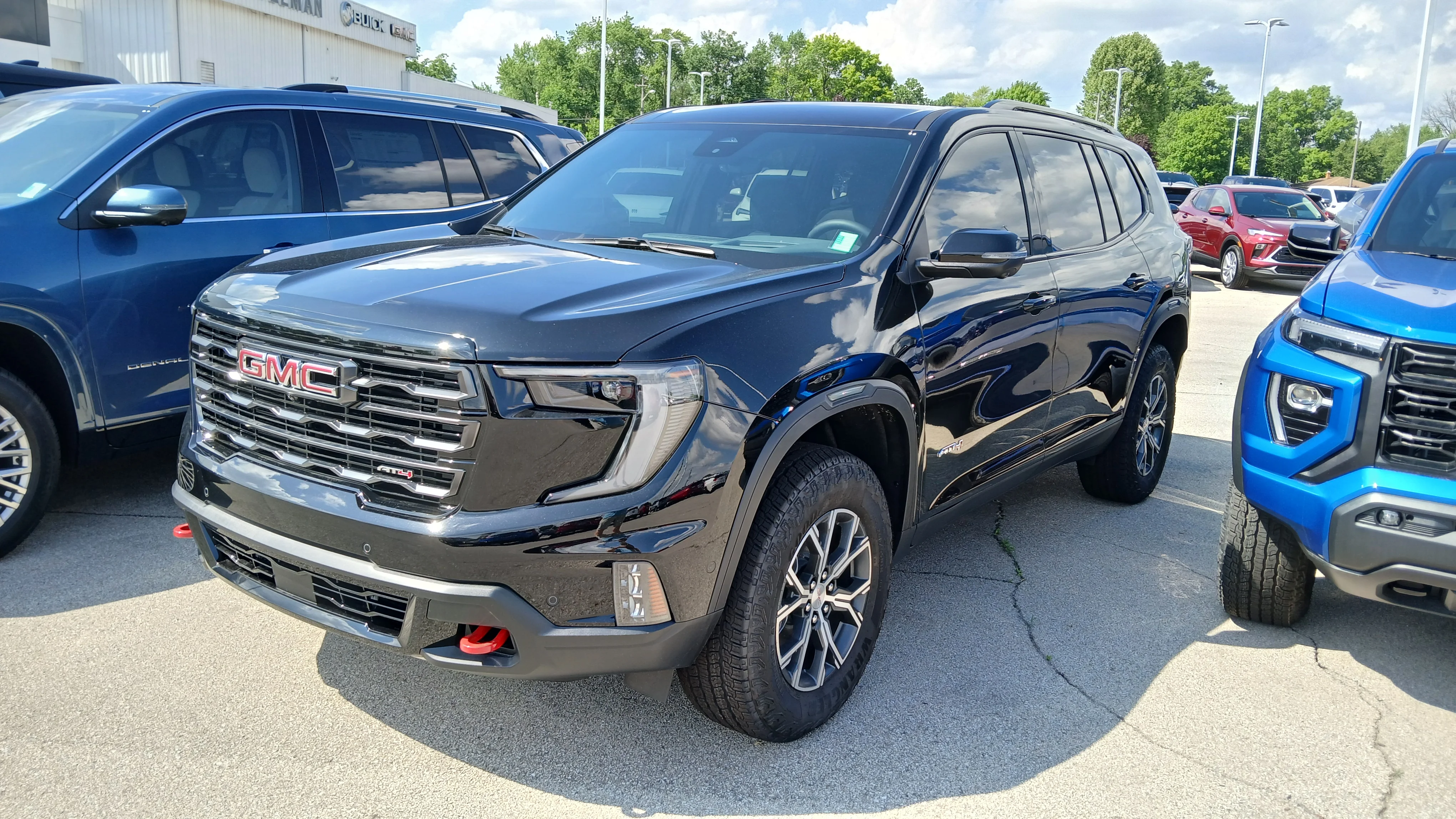
The Acadia is the roomiest bed of the bunch
Can you sleep in a GMC Acadia? Yes, and out of the mainstream three-rows people cross-shop for camping, the redesigned Acadia gives you the most room to do it - 97.5 cubic feet behind the first row with both rear rows folded, per GMC's official figures. That's the biggest hold and the longest floor in this comparison, which makes a flat two-adult bed genuinely easy here.
I build camp setups cheap, so I care about two things on any rig: does the floor actually fit a body, and are you paying for features that earn their keep. The Acadia's answer is mostly good news - the most space of the group - with two honest asterisks: the folded floor is largely level rather than perfectly flat, and the household outlet is small and isn't fitted to every trim. Know those and you can build a great bed in one without overspending.
This page works only from the current 2024-and-newer numbers - the redesign made the Acadia a different, bigger vehicle - and covers the volume, the floor, the length, the power, and a budget build, so you can decide before you spend.
Room matters more than people expect once two adults are actually in a cargo bay. The extra length and width of the Acadia's hold is the difference between two sleepers stacking gear neatly at their feet and turning it into a jigsaw every night, and between rolling over freely and waking each other up. That margin to spare is exactly what the 97.5-cubic-foot figure buys you over the smaller rivals in this class.
The flip side of all that space is the temptation to over-build. A budget wrench's instinct is the right one here: the more level and roomy the floor already is, the less plywood, hardware and cutting you need to make it sleepable. Everything below is aimed at spending the least to get a flat, comfortable bed in the biggest floor of the group, rather than reaching for tools the Acadia doesn't make you buy.
The 2024 redesign changed the whole answer
Before any numbers, get the year straight, because it's the single biggest source of bad Acadia advice online. GMC completely redesigned the Acadia for 2024, and the new one is roughly a quarter bigger inside than the pre-2024 model it replaced. Any spec sheet quoting a smaller Acadia is describing a different, tighter vehicle - use it and you'll build a bed that comes up short.
The Acadia's sleeping numbers only make sense for the 2024 redesign and newer. The older, smaller second-gen Acadia is a different vehicle - never plan a bed around its figures.
The practical rule for a budget builder: when you read a cargo number or an owner measurement, confirm it says 2024 or newer before you trust it. The old Acadia was a mid-size that many found cramped in back; the new one is a properly large three-row, and only the new figures describe the bed you're actually building.
The confusion is easy to understand. The Acadia name has been on GMC's lot for years, so a search for 'Acadia cargo space' pulls up a decade of specs stacked together, and the older, smaller second-generation numbers still dominate a lot of pages. GMC's own figure for the redesign - 97.5 cubic feet at maximum - is roughly a quarter larger than the model it replaced, so mixing the two isn't a rounding error; it's a different vehicle's worth of space.
- Check the model year on the window sticker or registration - 2024 or newer is the redesign you want.
- Distrust any round number from an undated blog; confirm it against GMC's current interior spec before you plan a bed.
- Ignore pre-2024 owner photos of a folded floor - the proportions changed with the redesign.
Ninety-seven cubic feet, plus a bin GMC hides under the floor
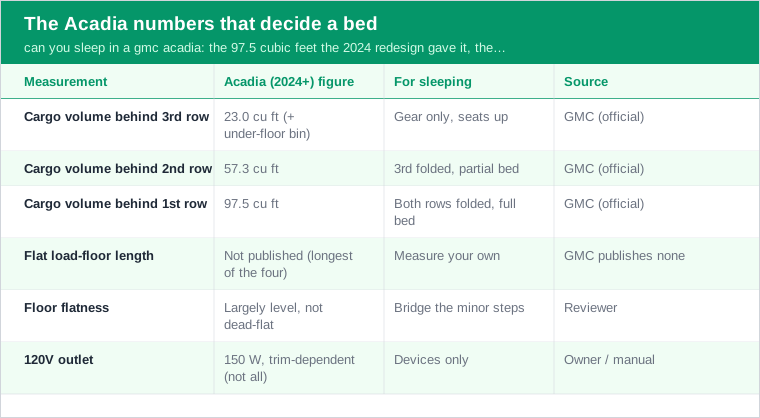
Here's the official box on the current car. GMC lists 23.0 cubic feet behind the third row, 57.3 cubic feet behind the second with the third folded, and 97.5 cubic feet behind the first row with both rear rows down - plus a useful covered storage bin under the cargo floor behind the third row. That under-floor bin is a budget camper's friend for stashing gear out of the sleeping footprint.
- 23.0 cubic feet seats-up handles the groceries, not a bed - but the hidden bin adds real stash space.
- 57.3 cubic feet with the third row folded is a partial platform.
- 97.5 cubic feet with both rows down is the sleeping number, and it's the largest in this group.
The jump from 57.3 to 97.5 cubic feet is where the Acadia becomes a bed, so plan on folding both rear rows. Ninety-seven and a half cubic feet in the biggest body here means the longest, roomiest floor of the four - the reason to size up to the Acadia if space is your priority.
The under-floor bin deserves more attention than the spec sheets give it. Behind the third row, beneath the main cargo floor, it's covered storage that stays out of the way when the seats are up and, more usefully for camping, out of your sleeping footprint when they're down. For a two-person overnight it's the natural home for recovery gear, tools, muddy boots or a stove kit - anything you don't want migrating into the bed at two in the morning.
It helps to read the three volume numbers as a sequence rather than three separate stats. Seats-up 23.0 cubic feet is a daily-driver trunk; drop the third row for 57.3 and you've got a long shelf but not a full bed; fold everything for 97.5 and the whole bay opens into one sleeping platform. Plan your packing around which configuration you'll actually sleep in, because gear left on a seat you need folded just moves the problem instead of solving it.
The floor folds long and largely level
Flatness is the make-or-break for sleeping, and the Acadia does well - with one honest qualifier. The power-folding third row and the fold-flat, sliding second row create a long, largely level floor, per reviewers. 'Largely level' is the operative phrase: it's flatter than most, but not confirmed dead-flat corner to corner, so expect minor steps to bridge.
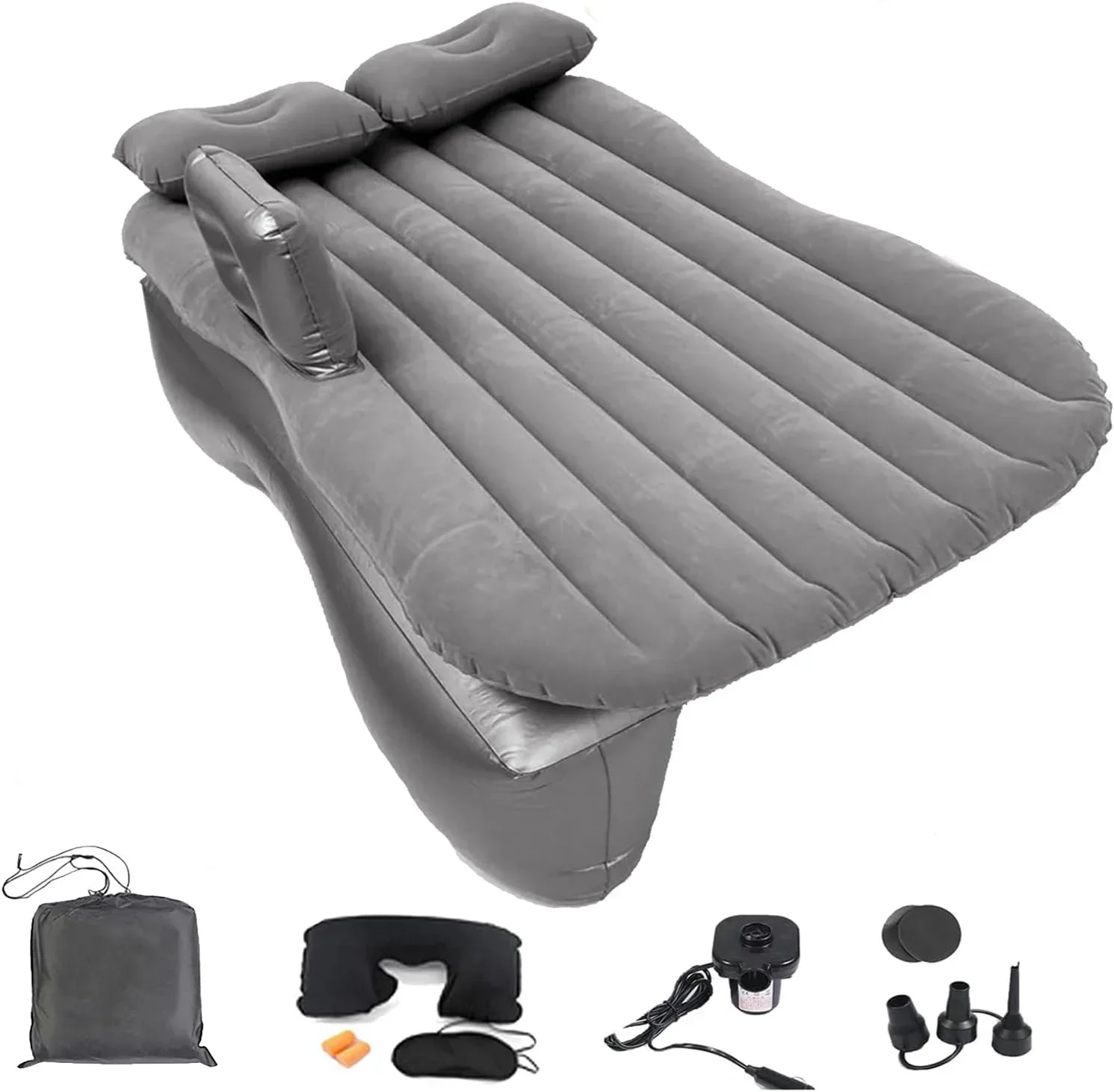
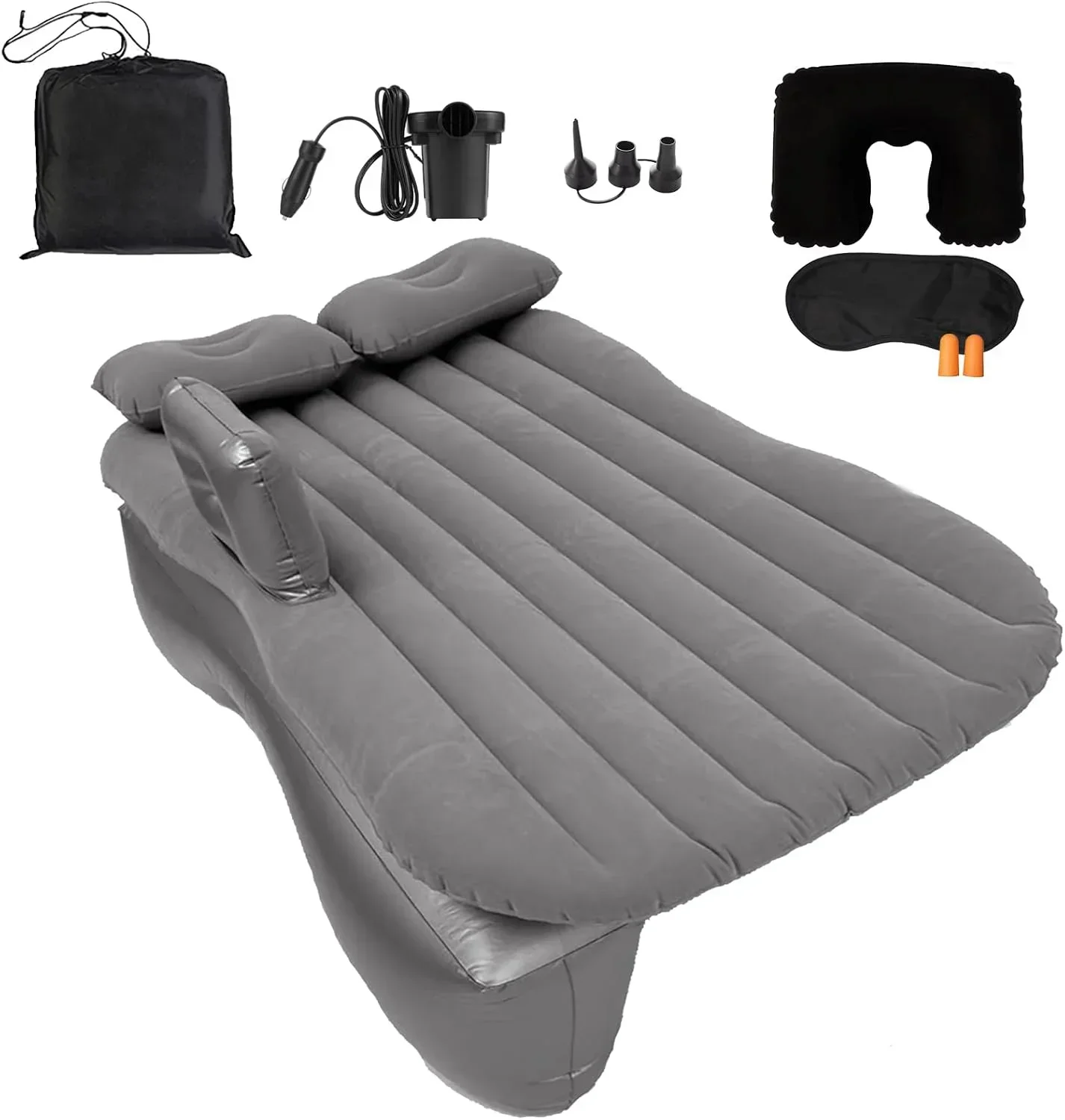
An Onirii SUV air mattress is the cheapest way to turn 'largely level' into 'flat' - it spans the seatback steps and evens the whole bay in one inflate, no plywood required. For a budget build that's the move:
- Level first with a shaped pad, then add your own cushion on top.
- Sleep so any minor step falls under your knees, not your hips.
- Use the sliding second row to close gaps and buy length before you build.
Worth being precise about what 'largely level' costs you in practice. Folded SUV seatbacks are firm and often sit at a slight angle, and the seams where the second and third rows meet leave shallow ridges. None of that stops you sleeping, but lying straight on bare seatbacks means feeling every seam, so the pad on top is doing real work rather than just adding softness.
Two more comfort points that cost nothing. A folded seatback is a hard surface, so a little loft - an air mattress, a foam topper, or both - keeps hips and shoulders off the ridges. And any SUV bed collects condensation overnight as warm breath meets cold glass, so crack a window an inch on each side for airflow; it's the cheapest way to wake up dry. Neither trick is Acadia-specific, but both matter more on a firm, folded floor than on a purpose-built platform.
Length and width: the biggest floor here, but measure it
Now the honest gap, same as its rivals: GMC does not publish a folded load-floor length or a cargo width in inches for the Acadia. So I won't invent one. What the volume tells you honestly is that 97.5 cubic feet in the largest body of this group gives the longest floor of the four - a six-footer most likely lies flat, and the width takes two pads side by side.
But 'most likely' isn't measured, so do the two measurements that matter with both rows folded:
- Flat length: tailgate to the back of the front seats along the floor - your true bed length.
- Wheel-well pinch: the narrowest width between the wells - the real ceiling on two adults, always tighter than the tailgate opening.
Build a platform level with the wheel-well tops and you reclaim the full width above them. On the Acadia's big floor that's how you get two adults comfortable - but confirm the pinch number rather than trusting the wide-open look of the hatch.
A few habits make those two measurements trustworthy. Take the length along the floor itself, not eyeballed through the air, and take it with the second row slid fully forward and the front seats where you actually drive - push the fronts back later and you lose bed length you thought you had. For width, measure at the wheel wells and again at the tailgate opening; the gap between the two tells you how much a raised platform would reclaim above the wells.
If the flat length comes up an inch or two short for a tall sleeper, the biggest floor in the class still has an out: lying on a slight diagonal, corner to corner, buys length that a square measurement misses. It's the same trick that rescues a six-footer in a shorter rig, and the Acadia's width gives you more room to angle than its narrower rivals do.
Power: a 150-watt outlet, and not on every trim
Here's where the Acadia disappoints a little, and where a budget wrench saves you from a bad assumption. The Acadia offers a 120-volt household outlet rated at 150 watts on the rear of the center console - but it's trim- and option-dependent, per owner and manual sources, so it is not on every Acadia. Don't assume your specific truck has it; check.
- If your Acadia has it: 150 watts runs phone chargers, a laptop, or a CPAP - light loads only, no fridge, no heating element.
- If it doesn't: you're on 12V sockets and USB, which is fine once you plan for it.
- Overnight either way: the outlets die with the ignition, so nothing runs off the car while you sleep.
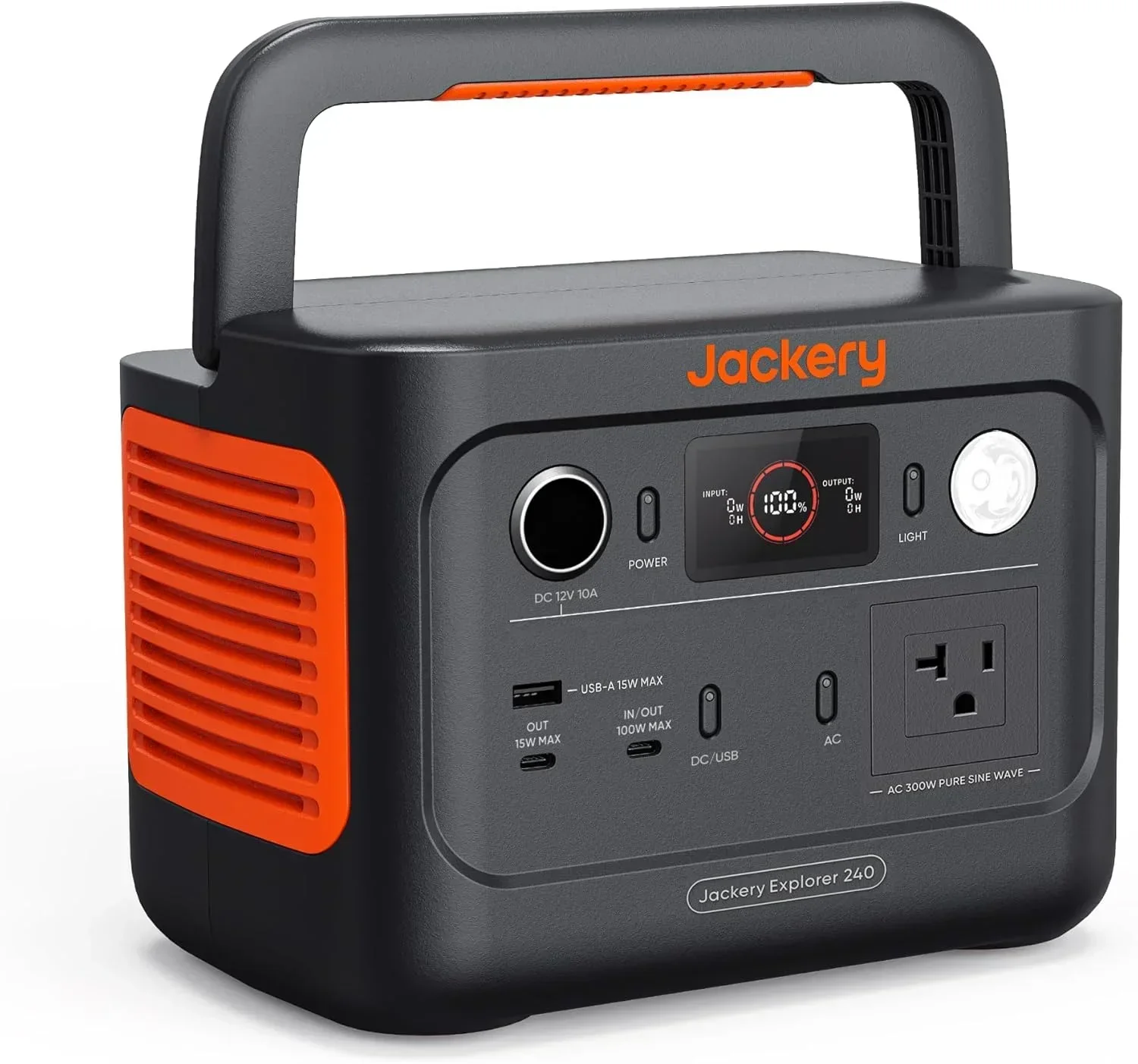
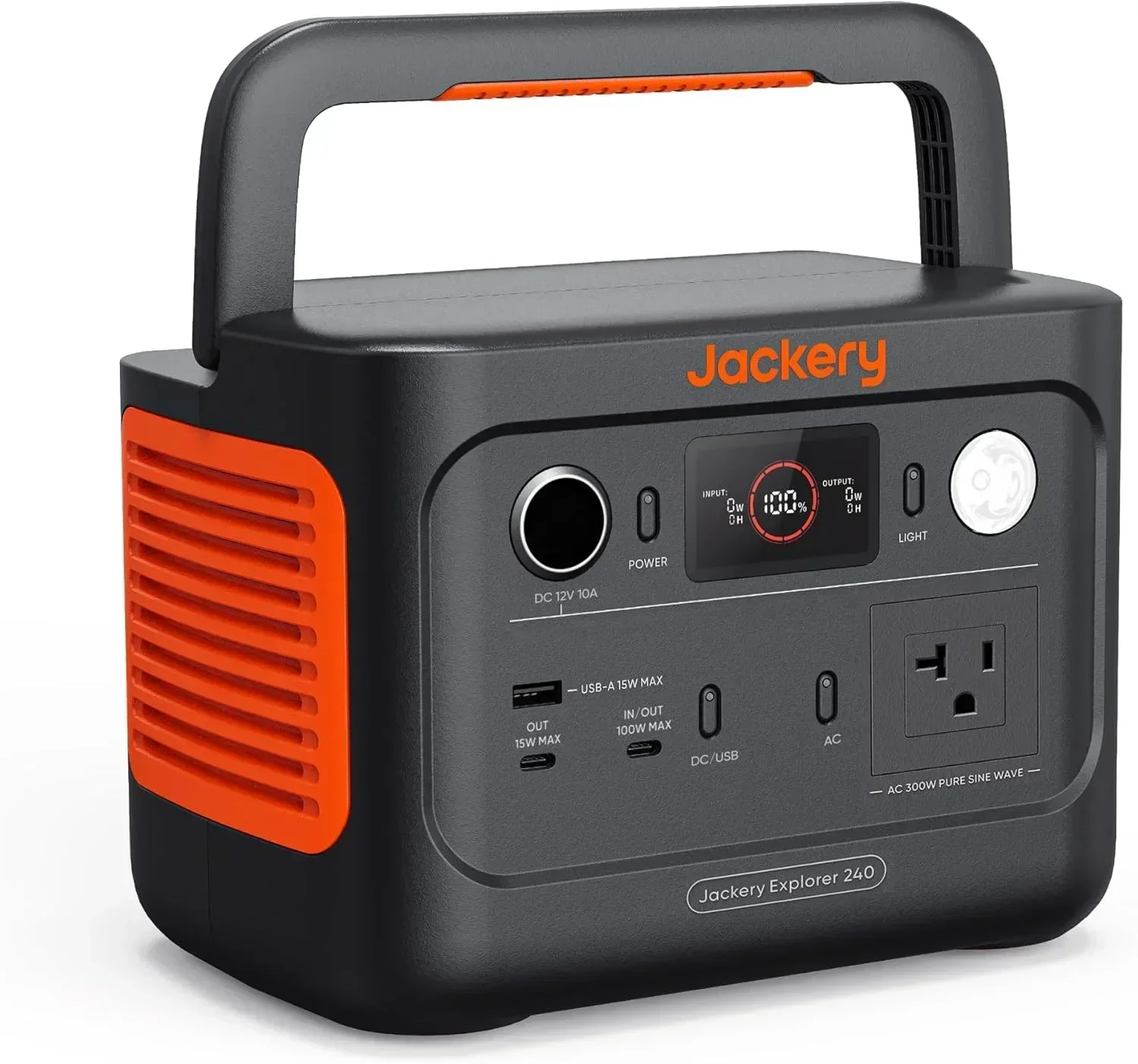
The cheap, reliable fix that ignores the trim lottery entirely is a Jackery Explorer 240 v2 power station: its 256 watt-hours run a fan, lights and charging all night and recharge off the 12V socket as you drive - so it doesn't matter whether your Acadia got the 150-watt outlet or not.
It's worth understanding why 150 watts is the ceiling that matters. This is a convenience inverter, not a camp power supply, so anything with a heating element or a compressor - a kettle, a hair dryer, a 12V fridge run on AC, a small space heater - will overrun it or trip it. Inside 150 watts you're limited to electronics: charging phones and tablets, running a laptop, a small fan, or a CPAP that stays under the limit.
Because availability is tied to trim and options rather than being standard, don't take a forum photo as proof your own truck has it. The feature is a GM build code, so the surest checks are your window sticker, the owner's manual, or simply looking at the rear of the center console. If it isn't there, nothing about the bed changes - you just lean on your own battery, which is the more dependable plan for overnight loads anyway.
Making the big floor into a flat bed on a budget
The Acadia gives you the most floor to work with, and you don't need to spend much to make it a bed. Fold the third row (power-fold on many trims), slide and fold the second row forward, and you've got a long, largely-level platform. Turn it into one plane cheaply:
- No-tools route: a shaped SUV air mattress levels the minor steps in one inflate - the fastest, cheapest flat bed.
- Durable route: a low plywood platform on cheap cross supports, cut to your measured floor, with the under-floor bin still usable for stash below.
- Keep it low - every inch of platform is an inch of sitting height gone, and this floor barely needs raising.
Measure twice, cut once, and lay the cushion last. On a floor this size the build is more about filling minor gaps than major carpentry, which keeps the whole setup cheap.
A couple of details separate a bed that works from one that annoys you. Whatever route you pick, build to your measured floor rather than a plan written for a different truck - the seatback contours are specific to this body. And leave the under-floor bin reachable where you can; on a platform build that means not fixing a panel down over the release, so you keep the free stash space the Acadia hands you.
Two finishing touches cost little and pay off every night. Privacy covers on the side and rear glass - even cut-to-fit foam or fabric - block light and prying eyes and add a little insulation. And park as level as the spot allows before you settle in, because no mattress fixes a sloped driveway; a few minutes finding flat ground does more for sleep quality than any amount of platform carpentry. On a floor this size the build really is more finishing than framing.
Why the Acadia wins on room and where it slips
Can you sleep in a GMC Acadia? Yes, and if maximum room is your priority, the 2024-and-newer Acadia is the pick of this group. The 97.5-cubic-foot hold, the longest floor of the four, the sliding second row, and the bonus under-floor bin make a spacious two-adult bed with little building. Where it slips: the floor is largely level rather than dead-flat, the 150-watt outlet is weak, and that outlet isn't on every trim.
The Acadia trades a perfectly flat floor and guaranteed power for the most space in the class. Level the minor steps, bring your own battery, and it's the roomiest bed of the bunch.
Put plainly, the Acadia earns its place by out-sizing the room, not by being the most refined sleeper. If your priority is two adults stretching out with gear stowed and space to move, nothing else in this mainstream group gives you as much floor for as little building. If instead you want a guaranteed dead-flat plane and real onboard power straight from the factory, a rig with a factory-flat floor or a bigger inverter may suit you better - the Acadia asks you to bring a pad and a battery.
For a budget build the math is friendly. The single biggest expense in most SUV camp setups is turning an uneven floor into a flat one, and the Acadia hands you most of that for free with its largely level, longest-in-class floor. Spend the savings on a good pad and a portable battery, skip the heavy platform, and the roomiest bed of the bunch is also one of the cheapest to finish.
Buy the 2024 redesign for the room, confirm whether your trim has the outlet, bring a portable battery, and level the floor with a pad, and the Acadia rewards you with the most comfortable stretch-out of these SUVs. The full build lives in our GMC Acadia camping guide, and if you're weighing it against a rival three-row, the Ford Explorer vs GMC Acadia comparison lines them up.
Related on Auto Roamer: Acadia cargo dimensions for sleeping; Acadia camping accessories.