Car Camping

Choosing the Right Size 12V Fridge for Your Overlanding Adventures

Casey - The Weekend Warrior
4 min read
Includes Video

My first overlanding fridge was a $400, 45-quart behemoth that barely fit in my old Subaru Outback. I learned the hard way that bigger isn't always better when it comes to 12V fridges. Three years and a couple of different vehicles later, I've figured out the real moves for picking the right size without breaking the bank or your back.

My first overlanding fridge was a $400, 45-quart behemoth that barely fit in my old Subaru Outback. I learned the hard way that bigger isn't always better when it comes to 12V fridges. Three years and a couple of different vehicles later, I've figured out the real moves for picking the right size without breaking the bank or your back.

The honest version: most people buy a fridge that's way too big for their actual needs.

This leads to wasted space, wasted power, and a lot of frustration trying to cram it into their rig. Let's avoid that rookie mistake.
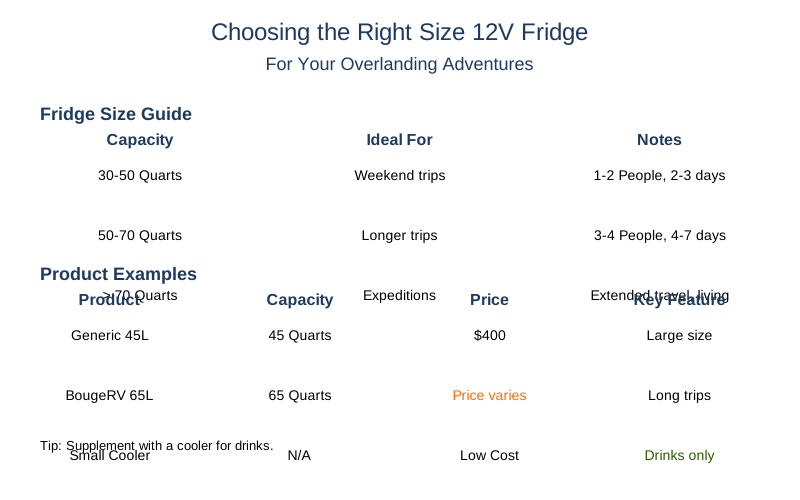
Choosing the Right Size 12V Fridge for Your Overlanding Adventures — Key Specifications Compared
Key specifications for Choosing the Right Size 12V Fridge for Your Overlanding Adventures

The Core Answer

Look, the internet is full of advice, but the real move is to match the fridge size to how you actually camp. For weekend warrior trips, think 30-50 quarts. This is the sweet spot for one or two people for 2-3 nights. I used a 45-quart for a long time, and honestly, I rarely filled it up on a typical weekend trip to Shenandoah Source Name. If you're running with three or four people, or going for 4-7 days, then you're probably looking at the 50-70 quart range. This is where you can actually pack enough food for a longer haul without having to live on beef jerky alone. My buddy Dave, who does a lot of week-long desert trips, swears by his 65-quart BougeRV. Anything over 70 quarts is usually for extended expeditions or people who are basically living out of their vehicle. You need to seriously consider the power draw and the physical space. That 100-liter monstrosity I saw online? Brilliant engineering for a food truck, not so much for a Jeep Wrangler How to Choose the PERFECT OVERLAND FRIDGE Setup. What nobody tells beginners is that you can always supplement with a small cooler for drinks if you're worried about space. This way, you're not running a massive fridge that's half empty most of the time. It's about efficiency, not just sheer volume. My second trip, I packed a 30-quart fridge and a small cooler, and it was way more comfortable than my first attempt with a monster fridge Setpower USA.
To maximize your food storage options, consider the benefits of a dual zone fridge for your overlanding trips.
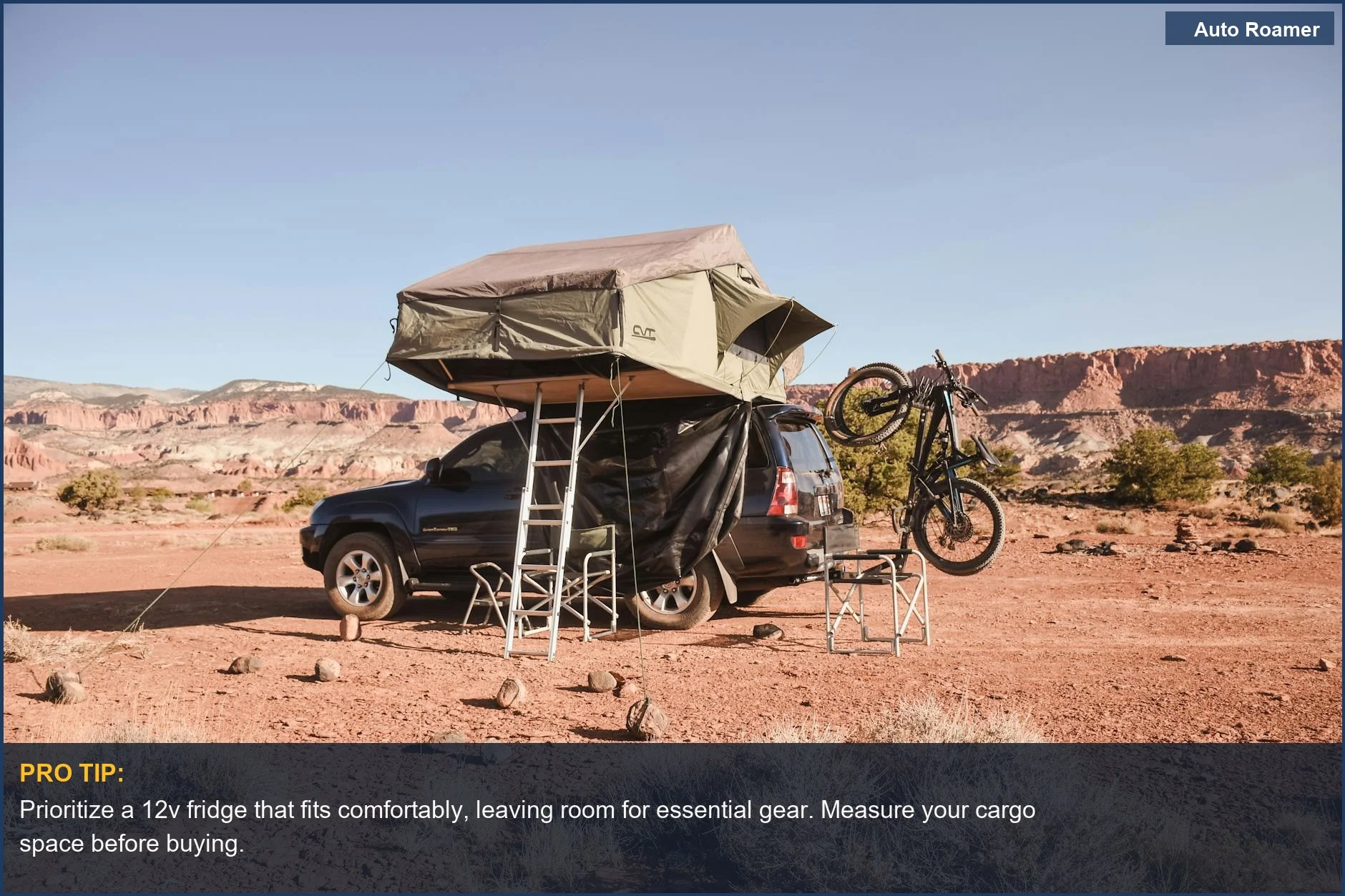
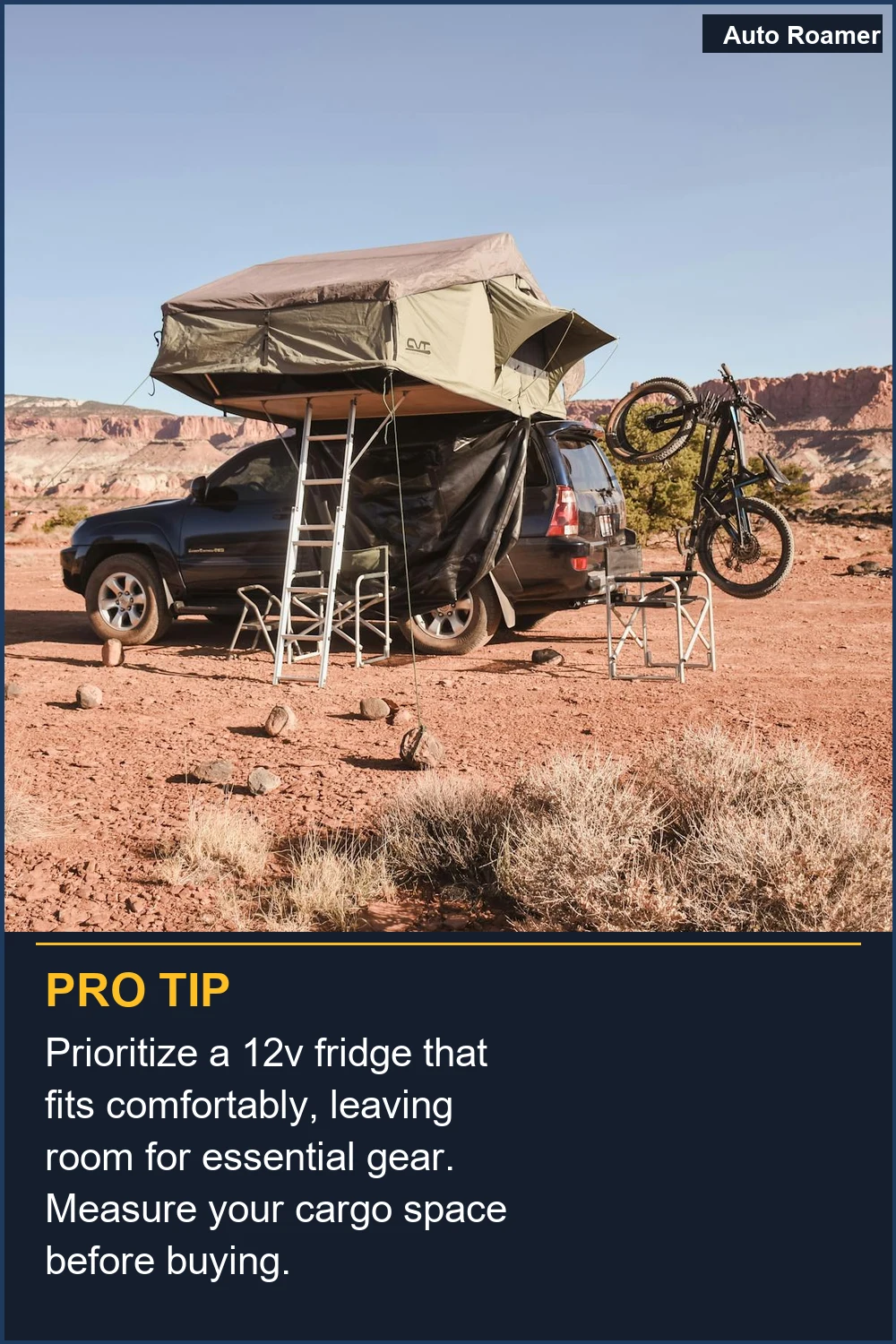
Prioritize a 12v fridge that fits comfortably, leaving room for essential gear. Measure your cargo space before buying.
Choosing the right 12v fridge size is crucial for overlanding. For 1-2 people on weekend trips, a 30-50 quart capacity is ideal. | Photo by Jenny Uhling

Why This Matters for Your Setup

  • Space is King: A fridge that's too big eats up valuable cargo space. I once had to leave my actual camping chairs at home because my fridge took up too much room in the back of my Tacoma BougeRV.
  • Power Draw: Bigger fridges generally use more power. If you don't have a robust dual-battery system, a huge fridge can drain your main battery faster than you can say 'jump start.' I learned this lesson the hard way after a weekend camping trip where my fridge died overnight, leaving my cheese sweating 12v Overlanding Fridge Buying Guide.
  • Weight: These things are heavy, especially when loaded. Trying to maneuver a giant fridge into and out of your vehicle can be a workout you didn't sign up for. My 50-quart is manageable, but I've seen guys struggle with 100-liter units like they're moving a piano Setpower USA.
  • Cost: Let's not forget the price tag. A 45-quart fridge from a decent brand might run you $500-$800. A 95-quart? You could be looking at $1000+ OutdoorX4. That's a lot of extra cash you could spend on gas or, you know, actual food.
  • To ensure you maximize efficiency, it's important to consider the right size for your car fridge.
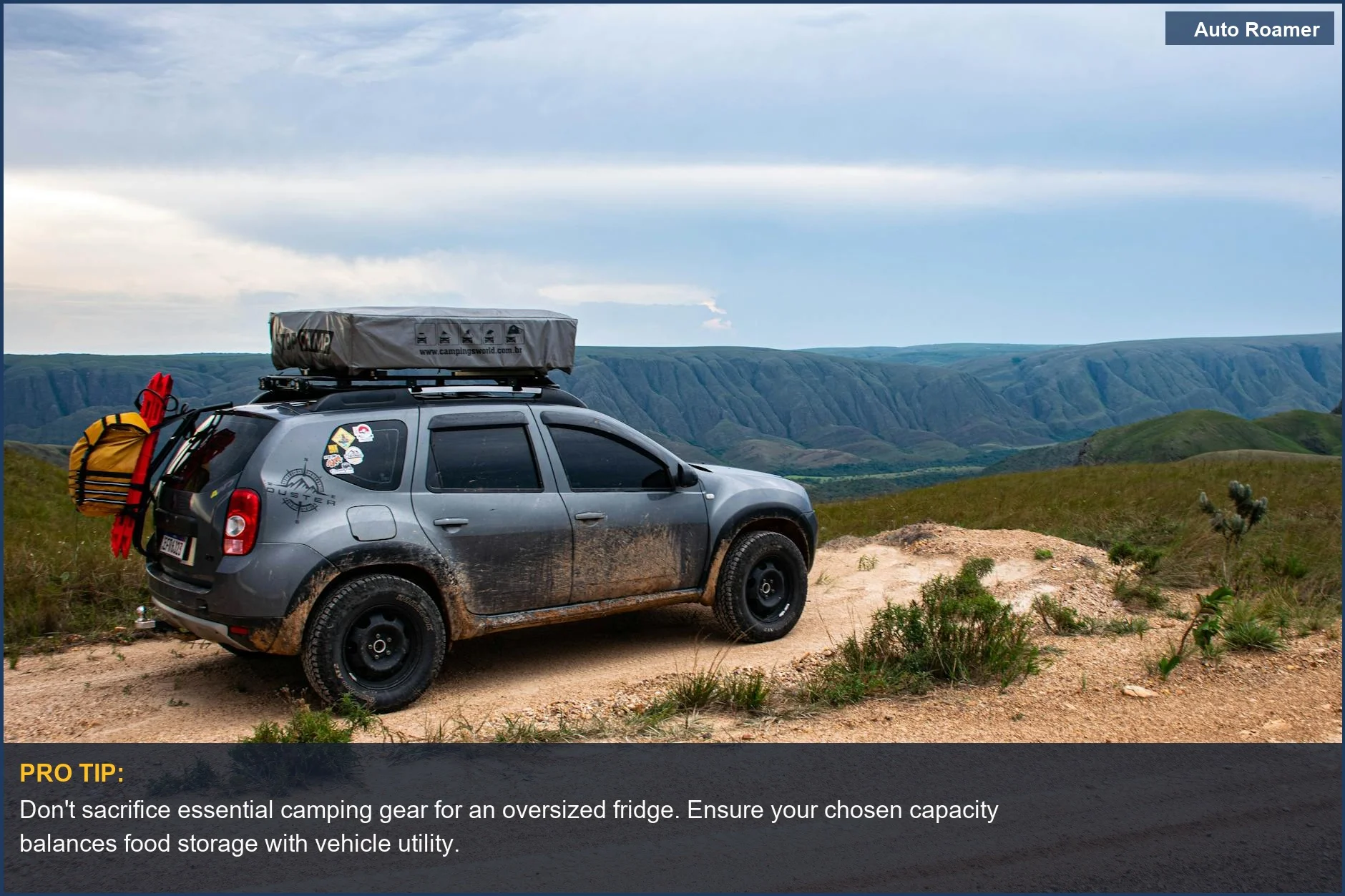
    Don't sacrifice essential camping gear for an oversized fridge. Ensure your chosen capacity balances food storage with vehicle utility.
    A fridge that's too big can consume valuable cargo space. Optimize your overlanding fridge capacity to fit your vehicle's needs. | Photo by Nicholas Shirazawa

    Making the Right Choice

  • Weekend Warrior (1-3 days, 1-2 people): Aim for 30-50 quarts. This is the $500 version that gets the job done without overcomplicating things BougeRV.
  • Extended Trips (4-7 days, 2-4 people): Look at 50-70 quarts. This is where you start to get serious about longer hauls and need a bit more capacity How to Choose the PERFECT OVERLAND FRIDGE Setup.
  • Expedition Level (8+ days, 4+ people): Go bigger, but be realistic about your vehicle's power and space. If you need more than 70 quarts, you better have a plan for the electrical system BTR Outfitters.
  • The Real Move: Don't buy the biggest fridge you can find. Buy the biggest fridge you actually *need*. It's a game-time decision based on your trips, not just what looks cool on Instagram Reddit.
  • If you're also considering a fridge for shorter excursions, explore our tips on choosing portable fridges for car camping.
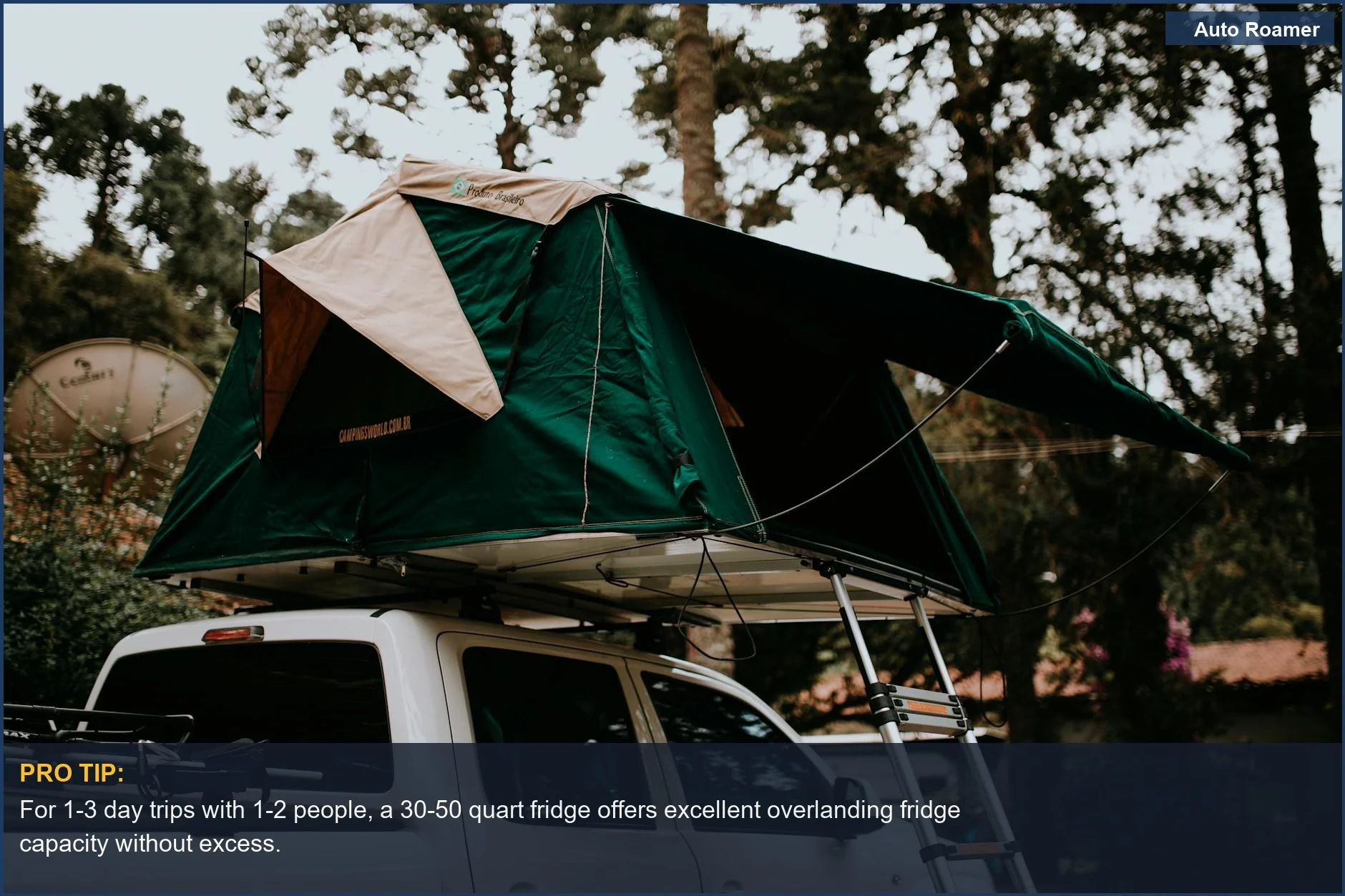
    For 1-3 day trips with 1-2 people, a 30-50 quart fridge offers excellent overlanding fridge capacity without excess.
    Selecting the correct 12v fridge size ensures you have enough cold storage. A 30-50 quart model is a solid choice for weekend adventures. | Photo by Matheus Bertelli

    Frequently Asked Questions

    I saw a DIY 12V fridge build online for like $200 in parts. Is it worth trying that instead of dropping $500+ on a name brand?
    Look, if you're an electrical engineer who likes to tinker, maybe. But for the rest of us? That $200 in parts is going to turn into $400 real fast when you realize you need a better compressor, a more robust power supply, and a properly insulated box. I tried a DIY cooler setup once, and it leaked coolant all over my camping gear. Stick to the $500 version, it's way less headache. OutdoorX4
    Do I really need a fancy battery monitor or a multimeter to figure out how much power my fridge is using?
    For your first few trips with a fridge in the 30-50 quart range, probably not. Just make sure your vehicle's alternator is in good shape and you're not running the fridge constantly with the engine off for days. If you start experiencing dead batteries or have a bigger fridge, then yeah, a decent battery monitor that shows voltage and amp draw is a smart move. It's better than guessing and ending up stranded. 12v Overlanding Fridge Buying Guide
    What if I buy a 45-quart fridge and realize I need more space for a week-long trip? Can I just add a second, smaller fridge?
    Absolutely. That's actually a pretty common setup. You can run a larger fridge for your main perishables and a smaller 15-20 quart fridge for drinks or overflow. Just make sure you've got the power to handle both. Running two fridges can significantly increase your battery drain, so plan accordingly. BTR Outfitters
    If I run my fridge too low on battery power, can it permanently damage my car's battery?
    Yes, it absolutely can. Deeply discharging a lead-acid car battery (the standard ones) can significantly shorten its lifespan and reduce its overall capacity. Most modern 12V fridges have a low-voltage cutoff to prevent this, but if yours doesn't, or you ignore the warning, you're asking for trouble. It's like running your phone battery down to 0% every single day. 12v Overlanding Fridge Buying Guide
    I heard that compressor fridges are way less efficient than thermoelectric coolers. Is that true?
    That's a common misconception. While thermoelectric coolers (like those cheap $50 ones from Walmart) are simple, they're incredibly inefficient, especially in warmer weather. Compressor fridges, while more expensive initially, are the real deal for overlanding. They cool much faster, can actually freeze things, and use less power overall to maintain a consistent temperature. Don't waste your money on a thermoelectric cooler for anything serious. Setpower USA

    🏅 Looking for Gear Recommendations?

    Check out our tested gear guides for products that work with this setup:

    C

    Casey - The Weekend Warrior

    Weekend car camper and road trip enthusiast. Focuses on practical, budget-friendly solutions for families and first-time campers.

    Sources

    Related Articles