Car Camping

Choosing the Right Size 12V Car Fridge for Your Needs

Casey - The Weekend Warrior
5 min read
Includes Video

Choosing the right 12-volt refrigerator size is less about packing for a move and more about smart, real-world camping. My first trunk was so full of gear I couldn't see out the back window; I learned quickly that every cubic inch counts, especially when it comes to keeping your food cold without draining your battery.

Choosing the right 12-volt refrigerator size is less about packing for a move and more about smart, real-world camping. My first trunk was so full of gear I couldn't see out the back window; I learned quickly that every cubic inch counts, especially when it comes to keeping your food cold without draining your battery. A fridge that's too big wastes precious vehicle space, while one that's too small means warm drinks and spoiled snacks.

It's a delicate balance, and frankly, nobody tells you how to find it on your first trip. This isn't about fancy specs; it's about what actually fits and works when you're miles from anywhere. 12 Volt Refrigerator Buying Guide is a good starting point, but let's get real about what matters in the field.
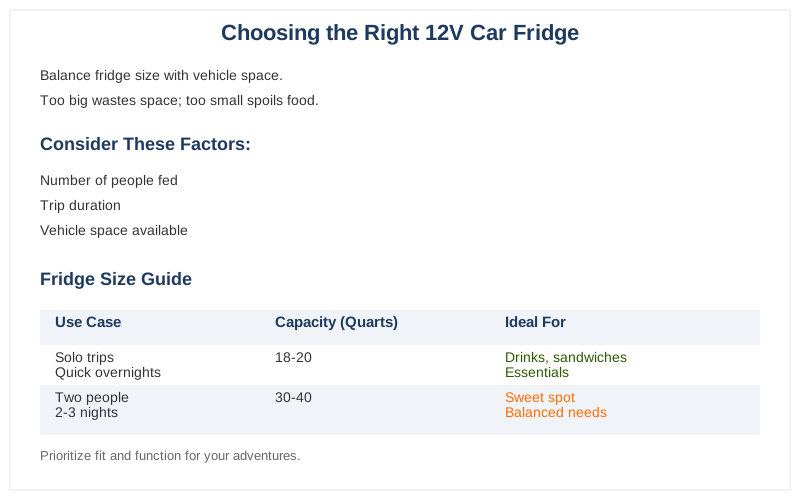
Choosing the Right Size 12V Car Fridge for Your Needs — Key Specifications Compared
Key specifications for Choosing the Right Size 12V Car Fridge for Your Needs

The Core Answer

The honest version: figure out how many people you're feeding and how long you'll be out. For a weekend warrior like me, feeding two people for two or three nights, a 30- to 40-quart fridge is usually the sweet spot. I used to think bigger was always better, but cramming a giant fridge into my hatchback meant I had to leave my camp chairs at home. Not ideal. Reddit is full of people saying "go as big as you can," and yeah, more space is nice, but only if it fits without turning your vehicle into a Tetris nightmare. If you're solo or just doing quick overnights, you can probably get away with a smaller 18- to 20-quart unit. I know a guy who swore by his 18-liter fridge for short trips; said it fit perfectly behind his driver's seat. He had great results. It's enough for some drinks, sandwiches, and a few essentials. Don't underestimate the power of a compact fridge that actually fits. For longer trips or larger groups, say four people for a week, you're probably looking at 50 quarts or more. This is where you really need to think about your vehicle's cargo space. Trying to stuff a 60-quart fridge into a compact SUV is a rookie mistake I've seen happen. It's like trying to fit a king-size mattress into a smart car. Choosing the wrong size wastes space. The real move is to measure your available space before you even start looking. Get a tape measure and actually measure the height, width, and depth where you plan to put it. A fridge that's a few inches too tall won't fit under your tonneau cover or through the back hatch. I learned this the hard way trying to jam a fridge into my old Subaru Outback; it just wouldn't close. Brilliant engineering, that. How to Choose the PERFECT OVERLAND FRIDGE might show you some cool setups, but always check your own measurements. Think about what you *actually* eat and drink. Are you packing gourmet meals or just keeping a few beers and some cheese cold? For most weekend trips, I'm not cooking elaborate dinners. So, a fridge that holds a week's worth of groceries for a family of five is overkill and just takes up space. The $50 version of this advice is: buy what fits and what you need, not what looks impressive. Consider your vehicle type; sedans need smaller units than SUVs or trucks. Ultimately, the "right" size is subjective but heavily influenced by practical constraints. It's the difference between enjoying your trip and wrestling with gear. My second trip had half the gear and was twice as comfortable, and that included a fridge that actually fit. Focus on your specific needs, not just the advertised capacity.
To ensure you get the best fit, consider our tips on choosing the right size for your car fridge.
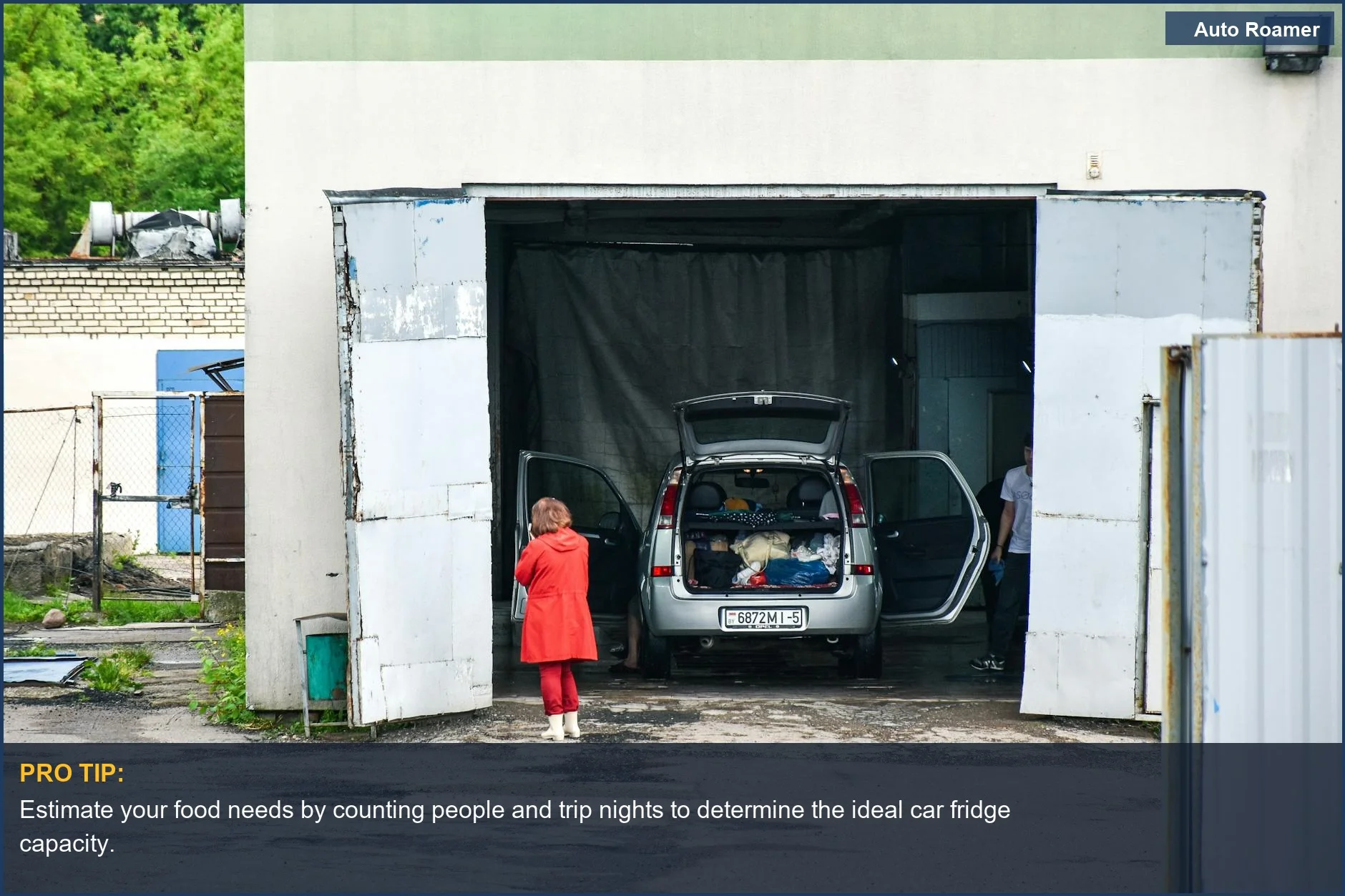
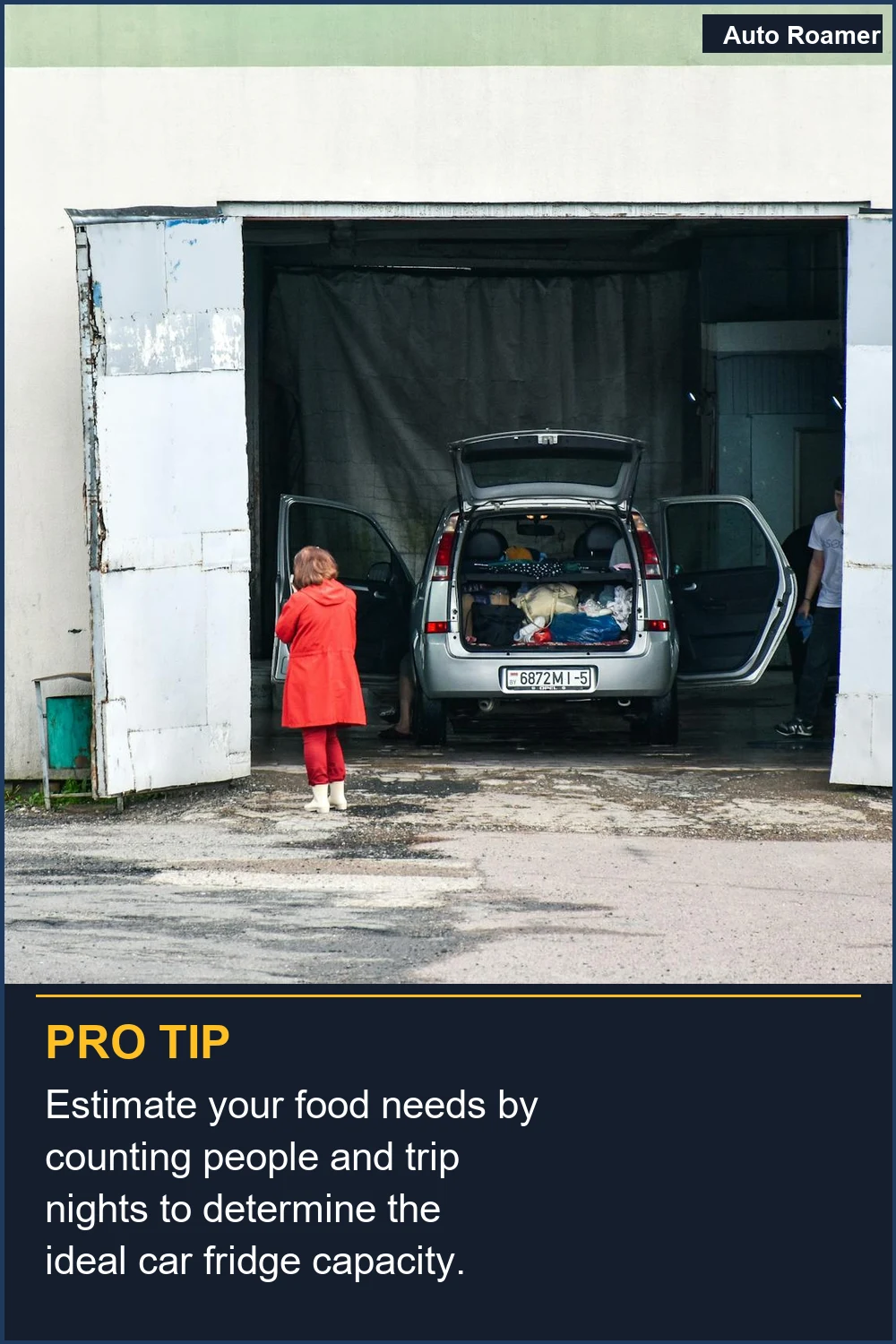
Estimate your food needs by counting people and trip nights to determine the ideal car fridge capacity.
Planning a road trip? This woman is packing for adventure, highlighting the importance of selecting the right car fridge capacity for your travel duration. | Photo by Artem Makarov

Why This Matters for Your Setup

  • Vehicle Space: This is the big one. A fridge that's too large eats up valuable real estate in your trunk or back seat. For my Honda Civic, anything over 20 quarts felt like trying to pack a sofa. Sedans have limited interior space, so smaller units are key.
  • Power Draw: Larger fridges generally draw more power.
  • While most 12V fridges are efficient, a massive unit can drain your car battery faster, especially if you're not running the engine. I learned to always check my battery voltage after a long day. Energy efficiency is key.
  • Accessibility: A fridge that's crammed in might be hard to open or access. I once had a fridge so tight I had to remove half my camping gear just to get to my drinks.
  • Not the "convenience" I signed up for. Consider how you'll use it.
  • Trip Length: For a quick overnight, you don't need a portable walk-in freezer. For a week-long expedition, a tiny cooler won't cut it. Match the fridge size to the duration of your adventures. A 50qt is good for 2-3 people for 2-3 nights, according to some folks.
  • To ensure optimal performance and convenience, understanding how to choose the right size cooler is essential.
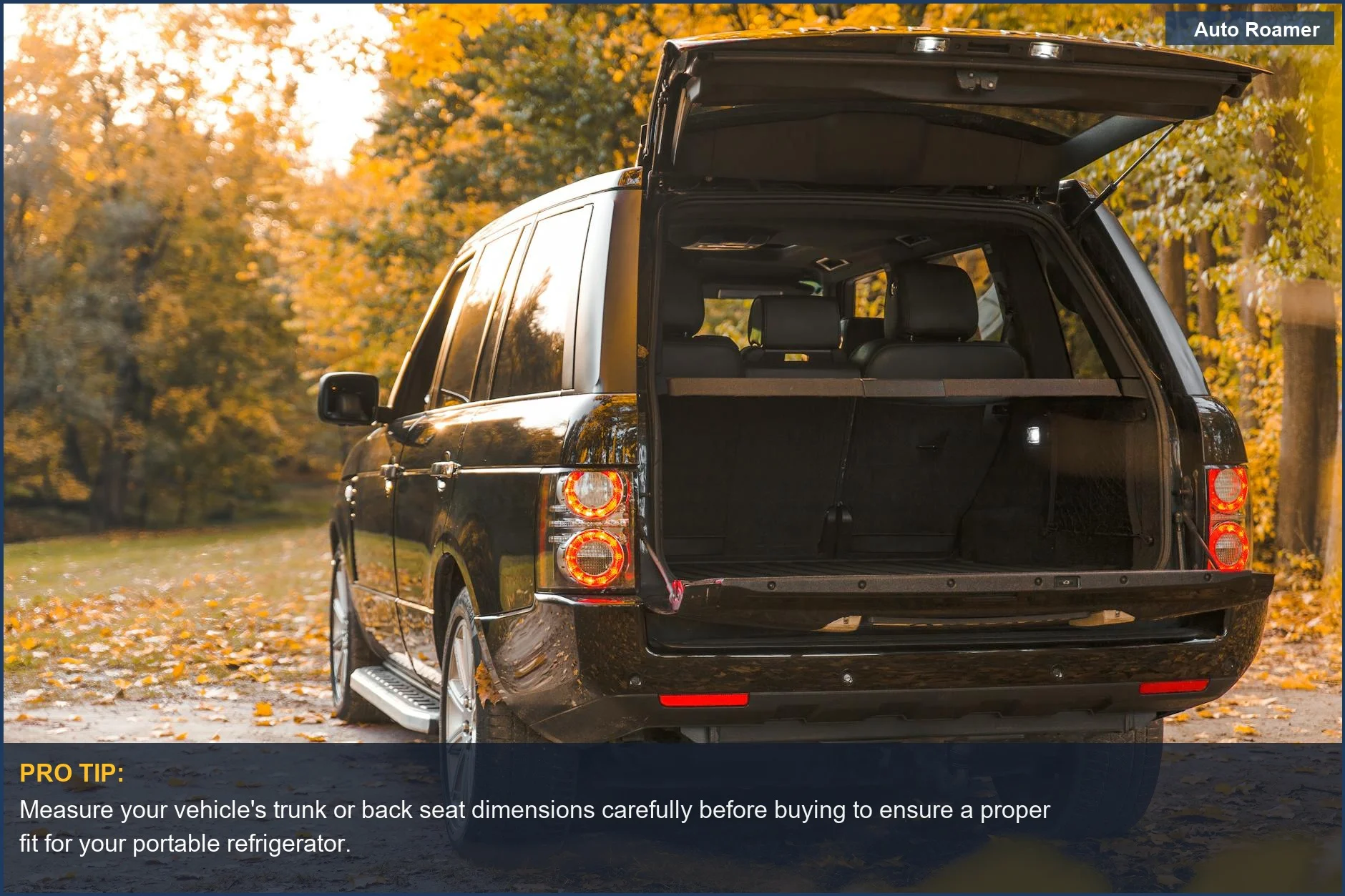
    Measure your vehicle's trunk or back seat dimensions carefully before buying to ensure a proper fit for your portable refrigerator.
    Consider your vehicle's space like this SUV in a scenic setting. Ensure your chosen portable refrigerator dimensions won't consume too much valuable cargo area. | Photo by Kipras Zabeliauskas

    Making the Right Choice

  • Measure Twice, Buy Once: Seriously, get out there with a tape measure. Don't just eyeball it. I once bought a fridge that was 1 inch too tall for my trunk. Rookie mistake. Know your vehicle's dimensions.
  • Consider Your Crew: How many mouths are you feeding? A single hiker has different needs than a family of four. Be honest about your group size and eating habits.
  • 40-60 quarts is often ideal for couples or small groups.
  • Think About Your Gear: Will the fridge fit alongside your other essentials like a tent, sleeping bags, and cooking gear? If you have to leave something important behind, the fridge might be too big. My trunk was a disaster zone the first time. Organization is key.
  • The Real Move: Prioritize what you *actually* need for your typical trip. Don't overbuy.
  • It's better to have a slightly smaller fridge that fits perfectly and works reliably than a massive one that causes logistical headaches. Chest-style fridges are generally more efficient due to less cold air escaping.
    To complement your fridge slide choice, understanding how to pick the right size 12V fridge is essential for your adventures.
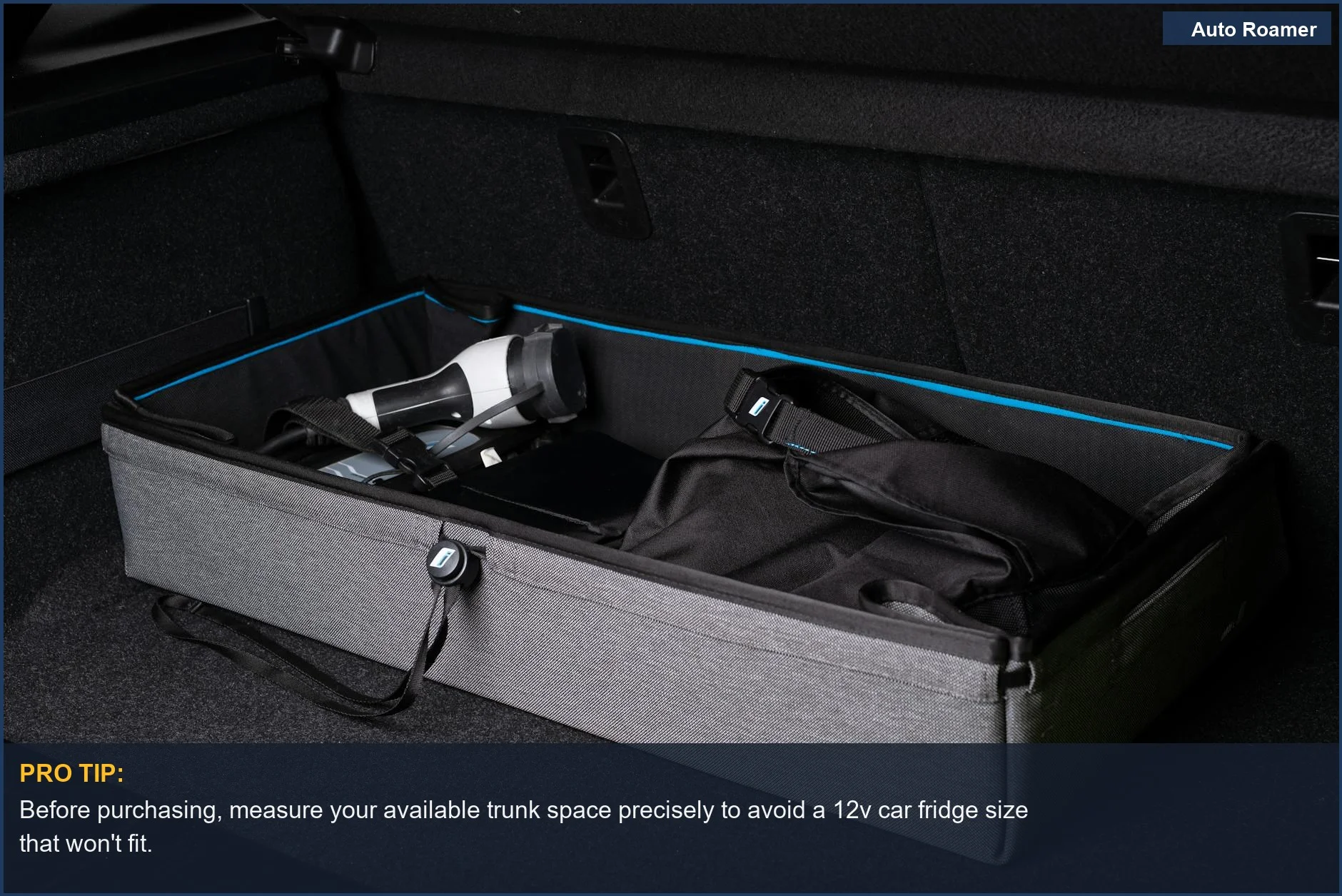
    Before purchasing, measure your available trunk space precisely to avoid a 12v car fridge size that won't fit.
    Efficient organization is key! This packed trunk shows how to maximize space, reinforcing the need to know your 12v car fridge size. | Photo by Vitali Adutskevich

    Frequently Asked Questions

    My car fridge is costing me a fortune in gas because my alternator has to work so hard. Can I just wire it directly to the battery with a cheap fuse instead of using the car's 12V socket?
    Whoa there, Speedy Gonzales. While bypassing the 12V socket might seem like a shortcut, it's a rookie mistake waiting to happen. The real move is to use a proper fuse rated for your fridge, usually around 10 to 15 amps, and connect it directly to the battery. Anything less, and you risk a fire. Anything more, and you risk frying your fridge if something goes wrong. Don't cheap out on safety; your car's wiring is designed for a reason, and a direct wire needs a proper inline fuse.
    Do I really need a fancy battery monitor or voltage cutoff if my fridge has one built-in?
    Look, the built-in cutoff is better than nothing, but it's not game-time. I learned this the hard way at a campsite in the Rockies when my fridge shut off, but my battery was still nearly dead. Having a separate, reliable battery monitor that gives you real-time voltage readings is crucial. It lets you see exactly what's going on before the fridge's safety net kicks in, which might be too late to save your battery from a deep discharge. It's like having a copilot for your power.
    What if my 30-quart fridge is full of food, but it's still not getting cold enough on a 95-degree day in Arizona?
    First off, did you pre-chill your fridge and your food before you left? That's step one. If it's still struggling, make sure the vents on the back aren't blocked by anything. I once had my cooler bag shoved right against it, and it was struggling. Also, check your temperature setting; maybe it's just set too high. If all else fails, you might have a refrigerant leak or a compressor issue, which means it's time for a professional look-over, not just kicking it.
    Can running a 12V fridge constantly in my car permanently damage my car's battery or electrical system?
    If you're running it directly off your car's starting battery without any sort of cutoff or secondary power source, then yes, absolutely. You can deep cycle your starting battery, which drastically reduces its lifespan. I've seen batteries go from healthy to toast in a single long trip. The smart move is to use a deep cycle battery or a portable power station, and always ensure your fridge has a low-voltage cutoff. Otherwise, you're asking for trouble and a hefty repair bill.
    I heard that compressor fridges are way less efficient than thermoelectric coolers. Is that true?
    That's a common misconception, and frankly, it's backward. Thermoelectric coolers are cheap and simple, but they're terrible at actually cooling, especially in hot weather. They just move heat around. Compressor fridges, on the other hand, are like mini home refrigerators and are far more efficient at maintaining consistent low temperatures, even in 100-degree heat. My first thermoelectric cooler was a joke; it barely kept drinks cool on a mild day. The compressor style is the real move for serious camping.

    🏅 Looking for Gear Recommendations?

    Check out our tested gear guides for products that work with this setup:

    C

    Casey - The Weekend Warrior

    Weekend car camper and road trip enthusiast. Focuses on practical, budget-friendly solutions for families and first-time campers.

    Sources

    Related Articles