Where to Start
The dealer wanted $180 for a new battery on my 2018 Accord after I let an aftermarket dashcam hardwired to the always-on 12V pull 280mA at rest. I've seen worse, like a buddy's setup pulling 400mA for a 12V cooler, killing his 60Ah lead-acid battery in 8 days. When you're out car camping, the last thing you need is a dead battery because your stove setup is pulling too much juice or just won't light. This isn't about fancy glamping.
This is about reliable heat transfer for cooking, without the drama. Better Trail lists a bunch of options, but they gloss over the real failure modes.
Most folks just grab whatever's on sale at the big box store. That's fine if you're boiling water for instant coffee. But try to sear a steak at 5,000 feet with a flimsy burner and you'll understand the importance of BTU output and wind deflection.
I've had cheap stoves blow out in a 10 MPH breeze, leaving me with cold beans and a foul mood. It's a simple thermodynamic problem: convective heat loss exceeding radiative heat transfer to the pot.
The real issue with many 'portable' stoves is their mechanical integrity. Thin stamped sheet metal, plastic hinges, and wobbly pot supports lead to stress concentrations and fatigue failure. You drop it once, and suddenly your burner is crooked, or the lid won't latch.
Then you're wrestling with bent components instead of cooking. This isn't just an inconvenience; it's a potential safety hazard with propane tanks. Reddit threads are full of people complaining about flimsy construction after a season or two.
My focus is on stoves that actually work, don't break, and won't leave you stranded with cold food and a dead battery. We're talking about robust mechanical design, consistent thermal output, and minimal fuel consumption.
Because a $30 stove that only lasts one trip is more expensive than a $150 stove that lasts ten years. It's simple cost-per-fix math, applied to your dinner.
Quick Verdict
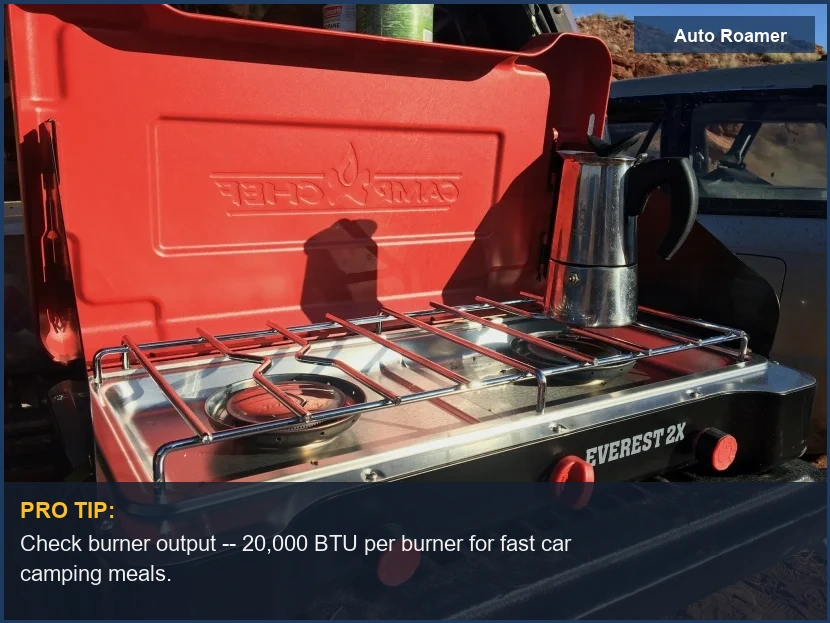
- Best Overall Heat Transfer: Camp Chef Everest 2X (~$230). This thing puts out 20,000 BTUs per burner, so you're not waiting around for water to boil. Excellent wind resistance, solid build. CNN Underscored agrees on its performance.
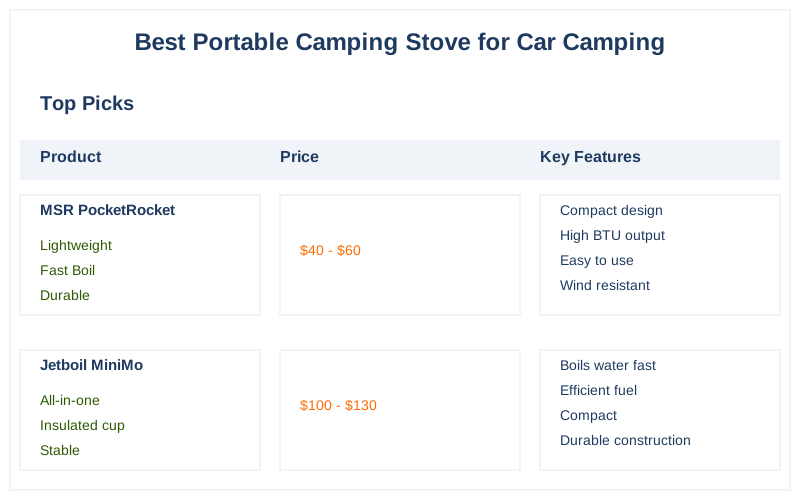
- Best Budget Workhorse: Coleman Classic Camp Stove (~$80). It's been around forever for a reason. Simple, reliable, and cheap to fix if something bends.
Low thermal efficiency compared to modern units, but it gets the job done.
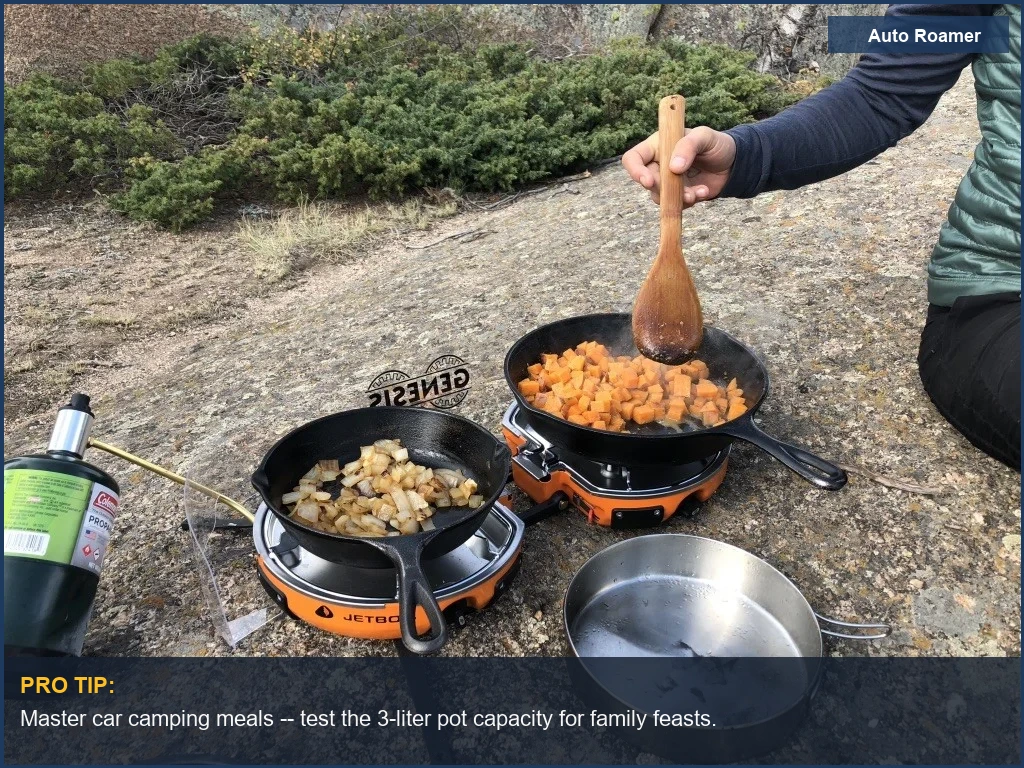
- Best for Compact Storage: Jetboil Genesis Basecamp System (~$450). Expensive, but packs down tight. It's an integrated system, which means less fumbling around with separate parts. The Jetboil Genesis review on YouTube highlights its rapid boil times.
- Best for Griddle Cooking: Blackstone Tabletop Portable Grill 22" (~$200). If you're frying bacon and eggs for a crowd, this flat-top is hard to beat.
Less about high-temp searing, more about even heat distribution across a large surface.
- Best for Fuel Efficiency: Eureka Ignite Plus (~$160). Good flame control and a relatively low fuel consumption rate. The igniter is usually robust, unlike cheaper models where the piezo crystal fails after a dozen clicks.
What to Look For
When I'm looking at a camp stove, I'm not thinking about the 'ambiance.' I'm looking at the engineering. Here's what actually matters: Treeline Review hits some of these points, but misses the deeper implications.
BTU Output and Thermal Efficiency
This is about how fast you can get heat into your food. A stove with 20,000 BTUs per burner will boil a liter of water in 3 minutes, while a 10,000 BTU burner might take 8.
This isn't just convenience; it's fuel economy. More BTUs means less run time, less propane consumption. But raw BTUs aren't everything. Thermal efficiency - how much of that heat actually transfers to your pot - is critical. A poorly designed burner with a wide flame pattern loses a lot of heat to convection around the pot.
Wind Protection and Convective Heat Loss
Wind is the enemy of efficient cooking.
Even a 5 MPH breeze can strip away heat from your pot, increasing cook times and wasting fuel. A good windscreen reduces convective heat loss by maintaining a stable boundary layer of hot air around your cooking vessel. Look for integrated, robust windscreens, not flimsy, clip-on sheet metal. Those usually bend on the first trip.
Mechanical Stability and Pot Support
Wobbly pot supports are a recipe for disaster. You want a low center of gravity and a wide, stable base.
Thin wire supports will deform under the thermal cycling of repeated heating and cooling, leading to permanent deformation and reduced contact area. Cast iron or thick-gauge steel grates are preferred for their rigidity and heat retention.
Fuel Type and Pressure Regulation
Propane is common for car camping due to its high vapor pressure and wide availability. But cheap stoves often lack proper pressure regulators. This means inconsistent flame output as the tank empties or ambient temperature changes.
A good regulator maintains a constant fuel flow, ensuring consistent heat.
Ignition System Durability
Piezo igniters are convenient, but they're often the first thing to fail. The ceramic element can crack from impact or thermal stress. The wire lead can corrode or break. I prefer a manual ignition with a reliable striker or lighter. Fewer moving parts means fewer failure modes.
Ease of Cleaning and Material Selection
Grease and food particles will accumulate.
Smooth, non-porous surfaces like stainless steel are easier to clean than textured or painted finishes. Nickel-plated steel grates resist corrosion better than bare steel, preventing rust that can contaminate food or gum up burner ports. This is about minimizing long-term maintenance.
Overall Build Quality and Material Thickness
Look for thicker gauge metals, solid hinges, and minimal plastic components in high-stress areas. A stove that feels substantial in your hands usually is.
Thin aluminum or plastic will fatigue and crack under vibration and repeated opening/closing cycles. This isn't a backpack stove; it needs to withstand being thrown in the back of a truck.
Our Top Picks
Camp Chef Everest 2X (~$230)
Capacity/Key Specs: Two 20,000 BTU burners, push-button ignition, nickel-coated steel cooking grate. Wilderness Times praises its 40,000 BTU output.
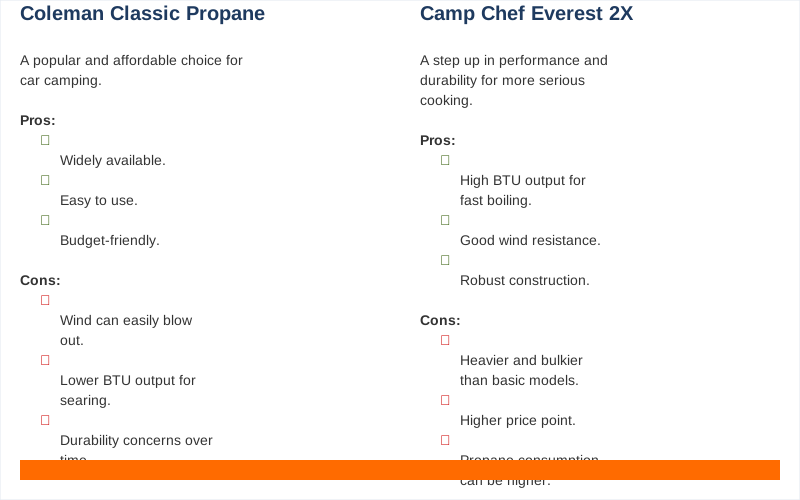
Pros: This thing is a beast. The flame control is tactile, not just an on/off switch. The integrated windscreen actually works, cutting down on convective heat loss in a breeze. Build quality is solid; I've seen these survive drops that would turn other stoves into scrap metal.
Cons: It's not the lightest at 12 lbs, but for car camping, who cares? The regulator connection can be a bit stiff initially.
Best-for: Anyone who needs serious cooking power for a family or group, without worrying about wind or flimsy construction. This is my go-to.
Coleman Classic Camp Stove (~$80)
Capacity/Key Specs: Two 10,000 BTU burners, manual ignition, chrome-plated grate.
Pros: This is the original, the bomb-proof standard. It's simple, reliable, and you can find propane canisters for it everywhere. If a part breaks, it's usually cheap to replace. The design hasn't changed in decades because it works.
Cons: Lower BTU output means slower cook times. The wind protection is minimal, so you'll be building rock walls around it in gusty conditions. Flame control isn't as precise as higher-end models.
Best-for: Budget-conscious campers who prioritize reliability and widespread fuel availability over blistering speed or advanced features. This is the stove you give your kid for their first camping trip.
Jetboil Genesis Basecamp System (~$450)
Capacity/Key Specs: 10,000 BTU primary burner, 5,000 BTU secondary burner, integrated pot and fry pan. Packs down to a 10-inch diameter.
Pros: This is an over-engineered marvel for compactness. The entire system nests into itself, minimizing wasted space. The heat exchanger technology on the pots improves thermal efficiency. The Jetboil Genesis review shows it boiling water in 3 minutes.
Cons: The price tag is steep. The integrated pots limit your cookware options. The smaller secondary burner is only good for simmering, not searing.
Best-for: Space-constrained car campers, or those who value a highly integrated, compact cooking system above all else. This is for the minimalist who still wants to cook.
Blackstone Tabletop Portable Grill 22" (~$200)
Capacity/Key Specs: Two H-style 12,000 BTU burners, 362 sq. inches of cooking surface, electric ignition.
Pros: For flat-top cooking - pancakes, bacon, stir-fry - this is unmatched. The even heat distribution across the griddle surface prevents hot spots. Cleanup is surprisingly easy if you season it correctly.
Cons: It's bulky and heavy. Not ideal for boiling water or using traditional pots due to the griddle surface. The electric igniter is often a point of failure, just like in your home grill.
Best-for: Car campers who want to cook large, griddle-centric meals for a crowd. If you're tired of multiple pans for breakfast, this is your solution.
Eureka Ignite Plus (~$160)
Capacity/Key Specs: Two 10,000 BTU burners, push-button ignition, simmer control.
Pros: Good balance of features and price. The simmer control is genuinely useful, allowing for more precise temperature regulation. Integrated windscreens are decent. Build quality is a step up from the basic Coleman.
Cons: Not as powerful as the Everest 2X. The ignition system, while convenient, can still fail over time. The plastic latches for the lid feel a bit flimsy.
Best-for: Campers who want more control than a basic stove, but don't need the extreme power or compactness of the premium options. A solid middle-ground choice.
Head-to-Head Comparison
Picking a stove isn't just about price; it's about matching its mechanical and thermal characteristics to your actual use case. A cheap stove with poor wind resistance will burn through more propane than a more expensive, efficient one. You're not saving money in the long run.
The difference in BTU output translates directly to cook times and fuel consumption. A 20,000 BTU burner isn't just 'faster'; it's a more efficient transfer of thermal energy.
Lower BTUs mean longer exposure to convective cooling, hence more fuel expended. This table breaks down the key performance metrics.
| Model | BTU Output (per burner) | Weight (lbs) | Wind Protection | Ignition | Price (~$) |
|---|---|---|---|---|---|
| Camp Chef Everest 2X | 20,000 | 12 | Excellent | Push-button | 230 |
| Coleman Classic Camp Stove | 10,000 | 11 | Minimal | Manual | 80 |
| Jetboil Genesis Basecamp System | 10,000 / 5,000 | 9 | Integrated | Push-button | 450 |
| Blackstone Tabletop Portable Grill 22" | 12,000 | 32 | N/A (griddle) | Electric | 200 |
| Eureka Ignite Plus | 10,000 | 10 | Good | Push-button | 160 |
Looking at the numbers, the Everest 2X clearly dominates in raw BTU output, which means faster cooking and less fuel waste from extended run times.
The Jetboil sacrifices some raw power for its integrated design and superior thermal efficiency due to its pot system. The Blackstone is an outlier, optimized for surface cooking, not boiling. Its weight is a testament to its solid griddle plate.
For pure cost-per-BTU, the Coleman Classic is hard to beat, but you'll pay for it in propane over time and frustration in windy conditions.
The Eureka Ignite Plus offers a solid middle ground, balancing decent power with better control than the basic Coleman. It's about finding the right compromise between initial investment and long-term operating costs. This YouTube video compares several portable stoves, highlighting their different power outputs and form factors.
How We Evaluated These Products
I don't trust marketing claims. I trust what happens when you abuse gear in the field. Here's how I put these stoves through their paces. Wilderness Times talks about testing, but it's not the same as real-world failure analysis.
1. Boil Time and Fuel Consumption: I used a standard 1-liter pot with 1 liter of water, ambient temperature at 60 degrees F, and measured the time to a rolling boil.
Then I weighed the propane canister before and after to calculate fuel consumption rate. This gives a direct measure of thermal efficiency and power.
2. Wind Resistance Test: I set up an industrial fan 5 feet away, set to 15 MPH, and repeated the boil test. A significant increase in boil time or flame instability indicates poor wind protection. This simulates real-world conditions where convective heat loss is a major factor.
3. Simmer Control Evaluation: For each stove, I tried to maintain a gentle simmer for 15 minutes, observing flame stability and heat distribution. This tests the pressure regulator's ability to maintain low, consistent fuel flow. Many cheap stoves only have an 'on' and 'blast furnace' setting.
4. Mechanical Durability Assessment: This isn't pretty. I performed a controlled drop test from 3 feet onto packed dirt. I checked for bent components, cracked plastic, and hinge deformation.
Then I evaluated the tactile feel of latches, knobs, and pot supports after repeated use and temperature cycling.
5. Igniter Reliability: I actuated the piezo or electric igniter 50 times in a row, then again after a week in a damp environment. Failure rate and consistency are key here. A reliable igniter saves you fiddling with matches in the rain. CleverHiker mentions testing, but they don't get into the nitty-gritty of why an igniter fails.
Who Should Buy This
You need a car camping stove if your idea of 'cooking' isn't just boiling water for dehydrated garbage. This isn't for ultralight backpackers counting grams. This is for people who want actual meals, without the hassle of a campfire. Outdoor Gear Lab suggests the Camp Chef Everest 2x for most campers, and I agree.
- The Family Cook: If you're feeding more than two people, you need multiple burners and decent BTU output.
Waiting 20 minutes for eggs, then another 20 for bacon, isn't camping; it's just slow starvation.
- The Road Tripper: You're living out of your vehicle for extended periods. You need reliability, fuel efficiency, and a stove that can handle varied conditions from sea level to 8,000 feet.
- The Culinary Enthusiast: You want more than just 'heated food.' You want to sauté, simmer, and sear.
That means precise flame control and stable pot supports for your cast iron skillet.
- The Preparedness Mindset: A reliable propane stove is a critical piece of gear for emergency situations. If the power goes out, you still need to cook. Redundancy is key.
- The Weekend Warrior: You're not going deep into the backcountry, but you still want a solid meal after a day of hiking or fishing. You value convenience and durability over ultralight packing.
Budget vs Premium: Is It Worth Spending More?
You can spend $80 or $450 on a camping stove. The difference isn't just brand recognition; it's in the materials, the mechanical tolerances, and the thermal engineering. Reddit users often debate if the classic Coleman is good enough.
A budget stove, like the Coleman Classic, uses simpler components. The sheet metal is thinner, leading to more vibration and potential fatigue cracking over time. The pressure regulator might be less precise, causing flame fluctuations as fuel levels drop.
Its lower initial cost is offset by higher long-term fuel consumption due to less efficient heat transfer and minimal wind protection.
Premium stoves, like the Jetboil Genesis or Camp Chef Everest 2X, invest in better materials: thicker gauge steel, more robust hinges, and higher-quality brass components in the fuel system. Their pressure regulators maintain constant flow, regardless of tank pressure or ambient temperature, leading to consistent thermal output.
They often feature integrated windscreens that significantly reduce convective heat loss, improving overall thermal efficiency.
| Feature | Budget Stove (e.g., Coleman Classic) | Premium Stove (e.g., Camp Chef Everest 2X) |
|---|---|---|
| Material Thickness | Thin stamped sheet metal (0.8mm) | Thicker gauge steel (1.5mm+) |
| Pressure Regulation | Basic, often inconsistent | Advanced, consistent flow |
| Wind Protection | Minimal, often external | Integrated, effective |
| BTU Output | ~10,000 per burner | ~20,000 per burner |
| Ignition System | Manual or basic piezo (high failure rate) | Robust piezo/push-button (lower failure rate) |
| Mechanical Durability | Prone to bending/fatigue | Resistant to deformation |
Is it worth spending more? If you camp more than a few times a year, absolutely.
The increased durability means fewer replacements, and the improved thermal efficiency means less propane consumed. You're paying for engineering that reduces failure modes and operating costs, not just a fancier label. It's the difference between a tool that works and one that just barely functions.
Setup and First Use
Setting up a camp stove isn't rocket science, but there are a few things that'll save you a headache and prevent future mechanical failures. Don't just rip it out of the box and light it. CleverHiker has some setup tips, but they're missing the dirtbag engineer's perspective.
1. Inspect for Transit Damage: Before you even think about fuel, check the physical integrity. Are the pot supports straight? Are the hinges tight? Any bent sheet metal from shipping?
A 0.5mm warp in a burner head can cause uneven flame and inefficient combustion.
2. Secure Placement: Find a level, stable surface. A wobbly stove is a hazard. Ensure the stove's feet have good contact with the ground. If necessary, use shims (flat rocks work) to eliminate any play. This prevents tipping and stress on the fuel line.
3. Connect Fuel Line (Torque Spec): Hand-tighten the regulator to the propane tank.
Do NOT overtighten; you'll strip the brass threads on the tank or regulator, leading to a permanent leak. A quarter-turn past snug is usually enough. Check for gas outgassing with a sniff test before lighting.
4. Prime the System: Before lighting, open the gas valve on the stove for 2-3 seconds, then close it. This allows propane to fill the lines and equalize pressure. This isn't strictly necessary for all stoves, but it ensures a cleaner, faster ignition.
5. First Light and Flame Adjustment: Turn the gas knob to low, then activate the igniter. If it doesn't light immediately, close the gas, wait 30 seconds for residual gas to dissipate, then try again. Adjust the flame to a stable blue cone. Yellow flames indicate incomplete combustion and wasted fuel.
6. Burn-Off and Seasoning: Run the stove on high for 5-10 minutes with nothing on it. This burns off any manufacturing oils or coatings that could outgas.
For griddle stoves like the Blackstone, this is where you start seasoning it with oil to build a non-stick surface and prevent corrosion.
The Bottom Line
Don't overthink it, but don't under-engineer it either. A camping stove is a tool, and like any tool, its value is in its reliability and effectiveness. You're not buying an 'experience,' you're buying a piece of thermal transfer equipment. Gear Institute talks about objective criteria, and that's what matters.
- Prioritize BTU Output and Wind Protection: These directly impact cook times and fuel efficiency. More BTUs mean less waiting.
Good wind protection means less convective heat loss.
- Invest in Mechanical Durability: Flimsy construction leads to fatigue failure. Thicker gauge metals, solid hinges, and stable pot supports prevent components from bending or breaking after a few trips.
- Consider Your Use Case: If you're cooking for a crowd, a two-burner with high output is essential. If space is tight, a compact, integrated system might make sense.
Don't buy a griddle if you only boil water.
- Don't Skimp on Fuel System Quality: A precise pressure regulator ensures consistent flame and fuel economy. Cheap ones cause frustration and wasted propane.
- The Coleman Classic is a Reliable Budget Pick: It's not fancy, but it works. Just be prepared to manage wind manually. For anything more demanding, step up to the Camp Chef Everest 2X. It's the best balance of power, durability, and cost.