What You Need to Know
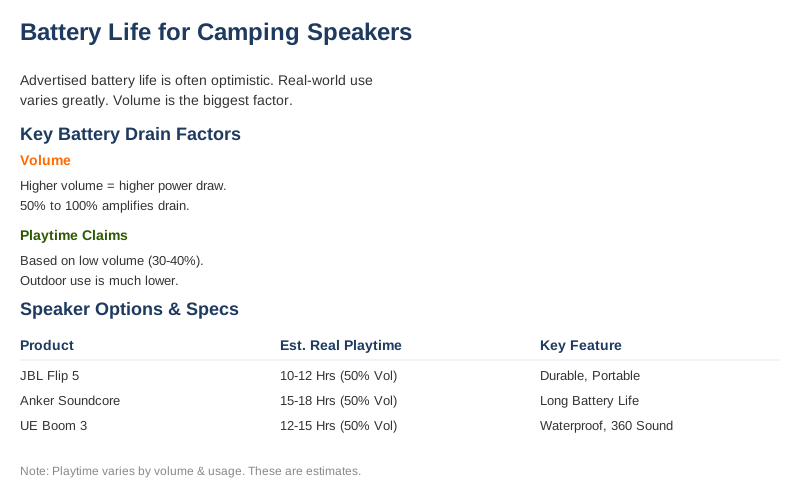
The advertised battery life on portable Bluetooth speakers is often a cruel joke, especially when you're miles from a wall outlet. My first car camping trip, a two-night ordeal in the Adirondacks, had my speaker die by Saturday afternoon, leaving a deafening silence where my questionable 80s power ballads should have been Source Name. The honest version: those 20-hour claims? They're usually for a volume setting lower than a whisper. Real-world use, especially outdoors, is a different beast entirely.
It's not just about the battery's mAh rating; it's about how you actually use it. Forget the marketing fluff; we need to talk about what actually drains that juice when you're trying to enjoy some tunes by the campfire Source Name.
The Core Answer
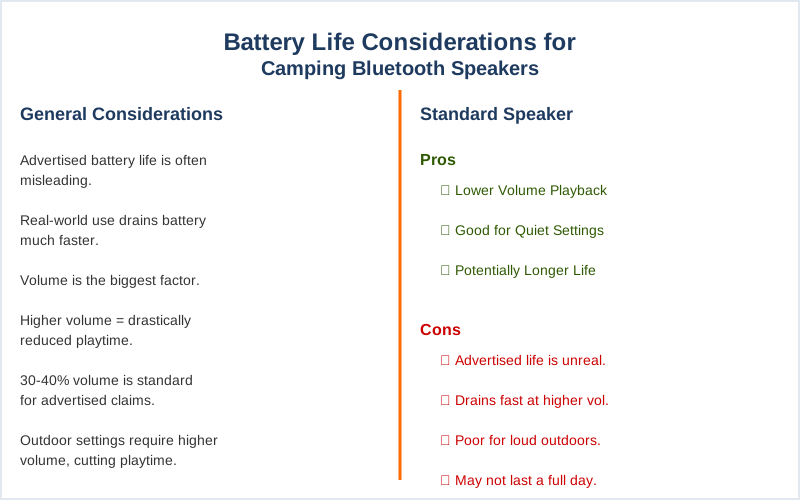
The biggest killer of speaker battery life, bar none, is volume. It's a rookie mistake to think that just because you can barely hear it, it's not using much power. Turn that dial up, and you're asking the amplifier to work overtime, guzzling juice like my old Ford Explorer on the highway. My first attempt at a backyard party had my speaker dead by 9 PM, and I was only at maybe 70% volume Source Name.
The real move is to understand that going from 50% to 100% volume doesn't just double the sound; it can more than double the power draw. A speaker rated for 20 hours at a low setting might only give you 5-7 hours when you're trying to drown out the crickets or your neighbor's dog Source Name.
What nobody tells beginners is that those advertised playtimes are often based on listening at around 30-40% volume, which is barely audible in any outdoor setting Source Name. If you're camping, and you want background music that you can actually hear over the wind or the crackling fire, you're likely pushing 60-80% volume. That's where the battery drain really kicks in.
For a typical 5,000mAh battery, running at a low volume might get you a full day, but crank it up, and you're looking at maybe 6 hours, tops Source Name.
Beyond volume, other features can sneakily drain power. Think about those fancy LED lights - they look cool, but they're essentially little power vampires. Turn them off if you're not actively trying to impress the squirrels Source Name. Similarly, if your speaker has a bass boost or surround sound mode, those suckers gobble up extra watts. The honest version: unless you absolutely need that booming sound for a rave in the woods, stick to the basics.
Another thing to watch out for is a shaky Bluetooth connection. If your phone is constantly trying to re-establish a link because you wandered too far or there's a metal cooler in the way, that's extra battery being spent on maintaining the connection Source Name. Keep your device reasonably close to the speaker, ideally within 10-15 feet, to avoid this drain.
I learned this the hard way when my speaker kept cutting out and dying way too early at Lake Michigan.
Why This Matters for Your Setup
Why does this matter for your setup? Because nobody wants their soundtrack to die halfway through a sunset hike or a campfire singalong.
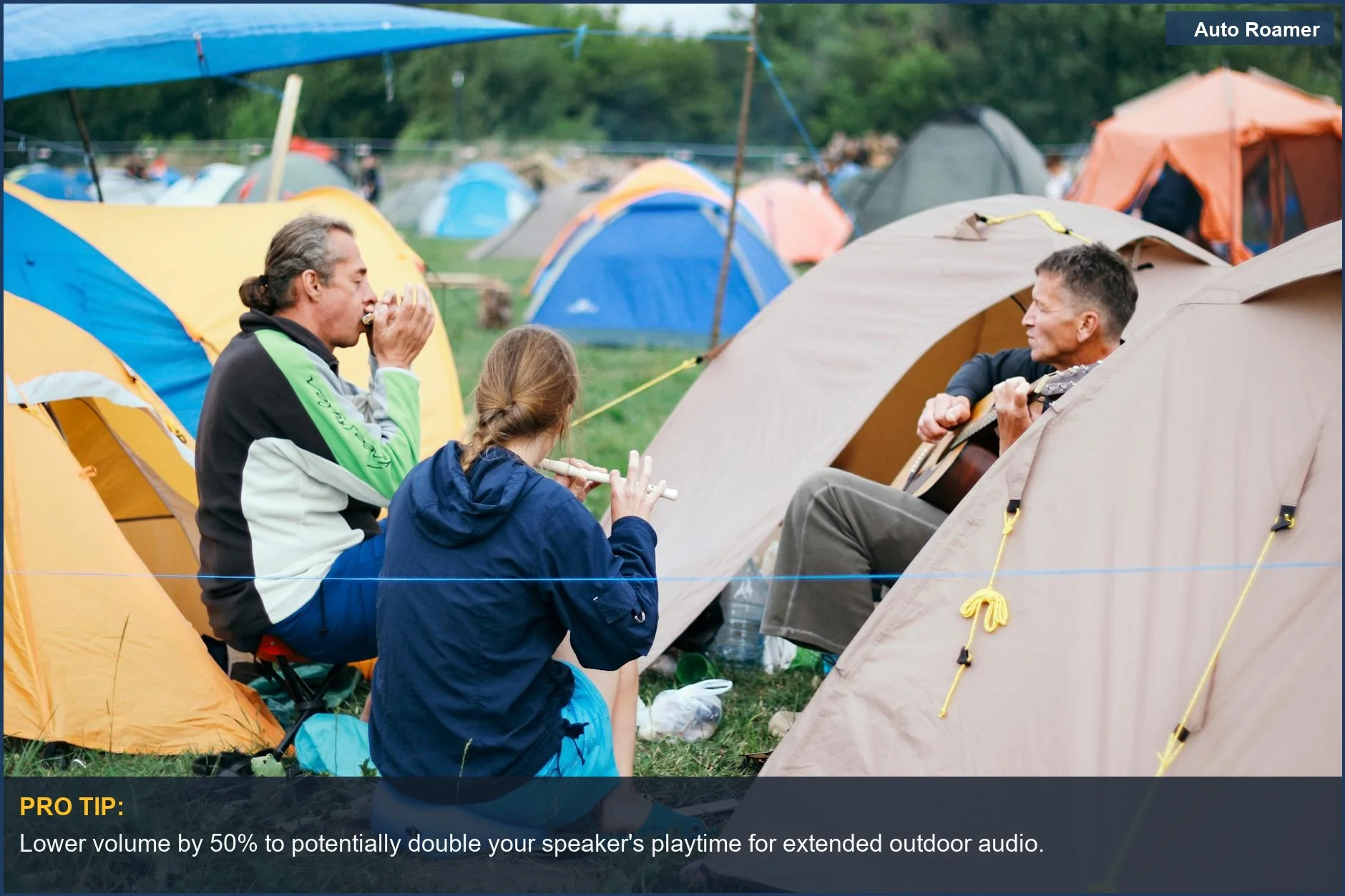
- Volume is King (of Battery Drain): If you're car camping and have a big speaker, you might get away with higher volumes for a few hours. But if you're backpacking or just want to listen for a whole weekend, you need to be mindful. Cranking it to 100% can cut playtime by more than half compared to a moderate setting Source Name.
- Feature Creep: Those extra bells and whistles like flashing lights or special audio modes?
They add up. For a longer listening session, especially when you're off-grid, turn off anything you don't absolutely need Source Name.
- The Power of Proximity: Keep your phone or music player close to the speaker. A weak, struggling Bluetooth signal is like a leaky faucet for your battery Source Name.
I've seen people blame the speaker when it was just a bad connection draining everything.
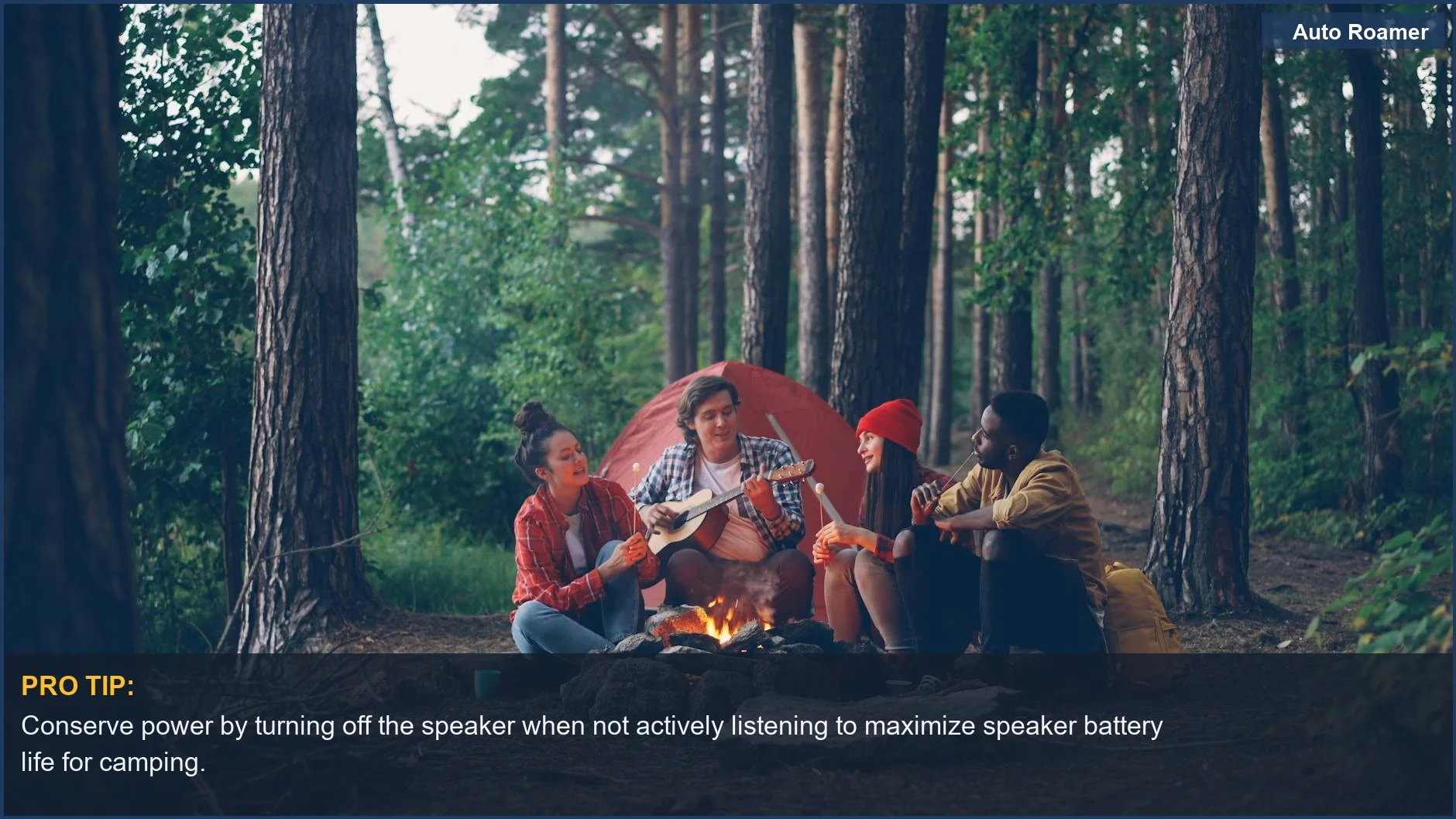
- Don't Forget to Turn It Off: Seriously, just power it down when you're done. Leaving it in standby mode is like leaving the TV on with the screen black - it's still using power Source Name. My neighbor's speaker died on day two of a trip because he 'thought' it was off.
Making the Right Choice
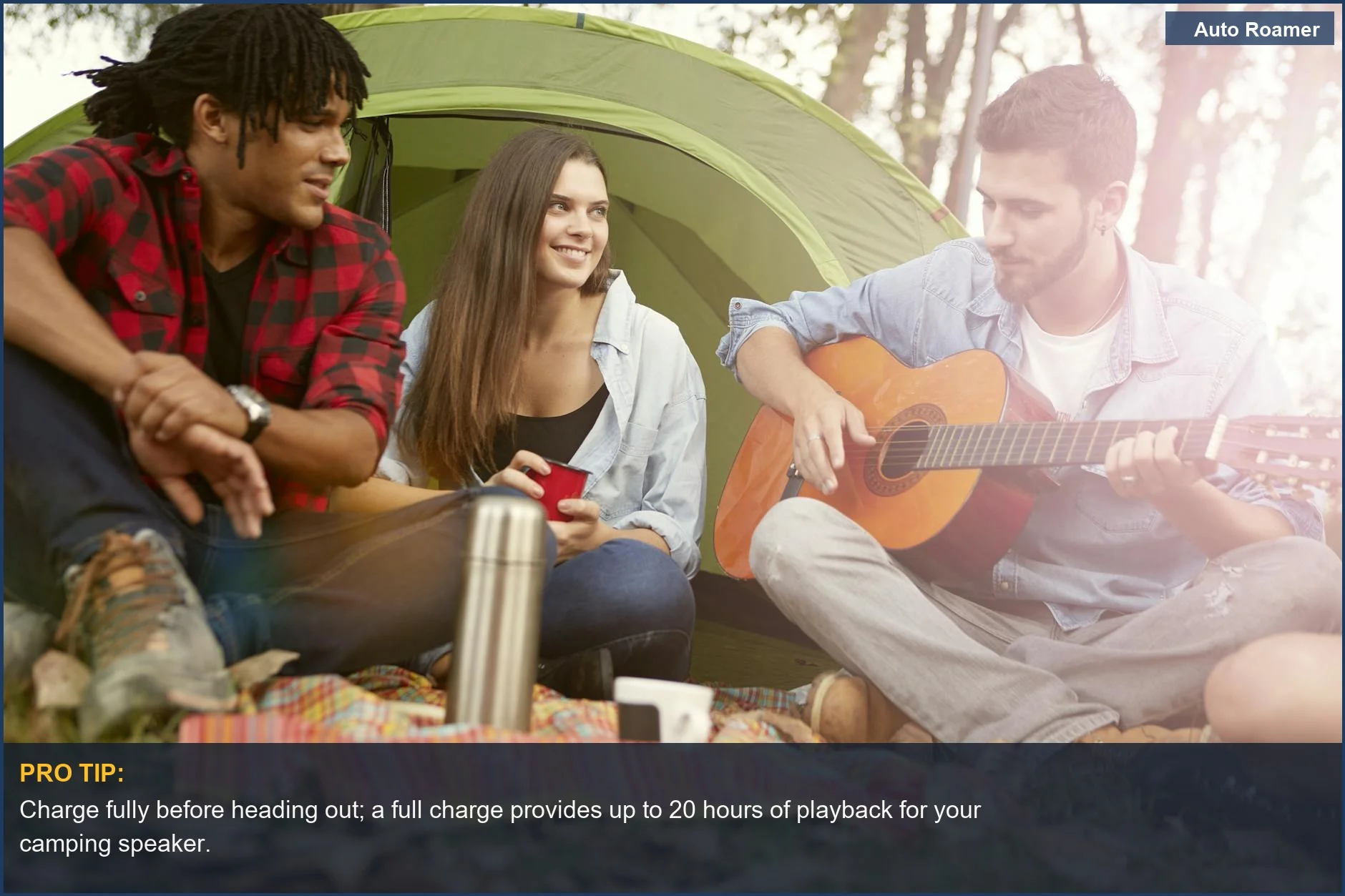
When you're out camping, the last thing you want is the silence of a dead battery.
- Volume Management is Key: The biggest takeaway is that volume is the primary battery killer. If you need your music to last all day, you'll need to compromise on how loud you play it Source Name. Think of it as a trade-off for uninterrupted tunes.
- Be Mindful of Features: Those extra lights and audio enhancements look nice, but they drain power. For extended use, disable them.
It's the $50 version of battery saving Source Name.
- Stable Connections Save Juice: Keep your device close to the speaker to maintain a strong Bluetooth signal. This prevents the speaker from wasting energy trying to reconnect Source Name. My friend's speaker lasted twice as long on our last trip just by doing this.
- Batteries Age: Just like your old phone, speaker batteries degrade over time.
If your speaker used to last all day and now dies after a couple of hours, it might just be time for a new battery Source Name. Physics doesn't care about your sentimental attachment to that old boombox.