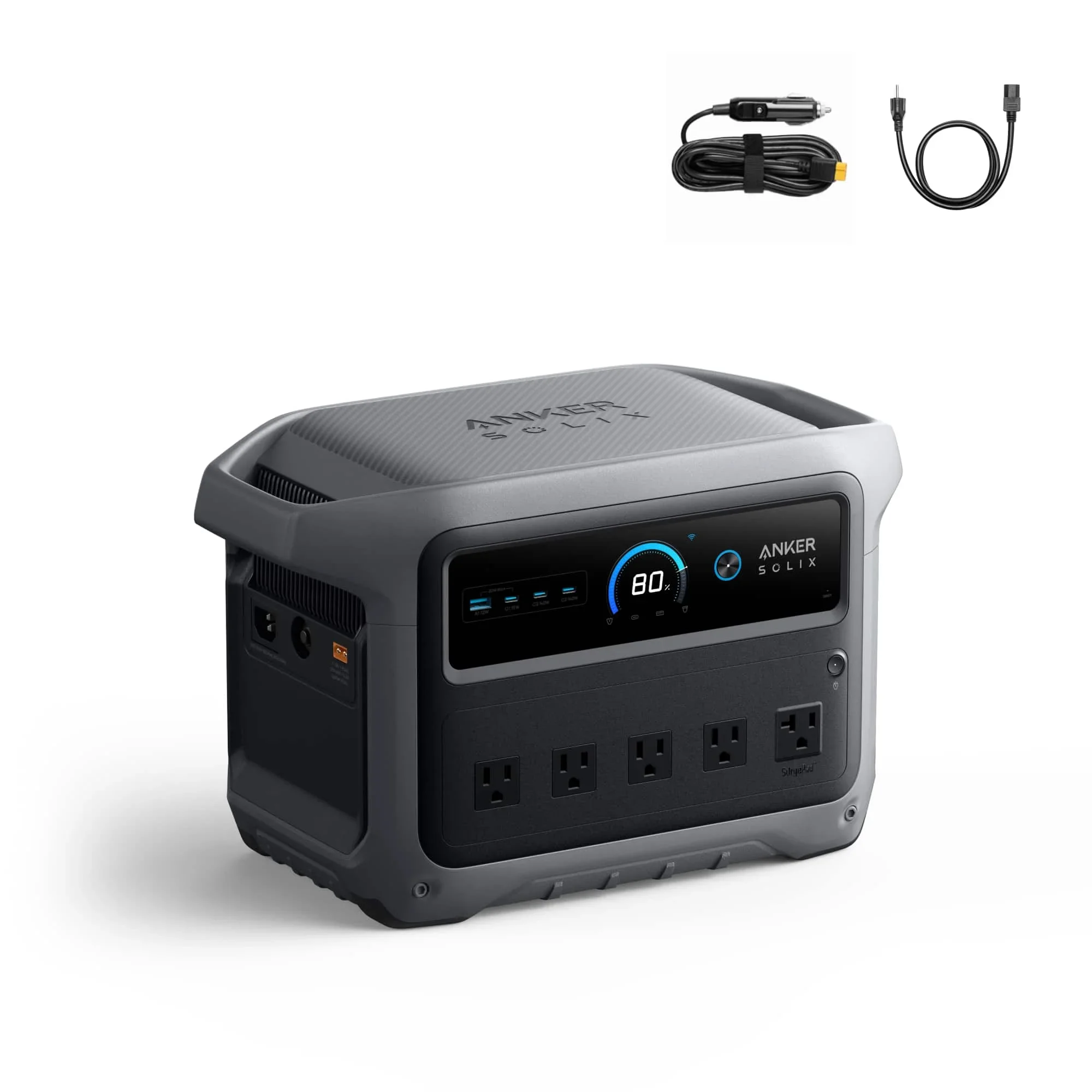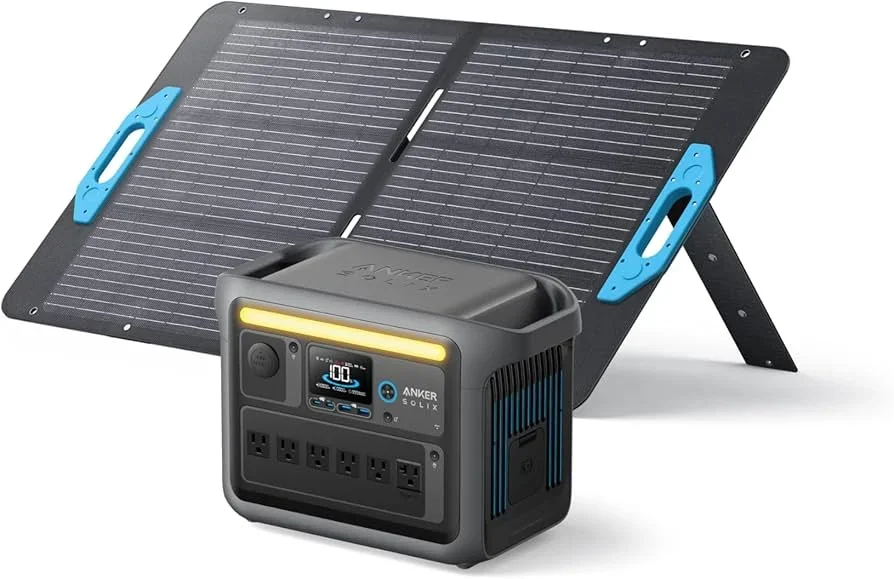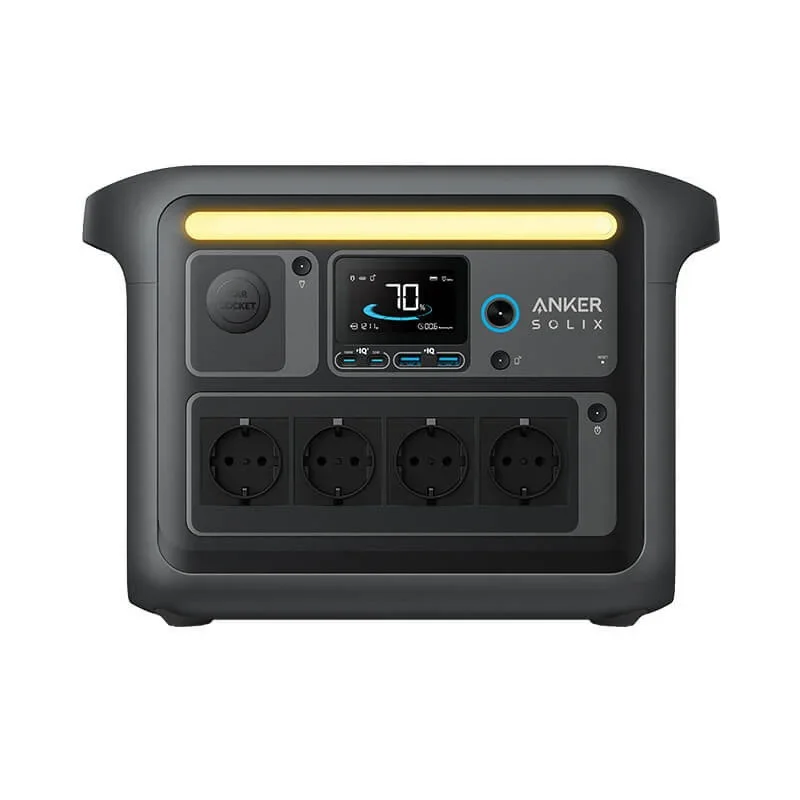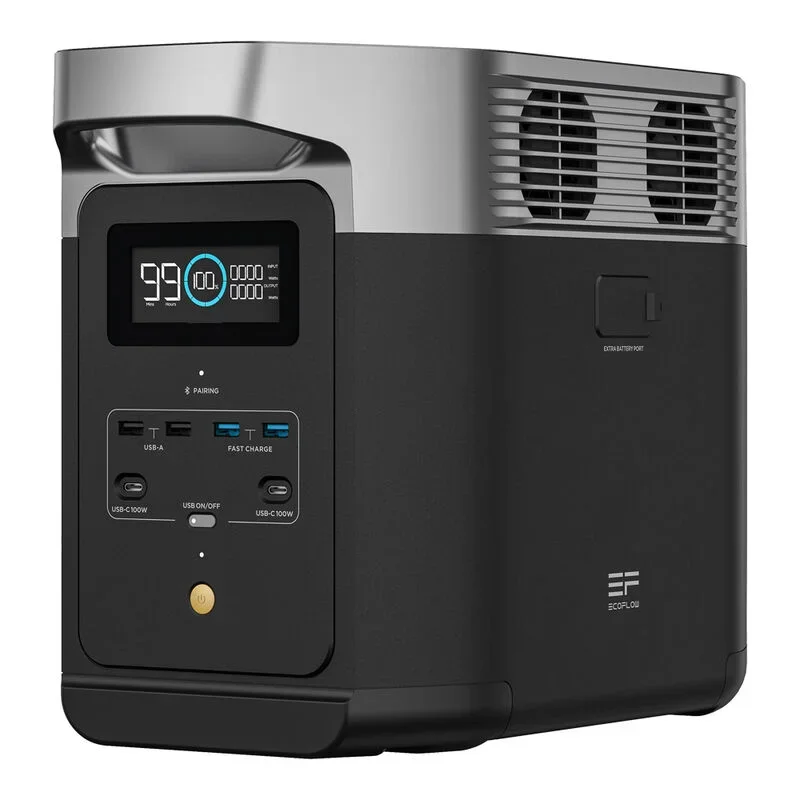
The honest verdict: fastest refill vs biggest expansion
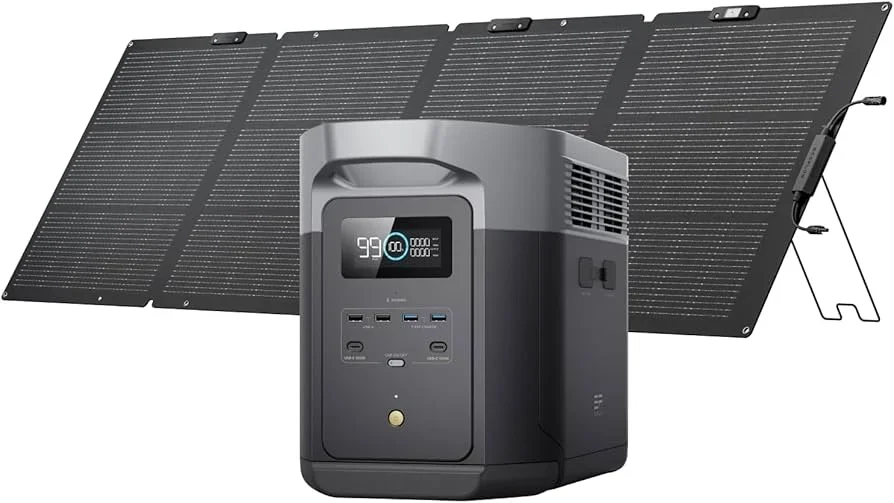
The Anker Solix C1000 and the EcoFlow Delta 2 are the closest matchup on this whole bench: both are roughly 1kWh LiFePO4 stations, both rated for 1800 watts, both carry six AC outlets, and both expand with an add-on battery. When two units are this alike, the decision lives in the edges - and here the edges are solar and recharge on one side and expansion ceiling on the other. The Anker takes up to 600 watts of solar and refills fastest; the EcoFlow grows further, to 3040Wh, per Anker and EcoFlow.
I run my camps off the sun when I can, so my instinct sends most people to the Anker: the higher solar input and sub-hour recharge mean less time tethered and more time topped up, and its 1056Wh battery is a hair bigger than the EcoFlow's 1024Wh. But if your trips run genuinely long and you want the option to stack up to 3040Wh, the EcoFlow's bigger expansion ceiling is the reason to pick it. Below I take solar, recharge, battery, output, expansion, weight, and a real weekend one at a time so you can see which edge matters to your camping.
A note on the two ASINs before we dig in: Anker sells both an original C1000 and a newer Gen 2, and this comparison is the 1056Wh / 1800W original, which is the unit that lines up most directly against the 1024Wh EcoFlow Delta 2. If you are shopping and see a Gen 2 listed at 1024Wh and 2000 watts, that is a different, later model - match the capacity and output on the listing to the numbers in this table so you are comparing like for like. With that settled, the rest is a straight read of solar, recharge, storage, and how you actually spend your nights out.
Solar input: the Anker swallows more panel
For a camper who leans on the sun, solar input is the headline number, and the Anker wins it. The Anker Solix C1000 accepts up to 600 watts of solar through its MPPT controller, per Anker - the highest on this bench - while the EcoFlow Delta 2 tops out at 500 watts, per EcoFlow. That extra 100 watts is not huge, but it is the difference between refilling a little faster on a short winter day or under patchy cloud.
Solar input is a ceiling, not a promise: you only benefit from 600 watts if you actually carry that much panel. With a modest 100-to-200-watt setup, both stations behave the same.
Where the Anker's headroom pays off:
- Bigger arrays: if you run 400-to-600 watts of folding panels, the Anker converts more of it, refilling faster off-grid.
- Short or cloudy days: the higher ceiling captures more during the few good solar hours you get in winter or under trees.
- Modest panels: at 100-200 watts the two are effectively equal, so this edge only matters if you invest in solar.
The reason I weight solar heavily is that it is the one spec that changes what kind of trips are possible. A station you can only refill at a wall keeps you near campgrounds with power; a station that drinks 600 watts of panel lets you sit deep off-grid and stay topped up on sunshine alone. The Anker is not dramatically ahead of the EcoFlow here - 600 versus 500 watts is a fifth more, not double - but combined with its faster charge controller it captures a bit more of every good solar hour, and over a multi-day sunny stretch those hours add up to real independence from the grid.
Recharge speed: the Anker's sub-hour refill
Recharge time decides how long you are chained to a wall or a panel, and the Anker is the quicker of the two on shore power. The Anker Solix C1000 is rated to reach a full charge in about 58 minutes (roughly 43 minutes to 80 percent) at up to 1300 watts of AC input via its HyperFlash mode, per Anker. The EcoFlow Delta 2 is rated to reach 0 to 80 percent in about 50 minutes and full in roughly 80 minutes, per EcoFlow - quick, but slower to a complete refill.
What the recharge gap means on a trip:
- Full top-up at a powered site: the Anker is done in under an hour; the EcoFlow needs a bit longer to reach 100 percent.
- Short shore-power window: both hit 80 percent fast, so a brief plug-in bails out either.
- Solar refill: the Anker's higher input plus fast MPPT means a sunny afternoon returns a little more, a real edge for sun-based camping.
Neither is slow. But if you value being fully charged and unplugged as quickly as possible, the Anker's sub-hour refill is a genuine, everyday convenience.
One caveat that applies to both: fast AC charging spins the cooling fans and warms the pack, so charging at full input inside a quiet tent is louder than you might want. Both units let you cap the input for a slower, quieter overnight charge, which is what I do when a site has power but I am trying to sleep. And as with every station on this bench, topping up from a 12V car socket while you drive is far slower than a wall - useful for a partial boost between camps, not a full refill, as our guide to charging a power station while driving spells out. Plan your real recharge around wall outlets and solar, and treat the drive as a bonus trickle.
Battery and output: nearly identical, small Anker edges
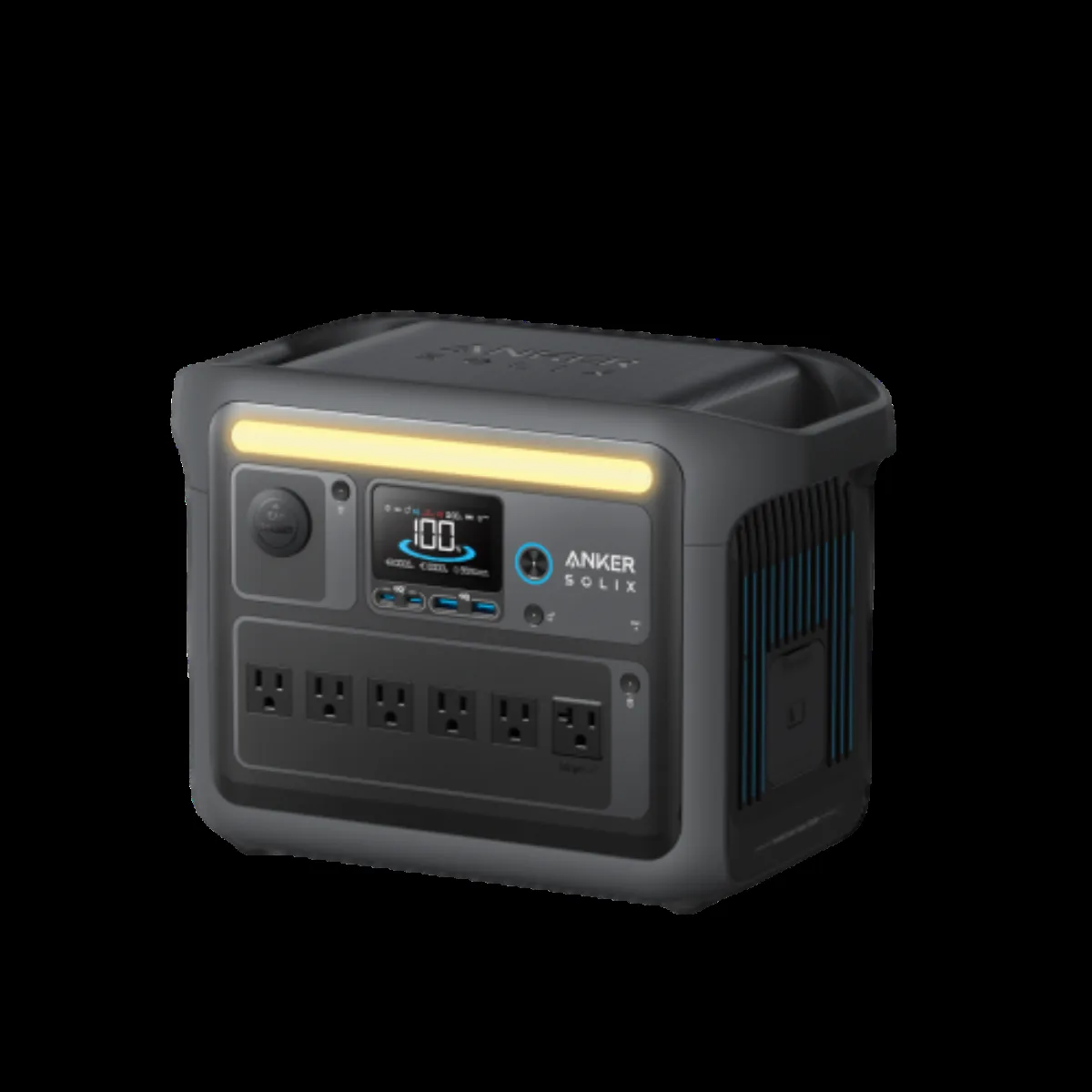
On the core numbers these two are almost the same, with the Anker holding slight leads. Battery capacity is 1056Wh for the Anker versus 1024Wh for the EcoFlow - a 32Wh, three-percent gap that no one notices in the field. Both are rated for 1800 watts continuous, and both put out across six AC outlets, so they run the same everyday camp loads without complaint. The Anker surges to 2400 watts and the EcoFlow to 2200 watts via X-Boost, per Anker and EcoFlow, giving the Anker a touch more headroom for motor-start loads.
The practical picture for car camping:
- Overnight loads: a 12V fridge (30-50 amp-hours a day) plus a fan and charging is trivial for either 1kWh bank.
- Camp cooking: both handle most appliances; the Anker's 2400-watt surge starts the stubborn ones slightly more readily.
- Ports: both offer six AC outlets and 100W USB-C fast charging, so a busy campsite is covered on either.
Call the battery and output a tie with the Anker nudging ahead. If this were the whole story, you would flip a coin - which is why solar, recharge, and expansion decide it.
It is worth saying that both use lithium iron phosphate cells rated for thousands of cycles, so neither is quietly the shorter-lived battery. Charge either one every weekend for years and you will barely touch its rated lifespan, and both carry five-year warranties to back that up. That longevity parity is part of why the core numbers feel like a tie: you are not trading durability for capacity or price between these two, only choosing which set of edge features - fast solar refill or bigger expansion - fits the way you camp.
Expansion: the EcoFlow's bigger ceiling
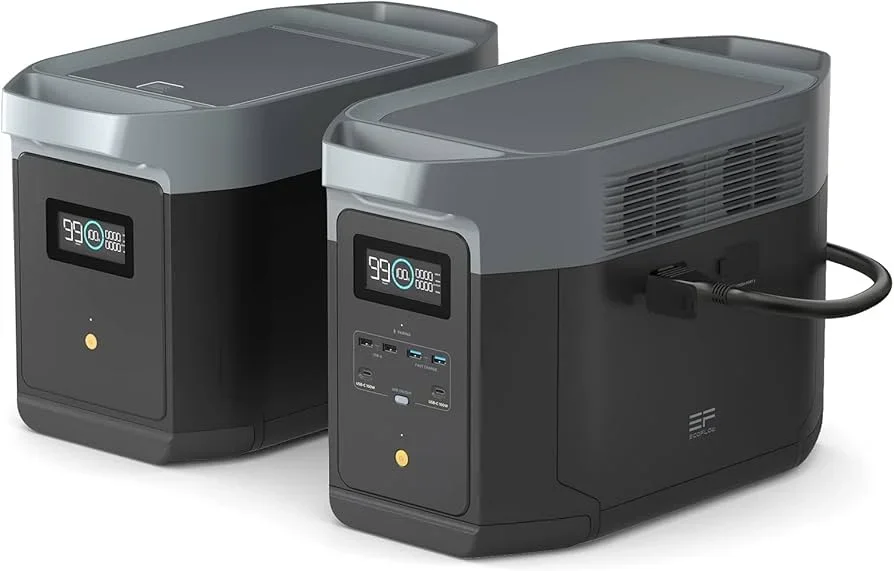
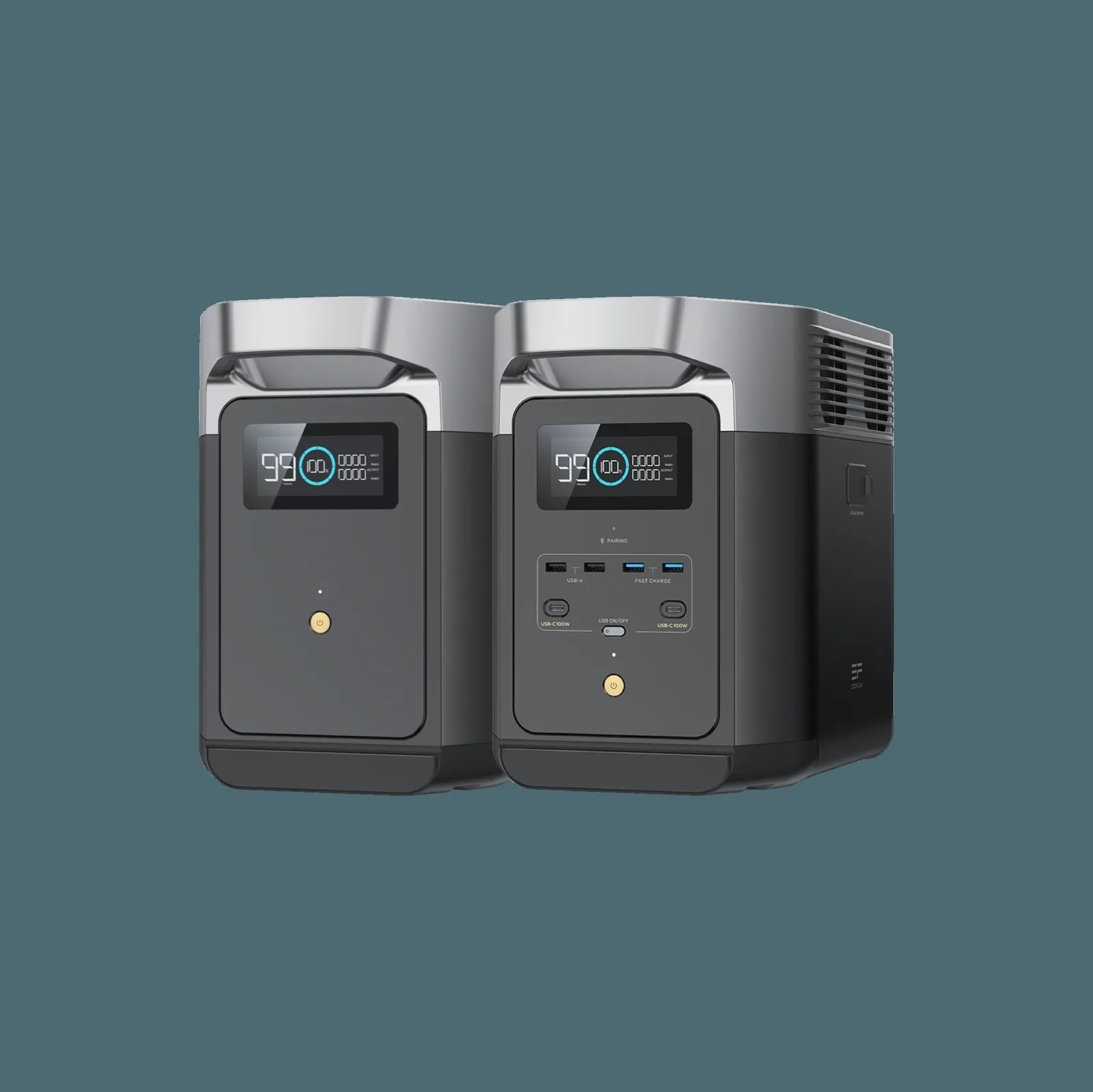
This is the EcoFlow's clearest win and the reason to choose it. Both stations expand with an add-on battery, but they stop at different ceilings: the EcoFlow Delta 2 climbs to 3040Wh with a Delta Max battery, per EcoFlow, while the Anker Solix C1000 tops out at 2112Wh with its expansion battery, per Anker. If your idea of car camping includes genuinely long off-grid stays, that extra roughly 900Wh of headroom is meaningful.
How to weigh the expansion difference:
- Long off-grid stretches: the EcoFlow's 3040Wh ceiling runs a fridge and camp loads for more days between charges.
- Weekend and mild use: neither needs expansion for a normal trip - a 1kWh base carries an overnight easily.
- Growth path: both let you start with the base unit and add a battery later, but the EcoFlow's path reaches higher.
So the trade sharpens: the Anker refills faster and takes more solar, the EcoFlow stores more when fully expanded. Match that to whether your bottleneck is getting power back in or holding more of it.
Be honest with yourself about whether you will ever buy the expansion battery, though. Most car campers never do - a 1kWh base plus a solar panel covers the overwhelming majority of trips, and the add-on packs are a significant extra purchase that also adds real weight and eats real cargo space. If a bigger ceiling is theoretical for you, then the EcoFlow's expansion advantage is theoretical too, and the Anker's faster refill and higher solar input are the tangible, every-trip wins. Buy the expansion ceiling only if you have a concrete plan to actually use it; otherwise let the recharge and solar numbers lead.
Weight, ports, and everyday livability
Day to day the two feel like siblings. The Anker Solix C1000 weighs about 28.4 pounds and the EcoFlow Delta 2 about 27 pounds, per Anker and Battery Skills - close enough that handling is a wash, and both are compact enough to stow behind a seat. Both wear clear front displays that show real input and output wattage, which is how you watch a fridge's overnight draw and plan your night.
The small conveniences split evenly. The Anker pairs a 100-watt USB-C with a 30-watt USB-C and a 12V car port, and its app reports charge and draw over Wi-Fi. The EcoFlow runs two 100-watt USB-C ports, four USB-A, a 12V port, and app control of its own. Neither is missing a port that would change your buying decision. If you want a single tiebreaker here, the Anker's notably compact footprint is easy to love in a packed cargo area, while the EcoFlow's extra USB-C port suits a household of fast-charging devices. These are preferences, not deal-makers - the decision still rests on solar, recharge, and expansion.
Both are also quiet, well-built units with clean fit and finish, sturdy handles, and pure sine wave output that runs sensitive electronics without complaint. Neither feels like the budget choice next to the other; they are peers from two strong brands, which is exactly why this comparison comes down to a couple of edge specs rather than any obvious quality gap. Whichever you pick, you are getting a capable, durable 1kWh station that will serve for years - the only real question is which handful of watts and watt-hours happens to land on your side of the ledger for the way you camp.
A realistic weekend, and when the edges matter
On a standard two-night trip these two are interchangeable. Run a 12V fridge around the clock, a fan in the evening, and device charging, and both the Anker and the EcoFlow start full, carry the fridge without stress, and finish the weekend with charge to spare - a 1kWh bank against a 30-to-50 amp-hour daily fridge draw is comfortable either way.
The edges only show up when you push past the ordinary. If you are running off solar for several days, the Anker's 600-watt input and sub-hour refill keep you topped up with less fuss. If you are parked deep off-grid for a long stretch with no sun and no wall, the EcoFlow's ability to expand to 3040Wh is the bigger tank.
Put numbers on the sunny multi-day case, since it is where these two actually separate. A 12V fridge might pull 30 to 50 amp-hours a day - roughly 400 to 600 watt-hours. On a bright day a 400-watt solar array into the Anker returns well more than that, so you wake near full each morning and effectively camp on sunlight for as long as the weather holds; the EcoFlow does the same with a slightly lower ceiling. Take the sun away for three or four cloudy days and neither refills much - now the EcoFlow's expanded 3040Wh becomes the deciding factor because it simply holds more to ration. That is the whole matchup in one scenario: the Anker wins the sunny weeks, the expanded EcoFlow wins the sunless stretches.
For the wider field, our best portable power stations for car camping ranks both, and our best solar panels for car camping guide matches panels to each station's input so you actually use that solar headroom; and if you are also weighing the Jackery, our Jackery 1000 v2 vs EcoFlow Delta 2 comparison covers that pairing.
Which to buy: match the edge to your camping
Both the Anker Solix C1000 and the EcoFlow Delta 2 are excellent, near-identical 1kWh LiFePO4 stations that will run a car-camping weekend without drama. Since the core specs are a near-tie, buy on the edge that fits your camping.
Buy the Anker Solix C1000 if you camp off solar and value the fastest recharge, the most solar input, and a slightly bigger battery. Buy the EcoFlow Delta 2 if you want the bigger 3040Wh expansion ceiling for long off-grid stays.
My default for a sun-powered car camper is the Anker - the 600-watt solar input and sub-hour refill are advantages you feel on every sunny afternoon, and the battery and output leads, however small, all point the same way. Choose the EcoFlow when maximum expanded capacity beats fast refills for how you travel. Either way, decide whether your real constraint is putting power back in or holding more of it, and the near-tie resolves itself.
And if you truly cannot decide, that is a sign either one will serve you well - a reassuring place to land on a purchase this size. Both are proven, well-supported stations from major brands, both carry the same five-year warranty, and both will run your fridge and charge your gear for years. Pick the one whose edge feature you can picture yourself actually using, order it, and spend your energy on the trip instead of the spec sheet.