The short version
The 2025 Hyundai Tucson is one of the more comfortable compact SUVs to camp out of, and the current generation's extra interior room is the reason it keeps showing up in car-camping forums. Fold the rear seats, level the floor, sort airflow, and you have a weatherproof bedroom that drove itself to the trailhead and starts reliably to drive you home.
This guide walks the Tucson aspect by aspect: the real cargo numbers with the seats down, how owners build a flat bed, where the gear goes, how to keep the air moving and the glass dry, and how to run lights and charge devices off-grid. It's grounded in published reviews and owner reports, not a pretend test drive.
The hard numbers: dimensions, cargo and space
With the 60/40 rear seats folded, the Tucson gives you roughly 5.5 to 6 feet of floor from the tailgate to the front seatbacks — enough for most adults to stretch out once the front seats slide forward a little. That figure is the one that matters: it's the difference between sleeping flat and sleeping curled. The current Tucson is meaningfully roomier than the previous generation, which is why owners who upgraded report an easier two-person setup.
The Tucson's cargo shape is wide and reasonably tall, so you can sit up partway and stack bins along the wheel wells. The catch, as with every SUV, is that the folded floor isn't perfectly level — there's a step at the seatback hinge and a gentle slope. Every good Tucson sleeping setup is really a story about closing that gap.
One Tucson-specific note: the folded seatbacks sit slightly higher than the cargo floor, so a trimmable foam mattress or a thin topper across the seam is the cleanest fix. Measure your specific trim's folded length before buying a platform — trims with a powered tailgate and subwoofer can shave usable space.
Sleeping setups: mattress and platform options
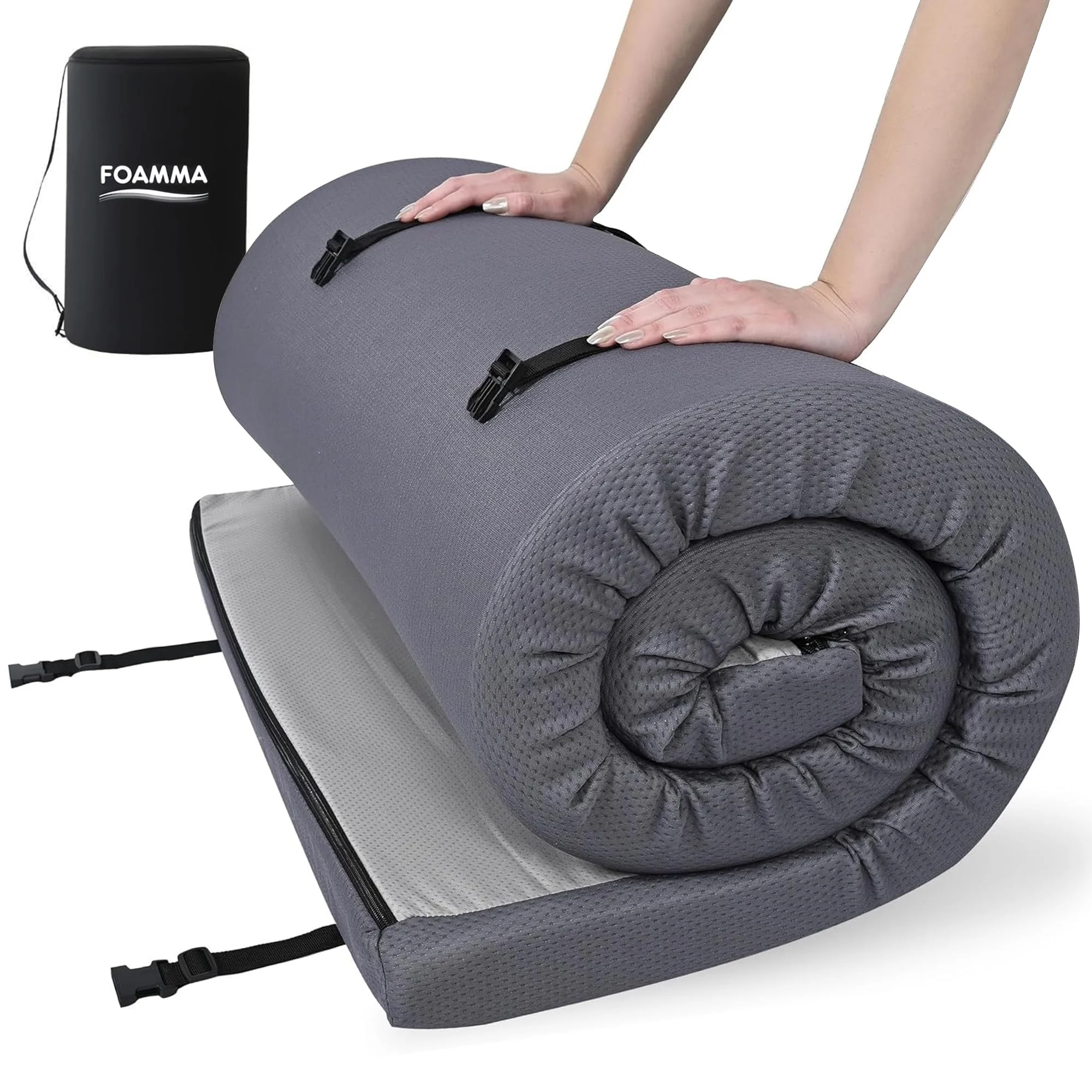
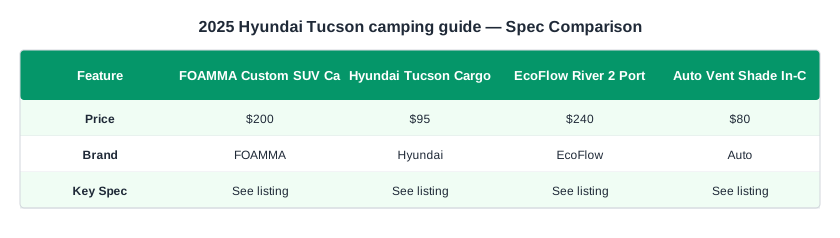
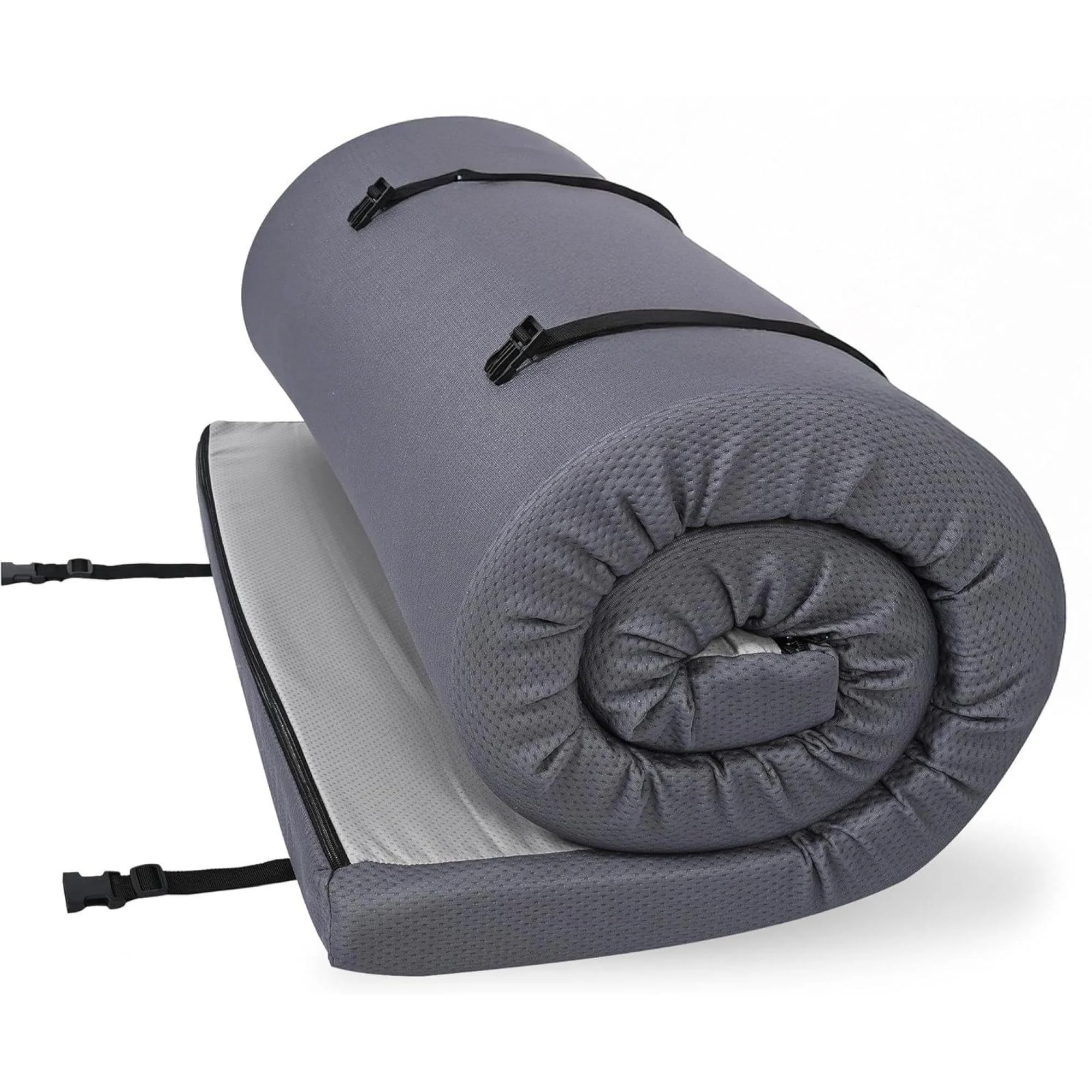
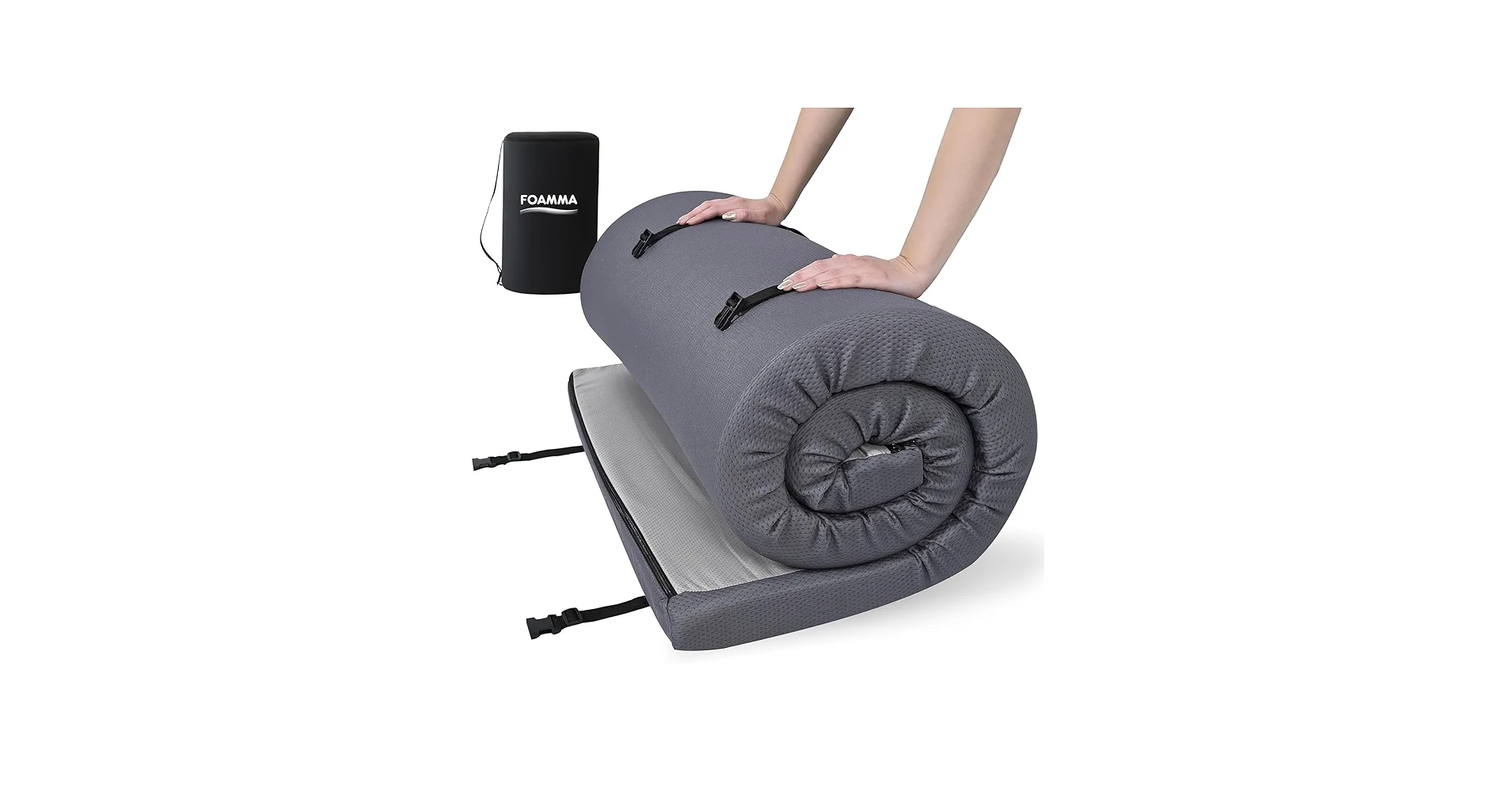
Two approaches dominate. The simplest is a trimmable foam SUV mattress like the FOAMMA Custom SUV Camping Mattress cut to the Tucson's folded floor — it bridges the seatback step and fills the low spots, giving a flat, supportive bed for two without the firmness-and-leak fuss of an air mattress. Many Tucson owners prefer foam here precisely because the floor needs leveling more than it needs air volume.
The other is a plywood platform with foam on top, built so the space underneath becomes drawers or bins. It's more work and semi-permanent, but flatter, stronger for storage, and the choice for people who camp out of the Tucson often.
Whichever route you take, level first and decorate second: get the surface flat across the seatback seam, then add a fitted sheet and a real pillow. Solo campers can run a single thick self-inflating pad down the floor — it packs smaller and doubles as a daytime seat, and the Tucson's length makes it comfortable for one.
Storage and gear organization
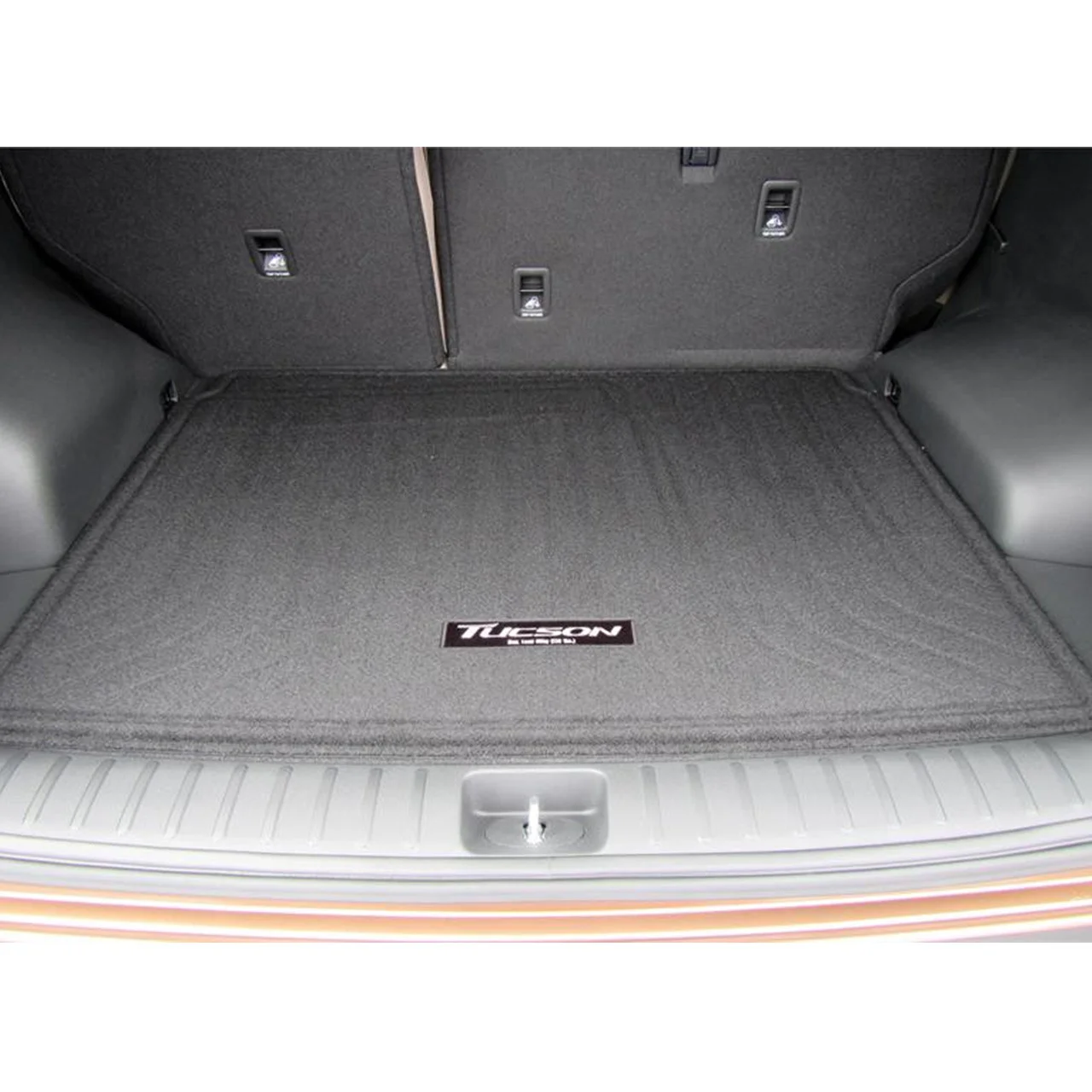
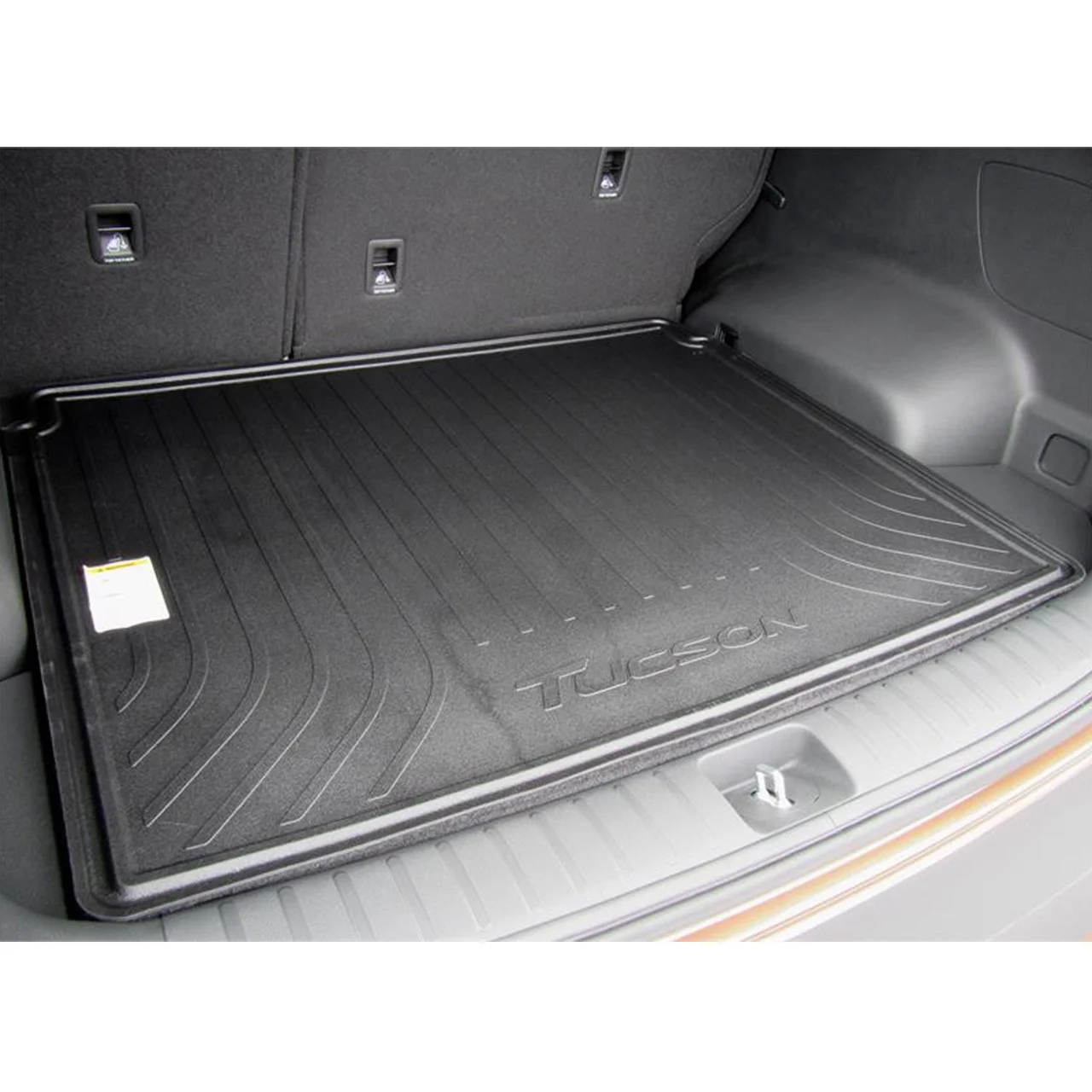
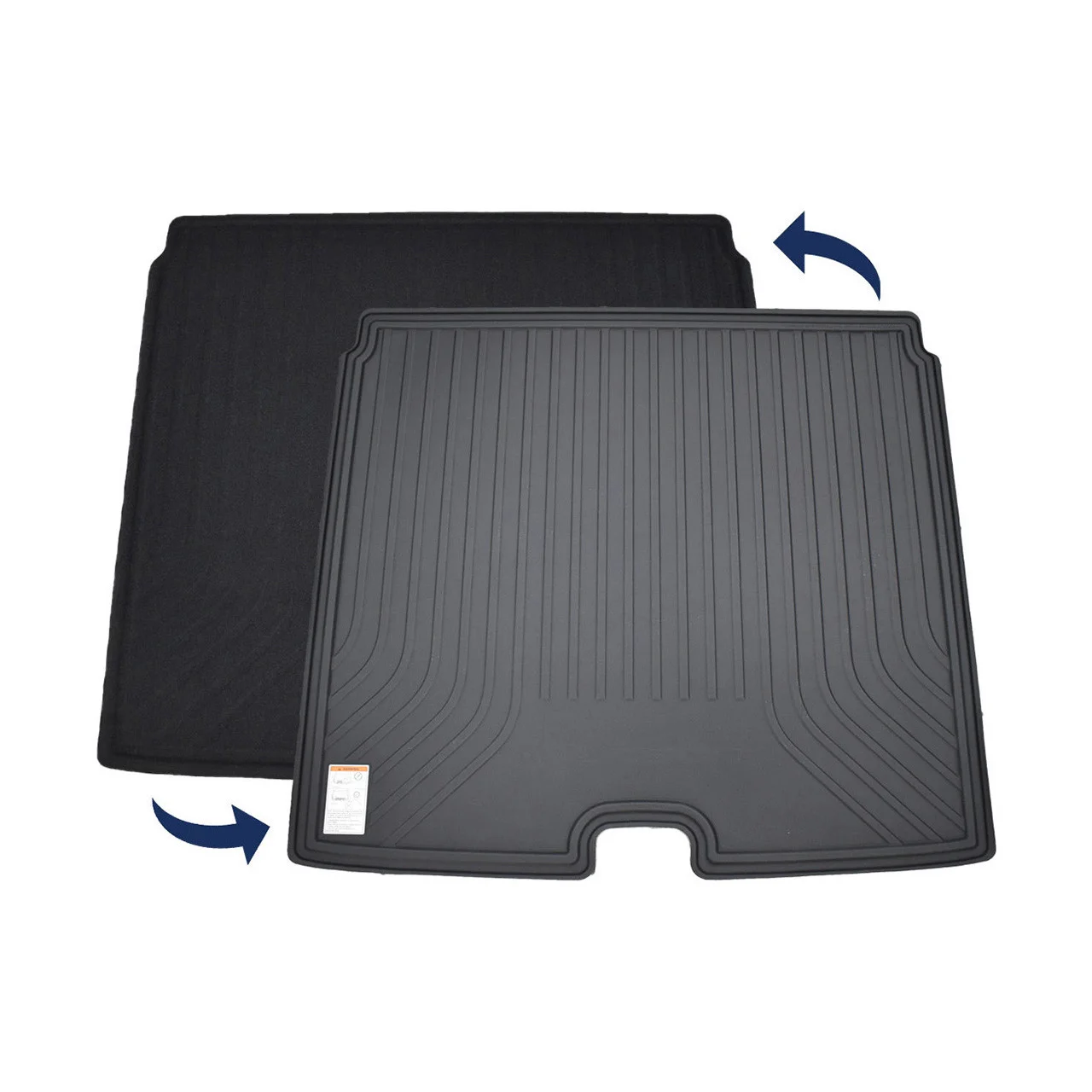
The trick is keeping the bed clear at night and the gear reachable by day. A platform build solves it with under-bed drawers. On the foam-mattress route, owners use collapsible cargo bins or a trunk organizer that slide to the footwells at night and back to center when driving. A genuine liner like the Hyundai Tucson Cargo Tray Liner earns its keep here — a camping cargo area gets muddy and wet, and a rubber tray you can hose off saves the carpet.
A few habits make the Tucson feel twice as organized. Use soft duffels, not hard cases — they squash into the footwells and wheel-well gaps that rigid bins waste. Hang a net or shoe organizer from a rear grab handle for the small stuff. And keep a 'night bag' (headlamp, water, layers) within arm's reach so you're not digging at 2 a.m.
The Tucson's under-floor cargo cubby is a quiet asset here: it swallows the recovery strap, tire plugs and the tools you want aboard but never need at night, keeping the sleeping surface clear. And because the rear seats fold from levers at the cargo opening, you can drop and raise the bed without walking around to the doors — a small thing that matters when it's raining and you just want to convert the car and get inside. Pack the heavy bins low and forward over the rear axle so the ride stays settled on washboard forest roads; weight stacked high and rearward is what makes a loaded crossover feel tippy on the drive in.
Power and charging options
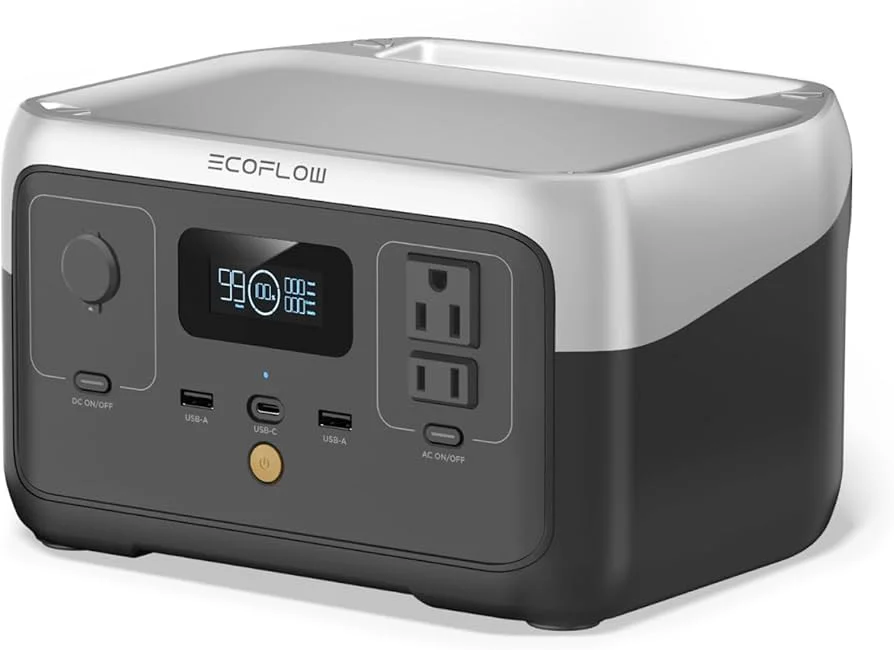
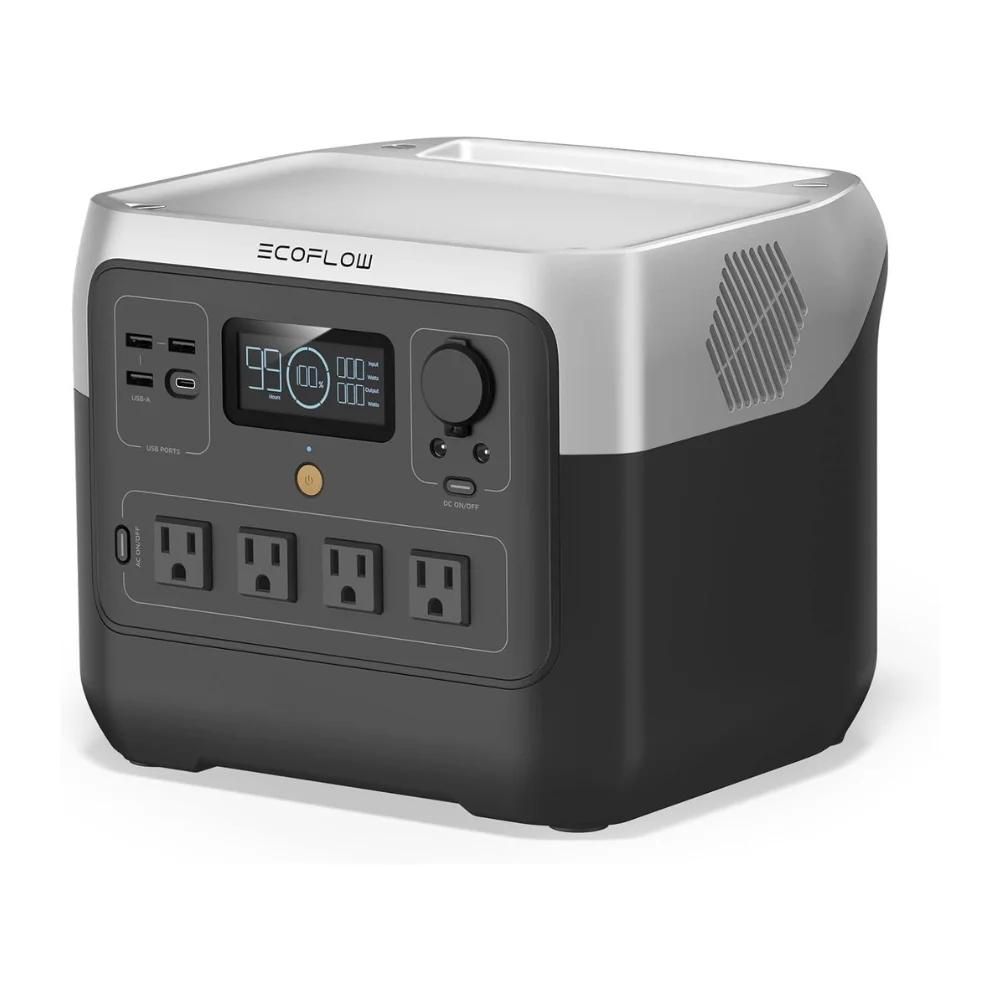
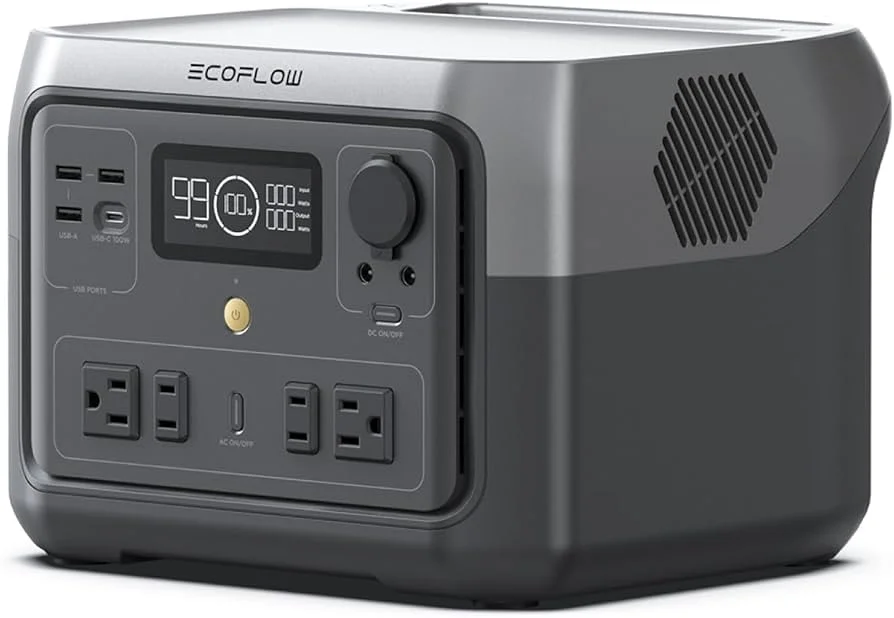
The Tucson gives you a 12V socket and USB ports — fine for phones and lights, but a 12V compressor fridge or a laptop you work from wants a dedicated 300–500Wh LiFePO4 portable power station that recharges from the car while you drive or from a folding solar panel at camp. A compact unit like the EcoFlow River 2 Portable Power Station is the common owner pick because it fast-charges and runs lights and devices without touching the starter battery.
The Tucson Hybrid and plug-in Hybrid don't ship a household AC outlet for camp gear on standard trims, so don't plan around the car itself running AC loads — confirm your trim. Whichever path you're on, the golden rule is to keep heavy camp loads OFF the 12V starter battery so the car always cranks in the morning.
Ventilation and condensation control
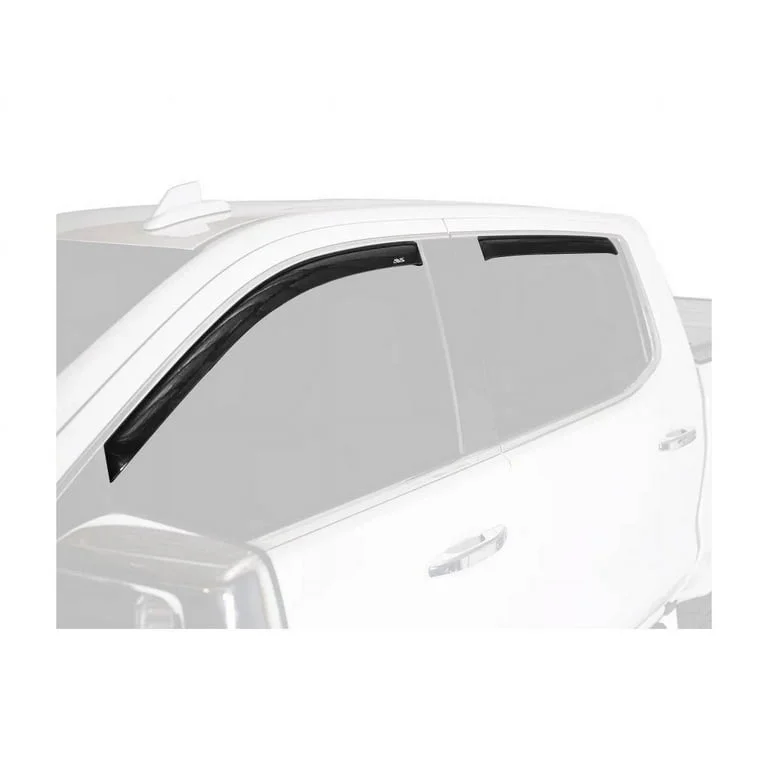
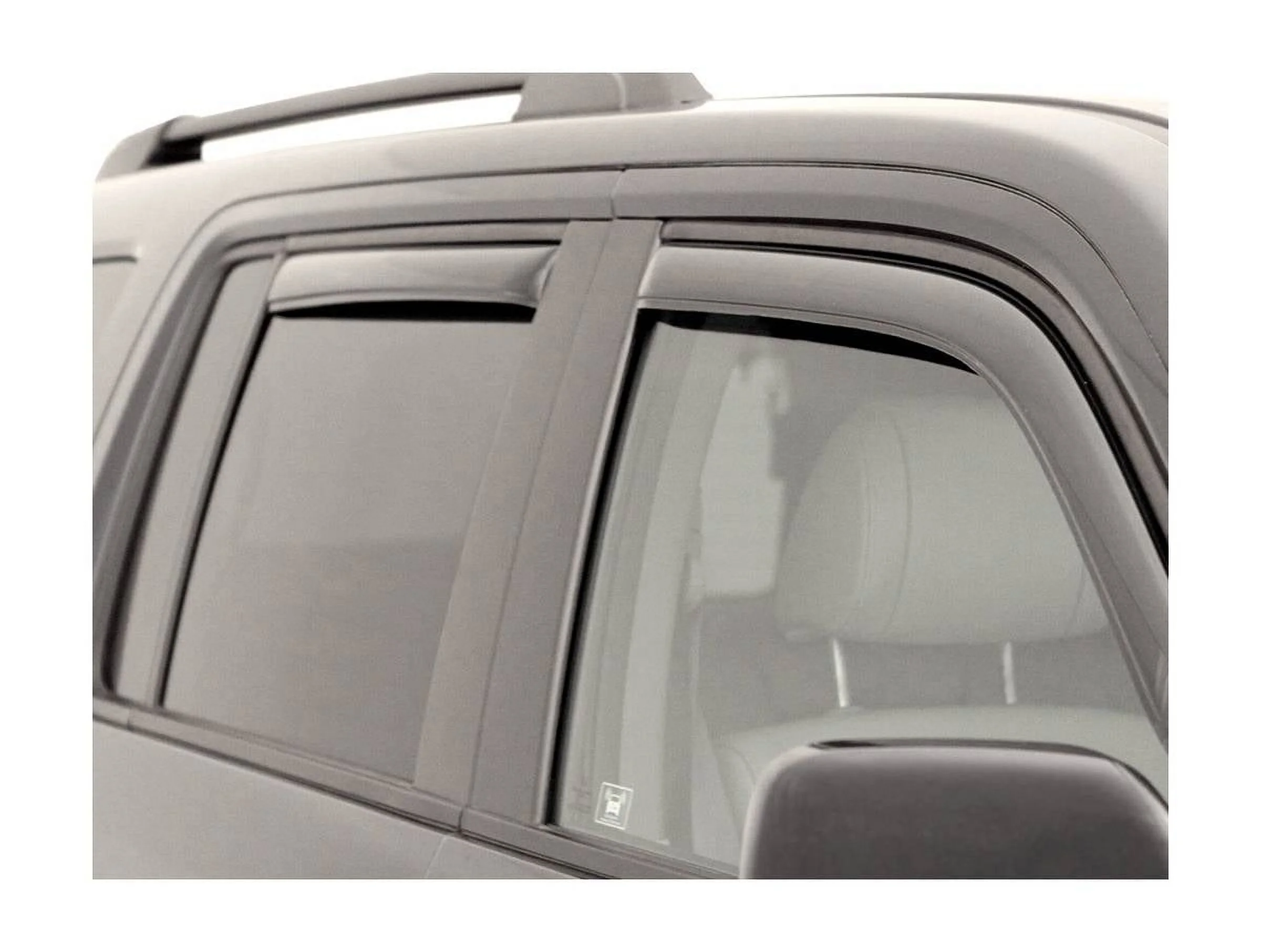
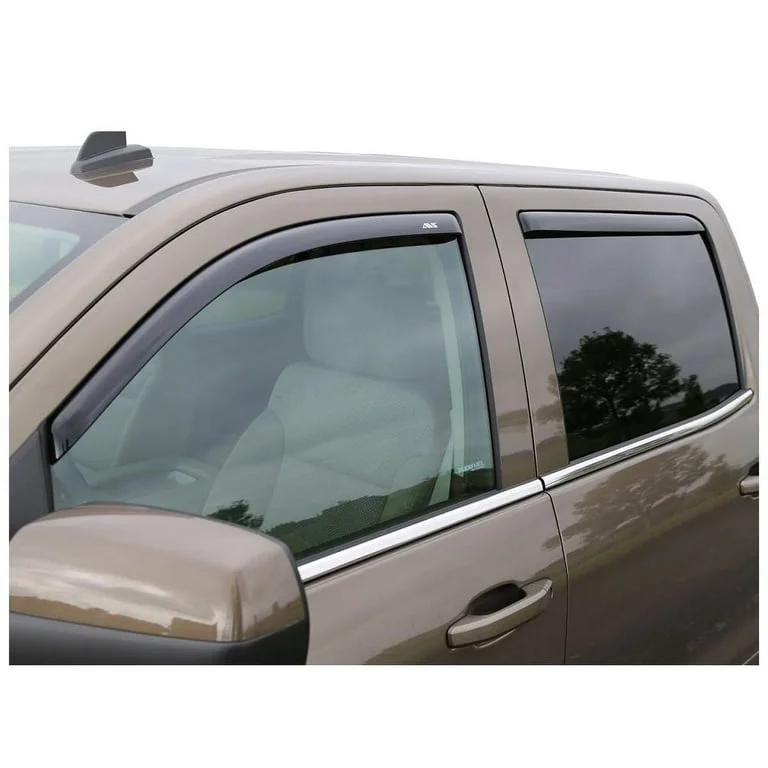
This is the part first-timers skip and regret. Two people breathing for eight hours in a sealed Tucson will fog every window and leave the bedding damp. The fix is cross-ventilation: crack two windows on opposite sides so air moves through. In rain, in-channel window visors let you leave the glass open an inch without water coming in. Add a small clip-on 12V fan to push air and you go from clammy to dry. Bug screens cut to the window openings keep the airflow honest in summer.
Condensation is worst on cold, still nights with two people and a dog, so on those nights owners run the small fan continuously on its lowest setting and wipe the inside of the glass before sleep — a dry start beats fighting fog at 3 a.m. A moisture absorber tub tucked under a seat helps too, pulling the worst of the damp out of a sealed cabin.
Soft-roading: where the Tucson can and can't go
The AWD Tucson handles exactly the access car camping needs: gravel forest roads, muddy campsite entrances, light farm tracks and snowy lots. The HTRAC AWD system and the available terrain modes widen that envelope a little — but the Tucson is a soft-roader, not a rock-crawler, and it sits at typical crossover ground clearance. If your camping regularly ends on rough two-track, that's a more capable SUV's job. For the gravel-and-mud reality of most car camping, the Tucson reaches far more trailheads than a front-drive crossover and gets you home reliably.
Pros and cons — the honest trade-offs
The balanced view, strengths and limits together:
- Pro: roomier than the previous generation — an easier two-person setup once leveled.
- Pro: wide, fairly tall cargo area with real sit-up room.
- Pro: efficient Hybrid drivetrain for long drives between campsites.
- Con: the folded floor needs leveling; foam or a platform, not just a sleeping bag.
- Con: no household AC outlet — you bring your own power station.
- Con: soft-roader clearance; not for rough two-track.
None of these are dealbreakers — they're the reality of camping out of a compact crossover rather than a built van.
Final verdict
The 2025 Tucson is a genuinely good compact-SUV car camper for one or two people, helped by the current generation's extra room. Spend on three things and it's transformed: a trimmable foam mattress to level the bed, a compact LiFePO4 power station to run lights and charge devices, and window visors plus a fan to keep the air dry. Do that and the Tucson does what a good compact SUV should — drive you efficiently to the edge of the map and be a dry, level place to sleep when you get there.